New York Times: U.S. poised to put heavy weaponry in East Europe

“Russia’s increasingly aggressive actions around NATO’s borders…”

NATO keeps moving its borders up to Russia’s borders.

“Professor [Mark] Galeotti said. ‘This is about telling Russia that you’re getting closer to a real red line.’”

NATO’s red line is a noose, drawing tighter and tighter around Russia and any country that defies the Anglo-American alliance.

This article is typical mainstream US “journalism”. Unless a reader follows the extensive equipment buildup that has been taking place for months,  and the ongoing, intensifying US/NATO military exercises in the region,  they would conclude from this article that the US and NATO have only a weak force in Europe.

June 13, 2015
By ERIC SCHMITT and STEVEN LEE MYERS


RIGA, Latvia — In a significant move to deter possible Russian aggression in Europe, the Pentagon is poised to store battle tanks, infantry fighting vehicles and other heavy weapons for as many as 5,000 American troops in several Baltic and Eastern European countries, American and allied officials say.

The proposal, if approved, would represent the first time since the end of the Cold War that the United States has stationed heavy military equipment in the newer NATO member nations in Eastern Europe that had once been part of the Soviet sphere of influence. Russia’s annexation of Crimea and the war in eastern Ukraine have caused alarm and prompted new military planning in NATO capitals.

It would be the most prominent of a series of moves the United States and NATO have taken to bolster forces in the region and send a clear message of resolve to allies and to Russia’s president, Vladimir V. Putin, that the United States would defend the alliance’s members closest to the Russian frontier.

After the expansion of NATO to include the Baltic nations in 2004, the United States and its allies avoided the permanent stationing of equipment or troops in the east as they sought varying forms of partnership with Russia.

“This is a very meaningful shift in policy,” said James G. Stavridis, a retired admiral and the former supreme allied commander of NATO, who is now dean of the Fletcher School of Law and Diplomacy at Tufts University. “It provides a reasonable level of reassurance to jittery allies, although nothing is as good as troops stationed full-time on the ground, of course.”

Continue reading

‘Texas’ with the Tuv family in Donetsk (video)

From Fort Russ

June 5th, 2015
By: Essence of Time EoT and “Texas”

In this heart wrenching episode, Texas visits the Tuv family in the hospital.  They have a special message for the UAF.

<iframe width=”320″ height=”266″ src=”https://www.youtube.com/embed/aDmNMH3iKsE&#8221; frameborder=”0″ allowfullscreen>

Note from Fort Russ Team:  We have spoken with ‘Texas’, one of the better known American volunteers fighting for the DPR in Donbass.  We made a deal to regularly feature his reports from the front, as produced by Essence of Time TV. 

http://www.fortruss.blogspot.com/2015/06/texas-with-tuv-family-donetsk-dpr-issue.html

Leaked documents expose American scheme arming Ukrainian Nazis through Bulgaria

From Fort Russ

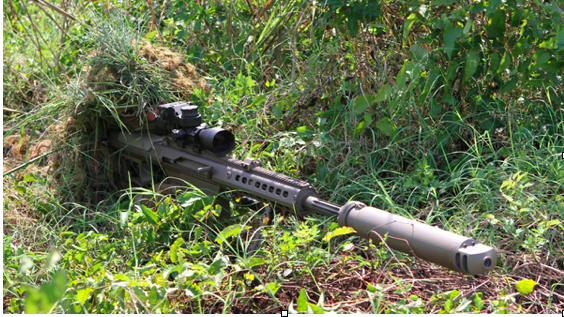
Barrett M107A1

June 4th, 2015
Segodnia.ru (published June 3rd, 2015)
Translated by Kristina Rus

Documents show Washington delivered [at least] half a million dollars worth of weapons to Ukraine

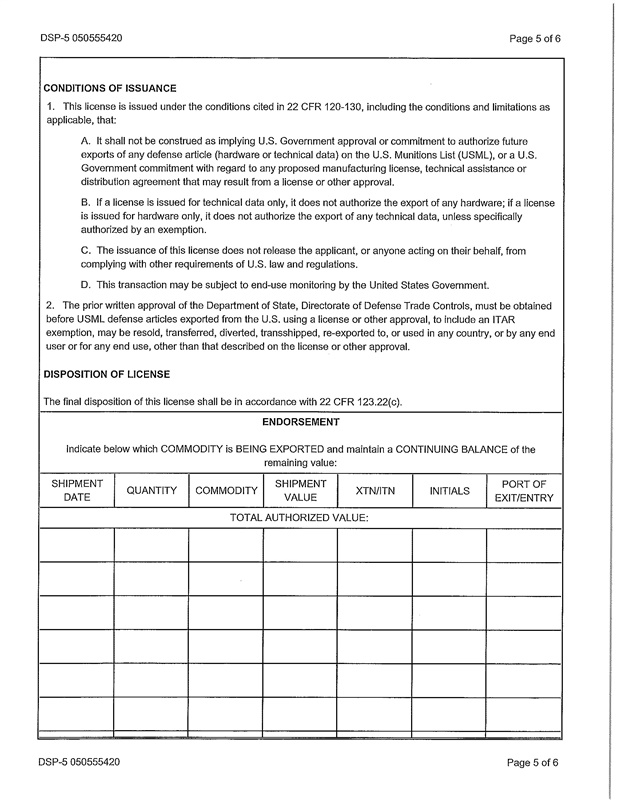
Our editors obtained a curious document of the U.S. State Department, which directly indicates active arms deliveries by the United States to Ukraine through Bulgaria:


The scheme is as follows. Company AMI GLOBAL SECURITY, LLC exports from Portland, Oregon 52 silencers to the sniper rifle Barrett (cost of 52 silencers – $139 100) and 15 packages of spare parts for these deadly weapons (cost – $363 840). The total cost of delivery, therefore, is $502 940 – half a million dollars.

Silencer installed on a Barrett M107A1

Spare parts kit for Barrett M107A1:

In the column “Country of Ultimate Destination” it proudly says “UKRAINE”, and under the “Foreign End-User” – “National Guard of Ukraine, Minister of Internal Affairs of Ukraine”.

However, on the way the goods will pass another country. The intermediary in this transaction (identified as “Foreign Consignee”) is a company Bulcomers KS Ltd., located in the city of Sofia (Bulgaria). It appears such a mediator is necessary for a cover-up and a conversion of the goods into some “auto parts”. And in the end, many goods are delivered to Ukraine from Bulgaria. Who will inspect all of them? But deliveries to Ukraine from the US of this nature are guaranteed to attract attention.

Thus, in fact, the United States began to supply lethal weapons to Ukraine. Given the demands of these rifles for weather conditions and operation, the parts for them are essential for active use. And why does the Ukrainian national guard need these rifles and their parts during a ceasefire? That’s right – for battle, that is, for a violation of this ceasefire, which are recorded every day. In addition, knowing the “life and customs” of national guardsmen, you can imagine how many bullets fired through the silencers provided by the USA and Bulgaria, will end up in the bodies of civilians of Novorossia. The picture is more than disturbing: the State Department is actually churning out licenses for murder during a ceasefire, and brothers-slavs Bulgarians “bring the cartridges,” passed by American benefactors. In the long term nothing can change this sad state of affairs, unless it’s widely publicized…

http://www.fortruss.blogspot.com/2015/06/leaked-documents-expose-american-scheme.html

From AMI Global Security’s website:

AMI GLOBAL SECURITY, LLC is registered with the US Department of State Bureau of Political and Military Affairs as a defense trade and manufacturer’s  exporter.  We process export permits of defense related articles for  internationally based clients.  We possess a Federal Firearms License  issued by the Bureau of Alcohol, Tobacco, Firearms. [BATF]

We provide a full  scope of professional security consulting services ranging from  procurement, acquisition, contracting and delivery of equipment.  AMI GLOBAL SECURITY, LLC is a registered United Nations vendor and registered US Department of Defense  Sub-Contractor.  We maintain full compliance with the US International Traffic in Arms Regulations, [ITAR].

The reversal of Kerry’s warning to Poroshenko came from Obama, not Nuland

Here Eric Zuesse writes a correction to his article June 7 http://www.globalresearch.ca/obama-sidelines-kerry-on-ukraine-policy/5454038

War and Peace in Donbass: The Reversal of Kerry’s Ukraine Statement Came from Obama, Not Nuland
By Eric Zuesse, June 10, 2015
Posted on Global Research

When Assistant Secretary of State Victoria Nuland on May 15th contradicted her boss John Kerry’s statement of three days earlier, in which Kerry had warned Ukraine’s President Petro Petroshenko not to violate the Minsk II agreement, and not to invade Crimea, and not to re-invade Donbass, the source of this reversal was actually U.S. President Barack Obama, and not Victoria Nuland (as the State Department had reported).

When I first noticed the contradiction as I reported on May 21st, Nuland’s statement on May 15th was being quoted by Ukraine’s Interfax News Agency, without any link to its U.S. source. I looked but didn’t right away find its U.S. source, but the official Ukrainian news agency would not quote a U.S. Government official falsely, and so I went with the story on that basis.

Now that I have found the U.S. source in the full May 15th U.S. State Department press briefing in Washington, there can be little doubt that Nuland had actually been instructed by the White House to be quoted there as issuing this reversal of Kerry’s statement.

The press conference, by the Department’s press spokesperson Jeff Rathke, opened with an introductory statement in which he asserted:

Assistant Secretary Nuland’s ongoing visit to Kyiv and her discussions with Prime Minister Yatsenyuk and President Poroshenko reaffirm the United States’ full and unbreakable support for Ukraine’s government, sovereignty, and territorial integrity. We continue to stand shoulder to shoulder with the people of Ukraine and reiterate our deep commitment to a single Ukrainian nation, including Crimea, and all the other regions of Ukraine.

That’s all that was reported by Ukraine’s Interfax. Much later in the press conference, however, after reporters had asked him many questions about Iran, Burundi, Japan, Iraq, and other countries, but not Ukraine, one reporter finally asked a single (but unrelated) question about Ukraine, and, after answering it, Rathke interrupted the next reporter’s question, which was about Cuba, to ask all of the assembled press-stenographers, “I’m sorry, any other questions on Ukraine?” and, after not getting any such question, he simply went directly on to say:

I would – if I could take the opportunity, I would also just want to go back to what I said at the top, and just to review what has happened this week with regard to Ukraine. Secretary Kerry was in Sochi at the start of the week, where the Secretary was clear with Russia – President Putin, Foreign Minister Lavrov – about Ukraine and about the consequences for failing to uphold the Minsk commitments. Right after that discussion, he called President Poroshenko to update him and to reaffirm our support for Ukraine. He went from there immediately to the meeting of NATO foreign ministers in Antalya, where he briefed them and also underscored the United States’ commitment when he met with Foreign Minister Klimkin in Antalya. Assistant Secretary Nuland is in Kyiv right now, and the message of all of these engagements is that we stand for the implementation of Minsk. We stand in support of the Ukrainian Government, President Poroshenko, Prime Minister Yatsenyuk, and the Ukrainian people. And I wanted just to make sure that I took that opportunity.

In other words: Kerry, after his statement on May 12th to Putin in Sochi, saying, about Poroshenko’s repeated warnings that Ukraine will retake both Crimea and Donbass —

“we would strongly urge him to think twice not to engage in that kind of activity, that that would put Minsk in serious jeopardy. And we would be very, very concerned about what the consequences of that kind of action at this time may be.”

— was taken to the woodshed by his boss, Obama; and the best way that could be decided upon to issue the reversal was by this indirect one, which would be sourced to his subordinate Nuland, so that Kerry himself wouldn’t have to be the person contradicting himself, and so that the blame for the actually anti-Minsk-agreement position of the U.S. President himself would go instead to Nuland, whom everybody already knows to be a “neo-conservative,” and a hardliner against Russia — and would definitely not go to the Nobel Peace Prize winning U.S. President, Barack Obama.

In other words: the President, who had been behind the February 2014 coup that instigated Russia’s defensive measure of protecting its main naval base (ever since 1783) in Crimea and so Russia’s accepting the overwhelming desire of Crimea’s residents on 16 March 2014 to become again a part of Russia (of which Crimea had always been a part until 1954), wanted to move forward again with the war in Ukraine, and with the resulting sanctions against Russia, all of which were part of Obama’s plan ever since at least the summer of 2013, when the organizing of the overthrow of Yanukovych had started at the U.S. Embassy in Kiev.

The Minsk II agreement had been engineered by Merkel and Hollande of the EU, against the wishes and without the participation of Obama, and this is the sort of thing that Nuland had had in mind about the EU when she had told Geoffrey Pyatt, America’s Kiev Ambassador, on 4 February 2014, “F—k the EU!” and instructed him then whom to get appointed to run Ukraine after the coup (“Yats” Yatsenyuk), which coup then culminated 18 days later, onFebruary 22nd. (Yatsenyuk received the official appointment on February 26th.)

This likewise explains the reason why Ukraine’s President Poroshenko, as I reported on June 7th, said again, on June 5th, that Ukraine will retake both Crimea and Donbass. He has Obama’s wind to his sails on this (and not only Nuland’s).

So: the war will continue, as Obama wants, and probably the resistance to it on the part of the EU will continue to be ineffectual and half-hearted.

And the sanctions against Russia, for responding as it must to Obama’s actions, will also continue, which is also part of Obama’s original plan. (What was not part of Obama’s plan, however, was the continued survival of millions of the residents in Donbass, the former region of Ukraine that had voted 90%+ for the man, Viktor Yanukovych, whom Obama overthrew. But Obama evidently has not given up his goal of eliminating them.)

The people who say that Obama doesn’t have a plan are simply ignoring it. The evidence is very clear what the plan is. And it is succeeding: it’s a war-plan against Russia.

Investigative historian Eric Zuesse is the author, most recently, of They’re Not Even Close: The Democratic vs. Republican Economic Records, 1910-2010, and of CHRIST’S VENTRILOQUISTS: The Event that Created Christianity, and of Feudalism, Fascism, Libertarianism and

http://www.globalresearch.ca/war-and-peace-in-donbass-the-reversal-of-kerrys-ukraine-statement-came-from-obama-not-nuland/5454561

US-led coalition supposedly against ISIS, yet warplanes “mistakenly” strike Iraqi bases in Fallujah, killing 6 Iraqi soldiers

FARS News Agency 6 June 2015
Global Research, June 07, 2015

Fighter jets of the US-led coalition against ISIL once again struck the Iraqi forces’ positions in the province of Anbar, in Western Iraq, on Saturday.

The US-led coalition warplanes hit the bases of Iraqi army’s Hezbollah battalions in Fallujah in Anbar province, killing 6 soldiers and injuring 8 others.

In early May, the anti-ISIL coalition forces struck the position of Iraq’s popular forces near Baghdad, killing a number of volunteer forces.

The US-led coalition warplanes hit an arms production workshop of the popular forces near the Iraqi capital, destroying the workshop and its ammunition completely.

Two members of Iraq’s popular forces were killed in the attack.

The US has repeatedly struck the popular forces’ positions in different parts of Iraq.

On March 29, the US fighter jets struck the positions of Iraq’s popular forces during their fierce clashes with ISIL terrorists near Tikrit, injuring a number of fighters.

The US and coalition forces conducted eight airstrikes near Tikrit, but they hit the popular forces’ positions instead of ISIL.

In February, an Iraqi provincial official lashed out at the western countries and their regional allies for supporting Takfiri terrorists in Iraq, revealing that the US airplanes still continue to airdrop weapons and foodstuff for the ISIL terrorists.

“The US planes have dropped weapons for the ISIL terrorists in the areas under ISIL control and even in those areas that have been recently liberated from the ISIL control to encourage the terrorists to return to those places,” Coordinator of Iraqi popular forces Jafar al-Jaberi told FNA.

He noted that eyewitnesses in Al-Havijeh of Kirkuk province had witnessed the US airplanes dropping several suspicious parcels for ISIL terrorists in the province.

“Two coalition planes were also seen above the town of Al-Khas in Diyala and they carried the Takfiri terrorists to the region that has recently been liberated from the ISIL control,” Al-Jaberi said.

Meantime, Head of Iraqi Parliament’s National Security and Defense Committee Hakem al-Zameli also disclosed that the anti-ISIL coalition’s planes have dropped weapons and foodstuff for the ISIL in Salahuddin, Al-Anbar and Diyala provinces.

In January, al-Zameli underlined that  the coalition is the main cause of ISIL’s survival in Iraq.

“There are proofs and evidence for the US-led coalition’s military aid to ISIL terrorists through air(dropped cargoes),” he told FNA at the time.

http://english.farsnews.com/newstext.aspx?nn=13940316001210

http://www.globalresearch.ca/us-led-coalition-against-isis-warplanes-mistakenly-strike-iraqi-army-bases-in-fallujah-kill-iraqi-soldiers/5454005

President Obama sides with Victoria Nuland on Ukraine. Will John Kerry resign?

By Eric Zuesse
Global Research, June 7, 2015

kerry_0

On May 21st, I headlined “Secretary of State John Kerry v. His Subordinate Victoria Nuland, Regarding Ukraine,” and quoted John Kerry’s May 12th warning to Ukrainian President Petro Poroshenko to cease his repeated threats to invade Crimea and re-invade Donbass, two former regions of Ukraine, which had refused to accept the legitimacy of the new regime that was imposed on Ukraine in violent clashes during February 2014. (These were regions that had voted overwhelmingly for the Ukrainian President who had just been overthrown.)

They didn’t like him being violently tossed out and replaced by his enemies.) Kerry said then that, regarding Poroshenko,

“we would strongly urge him to think twice not to engage in that kind of activity, that that would put Minsk in serious jeopardy. And we would be very, very concerned about what the consequences of that kind of action at this time may be.”

Also quoted there was Kerry’s subordinate, Victoria Nuland, three days later, saying the exact opposite, that we “reiterate our deep commitment to a single Ukrainian nation, including Crimea, and all the other regions of Ukraine.” I noted, then that, “The only person with the power to fire Nuland is actually U.S. President Barack Obama.” However, Obama instead has sided with Nuland on this.

Radio Free Europe, Radio Liberty, bannered, on June 5th, “Poroshenko: Ukraine Will ‘Do Everything’ To Retake Crimea’,” and reported that

President Petro Poroshenko has vowed to seek Crimea’s return to Ukrainian rule. … Speaking at a news conference on June 5, … Poroshenko said that ‘every day and every moment, we will do everything to return Crimea to Ukraine.’”

Poroshenko was also quoted there as saying, ”It is important not to give Russia a chance to break the world’s pro-Ukrainian coalition,” which indirectly insulted Kerry for his having criticized Poroshenko’s warnings that he intended to invade Crimea and Donbass.

Right now, the Minsk II ceasefire has broken down and there are accusations on both sides that the other is to blame. What cannot be denied is that at least three times, on April 30th, then on May 11th, and then on June 5th, Poroshenko has repeatedly promised to invade Crimea, which wasn’t even mentioned in the Minsk II agreement; and that he was also promising to re-invade Donbass, something that is explicitly prohibited in this agreement. Furthermore, America’s President, Barack Obama, did not fire Kerry’s subordinate, Nuland, for her contradicting her boss on this important matter.

How will that be taken in European capitals? Kerry was reaffirming the position of Merkel and Hollande, the key shapers of the Minsk II agreement; and Nuland was nullifying them. Obama now has sided with Nuland on this; it’s a slap in the face to the EU: Poroshenko can continue ignoring Kerry and can blatantly ignore the Minsk II agreement; and Obama tacitly sides with Poroshenko and Nuland, against Kerry.

The personalities here are important: On 4 February 2014, in the very same phone-conversation with Geoffrey Pyatt, America’s Ambassador in Ukraine, in which Nuland had instructed Pyatt to get “Yats” Yatsenyuk appointed to lead Ukraine after the coup (which then occurred 18 days later), she also famously said “F—k  the EU!” Obama is now seconding that statement of hers.

In effect, Obama is telling the EU that they can get anything they want signed, but that he would still move forward with his own policy, regardless of whether or not they like it.

Kerry, for his part, now faces the decision as to whether to quit — which would force the EU’s hand regarding whether to continue with U.S. policy there — or else for Kerry to stay in office and be disrespected in all capitals for his staying on after having been so blatantly contradicted by his subordinate on a key issue of U.S. foreign policy. If he stays on while Nuland also does, then, in effect, Kerry is being cut out of policymaking on Europe and Asia (Nuland’s territory), altogether, and the EU needs to communicate directly with Obama on everything, or else to communicate with Nuland as if she and not Kerry were the actual U.S. Secretary of State. But if Kerry instead quits, then the pressure would be placed on EU officials: whether to continue with the U.S., or to reject U.S. anti-Russia policy, and to move forward by leaving NATO, and all that that entails?

If they then decide to stay with the U.S., after that “F—k the EU!” and then this; then, the European countries are clearly just U.S. colonies. This would be far more embarrassing to those leaders than John Kerry would be embarrassed by his simply resigning from the U.S. State Department. It might even turn the tide and force the Ukrainian Government to follow through with all of its commitments under the Minsk II accords.

It would be the most effective thing for Kerry to do at this stage. But, it would lose him his position as a (now merely nominal) member of Obama’s Cabinet.

The way this turns out will show a lot, about John Kerry. The nations of Europe already know everything they need to know about Barack Obama. If Kerry quits, he’ll have respect around the world. If he stays, he’ll be just another Colin Powell.

The ball is in Kerry’s court, and everyone will see how he plays it — and what type of man he is (and isn’t).

Investigative historian Eric Zuesse is the author, most recently, of  They’re Not Even Close: The Democratic vs. Republican Economic Records, 1910-2010, and of CHRIST’S VENTRILOQUISTS: The Event that Created Christianity, and of  Feudalism, Fascism, Libertarianism and Economics

http://www.globalresearch.ca/obama-sidelines-kerry-on-ukraine-policy/5454038

‘Impeach Poroshenko!’ Large anti-gov’t rally held in central Kiev

From RT, June 6, 2016

A massive march took place in the streets of Kiev to protest against the policies of the current Ukrainian government, calling for its resignation and economic reforms.

According to TASS news agency, up to 3,000 people took to the streets in Kiev on Saturday to protest against lack of reform and economic instability.

The people carried placards reading “We are hungry,” “Raise pensions” as well as some anti-LGBT slogans as they marched along Khreshchatyk Street to Independence square (Maidan Nezalezhnosty) in central Kiev.

Others called for the current administration to be removed and President Petro Poroshenko impeached, saying his government was unable to handle the problems facing the country.

Protesters demanded a raise in social welfare payments and an end to the unrest in eastern Ukraine. Reinforced police patrols ensured public order during the march.

https://youtu.be/koM9_2mczQI

Meanwhile, on Friday a Gay Pride march also took place in central Kiev. However, it ended very quickly after attacks by far right radicals. Members of the Right Sector nationalist group hurled smoke bombs and stones at the demonstrators.

Five policemen were injured, one seriously, and about 30 attackers were arrested, according to local media reports.

READ MORE: Teargas, arrests & injuries: Far right attacks 2nd Kiev gay rights march

Previous to the event, Right Sector spokesman Artem Skoropadsky threatened the LGBT activists saying “there will be thousands of us” to counter the march, the Kyiv Post reported on Friday.

https://youtu.be/h_1IIjOPaic

Political analyst Aleksandar Pavic told RT that there has been a rapid decline in living standards and human rights since the Maidan revolution in 2014, which resulted in the violent ouster of the former government by Kiev’s current authorities.

“After the Maidan 2014 nobody in Ukraine is enjoying a better life, except people at the top of organizations and structures that caused the Maidan revolution,” Pavic said.

Since Maidan, Ukraine has established an almost “oligarchical regime,” as the current government has excluded a “large fragment of the population from having a say in political life,” he said.

“If they look at their lives today and a year and a half ago I think they cannot but notice the big decline of living standards and even human rights.”

https://soundcloud.com/rttv/pavic-maidan

Even under Yanukovich’s rule Ukraine was “much closer to the European way of life,” Pavic said.

“They had peace, they had some hope of economic advancement, they had offers from both West and East,” he added.

Speculating on potential reactions from Kiev’s Western supporter-states to the recent unrest in the capital, he said there will be a public reaction, but “fundamentally nothing will change because they need these people to keep Ukraine in the Western orbit.”

Read more​US military instructors deployed to Ukraine to train local forces

They’ve allowed the Right Sector to integrate with Ukraine’s national army. You have US army officers training units with members of Right Sector in them.”

The Maidan protests initially began as peaceful protest against then-President Viktor Yanukovich’s refusal to sign an EU association deal in late 2013. However the demonstrations slid into violence and resulted in a coup that toppled the former Ukrainian president and his government in February 2014.

The new authorities promised to undertake political and social reforms needed to meet the economic and democratic norms of the EU countries, so that Ukraine could eventually join the union.

READ MORE: ‘No promises’ on EU membership for Eastern states at Riga summit

While Kiev awaits concrete assurances from bloc members, EU leaders have been wary of welcoming its eastern neighbor.

“They have their right to have a dream, but maybe not membership in the predictable future,” European Council President Donald Tusk said at the latest Riga summit of the Eastern Partnership in May.

http://rt.com/news/265516-kiev-protest-against-government/

“Only an insane person and only in a dream can imagine that Russia would suddenly attack NATO”– Italian newspaper interview with Vladimir Putin, transcript

I think that only an insane person and only in a dream can imagine that Russia would suddenly attack NATO. I think some countries are simply taking advantage of people’s fears with regard to Russia. They just want to play the role of front-line countries that should receive some supplementary military, economic, financial or some other aid,”

Posted by the Russian Federation Embassy in the UK, June 6, 2016

Vladimir Putin’s Interview to the Italian newspaper Il Corriere della Sera

President of Russia Vladimir Putin: Good evening.

Luciano Fontana: Good evening, Mr President. First of all, we would like to thank you for giving us this important opportunity to interview you today.

Vladimir Putin: It is my pleasure.

Luciano Fontana: My name is Luciano Fontana. I am the new head of Il Corriere della Sera, and here with me is my colleague, Paolo Valentino, who worked for a long time in Russia and even married a Russian woman.

Vladimir Putin: You are the new head of the newspaper?

Luciano Fontana: Yes, it has only been a month.

Vladimir Putin: Congratulations you on the appointment.

Luciano Fontana: Thank you very much, Mr Putin.

I would like to start with a question concerning Russian-Italian relations. This relationship has always been close and privileged, both in the economic and political spheres. However, it has been somewhat marred by the crisis in Ukraine and the sanctions.

Could the recent visit by Italian Prime Minister Matteo Renzi to Russia and your upcoming visit to Milan somehow change this trend, and if so, what is needed for that?

Vladimir Putin: First, I firmly believe that Russia was not responsible for the deterioration in relations between our country and the EU states. This was not our choice; it was dictated to us by our partners. It was not we who introduced restrictions on trade and economic activities. Rather, we were the target and we had to respond with retaliatory, protective measures.

But the relationship between Russia and Italy has, indeed, always been privileged, both in politics and the economy. For instance, in recent years, that is, in the last couple of years, trade between our countries increased elevenfold, from what I believe was $4.2 billion – we make calculations in US dollars – to over $48 billion, nearly $49 billion.

There are 400 Italian companies operating in Russia. We are cooperating actively in the energy sector, in an array of fields. Italy is the third largest consumer of our energy resources. We also have many joint high technology projects: in the space and aircraft industries, and in many other sectors. Russian regions are working very closely with Italy. Last year, almost a million Russian tourists, about 900,000, visited Italy. And while there, they spent over a billion euro.

We have always enjoyed trust-based relations in the political sphere as well. The establishment of the Russia-NATO Council was Italy’s initiative – Silvio Berlusconi was Prime Minister at the time. This advisory working body no doubt became an important factor of security in Europe. In this regard, Italy has always contributed greatly to the development of the dialogue between Russia and Europe, and NATO as a whole. Not to mention our special cultural and humanitarian cooperation.

All this, of course, lays the foundation for a special relationship between our countries. And the incumbent Prime Minister’s visit to Russia sent a very important message showing that Italy is willing to develop these relations. It is only natural that this does not go unnoticed either by the Government of the Russian Federation or by the public.

We are, of course, ready to reciprocate and go further in expanding our cooperation as long as our Italian partners are willing to do the same. I hope that my upcoming visit to Milan will help in this respect.

Continue reading

Summary of Italian newspaper interview with Vladimir Putin

Posted on RT, June 6, 2015
Russia ‘never viewed Europe as a mistress’ – Putin

Russia has never sought a no-obligation kind of relationship with Europe, and has always called for a serious partnership, President Vladimir Putin said in an interview that touched on EU sanctions, energy disputes and severed business ties with Ukraine.

“We have never viewed Europe as a mistress,” Putin told Il Corriere della Sera on the eve of his visit to Italy. “I am quite serious now. We have always proposed a serious relationship. But now I have the impression that Europe has actually been trying to establish material-based relations with us, and solely for its own gain.”

Putin said the “deterioration in relations” between Moscow and the EU states was not Russia’s fault.

“This was not our choice,” Putin said. “It was dictated to us by our partners. It was not we who introduced restrictions on trade and economic activities. Rather, we were the target and we had to respond with retaliatory, protective measures.”

Read more‘Worst is over’ – Putin on Russian economy

The Russian president recalled the “notorious” Third Energy Package and Brussels’ denial of access for Russian nuclear energy products to the European market – despite all the existing agreements.

The EU is also reluctant to acknowledge the legitimacy of Russia’s integration attempts on the territory of the former USSR, initially the Customs Union, which was later succeeded by the Eurasian Economic Union.

“It is all right when integration takes place in Europe, but if we do the same in the territory of the former Soviet Union, they try to explain it by Russia’s desire to restore an empire,” Putin said. “I don’t understand the reasons for such an approach.”

http://twitter.com/RussianEmbassy/status/607131817091727361/photo/1

Putin recalled that once it was French President Charles de Gaulle who first voiced the need to establish a

“common economic space stretching from Lisbon to Vladivostok.”

“Today nobody objects to it, everybody says: yes, we should aspire to this,” the Russian leader said, stressing that the reality sharply contrasts with the expectations.

It has cost Russia billions to rearrange its energy system because Brussels insists that its new members, such as the three Baltic States (Estonia, Latvia and Lithuania), must join the European Union’s energy system, whereas these territories have for decades been an integral part of the energy system of the Soviet Union, and later Russia.

Brussels explains that although “there are no problems,” it was decided that it will “be better this way,” whereas for Russia that means building additional generating capacities in western regions.

Because electricity transmission lines went through the Baltic States to Russia’s territories in Europe and vice versa, the Baltic States cut-over plan and ensuring electricity supply to Russia’s Kaliningrad exclave has cost Russia about €2 billion to €2.5 billion in practical terms, Putin said.

If a similar procedure is forced on the electricity infrastructure of Ukraine, Putin said, that would cost Russia another €8 billion to €10 billion.

“Why is this necessary if we believe in building a common economic space from Lisbon to Vladivostok?” said Putin, referring to the fear that the European Union’s Eastern Partnership’s aims not to integrate the whole former Soviet Union into a single space with Europe from Lisbon to Vladivostok, but to “cut something off,” like Ukraine and Moldova, and establish a new border between modern Russia and western countries.

In the interview, President Putin paid special attention to the Ukrainian economy, pointing out that although the European Union unilaterally removed its customs duties for Ukraine, the country’s sales to the European market remain low because “there is nothing to sell,” since there is no demand for Ukrainian products in Europe “either in terms of quality or price.”

“We have a market for Ukraine, but many ties have been severed unilaterally by the Ukrainian side,” the Russian president said.

“I don’t understand why this was done,” Putin said, adding that when he puts this question to his colleagues in Europe and the US, they say that the situation “has run out of control.”

Still, despite the difficulties that the development of the Russian economy faces today, the country’s agricultural sector has been “growing steadily” at a rate of 3.4 percent to 3.5 percent in 2014, Putin said.

Putin recalled that once it was French President Charles de Gaulle who first voiced the need to establish a

“common economic space stretching from Lisbon to Vladivostok.”

“Today nobody objects to it, everybody says: yes, we should aspire to this,” the Russian leader said, stressing that the reality sharply contrasts with the expectations.

It has cost Russia billions to rearrange its energy system because Brussels insists that its new members, such as the three Baltic States (Estonia, Latvia and Lithuania), must join the European Union’s energy system, whereas these territories have for decades been an integral part of the energy system of the Soviet Union, and later Russia.

Brussels explains that although “there are no problems,” it was decided that it will “be better this way,” whereas for Russia that means building additional generating capacities in western regions.

Because electricity transmission lines went through the Baltic States to Russia’s territories in Europe and vice versa, the Baltic States cut-over plan and ensuring electricity supply to Russia’s Kaliningrad exclave has cost Russia about €2 billion to €2.5 billion in practical terms, Putin said.

If a similar procedure is forced on the electricity infrastructure of Ukraine, Putin said, that would cost Russia another €8 billion to €10 billion.

“Why is this necessary if we believe in building a common economic space from Lisbon to Vladivostok?” said Putin, referring to the fear that the European Union’s Eastern Partnership’s aims not to integrate the whole former Soviet Union into a single space with Europe from Lisbon to Vladivostok, but to “cut something off,” like Ukraine and Moldova, and establish a new border between modern Russia and western countries.

In the interview, President Putin paid special attention to the Ukrainian economy, pointing out that although the European Union unilaterally removed its customs duties for Ukraine, the country’s sales to the European market remain low because “there is nothing to sell,” since there is no demand for Ukrainian products in Europe “either in terms of quality or price.”

“We have a market for Ukraine, but many ties have been severed unilaterally by the Ukrainian side,” the Russian president said.

“I don’t understand why this was done,” Putin said, adding that when he puts this question to his colleagues in Europe and the US, they say that the situation “has run out of control.”

Still, despite the difficulties that the development of the Russian economy faces today, the country’s agricultural sector has been “growing steadily” at a rate of 3.4 percent to 3.5 percent in 2014, Putin said.

https://youtu.be/Vc4qnvGxF1U

We pay significant attention to the development of agriculture in our country,” Putin said, adding that the growth in the first quarter of the current year remains at the same level, at 3.4 percent.

“Russia is now the third-largest grain exporter in the world,” Putin said, noting that last year Russia produced a record harvest of grain crops, at 105.3 million tons.

“Russia has an enormous potential in this sphere,” the Russian president said, mentioning among the reasons for this the world’s probably largest area of arable land and the biggest freshwater reserves, since Russia is the largest country on the planet.

The Russian president’s itinerary for his visit to Italy includes attending the Russia Day at the Universal Exhibition EXPO 2015 in Milan, where the core theme of this year’s exhibition is “Feeding the Planet, Energy for Life.”

In this regard, Vladimir Putin said that, according to experts, the world’s fast-growing population will reach 9 billion people by 2050.

Yet even today, according to the UN, 850 million people, including 100 million children, around the planet are undernourished or starving.

“There is no doubt that this is one of the key issues of our time,” Putin said, noting that Russia’s contribution to the UN programmes exceeds $200 million.

http://rt.com/business/265408-russia-europe-mistress-putin/