The Turkish and Saudi intervention in Syria. Towards a broader war

Global Research, February 15, 2016
South Front 15 February 2016

The Syrian Arab Army (SAA) and its allies are advancing to the West of the Raqqa province. Currently, the Syrian Armed Forces are approximately 35 km away from the Tabqa military airport — their primary objective in Raqqa at the moment. The Syrian forces are also pursuing to secure the Salamiyah-Raqqa highway.

The Kurdish fighters, backed by Russian warplanes are currently engaged in intense clashes with the terrorist groups at the Western entrance of the town of Tal Rifat town in the Aleppo province. It’s confirmed that several terrorists of al-Nusra, including their commander Abdulsalam al-Saan, were killed in the air raids in the area of Tal Rifat.

Since Feb.13, the Turkish army has been shelling Syrian government forces and Kurdish targets mainly in the area near the city of Azaz in northwestern Syria, including the Menagh military air base recently retaken from the Syrian al Qaeda affilate, al Nusra. Turkish Prime Minister Ahmet Davutoglu said German Chancellor Angela Merkel by phone on Feb.14 that Turkey’s military will continue to shell Kurdish YPG clashing ISIS in northern Syria.

In a separate statement, the Turkish Ministry of Foreign Affairs announced that Ankara and Riyadh may launch a joint operation to fight ISIS in Syria. Considering at least that Turkish elites are deeply involved in the oil smuggling with ISIS and Saudi Arabia is a main sponsor of the al Nusra terrorist group, the only real reason of this intervention could be an attempt to prevent the gains of the Syrian government’s forces and Kurds supported by the Russian Aerospace Defense Forces against terrorists in Northern Syria. If the terrorist groups are cut from the Turkish border, they will lost their main source of supplies and reinforcements.

Moreover, on Feb.14, Turkey has reportedly relocated 400 militants from Idlib province to Aleppo via its soil to block the Kurdish fighters’ rapid advances in Northern Aleppo province.

On Feb.13, it was discovered that a massive shipment of ground-to-ground “Grad” missiles has been sent by the US allies, Saudi Arabia and Turkey, to militants fighting against the Syrian government.

Note:

SouthFront: Analysis & Intelligence is one of the few genuinely independent projects available, which disturbs our ill-wishers. 

If you’re able, and if you like South Front’s content and approach, please support the project. South Front’s work wouldn’t be possible without your help: PayPal:

southfront@list.ru or via: http://southfront.org/donate/ or via: https://www.patreon.com/southfront

CIA, Saudi funding of Syria al Qaeda extremists greater than previously realized

Global Research, January 29, 2016
Sputnik 28 January 2016

New reports in the US media reveal that secret cooperation between the Central Intelligence Agency (CIA) and Saudi Arabia to fund Daesh and other extreme Islamic groups in Syria was far greater than previously suspected, US scholars told Sputnik.

“The details about the Saudi funding should give very serious pause to Americans,” Middle East expert and author Helena Cobban told Sputnik.

New details revealed in a New York Times report on Tuesday indicated that the US government and its secret agencies were trying to repeat in Syria the strategy they used against the Soviet Union in Afghanistan 35 years ago, Cobban stated.

“It all looks eerily like what happened in Afghanistan in the 1980s — a semi-clandestine and very hard to control CIA ‘intervention,’ backed up with huge amounts of Saudi money, and the ever-present Saudi support for the Wahhabist global agenda,” she suggested.

However, the Islamic terrorists, including Osama bin Laden, whom the CIA supported in Afghanistan during the 1980s, eventually turned on the United States with devastating consequences and the same thing could happen now, Cobban cautioned.

“What could possibly go wrong? We might ask the widows and orphans of the September 11, 2001 attack that question,” she said.The New York Times report revealed that the scale of US military and Saudi financial assistance to the Islamists in Syria was vastly greater than anything the Obama administration had previously admitted to, US author and Middle East affairs expert Dan Lazare told Sputnik.

“In the famous talk that [US Vice President] Joe Biden gave at Harvard’s Kennedy School in October 2014… he said that the Gulf states ‘poured hundreds of millions of dollars and tens of thousands of tons of military weapons into anyone who would fight against Assad’,” Lazare noted.

However, according to the New York Times report, estimates have put the total cost of the arming and training effort at several billion dollars, Lazare pointed out.

“So the Saudi contribution alone was on the order of ten times greater than what Biden had indicated. That’s huge,” Lazare emphasized.

Cobban further noted that US diplomats openly fanned the flames of rebellion and civil war in Syria.

“There were the blatantly incendiary actions of Ambassador Robert Ford during the spring of 2011, when… he gave a lot of moral and political support to very activist figures in the opposition,” Cobban recalled.

According to the New York Times report, Lazare observed, the US government was well aware how much Saudi citizens continued to support terrorist groups, but maintained their close intelligence partnership with Riyadh anyway.

These were the same forces that bombed the World Trade Center in 2001, killing nearly 3,000 Americans, he concluded.

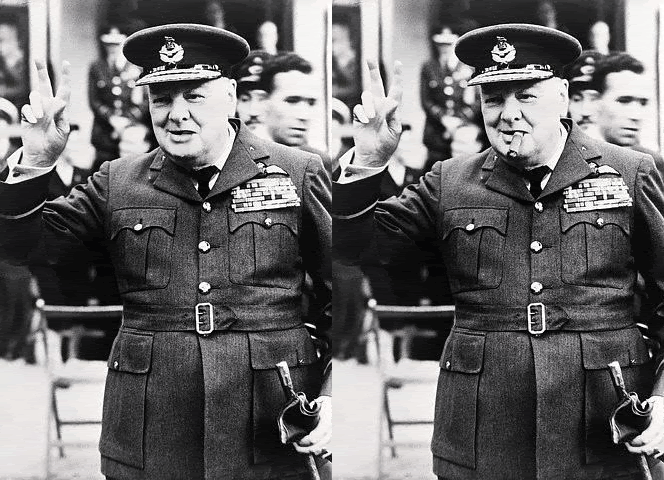
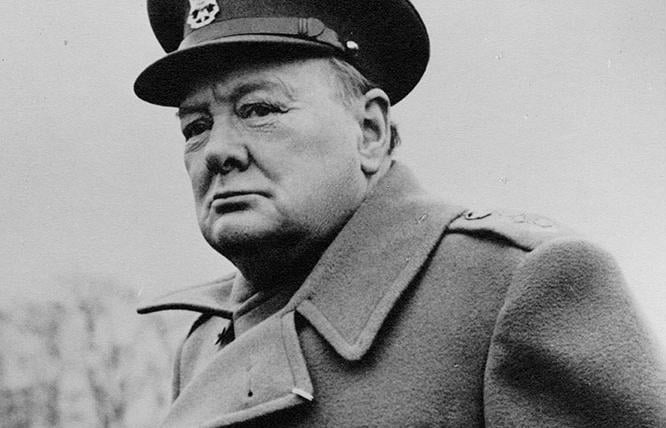
Winston Churchill: Britain’s “greatest Briton” left a legacy of global conflict and crimes against humanity

I do not admit for instance, that a great wrong has been done to the Red Indians of America or the black people of Australia. I do not admit that a wrong has been done to these people by the fact that a stronger race, a higher-grade race, a more worldly wise race to put it that way, has come in and taken their place.”
     — Winston Churchill, 1937
Sir_Winston_S_Churchill
Global Research, January 23, 2016

Sunday January 24th 2016 marks the anniversary of the death of one of the most lionized leaders in the Western world: Sir Winston Churchill.

The current British Prime Minister, David Cameron, has called Churchill “the greatest ever Prime Minister”, and Britons have recently voted him as the greatest Briton to have ever lived.

The story that British schoolbooks tell children about Churchill is of a British Bulldog, with unprecedented moral bravery and patriotism. He, who defeated the Nazis during World War II and spread civilisation to indigenous people from all corners of the globe. Historically, nothing could be further from the truth.


To the vast majority of the world, where the sun once never set on the British empire, Winston Churchill remains a great symbol of racist Western imperialist tyranny, who stood on the wrong side of history.

The myth of Churchill is Britain’s greatest propaganda tool because it rewrites Churchill’s true history in order to whitewash Britain’s past imperialist crimes against humanity. The Churchill myth also perpetuates Britain’s ongoing neo-colonial and neo-liberal policies, that still, to the is day, hurt the very people around the world that Churchill was alleged to have helped civilise.

The same man whose image is polished and placed on British mantelpieces as a symbol of all that is Great about Britain was an unapologetic racist and white supremacist. “I hate Indians, they are a beastly people with a beastly religion”, he once bellowed. As Churchill put it, Palestinians were simply “barbaric hordes who ate little but camel dung.”

In 1937, he told the Palestine Royal Commission:

“I do not admit for instance, that a great wrong has been done to the Red Indians of America or the black people of Australia. I do not admit that a wrong has been done to these people by the fact that a stronger race, a higher-grade race, a more worldly wise race to put it that way, has come in and taken their place.”

It is unsurprising that when Barack Obama became President, he returned to Britain a bust of Churchill which he found on his desk in the Oval office. According to historian Johann Hari, Mr. Obama’s Kenyan grandfather, Hussein Onyango Obama, was imprisoned without trial for two years and was tortured on Churchill’s watch, for daring to resist Churchill’s empire.

Apart from being an unrepentant racist, Churchill was also a staunch proponent of the use of terrorism as a weapon of war.

During the Kurdish rebellion against the British dictatorship in 1920, Churchill remarked that he simply did not understand the “squeamishness” surrounding the use of gas by civilized Great Britain as a weapon of terror. “I am strongly in favour of using gas against uncivilised tribes, it would spread a lively terror,” he remarked.

In the same year, as Secretary of State for War, Churchill sent the infamous Black and Tans to Ireland to fight the IRA. The group became known for vicious terrorist attacks on civilians which Churchill condoned and encouraged.

While today Britons celebrate Churchill’s legacy, much of the world outside the West mourns the legacy of a man who insisted that it was the solemn duty of Great Britain to invade and loot foreign lands because in Churchill’s own words Britain’s “Aryan stock is bound to triumph”.

Churchill’s legacy in the Far East, Middle East, South Asia and Africa is certainly not one of an affable British Lionheart, intent on spreading civilization amongst the natives of the world. To people of these regions the imperialism, racism, and fascism of a man like Winston Churchill can be blamed for much of the world’s ongoing conflicts and instability.

As Churchill himself boasted, he “created Jordan with a stroke of a pen one Sunday afternoon,” thereby placing many Jordanians under the brutal thumb of a throneless Hashemite prince, Abdullah. Historian Michael R. Burch recalls how the huge zigzag in Jordan’s eastern border with Saudi Arabia has been called “Winston’s Hiccup” or “Churchill’s Sneeze” because Churchill carelessly drew the expansive boundary after a generous lunch.

Churchill also invented Iraq. After giving Jordan to Prince Abdullah, Churchill, the great believer in democracy that he was, gave Prince Abdullah’s brother Faisal an arbitrary patch of desert that became Iraq. Faisal and Abdullah were war buddies of Churchill’s friend T. E. Lawrence, the famous “Lawrence of Arabia”.

Much like the clumsy actions in Iraq of today’s great Empire, Churchill’s imperial foreign policy caused decades of instability in Iraq by arbitrarily locking together three warring ethnic groups that have been bleeding heavily ever since. In Iraq, Churchill bundled together the three Ottoman vilayets of Basra that was predominantly Shiite, Baghdad that was Sunni, and Mosul that was mainly Kurd.

Ask almost anyone outside of Iraq who is responsible for the unstable mess that Iraq is in today and they are likely to say one word, either “Bush” or “America”. However, if you asked anyone within Iraq who is mainly responsible for Iraq’s problems over the last half century and they are likely to simply say “Churchill”.

Winston Churchill convened the 1912 Conference in Cairo to determine the boundaries of the British Middle Eastern mandate and T.E. Lawrence was the most influential delegate. Churchill did not invite a single Arab to the conference, which is shocking but hardly surprising since in his memoirs Churchill said that he never consulted the Arabs about his plans for them.

The arbitrary lines drawn in Middle Eastern sand by Churchillian imperialism were never going to withstand the test of time. To this day, Churchill’s actions have denied Jordanians, Iraqis, Kurds and Palestinians anything resembling true democracy and national stability.

The intractable Israeli-Palestinian conflict can also be traced directly back to Churchill’s door at number 10 Downing Street and his decision to hand over the “Promised Land” to both Arabs and Jews. Churchill gave practical effect to the Balfour declaration of 1917, which expressed Britain’s support for the creation of a Jewish homeland, resulting in the biggest single error of British foreign policy in the Middle East.

Churchill’s legacy in Sub-Saharan Africa and Kenya in particular is also one of deep physical and physiological scars that endure to this day.

Of greater consequence to truth and history should be a man’s actions, not merely his words. Whilst Churchill has become one of the most extensively quoted men in the English speaking world, particularly on issues of democracy and freedom, true history speaks of a man whose actions revolved around, in Churchill’s own words, “a lot of jolly little wars against barbarous peoples”.

One such war was when Kikuyu Kenyans rebelled for their freedom only to have Churchill call them “brutish savage children” and force 150,000 of them into “Britain’s Gulag”.

Pulitzer-prize winning historian, Professor Caroline Elkins, highlights Churchill’s many crimes in Kenya in her book Britain’s Gulag: The Brutal End of Empire in Kenya. Professor Elkins explains how Churchill’s soldiers “whipped, shot, burned, and mutilated Mau Mau suspects”, all in the name of British “civilization”. It is said that President Obama’s grandfather Hussein Onyango Obama never truly recovered from the torture he endured from Churchill’s men.

The Nobel Prize-winning economist Amartya Sen has proved how in Bengal in 1943 Churchill engineered one of the worst famines in human history for profit.

Over three million civilians starved to death whilst Churchill refused to send food aid to India. Instead, Churchill trumpeted that “the famine was their own fault for breeding like rabbits.” Churchill intentionally hoarded grain to sell for profit on the open market after the Second World War instead of diverting it to starving inhabitants of a nation controlled by Britain. Churchill’s actions in India unquestionably constituted a crime against humanity.

Churchill was also one of the greatest advocates of Britain’s disastrous divide-and-rule foreign policy.

Churchill’s administration deliberately created and exacerbated sectarian fissures within India’s independence movement, between Indian Hindus and Muslims that have had devastating effects on the region ever since.

Prior to India’s independence from Britain, Churchill was eager to see bloodshed erupt in India, so as to prove that Britain was the benevolent “glue holding the nation together”. For Churchill, bloodshed also had the added strategic advantage that it would also lead to the partition of India and Pakistan. Churchill’s hope was this partition would result in Pakistan remaining within Britain’s sphere of influence. This, in turn, would enable the Great Game against the Soviet empire to continue, no matter the cost to innocent Indian and Pakistanis. The partition of India with Pakistan caused the death of about 2.5 million people and displaced some 12.5 million others.

According to writer, Ishaan Tharoor, Churchill’s own Secretary of State for India, Leopold Amery,  compared his boss’s understanding of India’s problems to King George III’s apathy for the Americas. In his private diaries Amery vented that “on the subject of India, Churchill is not quite sane” and that he didn’t “see much difference between Churchill’s outlook and Hitler’s.”

Churchill shared far more ideologically in common with Hitler than most British historians care to admit. For instance, Churchill was a keen supporter of eugenics, something he shared in common with Germany’s Nazi leadership, who were estimated estimated to have killed 200,000 disabled people and forcibly sterilised twice that number. Churchill drafted a highly controversial piece of legislation, which mandated that the mentally ill be forcibly sterilized. In a memo to the Prime Minister in 1910, Winston Churchill cautioned, “the multiplication of the feeble-minded is a very terrible danger to the race”. He also helped organise the International Eugenics Conference of 1912, which was the largest meeting of proponents of eugenics in history.

Churchill had a long standing belief in racial hierarchies and eugenics. In Churchill’s view, white protestant Christians were at the very top of the pyramid, above white Catholics, while Jews and Indians were only slightly higher than Africans.

Historian, Mr. Hari, rightfully points out, “the fact that we now live in a world where a free and independent India is a superpower eclipsing Britain, and a grandson of the Kikuyu ‘savages’ is the most powerful man in the world, is a repudiation of Churchill at his ugliest – and a sweet, ironic victory for Churchill at his best.”

Amid today’s Churchillian parades and celebratory speeches, British media and schoolbooks may choose to only remember Churchill’s opposition to dictatorship in Europe, but the rest of the world cannot choose to forget Churchill’s imposition of dictatorship on darker skinned people outside of Europe. Far from being the Lionheart of Britain, who stood on the ramparts of civilisation, Winston Churchill, all too often, simply stood on the wrong side of history.

Churchill is indeed the Greatest Briton to have ever lived, because for decades, the myth of Churchill has served as Britain’s greatest propaganda tool to bolster national white pride and glorify British imperial culture.

Garikai Chengu is a scholar at Harvard University. Contact him on garikai.chengu@gmail.com

Military operations in preparation in and around Syria. Calm before the storm?

Global Research, December 16, 2015
Voltaire Network 14 December 2015

The Western Press doesn’t have much to say about the military operations in Syria, except to affirm, without the slightest proof, that the Coalition is successfully bombing Daesh jihadists while the Russians continue to kill innocent civilians. It is in fact difficult to form a reasonable idea of the current situation, particularly since each side is readying its weapons in preparation for a wider conflict. Thierry Meyssan describes what is going on.

The silence surrounding the military operations in Iraq and Syria does not mean that the war has ground to a halt, but that the different protagonists are preparing for a new round of hostilities.

The Coalition forces

On the imperial side, there reigns a state of total confusion. With regard to the contradictory declarations by US leaders, it is impossible to understand Washington’s objectives, if indeed there are any. At the very best, it would seem that the United States are allowing France to take certain initiatives at the head of one part of the Coalition, but even there, we do not know their real objectives.

Of course, France declares that it wants to destroy Daesh in retaliation for the attacks of the 13th November in Paris, but it was already saying so before these attacks took place. Their earlier declarations were the stuff of public relations, not reality. For example, the Mecid Aslanov, property of Necmettin Bilal Erdoğan’s BMZ Group, left the French port of Fos-sur-Mer on the 9th November 2015, having just delivered, in total impunity, a cargo of oil which it claimed had been extracted in Israël, but which in reality had been stolen by Daesh in Syria. There is nothing to indicate that the situation is any different today, or that we should begin taking the official declarations seriously.

French President François Hollande and his Minister of Defence Jean-Yves Le Drian visited the aircraft-carrier Charles-De-Gaulle, off the coast of Syria, on the 4th December. They announced a change of mission, but gave no explanation. As Army Chief of Staff General Pierre de Villiers had previously stated, the ship was diverted to the Persian Gulf.

The aeronaval Group constituted around the Charles-De-Gaulle is composed of its on-board aerial Group (eighteenRafale Marine, eight modernised Super Etendard, two Hawkeye, two Dauphin and one Alouette III), the aerial defence frigateChevalier Paul, the anti-submarine frigate La Motte-Picquet, the command flagship Marne, the Belgian frigate Léopold Ier and the German frigate Augsburg, and also, although the Minister of Defence denies it, a nuclear attack submarine. Attached to this group, the stealth light frigate Courbet remained in the western Mediterranean.

The European forces have been integrated into Task Force 50 of the USNavCent, in other words the US Central Command fleet. This unit now comprises about sixty ships.

The French authorities have announced that rear-admiral René-Jean Crignola has taken command of this international force, without mentioning that he is placed under the authority of the commander of the 5th Fleet, rear-admiral Kevin Donegan, who is himself under the authority of General Lloyd J. Austin III, commander of CentCom. It is in truth an absolute rule of the Empire that the command of operations always falls to US officers, and that the Allies only occupy auxiliary positions. In fact, apart from the relative promotion of the French rear-admiral, we find ourselves in the same position as last February. We have an international Coalition which is supposed to be fighting Daesh, and which – for an entire year – has certainly multiplied its reconnaissance flights and destroyed Chinese oil installations, but without having the slightest effect on its official objective, Daesh. Here too, there is no indication that anything will change.

The Coalition has announced that it has carried out new bombing missions and destroyed a number of Daesh installations, but these allegations are unverifiable and even more doubtful insofar as the terrorist organisation has not made the slightest protest.

From this disposition, we may conclude that France may elaborate its own strategy, but that the United States can re-assert control at any time.

The terrorist forces

We could deal here with the terrorist organisations, but that would involve pretending, like NATO, that these groups are independent formations which have suddenly materialised from the void, with all their salaries, armement and spare parts. More seriously, the jihadists are in fact mercenaries in the service of Turkey, Saudi Arabia and Qatar – it seems that the United Arab Emirates have almost completely withdrawn from this group – to which we must add certain multinationals like Academi, KKR and Exxon-Mobil.

Turkey continues its military deployement in Bachiqa (Irak), in support of the Kurdish forces of illegitimate President Massoud Barzani who, although his mandate is terminated, refuses to leave power and organise new elections. When the Iraqi government demanded that Turkey remove its troops and tanks, Ankara responded that it had sent its soldiers to protect the training forces deployed in Iraq according to an earlier international agreement, and that it had no intention of withdrawing them. It then added even more, bringing the number of troops involved to at least 1,000 soldiers and 25 tanks.

Iraq referred its case to the United Nations Security Council and the Arab League, without provoking the slightest reaction anywhere.

Turkey and the ex-governor of Mosul, Atheel al-Nujaifi, would like to be present when the city is taken from Daesh, hoping to be able to prevent it from being occupied by the Popular Mobilisation Forces (al-Hashd al-Shaabi), the great majority of whom are Shia.

It’s clear that everyone is dreaming – illegitimate President Massoud Barzani believes that no-one will question his annexation of the oil fields of Kirkuk and the Sinjar mountains – the leader of the Syrian Kurds, Saleh Muslim, imagines that he will soon be President of an internationally-recognised pseudo-Kurdistan – and President Recep Tayyip Erdoğan presumes that the Arabs of Mosul long to be liberated and governed by the Turks, as they were under the Ottoman Empire.

Furthermore, in Ukraine, Turkey has deployed the International Islamist Brigade that it officially created last August. These jihadists, who were extracted from the Syrian theatre, were divided into two groups as soon as they arrived in Kherson. Most of them went to fight in Donbass with the Cheikh Manour and Djokhar Doudaïev Brigades, while the best elements were infiltrated into Russia in order to sabotage the Crimean economy, where they managed to cut all electricity to the Republic for 48 hours.

Saudi Arabia united its mercenaries in Riyadh in order to constitute a delegation in readiness for the next round of negotiations organised by the NATO Director of Political Affairs, US neo-Conservative Jeffrey Feltman.

The Saudis did not invite the representatives of Al-Qaïda, nor those of Daesh, but only the Wahhabist groups who are working with them, like Jaysh al-Islam or Ahrar al-Sham. Therefore, in theory, there were no « terrorist groups », as listed by the UNO Security Council, present at the conference. However, in practice, all the participants were fighting with, in the name of, or alongside Al-Qaïda or Daesh without using their label, since most of these groups are directed by personalities who once belonged to Al-Qaïda or Daesh. Thus, Ahrar al-Sham was created just before the beginning of the events in Syria by the Muslim Brotherhood and the principal leaders of Al-Qaïda, drawn from personalities close to Osama bin Laden.

Continuing to act as they had before the Russisan intervention, the participants agreed to a « political solution » which would start with the abdication of the democratically-elected President Bachar el-Assad, and continue with a sharing of power between themselves and the Republican institutions. Thus, although they have lost all hope of a military victory, they persist in counting on the surrender of the Syrian Arab Republic.

Since the representative of the Syrian Kurds was not invited to the conference, we may conclude that Saudi Arabia considers the project for a pseudo-Kurdistan as distinct from the future of the rest of Syria. Let us note in passing that the YPG has just created a Syrian Democratic Council in order to reinforce the illusion of an alliance between Selah Muslim’s Kurds and the Sunni and Christian Arabs, when in reality, they are fighting each other on the ground.

In any case, there is no doubt that Riyadh is supporting Turkey’s efforts to create this pseudo-Kurdistan as a place of banishment for « its » Kurds. Indeed, it is now confirmed that Saudi Arabia supplied the logistical aid necessary for Turkey to guide the air-air missile which shot down the Russian Soukhoï 24.

Finally, Qatar is still pretending that it has not been involved in the war since the abdication of Emir Hamad, two years ago. Nonetheless, proof is accumulating of its secret operations, all of which are directed not against Damascus, but against Moscow – thus, the Qatari Minister of Defence, in Ukraine at the end of September, bought a number of sophisticated Pechora-2D anti-air weapons which the jihadists could use to threaten Russian forces. More recently, he organised a false-flag operation against Russia. Still in Ukraine, at the end of October, he bought 2,000 OFAB 250-270 Russian fragmentation bombs and dispersed them on the 6th December over a camp of the Syrian Arab Army, in order to accuse the Russian Army of blundering. In this case too, despite the proof, there was no reaction from the UNO.

The patriotic forces

The Russian forces have been bombing the jihadists since the 30th September. They plan to continue at least until the 6th January. Their action is aimed principally at destroying the bunkers built by these armed groups and the totality of their logistical networks. During this phase, there will be little evolution on the ground other than a withdrawal of jihadists towards Iraq and Turkey.

The Syrian Arab Army and its allies are preparing a vast operation for the beginning of 2016. The objective is to provoke an uprising of the populations dominated by the jihadists, and to take almost all the cities in the country simultaneously – with the possible exception of Palmyra – so that the foreign mercenaries will fall back to the desert. Unlike Iraq, where 120,00 Sunnis and Ba’athists joined Daesh only to exact revenge for having been excluded from power by the United States in favour of the Chiites, rare are the Syrians who ever acclaimed the « Caliphate ».

On the 21st and 22nd November, in the Mediterranean, the Russian army took part in excercises with its Syrian ally. As a result, the airports of Beirut (Lebanon) and Larnaca (Cyprus) were partially closed. On the 23rd and 24th November, the firing of Russian missiles on Daesh positions within Syria provoked the closing of the airports at Erbil and Sulaymaniyah (Iraq). It seems that in reality, the Russian army may have been testing the possible extension of its weapon that inhibits NATO communications and commands. In any case, on the 8th December, the submarine Rostov-on-Don fired on Daesh installations from the Mediterranean.

Russia, which disposes of the air base at Hmeymim (near Lattakia), also uses the air base of the Syrian Arab Army in Damascus, and is said to be building a new base at al-Shayrat (near Homs). Besides this, some high-ranking Russian officers have been carrying out scouting missions with a view to creating a fourth base in the North-East of Syria, in other words, close to both Turkey and Iraq.

Finally, an Iranian submarine has arrived off the coast of Tartus.

Hezbollah, who demonstrated their capacity to carry out commando operations during their liberation of the Sukhoï pilot held prisoner by militias organised by the Turkish army, are preparing the uprising of Shia populations, while the Syrian Arab Army – which is more than 70% Sunni – is concentrating on the Sunni populations.

The Syrian government has concluded an agreement with the jihadists of Homs, who have finally accepted to either join up or leave. The area has been evacuated under the control of the United Nations, so that today, Damascus, Homs, Hama, Lattakia and Der ez-Zor are completely secure. Aleppo, Idlib and Al-Raqqah still need to be liberated.

Contrary to peremptory affirmations by the western Press, Russia has no intention of leaving the north of the country to France, Israël and the United Kingdom so that they can create their pseudo-Kurdistan. The patriot plan forsees the liberation of all the inhabited areas of the country, including Rakka, which is the current « capital of the Caliphate ».

This is the calm before the storm.

Islamic State (ISIL) based in Northern Syria: A Wahhabi colony of Saudi Arabia?

Al Nusra and ISIS’ rise to prominence was not the result of US foreign policy backfiring in Syria, it was the result of US foreign policy working precisely as planned.
Global Research, December 16, 2015
New Eastern Outlook 16 December 2015
terror jihad mi5 cops

ISIS’ ideological source code can be found among America’s allies in Riyadh.  A recent confab of so-called “Syrian rebels” took place recently in Saudi Arabia. Those attending included a collection of dysfunctional expatriate “opposition” leaders as well as commanders from various militant groups operating in Syria including Ahrar al-Sham and Jaysh al-Islam – both affiliates of Al Qaeda’s Al Nusra Front – a US State Department designated foreign terrorist organization since 2012.

The BBC in its article, “Syria conflict: Divided opposition begins unity talks in Riyadh,” would report:

More than 100 Syrian rebels and opposition politicians are meeting in Riyadh in an attempt to come up with a united front for possible peace talks.

As the conference in the Saudi capital began, one of the most powerful rebel groups struck an uncompromising tone.

Ahrar al-Sham insisted President Bashar al-Assad would have to face justice.

It also criticised the presence of Syria-based opposition figures tolerated by Mr Assad and the absence of al-Qaeda’s affiliate in the country.

In other words, Ahrar al-Sham openly wanted Al Qaeda’s Al Nusra Front in Riyadh as well – and along with Jaysh al-Islam, the only other militant group mentioned by name by the BBC as attending the confab – reveals that the entire so-called “opposition” are all direct affiliates of Al Qaeda – fighting alongside Al Qaeda on the battlefield and supporting them politically off of it.

Ahrar al-Sham and Jaysh al-Islam are part of the US and Saudi Arabia’s wider shell game in which they train, fund, arm, and back Al Qaeda terrorists under a myriad of varying and constantly shifting aliases and front groups. The result has been Al Qaeda and ISIS’ otherwise inexplicable rise upon and domination of the battlefield, not to mention a large and steady stream of US-provided weaponry and vehicles “falling into” Al Qaeda’s hands.

Al Qaeda’s Rise in Syria was the Plan All Along 

Al Qaeda’s original inception itself was a joint product of US-Saudi geopolitical ambitions. The Muslim Brotherhood, destroyed and scattered in Syria by Syrian President Bashar Al Assad’s father, President Hafez Al Assad, was reorganized and sent to Afghanistan by the US and Saudi Arabia to fight a proxy war against the Soviet Union in the 1980s.

Since then, the group has serendipitously found itself engaged on every battlefield and in every region the US has sought to influence, whether it was in the Balkans and Chechnya, across the Middle East and North Africa (MENA), or even as far flung as Southeast Asia.

During the US occupation of Iraq, Al Qaeda would find itself playing a pivotal role dividing Iraqis against one another and confounding what was at first a unified Shia’a-Sunni front against the occupation. Terrorists were funded by Saudi Arabia and brought in from across the MENA region, including from the now infamous terror capital of Benghazi Libya, through NATO-member Turkey, and with the help of Syria’s future opposition, through Syrian territory and finally into Iraq.

In 2007, it would be revealed that the US and Saudi Arabia were openly conspiring to use these terrorists again, this time to overthrow the governments of Syria and Iran. Pulitzer Prize-winning journalist Seymour Hersh in his 2007, 9 page report, “The Redirection,” would spell out in great detail not only how this was being planned, but the sectarian bloodbath it would almost certainly precipitate.

Come 2011, when the first shots were fired in the Syrian conflict, those who have been paying close attention to Al Qaeda knew that from the very beginning, Hersh’s prophetic report was finally being fulfilled. The sectarian bloodbath he predicted in 2007, became a horrific reality from 2011 onward, and there was no question that after the West’s intentionally deceptive spin regarding just who the opposition was faded, it would emerge that it was Al Qaeda all along.

In fact, the US State Department’s own statement designating Al Nusra as a foreign terrorist organization admits that even from the beginning, it was conducting nationwide operations.

The statement would claim:

Since November 2011, al-Nusrah Front has claimed nearly 600 attacks – ranging from more than 40 suicide attacks to small arms and improvised explosive device operations – in major city centers including Damascus, Aleppo, Hamah, Dara, Homs, Idlib, and Dayr al-Zawr. During these attacks numerous innocent Syrians have been killed. Through these attacks, al-Nusrah has sought to portray itself as part of the legitimate Syrian opposition while it is, in fact, an attempt by AQI to hijack the struggles of the Syrian people for its own malign purposes.

The last point is particularly interesting, since not only did the US State Department claim Al Nusra sought to portray itself as part of the legitimate Syrian opposition, groups the US claims are the legitimate opposition have also attempted to portray Al Nusra as such.

Al Nusra and ISIS’ rise to prominence was not the result of US foreign policy backfiring in Syria, it was the result of US foreign policy working precisely as planned.

Hersh’s article would claim that US and and Saudi efforts to create an armed opposition with which to overthrow the Syrian government would have the predictable consequence of “the bolstering of Sunni extremist groups that espouse a militant vision of Islam and are hostile to America and sympathetic to Al Qaeda.”

And that is precisely what happened.

ISIS is a Wahhabi Colony 

Having failed to overwhelm Syria in the opening phases of the proxy war in 2011, “deconstructing Syria” is the secondary objective. Carving out a region influenced by Washington’s principle Kurdish proxy, Masoud Barzani, and a Saudi-Qatari-Turkish sphere of influence dominated by Al Qaeda appear to be the current focus of Western ambitions in the region. A divided, weakened Syria still serves the purpose of further isolating and weakening Iran in the region.

Saudi Arabia has proved over the decades to be an extremely pliable client state. Attempts to replicate this, even on a smaller scale in Syria and Iraq would be ideal. Having a Saudi-Qatari-Turkish arc of influence from the Black Sea to the Persian Gulf would be as ideal for Washington as a Shia’a arc of influence would be to Syria, Lebanon’s Hezbollah, Iran, and Russia.

ISIS then, serves as a means to “colonize” parts of Iraq and Syria with the very same toxic ideology that has prevailed for so long in Riyadh – Wahhabism – an extreme perversion of Islam created to serve the House of Saud’s own interests as far back as the 1700s.

Wahhabism was a means to indoctrinate and differentiate followers from mainstream Islam. This was necessary because its primary sponsors, the House of Saud, sought to use it as a means of achieving regional conquests and long-term regional domination. It green-lighted forms of barbarism, violence, and war strictly prohibited under Islam and relatively absent among the Saudis’ neighbors.

It has been used ever since as a means of filling the House of Saud’s rank and file with obedient, eager extremists ready to fight unquestionably for Saudi Arabia’s self-serving interests, and constitutes the cornerstone upon which the Saudis and their sponsors on Wall Street and in Washington maintain their grip on power within their borders, and influence the world beyond them. ISIS then, represents the export of this toxic ideology, not in the form of a shadowy terrorist group, but as a full-fledged army and “state.” The similarities between ISIS and the House of Saud, even superficially, are difficult to ignore.

Saudi Arabia beheads offenders of all kinds, ISIS beheads offenders of all kinds. Saudi Arabia does not tolerate opposition of any kind, ISIS doesn’t tolerate opposition of any kind. Women, minorities, and political enemies are stripped of anything resembling human rights in Saudi Arabia, and likewise by ISIS. In fact, besides geographical location, it is difficult to make and distinction at all between the two. That the two are inexorably linked politically, financially, ideologically, and strategically makes the case that the so-called “Islamic State” is actually nothing more than a Wahhabi colony, all the more compelling.

What is perhaps more damning than this superficial examination, or even deductions made regarding ISIS’ obvious logistical lines leading to NATO-member Turkey and Saudi Arabia itself, is the fact  that official documents from the US Department of Intelligence Agency (DIA), drafted in 2012 (.pdf) quite literally admitted:

If the situation unravels there is the possibility of establishing a declared or undeclared Salafist principality in eastern Syria (Hasaka and Der Zor), and this is exactly what the supporting powers to the opposition want, in order to isolate the Syrian regime, which is considered the strategic depth of the Shia expansion (Iraq and Iran).

To clarify just who these “supporting powers” were that sought the creation of a “Salafist principality,” the DIA report explains:

The West, Gulf countries, and Turkey support the opposition; while Russia, China, and Iran support the regime.

It is clear that – just as was planned since 2007 regarding the rise of Al Qaeda in Syria – the rise of a “Salafist” (Islamic) “principality” (State) was planned and pursued by the United States and its allies, including, and specifically Turkey and Saudi Arabia – with Turkey supplying logistical support, and Saudi Arabia supplying the ideological source code.

For those wondering why the United States has spent over a year bombing Syria allegedly to “fight ISIS” but has yet to make any progress, the fact that the US intentionally created the organization to gut Syria and would like to delay the liquidation of the terrorist army as long as possible until that occurs may provide a viable explanation.

For those wondering why Russia and the regime in Ankara are on the brink of war just as ISIS’ supply lines near the Turkish border with Syria are threatened, the fact that Turkey created and has gone through extraordinary measures to ensure those lines are maintained may also be a viable explanation.

And for those wondering why Saudi Arabia is inviting obvious accomplices of Al Qaeda to its capital, Riyadh, for a confab about Syria’s future, it is precisely because Saudi Arabia played a leading role in creating Al Qaeda as a means of influencing Syria’s future to begin with – a conspiracy it is still very much, clearly involved in and a conspiracy the United States doesn’t seem troubled leading along.

Tony Cartalucci, Bangkok-based geopolitical researcher and writer, especially for the online magazineNew Eastern Outlook”.   

French say Assad must go, President Assad responds “No thanks, Get serious”

Global Research, November 20, 2015
Activist Post 19 November 2015
assad Paris

Even after the Paris attacks, an elaborate false flag operation that saw well over a hundred innocent civilians brutally murdered by the hands of ISIS-linked NATO patsies (and apparently unwilling patsies), the French government is holding to the nonsensical line that Bashar al-Assad, the number one enemy of ISIS, must step down and relinquish power.

France’s President Francois Hollande recently stated that Syrian President Bashar al-Assad could never be part of the solution because he was part of the problem, despite the fact that the problem was one that was created by the hands of NATO countries, notably France itself.

Indeed, before the crisis even got fully underway in Syria in 2011, France and the rest of NATO were already deeply engaged in divvying up the spoils of war in Libya, a country that NATO and France helped destroy and return to the living standards of a time before civilization.

Thus, Assad was quite right when he responded to a question about Hollande’s statement by asking, “was Hollande assigned by the Syrian population to speak on their behalf?” Of course he wasn’t. And neither was Obama or Merkel or Cameron. Nor was anyone else (although Putin seems to be doing a pretty good job of doing so at the moment).

Regardless, as Assad points out, it is an act of unmitigated arrogance to suggest that the government of France, which is not even popular at home, has the moral or legal right to deem and determine the government of the Syrian people, particularly when the Syrian people have demonstrated time and time again that Bashar al-Assad is their preferred leader.

Assad was also quite right to call out France and Hollande, as well as the entire Western world, on their crocodile tears being shed over the “Syrian people” and their “human rights” when these same nations are allies with some of the most brutal, autocratic, and un-democratic nations on the face of the earth such as the Gulf State Feudal monarchies of Saudi Arabia and Qatar.

Furthermore, it is entirely hypocritical and intentionally deceptive for France to ever complain about anyone being part of the problem when it comes to the acts committed by ISIS since France itself has played a major role in the funding, arming, training, and directing of ISIS fighters on the ground in Syria under a myriad of names and guises.

It is this very reason that Assad responded to the question of what message he may have for Hollande and Foreign Minister Fabius by saying “My message to Hollande and Fabius – be serious when you talk about fighting terrorists.”

But, of course, Holland and Fabius are not serious about fighting terrorists and they never have been. If they were, they would never have funded them in Syria and they would never have demanded that Assad, the mortal enemy of ISIS, step down. Indeed, they would never have allowed ISIS terrorists to run rampant with their plans at Charlie Hebdo or the Bataclan when it was clearly within the power of French intelligence to stop the attacks. France would have long ago demanded that the Jarablus corridor in Northern Syria on the Turkish border be closed. But France, Hollande, and Fabius never did any of those things. In fact, they have consistently done the opposite, proving that France is serious about imperialism, not fighting terror.

Below is the transcript of Assad’s interview with the French Magazine Valeurs Actuelles, so that readers may understand the position of the Syrian President and the cognitively dissonant nature of the propaganda coming from the West regarding both ISIS and Assad.

*

Interview with Bashar Al-Assad of Syria with Valeurs Actuelles:

Question 1: I want to have your comment on this: when our President Mr. Hollande, said that President Assad couldn’t be the solution because he was part of the problem. Does this represent a general view for you, and how you see this? What’s your reaction?

President Assad: First, the first part of my reaction is: was Hollande assigned by the Syrian population to speak on their behalf? That is the first question. Would you as a French citizen accept a similar comment from any other politician in this world, to say that President Hollande shouldn’t be the French President? Isn’t it a humiliation to the French people? We look at it the same way. It’s a humiliation to the Syrian people when he says such a thing. Doesn’t it mean that he doesn’t recognize them?

Second, for France as a country that’s always proud of its traditions and the principles of the French Revolution and maybe democracy and human rights, the first principle of that democracy is that peoples have the right to decide who leads them. So, it’s a shame on him, for somebody who represents the French population, to do and say something which is against the principles of the French republic and the French people. Second, it’s a shame on him to try to humiliate a population with a civilized, long, deep history for thousands of years like the Syrian people. So, that’s my reaction, and I think it will not affect the facts in Syria, because the facts will not be affected by certain statements.

Question 2: If you had a message, one message, for Mr. Hollande and Mr. Fabius, especially after what happened yesterday in Paris? Is it “please cut your relations urgently with Qatar and Saudi Arabia?”

President Assad: My message to Hollande and Fabius.. be serious when you talk about fighting terrorists

First of all, this message has many aspects. The first part of this message is a question: are they independent to send them a message they can implement? Actually, the French policy these days is not independent of the American one. This is first. So, sending a message will lead nowhere. In spite of that, if I have a hope that there will be some political change in France, the first one is go back to the real, independent, friendly politics of France toward the Middle East and toward Syria. Second, be away from the American, how to say, methodology, of double standards. So, if you want to support the Syrian people – allegedly – regarding democracy and freedom, it’s better to support the Saudi people first.

If you have a problem about democracy with the Syrian state, how could you have good relations and friendship with the worst states in the world, the most underdeveloped states in the world which are the Saudi and Qatari states? So, this contradiction doesn’t give credibility.

Third, it’s natural for any official to work for the sake and interest of his people. The question that I ask in any message is: did the French policy during the past five years bring any good to the French people? What is the benefit? I’m sure the answer is no, and the proof of that answer is what I said a few years ago, that messing with the fault line in Syria is messing with an earthquake that will reverberate in the rest of the world, first of all in Europe because we are the backyard of Europe, geographically and geopolitically, so that time they said “are you threatening?” I didn’t, and Charlie Hebdo happened at the beginning of this year, and I said after that incident that this is only the tip of the iceberg, and what happened yesterday is another proof. So, they need to change their policy toward the interests of their people, and this is where we’re going to have the same interests with the French population, mainly fighting terrorism. So, the final message is: be serious when you talk about fighting terrorists. That’s my message.

Question 3: French experts say that terrorists are certainly being trained in the Middle East, and we have a lack of information. What would be necessary to have that kind of cooperation between Paris and Damascus?

President Assad: You need first of all seriousness. If the French government is not serious about fighting terrorism, we wouldn’t waste our time cooperating with a country, or a government, let’s say, with an institution that is supporting terrorism. First of all, you need to change your policy, to have one standard regarding this and not multiple standards, and to have that country be part of an alliance with countries that only fight terrorism, not countries that support terrorism and are fighting terrorism. This is a contradiction. So, these are the first basics of having any cooperation. We would like to have this kind of cooperation, not only with France, but with any country, but this cooperation needs an atmosphere. It needs certain criteria, and needs certain conditions.

Question 4: And in the future, if the government changes, would it be possible?

President Assad: In politics you don’t have friendship and emotions, you have interests. That’s my role as a politician, and that’s their role as politicians in your country. It’s not whether they like Assad or don’t like him, it’s not whether I like Hollande or not. It’s not about that. My job is about what is best for the Syrians, and what is best for the French, that’s our job. So, in the future we don’t have a problem. The problem is the policies, not the emotions.

Question 5: You just met President Putin. I mean, I don’t want to ask you what he said to you, but I want to ask you; when somebody said that Putin is the last guy who defends the West, would you say that? That Putin is the last head of state who defends the Christian-Western civilization?

President Assad: So he defends Western Europe?

Question 6: Exactly.

President Assad: When you talk about terrorism, it’s one arena; it’s not the Syrian, Libyan, Yemeni and French arenas. It’s one arena. So, the incentive behind the Russian coalition that they announced a few months ago before they sent their military to Syria, is that if we don’t fight terrorism in Syria, or maybe in other parts of the world, it will be hitting everywhere including Russia, so that’s correct. When you fight terrorism in Syria, you’re defending Russia and defending Europe and defending other continents. That’s correct. This has been our view for decades now, since we have been fighting against the terrorist Muslim Brotherhood in the 1970s and 1990s. We had that impression, we always asked for an international coalition for fighting terrorism because terrorism doesn’t recognize political borders, doesn’t care about procedures. No matter what procedure you took in France after Charlie Hebdo, what happened yesterday proves that theory. So, that’s correct and that’s very precise; whoever fights terrorism, not only Putin, whoever fights terrorism somewhere, will protect the rest of the world.

Question 7: There is a conference in Vienna about Syria, and also tomorrow in Ankara with the G20, and at several times different presidents have said “the solution is Bashar Assad has to leave Syria.” Are you ready, personally, to leave power if it could be the best solution to protect Syria?

President Assad: This is a two-part question. The first part, is there anything I have to do in response to any foreign request? My answer is no. I will not do it, no matter what that request is; small, big, important, not important, because they have nothing to do with the Syrian decision. The only thing they did so far is to support terrorists in different ways, by [providing an] umbrella and by direct support. They could only create problems; they are not part of the solution. Those countries, whoever supports terrorists, are not part of the solution in Syria. So, whatever they say, we don’t respond because we don’t care about them, to be frank.

Second, for me, as a Syrian, I have to respond to any Syrian will. Of course, when I talk about Syrian will, there must be a kind of consensus, the majority of the Syrians, and the only way to know what the Syrians want is through the ballot box. This is second. Third, for any president, to come and go, in any state that respects itself, respects its civilization and respects its people, is through a political process that reflects the constitution. The constitution will bring the president and the constitution will make him leave, through the parliament, through elections, through referendum, and so on. This is the only way for the president to come and go.

Question 8: What are all these talks about that the only solution not only for Syria; Iraq and Lebanon: partition? We hear much, you know, this is what you talk about, secular and sectarian. But there is a lot of talk everywhere, you know that better than us, about Syria with the coast, and Iraq too, and Lebanon. What is you feeling about that?

President Assad: The impression that they try to give in the Western media is that the problem in this region is a civil war between different components, religions, and ethnicities that don’t want to live with each other. So, why don’t they divide their country? This is where they can stay. Actually, the problem is not like this, because now, under the government’s control in Syria, you can see that all these components live with each other a normal life, a natural life. So, if you want to make division, you have to create clear lines between the components, whether between sects, or between ethnicities. In that case, if you’re going to have that situation, if the region reaches that situation, I will tell you that the situation is going to be small states fighting with each other, never-ending wars for maybe centuries. Any situation like this means constant wars. For the rest of the world it means more sources of exporting instability and terrorism around the world. That’s the situation. So, this is a very dangerous way of thinking. We don’t have the incubator now, the social incubator for such partition. Actually, if you ask any Syrian now, whether they are with the government or against the government, they will tell you that we are supporting the unity of Syria.

Question 9: You spoke about the constitution. In several months, you will have elections inside Syria. Are you ready to have international observers for these elections?

President Assad: Yes, but we said international observation doesn’t mean UN organizations that have no credibility, to be frank, because they are under the control of the Americans and the West in general. So, when you talk about international observation or participation or cooperation, it means certain countries around the world that were not biased during the crisis, that didn’t support the terrorists, didn’t try to politicize their position toward what’s happening in Syria. Those are the countries that can participate in such coordination or observation, but we don’t have a problem with the principle.

Question 10: We talked about Qatar and Saudi Arabia, but we didn’t talk about Turkey, and they let go in Europe hundreds of thousands of refugees, and it seems that they let go in Syria jihadists. So, what is the role of Turkey?

President Assad: The most dangerous role, in the whole situation, because Turkey offered all kinds of support to those terrorists, and all the spectrums of the terrorists. Some countries support al-Nusra Front, which is Al Qaeda, some other countries support ISIS, while Turkey supports both, and other groups at the same time. They support them with, how to say, human resources, they recruit. They support them with money, logistics, armaments, surveillance, information, and even the maneuvers of their military through their borders during the fights in Syria. Even the money that’s being collected from the rest of the world passes through Turkey, and the oil that ISIS sells is through Turkey, so Turkey is playing the worst part of our crisis.

Second, that’s related directly to Erdogan himself and Davutoglu, because they both reflect the real ideology that they carry in their hearts, which is the Muslim Brotherhood ideology.

Question 11: You think he is Muslim Brotherhood?

President Assad: Not necessarily to be organized, but the mentality, a hundred percent. He cares a lot about politicized Islam which is the opportunistic part of Islam which is not Islam actually. That’s how we look at it, because you shouldn’t politicize religion. So, it’s related directly to him, to his will to see the Muslim Brotherhood governing in the rest of the Arab world so that he can control them as a sultan, but actually more as an imam, not a sultan. That is what Turkey is playing.

Question 12: You know we are in a situation right now, yesterday night and before, Charlie Hebdo, and before and before. You said that, but I want your confirmation; you think that France cannot fight terrorism if it stays with its links with Qatar and Saudi Arabia?

President Assad: Yes. In addition, you cannot fight if you don’t have relations with the power that’s fighting ISIS or terrorism on the ground. You cannot fight terrorism while you follow or pursue the wrong politics that, at the end, in the end result, support terrorism directly or indirectly. If you don’t have all these things, no, you cannot, and we don’t think that they can, so far.

Journalists: Thank you very much, Mr. President, for this interview.

President Assad: Thank you for coming.

Brandon Turbeville – article archive here – is an author out of Florence, South Carolina. He has a Bachelor’s Degree from Francis Marion University and is the author of six books, Codex Alimentarius — The End of Health Freedom, 7 Real Conspiracies, Five Sense Solutions and Dispatches From a Dissident, volume 1 and volume 2, The Road to Damascus: The Anglo-American Assault on Syria, and The Difference it Makes: 36 Reasons Why Hillary Clinton Should Never Be President. Turbeville has published over 500 articles dealing on a wide variety of subjects including health, economics, government corruption, and civil liberties. Brandon Turbeville’s podcast Truth on The Tracks can be found every Monday night 9 pm EST at UCYTV. He is available for radio and TV interviews. Please contact activistpost (at) gmail.com.

http://www.globalresearch.ca/french-say-assad-must-go-president-assad-responds-no-thanks-get-serious/5490262

Bashar Al-Assad Interview: “Al Qaeda was created by the Americans with the help of Saudi Wahhabi money”. Turkey, Saudi Arabia, Qatar support ISIS

By SANA
Global Research, November 20, 2015
TV Channel RAI UNO 19 November 2015

Damascus, SANA-President Bashar al-Assad gave an interview to Italian TV channel RAI UNOBelow you will find the full transcript of this interview:

Question 1: Mr. President, thanks for the opportunity of talking to you. Let’s start from Paris. How did you react to the news coming from Paris?

President Assad: We can start by saying it’s a horrible crime, and at the same time it’s a sad event when you hear about innocents being killed without any reason and for nothing, and we understand in Syria the meaning of losing a dear member of the family or a dear friend, or anyone you know, in such a horrible crime. We’ve been suffering from that for the past five years. We feel for the French as we feel for the Lebanese a few days before that, and for the Russians regarding the airplane that’s been shot down over Sinai, and for the Yemenis maybe, but does the world, especially the West, feel for those people, or only for the French? Do they feel for the Syrians that have been suffering for five years from the same kind of terrorism? We cannot politicize feeling, feeling is not about the nationality, it’s about the human in general.

Question 2: There’s Daesh behind that. But from here, from this point of view, from here from Damascus, how strong Daesh is? How do you think we can fight terrorists on the ground?

President al-Assad: ISIS has no incubator in Syria 

President Assad: If you want to talk about the strength of Daesh, the first thing you have to ask is how much incubator, real incubator, natural incubator, you have in a certain society. Till this moment, I can tell you Daesh doesn’t have the natural incubator, social incubator, within Syria. This is something very good and very assuring, but at the same time, if it’s becoming chronic, this kind of ideology can change the society.

Question 3: Yes, but some of the terrorists were trained here, in Syria, just a few kilometers from here. What does it mean?

President Assad: That’s by the support of the Turks and the Saudi and Qatari and of course the Western policy that supported the terrorists in different ways since the beginning of the crisis, of course, but that’s not the issue. First of all, if you don’t have the incubator, you shouldn’t worry, but second, they can be strong as long as they have strong support from different states, whether Middle Eastern states or Western states.

Question 4: Mr. President, there are speculations in the West, that say that you were one of who supported Daesh in the beginning of the crisis, because of dividing the opposition, because of dividing the rebels. How do you react?

President al-Assad: Al Qaeda was created by the Americans

President Assad: Actually, according to what some American officials said, including Hillary Clinton, Al Qaeda was created by the Americans with the help of Saudi Wahabi money and ideology, and of course, many other officials said the same in the United States. And ISIS and al-Nusra, they are offshoots of Al Qaeda. Regarding ISIS, it started in Iraq, it was established in Iraq in 2006, and the leader was al-Zarqawi who was killed by the American forces then, so it was established under the American supervision in Iraq, and the leader of ISIS today, who is called Abu Bakr al-Baghdadi, he was in the American prisons, and he was put in New York in their prisons, and he was released by them. So, it wasn’t in Syria, it didn’t start in Syria, it started in Iraq, and it started before that in Afghanistan according to what they said, and Tony Blair recently said that yes, the Iraqi war helped create ISIS. So, their confession is the most important evidence regarding your question.

Question 5: Mr. President, watching the map of Syria, it seems that Syrian-Iraqi borders doesn’t exist anymore. Which part of Syria do you really control at the moment?

2

President Assad: If you’re talking geographically, it’s changing every day, but the most important thing is how much of the population are under the government’s control. Actually, most of the area that’s being controlled by the terrorists has been evacuated either by the terrorists, or because the people fled to the government control. There’s the question of how much of the Syrian population still supports the government? Militarily, you can win ground, you can lose some area, but anyway the army cannot exist everywhere in Syria. But looking to the map that you described, and what I see from time to time in the Western media, when they show you that the government controls 50% or less of their ground, actually 50 or 60% of Syria is empty ground, where you don’t have anyone, so they put it under the control of the terrorists, while it’s empty, fully empty.

Question 6: Yes, I spoke about the borders between Syria and Iraq.

President Assad: Exactly. After Damascus toward Iraq, it’s empty space, it’s empty area, so you cannot talk about its control. But regarding the borders, it’s only related to the terrorists; it’s related to the governments that supported the terrorists like the Turkish government first of all, and the Jordanian government. Both governments support terrorists, that’s why you have loose borders, because when you want to have controlled borders, it needs to be controlled from both sides, not from one sides.

Question 7: Well, the last weekend there have been two very important meetings talking about the situation in Syria, in Vienna and in Antalya. Most countries are talking about the transition in Syria. There are different positions, but basically most of the countries agree with the idea of elections in 18 months. But they also say that in the meantime, basically, you should leave. What’s your position about that?

President al-Assad: The main part of Vienna statement is that everything regarding the political process is about what the Syrians are going to agree upon

President Assad: No, in the statement there is nothing regarding the president. The main part of Vienna is that everything that is going to happen regarding the political process is about what the Syrians are going to agree upon, so the most output of that phrase is about the constitution, and the president, any president, should come to his position and leave that position according to constitutional procedures, not to the opinion of any Western power or country. So, as long as you are talking about the consensus of the Syrians, forget about the rest of Vienna. Regarding the schedule, that depends on the agreement that we can reach as Syrians. If we don’t reach it in 18 months, so what? You have many things that I think are trivial now, or let’s say, not essential. The most important part is that we’re going to sit with each other then we’re going to put our schedule and our plan as Syrians.

Question 8: I understand, but do you consider it an option, the possibility to leave power? I mean, do you imagine an electoral process without you?

President Assad: It depends. What do you mean by electoral? Do you mean at the parliament or the president?

Question 9: At the parliament.

President Assad: At the parliament, of course, there’s going to be parliamentarian elections because the parliamentarian elections is going to show which power of the political powers in Syria has real weight among the Syrian people, which one has real grassroots. Now, anyone can say “I’m opposition.” What does it mean, how do you translate it? Through the elections, and the seat that they can get in the parliament will tell how much they can have in the coming government, for example. Of course, that will be after having a new constitution. I’m just putting a proposal, for example, now, I’m not giving you the thing that we have agreed upon yet.

Question 10: And about the presidential [elections]?

President Assad: The presidential… if the Syrians, in their dialogue, they wanted to have presidential elections, there’s nothing called a red line, for example, regarding this. But it’s not my decision. It should be about what the consensus is among the Syrians.

Question 11:But, there could be someone else that you trust, participating in the process of elections instead of you.

President Assad: Someone I trust? What do you mean by someone I trust?

Question 12: I mean someone else in which you trust that can make this job.

President Assad: [laughs] Yeah, but it looks like talking about my private property, so I can go and bring someone to put in my place. It’s not a private property; it’s a national issue. A national issue, only the Syrians can choose someone they trust. Doesn’t matter if I trust someone or not. Whoever the Syrians trust will be in that position.

President al-Assad: Terrorists are main obstacle of any real political advancement

Question 13: Let me see if I understood well. Which is the real timetable, which is exactly your timetable, I mean the realistic timetable to get out of this crisis?

President Assad: The timetable, if you want to talk about schedule, this timetable starts after starting defeating terrorism. Before that, there will be no point in deciding any timetable, because you cannot achieve anything politically while you have the terrorists taking over many areas in Syria, and they’re going to be – they are already they main obstacle of any real political advancement. If we talk after that, one year and a half to two years is enough for any transition. It’s enough. I mean if you want to talk about first of all having a new constitution, then referendum, then parliamentarian elections, then any kind of other procedure, whether presidential or any other thing, doesn’t matter. It won’t take more than two years.

Question 14: There’s something else about the opposition; in these years, you said that you couldn’t consider as an opposition those who are fighting. Did you change your mind?

President Assad: We can apply that to your country; you don’t accept any opposition that are holding machineguns in your country. That’s the case in every other country. Whoever holds a machinegun and terrorizes people and destroys private or public properties or kills innocents and whoever is a terrorist, he’s not opposition. Opposition is a political term. Opposition could be defined not through your own opinion; it could be defined only through the elections, through the ballot box.

Question 15: So what do you consider opposition at the moment? Political opposition?

President Assad: I mean, ask the Syrians who they consider opposition. If they elect them, they are the real opposition. So that’s why I said we can define, we can give definition to this after the elections. But if you want to talk about my own opinion, you can be opposition when you have Syrian grassroots, when you belong only to your country. You cannot be opposition while you are formed as person or as entity in the foreign ministry of another country or in the intelligence building of other countries. You cannot be a puppet, you cannot be a surrogate mercenary; you can only be a real Syrian.

President al-Assad: Every Syrian citizen who leaves this country, is a loss to Syria

Question 16:Now in Europe, in Italy, we see so many Syrians coming, Syrian refugees, they are refugees. What would you like to tell these fleeing people, to you escaping people?

President Assad: Of course I would say everyone who leaves this country, is a loss to Syria. That’s for sure, and we feel sad, we feel the suffering, because every refugee in Syria has a long story of suffering within Syria, and that’s what we should deal with by asking the question “why did they leave?” For many reasons. The first one, the direct threat by terrorists. The second one is the influence of terrorists in destroying many of the infrastructure and affecting the livelihood of those people. But the third one, which is as important as the influence of terrorists, is the Western embargo on Syria. Many of those, if you ask him “do you want to go back to Syria” he wants to go back right away, but how can he go back to Syria while the basics of his life, his livelihood, has been affected dramatically, so he cannot stay in Syria. The embargo influence of the West and the terrorist influence has put those people between the devil and the deep blue sea.

Question 17: But don’t you feel in any way responsible for what has happened to your people?

President Assad: You mean myself?

Question 18: Yes.

President Assad: The only thing that we did since the beginning of the crisis is fighting terrorism and supporting dialogue. What else can we do? Does anyone oppose the dialogue? Does anyone oppose fighting terrorism? If you want to talk about the details, and about propaganda in the West, we shouldn’t waste our time. It’s just propaganda, because the problem from the very beginning with the West is that they don’t need this president, they want this government to fail and collapse, so they can change it. Everybody knows that. The whole Western game is regime-change, regardless of the meaning of regime; we don’t have a regime, we have a state, but I’m talking about their concept and their principle. So, you can blame whoever you want, but the main blame is on the West who supported those terrorists who created ISIS in Syria and created al-Nusra because of the umbrella that they gave to those terrorist organizations.

Question 19: So no responsibility?

President Assad: Of course, as a Syrian, no, I’m not saying that we don’t do mistakes. You have mistakes on the tactical level that you do every day in your work, and you have strategies. And the strategies, we adopted these two approaches, but on the tactical level, you do many mistakes every day. Every Syrian is responsible for what happened. We are responsible as Syrians, when we allow these terrorists to come to Syria, because of some Syrians who have the same mentality, and some Syrians who accepted to be puppets to the Gulf states and to the West. Of course we’re taking responsibility, while if you want to talk about my responsibility, it’s something you talk about details. I mean it’s difficult to judge now.

Question 20: I would like to ask you: how was your trip to Moscow?

President Assad: It was a trip to discuss the military situation, because it happened nearly two weeks after the Russians started the airstrikes, and to discuss the political process, because it was, again, a few days before Vienna 1. It was very fruitful, because the Russians understand very well this region, because they have historical relations, they have embassies, they have all kinds of necessary relations and means to play a role. So, I can describe it by fruitful visit.

Question 21: From Rome, from the Vatican, the Pope said that killing in the name of God is a blasphemy. And the question, first of all, is this war really a war of religion?

President Assad: No, actually, no. It’s not a religious war. It’s between people who deviated from the real religion, mainly of course, Islam, towards extremism, which we don’t consider as part of our religion. It’s a war between the real Muslims and the other extremists. This is the core of the war today. Of course, they give it different titles; war against Christians, war about other sects. This is only headlines the extremists use to promote their war, but the real issue is the war between them and the rest of the Muslims, the majority who are mainly moderate.

Question 22: Even if they kill in the name of God? They kill saying Allah Akbar?

President Assad: Exactly, that’s how they can promote their war. That’s why they use these holy words or phrase, in order to convince the other simple people in this region that they are fighting for Allah, for God, which is not true. And some of them, they use it with knowing that this is not true, and some of them are ignorant and they believe that this is a war for God. That’s the deviation, that’s why I said it’s a deviation; they are people who deviated from real Islam with knowing or without knowing.

Question 23: And what about the future of Christian people in Syria, in your country?

President Assad: Actually, this region, I think most of the Italians and many in the West know that this is a moderate region, a moderate society, especially Syria, whether politically or socially and culturally, and the main reason why we have this moderation is because we have this diversity in sects and ethnicities. But one of the most important factors is the Christian factor in the history of Syria, especially after Islam came to this region14 centuries ago. So, without them, this region will move more toward extremism. So, their future is important, but you cannot separate it from the future of the Syrians, it’s not separated. I mean, if you have a good future for the Syrians, the future of every component of our society will be good, and vice versa.

Question 24: Okay, so there’s a future for them here, because there seems to be a target in this war on Christian people.

President Assad: Not really, actually the number of Muslims that have been killed in Syria is much, much more than the Christians, so you cannot say there’s a target. Again, it’s only used by the extremists in order to promote their war, that it’s against the “atheists” and it’s for God and so on, but in reality, no.

Question 25: Mr. President, before the end of this interview, let me ask you one more question. How do you see your future? Do you consider the more important the future of Syria, or you staying in power?

President Assad: It’s self-evident; the future of Syria is everything for us. I mean, even my future cannot be separate, as a citizen. As a citizen, if my country is not safe, I cannot be safe. If it’s not good, I cannot have a good future, so that’s self-evident. But again, if you want to put them against each other, it’s like saying “if the president is here, the future of Syria is bad. If the president leaves, the future of Syria is good.” That’s the Western propaganda. Actually, that’s not the case within Syria. Within Syria, you have people who support that president, you have people who don’t support that president, so when my future is good for Syria, if the Syrian people want me as president, the future will be good. If the Syrian people don’t want me, and I want to cling to power, this is where for me being as president is bad. So it’s very simple. So, we don’t have to follow the Western propaganda to answer according to that propaganda, because it’s disconnected from reality. I have to answer you according to our reality.

Journalist: Okay, thank you, Mr. President. Thank for this opportunity.

President Assad: Thank you for coming to Syria.

The secret ISIS safe havens nobody wants you to know about

From New Eastern Outlook
by Gordon Duff
9-23-15

With recent talk of mysterious Russian forces inside Syria, forces no one has been able to locate, including Syrian President Assad, wondrous possibilities open to redress the both regional and global threat that ISIS represents.

It isn’t just the ISIS safe havens, certainly the many ISIS bases, prison camps and slave markets set up inside Turkey. It goes much further and a stronger military involvement by Russia could make lightning strikes against these terror centers a reality.

The legal precedents were set during Vietnam and, particularly, during the War on Terror, rendition, secret prisons, assassinations and drone attacks on facilities, now a useful tool when deployed against terror supporters across the Middle East, Europe and North America.

Only when we decide to get tough on real terrorists and use the legal tools the United States government has granted the world, can we finally be safe, just as Dick Cheney had wanted for us all.

Last week Syrian artillery began decimating hundreds of ISIS fighters fleeing their last hiding places in Zabadani, scene of a month long battle with Syrian and Hezbollah forces, one of a string of successes in reducing the dwindling ISIS footprint in that beleaguered nation.

Within minutes, forward air controllers among the fleeing fear-struck terrorists called for air support. There American built F16 fighters took off from ISIS held bases inside Israel and silenced the Syrian Army artillery position north of Damascus.

This has happened many times and been reported many times, never with any attempt at denial.

Back in 1970, a famous American military strategist and political advisor named Henry Kissinger was faced with a similar situation. American forces inside South Vietnam were being attacked from strongholds inside the neighboring nation of Cambodia.

First, Kissinger sent in B52’s to carpet-bomb the region. Then Kissinger announced a US invasion of Cambodia, May 1970, with tens of thousands of American troops entering that country legally, by American standards, going after the militant forces that now constitute the legal government of a reunited Vietnam.

Daraa Province in Southern Syria has been plagued with forces trained inside Jordan at CIA camps entering Syria and butchering thousands of civilians. These forces leaving Jordan fly the black flag of ISIS. Managing their operations is a command center outside of Amman, Jordan, staffed with US, Jordanian, Israeli and Saudi officers.

The large logistical facility that handles both trucked and air dropped supplies for ISIS in both Syria and Iraq is staffed by members of MEK, a pseudo-Islamic cult established during the 1960s in Iran by the Mossad, the same group responsible for fighting alongside Saddam against Iran and gassing 30,000 Kurds to death between 1991 and 1993.

From October 2014 onward, an endless stream of top of the line TOW missiles has been shipped by Raytheon Corporation to US Army supply depots. There is no record of end user certificates transferring these to any other nation.

These missiles ended up at a US Air Force Base in Constanta, Romania. From there, they were flown to Tbilisi, Georgia and from there trucked by British Petroleum and Bechtel Corporation through Turkey and into Syria where they were turned over to al Nusra/al Qaeda forces.

More high tech weaponry paid for by the American taxpayer was flown into a US Air Force Base in Adana, Turkey. From there it was trucked to an ISIS/al Nusra logistics facility run by the Turkish Army in the town of Rehanli, Hatay, Turkey, only miles from ISIS bases inside the Syrian city of Aleppo.

When tracking down the TOW missiles, it was found they had been consigned to the CIA as secret supplies to the Kiev junta. Evidence is accumulating that Kiev is actively supplying ISIS with weapons and, more interestingly, actively advising and assisting with chemical warfare against the Kurds, in exchange for promises from Turkey which may include a Ukrainian gas hookup to the new Turkish/Russian southern route through Romania. Online maps showing this spur have been purged from search engines and wrapped in malware.

Going further afield in order to find terror supporters who can, according to US law, be subject to drone strikes, we can begin to finally, years later, start degrading the material supporters of ISIS, not just Senator John McCain but others as well.

We know ISIS gets considerable funding from selling stolen oil. We also know who is running this for them; British Petroleum and Exxon Corporation.

These terror supporters are vulnerable, they have tanker fleets that can be seized and assets around the world. Were Exxon headquarters in Irving, Texas or several of their terrorist operational centers north of Houston at the Woodlands to be hit by the Delta Force aided by Russian Spetznaz, it would be the first real step in a very real war on global terror. Is America ready for that?

Remember, it is American law that makes everyone involved subject to non-judicial killing.

Let’s not forget the theft of Syrian and Iraqi antiquities. Interpol has carefully traced thousands of items worth hundreds of millions of dollars into auction houses in London, New York, Vienna, Paris and Berlin.

Nearly every major house has some terrorist items with some well-known houses taking major positions in terrorist finance.

Basically, here is the plan using American strategic and legal precedents:

  • At the outset, a No Fly Zone has to be established over Israel until ISIS run air facilities can be put out of action. It can be safely assumed that any air traffic over Israel may be terrorist, perhaps including airliners which can be stuffed with bio weapons or nuclear waste from Dimona.
  • A string of lighting attacks, over a period of two to three years, will be needed to degrade the terror infrastructure inside Turkey. Chemical weapons facilities, training camps, air bases, all need to be taken out before ISIS can be beaten.
  • Terror camps and command centers in Jordan will require the heaviest munitions as some are deeply hidden underground including those inside the new Saudi Arabian “embassy” complex outside Amman.
  • Rendition teams will be hitting auction houses, banks, boardrooms and newspaper offices around the world, ferreting out terror supporters, just as the US had done after 9/11.
  • There are dozens of NGOs (Non-Governmental Organizations) like the Syrian Human Rights Observatory in London which operates public relations for ISIS and dozens of others, some operating as refugee aid fronts that traffic in jihadists, human slavery and narcotics. All must be brought to justice.

America has to be given credit for using some of the greatest legal minds the world has seen, bringing them together, all members of the noted Federalist Society, and putting together the laws that will bring ISIS to its knees.

That America, though poor judgement, kidnapped and assassinated almost entirely innocent people under these provisions is unfortunate. Perhaps others will do better.

Gordon Duff is a Marine combat veteran of the Vietnam War that has worked on veterans and POW issues for decades and consulted with governments challenged by security issues. He’s a senior editor and chairman of the board of Veterans Today, especially for the online magazine “New Eastern Outlook”.
First appeared: http://journal-neo.org/2015/09/23/the-secret-isis-safe-havens-nobody-wants-you-to-know-about/

Russian consulate bombed and looted in Yemen; Saudis prohibit Russian plane to evacuate embassy staff

Posted on Fort Russ

Aden, Yemen
April 2, 2015

Translated by Kristina Rus
The Shiite rebels attacked and looted the Russian Consulate in Aden. They broke down the door of the Consulate building, and looted the consulate property and office equipment. The militants loaded the equipment and documents into cars and fled in an unknown direction. At the time of the attack there were no workers in the Russian Consulate.

Earlier the Russian Consulate in Aden was damaged in the bombing of the largest city in the South of Yemen by Arab coalition led by Saudi Arabia. This was reported by the Russian Embassy in Yemen.

The source admitted that there was not a single window left in the building. He added that the Russian Consulate may be closed and Russian citizens evacuated.

On Wednesday, April 1, a Russian plane was not allowed to board on the territory of Yemen in order to evacuate the citizens of the Russian Federation. In early March the UN international staff was evacuated from Yemen. Germany, Japan, USA and Turkey already announced about suspending embassy operations.

A Russian plane is waiting at Cairo airport for permission to land in Sana’a. It has to evacuate Russian diplomats and Russian women who are married to the Yemenis. Despite the prior agreement, Saudi Arabia still does not allow the Russian plane to land in Sana’a.

Defending the dollar imperialism: gas-dollar link drives Ukraine war

By Mike Whitney
Counterpunch, December 1, 2014

“The Fed’s ‘need’ to take on an even more active role as foreigners further slow the purchases of our paper is to put the pedal to the metal on the currency debasement race now being run in the developed world — a race which is speeding us all toward the end of the present currency regime.”
Stephanie Pomboy, MacroMavens

“No matter what our Western counterparts tell us, we can see what’s going on. NATO is blatantly building up its forces in Eastern Europe, including the Black Sea and the Baltic Sea areas. Its operational and combat training activities are gaining in scale.”
Russian President Vladimir Putin

If there was a way the United States could achieve its long-term strategic objectives and, at the same time, avoid a war with Russia, it would so. Unfortunately, that is not an option, which is why there’s going to be a clash between the two nuclear-armed adversaries sometime in the near future.

Let me explain: The Obama administration is trying to rebalance US policy in a way that shifts the focus of attention from the Middle East to Asia, which is expected to be the fastest growing region in the coming century. This policy-change is called the “pivot” to Asia. In order to benefit from Asia’s surge of growth, the US plans to beef up its presence on the continent, expand its military bases, strengthen bilateral alliances and trade agreements, and assume the role of regional security kingpin. The not-so-secret purpose of the policy is China “containment”, that is, Washington wants to preserve its position as the world’s only superpower by controlling China’s explosive growth. (The US wants a weak, divided China that will do what it’s told.)

In order to achieve its goals in Asia, the US needs to push NATO further eastward, tighten its encirclement of Russia, and control the flow of oil and gas from east to west. These are the necessary preconditions for establishing US hegemonic rule over the continent. And this is why the Obama administration is so invested in Kiev’s blundering junta-government; it’s because Washington needs Poroshenko’s neo Nazi shock troops to draw Russia into a conflagration in Ukraine that will drain its resources, discredit Putin in the eyes of his EU trading partners, and create the pretext for deploying NATO to Russia’s western border.

The idea that Obama’s proxy army in Ukraine is defending the country’s sovereignty is pure bunkum. What’s going on below the surface is the US is trying to stave off irreversible economic decline and an ever-shrinking share of global GDP through military force. What we’re seeing in Ukraine today, is a 21st century version of the Great Game implemented by political fantasists and Koolaid drinkers who think they can turn the clock back to the post WW2 heyday of the US Empire when the world was America’s oyster. Thankfully, that period is over.

Keep in mind, the glorious US military has spent the last 13 years fighting sheep herders in flip-flops in Afghanistan in a conflict that, at best, could be characterized as a stalemate. And now the White House wants to take on Russia?

Can you appreciate the insanity of the policy?

This is why Secretary of Defense Chuck Hagel was sacked last week, because he wasn’t sufficiently eager to pursue this madcap policy of escalating the wars in Afghanistan, Iraq, Syria and Ukraine. Everyone knows it’s true, the administration hasn’t even tried to deny it. They’d rather stick with foam-at-the-mouth buffoons, like Susan Rice and Samantha Powers, then a decorated veteran who has more credibility and intelligence in his little finger than Obama’s whole National Security team put together.

So now Obama is completely surrounded by rabid warmongering imbeciles, all of whom ascribe to the same fairytale that the US is going to dust-off Russia, remove Assad, redraw the map of the Middle East, control the flow of gas and oil from the ME to markets in the EU, and establish myriad beachheads across Asia where they can keep a tight grip on China’s growth.

Tell me, dear reader, doesn’t that strike you as a bit improbable?

But, of course, the Obama claque think it’s all within their grasp, because, well, because that’s what they’ve been told to think, and because that’s what the US has to do if it wants to maintain its exalted position as the world’s lone superpower when its economic significance in the world is steadily declining. You see, here’s the thing: The exceptional nation is becoming more unexceptional all the time, and that’s what has the political class worried, because they see the handwriting on the wall, and the writing says, “Enjoy it while it lasts, buddy, cuz you ain’t gonna be numero uno much longer.” Continue reading