CONFIRMED: U.S. “operation rooms” backing Al Qaeda in Syria

“For those that fail to see how Syria is linked to the survival of many nations beyond its borders and the very concept of a multi-polar world built upon the concept of national sovereignty, they invite not just Damascus’ defeat, but that of the world as we know it.”

By Tony Cartalucci
May 11, 2015
New Eastern Outlook

US policy think-tank Brookings Institution confirms that contrary to propaganda, US-Saudi “moderates” and Turkey-Qatar “Islamists” have been coordinating all along. 

The war in Syria continues to drag on, with a recent and renewed vigor demonstrated behind an opposition long portrayed as fractured and reflecting a myriad of competing foreign interests. Chief among these competing interests, the public has been told, were the US and Saudis on one side, backing so-called “moderate rebels,” and Turkey and Qatar on the other openly backing Al Qaeda and its various franchises including the Islamic State (ISIS).

However, for those following the conflict closely, it was clear from the beginning and by the West’s own admissions that success hinged on covertly providing arms, cash, equipment, and both political and military support to Al Qaeda and other sectarian extremists, not opposed by Saudi Arabia, but rather by using Saudi Arabia as the primary medium through which Western material support could be laundered.

And this fact is now confirmed in a recent article published on the Brookings Institution’s website titled, “Why Assad is losing.”

It states unequivocally that (emphasis added):

The involvement of FSA groups, in fact, reveals how the factions’ backers have changed their tune regarding coordination with Islamists. Several commanders involved in leading recent Idlib operations confirmed to this author that the U.S.-led operations room in southern Turkey, which coordinates the provision of lethal and non-lethal support to vetted opposition groups, was instrumental in facilitating their involvement in the operation from early April onwards. That operations room — along with another in Jordan, which covers Syria’s south — also appears to have dramatically increased its level of assistance and provision of intelligence to vetted groups in recent weeks.

Whereas these multinational operations rooms have previously demanded that recipients of military assistance cease direct coordination with groups like Jabhat al-Nusra, recent dynamics in Idlib appear to have demonstrated something different. Not only were weapons shipments increased to the so-called “vetted groups,” but the operations room specifically encouraged a closer cooperation with Islamists commanding frontline operations.

Overall, Brookings is pleased to report that with the infiltration and overrunning of much of Idlib in northern Syria, it appears their long-stated goal of creating a seat of power for their proxies within Syria’s borders and perhaps even extending NATO aircover over it, may finally be at hand. Brookings still attempts to perpetuate an adversarial narrative between the West and Al Qaeda, despite admitting that it was only with Western backing that recent offensives spearheaded by Al Qaeda itself were successful.

In reality, as far back as 2007, it was the admitted policy of the then Bush-led White House to begin arming and funding sectarian extremists, including Al Qaeda, through the use of intermediaries including Saudi Arabia. Veteran journalist and two-time Pulitzer Prize-winner Seymour Hersh in his report “The Redirection: Is the Administration’s new policy benefiting our enemies in the war on terrorism?“would lay bare this conspiracy which has since then unfolded verbatim as described in 2007.

The above mentioned Brookings article also alludes to a grander geopolitical landscape taking shape beyond the Syrian conflict. It states in regards to the US now openly backing what is for all intents and purposes an Al Qaeda-led offensive that:

The most likely explanation for such a move is pressure from the newly emboldened regional alliance comprising Turkey, Saudi Arabia, and Qatar. The United States also is looking for ways to prove its continued alignment with its traditional Sunni Gulf allies, amid the broader context of its rapprochement with Iran.

The continuation, even expansion of the US-backed conflict in Syria is the most telling evidence of all regarding the disingenuous nature of America’s rapprochement with Iran. The entire goal of destabilizing and potentially overthrowing the government in Syria is to weaken Iran ahead of a similar campaign of encirclement, destabilization, and destruction within Iran itself.

The fact that events in Syria are being accelerated, with Brookings itself admitting that “international and ideological differences,” have been “pushed to the side,” illustrates a palpable desperation among the West to finish the conflict in Syria in hopes of moving forward toward Iran before regional dynamics and Iran’s own defensive posture renders moot the West’s entire regional agenda, jeopardizing its long-standing hegemony across North Africa and the Middle East.

Similarly rushed operations appear to be underway in Yemen. With Western-backed conflicts embroiling virtually every nation surrounding Iran, the idea that the US seeks anything but Iran’s eventual destruction, let alone “rapprochement” must surely have no one fooled in Tehran.

While Brookings enthusiastically reports on the continued destruction in Syria it itself played a part in engineering and promoting, it still admits that overthrowing Syria’s legitimate government is not inevitable. While it attempts to portray Syria’s allies as withdrawing support for Damascus, the reality is that if and when Syria falls, Syria’s allies are indisputably next in line.

Iran will face an entire nation handed over to Al Qaeda and other heavily armed and well-backed sectarian extremists dreaming of a cataclysmic confrontation with Tehran, fueled by a global network of US-Saudi backed madrases turning out legions of ideologically poisoned zealots. And beyond Iran, Russia faces the prospect of its Caucasus region being turned into a corridor of terror aimed straight at the heart of Russia itself.

The conflict in Syria is but a single battle among a much larger war  a global war constituting what is basically a third World War, fought not upon vast but clearly defined fronts, but rather through the use of fourth generation warfare, proxies, mercenaries, economics, and information. For those that fail to see how Syria is linked to the survival of many nations beyond its borders and the very concept of a multi-polar world built upon the concept of national sovereignty, they invite not just Damascus’ defeat, but that of the world as we know it.

Tony Cartalucci, Bangkok-based geopolitical researcher and writer, especially for the online magazine New Eastern Outlook”.
http://journal-neo.org/2015/05/11/confirmed-us-operation-rooms-backing-al-qaeda-in-syria/

Poem: А на Земле быть добру! And in the world to be good!

From Bytdobru.info

А на Земле быть добру!
Быть на Земле рассвету
Песней своей эту мечту
Я разнесу по свету.
Будет она с ветром лететь
И верю воплотится.
И на ладонях птицы
Будут свободно петь.

Олесь из Любоистока

And in the world to be good!
Be on Earth at dawn
The song of those that dream
I’ll blow over the world.
It will fly with the wind
And I believe be embodied.
And on our hands the birds
Will be free to sing.

Oles of Lyuboistoka


http://gazeta.bytdobru.info/statya/737-press-konferentsiya-v-itar-tass-s-v-megre-o-dvizhenii-v-podderzhku-rodovyh-pomestii-rossii

This is an amazing website.
http://bytdobru.info/
There was a way to translate the pages, but it seemed to be missing this time.

Engdahl: Why I wept at the Russian parade

Posted on New Eastern Outlook, May 13, 2015
by F. William Engdahl

k1Bs7ECqu7dOvKwnTmbImqhKFrofL6Zd

Something extraordinary just took place in Russia and it may have moved our disturbed world one major step nearer to peace and away from a looming new world war. Of all unlikely things, what took place was a nationwide remembrance by Russians of the estimated 27 to perhaps 30 million Soviet citizens who never returned alive from World War II. Yet in what can only be described in a spiritual manner, the events of May 9, Victory Day over Nazism, that took place across all Russia, transcended the specific day of memory on the 70th anniversary of the end of World War II in 1945. It was possible to see a spirit emerge from the moving events unlike anything this author has ever witnessed in his life.

The event was extraordinary in every respect. There was a sense in all participants that they were shaping history in some ineffable way. It was no usual May 9 annual show of Russia’s military force. Yes, it featured a parade of Russia’s most advanced military hardware, including the awesome new T-14 Armata tanks, S-400 anti-missile systems and advanced Sukhoi Su-35 fighter jets. It was indeed impressive to watch.

The military part of the events also featured for the first time ever elite soldiers from China’s Peoples’ Liberation Army marching in formation along with Russian soldiers. That in itself should shivers down the spines of the neoconservative warhawks in the EU and Washington, had they any spines to shiver. The alliance between the two great Eurasian powers—Russia and China—is evolving with stunning speed into a new that will change the economic dynamic of our world from one of debt, depression, and wars to one of rising general prosperity and development if we are good enough to help make it happen.

During his visit, China’s President XI, in addition to his quite visible honoring of the Russian Victory event and its significance for China, met separately with Vladimir Putin and agreed that China’s emerging New Silk Road high-speed railway infrastructure great project will be integrated in planning and other respects with Russia’s Eurasian Economic Union which now consists of Russia, Belarus, Kazakhstan and Armenia with several prospective candidates waiting to join. While it may seem an obvious step, it was not at all certain until now.

The two great Eurasian countries have now cemented the huge oil and gas deals between them, the trade deals and the military cooperation agreements with a commitment to fully integrate their economic infrastructure. Following his meeting with Xi, Putin told the press, “The integration of the Eurasian Economic Union and Silk Road projects means reaching a new level of partnership and actually implies a common economic space on the continent.”

It’s Zbigniew Brzezinski’s worst geopolitical nightmare come to fruition. And that, thanks to the stupid, short-sighted geopolitical strategy of Brzezinski and the Washington war faction that made it clear to Beijing and to Moscow their only hope for sovereign development and to be free of the dictates of a Washington-Wall Street Sole Superpower was to build an entire monetary and economic space independent of the dollar world.

The Parade of the Good

Yet the most extraordinary part of the day-long events was not the show of military hardware at a time when NATO is not only rattling sabres at Russia, but even intervening militarily in Ukraine to provoke Russia into some form of war.

What was extraordinary about the May 9 Victory Day Parade was the citizens’ remembrance march, a symbolic parade known as the March of the Immortal Regiment, a procession through the streets of Moscow into the famous and quite beautiful Red Square. The square, contrary to belief of many in the West was not named so by the “Red” Bolsheviks. It took its name from Czar Alexei Mikhailovich in the mid-17th Century from a Russian word which now means red. Similar Immortal Regiment parades involving an estimated twelve million Russians took place all over Russia at the same time, from Vladivostock to St. Petersburg to Stevastopol in what is now Russian Crimea.

In an atmosphere of reverence and quiet, some three hundred thousand Russians, most carrying photos or portraits of family members who never returned from the war, walked on the beautiful, sunny spring day through downtown Moscow into Red Square where the President’s residence, the famous Kremlin, is also located.

To see the faces of thousands and thousands of ordinary Russians walking, optimism about their future beaming from their faces, young and the very old, including surviving veterans of the Great Patriotic War as it is known to Russians, moved this writer to quietly weep. What was conveyed in the smiles and eyes of the thousands of marchers was not a looking back in the sense of sorrow at the horrors of that war. Rather what came across so clearly was that the parade was a gesture of loving respect and gratitude to those who gave their lives that today’s Russia might be born, a new, future-looking Russia that is at the heart of building the only viable alternative to a one-world dictatorship under a Pentagon Full Spectrum Dominance and a dollar system choking on debt and fraud. The entire Russian nation exuded a feeling of being good and of being victorious. Few peoples have that in today’s world.

When the television cameras zoomed in on President Vladimir Putin who was also marching, he was walking freely and open amid the thousands of citizens, holding a picture of his deceased father who had served in the war and was severely wounded in 1942. Putin was surrounded not by bulletproof limousines that any US President since the assassination of Kennedy in 1963 would have, were he even to dare to get close to a crowd. There were three or four presidential security people near Putin, but there were thousands of ordinary Russians within arm’s length of one of the most influential world leaders of the present time. There was no climate of fear visible anywhere.

My tears

My tears at seeing the silent marchers and at seeing Putin amid them was an unconscious reaction to what, on reflection, I realized was my very personal sense of recognition how remote from anything comparable in my own country, the United States of America, such a memorial march in peace and serenity would be today. There were no “victory” marches after US troops destroyed Iraq; no victory marches after Afghanistan; no victory marches after Libya. Americans today have nothing other than wars of death and destruction to commemorate and veterans coming home with traumas and radiation poisonings that are ignored by their own government.

That transformation in America has come about in those same 7o years since the end of the war, a war when we–Americans and Russians, then the Soviet Union of course—had fought side-by-side to defeat Hitler and the Third Reich. Today the Government of the United States is siding with and backing neo-nazis in Ukraine to provoke Russia.

I reflected how much my countrymen have changed over those few decades. From the world’s most prosperous nation, the center of invention, innovation, technology, prosperity, in the space of seven decades we have managed to let our country be ruined by a gaggle of stupid and very rich oligarchs with names like Rockefeller, Gates, Buffett and their acolytes in the Bush dynasty. Those narcissistic oligarchs cared not a whit for the greatness of the American people, but saw us as a mere platform to realize their sick dream of world dominion.

We let that happen.

I’ll let you in on a secret that I recently discovered. The American oligarchs ain’t all-powerful; they ain’t some new Illuminati or gods as some try to convince us. They ain’t omniscient. They get away with murder because we allow them. We are hypnotized by their aura of power.

Yet were we to stand tall and clear in the open and say, “These silly would-be Emperors have no clothes!,” their power would evaporate like cotton candy in hot water.

That’s what they’re terrified of. That’s why they are deploying the US Armed Forces into Texas to stage war games aimed at US citizens; that’s why they have torn up the Constitution and Bill of Rights after 911. That’s why the Created a Department of Homeland Security. It’s why they try to terrify our citizens to vaccinate with untested Ebola or other vaccines. It’s why they are desperate to control free expression of political ideas in the Internet.

Now, when I reflect on the true state of America today compared with Russia, it brings tears. Today the economy of the USA is in ruins. It has been “globalized” by its Fortune 500 global companies and the banks of Wall Street. Its industrial jobs have been outsourced to China, Mexico, even Russia over the past 25 or so years. Investment in the education of our youth has become a politically-correct sick joke. College students must go deep into debt to private banks, some $1 trillion worth today, to get a piece of paper called a degree in order to look for non-existent jobs.

Our Washington government has become serial liars who have lied to us about the true state of the economy ever since Lyndon Johnson during the Vietnam War ordered the Commerce and Labor departments to find ways to fake the numbers to hide the developing internal economic rot. The consequence, followed by every president since, is that we live in a fairy tale world where the mainstream media tells us we are in the “sixth year of economic recovery” and have a mere 5.4% unemployment. The reality is that more than 23% of Americans today are unemployed but through clever tricks have been defined out of the statistics. Some 93 million Americans are unable to get full time work. It isn’t the fault of Obama or Bush before him or Clinton, Bush, Reagan or Jimmy Carter. It’s our own fault because we were passive; we gave them the power because we did not believe in ourselves enough. We let billionaires decide for us who will be our President and Congress because we no longer believed that we were good.

By the same token, Russians today, amid brutal Western economic and financial warfare sanctions; amid a NATO war in Ukraine that has led more than one million Russian-speaking Ukrainians to flee to Russia for safety, despite the demonization in the western media of their country, exude a new optimism about their future. What makes Vladimir Putin so extraordinarily popular, with over 83% approval, is that he acts out that growing sense of representing that Russian soul, the people who are good, being just, being right, the sense that the vast majority of Russians today have.

That was overwhelmingly visible in the faces of the May 9 marchers. You could feel that Putin on the speaker’s podium felt it when he looked into the vast crowd. It was clear when Defense Minister Shoigu, a Russian-Mongolian Tuvan-born Buddhist, respectfully and humbly made the Orthodox sign of the cross with bowed head as he passed through the Kremlin’s Saviour Tower to take his place aside Putin. As Victor Baranets, a noted Russian journalist put it: ”At that moment I felt that with his simple gesture Shoigu brought all of Russia to his feet. There was so much kindness, so much hope, so much of our Russian sense of the sacred in this gesture.“  The legendary Russian Soul was manifest on May 9 and its alive and very well, thank you.

And that’s why I shed the tears on May 9, watching hundreds of thousands of peaceful Russians walk through their capital city, the city that saw the defeat of Napoleon’s army and of Hitler’s. I was moved deeply watching them slowly and deliberately walking into the Red Square next to their President’s residence at a time when Washington’s White House is surrounded by concrete barriers, barbed wire and armed guards.

You could see it in the eyes of the Russians on the street: they knew that they were good. They were good not because their fathers or grandfathers had died defeating Nazism. They were good because they could be proud Russians, proud of their country after all the ravages of recent decades, most recently the US-backed looting during the 1990’s Harvard Shock Therapy in the Yeltsin era.

I shed tears being deeply moved by what I saw in those ordinary Russians and tears for what I felt had been destroyed in my country. We Americans have lost our sense that we are good or even perhaps again could be. We have accepted that we are bad, that we kill all around the world, that we hate ourselves and our neighbors, that we fear, that we live in a climate of race war, that we are despised for all this around the world.

We feel ourselves to be anything but good because we are in a kind of hypnosis induced by those narcissistic oligarchs to be so. Hypnosis, however, can be broken under the right circumstances. We only have to will it so.

Postscript:

The last time I wept at a public event was in November 1989 when the Berlin Wall came down and Germans—east and west—danced together on the symbol of the Cold War division between East and West, Beethoven’s Ode to Joy rang out. The German Chancellor made a speech to the Bundestag proposing the vision of a high-speed rail linking Berlin to Moscow. Then, Germany was not strong enough, not free enough from guilt feelings from the war, to reject the pressure that came from Washington. The architect of that vision, Alfred Herrhausen, was assassinated by the ‘Red Army Fraction’ of Langley, Virginia. Russia was deliberately thrown into chaos by IMF shock therapy and the criminal Yeltsin family. Today the world has a new, far more beautiful possibility to realize Herrhausen’s dream—this time with Russia, China and all Eurasia. This is what was so beautiful about the May 9 parade.

F. William Engdahl is strategic risk consultant and lecturer, he holds a degree in politics from Princeton University and is a best-selling author on oil and geopolitics, exclusively for the online magazine “New Eastern Outlook”.
First appeared: http://journal-neo.org/2015/05/13/why-i-wept-at-the-russian-parade/

European values on display as NATO and Ukraine partner in war: One for all, all for one

“If Ukraine falls, all of us will fall.”

As Ukraine is eaten with rot from within, directly supported by NATO and its financial partners,  this statement by a NATO foreign minister may be prophetic.

Beware: the NATO alliance is poisoning and stripping each country. The enemy is not outside. The NATO-allied leaders are responsible.

No one at this meeting of ministers apparently objected to the Kiev government’s actions. That means they approve of Kiev attacking its own citizens.  Who’s next?

From Stop NATO

Interfax-Ukraine
May 14, 2015
Ukraine pleased with support from NATO allies – Klimkin

Ukrainian Foreign Minister Pavlo Klimkin has said his country is pleased with the support it has received from its NATO allies, especially over its territorial integrity.

“Everyone was talking at the meeting about support for the sovereignty and territorial integrity of Ukraine,” Klimkin said on the results of a meeting of NATO foreign ministers in Antalya, Turkey.

He quoted the statement of one of the ministers who attended the meeting, which impressed him: “If Ukraine falls, all of us will fall.”

Saying it was “extremely important” to hear the messages of support and to hear messages of commitment to the reforms being carried out in Ukraine, Klimkin said: “I especially express my gratefulness to all the allies who have provided for Ukrainian military forces and the National Guard.”

https://rickrozoff.wordpress.com/2015/05/14/nato-and-ukraine-at-war-one-for-all-all-for-one/

Pentagon ready to move 24 NATO Interceptor missiles to Romania

Posted on Stop NATO, May 13, 2015

U.S. Army Europe
May 12, 2015
Aegis Ashore team finds timely solution to portable power need
By Lt. Cmdr. Mike Billips, NSF Deveselu Public Affairs

rtn_rms_sm3_pic041
Standard Missile-3 of the sort to be installed in Romania

NAVAL SUPPORT FACILITY DEVESELU, Romania: A U.S. Navy base, under construction in Romania, is using U.S. Soldiers to ensure that the second phase of the European Phased Adaptive Approach, or EPAA, to ballistic missile defense of U.S. and allied interests becomes operational on time.

President Barack Obama has mandated that the Aegis Ashore capability, in the NATO partner nation of Romania, be operational by the end of 2015.

The U.S. Army Corps of Engineers, or USACE, 249th Engineer Battalion, deployed a team and equipment to Romania on less than a week’s notice in early April. They provided an instant solution to a knotty schedule problem at Naval Support Facility, or NSF, Deveselu, the first Aegis Ashore base under construction in central Romania.

The 249th’s four generators, together with their switching gear, make up a 3.2-megawatt power plant solution to support continued progress on EPAA phase II. This “Prime Power” equipment can be deployed anywhere in the world that diesel fuel can be supplied. That was crucial for NSF Deveselu, where the U.S. Missile Defense Agency, or MDA, is building the first operational Aegis Ashore Ballistic Missile Defense system.

“They were able to provide the right power for the testing of the Aegis Weapons System,” said Capt. William Garren, commanding officer of NSF Deveselu. “If they hadn’t come, it would have cost 44 days, from the schedule, to get the system checked out and operational.”

A necessary design change meant a potential six-week delay in testing and bringing the system online, as generators were taken offline and moved to their permanent locations. Fortunately, the USACE Europe District, which oversees all military construction in the region, happened to be more than familiar with U.S. military’s portable power capabilities.

Col. Matthew Tyler, who is also the district engineer, is a former commander of the 249th, and a former commandant of the Prime Power School, which also trains Navy Mobile Utilities Support Equipment Seabees.

“While MUSE was considered first for the mission, their new equipment was not certified for air transport, which meant the Army could respond more quickly,” he said.

“It’s a strategically important project, and it warrants a greater amount of attention to ensure we can meet the presidential mandate,” Tyler said.

The successful deployment and installation of the generators took less than three weeks, from first notification of the unit, that they would deploy. The Soldiers will remain in Romania to operate the equipment until permanently installed replacements are fully operational this fall.

The solution was the result of a much longer planning and coordination process involving the Navy base and tenant command, USACE, the Missile Defense Agency, or MDA, and multiple contractors.

https://rickrozoff.wordpress.com/2015/05/13/pentagon-ready-to-move-24-nato-interceptor-missiles-to-romania/


NATO provides active support for Kiev government

“Our partnership is strong, and getting stronger.”
NATO Secretary General Jens Stoltenberg

It’s hard to imagine the trance state in which these NATO leaders live. What drugs are they consuming that render them so immune to common sense and humanity?

When they see the proof in front of their eyes of Nazism and war crimes, yet applaud and supply the ones who commit these foul deeds, what does that mean for us who live under their dictates and also pay for this war?

Stop NATO has ongoing coverage from NATO and military sources about what is taking place.

Posted on Stop NATO

North Atlantic Treaty Organization
May 13, 2015
NATO stands firm in support for Ukraine

20150513_150513k-011_rdax_775x516

NATO Foreign Ministers have reconfirmed their full support for Ukraine’s sovereignty and territorial integrity, and have called on Russia to cease its destabilisation of eastern Ukraine. Under the chairmanship of Secretary General Jens Stoltenberg, the Allied ministers met with their Ukrainian counterpart Pavlo Klimkin in a session of the NATO-Ukraine Commission in Antalya, Turkey on Wednesday (13 May 2015).

Opening remarks by NATO Secretary General Jens Stoltenberg at the start of the NATO-Ukraine Commission
“We strongly condemn Russia’s aggressive actions in eastern Ukraine” the Secretary General said, calling on Russia “to fully abide by international law.” Mr. Stoltenberg also underscored that “Russia’s annexation of Crimea is illegal and illegitimate; we do not and we will not recognize it.”

The Secretary General further expressed concerns about Russian “statements about possible future stationing of nuclear weapons and delivery systems in Crimea”. He added that NATO is “concerned by Russia’s efforts to further build up its presence in the Black Sea region,” warning that “this could have further implications on regional stability.”

On behalf of all Allies, the Secretary General called on Russia to stop destabilising eastern Ukraine; withdraw its support for the separatists; withdraw its forces and military equipment from Ukraine and along the border; and fully support a political solution.

Mr. Stoltenberg welcomed Ukraine’s efforts to promote reform and reconciliation, and urged the Ukrainian government to continue on this path.

“We strongly encourage the government of Ukraine to continue its efforts, at full speed”, the Secretary General said.

He noted that “our close cooperation will strengthen Ukraine’s ability to defend itself”.

Mr. Stoltenberg underlined that “we have stepped up our support to Ukraine on command and control; logistics; cyber defence; and rehabilitation of wounded soldiers.” He added that the Alliance has strengthened its office in Kyiv, and provided advisors to the Ukrainian government. The Secretary General further noted that “Ukraine will host a NATO-led exercise on disaster response this autumn.”

“Our partnership is strong, and getting stronger,” the Secretary General concluded.

https://rickrozoff.wordpress.com/2015/05/14/nato-fully-backs-ukraine-in-13-month-proxy-war-with-russia/

Battlefield: Black Sea; US-NATO escalation and provocation

It seems the policy now is to both prepare for war and work to ensure that it comes to fruition.

From New Eastern Outlook, May 14, 2015
By Eric Draitser

While the war in Ukraine has raged on for more than a year, the growing conflict between the US-NATO and Russia has taken on new dimensions. From economic warfare waged by the West in the form of sanctions, to the diplomatic rows over the commemoration of Victory Day in Moscow, more and more it seems that relations between East and West are fraying beyond repair. Though it may seem that this conflict is escalating into simply an extension of what was once known as the Cold War, the potential exists for a hot war of global dimensions.

Lost amid the cacophony of saber-rattling and chest-thumping in Washington and Brussels is the quietly emerging, and infinitely dangerous, military deployment in the Black Sea. Once seen as a no-go zone for the US and NATO, the Black Sea, with its expansive Russian shores, has recently become the site of a slew of provocative military moves by the US, and equally significant counter-moves by Russia. Adding fuel to this potential fire is the participation of Chinese naval assets in this quietly brewing cocktail of global conflict.

The presence of US military assets all throughout the Black Sea region is undoubtedly provocative as it is pushing perilously close to Russia’s borders. The potential for escalation – premeditated or otherwise – puts the entire region, and indeed the entire world, at risk of catastrophe.

This article will focus on the US-NATO military developments in and around the Black Sea. While by no means a comprehensive listing of all of Washington’s moves in the region, it is an attempt to provide a glimpse into a little discussed theater of deployment for the West – one that is regarded as a very serious threat by Moscow.

Washington Swimming in the Black Sea

There is no doubt that US strategy vis-à-vis Russia places tremendous strategic importance on maintaining and expanding a robust military presence in and around the Black Sea. Recent moves by the US-NATO military forces make this fact all the more apparent. Having deployed a significant amount of forces to littoral countries, as well as initiating a series of critical military exercises and drills, Washington is demonstrating unequivocally its commitment to escalating the conflict with Russia.

Nearly a year ago, in June 2014, former Defense Secretary Chuck Hagel laid bare US intentions. In the wake of President Obama’s public announcement of $1 billion to expand the US military presence in Eastern Europe, Hagel stated that the billion dollar commitment was for a “stronger presence of US ships in the Black Sea,” and that “[The US] will sustain that tempo going forward.” Put in slightly more understandable terminology, the US committed a significant monetary investment to the permanent expansion of its military presence in and around the Black Sea.

The permanence of this new commitment is what is striking because, unlike much of the bluff and bluster from Washington over Ukraine and related issues, this represents a military deployment with real tactical value. It is not mere rhetoric, it is military escalation. And, in the year since the announcement was made, this process has evolved in earnest.

The US Army is currently, or will soon be, leading a series of critical military exercises in the Black Sea. One notable one is known as Noble Partner. This series of exercises is being conducted with the de facto NATO member Georgia which has effectively become a forward arm of NATO military forces. As the official page of the US Army noted:

Noble Partner will support Georgia’s contribution of a light infantry company to NATO Response Force, or NRF… The exercise will focus on unified land operations … Exercise Noble Partner provides an opportunity for the U.S. military to continue its training relationship with the Georgian Armed Forces as the sponsor of Georgia’s participation in the NRF. The NRF provides a rapid military response force to deploy quickly, wherever needed…. Exercise Noble Partner will include approximately 600 U.S. and Georgian Service members incorporating a full range of equipment… Georgian forces will operate alongside U.S. forces with their BMP-2 Infantry Combat Vehicle. The exercise will consist of both a field training exercise and a live-fire exercise.

However, as part of the US military training, a significant amount of military hardware is being shuttled across the Black Sea in an unprecedented move by the US which has never so brazenly treated this body of water as its own backyard. As the US Army page wrote:

Fourteen Bradley Infantry Fighting vehicles and several wheeled-support vehicles, roughly 748 metric tons of steel and rubber, cut across the Black Sea…bound for the port in Batumi, Georgia, May 2. This is the first time that the U.S. Army has deployed a mechanized company worth of equipment across the Black Sea. The equipment will support the 2nd Battalion, 7th Infantry Regiment, 3rd Infantry Division Soldiers, participating in Exercise Noble Partner.

Taken in combination with Hagel’s comments a year ago, it is clear that the US is committed to escalating its military presence in the Black Sea. Of course, it is self-evident that such a strategic development must be seen as an attempt to both outgun and intimidate Russia in its traditional sphere of influence.

Additionally, and concurrent to these military exercises, is the planned Trident Joust 2015, which according to US Navy Admiral Mark Ferguson, will “test the capability of the NRF [NATO Response Force] command and control element to work at full operational capacity in a deployed location…TRIDENT JOUST 15…will reinforce the NATO Readiness Action Plan from the Wales Summit and project assurance measures to all NATO allies.” Trident Joust should be understood as an attempt to prepare NATO’s military architecture for possible rapid deployment in the Black Sea region, ostensibly as a defense against so-called Russian aggression while in reality seeking to expand NATO military capability against the backdrop of the war in Ukraine and increased tensions with Moscow.

At no time during the Cold War did the US engage in such openly hostile and belligerent actions designed more to provoke than to defend. It seems the policy now is to both prepare for war and work to ensure that it comes to fruition. As if to make it even more transparent what Washignton’s intentions are with Trident Joust, Admiral Ferguson was quoted as saying “I appreciate the efforts of Romania as we work on other measures to transform the Alliance, such as the formation of the Multinational Division Southeast and the NATO Force Integration Unit.”

There are other important military moves that the US-NATO have made in the Black Sea in recent months, all designed to send a stern warning to Russia. NATO’s Standing NATO Maritime Group Two (SNMG2) recently completed its training exercises “designed to improve interoperability and enhance rapid integration of Alliance maritime assets… The force trained on anti-air, anti-submarine and anti-surface warfare procedures during separate exercises with the Turkish, Bulgarian and Romanian navies.” As part of SNMG2, NATO deployed significant military assets to the Romanian port of Constanta, not coincidentally a short distance across the Black Sea from Crimea and Russia’s fleet at Sevastopol. Participating in the SNMG2 was the USS Vicksburg with its Mark 41 Vertical Launching System, Harpoon anti-ship missiles, and arsenal of guns. In addition were Canadian, Italian, and Turkish warships, all carrying significant firepower of their own.

Aside from these specific sets of naval exercises, the US has had major assets in and around the Black Sea to participate in a series of one-off maneuvers and a variety of drills in the past year, even before Secretary Hagel’s public announcement in June 2014. These include the recently decommissioned USS Taylor which spent much of 2014 in the Black Sea. Perhaps not so coincidentally, this US frigate is now slated for sale to Taiwan in a move that is likely to be met with disapproval in Beijing. Additionally, the USS Donald Cook, a missile destroyer, conducted exercises with the USS Taylor and Romanian Navy. Also, the USS Truxton and USS Vella Gulf both logged significant time in the Black Sea in 2014, undoubtedly motivating Russia to move quickly to ramp up its naval and military capabilities.

It is interesting to note that Russia’s moves in Crimea in 2014 came within a matter of days of the entrance into the Black Sea of these US naval assets. Anyone who doubts that Moscow’s decision to support Crimea’s vote for reunification with the Russian Federation was motivated by something other than military and strategic pragmatism would do well to examine this timeline of events.

All of this makes plain that the US and its NATO arsenal are gearing up for a “pivot” – to borrow the grossly overused terminology of the Obama administration and the Pentagon – that will see their forces focused on the Black Sea, just as they have shifted attention to the Baltic Sea even more so in recent months. It does not take exceptional powers of deduction to see what the US intends: continued escalation, force preparedness, and intimidation against Moscow. However, it is equally apparent that such provocative moves raise the risk of a misstep, an accident or misunderstanding that could touch off a major military conflict. Considering the players involved, such a blunder could spark World War 3.

A forthcoming article will focus on the countermoves that Russia is employing to confront US-NATO aggression near Russia’s borders. The article will focus specifically on the fast-developing military relationship between Russia and China.

Eric Draitser is an independent geopolitical analyst based in New York City, he is the founder of StopImperialism.org and OP-ed columnist for RT, exclusively for the online magazine “New Eastern Outlook”.
http://journal-neo.org/2015/05/14/battlefield-black-sea/

Book — Operation Gladio: The Untold Story of the Unholy Alliance Between the Vatican, the CIA, and the Mafia

Review of Paul L. Williams Book

Posted on Global Research, May 13, 2015
The Washington Book Review 26 February 2015

by Arif Jamal

After the Second World War ended, The Vatican, the CIA, the ex-Nazis, and the Sicilian/American Mafia forged an alliance to fight the Cold War against the former Soviet Union and the rising pro-Soviet governments in Europe and the rest of the world.

In a new book, Paul L. Williams offers new and disturbing evidence to expose what he calls the unholy alliance. Operation Gladio is likely to be a controversial book and may even be contested by several quarters. However, it would be difficult to reject the evidence author Paul L. Williams has provided.

The story started as early as 1942 with the formation of the Vatican Bank. The same year ONI (Office of Naval Intelligence) recruited Lucky Luciano, a pre-eminent drug lord. The Swiss director of the US Office of Strategic Services (OSS) Allen Dulles came to the conclusion, “We’re fighting the wrong enemy.” Schutzstaffel (SS) sent Dulles a message through the Vatican that the Nazi government wanted to establish a separate peace with the United States; they wanted to fight the Soviets. Dulles met Prince Max von Hohenlohe in Bern. Hohenlohe found Dulles in agreement with him. Later, Dulles also met other Nazi officials to forge the new alliance. Chief of Special Intelligence for the OSS in China Col. Paul E Helliwell thought of another unholy alliance between the US intelligence community and organized crime groups. Consequently, the US intelligence agencies got drug lord Lucky Luciano released from jail, allowed him to build his narcotic empire, and simply watched the flow of drugs into the largely black ghettos of New York and Washington. The unholy alliance of the American spies and criminals was replicated everywhere, from Laos and Burma to Marseilles and Panama.

After Richard Nixon became president in 1969, the strategy of tension gained more impetus.  National Adviser Henry Kissinger issued orders to Licio Gelli to carry out terror attacks and coup attempts. The United States and the Vatican channeled millions of dollars for these operations. Most of the money was raised in questionable ways. The first major attack in Europe took place on December 12, 1969 when a bomb went off in the lobby of Banca Nazionale Dell’ Agricoltura in Milan, Italy. Seventeen people died in the explosion. Within an hour, three bombs exploded in Rome. According to official figures, 14,591 acts of violence with a political motivation took place between January 1, 1969 and December 31, 1987. In these terror attacks, 491 people died and 1,181 were injured. A large number of terror attacks took place in other European countries from 1965 to 1981. After a series of assassination attempts to kill French President De Gaulle failed, he denounced “the secret warfare of the Pentagon” and expelled the European headquarters of NATO.

In the Latin America, the CIA and the Vatican launched Operation Condor as the Latin American version of the Operation Gladio. The label was applied very liberally by the US intelligence agencies that “any government risked being so labeled if it advocated nationalization of private industry (particularly foreign-owned corporations), radical land reform, autarkic trade policies, acceptance of soviet aid, or an anti-American foreign policy.” The CIA and the Vatican started Operation Condor in the early 1970s when Opus Dei elicited support from Chilean bishops for the overthrow of the government of President Allende. The Catholic group was closely working with the CIA-funded organizations such as the Fatherland and Liberty, which was later turned into the dreaded Chilean secret police. “In 1971, the CIA began shelling out millions to the Chilean Institute for General Studies (IGS), an Opus Dei think tank, for the planning of the revolution.” Many members of the IGS joined the government after the coup. Hernan Cubillos became the foreign minister. He was the founder of Que Pasa, an OPUS Dei magazine, and publisher of El Mercurio, the largest newspaper in Santiago which was subsidized by the CIA.

Williams shows that the Vatican was fully involved in Operation Condor. The Pope was fully behind the purging of the left wing clerics; leaders of the military junta were devout Catholics. The Vatican did not abandon General Pinochet even when he was arrested in Britain for the murder of thousands of Chileans. Vatican Secretary of State Cardinal Angelo Sodano wrote to the British government on behalf of the Pope to demand his release. Under Pinochet, hundreds of thousands Chileans had disappeared while more than four thousands had died. More than fifty thousand Chileans were tortured in the name of Catholic god. CIA’s dirty war was perpetuated in many Latin American countries with the help and blessing of the Vatican.

Williams quotes FBI whistle blower Sibel Edmonds who said,

“Between 1996 and 2002, we, the United States, planned, financed, and helped execute every major terrorist incident by Chechen rebels (and the Mujahideen) against Russia. Between 1996 and 20002, we, the United States, planned, financed, and helped execute every single uprising and terror related scheme in Xinjiang (aka East Turkistan and Uyhurstan). Between 1996 and 2002, we, the United States, planned and carried out at least two assassination schemes against pro-Russian officials in Azerbaijan.”

Operation Gladio is a highly well-researched book with some 1,100 endnotes and footnotes. This work is highly rich in details. It is an estimable scholarly and intellectual accomplishment which is unrivaled. His scholarly work fills a major lacuna in the study of the US foreign policy which was left by scholars such as Alfred McCoy, Peter Dale Scot, Martin A. Lee, Dale Yallop, and Sibel Edmonds.

Reviewed by Arif Jamal

Paul L. Williams is a journalist and author of The Vatican Exposed, Crescent Moon Rising, The Day of Islam, Osama’s revenge, and the Al-Qaeda Connection. He has written articles for The Wall Street Journal, USA Today, The Counter-Terrorist, NewsMax, and National Review. He is the winner of three first-place Keystone Press Awards for journalism. He has also served as a consultant for the FBI and as an adjunct professor of Humanities at the University of Scranton and Wilkes University.

Copyright Arif Jamal, The Washington Book Review, 2015

http://www.globalresearch.ca/the-untold-story-of-unholy-alliance-between-the-vatican-the-cia-and-the-mafia/5449288

Reposted under Fair Use Rules.

Who owns agricultural land in Ukraine?

From Oakland Institute
By Elizabeth Fraser

The fate of Ukraine’s agricultural sector is on shaky ground. Last year, the Oakland Institute reported that over 1.6 million hectares (ha) of land in Ukraine are now under the control of foreign-based corporations. Further research has allowed for the identification of additional foreign investments. Some estimates now bring the total of Ukrainian farmland controlled by foreign companies to over 2.2 million ha;1 however, research has also identified important grey areas around land tenure in the country, and who actually controls land in Ukraine today is difficult to ascertain.

The companies and shareholders behind foreign land acquisitions in Ukraine span many different parts of the world. The Danish “Trigon Agri,” for example, holds over 52,000 ha. Trigon was established in 2006 using start-up capital from Finnish “high net worth individuals.” The company is traded in Stockholm (NASDAQ), and its largest shareholders include: JPM Chase (UK, 9.5 percent); Swedbank (Sweden, 9.4 percent); UB Securities (Finland, 7.9 percent); Euroclear Bank (Belgium, 6.6 percent); and JP Morgan Clearing Corp (USA, 6.2 percent).

The United Farmers Holding Company, which is owned by a group of Saudi Arabian investors, controls some 33,000 ha of Ukrainian farmland through Continental Farmers Group PLC.

AgroGeneration, which holds 120,000 ha of Ukrainian farmland, is incorporated in France, with over 62 percent of its shares managed by SigmaBleyzer, a Texas-based investment company.

US pension fund NCH Capital holds 450,000 ha. The company began in 1993 and boasts being some of the earliest western investors in Ukraine after the break-up of the Soviet Union. Over the past decade, the company has systematically leased out small parcels of agricultural land (around two to six hectares in size) across Ukraine, aggregating these into large-scale farms that now operate industrially. According to NCH Capital’s General Partner, George Rohr, the leases give the company the right to buy the currently-leased farmland once the moratorium on the sale of land in Ukraine is lifted.

Another subset of companies have Ukrainian leadership, often a mix of domestic and foreign investment, and may be incorporated in tax havens like Cyprus, Austria, and Luxembourg. Some of them are also led by Ukrainian oligarchs. For instance, UkrLandFarming controls the country’s largest land-bank, totalling 654,000 ha of land. 95 percent of the shares of UkrLandFarming are owned by multi-millionaire Oleg Bakhmatyuk with the remaining five percent having been recently sold to Cargill.  Similarly, Yuriy Kosiuk, Ukraine’s fifth richest man, is the CEO of MHP, one of the country’s largest agricultural companies, which holds over 360,000 ha of farmland.

With the onset of the political crisis, several of these mostly Ukrainian-based companies have descended into crisis themselves. One example is Cyprus-incorporated Mriya Agro Holding, which holds a land-bank of close to 300,000 ha. In 2014, the company’s website (which is no longer available online) indicated that 80 percent of the shares of Mriya Agro Holding are/were owned by the Guta family (Ukrainian), who hold primary leadership positions in the company. The remaining 20 percent are/were listed on the Frankfurt Stock Exchange.

According to news sources, in summer 2014 the company defaulted on its payments for two large Eurobonds, putting its future into question. The company first enlisted the support of US-based Blackstone Group and Ukrainian-based Dragon Capital, both of whom withdrew support after only one month; and later, the international auditing and financial service firm, Deloitte. An international bondholder committee was struck, comprised of several US and UK-based investment groups (including CarVal Investors – Cargill’s investment arm), which together own over 50 percent of the debt owed on Mriya’s 2018 Eurobonds and 15 percent of the 2016 Eurobonds. The future of this firm is unclear with some sources suggesting a risk of bankruptcy.

Other Ukrainian-owned companies incorporated in tax havens are also experiencing difficulties. Sintal Agriculture Public Ltd (based in Cyprus, traded on the Frankfurt Stock Exchange as of 2008, and holding almost 150,000 ha of land) ceased trading in shares on January 29, 2014 “until further notice” after bankruptcy proceedings were initiated against the company. In 2013, its website (now also defunct) indicated that 36.3 percent of the company was free floating shares.

The potential bankruptcy of these corporations, and the involvement of Western investors in the crisis management, raises questions about the fate of the agricultural land they hold. At this time, it is not clear how control over the agricultural lands in question will be addressed and what the role of foreign companies and funds who have invested in these companies will be. However, if things progress in a similar way to neighboring Romania, foreign control of this land could transpire.

Romania has a similar story of dissolving collectivized farms, giving land titles to collective farm workers, and imposing a moratorium on the sale of agricultural land. Loopholes in the country’s national legislation have created opportunities for foreign control of land via bankruptcy proceedings. As documented by Judith Bouniol, the bankruptcy of national agribusinesses has provided a gateway for foreign control of Romania’s farmland.

It is far from clear if the same scenario could take place in Ukraine. However, this lesson from Romania emphasizes the importance of keeping close watch on these agricultural land deals. In addition, the murky situation around land ownership in Ukraine raises many questions. Perhaps the most important is whether the growing concentration of Ukrainian land in the hands of a few oligarchs and foreign corporations can benefit the country, its people, and its economy.

Note

1 Two land investment databases were accessed over the past year: the Land Matrix accessed in July 2014 and April 2015, and GRAIN’s 2012 data set on land investments worldwide. Taken individually, these databases suggest foreign land acquisitions of between 997,000 ha to 1.7M ha. When consolidated, individual deals reported by these databases represent over 2.2M ha of land in Ukraine.

http://www.oaklandinstitute.org/who-owns-agricultural-land-ukraine

Jeb Bush, the Mexican drug cartel and “free trade”. The Bush family and organized crime.

From Global Research, May 12, 2015
by Prof. Michel Chossudovsky

Jeb Bush is a presidential candidate.

But Jeb is not only the brother of George W. and the son of George H. W. Bush.

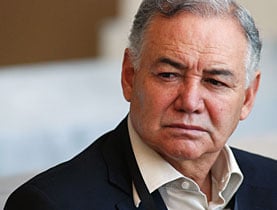
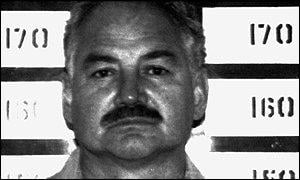
Jeb Bush also had close personal ties to Raul Salinas de Gortiari, brother of Mexico’s former president Carlos Salinas de Gortiari. In the 1990s, Raul the “drug kingpin”, according to Switzerland’s  federal prosecutor Carla del Ponte, was one of the main figures of the Mexican Drug Cartel.  

Jeb Bush  –before becoming Governor of the Sunshine State– was a close friend of Raul Salinas de Gortiari (image right):

“There has also been a great deal of speculation in Mexico about the exact nature of Raul Salinas’ close friendship with former President George Bush’s son, Jeb. It is well known here that for many years the two families spent vacations together — the Salinases at Jeb Bush’s home in Miami, the Bushes at Raul’s ranch, Las Mendocinas, under the volcano in Puebla.

There are many in Mexico who believe that the relationship became a back channel for delicate and crucial negotiations between the two governments, leading up to President Bush’s sponsorship of NAFTA.” (Prominent intellectual and former foreign Minister of Mexico Jorge G. Castañeda, The Los Angeles Times. and Houston Chronicle, 9 March 1995, emphasis added)

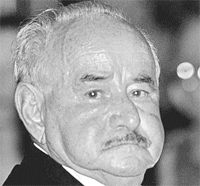
The personal relationship between the Bush and Salinas families was a matter of public record. Former President George H. W. Bush — when he worked in the oil business in Texas in the 1970s– had developed close personal ties with Carlos Salinas and his father, Raul Salinas Lozano. (left)

Raul Salinas Lozano was the family patriarch, father of Carlos and Raul Junior. According to the former private secretary to Raul Salinas Lozano (in as statement to US authorities):

“… Mr. Salinas Lozano was a leading figure in narcotics dealings that also involved his son, Raul Salinas de Gortiari, his son-in-law, Jose Francisco Ruiz Massieu, the No. 2 official in the governing Institutional Revolutionary Party, or PRI, and other leading politicians, according to the documents. Mr. Ruiz Massieu was assassinated in 1994.” (Dallas Morning News, 26 February 1997, emphasis added).

Former president George H. W. Bush and Raul Salinas Lozano were “intimo amigos”. According to former DEA official Michael Levine, the Mexican drug Cartel was a “family affair”. Both Carlos and Raul were prominent members of the Cartel. And this was known to then US Attorney General Edward Meese in 1987 one year prior to Carlos Salinas’ inauguration as the country’s president.

When Carlos Salinas was inaugurated as President, the entire Mexican State apparatus became criminalised with key government positions occupied by members of the Cartel. The Minister of Commerce in charge of trade negotiations leading up to the signing of NAFTA was Raul Salinas Lozano, father of Raul Junior the Drug kingpin and of Carlos the president.

And it is precisely during this period that the Salinas government launched a sweeping privatisation program under advice from the IMF.

The privatisation program subsequently evolved into a multibillion dollar money laundering operation. Narco-dollars were channelled towards the acquisition of State property and public utilities.

Richard Barnet of the Institute for Policy Studies, testified to the US Congress (April 14, 1994) that

“billions of dollars in state assets have gone to supporters and cronies” (Dallas Morning News, 11 August 1994).

These included the sale of Telefonos de Mexico, valued at $ 3.9 billion and purchased by a Salinas crony for $ 400 million.(Ibid).

Raul Salinas was behind the privatisation programme. He was known as ”El Señor 10 por Ciento” [Mr. 10 Percent] “for the slice of bid money he allegedly demanded in exchange for helping acquaintances acquire companies, concessions and contracts [under the IMF sponsored privatisation program”(The News, InfoLatina, .Mexico, October 10, 1997).

The North American Free Trade Agreement (NAFTA)

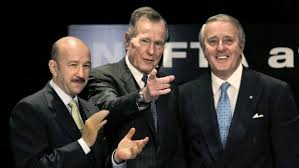
Raul Salinas de Gortiari is the brother of  former president Carlos Salinas de Gortiari, who signed the North American Free Trade Agreement (NAFTA) in December 1992 alongside US President George H. W. Bush and Canada’s Prime Minister Brian Mulroney.(image left)

In a bitter irony, it was only after this historical event, that Carlos Salinas’ family links to the drug trade through his brother Raul were revealed.

The George H. W. Bush Senior administration was fully aware of the links of the Salinas presidency to organized crime. Public opinion in the US and Canada was never informed so as not to jeopardize the signing of NAFTA:

“Other former officials say they were pressured to keep mum because Washington was obsessed with approving NAFTA”.

“The intelligence on corruption, especially by drug traffickers, has always been there,” said Phil Jordan, who headed DEA’s Dallas office from 1984 to 1994. But “we were under instructions not to say anything negative about Mexico. It was a no-no since NAFTA was a hot political football.” (Dallas Morning News, 26 February 1997)

In other words, at the time the NAFTA Agreement was signed, both Bush Senior and Mulroney were aware that one of the signatories of NAFTA, namely president Salinas de Gortiari  had links to the Mexican Drug Cartel.

In 1995 in the wake of the scandal and the arrest of his brother Raul for murder, Carlos Salinas left Mexico to take up residence in Dublin. His alleged links to the Drug Cartel did not prevent him from being appointed to the Board of the Dow Jones Company on Wall Street, a position which he held until 1997:

Salinas, who left Mexico in March 1995 after his brother, Raul, was charged with masterminding the murder of a political opponent, has served on the company’s board for two years. He was questioned last year in Dublin by a Mexican prosecutor investigating the murder in March 1994 of Luis Donaldo Colosio, who wanted to succeed Salinas as president. A Dow Jones spokesman last week denied that Salinas had been forced out of an election for the new board, which will take place at the company’s annual meeting on April 16… Salinas, who negotiated Mexico’s entry into the free trade agreement with the United States and Canada, was appointed to the board because of his international experience. He was unavailable for comment at his Dublin home last week.” (Sunday Times, London, 30 March 1997).

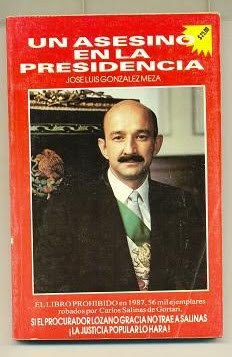
Washington has consistently denied Carlos Salinas involvement. “it was his brother Raul”, Carlos Salinas “did not know”, the American media continued to uphold Salinas as a model statesman, architect of free trade in the Americas and a friend of the Bush family.

In October 1998, The Swiss government confirmed that the brother of the former Mexican president had deposited some 100 million in drug money in Swiss banks:

“They [Swiss authorities] are confiscating the money, which they believe was part of a much larger amount paid to Raul Salinas for helping Mexican and Colombian drugs cartels during his brother’s six-year term ending in 1994. Mr Salinas’ lawyers have maintained he was legally heading an investment fund for Mexican businessmen but the Swiss federal prosecutor, Carla del Ponte, described Salinas’ business dealings as unsound, incomprehensible and contrary to customary business usage. (BBC Report)

 A few months later in January 1999, after a four-year trial, Raúl Salinas de Gortari (left) was convicted of ordering the murder of his brother-in-law, Jose Francisco Ruiz Massieu:

“After [Carlos] Salinas left office in 1994, the Salinas family fell from grace in a swirl of drug-related corruption and crime scandals. Raúl was jailed and convicted on charges of money laundering and of masterminding the assassination of his brother-in-law; after spending 10 years in jail, Raúl was acquitted of both crimes.  …

With the scandal unraveling, Jeb’s friendship with Raúl did not go unnoticed. Jeb has never denied his friendship with Raúl, who [now] keeps a low profile in Mexico.

Kristy Campbell, spokesperson for Bush, did not respond a request for comment. The Salinas family’s demise caught the Bushes by surprise. “I have been very disappointed by the allegations about him and his family. I never had the slightest hint of information that President Salinas was anything but totally honest,” Bush senior  told me in the 1997 interview. (Dolia Estevez, Jeb Bush’s Mexican Connections, Forbes, April 7, 2015, emphasis added)

“The Salinas family’s demise caught the Bushes by surprise”? (Forbes, April 2015) The Bushes knew who they were all along.

Former DEA official Michael Levine confirmed that Carlos Salinas role in the Mexican drug cartel was known to US officials.

US President George H. W. Bush was  regularly briefed by officials from the Department of Justice, the CIA and the DEA.

Did Jeb Bush –who is now a candidate for the White House under a Republican ticket– know about Raul’s links to the Drug Cartel?.

Was the Bush family in any way complicit?

These are issues which must be addressed and debated by the American public across the land prior to the 2016 presidential primary elections.

According to Andres Openheimer writing in the Miami Herald (February 17 1997):

witnesses say former Mexican president Carlos Salinas de Gortiari, his imprisoned brother Raul and other members of country’s ruling elite met with drug lord Juan Garcia Abrego at a Salinas family ranch; Jeb Bush admits he met with Raul Salinas several times but has never done any business with him.”

US authorities waited until after Carlos Salinas finished his presidential term to arrest Mexican drug lord Juan Garcia Abrego, who was a close collaborator of the president’s brother Raul. In turn, Raul Salinas was an “intimo amigo” of Jeb Bush :

Juan Garcia Abrego, a fugitive on the FBI’s most-wanted list, was flown to Houston late Monday, following his arrest by Mexican police …  Garcia Abrego, the reputed head of Mexico’s second most powerful drug cartel, had eluded authorities on both sides of the border for years. His arrest is an enormous victory for the U.S. and Mexican governments. CNN, January 16, 2015

But there is more than meets the eye: while the Bushes and the Salinas have longstanding ties, Wall Street was also involved in the laundering of drug money:

A U.S. official said the Justice Department has made significant advances in its money-laundering investigation against Raul Salinas de Gortari and has identified several people who can testify that the former first brother received protection money from a major narcotics cartel.

If the U.S. were to indict Mr. Salinas, it could have implications for a Justice Department investigation into possible money laundering by Citibank, where Mr. Salinas had some of his accounts. Citibank, a unit of Citicorp , has denied wrongdoing. (WSW, April 23, 2015)

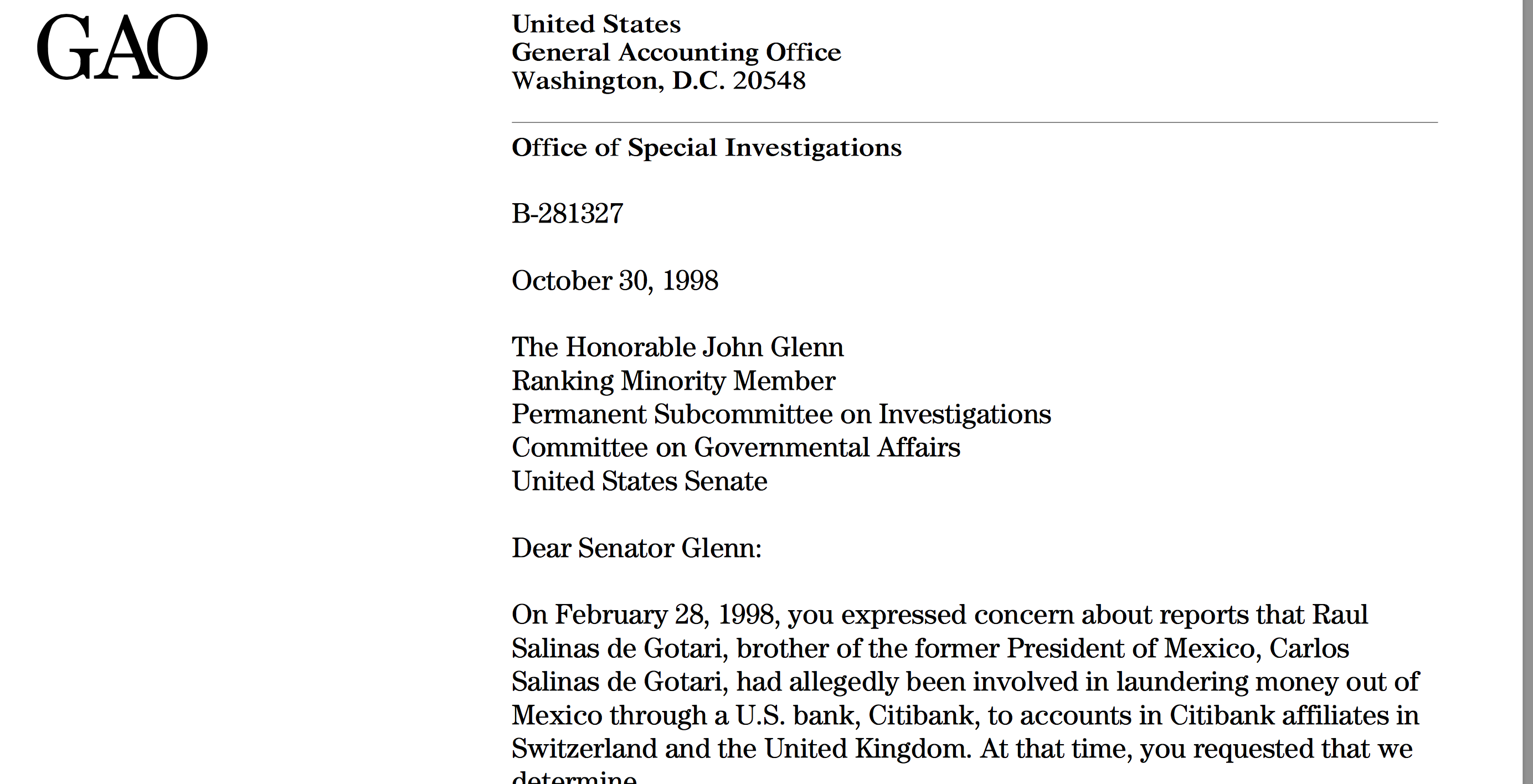
The involvement of Citbank in the money laundering operation is documented a Senate Committee on Governmental Affairs Report (US General Accounting Office  “Private Banking: Raul Salinas, Citibank, and Alleged Money Laundering” Washington, 1998).
.

The End Game

Raul Salinas de Gortiari was set free  in 2005. All charges were dropped.

The matter involving the Bushes and the Salinas has largely been forgotten.

Meanwhile, American political history has been rewritten…

Not to mention the 1992 “Free Trade” Agreement (NAFTA),  which was signed by a head of State with links to organized crime. Does that make it an illegal agreement? The legitimacy of NAFTA has so far not been the object of a legal procedure of judicial inquiry.

An “illegal NAFTA” sets the stage for the TPP and TTIP “agreements” negotiated behind closed doors.

All is well in the American Republic.

At least until the forthcoming 2016 presidential elections.