From the Libertarian Institute
By Ted Snider
July 17, 2023
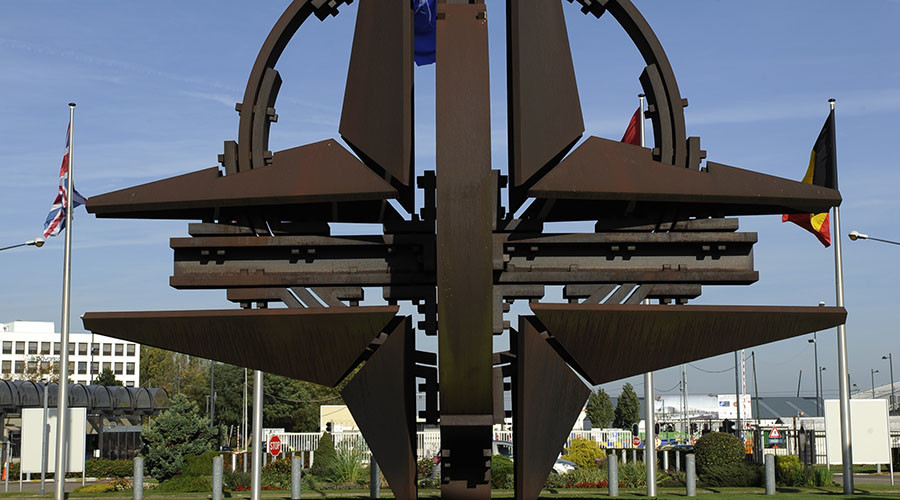
At the NATO summit in Bucharest in 2008, eventual membership in NATO was promised to Ukraine and Georgia with the statement that “NATO welcomes Ukraine’s and Georgia’s Euro-Atlantic aspirations for membership in NATO. We agree today that these countries will become members of NATO.” Russian President Vladimir Putin “flew into a rage,” and, according to a Russian journalist quoted by John Mearsheimer, warned that “if Ukraine joins NATO, it will do so without Crimea and the eastern regions. It will simply fall apart.”
A decade and a half later, Putin sent the message [1] to Ukrainian President Volodymyr Zelensky: “Tell me you’re not joining NATO, I won’t invade.”
Putin is consistently accused in the West of dangerous melodrama and of historical revisionism when he points to NATO’s broken promise that it wouldn’t expand east if the Soviet Union permitted a united Germany to join NATO.
In 2007, Putin complained, “What happened to the assurances our western partners made after the dissolution of the Warsaw Pact? Where are those declarations today? No one even remembers them.” A year later, former Soviet leader Mikhail Gorbachev complained that the United States “promised that NATO wouldn’t move beyond the boundaries of Germany after the Cold War but now half of central and Eastern Europe are members, so what happened to their promises? It shows they cannot be trusted.”
Then U.S. Secretary of State James Baker has claimed [2] that the discussion of NATO expansion applied only to East Germany, not to Eastern Europe: “There was never any discussion of anything but the GDR (East Germany].” A 2014 NATO report claimed, “No such pledge was made, and no evidence to back up Russia’s claims has ever been produced.”
But declassified documents [3] now reveal that NATO was lying, and that it is Baker, and not Putin, who was engaging in historical revisionism.
After complaining that no one remembers the West’s assurances, Putin went on to remind his audience what they said: “I would like to quote the speech of NATO General Secretary Mr. Woerner in Brussels on 17 May 1990. He said at the time that: ‘The fact that we are ready not to place a NATO army outside of German territory gives the Soviet Union a firm security guarantee.’ Where are those guarantees?”
Putin was quoting correctly. He might have added, as we know from the recently declassified documents, that Woerner also “stressed that the NATO Council and he are against the expansion of NATO (13 out of 16 NATO members support this point of view).” The NATO Secretary General also assured the Russians on July 1, 1991 that, in an upcoming meeting with Poland’s Lech Walesa and Romania’s Ion Iliescu, “he will oppose Poland and Romania joining NATO, and earlier this was stated to Hungary and Czechoslovakia.” (Document 30)
As for Baker’s insistence that no such promise was made, he articulated some of the most important statements of that promise. On February 9, 1990, Baker famously offered Gorbachev a choice: “I want to ask you a question, and you need not answer it right now. Supposing unification takes place, what would you prefer: a united Germany outside of NATO, absolutely independent and without American troops; or a united Germany keeping its connections with NATO, but with the guarantee that NATO’s jurisdiction or troops will not spread east of the present boundary?”
Baker has been dismissive of this statement, categorizing it as only a hypothetical question. But Baker’s next statement, not previously included in the quotation, but now placed back in the script by the documentary record, refutes that claim. After Gorbachev answers Baker’s question, saying, “It goes without saying that a broadening of the NATO zone is not acceptable,” Baker replies categorically, “We agree with that.” (Document 6)
There are a number of other declassified statements that now solidify the evidence against Baker’s claim. The most important is Baker’s own interpretation of his question to Gorbachev at the time. At a press conference immediately following this most crucial meeting with Gorbachev, Baker announced that NATO’s “jurisdiction would not be moved eastward.” He added that he had “indicated” to Gorbachev that “there should be no extension of NATO forces eastward.”
And while Baker was meeting with Gorbachev, Deputy National Security Adviser Robert Gates was asking the same question of KGB leader Vladimir Kryuchkov in clearly non-hypothetical terms. He asked Kryuchkov what he thought of the “proposal under which a united Germany would be associated with NATO, but in which NATO troops would move no further east than they now were?” Gates then added, “It seems to us to be a sound proposal.” (Document 7)
On that same busy day, Baker posed the same question to Soviet Minister of Foreign Affairs Eduard Shevardnadze. He asked if there “might be an outcome that would guarantee that there would be no NATO forces in the eastern part of Germany. In fact, there could be an absolute ban on that.” How did Baker intend that offer? In Not One Inch, M.E. Sarotte reports that in his own notes, Baker wrote, “End result: Unified Ger. Anchored in a changed (polit.) NATO—whose juris. would not be moved eastward!” According to a now declassified State department memorandum of their conversation, Baker had already in this conversation assured Shevardnadze, “There would, of course, have to be ironclad guarantees that NATO’s jurisdiction or forces would not move eastward.” (Document 4)
And, according to a declassified State Department memorandum of the conversation, on still the same day, Baker told Gorbachev and Shevardnadze, not in the form of a question at all, that, “If we maintain a presence in a Germany that is a part of NATO, there would be no extension of NATO’s jurisdiction for forces of NATO one inch to the east.” (Document 5)
Continue reading
 Free Ukraine Now