The Iran War and PFAS

From Military Poisons

Part 1 of a 2-part series

Pat Elder
March 21, 2026
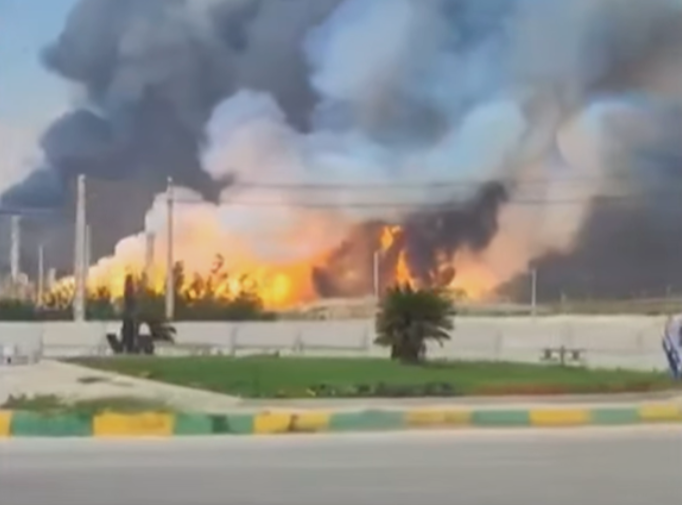
Israeli warplanes set Iran’s South Pars gas field ablaze on March 18, 2026.

On March 18, 2026, Israeli warplanes struck Iran’s South Pars gas field, igniting fires across one of the most critical energy complexes on Earth. The attack targeted infrastructure at the heart of the global natural gas system, sending flames through facilities that underpin a significant share of the world’s fertilizer production.

The South Pars strike is not just an energy story—it is also a story about the global food supply. Modern agriculture is fundamentally dependent on natural gas, which is used to produce ammonia and urea fertilizers. The Persian Gulf region supplies a substantial share of the world’s nitrogen fertilizers, so disruptions to this system reverberate immediately through global markets, agricultural production, and ultimately the food supply.

Countries most exposed to fertilizer shocks—particularly Japan, South Korea, Taiwan, and import-dependent nations across Southeast and South Asia—are increasingly turning to wastewater sludge as a substitute nutrient source, a shift that risks transferring industrial PFAS contamination from urban waste streams directly onto agricultural soils. We will examine that shift in Part 2.

Here, we’ll examine the contamination unfolding from the widespread use of aqueous film-forming foam (AFFF) across the war theater.

Fires at gas fields, refineries, tank farms, and export terminals are not fought with water. Hydrocarbon fires require foam. At petroleum and gas installations, fire suppression systems have long been built around aqueous film-forming foam, or AFFF, a firefighting agent designed to spread across fuel surfaces, suppress flammable vapors, and prevent re-ignition. Foam smothers the fires. Its active ingredients are made of carcinogenic PFAS compounds.

For decades, AFFF has been the global standard for fighting liquid fuel fires in the military, at airports, and throughout the oil and gas sector. Most refineries and LNG plants in the Gulf were built long before the recent push toward fluorine-free alternatives. Their systems were designed around fluorinated foams.

Even where fluorine-free foams are beginning to enter the market, the transition is spotty, especially in high-risk petroleum settings where operators remain reluctant to abandon legacy systems. Often, an “environment be damned” mentality prevails while putting out petroleum fires.

In Iran, it is likely that older, deadlier AFFF stockpiles remain in use. Sanctions have tortured the Iranians on many fronts, constraining access to newer technologies and replacement equipment.

AFFF is a delivery system for PFAS, linked to cancer, immune dysfunction, endocrine disruption, and developmental harm. The compounds travel with firefighting runoff, infiltrate soil, enter drainage systems, contaminate surface water, and move into wastewater streams. In a war involving repeated fires at petroleum and gas facilities, PFAS contamination will become a defining legacy of the conflict.
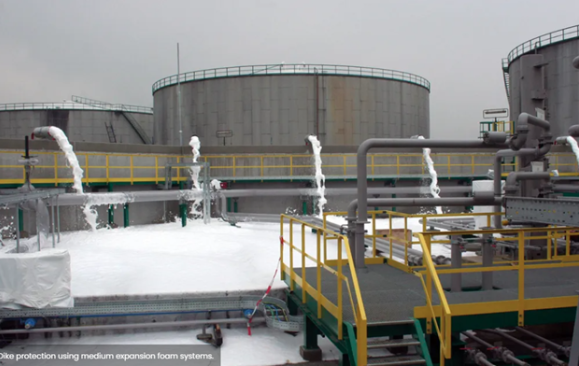
The image shows a foam system used for dike protection in oil and gas facilities. While the specific foam type shown here cannot be determined visually, such systems in the Gulf region have historically been designed around PFAS-based foams. 
https://gulffire%5Bdot%5Dcom/meeting-the-challenges-of-transitioning-to-fluorine-free-foam-agents/

Calculating the scale

Exact volumes of foam used in the current war are not publicly reported, but industry standards make clear the likely scale. Large hydrocarbon fires at refineries and tank farms can require sustained foam application over wide surface areas for hours or even days. A single major dike or tank fire can consume thousands of gallons of foam concentrate.  

Across multiple simultaneous fires involving storage tanks, pipelines, refineries, and gas-processing infrastructure, cumulative use can rise into the hundreds of thousands of gallons of concentrate, producing millions of gallons of finished foam solution.

A large fuel storage tank fire can require thousands of gallons of 3% AFFF concentrate and hundreds of thousands of gallons of finished foam solution to extinguish. The concentrate is typically mixed at a ratio of 3% foam concentrate to 97% water and then aerated to produce the firefighting foam.

AFFF-type foams require approximately 1 gallon per minute  liquid concentrate flow for every 10 square feet of burning surface on a hydrocarbon-type fuel.

A large storage tank in the South Pars Gas Complex may contain a 78-meter diameter. This is 4,778 square meters, which converts to about 51,434 square feet.

This tank would require 5,143 gallons of liquid foam concentrate per minute.  It may require from 10 to 30 minutes to extinguish the flame in a single tank.

AFFF Requirements for a single 78-Meter Diameter Tank Fire  (3% Solution)

Time applied       Gals. Conc.           Gals. Foam

10 minutes             1,543                    51,430                 
20 minutes             3,086                   102,860               
30 minutes             4,629                   154,290  

===========             

Israeli strikes on Iran’s South Pars gas field and the Asaluyeh processing hub on March 18 triggered a wave of retaliatory attacks across the Gulf that hit refineries, gas plants and export terminals in Saudi Arabia, Kuwait, Qatar, the United Arab Emirates and Bahrain. Reuters, March 20, 2026

Following is a list of locations where missiles and drones have ignited blazes that have likely been doused with AFFF:

  • South Pars gas field, Iran
  • Asaluyeh, Iran
  • Shahran fuel tanks, Tehran, Iran
  • Ras Laffan Industrial City / LNG facilities, Qatar
  • Pearl gas-to-liquids plant, Ras Laffan, Qatar.
  • Mina al-Ahmadi refinery, Kuwait
  • Mina Abdullah refinery, Kuwait
  • Ras Tanura refinery / export complex, Saudi Arabia
  • SAMREF Refinery, Yanbu, Saudi Arabia
  • Ruwais refinery complex, UAE
  • Fujairah oil industry zone / export terminal , UAE
  • Bapco Sitra refinery / oil refinery complex, Bahrain
  • Haifa  Oil Refinery, Israel
  • Lanaz refinery, Erbil
  • Two fuel tankers in Iraqi waters near Basra
  • Oil tanker off Oman’s Musandam peninsula
  • Habshan gas processing complex, UAE
  • Bab oil field, UAE
  • Ashdod refinery, Israel

In multi-site, simultaneous attacks like those unfolding on our TV screens, total AFFF use can top  millions  of gallons, injecting venomous poisons into the earth throughout the Middle East.

From Fire Suppression to Environmental Contamination

When thousands of gallons of concentrate are deployed in a single incident, the result is the runoff of significant quantities of persistent fluorinated chemicals into the environment. At coastal facilities, which describe many of the sites now burning across the Persian Gulf, this runoff often moves quickly into marine environments. The Gulf is a semi-enclosed body of water with limited circulation, making it particularly vulnerable to the accumulation of persistent contaminants.‍ ‍

In the Gulf states, where a substantial portion of food is imported, the most immediate pathway of exposure is not through local agriculture but through the marine environment itself. Fisheries in the Persian Gulf, along with those in the waters of the Arabian Sea, the Red Sea, and the eastern Mediterranean, are susceptible to contamination as PFAS move through food webs.‍ ‍

Unlike hydrocarbons, which burn off or degrade over time, PFAS do not break down under environmental conditions. They bind to sediments and accumulate in living organisms rather than remaining dissolved in open water. Instead of dispersing harmlessly, they are taken up by soils, sediments, and biological tissues, where they persist and concentrate over time.‍ ‍

The result is a shift in how the environmental impact of war should be understood. Oil fires have long been associated with air pollution and visible ecological damage. The widespread use of AFFF introduces a hidden, more persistent hazard, one that does not dissipate when the flames are extinguished. ‍ ‍

The contamination is also largely unmeasured. There are no coordinated monitoring programs tracking PFAS releases during wartime fire suppression, no public accounting of the volumes used, and no framework for post-conflict remediation. What is being dispersed across the region is effectively invisible in real time, even as it establishes a chemical legacy that may persist for centuries or longer.‍ ‍

There is no robust, systematic body of studies on PFAS in marine fish from the Arabian Sea or Persian Gulf.  A host of global studies show that PFAS readily accumulate in seafood and can be transported across regions through both ocean currents and migratory species.‍‍‍‍ ‍

Lesson from Brunswick, Maine

‍On August 19, 2024, a malfunctioning fire suppression system at the former Brunswick Naval Air Station released approximately 1,450 gallons of AFFF concentrate mixed with 50,000 gallons of water, marking one of the largest accidental PFAS foam spills in history.

‍1,450 gallons pales in comparison to the millions being unloosed in the war, although it poisoned the region forever. The state analyzed the composition of the foam concentrate and published the shocking results, shown below. PFOS levels that drained into the grass topped 3.78 billion parts per trillion. PFOS is highly mobile in soil and groundwater.

The US EPA had committed to keeping groundwater that is used for drinking water under 4 parts per trillion of PFOS and PFOA, although actual enforcement has been pushed back to 2031 by the Trump Administration.

‍Results below are shown in ng/L or parts per trillion. ‍‍‍ ‍
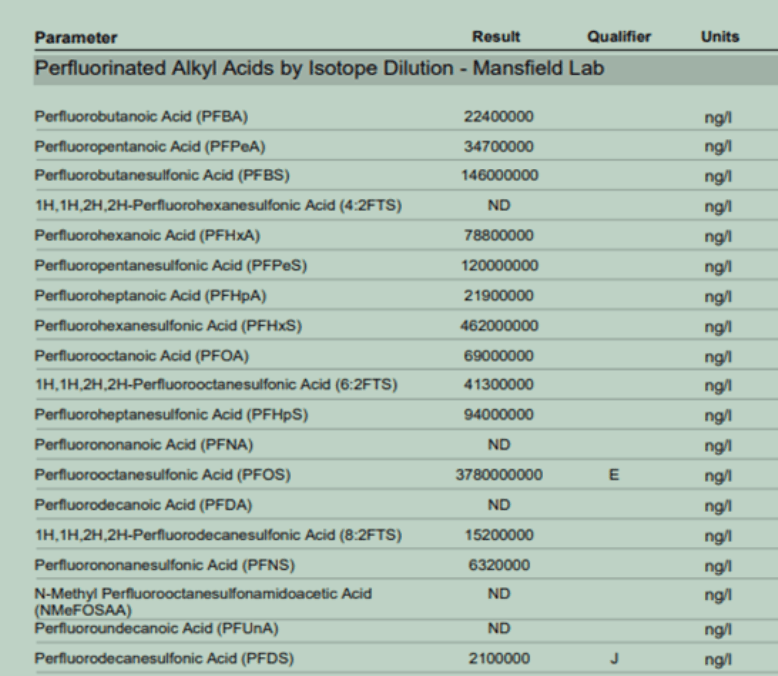
Alpha Analytical  – 08/23/24. PFOA at levels less the 1 part per trillion in drinking water is linked to pancreatic cancer.  At Brunswick PFOA was recorded at 69,000,000 parts per trillion in liquids that seeped into the ground.
https://www.maine%5Bdot%5Dgov/dep/bep/Brunswick%20Airbase.pdf

In the conflagration that is the Persian Gulf, the disparate PFAS compounds in AFFF do not combine into a single new chemical. Instead, they are released as a complex mixture: some persist in their original form, some gradually transform into terminal compounds such as PFOS and PFOA, and all of them partition differently among seawater, sediments, wastewater, and living organisms. The result is not one contaminant, but a shifting, perpetual fluorinated burden that can intensify over time as precursor compounds degrade into more stable end products.

While black smoke fills the sky and headlines focus on oil prices, a chemical catastrophe is unfolding across the Middle East. The same war that is destabilizing global energy and food markets is coating landscapes, drainage systems, industrial wastewater streams, and coastal waters with deadly and  persistent fluorinated  compounds. The public hears about flames and airstrikes. It is not hearing about the highly carcinogenic foams sprayed to extinguish them.

://www.militarypoisons.org/latest-news/the-iran-war-and-pfas

Project Censored: News media cover-up of reason for war on Syria — a natural gas pipeline route

Project Censored publishes a book annually of the top 25 unreported or under-reported news stories for the year. This year, the story of a major reason for the Syrian conflict was #8.

8. Syria’s War Spurred by Contest for Gas Delivery to Europe, Not Muslim Sectarianism

At least four years into the crisis in Syria, “most people have no idea how this war even got started,” Mnar Muhawesh reported for MintPress News in September 2015.

In 2011–12, after Syrian president Bashar al-Assad refused to cooperate with Turkey’s proposal to create a natural gas pipeline between Qatar and Turkey through Syria, Turkey and its allies became “the major architects of Syria’s ‘civil war.’” The proposed pipeline would have bypassed Russia to reach European markets currently dominated by Russian gas giant Gazprom. As a result, Muhawesh wrote, “The Middle East is being torn to shreds by manipulative plans to gain oil and gas access by pitting people against one another based on religion. The ensuing chaos provides ample cover to install a new regime that’s more amenable to opening up oil pipelines and ensuring favorable routes for the highest bidders.”

In 2012, the US, UK, France, Qatar, and Saudi Arabia, along with Turkey, began to organize, arm, and finance rebels to form the Free Syrian Army, consistent with long-standing US plans to destabilize Syria. These nations formed a pact, “The Group of Friends of the Syrian People,” that implemented a sectarian divide and conquer strategy to overthrow President Assad. “It’s important to note the timing,” Muhawesh wrote. “This coalition and meddling in Syria came about immediately on the heels of discussions of an Iran-Iraq-Syria gas pipeline that was to be built between 2014 and 2016 from Iran’s giant South Pars field through Iraq and Syria. With a possible extension to Lebanon, it would eventually reach Europe, the target export market.” As MintPress News reported, access to oil and gas—not sectarian differences—is the underlying cause of the violent conflict and humanitarian disaster in Syria. “The war is being sold to the public as a Sunni-Shiite conflict” by the Friends of Syria because, if the public understood the economic interests at stake, “most people would not support any covert funding and arming of rebels or direct intervention.”

Based on secret US cables revealed by WikiLeaks, Muhawesh reported that “foreign meddling in Syria began several years before the Syrian revolt erupted.” US State Department cables from 2006 documented plans to instigate civil strife that would lead to the overthrow of Assad’s government. The leaks revealed the United States partnering with nations including Saudi Arabia, Turkey, Qatar, and Egypt to fuel Sunni-Shiite sectarianism to divide Syria.

Although there is plenty of coverage in US corporate media about the violence in Syria and the refugee crisis that is sweeping Europe and reaching North America, this coverage has failed to address the economic interests, including control of potentially lucrative gas pipelines, that motivate the US and its allies.  (US corporate news coverage of the Ukraine crisis was comparable in that it too downplayed geopolitical oil interests as a source of tension among Russia, the US, and their respective allies, as Nafeez Ahmed has reported. See “US Media Hypocrisy in Covering Ukraine Crisis,”Censored story #9 from Censored 2015.) Instead, corporate news coverage has characterized the conflict in Syria as a battle for democracy that has been hijacked by Sunni-Shiite interests. For example, Oren Dorell of USA Today identified “a mind-boggling and dangerous stew of shifting and competing alliances” involved in the Syrian conflict—including groups categorized as progovernment, antigovernment, anti-Islamic State, and “other fighters”—but he did not address the gas interests that, according to Muhawesh’s reporting, ultimately underpin the conflict. Instead, much of what passes for news coverage in the corporate press adheres to a pattern that Muhawesh identified and critiqued as simplistic and “Orientalist,” framing conflict in the Middle East and especially Syria as sectarian in order “to paint the region and its people as barbaric.”


Mnar Muhawesh, “Refugee Crisis & Syria War Fueled by Competing Gas Pipelines,” MintPress News, September 9, 2015, http://www.mintpressnews.com/migrant-crisis-syria-war-fueled-by-competing-gas-pipelines/209294/.

Student Researcher: Salah Mouazen (Citrus College)

Faculty Evaluators: Andy Lee Roth and Lanette Granger (Citrus College)

8. Syria’s War Spurred by Contest for Gas Delivery to Europe, Not Muslim Sectarianism

To find out more information on this year’s stories and order the book: http://www.projectcensored.org

Europeans now have one choice: recognize Crimea or live without heating

Frightening statistics: 

more than 50 million people in the European Union are forced to choose between buying food and paying electricity bills…Bulgarians find themselves in the most critical such situation, where such a choice haunts 40% of the population. In such a civilized country as the United Kingdom, moreover, according to “Home and Renting” magazine, 2,700 people die every year from hypothermia, as heating homes with electricity is too expensive.

From Fort Russ

May 4, 2016 –
Boris Stepnov, PolitRussia – 
Translated by J. Arnoldski


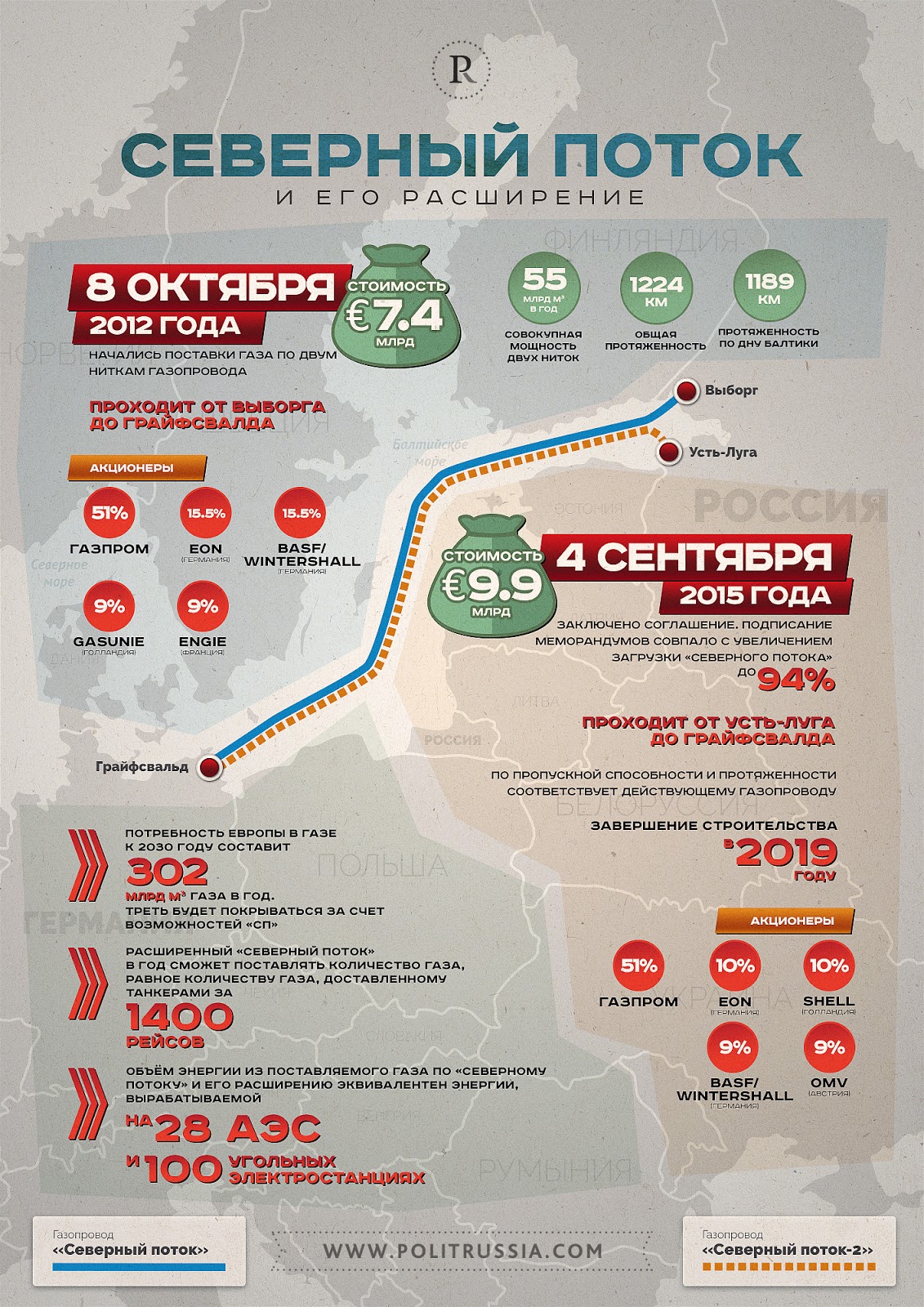
As is well known, the contract on the transit of natural gas through Ukraine ends in 2019 and alternative supply routes to Europe are required to be built before this time. During recent discussions at the European Parliament, delegates from the Ministry of Energy of Ukraine and Naftogaz called the “Nord Stream-2” a “gas-killer” and appealed to the mercy of Europeans.
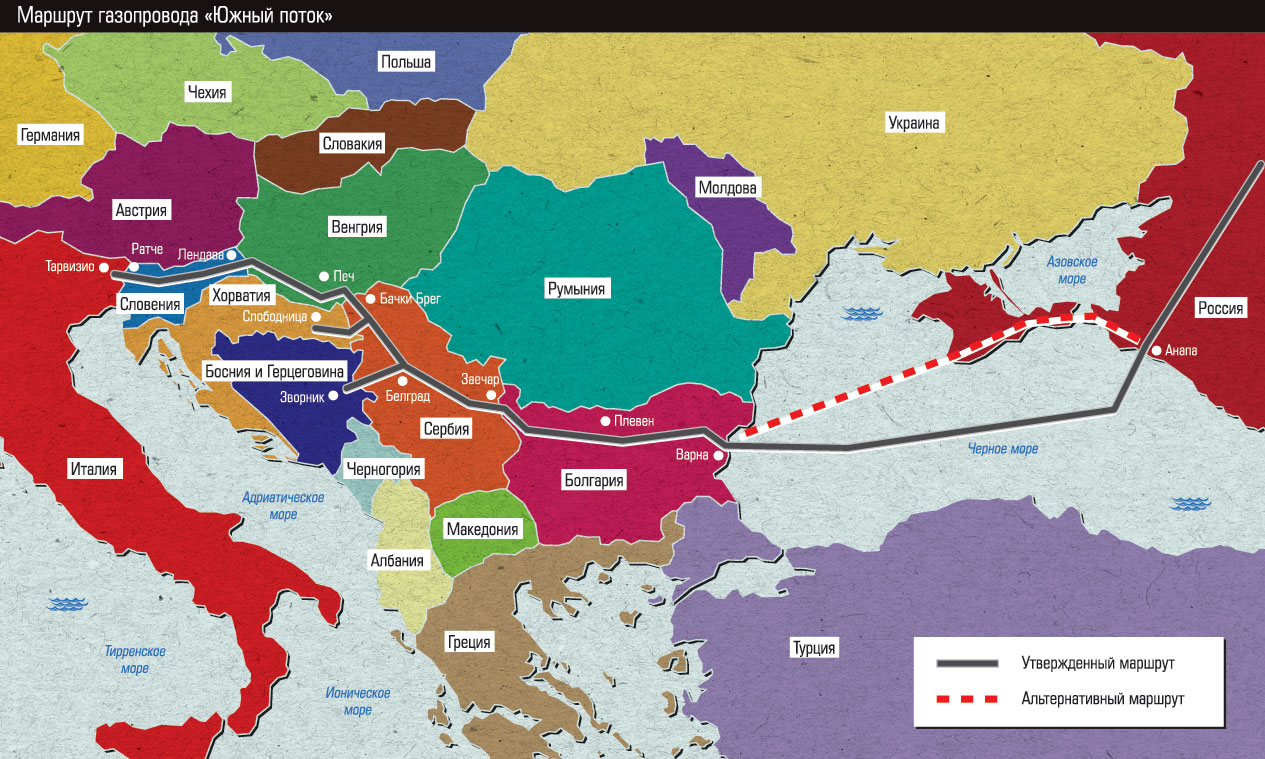
Just the other day during the Central European Gas Forum in Bratislava, “Gazprom Exports” advisor Andrey Konoplyanik mentioned the possibility of resuming the “South Stream” project in a new version based out of Crimea. He stated: “Russia has the right to seek a route for gas exports with the lowest risk for the fulfillments of agreements.”
Such statements are far from groundless, and there is a serious probability that South Stream will be revived. Meanwhile, Nord Stream and its extension is all well and good, but guaranteeing an alternative and, most importantly, a reliable path for deliveries would be well advised. Therefore, according to Konoplyanik, Russia is developing routes which can bypass Ukraine and avoid Turkey’s participation. 
Moreover, it has been reported that the Prime Minister of Bulgaria, Boyko Borisov, even hinted at the unofficial continuation of work on the project. 
Poor Bulgaria is being shoved around here and there. In December, Borisov pointed to the reason for the cancellation of the project as being Brussel’s orders. Borisov stated: “Today the Russian President confirmed the understand that the halt to the South Stream project has occurred not because Bulgaria is against Russia, but because, as a loyal member of the EU, Bulgaria must fulfill all demands [of the European Commission], comply with the sanctions regime, and fulfill provisions for a third energy packet and other requirements related to gas projects.” 
 
 
In January 2016, the news appeared that the South Stream project would be revived, but in February the Bulgarian Parliament once again, finally rejected the idea of the gas pipeline.
Why is Bulgaria so feverish? Or, more precisely, why is Brussels hampering its will? Or even more precisely: Why is Washington so nervous? 
Russia firmly intends to supply gas to Europe and, moreover, intends to strengthen its position in the energy market, something that the US  is not too comfortable with. In order to undermine the position of our country, at the very onset the US yanked Bulgaria into rejecting the South Stream, and then Turkey into rejecting the Turkish Stream. The US even began shipping its own liquified natural gas to Europe, something that our domestic experts even dared to call a “gas attack.”
But Nord Stream-2 has still managed to get off the launch pad since Germany still considers itself strong enough to have its own opinion despite Merkel’s apparent obedience to Washington. And, of course, it is clear that Germany is very aware of the benefits of the pipeline – it’s not a bad idea to be at the center of the distribution of Russian gas to the rest of Europe. 
Washington, in turn, is perfectly aware that such a course would significantly strengthen the position of Germany in Europe, and that then Berlin would become even less bendable to its will. Against this background, a few [US] tankers carrying liquified gas or shale gas pale in comparison [to the prospects of Russian gas]. Even more so if the South Stream is added to all of this.
At the same time, as the studies of “Energy Insight” show, more than 50 million people in the European Union are forced to choose between buying food and paying electricity bills. Impressive, is it not? Bulgarians find themselves in the most critical such situation, where such a choice haunts 40% of the population. In such a civilized country as the United Kingdom, moreover, according to “Home and Renting” magazine, 2,700 people die every year from hypothermia, as heating homes with electricity is too expensive. And, mind you, this is not Soviet central heating…
Germany is additionally motivated to obtain Russian gas because of the Green Party’s (with Merkel’s support) imposition of the necessity of destroying nuclear power plants. The result is the following:
“Germany is planning to abandon nuclear and conventional energy. This is a utopian plan that will never work. 85% of the population still support this idea, but this will change once it becomes clear just how much energy will actually start to cost. The laws of economics and physics are apparently being thrown out the window with this…Despite the fact that solar and wind generators are being actively constructed in Germany, they provide on average less than 3% of the energy consumed, and guarantee a minimum generation of only .4%…In order to reach 3% of the guaranteed energy generation and abandon Germany’s three nuclear power plants, the Germans will need the same amount of funds for which 85 new nuclear power plants could be built.”
The absurdity of such a path is clear, but Sweden is also phasing out nuclear power under “green” pressure. Alternative energy using renewable resources has become quite fashionable in today’s Europe even though it has a fairly narrow niche – using such energy is only logical in a specific climate and under particular conditions. In Germany, in the conditions of the Old World, “green” energy is doomed to fail.
Back in 2014, President Jerome Ferrier of the International Gas Union openly assessed the situation in the following way: 
“In the current situation of tension between Russia and Ukraine, some activists are trying to convince us that Europe can get along without Russian gas by seeking other supplies. This is a completely false conviction.” 
Although news is spreading of the possible resumption of negotiations on the South Stream project, there is yet another interesting point. Not a single European country officially recognizes Crimea as Russian.
As they say, however, hunger is not an aunt, especially not energy-related hunger. Europe and especially Bulgaria’s needs for gas could ultimately overcome all political factors. In fact, the carrot has already been hung in front of Bulgaria’s nose: if you want gas, then recognize Crimea. 
We will find out later what the final decision will be. In the meanwhile, Russia is already very successfully probing the soil. 

http://www.fort-russ.com/2016/05/europeans-now-have-one-choice-recognize.html