China’s statement to UN General Assembly, September 26, 2025

From the Ministry of Foreign Affairs, People’s Republic of China

Statement by Chinese Premier Li Qiang at the General Debate of the 80th Session of the United Nations General Assembly

New York, September 26, 2025

Madam President,
Colleagues,

This year marks the 80th anniversary of the victory of the World Anti-Fascist War. It is also the 80th anniversary of the founding of the United Nations (U.N.). Eighty years ago, fascism was defeated in fearless battles by countless heroic men and women around the world, and the U.N. was created upon their ideal of a world free of war.

An important outcome of the victory of the World Anti-Fascist War, the U.N. was born out of a deep reflection on the scourge of two world wars.

Its founding initiated a historic experiment to escape the law of the jungle, and marked the beginning of an extraordinary journey, i.e. building the postwar international order and pursuing peace and development. The past 80 years have been tortuous but purposeful. Today, the U.N. is the world’s most universal, representative, and authoritative intergovernmental organization, and plays an irreplaceable, key role in global governance. With an international system centered around the U.N. and an international order based on international law, human society has realized overall peace, and achieved unprecedented levels of development and prosperity. The past 80 years have witnessed tectonic changes in our world. Straddling two centuries, this period saw human society leapfrog from the age of electricity and computers into a digital intelligence era. While the world we live in has changed enormously, the ideal of making it a better place remains unchanged. Looking back, we can draw a number of valuable inspirations.

First, peace and development are the strongest aspirations shared by the people of all countries. Throughout history, while the shadows of war and conflict have never fully gone away, no force has ever stopped humanity in its quest for peace and development. Having gone through two world wars, we must never forget the bitter lessons learned through bloodshed and loss of lives. For 80 years, a generally peaceful international environment has led to remarkable growth in the global economy. Today, as the desire for peace and development grows even stronger around the world, it is incumbent upon our generation to further strengthen the force for peace and development.

Second, solidarity and cooperation are the most powerful drivers for human progress. In the ferocious years of the World Anti-Fascist War, countries with different social systems, histories and cultures rose above their differences, fought side by side, and prevailed together. In the 80 years that followed, they weathered a succession of vicissitudes, such as the Cold War standoff, financial crises, and global pandemics, by staying connected and working together. All this proves a simple yet powerful point — solidarity lifts everyone up, while division drags all down. The road ahead might be hard and bumpy, but when all countries unite as one and collaborate in good faith, our strengths will converge into a mighty force with which we can withstand any headwind and cross any hurdle.

Third, fairness and justice are the most important values pursued by the international community. In the past 80 years, the world saw the demise of the old colonial system, the establishment of the existing international order, and the strengthening of international rule of law. History keeps reminding us that when might dictates right, the world risks division and regression; when fairness and justice prevail, societies enjoy stability and thrive. Should the era of the law of the jungle return and the weak be left as a prey to the strong, human society would face even more bloodshed and brutality. As members of the global family, we must uphold justice while pursuing our own interests. This is particularly true for the major countries. Only when all countries, big or small, are treated as equals and true multilateralism is practiced, can the rights and interests of all parties be better protected.

Every moment of historical reflection is an opportunity for us to recalibrate our direction and avoid going astray. At present, the world has entered a new period of turbulence and transformation. Unilateralism and Cold War mentality are resurfacing, the international rules and order built over the past 80 years are under serious challenge, and the once-effective international system is constantly disrupted. The various problems induced are distressing and worrying. Humanity has once again come to a crossroads. Anyone who cares about the state of affairs in the world would want to ask: Why couldn’t we humans, having emerged from tribulations, adopt a greater sense of conscience and rationality, and treat each other with kindness and coexist in peace? How could we, in the face of deplorable incidents such as humanitarian disasters, turn a blind eye to atrocities that trample blatantly on fairness and justice and sit on our hands? How could we, when confronted with unscrupulous acts of hegemonism and bullying, remain silent and submissive for fear of might? And how could we let the ardent passion and dedication of our forefathers in founding the U.N. simply fade into the pages of history? We Chinese people often say, “Never forget why you started, and you can accomplish your mission.” Arriving at the U.N. headquarters this time, I saw over 190 national flags lined up in front of the building and fluttering in the breeze; I saw the sculptures “Let Us Beat Swords into Ploughshares” and “Non-Violence” with their time-tested message ever so loud; and I saw staff members from different regions, of different races and with different skin colors working in collaboration for the common goals of humanity. What I saw got me thinking: Those people, objects and scenes that embody peace, progress and development are exactly why we choose to commemorate victory. They are also what inspires us to forge ahead hand in hand. While we may not be able to go back in time and relive the victory, we can definitely create a better future together.

As a founding member of the U.N., China has all along taken an active part in global affairs and worked for the betterment of humanity. Over the years, President Xi Jinping has put forward the vision of building a community with a shared future for humanity, the Global Development Initiative, the Global Security Initiative, the Global Civilization Initiative and the Global Governance Initiative, sharing China’s wisdom and solution for navigating global transformations and overcoming pressing challenges. In particular, the Global Governance Initiative proposed at the Shanghai Cooperation Organization Tianjin Summit at the beginning of this month underscores the principles of adhering to sovereign equality, abiding by international rule of law, practicing multilateralism, advocating the people-centered approach and focusing on taking real actions. It points the right direction and provides an important pathway for building a more just and equitable global governance system. China is ready to take coordinated and effective actions together with all sides to offer more concrete solutions and promote world peace and development.

First, amid the volatility and turbulence in the world, we must work together for peace and shared security. All countries belong to the same global village and rely on each other for security. We should uphold the vision of common, comprehensive, cooperative and sustainable security, and respect the legitimate security concerns of all countries. We should work in solidarity to address complex and serious security challenges, and settle differences and disputes peacefully through dialogue and consultation. Persisting in camp-based confrontation or willful resort to force only drives peace further away.

China has all along acted as a staunch defender of world peace and security. China is the second largest contributor to U.N. peacekeeping budget and the largest provider of peacekeepers among the permanent members of the Security Council. China has been working actively to promote peace talks on hotspot issues such as the Ukraine crisis and the Palestinian-Israeli conflict. This year, China established the International Organization for Mediation together with over 30 countries. China will continue to uphold fairness and justice, proceed from the merits of the issues concerned and the common interests of the international community, and work with all sides to seek the greatest common denominator for peace and play a constructive role in promoting the political settlement of hotspot issues.

Second, amid sluggish global growth, we must reinvigorate cooperation and pursue win-win results. Self-isolation cannot produce lasting development. Only through openness and cooperation can we bolster the momentum of development. A major cause of the current global economic doldrums is the rise in unilateral and protectionist measures, such as tariff hikes and erection of walls and barriers. Ultimately everyone will be worse off. We should collaborate more closely to identify and expand convergence of interests, promote universally beneficial and inclusive economic globalization, and help each other succeed by moving forward in the same direction.

China has always been a key driver of global common development. Over the years, the Chinese economy has maintained steady development, contributing around 30 percent to global economic growth. China has consistently opened its door wider to the world. It has lowered its overall tariff level to 7.3 percent and remained the world’s second largest importer for 16 consecutive years. An active player in international cooperation on sci-tech innovation, China has encouraged the sharing of cutting-edge technologies, such as 5G and AI, and engaged in joint efforts to foster new drivers of economic growth. China has also advanced high-quality Belt and Road cooperation with over 150 countries. Currently, China is taking solid steps to promote high-quality development at home, with a focus on expanding domestic demand and fostering new quality productive forces at a faster pace. China has the confidence and capability to keep its economy on an upward trajectory and continue to provide important support for global economic growth.

Third, amid dynamic interactions among civilizations, we must champion dialogue and mutual enlightenment. We Chinese people often say, “A single flower does not make spring; one hundred flowers in full blossom bring spring to the garden.” Every civilization has its unique value and heritage, and deserves acknowledgment and respect. Obsession with so-called “civilizational superiority” or ideology-based circles only breeds more division and confrontation. Adopting an inclusive attitude and engaging in exchange and mutual learning is a sure way to build more consensus and collective strength.

China has all along engaged in active civilizational exchange and mutual learning. Philosophical concepts such as harmonious coexistence are deeply ingrained in the DNA of the Chinese nation. We actively promote the common values of humanity and never impose our ways on others. Over the next five years, China will carry out 50 development cooperation programs in the field of culture and civilization for fellow developing countries and host 200 thematic training and seminar programs, contributing its part to inter-civilizational dialogue and the progress of civilizations.

Fourth, amid emerging challenges, we must respond with concerted efforts and protect our shared home. Climate change is a major challenge confronting all of us. We should uphold the principle of common but differentiated responsibilities, promote the effective implementation of the Paris Agreement, and enhance international collaboration on the green economy. In recent years, technologies such as AI, network communications, and biomanufacturing have advanced rapidly. Along with the benefits, they also bring potential risks. We should adhere to the principles of people-centered development, technology for good and equitable benefits, improve relevant governance rules at a faster pace and strengthen global governance cooperation, so that technological progress could bring real benefits to humanity in a better way.

China has always been a responsible stakeholder in addressing global challenges. Committed to green and low-carbon development, China has established the world’s largest and fastest-growing renewable energy system, and built the most extensive and complete new energy industrial chain. Two days ago, at the United Nations Climate Summit, President Xi Jinping solemnly announced China’s 2035 Nationally Determined Contributions that cover all economic sectors and all greenhouse gases. This is another major step taken by China in responding to global climate change. China is dedicated to deepening cooperation with other countries in areas such as cybersecurity, biosecurity and outer space. China has proposed the Global Al Governance Initiative and advocated the establishment of a World AI Cooperation Organization. This time during the 80th session, China will present to the U.N. the lunar soil samples collected by Chang’e-6 from the far side of the moon. Going forward, China will take more proactive actions and work with all parties to advance global governance in relevant areas.

Colleagues,

China stands ready to work with all members to uphold the standing and authority of the U.N., safeguard the purposes and principles of the U.N. Charter, support U.N. reforms to improve its efficiency and capacity to fulfill its mandate, and advocate greater representation and voice of developing countries. China will work with the U.N. to set up a China-U.N. Global South-South Development Facility and provide it with US$10 million in budgetary support. China will also partner with the United Nations Development Programme to establish a global center for sustainable development in Shanghai to accelerate the implementation of the U.N. 2030 Agenda for Sustainable Development.

The tide of history surges forward, and the Great Way remains smooth and steadfast. Going forward, China will continue doing its best to contribute to global peace and development. A steadily developing and highly open China will bring more fresh opportunities to countries around the world. A China that bears in mind the greater good of humanity and stands ready to take up responsibilities will bring more positive energy into the world. China hopes to work with the rest of the world to uphold the ideals of the U.N., carry forward the spirit of multilateralism, actively implement the four major global initiatives, advance toward the lofty goal of building a community with a shared future for humanity, and make our world a more harmonious and beautiful place.

Thank you.

https://www.fmprc.gov.cn/mfa_eng/xw/zyxw/202509/t20250927_11718404.html

September 30 Webinar: The Fight Against US Bases and Imperialist Plunder

From ILPS

The Fight Against US Bases and Imperialist Plunder

September 30: 8am Puerto Rico | 12pm Mali | 8pm Philippines
Webinar as part of the Land and Liberation education series of the International League of Peoples’ Struggle, featuring speakers from the Philippines, Puerto Rico, and Mali on the successful fight against imperialist military bases

Register here

https://peoplesstruggle.org/en/resist-bases/

September 28, Launch event for International People’s Tribunal for Palestine

From ILPS

Launch of the International People’s Tribunal for Palestine

September 28: 4pm Central Europe Time (register to view your time zone)

Part informational session, part campaign launch, this online activity will give you everything you need to know to start preparing for the International People’s Tribunal this November!

Register here

https://peoplesstruggle.org/en/resist-bases/

September 27 webinar: Women Resisting U.S. Military Bases

From International Women’s Alliance

Women Resisting US Military Bases

September 27:
5am Los Angeles
7am Ecuador
8am Puerto Rico
2pm Netherlands
5pm Pakistan
8pm Philippines

Webinar of the International Women’s Alliance as part of the global weeks of action against US military bases

https://peoplesstruggle.org/en/resist-bases/

International Peace Day September 21; ILPS education events and protests against U.S. military bases

From International League of People’s Struggle

The US’s network of military bases and facilities still spans the entire world, and while its main fronts of war strategically focus on Asia and the Pacific, West Asia, and Eastern Europe against its key rivals, regional wars of aggression and violent counter-insurgency campaigns exist throughout Africa, Latin America, and the Caribbean as well. New bases are even breaking ground in the Arctic to prepare for war in the open wilderness of the North. Meanwhile, the wide network of US aircraft carriers and submarines make whole oceans terrain for these mobile military bases, while more and more air bases are beginning to be purposed with rocket launchpads for the militarization of space.

US military bases have devastating impacts on people all over the world. These bases are the staging ground for wars of aggression, and that brings the countries that host these bases directly into the wars that the US provokes. The US uses its bases to surveil countries which refuse its imperialist policies. Overseas military bases function as centers where American soldiers violently abuse countless women and extrajudicial killings are endemic around US bases. These overseas installations commit environmental destruction and disrupt the lives of civilians in and out of the bases. Bases dump toxic chemicals that harm the health of residents and destroy the source of livelihood of millions of people.

Yet, foreign bases are not invincible, the people have blocked bases from being built in Korea and Japan, or expelled the US military through mass struggle in cases like Subic Bay Naval Base and Clark Air Force base in the Philippines, the US Navy in Vieques and Culebra in Puerto Rico, refusal of the renewal of the US military base lease in Ecuador, and the recent ouster of French and US bases from Senegal, Chad, Burkina Faso, Mali and Niger.

In the spirit of these historic fights against US military bases and with the militant rage of the people against the ongoing US-Zionist genocide of Palestine, ongoing attempts at US intervention in Venezuela, and many other flashpoints of imperialist war, that the below-signed organizations call for global weeks of action this September 2025!

SIGNATORIES

  • International League of Peoples’ Struggle (ILPS)
  • ILPS Commission 1 (on national liberation)
  • ILPS Commission 4 (on war and peace)
  • Resist US-Led War Movement
  • Resist US-Led War Asia-Pacific Campaign
  • Asia Pacific Research Network
  • International Women’s Alliance
  • Bayan Philippines

ENDORSERS

  • Pakistan Kissan Mazdoor Tehreek (Pakistan)
  • Union des Africains du Quebec et Amis Solidaires de l’Afrique (Canada)
  • Veterans for Peace (USA)
  • Women for Peace (Sweden)
  • Madres Contra la Guerra (Puerto Rico)
  • Malaya Movement Florida (USA)
  • Työväen antimilitaristit (Finland)
  • Diaspora Pa’lante Collective (Puerto Rico)
  • San Diego Veterans For Peace (USA)

Types of activities can include:

  • Protest mobilizations
  • Photo actions
  • Educational discussions
  • Film screenings
  • Production of primers and other educational materials
  • Shared prop – graphics, statements, brochures, etc.
  • Possible joint 24-hour activities in different time zones, to be coordinated on zoom and in person

JOINT DAYS OF ACTION

  • 9/14 – Launch of the weeks of action
  • 9/18 – Online photo action day for all participants
  • 9/21 – International Peace Day and global day of action for the Philippines
  • 9/29 – Solidarity Media Forum for Venezuela

[Website has printable placards to download.]

Upcoming events:

Piquete No al las Bases

September 21: 3pm Puerto Rico Time

Join Madres Contra La Guerra for a mobilization outside Roosevelt Roads, former US Navy Base.

NO US military bases in Puerto Rico! We want independencia! No invasion of Venezuela!

For more events:

https://peoplesstruggle.org/en/resist-bases/

Golden Dome? Interview with Bruce Gagnon, Global Network Against Weapons and Nuclear Power in Space

From Annie Gibbons
Sept. 19, 2025

Please take the time to watch this interview with Bruce Gagnon about Trump’s ominous Golden Dome. Coordinator of Bruce is the coordinator of the Global Network Against Weapons & Nuclear Power in Space, a walking encyclopedia on the militarization of space and a very good friend. (Click the link, not the image.)

(1) Why Trump’s Golden Dome must be opposed – Bruce Gagnon & Dae-Han Song – YouTube

https://annecantstandit.substack.com/p/golden-dome

Anti-NATO events in Washington DC

From Global Network Against Weapons and Nuclear Power in Space
by Bruce Gagnon
July 9, 2024

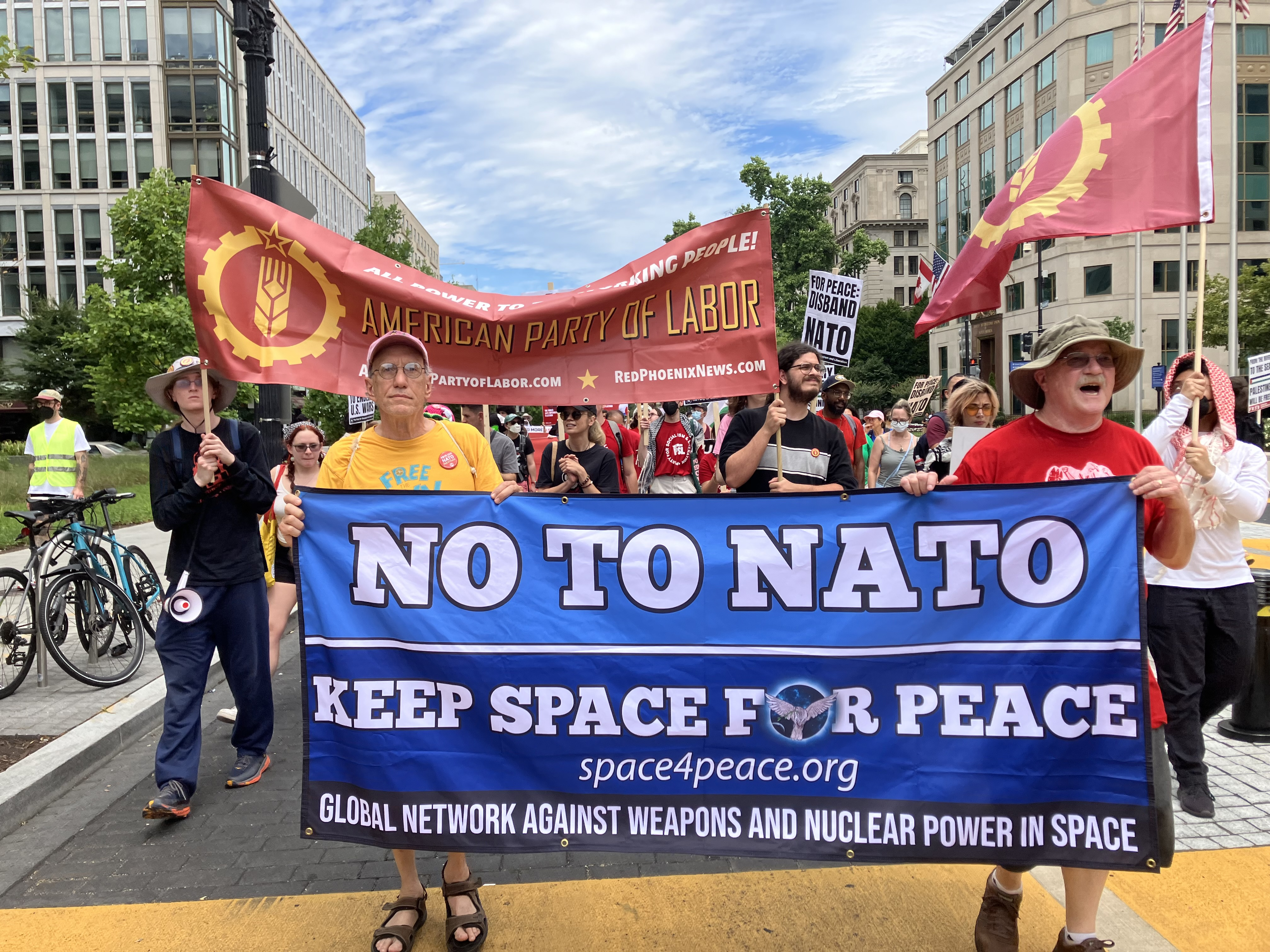
Bruce Gagnon and Rick Staggenborg in the march on Sunday

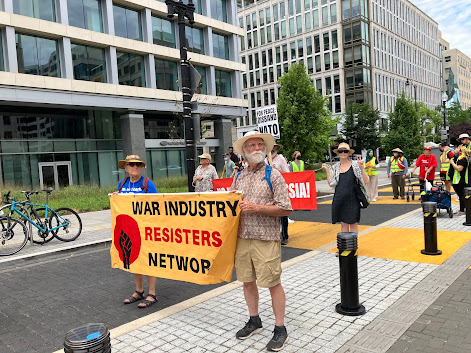
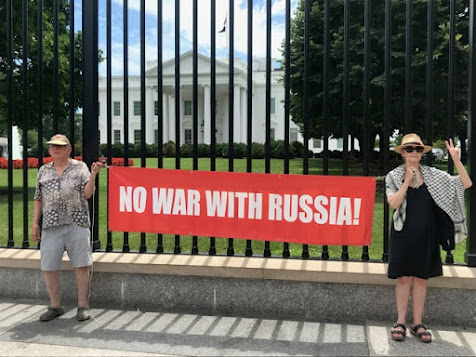
Four of us from Maine (MB Sullivan, Lisa Savage, Mark Roman and I) made the 10-hour drive to Washington DC last Friday to join the anti-NATO events planned to protest NATO’s ’75th anniversary celebration’ which begins on July 10. We were joined by former Mainers Melody Shank and Ken Jones  now living in North Carolina. 

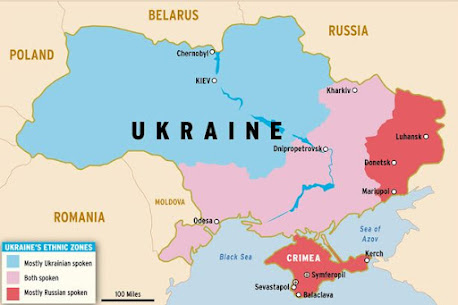
Things began with a conference on Saturday morning at a local church attended by about 150 people and organized by a coalition led by World Beyond War. Disappointingly (but not surprising) several of the speakers once again blamed Russia for the war in Ukraine with words like ‘illegal, immoral, provocative’ Russian invasion. Sadly there are still some in the ‘peace movement’ who continue to be reluctant to pin the blame for the proxy war on US-NATO which was particularly uncalled for at an anti-NATO summit. Those that do at some point admit that US-NATO did in fact instigate the ‘tensions’ always seem to say that Russia should not have responded to protect the Donbass. That option was of course unacceptable to Moscow which I fully agree with.

This of course has been going on ever since the 2014 US-NATO orchestrated coup d’etat in Kiev which was led by the Obama-Biden administration under the direction of Victoria Nuland, Hillary Clinton and Joe Biden [and John Kerry]. Soon thereafter the US-NATO regime in Kiev (infused with Nazis from Western Ukraine) began attacking the Donbass region of Ukraine where Russian-ethnics predominate and killed more than 15,000 and wounded around 35,000. 

Moscow made repeated attempts to create mechanisms to end the siege on the Donbass including the Minsk 1 & 2 agreements that leaders of Ukraine, France and Germany later admitted they never intended to honor – they just used the agreements to buy time to build up Ukraine’s US-NATO funded, trained, armed and directed army for a final charge against their own citizens whose only crime was they spoke Russian.

By early 2022 Russia knew that the western controlled Ukrainian military would soon launch a full scale attack on the Donbass so Moscow decided to preempt that move and began the slow and deliberate effort to push the Nazi-led forces away from the Donbass which sits on Russia’s border.

Later Saturday around 5:00 pm a larger conference began at another church in Washington. Oh, what a difference it was. This event was led by anti-imperialist organizations that have no doubt the US-NATO were in fact responsible for the war in Ukraine – to be used in a now failed strategy to force ‘regime change’ in Moscow in order for western resource extraction corporations to grab Russia’s vast resource base (among other reasons).

More than 300 (mostly young activists) gathered at this event with powerful speakers talking about a myriad of regions of the world where the US-NATO war machine is trying to regain their settler colonial domination. Good luck with that one.

This multi-ethnic coalition was a stark difference from the smaller event we had attended earlier that day. 

I learned years ago about the US anti-imperialist movement led by Mark Twain during Washington’s war on the Philippines.  At this event an impressive video was shown about the long US occupation of the Philippines that continues today as the Biden administration now floods that island nation with new missiles, warships, war planes and troops aimed at China. All part of NATO’s ‘pivot’ into the Asia-Pacific.

We also heard from young activists speaking about Palestine, Puerto Rico, black liberation movements across the US and much more. The Nicaraguan ambassador to the US also spoke and was roundly received. 

Fascism is growing worldwide in order to protect corporate interests and to suppress the resulting people’s movements for liberation. US-NATO wars in the Middle East have cost 4.5 million lives in the last 25 years. Israel is a ‘partner’ of NATO and takes part in its war games. NATO also trains Middle Eastern reactionary regimes that have served as western puppets for many years – Saudi Arabia, Bahrain, UAE, Jordan and more.

On Sunday we joined a march led by the anti-imperialist/anti-capitalist coalition to the White House. A rally was set up in Lafayette Park next to the White House led by the World Beyond War coalition. When we arrived very few people were at the rally site. Thanks to the 400 in the anti-imperialist march the rally began to look more respectable though I didn’t see any of the anti-imperialist leaders invited to the stage to speak to the largely younger crowd.

Despite the long drive from Maine to DC we all agreed that it was well worth the trip – especially to be with emerging activists. We often hear elder ‘peace movement’ folks wonder where are the ‘young people’? Actually they are out there leading the protests against zionist genocide in Palestine and doing great anti-NATO work against the empire’s ever expanding war machine. Some might call them radicals – but I stand by the definition of radical as those getting to the root of the problems that we face.

The half-stepping reformist peace groups (sometimes linked to the Democratic party and their foundation funders) have a long way to go if they hope to more fully integrate with the next generation of activism.

https://space4peace.blogspot.com/2024/07/anti-nato-events-in-washington-dc.html

Moscow’s basic terms for a peace deal with Kiev; Ukraine continues attacks on Zaporozhye Nuclear Power Plant

From Startegic Stability
May 28, 2023

1. Russia outlined conditions for a peace accord

The Ukraine conflict could be settled if Kiev were to re-commit to its neutral status, recognize “new territorial realities,” and declare Russian as a state language, Russian Deputy Foreign Minister Mikhail Galuzin said in an interview released on May 28. He is convinced that a peace settlement will be possible only if the Ukrainian Armed Forces cease aggression against Russia, and Western weapons shipments to Kiev are stopped completely.

Galuzin added that to achieve a durable peace, Kiev must return to a non-aligned status and refuse to join NATO, recognize the “new territorial realities” that emerged after people in Ukraine exercised their right to self-determination in 2014 and 2022.

The diplomat was referring to Crimea and four former Ukrainian regions that overwhelmingly voted to join Russia in public referenda, respectively, in 2014 and 2022.

Deputy Foreign Minister noted that another crucial element of any peace settlement is Kiev’s commitment to respect the rights of the country’s Russian-speaking population and other ethnic minorities. “Russian should be designated as a state language at the legislative level. It is necessary to ensure that basic human rights, including freedom of faith, are observed in Ukraine,” he stressed.

On May 28, Mikhail Podoliak, an aide to Ukrainian President Vladimir Zelensky, dismissed Moscow’s conditions, issuing Kiev’s own list of demands. Those include the immediate withdrawal of all Russian troops from territory Kiev claims as its own, the creation of a “buffer zone” on Russian territory, as well as voluntary renunciation of Russian assets seized in other countries in favor of Ukraine.

Earlier this week, Kremlin Press Secretary Dmitry Peskov said that while Moscow does not want the Ukraine conflict to be frozen, there are no prerequisites for a peace settlement yet, pointing out that Kiev has prohibited any talks with the current Russian leadership.

2. Russia expects its sanctions to follow against Kiev

Ukraine’s “puppeteers” in London and Washington start begin to concern themselves with mental stability of top officials in Kiev and Russia hopes that sanctions against the Ukrainian leadership will follow over the threats against Russian President Vladimir Putin, Russian Foreign Minister Sergey Lavrov said in an interview published on May 27.

“I have no doubts that the puppeteers in Washington and London begin to concern themselves with how mentally stable these people are,” the Minister said. “I hope that sanctions will follow against these so-called officials. All statements that it is necessary to kill all Russians, wherever they are – that was said both by [Ukrainian Presidential Office Head Advisor Mikhail] Podolyak and [National Defense and Security Council Secretary Alexey] Danilov – and now personal [threats] against a leader of a sovereign state, the Russian Federation – is the most serious thing.”

Lavrov also stated that Ukraine is a terrorist state, with its authorities “driving themselves into this quality.”

Commenting on the threats against the Russian leadership, Lavrov underscored that a word has been uttered, and the West must bear responsibility for these words.”.

3. Rogov: Kiev is plotting new provocation at ZNPP

Ukraine is plotting a provocation at the Zaporozhye Nuclear Power Plant (ZNPP) to put the blame on Russia and cut short the International Atomic Energy Agency (IAEA) mission, Vladimir Rogov, leader of the We Are Together With Russia movement, told TASS on May 26. “Ukraine is announcing this strike in order to accuse us – and this is obvious, so that IAEA inspectors are not present [at the station] any longer,” he said, commenting of allegation by the Ukrainian defense ministry’s main intelligence directorate that Russia was hatching a provocation at the nuclear facility.

He noted that tensions around the Zaporozhye NPP have been growing in recent time. “Moreover, the rotation of the IAEA experts [at the ZNPP] has been postponed again. Vasilyevka is under shelling all the time: they are using artillery, HIMARS [multiple rocket launchers], and so on. Plus, an attempted terror attack on a journalist from federal mass media in Enerhodar to demonstrate that the situation in the city is too bad to visit it,” Rogov said.

Kiev is drawing attention to this topic, which means that it “is really plotting something,” he said. “Bearing in mind that they have both Grom-2 and Storm Shadow, and other weapons they can use, if the announce that, it is highly likely that they already have a scenario, he added.

Renat Karchaa, an adviser to the director general of Russia’s Rosenergoatom nuclear power engineering company, told TASS earlier on Friday that Ukraine had once again derailed the rotation of International Atomic Energy Agency (IAEA) inspectors at the Zaporozhye Nuclear Power Plant (ZNPP) due to take place on May 26 following a postponement. In his words, no date has been appointed as of yet. The ninth team of IAEA experts was to arrive at the ZNPP on May 25. According to Karchaa, Kiev has once again demonstrated the lack of interest in ensuring nuclear security as the Ukrainian authorities are indulging in “shady games, which have no relations to nuclear energy.”

Despite all massive Kiev’s military provocations and artillery shelling of the ZNPP, the IAEA Director General Rafael Grossi since February 2022 has not made any critical remarks on continuous Ukrainian nuclear blackmail Involving NPP, prohibited by the international law.