Raging special ops war in Novorossia despite official ceasefire

From Fort Russ

Svpressa.ru

May 29, 2015
Sergey Ishchenko
Svpressa.ru (“Free Press”)
Translated by Kristina Rus

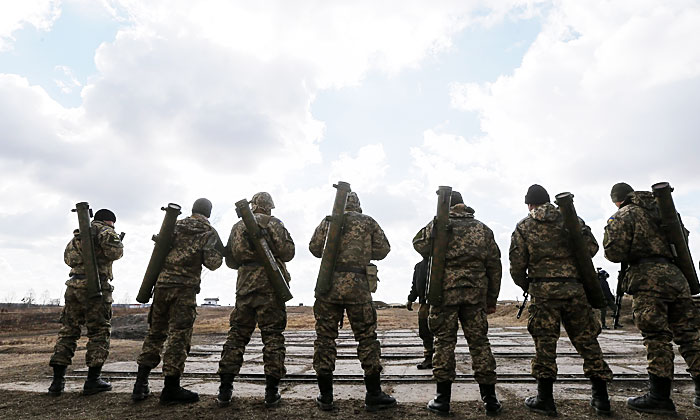
The outcome of the war in Ukraine will be decided by special operations forces. And not Ukrainian.
Wiki: Special operations (S.O.) are military operations that are considered “special” (that is, unconventional), usually carried out by dedicated special forces units.
Special operations are performed independently or in conjunction with conventional military operations. The primary goal is to achieve a political or military objective where a conventional force requirement does not exist or might adversely affect the overall strategic outcome. Special operations are usually conducted in a low-profile manner that aims to achieve the advantages of speed, surprise, and violence of action against an unsuspecting target. Special ops are typically carried out with limited numbers of highly trained personnel that are able to operate in all environments, utilize self-reliance, easily adapt to and overcome obstacles, and use unconventional combat skills and equipment to complete objectives. Special operations are usually implemented through specific, tailored intelligence.[1]
The decade 2003–2012 saw U.S. national security strategy rely on special operations to an unprecedented degree. Identifying, hunting, and killing terrorists became a central task in the Global War on Terrorism (GWOT). Linda Robinson, Adjunct Senior Fellow for U.S. National Security and Foreign Policy at the Council on Foreign Relations, argued that the organizational structure became flatter and cooperation with the intelligence community was stronger, allowing special operations to move at the “speed of war”.[2] Special Operations appropriations are costly: Its budget went from $2.3 billion in 2001 to $10.5 billion in 2012.[2] Some experts argued the investment was worthwhile, pointing to the raid in May 2011 that killed Osama bin Laden in Abbottabad, Pakistan. Others claimed that the emphasis on Special Operations precipitated a misconception that it was a substitute for prolonged conflict. “Raids and drone strikes are tactics that are rarely decisive and often incur significant political and diplomatic costs for the United States. Although raids and drone strikes are necessary to disrupt dire and imminent threats…special operations leaders readily admit that they should not be the central pillar of U.S. military strategy.”[2]Instead, Special Operations commanders stated that grand strategy should include their “indirect approach”, which meant working with non-U.S. partners to accomplish security objectives. “Special Operations forces forge relationships that can last for decades with a diverse collection of groups: training, advising, and operation alongside other countries’ militaries, police forces, tribes, militias or other information groups.”[2] 

[How about the Right Sector and volunteer battalions, whose resources are so envied by the Ukrainian military, in light of recent revelations that Kolomoisky is simply a front for US financing? – KR]

***
The recent events in Donbass deserve a closer look. The disturbing chronicle is as follows:

1. On May 22 at 13.00 from the Kambrod district of the city of Lugansk the police received a report from local residents that there was a suspicious group of armed men in camouflage calling themselves militias. Because the unknown were asking about the location of military bases, the townspeople became suspicious. To Kambrod went a rapid response team of the Ministry of Interior of LPR. It was fired on. During the ensuing fighting some of the strangers were killed, one detained. On his person was discovered a Western style camouflaged uniform, a mask and a list of unidentified phone numbers.

Lugansk is conducting passport checks to identify persons illegally residing on the territory of the city.

2. On May 23 at 17.40 on the territory of Donetsk region between checkpoints “Gorlovka” (under the control of DPR militia) and “Mayorsk” (held by the armed forces of Ukraine) the car of the Joint Center for Control and Coordination (SCCC) was fired on from automatic small arms. In the car was a head of the Russian office at SCCC, Colonel-General Alexander Lentsov, and the accompanying officers. The group was returning from the village of Shirokino, where there are continued clashes and shelling.

The attack on Lentsov’s car was not successful.

3. On the same day at 18.50 near the village of Mikhailovka on a land mine (according to other sources — an anti-personnel mine MON-50) a convoy of three cars was blown up and then shot at with machine guns. In one of them was the popular commander of the “Ghost” battalion of LPR army, Alexey Mozgovoy. The battalion commander was killed, along with six people accompanying him.

Let us leave aside bitter disputes immediately erupted about who actually killed Mozgovoy: his own (as argued by Kiev), “Ukrainian partisans” from the group “Shadows” (insists their leader Aleksandr Gladky) or someone very professional subversive group, specially sent to LPR for the elimination of Mozgovoy. Something else is more important. The sum of events of the last days, in my opinion, shows that a subversive war had sharply intensified in Novorossia. Intensified by whom is a separate issue. And more about it – below.

For now we will make another assumption. All winter military analysts on both sides of the front fed us with forecasts: the snow will melt, the thaw will be over, and the war for Donbass will ignite with a new force. And what? The snow is long gone, the land in those parts had dried up a month ago. But no one is going on the offensive, the parties are limited only to shooting weapons of all calibers.

The issue is that the nature of the civil war in Ukraine has changed dramatically.

Vladimir Putin already clearly stated that he will not allow anyone to destroy People’s Republics of Donbass. But Petro Poroshenko is not only unable to give his military the command “Stop!”, but even has no right to soften the hawkish rhetoric in Kiev. In this case, the President will simply choke on the smoke from burning tires. So all fall and winter both sides of the confrontation were digging trenches, building bunkers, mined fields, resupplied, trained and equipped combat units. This gigantic work produced a result.

At the front formed a kind of military parity, when any attempt to advance is fraught with high losses, but does not guarantee any reasonable result. What may be the goal of any offensive today? As for the militia, and for the Ukrainian military?

The militia decided not to go to Kiev last year. Did not take Mariupol, although they were just two steps away from it. In turn, the Ukrainian army and volunteer battalions unsuccessfully and incompetently fought all fall for a tiny (even at the scale of this war) Donetsk airport. How could this army seriously at least try to take control of the metropolis of one million people? Yeah, on the streets of a hostile Donetsk alone a 60 thousand-strong group that is involved on the part of Kiev in the so-called ATO will just dissolve, melt away and will be beaten by the enraged townspeople. And there are still Lugansk, Gorlovka, etc. Where can the Ukrainian military score so many garrisons?

So is it coming down to a so-called frozen conflict in Donbass? Like Transnistria? If there was no one standing behind Poroshenko’s regime, it would have most likely happened. But far beyond the borders of Ukraine there are many forces that need endless war in these parts.

Let’s skip the politicians and take the military — they are more frank and “militarily” straight forward. For example, U.S. Lieutenant General John Mulholland, from January 2015, the Deputy Director of CIA for military affairs. In a recent meeting with influential politicians in Washington, he declared that “everything must be done to draw Russia into a war with Ukraine”.

How can in such a difficult and risky business  General Mulholland help personally? Oh, he has skills. In recent past, the current deputy director of the CIA served as the deputy commander of special operations forces of the Armed forces of the United States. That is, Mulholland for four years supervised professional saboteurs and spies. Strangely after his joining the CIA it appeared that special operations forces today bear the brunt of the fighting in Donbass.

If so, than these are certainly not Ukrainian special ops. But if there are Ukrainian subversive groups in Donbass, then they are just a back up of the others. Because Kiev had only just begun to create their own special units of this type (“SP” wrote in detail in April about it).

However, the Ukrainian General staff for several months had a special ops directorate. There’s even a commander — Colonel Sergey Krivonos. But it is only in the beginning of the way. At least in April Krivonos said: “We have a deadline, so we have to start creation of special operations forces as soon as possible and not talk, but act concretely.”

Who, then, is fighting instead of Krivonos, who has a deadline? We will look through the old binders. For example, here is a report from July of last year. In an atmosphere of extreme secrecy 180 commando-instructors arrived in Kiev from the American special ops base in Fort Benning (GA). All speak Russian fluently. Foreign guests, without delay, were transferred to Mariupol, where they commenced the training of Ukrainian students. But we don’t know if the organized by Americans Mariupol special purpose courses are only about theory? Or is there supposed to be battle practice? And if Yes, then do the guests from the USA participate?

Second. There is a ton of information that the Georgian forces, already graduated from the Fort Benning school, are swarming in Donbass. For example, take the headline story of the capture on May 16 near the city of Schastje of the two wounded either former or current Russian special ops fighters from the 3rd brigade of GRU of the General staff of the Russian Armed forces, captain Evgeny Erofeev and Sergeant Alexander Alexandrov. In Ukraine a debate is raging: who had really captured our military? Who should receive the medals? Personnel of the 92nd mechanized brigade of the armed forces or the 24-th attack battalion “Aidar”? And maybe members of the military counterintelligence of SBU?

However, here is a comment of the deputy corps commander of the Ministry of Defence of DPR, Eduard Basurin: “There is a reason for all this confusion of Kiev, about who exactly participated in the capture of these fighters: soldiers of the 92nd brigade of the Ukrainian armed forces, or punishers from “Aidar”, or SBU. According to updated information of our intelligence, that day in the area there was a subversive group of Georgian spetsnaz“.

Basurin said that the base camp of Georgian spetsnaz operates under the cover of a training center of the Ukrainian national guard and is located in the district of Severodonetsk. So its existence was only known to the SBU. Neither 92nd brigade, nor “Aidar” knew about it. Therefore, having participated in the overall battle, they believe that when they shout in Kiev “Glory to the heroes!”, it is about them. And only them.

Note that reports about the participation of Georgian commandos broke through the veil of military secrecy even before. It was reported in the press that Alexander Grigolashvili who died in Donbass on December 18, 2014 served in the special forces of the Ministry of Defense of Georgia. Even earlier, in the battle for the Donetsk airport was killed either former or current Georgian commando Tamaz Sukhiashvili.

[Interestingly, one of the most famous Novorossia commanders Givi is Georgian, who grew up in Donbass, as many people of the Soviet Union moved freely and settled outside of their home Republics – KR]

There is even more evidence about the participation in the fighting in the South-East of Ukraine of special forces from Poland. So, on December 8 of last year, militia radio intelligence intercepted conversations of the enemy in Polish language. And after a few hours, on the night of December 9, 11 kilometers from the settlement of Nikishino there was a clash with a subversive group of eight people. All of them were killed. A detailed examination discovered stripes of the special forces regiment “Jednostka Wojskowa Komandosów” of the Armed forces of Poland.

On June 26, 2014 near the height of Saur-Grave a sniper from Poland was killed, the latest large-caliber American rifle was found by his side. Such weapons are used only by spetsnaz.

Earlier, on June 16, 2014, at the crash site of the downed by militia military transport aircraft Il-76 of the Ukrainian air force many charred documents in Polish were found. Although, whether it was a foreign spetsnaz or ordinary mercenaries, is impossible to conclude. However — it’s a possibility.

According to militia intelligence, there are nineteen subversive groups operating today on the side of the enemy, formed from commandos arrived from beyond the borders of Ukraine. It is obvious that in the coming months they will not let the war in Donbass fade away. No matter what the politicians say.
Pentagon prepares Romania for conflict with Russia, NATO consolidates control of Black Sea

From Rick Rozoff, Stop NATO
April 9, 2015

We have compiled a number of  official documents by the US military and its NATO allies as well as press reports which shed light on US-NATO War preparations directed against Russia.  

These reports are for informational purposes only. 

Operation Atlantic Resolve-South: Pentagon Prepares Romania For Conflict With Russia

U.S. Army Europe
April 5, 2015

BUCHAREST, Romania: Leadership assigned to 2nd Squadron, 2nd Cavalry Regiment met with their military counterparts assigned to the Training and Doctrine Command (TRADOC,) Romanian Land Forces (ROULF,) at the Land Forces Headquarters in Bucharest, Romania on Apr. 2, 2015.

Amongst the leaders representing 2nd Squadron “Cougar,” were Lt. Col. Theodore A. Johnson, 2nd squadron commander; Command Sgt. Maj. Peter D. Johnson, squadron command sergeant major; 1st Lt. Nathan P. Swire, a liaison officer and 2nd Lt. William Crawford, a public affairs liaison, both assigned to the squadron…

“The meeting reflected the strong relationship that is developing between our military organizations,” said Johnson. “We have established the course for our combined efforts to improve military’s capabilities to conduct operations with NATO Allies…”

Copyright US Army Europe, 2015

Commitment To NATO: U.S. Army Supports Latvian Special Forces Drill

U.S. Army Europe
April 7, 2015

U.S. Army Aviators support Latvian Spec. Ops. training
By Capt. Scott C. Hetzel

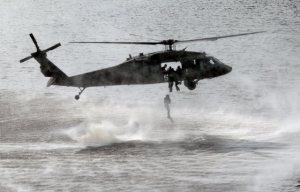
KATTERBACH, Germany: Aviators from the Bravo Company, 3-158th Assault Helicopter Battalion, 12th Combat Aviation Brigade, provide aviation support for helocast training April 2, 2015, with Soldiers from the Latvian Special Forces over the Daugava River in Latvia.

Helocasting is a technique used by small unit, special operations forces to conduct airborne insertion into an area of operations, usually over water.

The “Stormriders” from 3-158th are currently deployed to Latvia in support of Operation Atlantic Resolve.

Operation Atlantic Resolve is a demonstration of continued U.S. commitment to the collective security of NATO…in the region, in light of Russia…

Army Europe is leading the Operation Atlantic Resolve enhanced land force multinational training and security cooperation activities taking place across Estonia, Latvia, Lithuania and Poland to ensure multinational interoperability, strengthen relationships among allied militaries, contribute to regional stability and demonstrate U.S. commitment to NATO.

Copyright US Army Europe, 2015

Ukraine To Sign Military, Technical Cooperation Agreement With NATO: Yatseniuk

Interfax-Ukraine
April 8, 2015

Ukraine to sign military and technical cooperation agreement with NATO – Yatseniuk

Ukrainian Prime Minister Arseniy Yatseniuk has said that the Ukrainian government will sign an agreement on military and technical cooperation with NATO, and the Armed Forces of Ukraine will seek to meet NATO standards.

“The government is signing an agreement on cooperation in the field of support with NATO. It is an agreement on support between the Ukrainian Cabinet and NATO, which envisages the implementation of four trust projects with NATO, including military and technical cooperation, communications, new communications and information technologies,” Yatseniuk said at a government meeting on Wednesday.

He said that Ukraine needed to rebuild its armed forces using the example of the strongest armies and associations which are fighting for global peace, and which adhere to NATO standards.

“We are moving in this direction,” Yatseniuk added.

Copyright Interfax Ukraine, 2015

Pentagon, NATO Gear Up For 21st-Century War In Europe

U.S. Army Europe
April 5, 2015

17 Nations get lasered up for Saber Junction 15
By Sgt. Jacob A Sawyer (USAREUR)

HOHENFELS, Germany: More than 4,700 participants from 17 Allied and European partner nations have arrived here for exercise Saber Junction 15. But before most of them do anything, they’ve got to get their lasers.

At the beginning of every training rotation, all Soldiers, vehicles and weapons systems are required to receive a Multiple Integrated Laser Engagement System, or MILES, that allows the training engagements to occur and record the data for analysis and feedback during after-action reviews.

The MILES warehouse at Hohenfels is responsible for the installation of vehicle MILES components, personnel MILES, and the overall integration into the JMRC Hohenfels Training Area battlefield.During Saber Junction 15, the MILES warehouse will install battle tracking systems on over 1,000 vehicles and 3,100 personnel…

Copyright US Army Europe, 2015

Georgia, Romania: NATO Consolidates Control Of Black Sea

Ministry of Defence of Georgia
April 6, 2015

Meeting between Defence Ministries of Georgia and Romania

Within the official visit to Georgia, Defence Ministries of Georgia and Romania held meeting at the MoD today.

At the beginning of the meeting, Mindia Janelidze expressed gratitude for supporting Georgia’s territorial integrity and sovereignty, as well as Georgia’s Euro-Atlantic aspiration. The sides overviewed regional security issues.

Mindia Janelidze delivered information to his Romanian counterpart on the performed and scheduled reforms in the Georgian defence sphere. As Georgian Defence Minister outlined the top priority of 2015 is effective execution of the Substantial NATO-Georgia Package and thanked Romanian side for readiness to send a representative to NATO Core Team…

Very soon NATO Core Team will start active work for the implementation of NATO-Georgia Substantial Package…

Copyright Ministry Defense Georgia, 2015

NATO Naval Group Drills With Moroccan Navy

North Atlantic Treaty Organization
Allied Maritime Command

April 7, 2015

SNMG2 trains with Royal Moroccan Navy

ATLANTIC OCEAN: Ships assigned to Standing NATO Maritime Group Two (SNMG2) recently completed passing exercises with the Royal Moroccan Navy (RMN) off the coast of Casablanca following the Group’s visit to the city.

Led by Rear Adm. Brad Williamson (USA), SNMG2 is currently comprised of the U.S. flagship USS Vicksburg (CG 69), Canadian ship HMCS Fredericton (FFH 337), Italian ship ITS Aliseo (F 547), German oiler FGS Spessart (A 1442), Turkish ship TCG Goksu (F 497) and French oiler FS Marne (A 630).

RMN ships RMNS Allal ben Abdellah (F 615) and RMNS Hassan II (F 612) participated in the exercises at sea…

These exercises were incredibly valuable for NATO, and I am extremely honoured to have trained with our partners in the Royal Moroccan Navy,” said Williamson. “The professionalism and precision in which they operate their ships truly impressed me. NATO’s partner nations are critical to the security of the Mediterranean and we welcome their robust participation with NATO in the future…”

 Copyright NATO, 2015

Poland Erects Observation Towers On Russian Border

Polish Radio
April 6, 2015

Poland places observation towers by Russian border

Poland’s 200-kilometre land border with the Russian Kaliningrad exclave is to be bolstered with the construction of six observation towers.

The towers – which range in height between 35 and 50 metres – are to aid border guards in monitoring the border 24 hours a day, with images streamed to local border control posts.

“We are currently in the test phase of the technical installations on the towers,” Mirosława Aleksandrowicz from the Warmia-Masurian Border Guard told the PAP news agency, adding that “we plan to be fully operational by June this year”.

The total cost of the investment is over PLN 14 million, with 75 percent of the cash coming from the EU’s External Borders Fund.

Poland’s border with Russia is also the external border of the European Union, and has four road crossings into the Kaliningrad exclave, in Gronowo, Grzechotki, Bezledy and Gołdap.

Last year, 3.2 million Poles and 3.3 million Russians passed through the border crossings, up from 2.9 million Poles and 3.2 million Russians passing through in 2013, PAP reports.

Copyright Polish Radio, 2015

U.S. Launches Yet More War Games In Estonia

UNIAN
April 6, 2015

Estonia and US start joint military exercises

Estonian army units on Monday began military exercises with the U.S. Air Force, Baltic news portal Delfi.lt has reported.

“Within the framework of the exercises, the military will work out techniques of defensive battles and constraints,” the commander of the Estonian Artillery Battalion Kaarel Mäesalu said, according to Ukrainian newspaper Europeiska Pravda.

“In addition, soldiers will be able to practice giving military assistance to allied aircraft,” Mäesalu said.

The exercise will take place in two stages. The first stage will last until April 9 and will focus on tactical activities and exercises, including defense from air attacks.

The second stage of exercises will start from April 10 and will include shooting from 155mm FH70 howitzers, and exercises involving F-16 fighter aircraft.

Copyright UNIAN, 2015

U.S. May Arm Ukraine This Year: Bellicose Ex-Envoy

Ukrinform
April 6, 2015

United States may give weapon to Ukraine this year – former ambassador

KYIV: Former U.S. ambassador to Ukraine (2003-2006) John Herbst believes that Washington will decide on arms supply to Ukraine this year.

He said this in an interview to Inter Ukrainian TV channel.

“We must stop aggression of Putin here in Ukraine. I do not think that the U.S. president understands that. I think he is short-sighted and does not see the depth of problem and, therefore, has not yet decided on issue of arms supplies to Ukraine,” Herbst said.

At the same time, he added that American political circles understood that the issue concerned the vital interests of the United States.

“So I think that this year Washington will decide on the supply of arms of Ukraine, but the president has not approved that so far,” he said.

According to Herbst, arms supplies to Kyiv could reduce the likelihood of a new attack by Russia.

Copyright Ukraine Inform 2015

U.S. Shifts A-10s To Romania

U.S. Air Forces in Europe
U.S. Air Force Africa

April 2, 2015

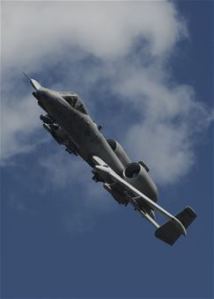
A-10s deploy to Romania for Operation Atlantic Resolve
By Staff Sgt. Joe W. McFadden
52nd Fighter Wing Public Affairs

CAMPIA TURZII, Romania: Twelve U.S. Air Force A-10 Thunderbolt IIs deployed as a 90-day theater security package in support of Operation Atlantic Resolve to Campia Turzii, Romania, March 30.

As part of the deployment, the U.S. and Romanian air forces will be flying together over the plateaus in the heart of Transylvania for Dacian Thunder 2015.

The U.S. Air Force’s 354th Expeditionary Fighter Squadron’s 12 A-10 Thunderbolt II aircraft and the Romanian air force’s 71st Air Base’s MiG-21 fighter aircraft will conduct the training to increase relations and interoperability while building upon both nations’ joint capabilities and ensuring a stronger partnership.

About 200 Airmen and support equipment from the 355th Fighter Wing at Davis-Monthan Air Force Base, Arizona, and the 52nd Fighter Wing at Spangdahlem Air Base, Germany, will participate as a combat capable force able to respond to a wide variety of operations.

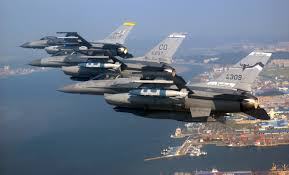
The A-10 supports Air Force missions around the world as part of the U.S. Air Force’s current inventory of strike platforms, including F-15 and F-16s. As part of Operation Atlantic Resolve, the aircraft will later forward deploy to locations in to reassure Eastern European NATO countries…

Copyright US Air Force, 2015

“If NATO Goes To War”: U.S. Trains With Estonian Joint Terminal Attack Controllers

U.S. Air Forces in Europe
U.S. Air Force Africa

April 2, 2015

Pilots, ground forces exercise Forward Air Controller (Airborne) mission over Estonia
By 1st Lt Allie Delury
31st Fighter Wing Public Affairs

Ämari Air Base, Estonia: At the invitation of the Estonian government, American pilots from the 510th Fighter Squadron at Aviano Air Base, Italy, have a unique opportunity to learn the value of the Forward Air Control (Airborne) mission with Estonians from Amari Air Base and U.S. instructor pilots from Luke Air Force Base.

FAC(A)s provide control of both airborne and ground forces in a close air support role and work closely with the ground commander to coordinate ground targets and de-conflict air assets. This flying training event ensures that pilots gain valuable experience with low-level flying and work with Estonian Joint Terminal Attack Controllers on the nearby Tapa Range…

“It’s important to work with all NATO allies because if we ever go to war, we have to understand each other and understand how different nations function,” said Piirisild. “The main mission is to enhance cooperation between the United States Air Force, NATO and Estonia…”

 Copyright US Air Force 2015

24-Hour War Production: Ukraine “Hits Unemployment” With Tanks, Armored Personnel Carriers – Poroshenko

Interfax-Ukraine
April 4, 2015

Poroshenko: we hit unemployment with tanks, APCs

Ukrainian President Petro Poroshenko again stressed that Ukrainian defense industry has picked up steam and new jobs have been created.

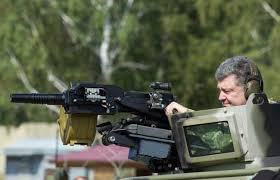
“Ukrainian defense industry that switches to three-shift operation is quickly boosting Ukraine’s military power,” the head of state said in the training center of the National Guard of Ukraine in Novi Petrivtsi (Kyiv region) on Saturday.

He said that “we hit unemployment with tanks and APCs.”

Poroshenko said that thousands of new jobs that have been created at defense enterprises is a contribution in restoration, including in Ukraine’s industrial potential.

An Interfax-Ukraine correspondent reported that on Saturday the presentation of weapon and military equipment samples was held in the training center of the National Guard of Ukraine in Novi Petrivtsi with the participation of the Ukrainian president.

Products of Ukroboronprom State Concern and some other Ukrainian enterprises were exhibited. Special exporters of Ukroboronprom also showed modern devices and equipment made by foreign companies..

Copyright Interfax, 2015

Black Sea: U.S. F-15s To Participate In War Games In Bulgaria

Sofia News Agency
March 31, 2015

USAF F-15s to Take Part in Military Drills in Bulgaria from April 10

US Air Force F-15 fighter jets will arrive in Bulgaria next month to join military exercises in the eastern European country, Reuters reported on Tuesday.

Up to 12 F-15s will arrive after Apirl 10, the newswire quoted a Bulgarian defence ministry official as saying.

The deployment, part of the Pentagon’s Operation Atlantic Resolve, will take place from April 10 to June 30.

The operation aims to demonstrate the commitment of the US military to NATO allies in view of tension along the Alliance’s flank in eastern Europe prompted by Russia’s involvement in the conflict in Ukraine.

Moscow has denied Western accusations of providing support to pro-Russian rebels in Ukraine.

Copyright Sofia New Agency 2015

U.S. Deploys F-15s For Impending Conflict In Europe

U.S. Air Forces in Europe
U.S. Air Force Africa

April 3, 2015

ANG general welcomes F-15 deployment to Europe
By Staff Sgt. Ryan Crane
USAFE-AFAFRICA Public Affairs

LEEUWARDEN AIR BASE, Netherlands: The second theater security package consisting of twelve F-15C Eagle fighter aircraft arrived at Leeuwarden Air Base, Netherlands, March 31 through April 1, marking the beginning of their six-month deployment to Europe.

The 125th Fighter Wing, Florida Air National Guard, Jacksonsville, Fla., leads this first ANG theater security package to deploy in support of Operation Atlantic Resolve. The aircraft and Airmen are based out of units in Florida, Oregon, California, Massachusetts and various bases throughout Europe. Regardless of their origin, together, they make up the 159th Expeditionary Fighter Squadron.

Maj. Gen. Eric Vollmecke, ANG assistant to the commander of U.S. Air Forces in Europe and Air Forces Africa, welcomed the Airmen and stressed the importance of the TSP in Europe during a visit April 3.

“We are here to reinforce to our allies that the security of Europe is a priority for the U.S.,” Vollmecke explained to the 159th EFS.

The squadron will fly with NATO allies and support OAR [Operation Atlantic Resolve], a demonstration of U.S. European Command and United States Air Forces in Europe’s continued commitment to the collective security of NATO…in the region…

Copyright US Army Europe, 2015

Turkey: NATO Commander Speaks On Future Air and Space Power

North Atlantic Treaty Organization
Allied Command Transformation

April 3, 2015

SACT participates to the International Conference on Air and Space Power

Supreme Allied Commander Transformation (SACT), French Air Force General Jean-Paul Paloméros participated to the International Conference on Air and Space Power (ICAP) at Turkish Air War College, April 2nd 2015.

The ICAP 2015, an International Conference organized in Turkey for the second time, was hosted by Air War College with Turkish Air Force’s contribution. The subjects discussed during ICAP will ensure that today’s and future changing principles of Air and Space Power are clearly understood with the contributions of speakers from partner and allied nations from all over the world..

Copyright NATO , 2015

Reposting on occasion of attack on Yemen: Open Letter on Saudi Arabia

Open Letter
Anthony B. Newkirk

Ileana Ros-Lehtinen (R-FL) ChairmanHouse Committee on Foreign Affairs Howard L. Berman (D-CA)Ranking MemberHouse Committee on Foreign Affairs

June 22, 2012

Honorable Members:

On October 20, 2010, the Obama administration announced approval of projected arms transfer agreements with the Kingdom of Saudi Arabia totaling over $60 billion in value. On February 16, 2011, I wrote a letter to you requesting further information. As I have not yet received a response, I am resubmitting my questions in a more public forum.

It is not hard to fathom why the United States and Saudi Arabia have very close ties. The perception that our country is dependent on “Arab oil” is firmly implanted in popular opinion. But the topic of security assistance for Saudi Arabia is not, an example being the 2010 Saudi arms deal. Of course, this is hardly the only problem facing our nation in this time of assaults on job security, social services, and civil liberties. It is also far from being the only problem in the Middle East. However, the Saudi arms deal focuses attention on a range of issues related to America’s fiscal soundness, security, and defense of human rights…

U.S. Guided Missile Destroyer To Enter Black Sea

Sofia News Agency
April 2, 2015

US Navy Destroyer Jason Dunham to Enter Black Sea Friday

US Navy guided-missile destroyer Jason Dunham will enter the Black Sea on Friday in support of Operation Atlantic Resolve, the US 6th Fleet has announced.

“The ship’s presence in the Black Sea demonstrates the United States’ commitment to working closely with allies to enhance maritime security and stability, readiness, and naval capability,” the US 6th Fleet said in a statement

Some 750 US Army tanks and thousands of troops were deployed to Lithuania, Latvia and Estonia for Atlantic Resolve activities, in a move described as a means “to deter Russian aggression.”

US and NATO have said they are holding Atlantic Resolve drills to strengthen security in the alliance’s member states in light of the conflict in Ukraine.

Moscow has repeatedly expressed concern over growing number of NATO military drills in eastern Europe.

The build-up of NATO forces in Eastern Europe “is an unprecedentedly dangerous step” that violates Russia’s agreements with the alliance, a Russian Foreign Ministry spokesman said on Thursday.

Copyright  Sofia New Agency 2015

This compilation was undertaken by Rick Rozoff, initially published on STOP NATO.
  http://www.globalresearch.ca/pentagon-prepares-romania-for-conflict-with-russia-nato-consolidates-control-of-black-sea/5441719

The U.S. deployed Special Forces to 70% of the nations of Earth — over 100 countries

Posted on AlterNet, January 24, 2015
By Nick Turse / Tom Dispatch

In the dead of night, they swept in aboard V-22 Osprey tilt-rotor aircraft.  Landing in a remote region of one of the most volatile countries on the planet, they raided a village and soon found themselves in a life-or-death firefight.  It was the second time in two weeks that elite U.S. Navy SEALs had attempted to rescue American photojournalist Luke Somers.  And it was the second time they failed.

On December 6, 2014, approximately 36 of America’s top commandos, heavily armed, operating with intelligence from satellites, drones, and high-tech eavesdropping, outfitted with night vision goggles, and backed up by elite Yemeni troops, went toe-to-toe with about six militants from al-Qaeda in the Arabian Peninsula.  When it was over, Somers was dead, along with Pierre Korkie, a South African teacher due to be set free the next day.  Eight civilians were also killed by the commandos, according to local reports.  Most of the militants escaped.

That blood-soaked episode was, depending on your vantage point, an ignominious end to a year that saw U.S. Special Operations forces deployed at near record levels, or an inauspicious beginning to a new year already on track to reach similar heights, if not exceed them.

During the fiscal year that ended on September 30, 2014, U.S. Special Operations forces (SOF) deployed to 133 countries — roughly 70% of the nations on the planet — according to Lieutenant Colonel Robert Bockholt, a public affairs officer with U.S. Special Operations Command (SOCOM).  This capped a three-year span in which the country’s most elite forces were active in more than 150 different countries around the world, conducting missions ranging from kill/capture night raids to training exercises.  And this year could be a record-breaker.  Only a day before the failed raid that ended Luke Somers life — just 66 days into fiscal 2015 — America’s most elite troops had already set foot in 105 nations, approximately 80% of 2014’s total.

Despite its massive scale and scope, this secret global war across much of the planet is unknown to most Americans.  Unlike the December debacle in Yemen, the vast majority of special ops missions remain completely in the shadows, hidden from external oversight or press scrutiny.  In fact, aside from modest amounts of information disclosed through highly-selective coverage by military media, official White House leaks, SEALs with something to sell, and a few cherry-picked journalists reporting on cherry-picked opportunities, much of what America’s special operators do is never subjected to meaningful examination, which only increases the chances of unforeseen blowback and catastrophic consequences.        

The Golden Age

“The command is at its absolute zenith.  And it is indeed a golden age for special operations.”  Those were the words of Army General Joseph Votel III, a West Point graduate and Army Ranger, as he assumed command of SOCOM last August. 

His rhetoric may have been high-flown, but it wasn’t hyperbole.  Since September 11, 2001, U.S. Special Operations forces have grown in every conceivable way, including their numbers, their budget, their clout in Washington, and their place in the country’s popular imagination.  The command has, for example, more than doubled its personnel from about 33,000 in 2001 to nearly 70,000 today, including a jump of roughly 8,000 during the three-year tenure of recently retired SOCOM chief Admiral William McRaven.

Those numbers, impressive as they are, don’t give a full sense of the nature of the expansion and growing global reach of America’s most elite forces in these years.  For that, a rundown of the acronym-ridden structure of the ever-expanding Special Operations Command is in order.  The list may be mind-numbing, but there is no other way to fully grasp its scope.   

The lion’s share of SOCOM’s troops are Rangers, Green Berets, and other soldiers from the Army, followed by Air Force air commandos, SEALs, Special Warfare Combatant-Craft Crewmen and support personnel from the Navy, as well as a smaller contingent of Marines.  But you only get a sense of the expansiveness of the command when you consider the full range of “sub-unified commands” that these special ops troops are divided among: the self-explanatory SOCAFRICA; SOCEUR, the European contingent; SOCKOR, which is devoted strictly to Korea; SOCPAC, which covers the rest of the Asia-Pacific region; SOCSOUTH, which conducts missions in Central America, South America, and the Caribbean; SOCCENT, the sub-unified command of U.S. Central Command (CENTCOM) in the Middle East; SOCNORTH, which is devoted to “homeland defense”; and the globe-trotting Joint Special Operations Command or JSOC — a clandestine sub-command (formerly headed by McRaven and then Votel) made up of personnel from each service branch, including SEALs, Air Force special tactics airmen, and the Army’s Delta Force, that specializes in tracking and killing suspected terrorists.

And don’t think that’s the end of it, either.  As a result of McRaven’s push to create “a Global SOF network of like-minded interagency allies and partners,” Special Operations liaison officers, or SOLOs, are now embedded in 14 key U.S. embassies to assist in advising the special forces of various allied nations.  Already operating in Australia, Brazil, Canada, Colombia, El Salvador, France, Israel, Italy, Jordan, Kenya, Poland, Peru, Turkey, and the United Kingdom, the SOLO program is poised, according to Votel, to expand to 40 countries by 2019.  The command, and especially JSOC, has also forged close ties with the Central Intelligence Agency, the Federal Bureau of Investigation, and the National Security Agency, among others.

Shadow Ops

Special Operations Command’s global reach extends further still, with smaller, more agile elements operating in the shadows from bases in the United States to remote parts of Southeast Asia, from Middle Eastern outposts to austere African camps. Since 2002, SOCOM has also been authorized to create its own Joint Task Forces, a prerogative normally limited to larger combatant commands like CENTCOM.  Take, for instance, Joint Special Operations Task Force-Philippines (JSOTF-P) which, at its peak, had roughly 600 U.S. personnel supporting counterterrorist operations by Filipino allies against insurgent groups like Abu Sayyaf.  After more than a decade spent battling that group, its numbers have been diminished, but it continues to be active, while violence in the region remains virtually unaltered. 

Votel now sits atop one of the major success stories of a post-9/11 military that has been mired in winless wars, intervention blowback, rampant criminal activity, repeated leaks of embarrassing secrets, and all manner of shocking scandals.  Through a deft combination of bravado and secrecy, well-placed leaks, adroit marketing and public relations efforts, the skillful cultivation of a superman mystique (with a dollop of tortured fragility on the side), and one extremely popular, high-profile, targeted killing, Special Operations forces have become the darlings of American popular culture, while the command has been a consistent winner in Washington’s bare-knuckled budget battles

This is particularly striking given what’s actually occurred in the field: in Africa, the arming and outfitting of militants and the training of a coup leader; in Iraq, America’s most elite forces were implicated in torture, the destruction of homes, and the killing and wounding of innocents;  in Afghanistan, it was a similar story, with repeated reports of civilian deaths; while in Yemen, Pakistan, and Somalia it’s been more of the same.  And this only scratches the surface of special ops miscues.  

In 2001, before U.S. black ops forces began their massive, multi-front clandestine war against terrorism, there were 33,000 members of Special Operations Command and about 1,800 members of the elite of the elite, the Joint Special Operations Command.  There were then also 23 terrorist groups — from Hamas to the Real Irish Republican Army — as recognized by the State Department, including al-Qaeda, whose membership was estimated at anywhere from 200 to 1,000.  That group was primarily based in Afghanistan and Pakistan, although small cells had operated in numerous countries including Germany and the United States

After more than a decade of secret wars, massive surveillance, untold numbers of night raids, detentions, and assassinations, not to mention billions upon billions of dollars spent, the results speak for themselves.  SOCOM has more than doubled in size and the secretive JSOC may be almost as large as SOCOM was in 2001.  Since September of that year, 36 new terror groups have sprung up, including multiple al-Qaeda franchises, offshoots, and allies.  Today, these groups still operate in Afghanistan and Pakistan — there are now 11 recognized al-Qaeda affiliates in the latter nation, five in the former — as well as in Mali and Tunisia, Libya and Morocco, Nigeria and Somalia, Lebanon and Yemen, among other countries.  One offshoot was born of the American invasion of Iraq, was nurtured in a U.S. prison camp, and, now known as the Islamic State, controls a wide swath of that country and neighboring Syria, a proto-caliphate in the heart of the Middle East that was only the stuff of jihadi dreams back in 2001.  That group, alone, has an estimated strength of around 30,000 and managed to take over a huge swath of territory, including Iraq’s second largest city, despite being relentlessly targeted in its infancy by JSOC.

“We need to continue to synchronize the deployment of SOF throughout the globe,” says Votel.  “We all need to be synched up, coordinated, and prepared throughout the command.”  Left out of sync are the American people who have consistently been kept in the dark about what America’s special operators are doing and where they’re doing it, not to mention the checkered results of, and blowback from, what they’ve done.  But if history is any guide, the black ops blackout will help ensure that this continues to be a “golden age” for U.S. Special Operations Command.


For the complete article,
http://www.alternet.org/world/us-dark-empire-has-secret-operations-over-100-countries