Russia’s position on space cooperation; U.S. opposes space treaty

Press Briefing by Foreign Ministry spokesperson Maria Zakharova
April 12, 2017

As you know, today is Cosmonautics Day, and I would like to wish you a happy one. Traditionally it is observed on a wide scale as an important event. Cosmonautics Day (International Day of Human Space Flight declared by the UN) is a good opportunity for focusing on some of the most important aspects of Russia’s space activity, in particular its international dimension.

Developing the country’s space capabilities is one of Russia’s national priorities, as President Putin has repeatedly stated. Designed through 2025, the Federal Space Programme provides for the development of all fundamental areas, including the study of planets of the solar system and the moon with the help of automated spacecraft and a manned space flight programme. I would like to draw your attention once again, considering that members of international media outlets are present here, and it is very important for us to make our assessments and our vision of this area of international cooperation clear to our foreign partners.

Russia is ensuring guaranteed access to outer space from its territory. Foreign policy priorities have been defined and are being consistently followed. Russia advocates the peaceful use of outer space and the prevention of an arms race in space.

Back in 2008, a Russian-Chinese draft international treaty on the prevention of the placement of weapons in outer space and the threat or use of force against outer space objects was submitted for consideration to the Disarmament Conference in Geneva. In 2014 an amended version of that document was submitted.

Essentially the only state that is opposed to the international community’s efforts in this area is the US. Under these circumstances, to enhance mutual confidence and transparency, back in 2004, Russia assumed a unilateral political commitment not to be the first to place weapons in outer space, and urged all responsible countries to follow suit. Many of them, including those that have significant space potential, have already become full participants to this initiative. Even more countries have co-sponsored a corresponding resolution of the UN General Assembly, which has been approved by an overwhelming majority of votes for three years in a row. Today, the international initiative regarding no first placement of weapons in outer space is the most effective, viable, cost-free, and transparent confidence-building measure in this sphere and it is gaining momentum. Of course, the main goal is to prevent an arms race in outer space.

It is noteworthy that back in 2005, at the Russia-EU summit in Moscow, an agreement was reached on combined efforts to prevent an arms race in space. We believe that these agreements still stand. We therefore have quite a few questions about the EU’s collective position, which was formed under pressure from Washington and obligates all EU countries to refrain from endorsing this simple and understandable resolution of the UN General Assembly for the third time in a row, which calls for dialogue in this area without even requiring any new obligations from EU countries, which cannot boast independence in their actions.

Furthermore, at the UN Outer Space Committee in Vienna, Russia put forward a host of important proposals designed to ensure the safety of space operations and the preservation of outer space as a secure, stable and conflict-free environment. Substantive talks are under way.

We are ready to work constructively on all these issues with all states in the interest of preserving the peaceful skies over our planet.

This is the first time we are observing this day and this holiday without our outstanding cosmonaut Georgy Grechko. He will forever remain in our hearts. His shining memory will live on. We regard everything that he has done for the development of the space industry and international cooperation in the peaceful use of outer space as an invaluable contribution. His name has been inscribed in gold letters not only in national history but also in the world history of cosmonautics.

http://www.mid.ru/en/press_service/spokesman/briefings/-/asset_publisher/D2wHaWMCU6Od/content/id/2725573

Russian Foreign Minister comments on Pence, McMasters statements, and chemical weapon investigation problems

From Ministry of Foreign Affairs, Russian Federation
April 17, 2017

Excerpts:

Question: Can you comment on rising tensions on the Korean Peninsula, taking into account US Vice President Mike Pence’s comment that the era of strategic patience is over in relations with North Korea and that all options are on the table to achieve security in the region?

Sergey Lavrov: I wouldn’t describe relations between North Korea and the Obama administration as an era of strategic patience, because the United States greatly restricted North Korea’s ability to develop the industries that could promote the nuclear or energy sectors. The UN Security Council adopted harsh sanctions against North Korea and condemned its policy.

If the figure of speech used by the US Vice President can be understood as a threat of a unilateral military solution, it is a highly risky path. We condemn Pyongyang’s opportunistic nuclear missile plans, which violate the numerous UN Security Council resolutions. But this does not mean that other countries can violate international law and use military force contrary to the UN Charter. I strongly hope that no unilateral actions will be taken similar to those we have recently seen in Syria, and that the United States will pursue the line President Donald Trump put forth during his election campaign.

Question: Can you comment on the statement by the US National Security Adviser Army Lieutenant General McMaster that “it’s time though, now, to have those tough discussions” with Russia over its support for Syria’s government and its “subversive actions” in Europe?

Sergey Lavrov: This is a complex question. I have no desire to comment on the unsubstantiated accusations made against Russia. First they concerned Ukraine, and now the focus has shifted to Syria. I have seen media reports that US or British officials are saying that they could cooperate with Russia if it [behaved] in Ukraine and, Syria, and now the Korean Peninsula has been added to the list. It appears that we must do something for somebody on the Korean Peninsula too, although we did not create the chaos that is reigning there. ISIS, and before it, al-Qaeda and Jabhat al-Nusra, are the offspring of opportunistic projects that involved our Western partners, primarily many US administrations, which began by supporting the mujahedeen in Afghanistan and praising them as freedom fighters, and continued this policy in Iraq and Libya. And now that these countries have been ruined, it appears that we must pay for the consequences. This is not how partners act. This approach is not acceptable to us. We will not listen to what President Trump’s adviser has said, but what President Trump himself has said, that he is optimistic when it comes to improving relations with Russia. We are ready for this.

Question: What issues are on the agenda of the upcoming Geneva meeting on the intra-Syrian settlement? Will it be political issues only, or will military issues also be discussed, in light of the recent air strike on the Syrian airfield and the coalition landing operation near Deir Ez-Zor?

Sergey Lavrov: The talks in Geneva will be held after May 3–4, that is, following a regular meeting in Astana. We hope that the UN Secretary-General’s Special Envoy for Syria, Mr Staffan de Mistura, will find a suitable date. It has been suggested that since the holy month of Ramadan begins in late May, it would be expedient to postpone the talks until after it ends. We are convinced that we must not lose momentum, especially in a situation when the political process has been brought into question. I am referring to the strike on the Shayrat airfield and the intention of many players in Syria, among the external opposition and in many countries in and outside the region, to use this situation to place the blame squarely on Bashar al-Assad. They seek to deviate from a political settlement through the expression of the will of the Syrian people themselves to conduct unilateral actions to overthrow the Syrian government. It is an alarming trend. As I have said, in pursuit of this goal, they are using the April 4 chemical weapons incident in Idlib, which was followed by the illegal US air strike on the airfield from which planes allegedly carrying chemical weapons took off. I have said repeatedly that we demand that an objective and unbiased investigation be carried out under the auspices of the OPCW with assistance from independent experts, and that this investigation be fully transparent.

I would like to remind you that we have pointed out a very strange coincidence: that the two groups of the OPCW Fact-Finding Mission (FFM) on the potential use of chemical weapons in Syria are chaired by UK citizens. We have said that this runs contrary to the principles of an international organisation, the structures of which must be maximally balanced. We have not received any response as yet, but we can regard a recent statement by UK Foreign Secretary Boris Johnson as an indirect response. He said in an interview that Damascus and Russia and Iran, which support it, are to blame for the chemical attack.  By way of evidence, he said that British scientists have analysed samples from the site of the attack, and that these have tested positive for sarin or a sarin-like substance. That’s an interesting coincidence: British citizens chairing the OPCW FFM don’t tell anyone anything, while British scientists have already analysed samples taken at the site of the incident. I believe we will be sending a request to the OPCW today demanding an explanation. I expect they will have to answer this time.

The situation is not simple at all. We hope that the majority of countries see what is going on. We will not permit anyone to derail the efforts to attain a political settlement in Syria under the UN Security Council resolution.

http://www.mid.ru/en/foreign_policy/news/-/asset_publisher/cKNonkJE02Bw/content/id/2729221

Russian Foreign Ministry comments before Tillerson visit: “We would prefer our interaction to reduce rather than aggravate international tensions.”

Ministry of Foreign Affairs, Russian Federation
April 11, 2017

In light of a visit by US Secretary of State Rex Tillerson, which begins today, we would like to express hope for productive talks. This is important not just for the future of Russian-US interaction but also for the international environment overall.

The current situation in Russian-US relations is more complicated than it has been at any point since the end of the Cold War. The previous US administration’s actions have seriously complicated them by trying to restrain the growth of Russia’s influence in international affairs and undermine its economic development through sanctions. Although these efforts have failed, they have also demonstrated Washington’s striving for global domination complemented with deliberations about “America’s exceptionalism”, which has sinister historical associations.

The Ukrainian crisis and the Syrian problem, although tragic and confusing, are the direct results of the irresponsible policies of the Obama administration, which wanted to hinder the natural evolution of a multipolar world. The US establishment tried and continues to try hypocritically to lay the blame at Russia’s door. But it was not Russia who provoked the unconstitutional coup in Ukraine or fanned the flames of the so-called Arab Spring.

Russia will not abandon its legitimate interests and will only cooperate on an equal basis, which does not please certain forces in Washington. We have always been open to candid dialogue with the United States on all issues on the bilateral and international agenda and for cooperation in the areas where we have similar goals. These include the fight against terrorism, non-proliferation of weapons of mass destruction, the settlement of regional conflicts, economic growth and many other areas where the conjunction of Russian and American efforts would benefit not just their people but humankind as a whole.

Therefore, we would like to use the upcoming talks to understand whether the United States is aware of the need to stabilise and normalise bilateral relations. We believe that idling is impermissible in bilateral relations, considering our countries’ responsibility for international security and strategic stability.

In this context, we would like to understand whether Washington intends to resume practical cooperation with Russia in the fight against terrorism, including in Syria. The recent US air strike at the Syrian Shayrat air base is an act of aggression against a sovereign state committed in violation of international law, and will most likely strengthen the terrorists.

We strongly hope that Washington will agree on an objective investigation with the OPCW involvement into the chemical poisoning of Syrians at Khan Sheikhoun on April 4. The West has accused the Syrian Government without good reason, although it is a fact that the Jabhat al-Nusra terrorists, who are operating in this area, manufactured chemical bombs.

In this situation, we are surprised by Washington’s disregard for reports about the use of chemical weapons by terrorists in the Middle East. There have been numerous chemical attacks not just in Syria but also in Iraq. Chemical weapons stockpiles have been found in eastern Aleppo after its liberation from the terrorists. However, the United States has not shown any interest in this information.

We also wonder when the West will dissociate itself from the notorious White Helmets and other pseudo-NGOs whose barefaced lies about the situation in Syria are eagerly taken up by the media. We wonder how much longer our American colleagues will rely on fake photo reports when taking decisions that can affect the lives of people in Syria.

We hope to learn what the United States will do in Libya, which has been split by NATO’s military intervention, just as Iraq. What plans do our American colleagues have for Yemen, where US weapons are used to bomb cities, killing civilians and aggravating the humanitarian catastrophe?

We hope that the United States will not refuse to attend international consultations on Afghanistan, the next round of which will be held in Moscow on April 14. These consultations aim to help launch the process of national reconciliation in that long-suffering country, as we told our American partners more than once.

We are gravely concerned about Washington’s plans regarding North Korea, considering hints about the unilateral use of a military scenario. We need to understand how this relates to the collective commitments to denuclearise the Korean Peninsula, which have been sealed in UN Security Council resolutions.

But above all we hope that the United States will use its influence on Kiev to neutralise the revenge-seeking sentiments of the Ukrainian party of war. Washington can also encourage the Kiev government to faithfully comply with its obligations under the Minsk Agreements. These agreements are the only way to settle a conflict that was provoked by radical nationalists’ intention to forcibly Ukrainianise all spheres of life in this multi-ethnic country.

We expect to hear US views on the entire range of issues pertaining to strategic security and stability in the Euro-Atlantic region.

As for bilateral agenda, the long list of irritants crated by Washington has not become shorter yet. Since nothing is being done to settle the problems in bilateral relations, we will have to take reciprocal measures.

Overall, we hope that the US Secretary of State will share with us Washington’s views on all issues of mutual concern. We are ready for any turn of events. However, we would prefer our interaction to help reduce rather than aggravate international tensions. We are not set for confrontation but for constructive cooperation and hope that this is what our American partners want, too.

http://www.mid.ru/en/foreign_policy/news/-/asset_publisher/cKNonkJE02Bw/content/id/2724848

Why is the news media citing man accused of kidnapping journalists as a credible source on Syrian chemical attack?

From Alternet

GRAYZONE PROJECT

With military intervention on the horizon, media outlets cite Shajul Islam, a doctor accused of working with extremists in Syria.
By Ben Norton

Photo Credit: Screenshot of video by Shajul Islam

Calls for regime change in Syria are once again filling the airwaves, and President Donald Trump has said he is considering further military intervention in the country.

(Update: After this article was published, the U.S. launched a missile attack on a Syrian government airfield, which ISIS subsequently exploited.)

Media outlets have been pouring fuel on the fire of war. One of the key voices calling for Western intervention that is being amplified by corporate news networks is Shajul Islam, a doctor in the al-Qaeda-controlled Syrian province of Idlib.

Islam has accused the Syrian government of carrying out a chemical attack on civilians. Dozens of major media outlets have cited his claims, while conceding that they have not been independently verified.

Meanwhile, these news publications have failed to disclose a crucial detail about the doctor: He was accused in court of kidnapping journalists in Syria.

In October 2012, Shajul Islam was arrested in the UK and charged with kidnapping two photographers, one British and one Dutch. He was accused of providing medical treatment for the Salafi jihadist extremist group in Syria that held the journalists hostage.

The case eventually fell apart and the charges against Islam were dropped because the prosecution was not able to hear evidence from the victims, who were the key witnesses. The attorney said this served “to frustrate the trial from the point of view of the prosecution.”

John Cantlie, one of the journalists Islam was accused of kidnapping, was unable to appear at the trial because he was still a hostage. He had been briefly freed in July 2012, but was soon kidnapped again — this time by ISIS. Cantlie was held with James Foley, the American journalist who was beheaded on camera by Mohamed Emwazi, an ISIS foreign fighter from London.

Islam’s younger brother, Razul, reportedly entered Syria to volunteer as a foreign fighter in the ranks of ISIS.

Sometime in 2016, Shajul Islam smuggled himself back into Syria and is now working in Idlib.

AlterNet previously detailed how Idlib is the “heartland” of al-Qaeda, as even hawkish pundits who have repeatedly called for further Western military intervention in Syria have acknowledged.

None of these facts stopped major news outlets from citing Islam’s claims and social media posts in their reports on the alleged Idlib chemical attack, including CBS NewsFox News, McClatchy, the Daily Beast, Voice of America, the New York Daily News, the New York Post, CBC, Politico, the Independent, Vocativ, Bellingcat, Euronews, Middle East Eye, the Mirror, Metro, the Daily Mail, the Sun and UNILAD.

NBC News and Middle East Eye published entire profiles on Islam without identifying the past accusations against him.

For the rest of the article:

http://www.alternet.org/grayzone-project/shajul-islam-idlib-chemical-attack-syria-media

American involvement in Syria: Chris Hedges interviews investigative journalists Max Blumenthal & Ben Norton (VIDEO)

On Contact, Chris Hedges
April 16, 2017

https://www.rt.com/shows/on-contact/384914-uncivil-war-blumenthal-norton/video/

Chris Hedges is joined by Max Blumenthal, author and senior editor of Alternet’s Grayzone Project, and Ben Norton, reporter for Alternet. Following the US missile attacks on a Syrian airbase in response to an alleged chemical weapons attack, they discuss the US’ role in the Syrian conflict.

https://www.rt.com/shows/on-contact/384914-uncivil-war-blumenthal-norton/

South Korea to quadruple reward fee for North Korean defectors to $860,000

From CNN
March 5, 2017

Seoul South Korea is quadrupling its reward fee for defectors from North Korea who are willing to hand over classified information on the reclusive country’s military secrets.

The Ministry of Unification announced Sunday that it would pay up to 1 billion won ($860,000) — eclipsing the previous maximum of 250 million won.
A bill outlining the changes is set to be submitted and would offer substantial financial rewards for those able to provide intelligence and knowledge, which could enhance South Korea’s security, according to the ministry.
The bill will be considered in the National Assembly between February 28 and March 9, a Unification Ministry official said.

White Helmets handle deadly toxic “sarin gas” while lighting up cigarettes (Video)

From Rusvesna.su

April 14, 2017

With each passing day the White Helmets expose themselves as the ISIS – Al Qaeda jihadist scam most readers of this site know them to be.

It has been recently reported by the Swedish NGO Doctors for Human Rights (SWEDHR) that the White Helmets murdering babies, not save babies and imitating life-saving procedures.

Now we can see the White Helmets pretend to handle deadly toxic sarin gas, which we are sure will sent to John McCain Labs Inc., where Assad and Russia will be found guilty of launching a chemical strike on “beautiful babies”.

We wonder, upon watching forensics experts/chemical weapons investigators/freedom fighters/medical doctors/first responders, the White Helmets, why some guys have masks, others do not.

Why some guys have gloves, others do not.

Some White Helmets jihadists are even hanging around the sarin gas lighting up a smoke.

[at :42, a man in black is in the foreground with a cigarette in his mouth; at :46, he is seen behind a masked figure, blowing out the smoke]

It appears like the UK funded White Helmets is having a jolly good time hanging around, filming the collection of sarin gas for the western mainstream media to happily distribute around the world to western sheep giddy to go to start a world war and raise a black flag over Damascus.

 http://rusvesna.su/english/1492162721
[There is also a steady stream of vehicles going by on the other side of the street and a motorcyclist that pulls up nearby]

MIT professor exposes ‘egregious error’ & evidence tampering in US report on Syria sarin incident

From RT

April 14, 2017

A closer look at photos from the town of Khan Shaykhun shows that the chemical attack site was tampered with and that the US report blaming the Syrian government can’t be true, says the MIT professor skeptical of the White House narrative.

Massachusetts Institute of Technology Professor Theodore Postol, who wrote a preliminary review of the US government claims earlier this week and shared his findings with RT, examined photographs of the attack site and concluded that the report endorsed by the White House “could not be true.”

Senior US administration officials who briefed the media on Tuesday admitted the White House intelligence was partly “based on the pro-opposition social media reporting,” which “tells a very clear and consistent story about what we think happened.”

Postol’s six-page addendum, made public on Thursday evening, “unambiguously shows that the assumption in the [White House report] that there was no tampering with the alleged site of the sarin release is not correct.”

That assumption was “totally unjustified,” wrote Postol, “and no competent intelligence analyst would have agreed that this assumption was valid.”

By implication, the report was not reviewed and released by competent intelligence experts – “unless they were motivated by factors other than concerns about the accuracy of the report,” the professor added.

Postol’s key argument is a series of photographs of the crater where the container holding sarin was supposedly air-dropped. He pointed to a photograph of several men inspecting the site, wearing loose clothing and medical gloves.

“If there were any sarin present at this location when this photograph was taken everybody in the photograph would have received a lethal or debilitating dose of sarin,” he wrote. “The fact that these people were dressed so inadequately either suggests a complete ignorance of the basic measures needed to protect an individual from sarin poisoning, or that they knew that the site was not seriously contaminated.”

Another photo shows the crushed contained half-buried in the crater, while in other photos is has been dug up and repositioned.

On Thursday, CIA Director Mike Pompeo confirmed that it was his agency which concluded that the Syrian government was responsible for the chemical weapons attack in Khan Shaykhun, which persuaded Trump to fire 59 cruise missiles at a Syrian airbase last week.

“We were good, and fast,” Pompeo said at an event in Washington, DC, “and we got it right.”

The US missile attack caused tensions between Washington and Moscow, leading to a suspension of a military hotline intended to “deconflict” operations over Syria and the US-led coalition scaling back its strikes against Islamic State (IS, formerly ISIS/ISIL.)

The Syrian government has denied using or even possessing chemical weapons. Syria’s compliance with the Chemical Weapons Convention was certified by international observers in 2013, the Russian General Staff said, noting that this did not include two sites on territory controlled by the rebels.

https://www.rt.com/usa/384800-syria-gas-professor-addendum/

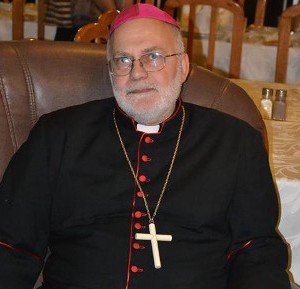
“Were it not for Syrian and Russia armed forces, we would have been slaughtered”: Syrian Bishop

April 12th, 2017 – Fort Russ News –
– Syriana Analysis – –  published for Fort Russ by Samer Hussein –

Published on Apr 12, 2017

The Berlin-based Syrian artist and political activist Hanin Elias has conducted an exclusive interview for Syriana Analysis portal with His Excellency, Jano Battah.

http://www.fort-russ.com/2017/04/were-it-not-for-syrian-and-russian.html

Why Russia doesn’t want a war with the United States

One doesn’t fight madness with madness.

From Rusvesna.su

April 12, 2017

Here’s why Russia doesn’t want to fight the United States in Syria (VIDEO) | Русская весна

If one wants to know why the modern Russian state and the Russian people are so averse to war, just take a look and the following charts.

Conservative estimates for Soviet deaths in the Great Patriotic War/Second World War are just over 26 million. Other scholars take the aggregate total of deaths including those who died from starvation and disease at around 40 million.

Between 1941 and 1945, more Russian mothers had to bury their sons than any other group of mothers in the world and that’s just the mothers who themselves didn’t die during the war.

Every Russian person alive today either knows or is related to someone who fought in the Great Patriotic War. It is why on the 9th of May, every year, everyone from Vladimir Putin to ordinary people march in The Immortal Regiment to honour their loved who were veterans of that war whether they died in battle or after.

With this in mind, is it any wonder that Russians do not share the same zeal for war as those who have numerically and dare I say emotionally, not experienced the hell of war as sharply and as painfully?

It is as easy and as disgusting for alt-media trolls sitting behind their laptops to talk about Russia ‘lobbing nukes’ to show America Russia means business as it is for cretins like fake news merchant Brian Williams to call an unprovoked missile attack which killed innocent people ‘beautiful’.

This is why it should come as no surprise to anyone that First Deputy Chairman of the Federation Council’s Committee on International Affairs Vladimir Jabarov has said that, “We cannot be dragged into a military confrontation as it could lead to a large-scale war”.

People like John McCain may just be crazy enough to want a war between superpowers, but hardly any Russians are.

In spite of this, many in the nominally pro-Russian alt-media seem to salivate at the concept of Russia engaging with the United States in a Third World War.

Copying aggressive, militant and preemptive neo-con strategies, only under a Russian flag, is not the solution to the mess that Donald Trump has created in Syria, nor is it what any mainstream Russian politician wants whether President Putin or opposition leaders Vladimir Zhirinovsky and Gennady Zyuganov. Contrary to inaccurate reports, the Russian government and main opposition leaders are speaking with a generally unified voice; one that is calm but stern, angry and prepared but not vengeful nor fanatical.

The Russian view boils down to this: maintain close and indeed closer cooperation with Syria, bolster Syria’s defences and be prepared for the worst with the knowledge that Syria and her legal allies do have the legal right to retaliate against any aggression on a sovereign state.

At the moment, that aggression mostly comes in the form of foreign terrorist proxies of Turkey, Saudi Arabia, Qatar, Britain, France and America. It also includes Turkish soldiers who Russia has not engaged with in battle and Israeli aircraft which Syria has engaged militarily but Russia has not.

Russia wants to avoid escalating the conflict at any cost, but is nevertheless prepared and quietly preparing for things to get worse all while working hard diplomatically to make sure things might get even a little better.

If Russia could resist the temptation to start another Russo-Turkish war in Syria, it follows that they will now try to resist a new Cuban Missile Crisis in the Middle East and one without the happy ending at that.

This explains Russia’s calm and quiet approach to the new unknown realities of American foreign policy in Syria.

As much as many would like Russian foreign policy to be as unpredictable, imperious and rash as that of the United States, this would be foolish. One doesn’t fight madness with madness.

Russia understands this, many people who fail to understand Russian history and culture do not.

http://rusvesna.su/english/1491949394