Breaking. Russia setting up military installations in northeastern Syria, in YPG-held area

Global Research, May 03, 2017
South Front 2 May 2017
Video on South Front website

A number of Russian troops and vehicles have entered the area of the Afrin Canton controlled by fighters of the Kurdish People’s Protection Units (YPG), according to photos and videos appearing online.

Pro-Kurdish media activists speculate that the Russian military is going to set up a military base or even a “joint military base” in the YPG-held area near the border with Turkey.

According to more neutral sources, Russian military servicemen are setting up two posts near the border in order to monitor possible clashes between Kurdish militias and the Turkish military.

This comes amid increasing US military activity along the Syrian-Turkish border. According to Kurdish sources in northeastern Syria, US troops have been patrolling the Kurdish-held areas bordering Turkey. Thus, US troops are a buffer force that should prevent Ankara from combating Kurdish militias in Syria.

The YPG which is a branch of the Kurdistan Workers’ Party (PKK) and a core of the Syrian Democratic Forces (SDF), is described by Turkey as a terrorist group.

In the province of Raqqah, the SDF is very close to capturing the whole area of the town of Tabqah from ISIS. When Tabqah is secured, the SDF, supported by the US-led coalition’s air power, artillery, and military advisors, will focus on securing the Tabqa dam and will continue attempts to further isolate Raqqah.

Earlier this week, western backed militant groups captured Al-Humaymah southwest of Deir Ezzor. This operation was part of the broader effort aimed at expanding control along the Syrian-Iraqi border.

With the collapsing of ISIS defenses in central Syria and in the area of the Iraqi city of Mosul, various factions involved in the Syrian conflict have increased efforts aimed at gaining control of as many important areas as possible.

While there is little doubt that the SDF, with significant US military assistance, will be able to seize Raqqah one day, the Deir Ezzor countryside and areas along the Syrian-Iraqi border will remain contested between US-backed forces and the Syrian government.

Fighting between government troops and ISIS terrorists continued near the Talilah crossroad east of Palmyra. ISIS has been conducting harassment operations against the Syrian Arab Army in the area in order to prevent a possible government advance along the Palmyra-Deir Ezzor road.

Government forces, led by the Republican Guard, continued military operations against Hayat Tahrir al-Sham and its allies in the district of Qaboun in eastern Damascus. Government troops there are seeking to divide the pocket into two separated parts. This will be a major move, if accomplished, on the way to a full liberation of the area from militants.

If you’re able, and if you like our content and approach, please support the project. Our work wouldn’t be possible without your help: PayPal: southfront@list.ru or via: http://southfront.org/donate/ or via: https://www.patreon.com/southfront

U.S. justice rejects extradition request by Russian pilot Yaroshenko

From RT

May 2, 2017

US justice rejects extradition request by Russian pilot Yaroshenko
© John Randolph / Reuters

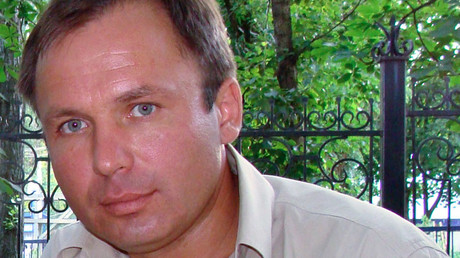
The plea of extradition to Russia that Konstantin Yaroshenko had filed over “cruel and humiliating” conditions in the Fort Dix Prison has been rejected by US officials.

Yaroshenko told daily Izvestia that in late April he received the reply from the US Department of Justice reading that the deportation plea had been rejected due to seriousness of charges that led to the pilot’s conviction.

The prisoner told reporters that the chances of his return to Russia had been practically exhausted, but he still hoped that Russian lawyers and diplomats would take his case to the International Criminal Court or the United Nations over the fact that the US prison authorities supposedly knowingly violate the international conventions against torture and cruel and unusual punishment.

In addition, he claimed that the US authorities had violated the 1966 International Covenant on Civil and Political Rights.

My lawyer has earlier presented the proof of my innocence as well as the proof of my abduction with testimonies of Liberian agents,” he said.

In 2011, Russian citizen and professional pilot Konstantin Yaroshenko was sentenced to 20 years in prison in the United States for allegedly participating in a plan to smuggle drugs into the country. All charges against him were based on the testimony of US Drug Enforcement Agency (DEA) agents who had launched a sting operation against him.

He was first arrested in Liberia and was flown to the US without official extradition procedure and in violation of the diplomatic code.

Yaroshenko strongly insists that he is completely innocent and that the whole process was a part of the US agents’ attempt to extract evidence against other Russian citizen, Viktor Bout. Bout was the owner of a transport company who had also been extradited to the US and sentenced to a lengthy prison term after a DEA sting operation.

He has also repeatedly protested against the conditions in which he has been kept, saying they are so bad that, given his poor health, remaining in them would be equivalent to torture.

In September 2016, Yaroshenko told reporters that he had signed a document that would allow his transfer home, but added that prison officials in the US had forced him to sign the papers. He added that Russian authorities requested his handover under the 1983 Strasbourg Convention on prisoner handover in 2014 but the US Federal Prison Authority had denied the request, offering various excuses.

In November 2016, Yaroshenko’s mother, Lyubov Yaroshenko, sent letters to then-President Barack Obama and Secretary of State John Kerry asking them to show mercy and send her son back to Russia under the international convention on prisoner handovers. The letters were sent by email and by post, and in both cases the messages reached the intended addresses, yet were left without reply.

https://www.rt.com/politics/386816-us-justice-rejects-extradition-request/

World Health Organization insider talks about the radiation secrets of the WHO; ICRP, IAEA, Chernobyl, Fukushima

Ms Katz’s April 2017 interview, which this article is based upon, can be heard in its entirety.

From CounterPunch

May 2, 2017

By Robert Hunziker

Imagine the following hypothetical: The World Health Organization (“WHO”) is deeply involved in a high level cover up of the human impact and dangers of ionizing radiation, intentionally hiding the facts from the public, a chilling storyline!

After all, the world community depends upon WHO as an independent org t0 forewarn the general public of health dangers and to help in times of crises, not hide pivotal health facts from public eye.

As it happens, that nightmarish hypothetical comes to life in an interview with Alison Katz, who claims: “We are absolutely convinced that if the consequences of nuclear radiation were known to the public, the debate about nuclear power would end tomorrow. In fact, if the public knew, it would probably be excluded immediately as an energy option.”

Alison Katz heads a NGO known as Independent WHO, and she spends a lot of time arranging sandwich boards with messages like: “Complicity in Scientific Crime” or “Crime of Chernobyl – WHO Accomplice” in front of WHO headquarters/Geneva. For 10 years now on a daily vigil from 8:00-to-6:00 she and/or other protestors expose alleged misbehavior committed by WHO, right outside of the headquarters building. Imagine this: Ten years on the same street corner every working day. It’s commitment and determination sans pareil.

“The aim of the silent vigil is to remind the World Health Organisation of its duties. It was Hippocrates who formulated the ethical rules for health practitioners. The World Health Organisation ignores these rules, when it comes to protecting the health of the victims of the consequences of the nuclear industry”.

Which brings forth: Ten years of hard work combating a difficult and challenging issue warrants public adulation beyond carrying posters back and forth, come rain or shine, trudging away in the heat of the sun or the freezing cold and snow in front of WHO Hdqs. Hopefully, this article serves that purpose for Alison Katz.

The mission of Independent WHO is to expose WHO’s failings whilst calling for WHO independence away from influence by the worldwide nuclear syndicate: According to WHO Independence’s Web Site: “The World Health Organization (WHO) is failing in its duty to protect those populations who are victims of radioactive contamination.”

Ms Katz worked inside the WHO for 18 years. She insists that WHO, in cahoots with IAEA (International Atomic Energy Agency), dangerously misrepresents the inherent dangers of ionizing radiation, an insinuation that smacks in the face with egregiousness galore.

Ms Katz’s April 2017 interview, which this article is based upon, can be heard in its entirety.

This article condenses and summarizes her one-hour interview. As such, according to Ms Katz: “The health consequences of nuclear activity, whether they are civil or military, are not known to the public… There has been a very high level cover up… including the WHO.”

Continue reading

Inundated in Southern California — “intense” April, SB group gets over 100 calls per day; sick or dead sea lions, birds, dolphins, with brain damage and neurological symptoms

From ENE News

May 2, 2017

KKFX FOX 11 transcript, Apr 22, 2017: A local rescue group is getting flooded with calls about sick or dead sea lions showing up on Santa Barbara beaches… Sick and confused, dozens of sea lions are appearing on Santa Barbara beaches with signs of brain damage. Samuel Dover, Channel Islands Marine & Wildlife Institute: “Normally we see injured animals about 1 or 2 here or there… Last Friday we got over 100 calls per day about sea lions in distress.”

KSBY, Apr 26, 2017: Marine mammals statewide becoming infected with brain-rotting toxinA high number of marine mammals in California are falling victim to a brain-rotting toxin… In Santa Barbara County, rescue centers are reporting hundreds of cases. With this outbreak potentially spreading, the Marine Mammal Center in Morro Bay is stocking up on medicine… scientists will be keeping a close eye on what’s happening with these mammals to monitor how else it will affect the marine food chain.

Ventura County Star, Apr 20, 2017: “Friday, we started getting inundated. The floodgates opened,” said [Dover]… Authorities say unusually high numbers of stranded or dead marine mammals and birds have shown up in spots throughout the Southern California coast in recent weeks. Federal and state agencies are working to document the scope of affected wildlife and mortalitiestests are underway to determine the cause of illness and death… they become sick, suffer from seizures and brain damage… The CIMWI hotline started getting about 100 calls on Friday and pretty much every day since, Dover said… [D]olphins have been impacted… Domoic acid poisoning is something he sees year after year, but not to the degree that’s happening right now. “This is the worst year we have ever seen,” Dover said. Beachgoers also have reported large numbers of dead and dying birds… Dover asked that those calling also understand that the agencies have been inundated.

Ventura County Reporter, Apr 26, 2017: Since the beginning of April, beachgoers have reported numerous sightings of discombobulated sea lions and sickly birds… “It has been pretty intense,” said [California State University, Channel Islands, Assistant Professor of Biology Allison Alvarado,] “It was like thousands of birds were being found”… Though domoic acid poisoning is suspected, the exact cause is not as yet determined[R]eports of unusual numbers of dead or sick animals along the coast stretch from as far north as Goleta and as far south as Malibu…

Santa Barbara Independent, Apr 25, 2017: Since the beginning of April, Julia Parker has seen 216 sick pelagic birds come into the Santa Barbara Wildlife Care Network. There were only four in February, and three in March… Many more have been found dead on nearby beaches. Pelagic birds live their lives on the ocean. “They only beach themselves if there’s something wrong: if… they’re emaciated and starving,” explained Parker, the network’s Director of Animal Affairs. A large number of the birds found in April displayed neurological symptoms… It’s not just birds… on April 21, “we started getting inundated with calls — 100 calls per day” reporting sea lions stranded on the beaches, said Sam Dover, a veterinarian who runs [Channel Islands Marine and Wildlife Institute]… In the last two weeks, they’ve also seen six beached dolphins, all dead or dying… It’s likely that animal populations further north could be affected in the coming weeks

AOL, Apr 23, 2017: Most years, conservationists might see one death from the illness.

CBS LA transcript, Apr 11, 2017: [Pacific Marine Mammal Center] only had 1 or 2 cases last year.

From last week: Mass die-off ongoing along US West Coast — Experts: ‘Unknown’ organisms eating away brains, hearts… New infection never seen before (VIDEOS)

Watch broadcasts here: KKFX | KSBY

http://enenews.com/brain-rotting-toxin-killing-huge-numbers-of-marine-animals-on-california-coast-expert-this-is-the-worst-year-we-have-ever-seen-mass-deaths-of-birds-sea-lions-dolphins-officials-warn-ou

Mass die-off of sharks on California coast; over 100 dead in SF Bay area; brain and heart lesions, organ failure, and unknown microorganism detected; Pelagic Shark Foundation asks for public help

From ENE News

April 24, 2017

KRON, Apr 13, 2017 (emphasis added): A troubling trend – sharks and other marine life are washing up on Bay Area shorelines. First, it was Santa Cruz, and now, it’s the Peninsula… dead sharks were found washed up Thursday morning… Experts say similar reports are coming in every day, and it’s not clear why all the marine life is washing up… [T]he Pelagic Shark Foundation in Santa Cruz is pleading with Bay Area people to be alert on walks and report to them immediately.

KRON transcript, Apr 13, 2017: “There are a lot of small dead sharks that have been found, just today… it’s just not clear why all the marine life is washing up like this.”

Santa Cruz Sentinel, Apr 8, 2017: [Sean Van Sommeran, Pelagic Shark Research Foundation executive director] said there have been too many white-shark strandings this year throughout coastal Northern California… he is frustrated about the lack of help for stranded sharks. “There’s been over 100 dead this year in San Francisco, San Mateo, Oakland and Berkeley Aquatic Park… We get them all the time in the San Francisco Bay Area.”

California Department of Fish and Wildlife, Apr 14, 2017: The carcass of a young great white shark was recovered on April 8 near Pleasure Point in Santa Cruz… It died of multiple organ failure, with major lesions in the brain, liver and heartUnidentified microorganisms were observed in the fluid surrounding the brain and heart. Additional testing is underway to attempt to identify these pathogenic organisms

CBS San Francisco, Apr 11, 2017: Marine Biologist Giancarlo Thomae said a necropsy found an infection had damaged the shark’s brain and other organs. “The species of the bacteria that contributed to the shark’s death is unknown at this time… However, the brain did have many lesions. In additional to that the shark’s heart and liver also showed damage, so we can conclude that the immune system of the shark was also compromised.”… Die-offs of leopard sharks and other types have occurred in the San Francisco Bay in the last two years

KXTV, Apr 14, 2017: Washed up Great White Shark died of organ failure… Biologists believe the shark died of multiple organ failure, with major lesions in the brain, liver and heart. Unknown microorganisms were also found and additional testing is being done.

NBC Bay Area, Apr 11, 2017: A pathogen that eventually caused brain lesions is the reason why a shark became stranded on a Santa Cruz beach and later died last weekend. Animal experts say the pathogen is unlike any kind of bacteria that has been seen in sharks before.

KSBW transcript, Apr 11, 2017: “They say it could be the same infection that’s killing mako sharks this year… but the question remains, why is the infection making its way through different shark species?” — Sean Van Sommeran, Pelagic Shark Research Foundation executive director: “Let’s see if we can exactly identify what appears to be a new type of brain infection — first of its kind, documented in a white shark like that.”

KSBW, Apr 11, 2017: Van Sommeran said the pathogen is unlike any kind of bacteria that has been noted in sharks before. “Necropsy results show severe necrotic brain lesions“…

Watch broadcasts here: NBC | CBS | KSBW | KRON

http://enenews.com/mass-die-offs-reported-along-us-west-coast-tv-its-just-not-clear-why-all-the-marine-life-is-washing-up-like-this-experts-unknown-organisms-are-eating-away-brains-and-hearts

Fukushima: “super heated atomic catastrophe”

From ENE News

April 24, 2017

TRT World transcript excerpts (government-funded public broadcaster of Turkey), Apr 14, 2017:

Martin Stanford, host of ‘Insight’ (emphasis added): Radiation Alert — a nuclear scientist tells us the cleanup at Japan’s Fukushima plant could take 100 years… The decommissioning process has barely begun… A British nuclear scientist who’s just come back from Fukushima has told this program it could take up to 100 years.

1:15 in – Dana Lewis, senior correspondent: In three years Tokyo will host the Summer Olympics, and ironically one of the commercial slogans asks ‘Is Japan cool?’ It would almost be funny if the situation wasn’t so serious. 150 miles from Tokyo is the Fukushima nuclear power station where the situation is not cool — it’s a super-heated atomic catastrophe ever since a powerful earthquake rattled Japan in 2011 a 15-metre tsunami engulfed Fukushima and caused three reactors to melt down and they still are.

1:45 in – Kevin Kamps, Beyond Nuclear: It’s unknown where those cores are at… There is some possibility that it’s burrowed completely through the containment, and is sitting in groundwater.

2:30 in – Lewis: Deep inside Fukushima there is a molten mess… But exactly how deep are those cores? And that is a burning question. These close-up photographs show that it has burned through some of the containment structure and burrowed deep in the foundation of the reactor. Until those cores can be retrieved, the radiation will keep spewing into groundwater and leaking — no one knows for sure where… Neil Hyatt is a professor of nuclear materials chemistry. [He’s] back from touring Fukushima — well at least the storage areas… and he admits the situation will haunt Japan for generations.

3:45 in – Neil Hyatt, nuclear scientist: Somewhere between 40 and 100 years for the Fukushima cleanup and complete decommissioning is probably a reasonable estimate…

4:00 in – Lewis: But while they plan to get to those cores Tokyo Electric is struggling with a lethal radioactive dragon

4:45 in – Hyatt: One concern is that there could be a resumption of the nuclear chain reaction

7:00 in – Mark Whitby, engineer: This was an unprecedented accident, it was very close to being much worse than Chernobyl… It wasn’t so much the reactor cores which were melting – there was nothing they could do to to retrieve that situation. The real problem was that one of the reactors had been recently taken offline, it had a fuel pond which was very hot, stacked with 20 years worth of fuel rods and that was beginning to boil dry… Had that fuel pond boiled, and Prime Minister Kan was very aware of this, this would have been 12 Chernobyls

Watch the broadcast here

http://enenews.com/tv-fukushima-radiation-alert-concern-nuclear-chain-reaction-could-occur-at-plant-reactors-are-still-melting-down-and-spewing-radioactivity-fuel-has-burned-through-containment-expert

Wildfire near Fukushima power plant, officials asked government to bring in troops to fight fire

From ENE News 

Posts for May 1 and April 30

May 1, 2017

Fukushima a “ticking time bomb” — Fires now “raging” near nuclear plant — Blaze doubles in size; “Smoke rising from wide areas” — Concern over fallout of highly radioactive material; Officials closely watching radiation levels (VIDEO)

NHK World, May 1, 2017 (emphasis added): Wildfire continues in Fukushima — A wildfire has been raging for more than 2 days near the damaged Fukushima Daiichi nuclear power plant… The area is part of a zone designated as “no-entry” due to high radiation levels… Fukushima and Miyagi prefectures and the Self-Defense Forces are using helicopters to fight the blaze. They are also looking at the possibility of using ground crews. Footage from an NHK helicopter on Monday morning showed smoke rising from wide areas and fires burning in several locations

Mainichi, May 1, 2017: Wildfire rages in highly radioactive Fukushima mountain forest — A fire broke out in a mountain forest near the crippled Fukushima No. 1 Nuclear Power Plant on the evening of April 29, consuming an area approximately 20 hectares in size, according to prefectural authorities… As the fire continued to spread, however, helicopters from the GSDF, Fukushima Prefecture and other parties on May 1 resumed fire extinguishing operations from around 5 a.m. … As of May 1, there were no major changes to radiation levels in the heart of Namie and other areas near the fire scene, according to the Ministry of the Environment. “We will continue to closely watch changes in radiation doses in the surrounding areas,” said a ministry official.

Common Dreams, May 1, 2017: Sparking Fears of Airborne Radiation, Wildfire Burns in Fukushima ‘No-Go Zone’; Contaminated forests such as those outside fallout sites like Fukushima and Chernobyl ‘are ticking time bombs’ — A wildfire broke out in the highly radioactive “no-go zone” near the crippled Fukushima nuclear power plant over the weekend, reviving concerns over potential airborne radiation… Local officials were forced to call in the Japanese military… In a blog post last year, Anton Beneslavsky, a member of Greenpeace Russia’s firefighting group who has been deployed to fight blazes in nuclear Chernobyl, outlined the specific dangers of wildfires in contaminated areas. “During a fire, radionuclides like caesium-137, strontium-90 and plutonium rise into the air and travel with the wind,” Beneslavsky wrote. “This is a health concern because when these unstable atoms are inhaled, people become internally exposed to radiation.” Contaminated forests such as those outside fallout sites like Fukushima and Chernobyl “are ticking time bombs,” scientist and former regional government official Ludmila Komogortseva told Beneslavsky. “Woods and peat accumulate radiation,” she explained “and every moment, every grass burning, every dropped cigarette or camp fire can spark a new disaster.”

Sputnik News, May 1, 2017: Japanese Authorities Fighting Wildfire in Evacuation Zone Near Fukushima NPP… There were no reports either about the wind direction or the changes in the background radiation level in relation to the fire.

See also: Fires burning near Fukushima plant — Officials ask Japan gov’t to send in troops to help fight blaze — Strong winds hindering firefighters (VIDEO)

Watch Mainichi’s video here

April 30, 2017

Fires burning near Fukushima plant — Officials ask Japan gov’t to send in troops to help fight blaze — Strong winds hindering firefighters (VIDEO)

RT, Apr 30, 2017: Fukushima authorities ask troops to help deal with forest fires near crippled nuclear power plant — Fukushima prefecture has asked the Japanese Self-Defense Forces for help in handling forest fires that have swept areas near the crippled Fukushima power plant, local media report. Strong winds are hindering the firefighting efforts, however. The forest fires broke out near the town of Namie, some seven kilometers from the disabled Fukushima Daiichi Nuclear Power Plant, on Saturday evening, Japanese NHK broadcaster reported… The prefecture has deployed several helicopters to extinguish the fires, which are believed to have been caused by lightning. According to police, at least 10 hectares of forest have burned in the area… With strong winds stoking the flames, the Fukushima Prefecture has requested help from the Self-Defense Forces, Japan’s de-facto army, on Sunday.

NHK (translated by Google), Apr 30, 2017: Fukushima Namie-cho continued fire fighting activities in forests in difficult-to-return areas — When smoke is rising from Namie-cho, Fukushima Prefecture, which is a difficult-to-return area of TEPCO’s Fukushima Daiichi Nuclear Power Plant, in the evening of 29th, there was a report to the fire department, the whole day burned all day It continues… Fukushima Prefecture requested the Self Defense Forces for disaster relief… Around 4:30 PM on Friday, Fukushima Prefecture Namie-cho Iyedo had a message saying “smoke is coming up” and a helicopter such as Fukushima Prefecture and Miyagi Prefecture came out early on Monday morning for fire fighting… Prefecture requested the SDF to dispatch disasters at noon on 30th, fire was extinguished with both helicopters, both of which were almost extinguished at 7:30 am on Friday, due to the strong wind again and burning again… the police are investigating the detailed situation looking at as a result of lightning strikes.

Iwate Daily (translated by Google), Apr 30, 2017: Forest fire in the difficult-to- return area, Fukushima prefecture dispatched to GSDF… Fukushima Prefecture, Miyagi Prefecture and Gunma Prefecture began fire fighting from the sky from morning on the 30th, once suppressed around 7:40 am, but it started burning again with a strong wind.

Watch NHK’s broadcast in  Japanese here

http://enenews.com/fukushima-a-ticking-time-bomb-fires-now-raging-near-nuclear-plant-blaze-doubles-in-size-smoke-rising-from-wide-areas-concern-over-fallout-of-highly-radioactive-material-official

http://enenews.com/fires-burning-near-fukushima-plant-officials-ask-japan-govt-to-send-in-troops-to-help-fight-blaze-strong-winds-hindering-firefighters-video

Norman Solomon: How the Russia spin got so much torque

From Information Clearing House

By Norman Solomon
May 02, 2017

A new book about Hillary Clinton’s last campaign for president — “Shattered,” by journalists Jonathan Allen and Amie Parnes — has gotten a lot of publicity since it appeared two weeks ago. But major media have ignored a revealing passage near the end of the book.

Soon after Clinton’s defeat, top strategists decided where to place the blame. “Within 24 hours of her concession speech,” the authors report, campaign manager Robby Mook and campaign chair John Podesta “assembled her communications team at the Brooklyn headquarters to engineer the case that the election wasn’t entirely on the up-and-up. For a couple of hours, with Shake Shack containers littering the room, they went over the script they would pitch to the press and the public. Already, Russian hacking was the centerpiece of the argument.

Six months later, that centerpiece of the argument is rampant — with claims often lurching from unsubstantiated overreach to outright demagoguery.

A lavishly-funded example is the “Moscow Project,” a mega-spin effort that surfaced in midwinter as a project of the Center for American Progress Action Fund. It’s led by Neera Tanden, a self-described “loyal solider” for Clinton who also runs the Center for American Progress (where she succeeded Podesta as president). The Center’s board includes several billionaires.

The “Moscow Project” is expressly inclined to go over the top, aiming to help normalize ultra-partisan conjectures as supposedly factual. And so, the homepage of the “Moscow Project” prominently declares: “Given Trump’s obedience to Vladimir Putin and the deep ties between his advisers and the Kremlin, Russia’s actions are a significant and ongoing cause for concern.”

Let’s freeze-frame how that sentence begins: “Given Trump’s obedience to Vladimir Putin.” It’s a jaw-dropping claim; a preposterous smear.

Echoes of such tactics can be heard from many Democrats in Congress and from allied media. Along the way, no outlet has been more in sync than MSNBC, and no one on the network has been more promotional of the Russia-runs-Trump meme than Rachel Maddow, tirelessly promoting the line and sometimes connecting dots in Glenn Beck fashion to the point of journalistic malpractice.

Yet last year, notably without success, the Clinton campaign devoted plenty of its messaging to the Trump-Russia theme. As the “Shattered” book notes, “Hillary would raise the issue herself repeatedly in debates” with Trump. For example, in one of those debates she said: “We have 17 — 17 — intelligence agencies, civilian and military, who have all concluded that these espionage attacks, these cyber attacks, come from the highest levels of the Kremlin and they are designed to influence our election.”

After Trump’s election triumph, the top tier of Clinton strategists quickly moved to seize as much of the narrative as they could, surely mindful of what George Orwell observed: “Who controls the past controls the future; who controls the present controls the past.” After all, they hardly wanted the public discourse to dwell on Clinton’s lack of voter appeal because of her deep ties to Wall Street. Political recriminations would be much better focused on the Russian government.

In early spring, the former communications director of the 2016 Clinton presidential campaign, Jennifer Palmieri, summed up the post-election approach neatly in a Washington Post opinion article: “If we make plain that what Russia has done is nothing less than an attack on our republic, the public will be with us. And the more we talk about it, the more they’ll be with us.”

The inability of top Clinton operatives to identify with the non-wealthy is so tenacious that they still want to assume “the public will be with us” the more they talk about Russia Russia Russia. Imagine sitting at a kitchen table with average-income voters who are worried sick about their financial futures — and explaining to them that the biggest threat they face is from the Kremlin rather than from U.S. government policies that benefit the rich and corporate America at their expense.

Tone deaf hardly describes the severe political impairment of those who insist that denouncing Russia will be key to the Democratic Party’s political fortunes in 2018 and 2020. But the top-down pressure for conformity among elected Democrats is enormous and effective.

One of the most promising progressives to arrive in Congress this year, Rep. Jamie Raskin from the Maryland suburbs of D.C., promptly drank what might be called the “Klinton Kremlin Kool-Aid.” His official website features an article about a town-hall meeting that quotes him describing Trump as a “hoax perpetrated by the Russians on the United States of America.”

Like hundreds of other Democrats on Capitol Hill, Raskin is on message with talking points from the party leadership. That came across in an email that he recently sent to supporters for a Democratic Congressional Campaign Committee fundraiser. It said:

“We pull the curtain back further each day on the Russian Connection, forcing National Security Adviser Michael Flynn to resign, Attorney General Sessions to recuse, and America to reflect on who’s calling the shots in Washington.”

You might think that Wall Street, big banks, hugely funded lobbyists, fat-check campaign contributors, the fossil fuel industry, insurance companies, military contractors and the like are calling the shots in Washington. Maybe you didn’t get the memo.

Norman Solomon is the coordinator of the online activist group RootsAction.org and the executive director of the Institute for Public Accuracy. He is the author of a dozen books including “War Made Easy: How Presidents and Pundits Keep Spinning Us to Death.”

The views expressed in this article are solely those of the author and do not necessarily reflect the opinions of Information Clearing House.

http://www.informationclearinghouse.info/46974.htm

May 2, 2017: Russian adviser killed by sniper in Syria

May 2nd, 2017 – Fort Russ News –

A Russian military adviser has been killed in Syria as a result of sniper fire. This has been reported by the Russian Defense Ministry.
“As a result of shelling against Syrian troops by a militant unit, Russian military advisor Lt. Col. Alexei Buchelnikov has been killed.” 
Buchelnikov was in Syria as part of a group of Russian military advisers, fulfilling teaching objectives for the Syrian army.

Responsible actions needed to ensure peace on the Korean Peninsula — a Chinese perspective

Global Research, May 01, 2017
People’s Daily 30 April 2017

Given the continued escalation of tensions on the Korean Peninsula over the past months, all concerned parties should implement the resolutions adopted by the UN Security Council in a more strict manner and return to peaceful negotiations, the People’s Daily said in an editorial published on Sunday.

The commentary came after Friday’s ministerial meeting on the nuclear issue of the Korean Peninsula hosted by the UN Security Council at the UN headquarters in New York.

The latest developments on the peninsula highlighted an imperative need for all parties to intensify their efforts to bring stakeholders to dialogue table, added the commentary published under the pen name Zhong Sheng, which is often used to express the paper’s views on foreign policy.

It is reasonable for the DPRK to pursue its own security, but its nuclear and missile ambitions have put itself and the whole region into dire peril, stressed the article titled “Responsible actions are needed to ensure peace of Korean Peninsula”.

The country has been immersed itself into a strong sense of insecurity given historic reasons and reality, the paper added.

The DPRK must not be obsessed in a wrong path of repeated nuclear tests and missile launches that resulted in rounds of sanctions, the commentary said, calling on the country to respect and comply with the relevant Security Council resolutions.

The article pointed out that the Republic of Korea(ROK) and the US also added fuel to the escalated tensions since the two allies, who have been maintaining a high-handed pressure on the nuclear issue of the Korean Peninsula, revealed a strategic intention to crush the DPRK.

It is almost impossible to ease the crisis on the peninsula if the ROK and the US continue their fantasy to settle the problem with more military actions but turn a blind eye to reasonable appeals of the DPRK, the paper stressed.

China is not a directly-concerned party of the peninsula crisis, and it does not hold the key to solving the nuclear issue on the peninsula, the commentary admitted.

But it emphasized that no matter what happens, China will never waiver in its clear-cut position regarding the nuclear issue on the Korean Peninsula, which means it will stay committed to the goal of denuclearization as well as the path of dialogue and negotiation.

In the next step, the DPRK should refrain from further nuclear test or missile launches, the article urged, adding that the ROK and the US, for their part, also need to stop launching or expanding their military drills or deployment against the DPRK.

All stakeholders need to comprehensively understand and fully implement the DPRK-related resolutions adopted by the Security Council, the paper said. The international community needs to step up their anti-proliferation efforts against the DPRK action. Meanwhile,all parties also need to do more to persuade stakeholders back to peaceful dialogues, it added.

China will, with its utmost sincerity and efforts, safeguard the peace and stability of Northeast Asia and realize the goal to denuclearize the Korean Peninsula along with relevant parties, the paper vowed, stressing that though a peace lover, the country is fearless of any provocations or tests.

China has proposed the “dual-track approach” and “suspension for suspension” plan for peaceful settlement of the issue, in an attempt to help the parties breakout of the security dilemma and return to the negotiating table.

The objective, reasonable and feasible proposals, according to the editorial, not only conform to the requirements of the UN resolutions, but also meet the fundamental interest of all parties including the US and the DPRK.

Translated from Chinese, People’s Daily, April 2017.