New U.S. Syria strategy aims to con Russia

Global Research, February 21, 2016

Months of Russian air power and rejuvenated Syrian ground forces making significant gains against ISIS and other terrorist groups got Washington to change strategy.

Wanting to avoid direct confrontation with Russia, it relies on deception – conning Moscow to cease bombing terrorist infested northern Syrian areas where US special forces are deployed, claiming  they’re supporting are “moderates.”

On the phony pretext of modestly increasing military-to-military communication and cooperation beyond last October’s “memorandum of understanding,” relating to safety protocols for Russian and US warplanes operating in Syrian airspace, Defense Secretary Ashton Carter’s spokesman Peter Cook said:

[The Pentagon] “provided a geographical area that we asked (Moscow) to stay out of because of the risk to US forces” on the ground – to protect their safety “in a dangerous situation.”

So far, Russia “honored this request,” he explained. It’s a thinly veiled con, a ruse,  Moscow will see through and reject.

Washington wants to give terrorist elements it supports (falsely called “moderates”) breathing space, a chance to rearm, regroup and add new fighters to their ranks.

Turkey provides them safe haven, aids their movement cross-border into Syria while continuing to shell northern Syrian-based anti-terrorist Kurdish YPG forces, OK’d by Washington.

Fact: US policymakers pretend to want peace. They intend endless war to accomplish their objective – eliminating sovereign Syria, replacing it with US-controlled puppet governance.

Fact: Diplomatically negotiating with Washington assures disaster. Terms agreed on are systematically breached, negotiating partners irresponsibly blamed.

Fact: US imperial aims are pure evil, wanting all independent governments eliminated, especially Russia and China.

Fact: Its aim for dominion over planet earth depends on it.

Fact: Its strategy relies on endless wars, raping and destroying one country after another – Syria in the eye of the storm.

If Putin goes along with the Pentagon’s request to cease bombing areas infested with US-supported terrorists, everything

Russian air power and Syrian ground forces accomplished so far will be jeopardized.

Washington will be in a stronger position to turn things around in its favor – perhaps able to snatch victory from the jaws of defeat.

Establishing a safe zone in northern Syria will become a platform for US-supported continued war while talking peace – strengthening terrorist forces, aiding their advance into other areas.

The most fundamental rule to follow in dealing with Washington is knowing it can’t be trusted – not ever. Hegemons yield nothing.

They want things entirely their way, letting nothing interfere with their imperial aims.

Hopefully Putin and other Russian officials are too smart to fall for America’s ruse. Continuing their anti-terrorism campaign nationwide is vital to have any hope for eventually liberating Syria.

Washington doesn’t negotiate. It demands. Hoping bilateral or multi-lateral talks will gain important concessions is a major mistake. A military solution alone can save Syria.

US rhetorical support for cessation of hostilities and resumption of peace talks is pure subterfuge – aiming solely to undermine Russia’s effective war on terrorism, essential to continue unobstructed.

Michel Chossudovsky explained Washington’s strategy, saying it’s “to protect remaining US sponsored terrorist positions in Northern Syria including those of the ISIS from Russian airstrikes.”

He cited a “Secret Pentagon document. (T)he ultimate objective ‘was’ (and likely remains) to create an Islamic State Caliphate (Salafist Principality) in Northern Syria.”

Defeating America’s objective depends on Russian air power and Syrian ground forces maintaining unrelenting pressure, continuing their effective campaign, rejecting the Pentagon’s thinly veiled scheme to undermine it.

Preserving Syrian sovereignty depends on it – along with foiling Washington’s Middle East agenda, part of its grand plan to rule the world unchallenged.

Stephen Lendman lives in Chicago. He can be reached at lendmanstephen@sbcglobal.net.

His new book as editor and contributor is titled “Flashpoint in Ukraine: US Drive for Hegemony Risks WW III.”

http://www.claritypress.com/LendmanIII.html

Visit his blog site at sjlendman.blogspot.com.

Listen to cutting-edge discussions with distinguished guests on the Progressive Radio News Hour on the Progressive Radio Network.

It airs three times weekly: live on Sundays at 1PM Central time plus two prerecorded archived programs.  

The Syrian endgame. US-NATO, Saudi Arabia, Turkey — ‘losers on the rampage’

Global Research, February 14, 2016
How a war is lost is a serious and dangerous business. After Henry Kissinger helped sabotage the 1968 Paris peace talks, for domestic political reasons, the War in Vietnam raged for another seven years. In the end Washington’s loss was more humiliating, and millions more lives were destroyed.

The Geneva process over Syria is in many respects different, because it is a charade. The NATO and Gulf monarchy sponsors pretend to support Syrian ‘opposition’ groups and pretend to fight the same extremist groups they created.

Yet the dangers are very real because the Saudis and Turkey might react unpredictably, faced with the failure of their five year project to carve up Syria. Both countries have threatened to invade Syria, to defend their ‘assets’ from inevitable defeat from the powerful alliance Syria has forged with Russia, Iran, Iraq and the better party of Lebanon.

It should be clear by now that every single anti-government armed group in Syria has been created by Washington and its allies. Several senior US officials have admitted the fact. Regime change has always been the goal. Nevertheless, the charade of a ‘War on ISIS’ goes on, with a compliant western media unwilling to point out that ‘the emperor has no clothes’.

Geneva 3 has actually brought some results. First, none of the NATO-backed ‘opposition’ groups managed to show a credible face. Second, and more importantly, the US and Russia kept talking and actually developed another de-escalation plan. It is not conclusive but it is encouraging.

The ‘moderate rebel’ masks are down, we now know who they are: the internationally proscribed terrorist group Jabhat al Nusra (al Qaeda in Syria) and its long term Salafist allies Jaysh al Islam (the Army of Islam) and Ahrar as Sham. The latter two are the remnants of the Syrian Salafist groups. In northern Syria they are also welded together by Turkey and the Saudis into the very non-moderate-sounding Jaysh al Fatah (the Army of Conquest).

These extremist groups represent very few in Syria, as MINT Press journalist Mnar Muhawesh pointed out in her editorial piece ‘The Syrian Opposition’s NATO Sponsored Apocalyptic Vision For Syria’: In ideology they are no different to ISIS.

(See: https://www.youtube.com/watch?v=bvq0JmzqR_8).

It may be stating the obvious to say that al Qaeda groups have poor negotiating skills. In any event, they proved it in Geneva. Losing on the battlefield they demanded capitulation in Geneva, then stormed out.

Foreign backed terrorists aside, who are the real Syrian opposition?

Firstly, they are the groups that created the 2005 Damascus Declaration but who sided with the state and the army in early 2011, when the Salafist insurrection hijacked the reform demonstrations.

Some of them like Haytham Manna and former minister Qadri Jamil appeared in Geneva. Others like the powerful Syrian Social National Party (SSNP) backed Bashar al Assad’s government, back in 2011.

Still others sat on the sidelines, frustrated at the Muslim Brotherhood’s violent hijacking of the reform movement. Sharmine Narwani’s piece at RT ‘Will Geneva talks lead right back to Assad’s 2011 reforms?’ illustrates this very well. As the Damascus Declaration made plain, most of the Syrian opposition rejected both foreign sponsorship and violent attacks on the state.

Second are the Syrian Kurds, who were open to foreign assistance but rejected attacks on the Syrian Army and state. They have received most of their arms from Damascus. Prefering to side with the Syrian Army than the Salafists, their presence in Geneva was not tolerated by Erdogan or his clients.

That left Russia and the USA to discuss their supposed common goals (destroying terrorists) while Erdogan and the Saudis seethed. The aims of the two big powers are worlds apart. Hat difference is seen in the loss of Washington’s proxies in Syria in face of the rise of the 4+1 (Russia, Syria, Iran, Iraq and Hezbollah).

That shift, in turn, threatens to derail the Bush plan for a ‘New Middle East’. The US wanted to control the entire region, now it faces losing it all.

Russia for its part has pursued its own interests in the region, backing its allies in accordance with international law. Its use of air power in Syria followed the Syria-Iran-Iraq-Hezbollah accord on ground power forces. That is the force currently prevailing on Syrian soil.

The good news is that, despite these widely differing aims, Washington and Moscow have kept talking and managed a provisional agreement at Geneva, with three heads.

The first agreement is over humanitarian aid, which faces serious obstacles due to the series of sieges taking place. Some of these are al Qaeda groups’ sieges, such as that on Foua and Kafraya in the north; but increasingly they are becoming Syrian Army sieges on al Qaeda fighters who hole up in towns and cities, such as Madaya and Eastern Aleppo. Most ground aid is going in through the Government-supervised Syria Arab Red Crescent, but air drops are being organised for Deir eZorr, and some other places.

Second, there is a political process which (it has been agreed) must be exclusively between Syrians, unconditional and inclusive. Contrary to many outside reports, there is not yet any framework for this, nor plans for early elections. The Syrian position, backed by Russia, is that the Syrian constitution (and the legally mandated schedule of elections) prevails until the Syrian people vote to change it.

Finally the agreement on ‘cessation of hostilities’, due almost immediately, has a task force to oversee the details. This ceasefire does not apply to any group identified by the UN Security Council as a terrorist group. That immediately rules out ISIS or Jabhat al Nusra. The major obstacle here is that Russia wants Jaysh al Islam and Ahrar as Sham (which have both collaborated with al Nusra for many years) added to the UNSC list. If Washington agrees to this, they will virtually abandon their ‘moderate rebel’ option. There is no other force of substance on the ground. The Saudis and Erdogan would be furious.

How will the US manage these tensions? The Obama administration has always approached the Syrian conflict in an arms-length way, reminiscent of the CIA’s ‘plausible deniability’ over its death squads in Latin America. But credibility problems have grown and Washington does seem more concerned at finding a way out rather than risking a new desperate gambit. That would certainly lead to serious escalation, and without any guarantee of success.

Would Washington allow Erdogan and the Saudis to initiate a major escalation, without US approval? I think not. Obama resisted Saudi and Israeli provocations, when the Iran deal was imminent. Even Bush could not be provoked into a confrontation with Russia, when invited by Georgia’s Mikheil Saakashvili.

For its part, Russia is well prepared for a provocation across the Turkish border. Logic suggests that the losers must lose. But this is a dangerous time.

America threatens a protracted war, ‘ground operations’ in Syria — Interview with Russia’s Prime Minister Dimitri Medvedev

Global Research, February 15, 2016
euronews 14 February 2016
medvedev

Featured image: Russia’s PM Dimitri Medvedev

Transcript of the PM interview with Euro News. Emphasis by GR

Syria

Isabelle Kumar: Many thanks for being with us on The Global Conversation. The issue of Syria is dominating the international agenda. But we feel we could be reaching the turning point yet it’s unclear which way it is going to go. What do you think?

Dmitri Medvedev: You know, as I was heading to this conference, I had a feeling that the situation in this area is very complex and challenging because we have yet to come to an agreement with our colleagues and partners on key issues, including the creation of a possible coalition and military cooperation.

All interactions in this respect have been episodic so far. That said, I note that here, in Munich, Russian Foreign Minister Sergei Lavrov met with Secretary of State John Kerry, and other colleagues acting in various capacities later joined them. They agreed on what should be done in the short run. For this reason, I’m cautiously optimistic about the prospects for cooperation on this issue. Let me emphasise that this cooperation is critical, because unless we come together on this issue, there will be no end to the war in Syria, people will keep dying, the massive influx of refugees to Europe will continue, and Europe will have to deal with major challenges. Most importantly, we will be unable to overcome terrorism, which is a threat to the entire modern civilisation.

Isabelle Kumar: What precise military actions and other, in that case, is Russia prepared to take to help in this de-escalation of the conflict in Syria?

Dmitri Medvedev: Let me remind you the reasons behind Russia’s involvement in Syria. The first reason that compelled Russia to take part in this campaign is the protection of national interests. There are many fighters in Syria who can go to Russia at any time and commit terrorist attacks there. There are thousands of them in Syria.

Second, there is a legal foundation in the form of the request by President al-Assad. We will therefore take these two factors into account in our military decisions and, obviously, the developments in the situation. What matters most at this point is to agree on launching the talks between all the parties to the Syrian conflict. Another important thing is to coordinate a list of terrorist groups, since this issue has been a matter of endless debates on who’s good and who’s bad. This is the first point I wanted to make.

My second point is the following. I learned that Secretary of State John Kerry said that if Russia and Iran do not help, the US will be ready to join other countries in carrying out a ground operation. These are futile words, he should not have said that for a simple reason: if all he wants is a protracted war, he can carry out ground operations and anything else. But don’t try to frighten anyone. Agreements should be reached along the same lines as Mr Kerry’s conversations with Mr Lavrov, instead of saying that if something goes wrong, other Arab countries and the US will carry out a ground operation.

I’ve answered this question only recently. But let me reiterate that no one is interested in a new war, and a ground operation is a full-fledged, long war. We must bear this in mind.

“We want sound, advanced relations both with the United States and the European Union”

Assad’s future

Isabelle Kumar: Clearly, one of the key issues is the future of Syrian President Bashar al-Assad. Will Russia continue to support him at this crucial moment in time?

Dmitri Medvedev: Russia does not support President al-Assad personally, but maintains friendly relations with Syria as a country. These ties were built not under Bashar al-Assad, but back when his father, Hafez al-Assad, became president. This is my first point in this respect.

Second, we have never said that this is the main issue for us in this process. We simply believe that there is currently no other legitimate authority in Syria apart from Bashar al-Assad. He is the incumbent president, whether anyone likes it or not. Taking him out of this equation would lead to chaos. We have seen that on numerous occasions in the Middle East, when countries simply fell apart, as it happened with Libya, for example.

It is for that reason that he should take part in all the procedures and processes, but it should be up to the Syrian people to decide his destiny.

Syria’s future

Isabelle Kumar: Are you therefore already working on ideas of political transition now in Syria?

Dmitri Medvedev: I don’t think that we should go into too much detail on these issues. I’m talking about Russia, the European Union and the United States. We should focus on facilitating the launch of this process. We must make sure that everyone sits down at the negotiating table, in fact, make them talk to each other. Let’s be honest and recognise that it will be anything but simple given the parties involved. On one side, you have President al-Assad, supported by a part of society and the military, and, on the other side, the other part of society, often representing different confessions, people who don’t like al-Assad but have to sit with him at the same negotiating table. Nevertheless, they need to come to an agreement for the sake of keeping Syria united.

Ukraine crisis

Isabelle Kumar: I’d like now to switch focus and look at the conflict in Ukraine. We talk of the frozen conflict there with, it appears, renewed fighting in the east. What can Russia do to bring about the thaw in that conflict, to bring an end to this conflict?

Dmitri Medvedev: Well, understandably, the answer here is somewhat easier than in Syria’s case. It is not just because this conflict is not as brutal, but because there is a clear understanding of how to move forward – by implementing the Minsk Agreements.

They should be implemented fully and in their entirety by all the parties. In fact, Russia calls on all the parties to do so, both those in power in the southeast, and the Kiev authorities. It is not a matter of Russia having some disagreements with Kiev or mutual dislike.

It would be fair to say that most of the provisions that were the responsibility of southeast Ukraine have been fulfilled. Most importantly, hostilities have ceased almost completely. Unfortunately, some action takes place from time to time, but not often. Finding political and legal solutions in keeping with the Minsk Agreements has now become vital. Whose responsibility is it? Of course, it is Ukraine’s responsibility. If Ukraine regards the southeast as part of its territory, it is within the jurisdiction, competence and authority of the President, Parliament and Government of Ukraine.

Isabelle Kumar: If you meet President Poroshenko here, at the Munich security conference, what will you say to him?

Dmitri Medvedev: I haven’t seen him and, to be honest, I haven’t missed him. President Poroshenko is in contact with President Putin. There is no doubt that the main thing my colleagues should undertake is to do everything it takes to implement the Minsk Agreements. It would benefit them, as well as the Ukrainian state, which, no matter what anyone says, is a close, neighbouring country for Russia.

Crimea

Isabelle Kumar: Obviously, one of the major sticking points in this, for Ukraine, but also for the international community, is Crimea. Is the future of Crimea up for negotiation?

Dmitri Medvedev: No, there is no such issue for Russia. This issue was settled once and for all. Crimea is part of Russia. A referendum was held there, we amended the constitution. The Republic of Crimea and the city of Sevastopol are part of the Russian Federation.

Russia’s relations with the world

Isabelle Kumar: So the conflict in Syria, the situation in Ukraine has contributed to a real degradation of relations with Russia, with the EU and the US. Do you think a reset is possible?

Dmitri Medvedev: The question is how and for whose sake. If something is to be reset, it should be done on a fundamentally different basis. What kind of basis? Equitable, fair, solid basis for relations, considering that Russia is not the only nation that needs this – the European Union and the United States need it as well. We want sound, advanced relations both with the United States and the European Union.

The European Union is our most important trade partner, a group of countries located on the same continent as us, so we are bound by our shared European identity, history and values. These continuing tensions aren’t doing us any good. But if we are told that they no longer want us around, of course, the first steps towards reconciliation should be taken by those who initiated the alienation. As for us, we are ready to discuss any issues.

Russia’s economy

Isabelle Kumar: Well, one of the repercussions of the souring of relations has been the sanctions that have been imposed on Russia, which are hitting hard. How much of a priority is it for your government to get those sanctions lifted?

Dmitri Medvedev: They told us we were the bad guys and had to be punished. And then they made some calculations and began to weep: it turns out that for some reason it was hitting their own business.

We had a trade turnover with the European Union at 450 billion euros. It was 450 billion! Now it is down to 217 billion euros. Why don’t they ask the people in the EU who are employed by the various companies that used to make products for Russia – how do they like all of this?

Again, we are not the ones who started this, so it is not up to us to undo it. They have always been trying to intimidate us with some sanctions, which were introduced even in the Soviet period, many times. It never brought them anything but lost profits. What is happening now is no different. They will have to have the courage to say, guys, we’ll just scrap all this from day X, and could you please reciprocate by lifting your response measures as well. That would be the right approach.

Isabelle Kumar: So how are ordinary Russians feeling this economic crisis? Because the sanctions are contributing towards this, the falling oil prices are also contributing to this. What’s it like for ordinary Russians?

Dmitri Medvedev: Indeed, we aren’t in the best economic situation right now, with the dramatic fall in oil prices probably contributing the most to the overall state of the economy, to the decline in revenues. This is something we haven’t seen for 17 years. The current prices are comparable to those in 1998. Unfortunately, our budget remains very dependent on oil prices. Although the structure of revenues has been improving, in terms of the share of oil and other sources, but yes, it remains commodity-dependent to a great extent. This could not but affect the incomes and the general standing of our people with their jobs and their real incomes.

The sanctions have had some effect as well. This is obvious, since some of our companies, for example, lost the financing they used to have from European banks, which means they cannot grow, some of them anyway. Therefore, in this sense, the economic situation is not the easiest. But there is also a positive effect. The economy is healing, it is becoming less dependent on oil, and we have an opportunity to develop our own industry and agriculture.

Perhaps one of the advantages of these sanctions and our response measures is that we started concentrating harder on domestic agriculture, so, to a large extent, we are now satisfying our demand for food, while wheat, for example, is now exported in large quantities. In this sense, the sanctions have helped. But they probably didn’t help farmers in the European Union.

Isabelle Kumar: I was asking about the ordinary Russians and how this was affecting them. And we hear of possible social unrest as their lives become more and more difficult in Russia. Is that something you are concerned about?

Dmitri Medvedev: Of course, the government must first of all think about the social impact of economic changes and the economic situation. Frankly, we have been compelled to cut budget spending in many areas, but we never touched social spending, or the public sector wages and benefits.

Moreover, we even indexed pensions last year, and this year, too, maybe not completely, but we did. We will try to continue doing this in the future. That is, the government’s social spending is large, but it is inviolable. In this sense, we will try to do everything towards Russian citizens’ social wellbeing, to keep them as comfortable as possible under these conditions. It is truly a priority for the government.

Russia’s human rights record

Isabelle Kumar: If we take an international perspective once again, a black mark on Russia’s reputation is the issue of human rights and freedom of speech, which Russia seems to continually backslide on. Why is that?

Dmitri Medvedev: To be frank, we’ve always differed in our views on the situation with the freedom of expression and the media in Russia. We’ve often been criticised and we are still coming under criticism. We have our own position on the issue. Perhaps in Russia, the media are somewhat different, for example, from the European media.

There are historical differences and there are growth issues. I rarely watch TV or read newspapers in print and I receive virtually all of my information from the Internet. And over half of Russia’s population does the same. As you know, on the Internet, there is no regulation in this sense. All points of view are represented there, including, to put it bluntly, even extremist ones. So I believe it’s not serious to think that some people have no access to different kinds of information in today’s global world.

Litvinenko enquiry

Isabelle Kumar: Yes, but also it seems that dissidents are silenced. In Britain, as you know, there has been – the results of the inquiry into the murder of Alexander Litvinenko, which the inquiry said – it pointed the finger at President Vladimir Putin, saying that it was likely that he ordered that murder. Will you be pursuing the British Government on this? There was talk of you suing the British Government over this inquiry.

Dmitri Medvedev: You’ve mentioned some report by some retired judge, in which practically every paragraph and each section opens with the word “probably”. What is there to comment on? What is regrettable about this whole story is that the British Prime Minister and the Foreign Secretary comment on a report that abounds in words like “probably”.

This is reminiscent of a witch-hunt. When all is said and done, let it be on the conscience of the commentators. As for any legal action, this is simply ridiculous. We don’t need this and the Russian Federation will never sue any country over some foolish fabrications or funny films.

Highlights

Isabelle Kumar: Finally, Mr Prime Minister, you’ve held the post of prime minister and also held the presidency, so you’ve got an overview, a full perspective of the issues we’ve been talking about, but if I were to ask you about one of the highlights of the your time in power, could you say what that’s been?

Dmitri Medvedev: Well, there’ve been plenty. Both these posts are very serious and challenging. These eight years of my life – and it has been almost eight years – you know, it’s this constant drive. As for events, there have been plenty, both in Russia – very good ones for me personally, notable, major, and sometime tragic events, like the ones we’ve been talking about now, and international events.

After all, we have not only argued and quarrelled. We’ve also accomplished a thing or two. For example, at some point we agreed on a New Strategic Arms Reduction Treaty. That was not bad at all. The document was signed. It is in force. It is being implemented and therefore we can work together and agree on different things. There have been contacts with my colleagues, including here in Germany, as well as in other European countries. We have dealt with a lot of issues. All of this is remarkable and exciting. Maybe one day I’ll talk about this in detail. For the time being I continue working and this work is interesting.

Prime Minister, many thanks for joining us.

Saudi troops into Syria: The “gates of Hell” will be open in the coming months. Three possible scenarios

Global Research, February 15, 2016
Elijah J M 14 February 2016

There are three possible scenarios in Syria

Participation of [Saudi] Arab troops  in Syria is not excluded.

A high-ranking officer within the joint operations room in Damascus, which includes Russia, Iran and Syria and Hezbollah said,

“ there are three possible scenarios in Syria:

The first is the [Saudi] Arab ground troops would enter Syria from the Turkish borders, in the area under the so-called “Islamic State” group (ISIS) on the long bordering front from Jarablus to Al-Ra’ee. This can be possible and quickly achievable if a kind of an agreement is reached between Turkey and ISIS. After all, the Jihadist group has to face either the Turkish-Arab forces – that could allow a possible exit – or the Russian-Iranian-Hezbollah forces where there will be no exit”.

The second scenario is through the Jordanian borders East of Syria up to Raqqa. A longer road but would allow Saudi Arabia to bring its logistic and armoured support to push all the way to the ISIS-controlled land. In both scenarios, these troops, Arabs or Turkish-Arabs, would not clash or contact or even walk into the Russia-Damascus and allies military operational stage.

The third scenario is that the Saudi are boosting the moral of the Jihadist by advertising a possible intervention so these don’t surrender easily and hold the ground for as long as possible.

The source said:

“Any scenario is linked to the will of the United States to be engaged in a war in Syria. This is exactly what the Saudi officials said. The U.S. is sending the Awacs aircraft because any U.S direct intervention on the ground is totally excluded. This could be the U.S. contribution, along the diplomatic effort in Geneva. Never the less, we build our military reaction based on the strong possibility that the Arab ground troops are most likely to invade Syria. These forces, under the title of defeating ISIS, won’t reach Raqqa overnight. Logistic support and troops movement from Jordan into Syria require between 3 to 4 months to be completed. These forces, in this case, are expected to advance from Jordan, into al-Badiyah and continue up north toward Raqqa, the northern Syrian city, as a possible scenario. Any potential contact with the Syrian forces could lead to a larger war”.

We do not exclude the fact that Saudi Special Forces could act behind ISIS lines to guide airtrikes or carry small scale attacks. None the less, these forces cannot contribute to defeat ISIS but in directing specific targets. Any attack that could weaken ISIS is considered to our advantage. The U.S. led coalition can bomb ISIS any time but no ground troops would be welcome. Moreover, no jet is allowed to enter the Syrian space without prior coordination with Russia, otherwise it will be considered as a potential target. This is also another fact to consider. Therefore, no one is willing to see a large scale war, mainly President Obama who has avoided to be entangled in the Syrian war for the last two years.

Russian Prime Minister Dimitry Medvedev said,

“all parties should sit down at the negotiating table instead of causing an outbreak of a new world war”, rumbling the drum of war in Syria. The Russian warning came after the confirmation of a spokesman for the Saudi Defense minister Ahmad Asiri “the Saudi Kingdom has announced the establishment of the new Islamist alliance to fight terrorism and is ready to carry out air and ground operations within the international coalition led by the United States in Syria.”

The aim of the [Saudi] Arab forces is to divide Syria is two parts: “Gharbistan” (western) and “Sharqistan”(Eastern) similar to what happened in Berlin after World War II.

In the first part, the Syrian army will continue fighting al-Qaeda and its allies with the support of Russia.

While in the second part, the [Saudi] Arabs would establish their forces to impose a political change and could destabilise the regime. In the meantime, the regime forces are at 60km from Raqqa, while, Turkey is at 180 km from ISIS main city. Therefore, if the idea to defeat ISIS is genuine, the U.S led coalition doesn’t need to intervene and walk all this distance from Turkey or Jordan to Raqqa. However, The race to Raqqa is declared, with the possibility or without the possibility of an [Saudi] Arab-Turkish intervention.

According to the source

“the gates of hell will be open in the next 3 months in Syria against al-Qaeda and its allies and also against ISIS. As agreed in Geneva between Russia and the United States, any cease-fire shall not include Jihadists and their allies. If Syrian opposition groups do not disengage from al-Qaeda, they will be considered legitimate targets because they become united as one group and will be dealt with accordingly”.

Al-Qaeda in Syria, known as Jabhat al-Nusra, is part of Jaish al-fateh, a coalition of many Syrian groups operating in northern Syria. Al-Qaeda and Jihadist movements are sending reinforcement to northern Aleppo in the last 48 hours, but used to maintain a strong presence around Nubbl and Zahraa, the two cities that Russia and its allies brock the siege imposed for over three and a half years. Al-Qaeda fighters pulled back toward the north of Aleppo fighting in Tal-Rifaat and others toward the south of Zahraa where they are fighting in Andan and Hay’yan.

According to the source, human and signal intelligence confirmed that

“Saudi Arabia has asked Syrian opposition associated and not-associated with al-Qaeda not to waive any proposition in the Geneva negotiations and not to hand over any city in Syria without fighting. Time is crucial and Saudi Arabia will continue its military support to the opposition, waiting for a new U.S. to be elected. The battle is expected to be more intense where everybody is holding the ground which indicates that the war is still far form being over”

original article in Arabic

http://www.alraimedia.com/ar/article/special-reports/2016/02/14/657188/nr/syria

http://www.globalresearch.ca/saudi-troops-into-syria-the-gates-of-hell-will-be-open-in-the-coming-months-three-possible-scenarios/5507857

The Turkish and Saudi intervention in Syria. Towards a broader war

Global Research, February 15, 2016
South Front 15 February 2016

The Syrian Arab Army (SAA) and its allies are advancing to the West of the Raqqa province. Currently, the Syrian Armed Forces are approximately 35 km away from the Tabqa military airport — their primary objective in Raqqa at the moment. The Syrian forces are also pursuing to secure the Salamiyah-Raqqa highway.

The Kurdish fighters, backed by Russian warplanes are currently engaged in intense clashes with the terrorist groups at the Western entrance of the town of Tal Rifat town in the Aleppo province. It’s confirmed that several terrorists of al-Nusra, including their commander Abdulsalam al-Saan, were killed in the air raids in the area of Tal Rifat.

Since Feb.13, the Turkish army has been shelling Syrian government forces and Kurdish targets mainly in the area near the city of Azaz in northwestern Syria, including the Menagh military air base recently retaken from the Syrian al Qaeda affilate, al Nusra. Turkish Prime Minister Ahmet Davutoglu said German Chancellor Angela Merkel by phone on Feb.14 that Turkey’s military will continue to shell Kurdish YPG clashing ISIS in northern Syria.

In a separate statement, the Turkish Ministry of Foreign Affairs announced that Ankara and Riyadh may launch a joint operation to fight ISIS in Syria. Considering at least that Turkish elites are deeply involved in the oil smuggling with ISIS and Saudi Arabia is a main sponsor of the al Nusra terrorist group, the only real reason of this intervention could be an attempt to prevent the gains of the Syrian government’s forces and Kurds supported by the Russian Aerospace Defense Forces against terrorists in Northern Syria. If the terrorist groups are cut from the Turkish border, they will lost their main source of supplies and reinforcements.

Moreover, on Feb.14, Turkey has reportedly relocated 400 militants from Idlib province to Aleppo via its soil to block the Kurdish fighters’ rapid advances in Northern Aleppo province.

On Feb.13, it was discovered that a massive shipment of ground-to-ground “Grad” missiles has been sent by the US allies, Saudi Arabia and Turkey, to militants fighting against the Syrian government.

Note:

SouthFront: Analysis & Intelligence is one of the few genuinely independent projects available, which disturbs our ill-wishers. 

If you’re able, and if you like South Front’s content and approach, please support the project. South Front’s work wouldn’t be possible without your help: PayPal:

southfront@list.ru or via: http://southfront.org/donate/ or via: https://www.patreon.com/southfront

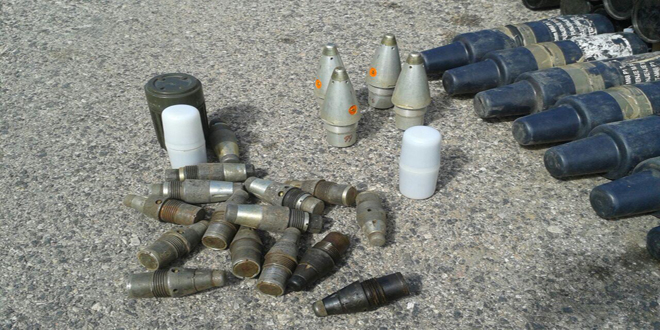
U.S. and Israeli weapons and ammunition in possession of terrorists, seized by Syrian government forces

Global Research, February 15, 2016
SANA 14 February 2016
weapons

The authorities concerned in Sweida, in cooperation with the locals, seized on Sunday a vehicle loaded with large amounts of arms and ammunition in the western countryside of the southern province.

A source at Sweida Governorate told SANA that the vehicle was heading to the terrorist organizations operating in the eastern countryside of the neighboring Daraa province.

The arms and ammunition which were confiscated included 7 Israeli-made anti-tank rocket launchers, 62 shells, 128 RPG shells of different kinds, 43 120 mm mortar rounds, 42 82 mm mortar rounds and 100 23 mm machinegun bullets.

Earlier on Saturday, the authorities, in cooperation with the popular committees, seized hundreds of U.S. and Israeli-made anti-tank mines loaded in a pickup in the western countryside of Sweida. The weapons were bound for the terrorists in eastern al-Badiya (desert).

On January 20th, the authorities in Sweida foiled an operation to smuggle a large quantity of ammunition for medium-sized and heavy weapons from eastern Daraa to terrorist organizations in al-Badiya.

 11  10  9
 8  7  6
 5  3  2
 12  1

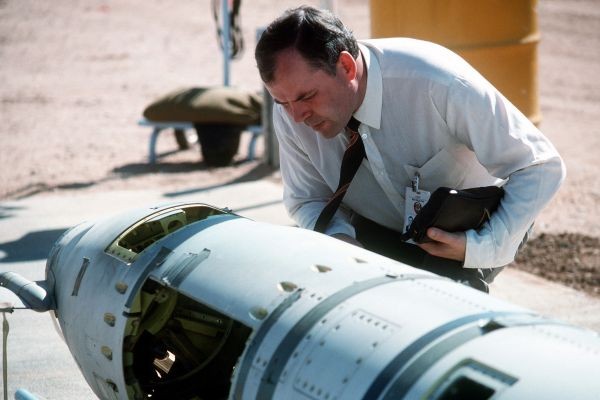
U.S will spend a trillion dollars to “catch up” with Russia

From Fort Russ

Translated by Ollie Richardson for Fort Russ
29th January, 2016

The Obama administration intends to spend a trillion dollars in the next 15 years, about half the annual defence budget of the USA, on the modernization of the arsenal of cruise missiles, writes The Economist. The reason for opening one of the most expensive military programs was the demonstration of the Russian cruise missiles “Kalibr”, dispelling the myth of the hegemony of the United States in the field of precision weapons.

“Russia is moving ahead towards its goal, which is placed on heavy bombers, submarines, and ships with winged long-range missiles equipped with non-nuclear warheads and long range weapons… If this trend continues, then over time the national missile defense system will face challenges in ensuring the protection of North America from the threat from Russian cruise missiles,” the head of the aerospace defense of the U.S. Admiral, William Courtney, said at the hearings in Congress.

“None of our ships are able to destroy the enemy ship using the standard weapons at a distance greater than 100 kilometers (the range of American anti-ship CU “Harpoon”). And none of the ships are capable of launching these missiles since their 1999 entrance into the service of the Navy,” said the Deputy Director of the Center for the study of American naval power at the Hudson Institute, Bryan McGrath.

However, US military commanders do not understand the panic because of the accumulated arsenal of thousands of “Tomahawks” – the main cruise missiles of the USA, which arms destroyers, cruisers and submarines. In recent history these missiles effectively fought desert guerrillas in Libya and other “hot spots”. They can be converted into cruise missile nuclear submarine type “Ohio”, which can carry 154 Tomahawks each. Should they be afraid?
The fact is that the subsonic flight of the Tomahawks at their full range may take more than three hours. During this time the enemy ship doing a conservative, slow speed, will be able to move at 60-100 kilometers from the point of impact. Thus, the previously included guidance system of the missile to the target’s data source is dangerously obsolete. Therefore, it is necessary to decisively increase the speed of the missile. Or to make a principally new guidance system, explains the portal “Novosti VPK”.
Also, “Tomahawks” were created almost 40 years ago, when the modern means of air defense systems and electronic warfare were not on the scene. Slow and unmasked in flight, the rocket will become an easy target for the more or less powerful anti-aircraft missile systems, and such complexes as S-400 “Triumph”, which is able to deflect a massive raid of “Tomahawks”.
It seems that in America they have only now realized the true meaning of the statement of Russian Defense Minister Sergei Shoigu, made in 2013. “By 2016 Russia intends to quintuple the number of high-precision long-range missiles, the Minister said. “And by 2020 – 30 times”.

Zika szaleje w mediach. Prof. Maria Dorota Majewska

Wolna Polska

Opublikowano Luty 9, 2016

Kolejna wirusowa histeria opanowała korporacyjne media.  Tym razem dotyczy wirusa zika.  Zapewne wszyscy już słyszeli o nowej epidemii zarażeń tym wirusem, który ma wkrótce zaatakować cały świat i wywołać masowe małogłowie (mikrocefalia) u niemowląt. Media straszą wirusem roznoszonym przez komary i epatują obrazami małogłowych dzieci, równocześnie ukrywając istotne informacje.

a

Municipal workers sprays insecticide to combat the Aedes aegypti mosquitoes that transmits the Zika virus at the Imbiribeira neighborhood in Recife, Pernambuco state, Brazil, Tuesday, Jan. 26, 2016. Brazil's health minister Marcelo Castro said that nearly 220,000 members of Brazil's Armed Forces would go door-to-door to help in mosquito eradication efforts ahead of the country's Carnival celebrations. (AP Photo/Felipe Dana)

Jakie są dowody, że mikrocefalia jest skutkiem zarażenia ziką?  Jak dotąd, praktycznie żadne.  Wirus ten występuje w wielu regionach świata i skutki zarażenia się nim dotąd były łagodne, przypominające krótkotrwałe przeziębienie. Spośród 4180 podejrzanych przypadków mikrocefalii, Brazylijskie Ministerstwo Zdrowia dokładnie zbadało 732 przypadków i potwierdziło małogłowie tylko u 270 niemowląt; w tej grupie zikę znaleziono zaledwie u 6 niemowląt.  Nie może więc być tu mowy o żadnej korelacji małogłowia z zarażeniem ziką.   

Z drugiej strony, mikrocefalia oraz inne zaburzenia rozwoju mózgu korelują czasowo z wprowadzeniem w Brazylii w 2014 r. masowych szczepień ciężarnych kobiet szczepionką Tdap (tężec, dyfteryt, krztusiec), która nigdy nie była testowana pod względem bezpieczeństwa na tej populacji. Mamy tu więc do czynienia z mengelowskim eksperymentem medycznym na skalę całego narodu.  Szczepionki te zawierają duże dawki silnie toksycznej rtęci (tiomersalu), znanej z powodowania zaburzeń rozwoju mózgu. Bardzo prawdopodobne, że małogłowie jest tragicznym skutkiem tych toksycznych szczepień, na co wskazuje brazylijskie badanie. (http://quiteriachagas.com/2016/01/28/causa-da-microcefalia-em-pernambuco-nao-e-zika-virus-foram-as-vacinas-em-gestantes-diz-estudo/). 

Zika oskarżana jest również o wywoływanie zespołu Guillaina-Barrégo, choroby będącej typowym powikłaniem wielu szczepień, w której układ immunologiczny atakuje nerwy. To wszystko sugeruje, że możemy tu mieć do czynienia z maskowaniem tragicznych powikłań poszczepiennych, będących przyczynami zarówno małogłowia jak i zespołu Guillaina-Barrégo

Inną możliwą przyczyną mikrocefalii może być zatrucie kobiet i ich płodów pestycydami oraz herbicydami. Brazylia jest znana z tego, że stosuje bardziej toksyczne środki ochrony roślin i w znacznie większych ilościach niż inne kraje.  Niewykluczone, że oba czynniki – szczepienia ciężarnych i pestycydy – synergicznie zatruwają płody brazylijskich kobiet.            

Znamienne jest to, że przy braku dowodów na związek ziki z małogłowiem, firmy farmaceutyczne wraz z WHO już zapowiadają szczepienia przeciw temu wirusowi (będące rzekomo w przygotowaniu).  Zapewne wkrótce w niektórych krajach wszystkie kobiety ciężarne będą zmuszane do ich przyjmowania i wtedy prawie wszystkie dzieci mogą rodzić się patologiczne, jeśli wcześniej nie ulegną poronieniom.  

Innym niewyjaśnionym aspektem „zikowej epidemii” jest jej czasowy związek z masowym wypuszczeniem w Brazylii przez firmę biotechnologiczną Oxitec genetycznie zmodyfikowanych komarów.  Intrygujące jest, że wirus zika został opatentowany, jest magazynowany i sprzedawany przez Fundację Rockefellera, która od lat zajmuje się tworzeniem produktów służących depopulacji.  Nic więc dziwnego, że wiele osób podejrzewa, iż genetycznie zmodyfikowane komary zarażone ziką zostały wypuszczone jako broń biologiczna.  Nikt nie wie, jak one zmienią ekologię i epidemiologię wielu wirusowych chorób na świecie.  Fakt, że rząd Brazylii zatrudnił setki tysięcy żołnierzy do zwalczania tych komarów wskazuje na prawdopodobną klęskę ekologiczną.  Docierające do nas informacje są niestety często ze sobą sprzeczne lub niewiarygodne, więc trudno mieć jasny obraz tego zagrożenia.   W tej sytuacji, nie poddając się medialnej propagandzie, warto zachować zdrowy rozsądek i na wszelki wypadek unikać wszelkich ukąszeń komarów.    

a

Zwyrodnienie korporacyjnej medycyny i służących jej mediów jest dziś tak dalece posunięte, że coraz powszechniej dzieci upośledzone, chronicznie chore, kalekie, autystyczne uznaje się za normę. Natomiast zdrowe, prawidłowo rozwinięte dzieci (zwykle nieszczepione) wkrótce będą uważane za nienormalne, będą prześladowane i pewnie zamykane w psychuszkach. Korporacyjna medycyna zdiagnozuje je, jako osobniki z syndromem deficytu szczepień, na co skuteczną kuracją będzie ładunek toksycznych szczepionek.  

Prof. Maria Dorota Majewska

Suplement:

http://wolna-polska.pl/wiadomosci/zika-szaleje-w-mediach-prof-maria-dorota-majewska-2016-02

Zika raging in the media — Prof. Maria Dorota Majewska

From Wolna Polska
February 9, 2016

a

Municipal workers sprays insecticide to combat the Aedes aegypti mosquitoes that transmits the Zika virus at the Imbiribeira neighborhood in Recife, Pernambuco state, Brazil, Tuesday, Jan. 26, 2016. Brazil's health minister Marcelo Castro said that nearly 220,000 members of Brazil's Armed Forces would go door-to-door to help in mosquito eradication efforts ahead of the country's Carnival celebrations. (AP Photo/Felipe Dana)

Another viral hysteria mastered by the corporate media. This time it’s the virus zika. Probably everyone has heard about the new epidemic of infection with this virus, which is soon to invade the whole world and trigger massive microcephaly (microcephaly) in infants. Media scare a virus spread by mosquitoes and dazzle images small-headed children while hiding relevant information.

What is the evidence that microcephaly is the result of infection Zika? So far, virtually none. This virus is found in many regions of the world and the effects of catching him so far been mild, cold-like short-lived. Of the 4180 suspected cases of microcephaly, the Brazilian Ministry of Health thoroughly investigated 732 cases and confirmed microcephaly only in 270 infants; zikę in this group we found only 6 infants. There can therefore be no question of any correlation with microcephaly infection zika.

On the other hand, microcephaly and other developmental disorders of the brain correlate temporally with the introduction in Brazil in 2014. Mass vaccination of pregnant women Tdap vaccine (tetanus, diphtheria, pertussis), which has never been tested for safety in this population. So here we have to deal with Mengele-like medical experiment on the scale of an entire nation. These vaccines contain large doses of highly toxic mercury (thimerosal), known to cause disorders of brain development. Very likely that microcephaly is a tragic consequence of these toxic vaccinations, as indicated by the Brazilian study.

(http://quiteriachagas.com/2016/01/28/causa-da-microcefalia-em-pernambuco-nao-e-zika-virus-foram-as-vacinas-em-gestantes-diz-estudo/ ).Zika is also accused of causing Guillain -Barre disease, which is a typical complication of many vaccination, in which the immune system attacks the nerves. This all suggests that we here have to do with masking tragic-vaccination complications, which are both causes of microcephaly and Guillain -Barré.

Another possible cause of microcephaly may be poisoning women and their fetuses pesticides and herbicides. Brazil is known that uses more toxic pesticides and in much larger quantities than other countries. It is possible that both factors – the vaccination of pregnant and pesticides – are poisoning synergistically fetuses Brazilian women. It is significant that in the absence of evidence of an association with microcephaly of zika, pharmaceutical companies, together with the WHO is already foretold vaccination against this virus (which are allegedly in preparation). Probably soon in some countries, all pregnant women will be forced to accept them, and then almost all children can be born abnormal, if not previously will miscarriages.

Another unexplained aspect “zika epidemic” is its temporal relationship with the mass release in Brazil by the biotech company Oxitec genetically modified mosquitoes. What is intriguing is that the virus zika has been patented, it is stored and sold by the Rockefeller Foundation, which has been involved in the creation of products for depopulation. It is no wonder that many people suspected that genetically modified mosquitoes infected Zika were released as a biological weapon. No one knows how they will change the ecology and epidemiology of many viral diseases in the world. The fact that the Brazilian government has hired hundreds of thousands of troops to fight the mosquitoes indicates a probable ecological disaster. Information reaching us are, unfortunately, often conflicting or unreliable, so it is difficult to have a clear picture of the threat. In this situation, not giving in to media propaganda, it is common sense and precaution to avoid any mosquito bites.

a

The degeneration of corporate medicine and serving the media today is so far-reaching that increasingly handicapped children, chronically ill, crippled, autism is considered the norm. In contrast, healthy, normally developed children (usually vaccinated) will soon be regarded as abnormal, they will be persecuted and probably closed psyche-houses. Corporate medicine diagnose them as individuals with the syndrome deficit vaccination, which will effectively cure the load of toxic vaccines.

Prof. Maria Dorota Majewska

http://wolna-polska.pl/wiadomosci/zika-szaleje-w-mediach-prof-maria-dorota-majewska-2016-02

“A special place in Hell”… for Hillary Clinton and Madeleine Albright?

Global Research, February 09, 2016
Liberation 7 February 2016

Madeleine Albright: “Champion of Democracy.”

Featured image: Albright, a fanatical advocate for genocidal sanctions and bombing campaigns, is in no place to lecture young women on “feminism.”

I am writing as a working woman, feminist, socialist, and candidate for President of the United States, and I want to condemn in the strongest possible terms the outlandish attacks by Hillary Clinton and Madeleine Albright on any woman working in support of the political campaign of Bernie Sanders. This attack, particularly on young women who are supporting Sanders in such large numbers, is a shameful and opportunist attempt to use the historic struggle for women’s rights for the narrowest political gains.

In a desperate attempt to reverse the growing support among young women and men for her opponent in the Democratic Party primaries, Hillary Clinton has enlisted the support of notorious war monger and advocate of mass murder, Madeleine Albright.

As Clinton looked on laughing and clapping, Albright told the media on February 6: “There’s a special place in hell for women who don’t help each other!”

If indeed there were such a “special place,” Madeleine Albright would most assuredly be going. And going along with her would be candidate Clinton.

As UN Ambassador and the Secretary of State in the Bill Clinton regime, Albright was a fanatical advocate of the genocidal sanctions blockade that killed more than a million women, children and men in Iraq, and of the 1999 U.S./NATO bombing war against Yugoslavia.

On May 12, 1996, nearly six years into the U.S./UN sanctions, Albright was interviewed on CBS “60 Minutes” by Lesley Stahl, who had just returned from Iraq, about the impact on the Iraqi population:

Lesley Stahl: “We have heard that a half million children have died. I mean, that’s more children than died in Hiroshima. And, you know, is the price worth it?”

U.S. Ambassador to the UN Madeleine Albright: “I think this is a very hard choice, but the price–we think the price is worth it.”

Albright’s astoundingly flippant answer was nothing less than a confession to one of the most horrific war crimes in history, indicting not just herself but all the leaders of the Bush I, Clinton and Bush II administrations who were fully aware of the lethal impact of sanctions on the people of Iraq.

In 1999, Albright played a key role in the war on Yugoslavia, engineering the failure of the negotiations that preceded the war. Albright presented the Yugoslav government with an “agreement” that would have allowed NATO to forces to occupy the entire country, with the unheard of provision that Yugoslavia would pay for the expenses of the occupation!

After the talks broke off, a “top official” (Albright) told reporters in an off-the-record session: “We intentionally set the bar too high for the Serbs to comply. They need some bombing, and that’s what they are going to get.” When the Yugoslav government predictably rejected the ultimatum disguised as a “proposal,” the bombing began and continued for three months.

Thousands of civilians were killed, wounded and made homeless. As was true in Iraq, the entire population was traumatized, with women and children most severely impacted.

Like the assault on Iraq, the attack on Yugoslavia was a war crime, a “crime against peace,” the most serious of all violations of international law, a war of aggression against another state that poses no threat to the country launching the war.

According to her own words, Hillary Clinton joined in the war chorus: “I urged him [President Clinton] to bomb.”

In 2003, Senator Clinton supported invasion and occupation of Iraq. In 2011, as Secretary of State, she was chief advocate in the Obama administration in calling for the bombing war that killed, wounded and displaced unknown numbers of Libyans and devastated the country.

After the torture and murder of Libyan leader Moammar Qaddafi, Clinton laughingly told a CBS interviewer: “We came, we saw, he died.

Albright and Clinton thus share much in common both with each other and their far more numerous murderous male counterparts in the top levels of the U.S. imperialist state machine. That they who have worked to destroy the lives of so many millions of women would now presume to lecture young women on “feminism” and attempt to shame them into supporting Clinton is a despicable travesty.