“The US should keep out of the Ukraine conflict”– EU Parliament President Martin Schulz in heated talk show roundtable

Participants on Günther Jauch talk show, February 8, 2015:

Martin Schulz — EU Parliament President
Gabriele Krone-Schmaltz — ARD (Ukrainian TV) Moscow correspondent
John Kornblum — former U.S. ambassador to Germany
Harald Kujat — formerly NATO/Bundeswehr General

Posted on Fort Russ
 2/11/2015

Germans are fed up with the US ‘”over-protectiveness” and are not willing to fight for Poroshenko

Translated from Russian by J.Hawk

Ukrainian special services ought to immediately put out an arrest warrant on the European Parliament deputy Martin Schulz. This “Colorado beetle” and “quilted jacket” [both are derogatory terms used to describe the Ukrainian proponents of good relations with Russia] dared, on the state ARD TV channel, to call what’s happening in Ukraine a civil war, while the current Kiev government really hates that term. You are liable to get arrested for that, like the journalist Kotsaba.

Schultz made that statement on Gunther Jauch’s talk show, which is the equivalent of Savik Schuster’s show in Ukraine.

The next show aired on February 8. The topic: “Fateful Days for Europe—Whom is Putin Listening to?” Needless to say, the topic was Ukraine.

The discussion as to whom Putin listens to included the European Parliament President Martin Schulz, the ARD Moscow correspondent Gabriele Krone-Schmaltz, the former US ambassador to Germany John Kornblum, and the former NATO [actually, Bundeswehr] general Harald Kujat.

The discussion was heated and shows that being under the “over-protectiveness” of the US Big Brother has long gotten under the Germans’ skin, and any reference to that fact caused applause among the studio audience.

It would be difficult to call Schultz a Russophile and a Ukrainophobe. Nevertheless even he could not force himself to lie in front of the cameras and call the conflict on the Donbass one between the Forces of Light against Colorado beetle terrorists.

The Donbass conflict is a civil war. It must be resolved by diplomatic means, and not through the use of the Ukrainian army. “If Minsk-1 had failed, maybe Minsk-2 will fail too, but even then we need to continue the negotiations even if it means Minsk-70,” is how Schultz sees the problem’s resolution.

One left with an impression of tension in the German-US relations. Judging by how Angela Merkel spent the entire 2014 agreeing with Obama, the anti-US sentiment in Germany had grown, to the point that Kornblum was reduced to complaining to his German audience that “these days I’m seeing a tendency to blame everything on the US.”

His statement that “it’s Russia that’s waging war”, Krone-Schmaltz met with a rather sharp reply. “I want to emphasize, I am underscoring that if Russia were included during the preparations for the association agreement with Ukraine (and this is normal diplomatic work), none of this would be happening. I also believe that if the Eastern regions of Ukraine, where there is fighting right now, were given some autonomy, none of this would be happening. One can’t judge everything by today’s events and blame Moscow as soon as something goes wrong. One needs to engage in a little self-criticism.” Judging by the studio applause, she hit the nail on the head.

“Mr. Kornblum, what do you think about what McCain said to Merkel, namely that she ‘doesn’t care that people in eastern Ukraine are being killed like cattle’? Such rhetoric in Germany, to put it mildly, is considered unfriendly,” said Jauch to Kornblum. “Well, McCain is known for his sharp tongue. There are heated discussions, people are getting hot-headed. If you knew how many times I was told that America is responsible for that war. But we are not dealing with a ‘civil war’ but with a Russian aggression,” continued Kornblum.

General Kujat could not remain indifferent to that statement. “There is no military solution. Let me clarify: the West does not have a military solution. If we do something idiotic and intervene, we will not win but lose, and there will be a huge catastrophe. The situation looks different for Russia. Russia could adopt a military solution and we need to keep that in mind. But if Russia had really wanted it, that war, that conflict in Eastern Ukraine, would have been over in 48 hours. We keep hearing from various sources that regular Russian forces are participating in the fighting. Ukraine’s president also repeated that claim. However, I have no trustworthy information that would confirm that. Even the Ukrainian GenStaff Chief recently said: we are not fighting against regular Russian forces. If there were regular Russian forces there, the conflict would be over in 48 hours. What we are hearing is propaganda.”

To Schulz’s words that “Putin obviously has influence over the separatists,” Krone-Schmaltz reacted as follows: “it would be an oversimplification that Moscow controls the separatists, and Kiev controls its forces. It’s obvious there are forces that nobody controls. Kiev likewise does not control several of its military formations. For example, there was an ceasefire agreement after the Boeing MH17 catastrophe, in order to collect the victims. And who violated that ceasefire? Not the separatists but the Ukrainian army, whoever might be representing it! It’s been like this until today. I remind you that the Right Sector still insists it has a right to carry weapons. Therefore the EU ought to exert pressure also on Kiev so that the situation does not spin out of control.”

Schulz also pointed out that there are too many Americans involved. “This conflict is occurring on the border with the EU, therefore the US ought to pull back. I think it would be best if the Europeans were to solve this problem themselves,” he said to thunderous applause. Continue reading

Minsk-2 Preliminary Analysis

Posted on Fort Russ
2/12/2015

Minsk-2: Withdrawal of Forces and Autonomy for the Donbass.
By Russkiy Malchik

Translated from Russian by J.Hawk

Information is still scarce. We have seen the main principles which were clear. But it’s obvious that they spent 16 hours discussing not the basic principles but the details. It is the details that are the core of the peace plan.

Unfortunately neither Poroshenko nor other leaders signed the joint declaration, and the “Collection of Measures” were signed only by the members of the contact group, namely LPR/DPR, Kuchma in Kiev’s name, OSCE, and Zurabov. That list likewise contains 13 points with fairly general formulations, which will require further clarification. But there are also specifics that have been published and by which we can assess how the negotiations went and what kind of compromise was reached.

The first has to do with the withdrawal of heavy weapons under OSCE control. The conditions are rather odd: it specifies a distance of 50km (for cannon) or 140km (for rocket artillery), from the actual line of the front as of midnight, February 15, and for the militia from the September 19 line [the line of demarcation from Minsk-1].

This means that both sides should leave their positions, creating a huge belt (100-300km) without weapons, de facto up to the borders of the Donetsk and Lugansk regions. Which leads to the following question: who will control it? This is the key question. So far there are no clear answers. But considering that the issue of peacekeepers was frequently brought up, this is who they have in mind. It is not for nothing that the Donbass representatives said that they will accept only Russian and Belarusian peacekeepers. Kiev, on the other hand, does not want peacekeepers, but if it does agree it will want NATO troops. So there is a big question mark here.

The second interesting provision is this. In the paragraph 11 which concerns Ukraine’s constitutional reform, which is to be implemented by the end of 2015, there is a provision which includes the main provisions of the law on the “Special Status of Lugansk and Donetsk Region”, which read as follows:

–Immunity from punishment, prosecution, or discrimination for individuals which participated in the events that took place in various parts of the Donetsk and Lugansk regions (this amounts to legalizing all combatants).

–The right to language self-determination.

–The participation of local self-government in the nominating process for the office of prosecutor general and the courts in the regions (LPR and DPR de-facto control over the legal and law enforcement systems).

–The central government shall enter into agreements with the local self-government concerning economic, social, and cultural development of the regions (Kiev will enter into agreements with Donetsk and Lugansk concerning all crucial aspects of the joint economy).

–The government supports the socio-economic development of the separate regions (Kiev will partially finance the reconstruction of Lugansk and Donetsk, and guarantees the fulfillment of social obligations).

–The central government shall facilitate cross-border cooperation between the several districts of the Donetsk and Lugansk regions with regions of the Russian Federation (Kiev will not oppose the cooperation between Lugansk, Donetsk, and Russia).

–The establishment of people’s militia in accordance with local government decisions in order to maintain public order in the several regions (the militia becomes a law enforcement organization, all power institutions remain under the control of the current leadership).

–The authority of the local authorities and officials from special elections that were designated by the Verkhovna Rada in accordance with this law, cannot be invalidated before their terms run out (this guarantees the rights of the current DPR and LPR government until they are re-elected as part of the process of forming local self-government through new elections).

As a result, Donbass receives widespread autonomy within the framework of nominally unitary Ukraine. This is the compromise which satisfied Putin after the 16-hour Minsk marathon. Moreover, France and Germany guarantee the re-establishment of the Donbass banking system, and will reach an agreement with Russia concerning the rules concerning the free trade zone between EU, Russia, and Ukraine, while taking into consideration the special status of Donbass.

The third detail pertains to border control. Here the language is extremely clear. The border between Ukraine and Russia will be re-established only after Ukraine carries out constitutional reforms, which implies autonomy (self-government, people’s militia, cross-border cooperation with Russia). In other words, once Kiev gives Donbass control over its own territory, then the border shall be re-established…but will remain under militia control.

To sum up this quick analysis based on still-incomplete information one can say the following: in purely diplomatic sense, Russia scored a success, forcing Kiev and the West to accept a painful and temporary, but real compromise. It is based on freezing the military conflict and the autonomy of the Donbass while nominally preserving Ukraine’s borders. In practice we are talking about reformatting Ukraine from a unitary into a federal state, regardless of Poroshenko’s denials. If the Galicia banderites realize this, they’ll start screaming about “Poroshenko’s treason.”

Of course, the implementation of the agreement is another question. The fact that neither Poroshenko nor European leaders signed it does not make it easier. On the other hand, Hollande’s and Merkel’s wishes are more than real, so it will fall to them to compel Kiev to implement the “Collection of Measures.” The only other option is a complete defeat for Ukrainian forces. To which Putin merrily alluded when he mentioned Debaltsevo—either you come out with your hands up, or you’ll continue to get killed.

The Minsk peace plan from February 12 does not solve the problem (and it could not solve it), but creates the possibility to delay the war until the end of 2015. With one condition: that Kiev and Washington accept the federalization of Ukraine. If not, the war will come to Kiev.

J.Hawk’s Comment:  The biggest factor here is whether the Ukrainian military is up to the task of continuing the fighting. If it is, if Poroshenko believes its forces have been sufficiently restored, the fighting will resume. However, the Ukrainian military took a heavy beating in the last months’ fighting and it will find it difficult to replace the lost equipment. Mobilization is unpopular, and there is little chance that NATO will rearm Ukraine. Last but not least, there is also the IMF and its stringent conditions on government spending that come as part of its bailout packages. Yaresko had already announced that Ukraine’s budget will have to undergo significant changes in order to accommodate the IMF. It’s difficult to see what else in that budget could be cut aside from the defense spending. Hollande and Merkel are not stupid, they’ve seen enough of Poroshenko to know what he is capable of, so therefore they will most likely act through the IMF to reduce Ukraine’s ability to wage war.

So overall this is a better agreement than Minsk-1, though not as good one as might have been reached should the Ukrainian military first suffered a catastrophic defeat. The fact that Novorossia will continue to enjoy unimpeded contact with the Russian Federation is also a major plus–Minsk-1 agreement called for the border control to be returned to Ukraine. 

But in the meantime Novorossia continues to exist and to enjoy a high degree of autonomy, though it is not likely that its authority will spread all the way to the borders of the Lugansk and Donetsk regions, even though Minsk-2 does not appear to contain any language concerning demarcation lines.   The above, of course, assumes that there will be a ceasefire at midnight of February 15, and there might not be one. Minsk-2 says nothing about Debaltsevo, which means the Ukrainian side will continue its attempts to break into or out of the encirclement. If the ceasefire goes into effect as of the 15th with the Ukrainian forces still trapped in Debaltsevo, they will have no choice but to surrender their weapons and depart. Poroshenko cannot allow that to happen, so the fighting could well continue. One can always perpetrate a “false flag” attack or two as an excuse for breaking the ceasefire…


http://fortruss.blogspot.com/2015/02/minsk-2-preliminary-analysis.html

On Minsk eve, Kiev refuses most terms, refuses to freeze conflict, asserts America can “thrash Russia”

by George Eliason, February 9, 2015
Posted on Global Research

According to the BBC on Febuary 9th President Barack Obama: ”The possibility of lethal defensive weapons is one of those options that is being examined.” What this means is if the Minsk talks fail, the US will supply lethal heavy weapons openly to Ukraine if Russia does not get into line with western policy.

Kiev, which has openly denied Russia is invading or sending regular troops into the conflict is now giving Russia an ultimatum. In October I traveled through the Donbass region and did invasive passport checks on soldiers. My findings agree with Kiev on this point.

There are no Russian military units or regular soldiers in the region. I interviewed Spanish volunteers. I spoke with Chechens, Afghanis, Russian citizens, and Cossacks. They are private citizens that have family here or have come to fight fascism so it does not spread further into Europe or Russia.

Even in the face of this According to the BBC Obama further stated “Russia had violated “every commitment” made in the failing Minsk agreement, he added, after talks with the German chancellor on a new peace deal.”

President Obama is under tremendous pressure from the combined Eastern European Caucus on Capital Hill to make this happen. For the nationalists the largest threat to them hasn’t been American democracy as it should have been, and should be. It has been Russia that has taken the lead in this and suffered the most for it.

On February 10th the Deputy Head of the Poroshenko Administration, Valery Chaly released these statements.

“Every decision concerning outcome of the upcoming meeting (Minsk) has been made already. Kiev unilaterally rejects all proposals for federalization, the expansion of the DNR an LNR to their administrative borders, and granting rights of broad autonomy.

The only thing that Kiev is ready to agree to is abolish duties between Russia and Donbass at their borders and indulge Donbass in the use of the Russian language.”

By taking any and all negotiations off the table, Poroshenko’s government has effectively rendered the Minsk talks and agreement worthless.

Taking a Stick To Russia’s Putin

Speaking for Poroshenko’s administration, Chaly went much further by saying under no circumstances will the conflict be frozen. In an ultimatum to Vladimir Putin’s government in Russia he boldly said “If Putin does not accept these terms the “West will thrash Russia! Russia will pay a high price, and among the serious consequences resulting from Russia’s lack of obedience would be an escalation of the conflict.”

How can Poroshenko’s Kiev escalate the conflict more than openly attacking civilians with banned weapons and destroying entire towns? The Ukrainian governments crimes against humanity in front of the world is what frames this conflict. This escalation can only mean drawing Russia into the conflict further, well beyond the diplomatic cover and humanitarian aid Russia is currently providing Donbass today.

This hit’em with a stick diplomacy is part and parcel to Ukrainian ultra-nationalist ideology. Diplomacy can only be conducted with a weapon pointed and your “enemy” crushed.

Heavy NATO weapons such as the Paladin artillery system and tanks are used in the arena already. The Ukrainian military has no training or experience on these systems. Will American troops fight for the openly nationalist Ukrainians? To date by the current reckoning well over 100 American mercenaries are buried here. Two US army military trainers were reported killed near Mariupol last August training Azov Battalion.

In one of the few articles to openly show the stark realities for Donbass the BBC in a congratulatory piece showed how much Ukraine is receiving for weapons and aid from private donors. It then compares the level of support Russia gives Donbass which according to the pro-junta BBC is minimal humanitarian aid.

Ukraine sealed off Donbass from getting medicines and foodstuffs from the west. Now it is demanding Russian do it from the East. It also demands that Russia take responsibility for weapons it is not sending. The twisted side politically is that Ukraine and the west want Russia’s Putin to take responsibility for decisions made outside his own country by the leaders of DNR and LNR who have clearly shown that while cooperative with Russia, Novorossya will be its own country. Vladimir Putin has also made it clear Novorossya does not have a future being absorbed as part of Russia.

Russia’s Response to the Ultimatum

As I sit writing this, the Kremlin has responded to both the ultimatums and the threat of US heavy weapons shipped openly to the conflict area. Simply, “we will respond to the US sending weapons with diplomacy.”

If Kiev was telling the truth about a Russian invasion through MSN all this time then US and EU troops are about to come in direct contact and conflict with them. This most dangerous of lies may eventually solve the problem of people not knowing where the Donbass conflict is. Should the worlds Titan countries go head to head, the Ukraine war, with Kiev’s lies, manipulations, war crimes, and eventual escalated attacks on Russia itself, may find its way to your own backyard.

For the American way of life, a crossroads has appeared in front of us. The decision about which road we should take will have profound effects on who we are as a country. If we are a great people we need to rely on and restore democratic principles.

If we sit by that decision is being made by neo-liberals and neo-cons for us today. In that case America will be remembered as a once great country that lost itself in both self-absorption and a nation that lost faith in its people. It became a people managed by its government. It is the most horrible of epitaphs.

http://www.globalresearch.ca/ukraine-war-kiev-announces-americas-war-with-russia/5430558

Alexander Mercouris: Diplomatic talks in Moscow — a two-part analysis

Posted on Vineyard of the Saker, February 6, 2015

Talks in Moscow – a two-part analysis
by Alexander Mercouris

Part one (On 6th February 2015)
They have apparently continued for 5 hours and are still not finished though it seems some sort of document is being prepared for tomorrow.

Three comments:

1. If negotiations go on for 5 hours that does not suggest a smooth and conflict free discussion.

2. One of the most interesting things about the Moscow talks is that they mainly happened without the presence of aides and officials i.e. Putin, Hollande and Merkel were by themselves save for interpreters and stenographers. Putin and Merkel are known to be masters of detail and given his background as an enarque I presume Hollande also is. However the German and French officials will be very unhappy about this. The Russians less so because since the meeting is taking place in the Kremlin they are listening in to the discussions via hidden microphones.

One wonders why this is happening? Even if the Russian officials are not listening in Merkel and Hollande will assume they are. The fact that Russian officials were not present is therefore less significant than that German and French officials have been barred from the meeting by their respective chiefs, suggesting that Merkel and Hollande do not entirely trust them.

There has been an extraordinary degree of secrecy about this whole episode and it rather looks as if Merkel and Hollande were anxious to stop leaks and to prevent information about the talks from getting out. Presumably this is why their officials were barred from the meeting. From whom one wonders do Merkel and Hollande want to keep details of the meeting secret? From the media? From other members of their own governments? From the Americans? What do they need to keep so secret? The frustration and worry on the part of all these groups must be intense.

3. The fact that the British are excluded from the talks is going down very badly with many people here in London. It has not escaped people’s notice that this is the first major negotiation to settle a big crisis in Europe in which Britain is not involved since the one that ended the Franco-Prussian War in 1870. Of course it is largely the fault of the inept diplomacy of Cameron, who has taken such an extreme pro-Ukrainian position that Moscow simply doesn’t see him as someone worth talking to. Also one suspects Merkel and Hollande do not trust Cameron not to leak the whole discussion to whomever they want to keep it from. Having said that it is difficult to see this as anything other than further evidence of Britain’s decline into complete irrelevance. I cannot imagine Thatcher being excluded in this way. If the United Kingdom is indeed in the process of breaking up (and as I suspected the Scottish referendum settled nothing with polls indicating that the SNP may make an almost clean sweep of all the seats in Scotland in the election in May) then the slide into irrelevance still has a long way to go.

Part two (On 7th February 2015)
I am coming increasingly round to the view of Alastair Newman that Merkel and Hollande came with no plan to Moscow but with the purpose of having what diplomats call “a full and frank discussion” in private with Putin looking at all the issues in the one place in Europe – the Kremlin – where they can be confident the Americans are not spying on them. That must be why they sent their officials away.

It is also clear that Merkel’s and Hollande’s visit to Kiev before their flight to Moscow was just for show.

Poroshenko’s officials are insisting that the question of federalisation was not discussed during Poroshenko’s meeting with Hollande and Merkel. Hollande has however now come out publicly to support “autonomy” for the eastern regions i.e. federalisation, which makes it a virtual certainty that in the meeting in Moscow it was discussed. The point is that Merkel and Hollande did not want to discuss federalisation with Poroshenko because they know the junta adamantly opposes the idea and did not want him to veto it before the meeting in Moscow had even begun.

The problem is that since everyone pretends that federalisation is an internal Ukrainian issue to be agreed freely between the two Ukrainian sides, its terms will only be thrashed out once constitutional negotiations between the two Ukrainian sides begin. Since the junta will never willingly agree to federalisation, in reality its form will have to be hammered out in private by Moscow after consultations with the NAF and with Berlin and Paris and then imposed on the junta in the negotiations.

Saying this shows how fraught with difficulty this whole process is going to be.

Not only are there plenty of people in the Donbass who now oppose federalisation (and some in Moscow too I suspect) but this whole process if it is to work would somehow have to get round the roadblock of the Washington hardliners, who will undoubtedly give their full support to the junta as it tries to obstruct a process over which it has a theoretical veto. Frankly, I wonder whether it can be done.

If the process is to have any chance of success then Merkel and Hollande must screw up the courage to do what they failed to do last spring and summer, which is publicly stand up to the hardliners in Washington and Kiev and impose their will upon them. Are they really willing to do that? Given how entrenched attitudes have become over the last few months and given the false position Merkel and Hollande put themselves in by so strongly supporting Kiev, the chances of them pulling this off look much weaker than they did last spring.

I would add a few more points;

1. There is one major difference between the situation now and in the Spring, which might offer some hope of movement.

Anyone reading the Western media now cannot fail but see that there is a growing sense of defeat. Sanctions have failed to work, the Ukrainian economy is disintegrating and the junta’s military is being defeated.

That was not the case last spring, when many in the West had convinced themselves that the junta would win the military struggle with the NAF. The confrontation strategy Merkel opted for in July based on that belief has totally and visibly failed. It is not therefore surprising if she is now looking for a way-out by reviving some of the ideas that were being floated by the Russians in the spring. She now has a political imperative to look for a solution in order to avoid the appearance of defeat, which would leave her position both in Germany and Europe badly weakened. That political imperative was not there in the spring. It is now. In a sense the pressure is now on her.

2. I should stress that it is Merkel who is Putin’s key interlocutor. The reason Hollande is there and appears to be taking the lead is to provide Merkel with cover. The one thing Merkel cannot afford politically is the appearance of a Moscow-Berlin stitch-up that the hardliners in Washington, Kiev, London, Warsaw and the Baltic States will claim is a new Molotov-Ribbentrop Pact to divide Europe into German and Russian spheres of influence. Whether we like it or not in Germany the shadow of Hitler still hangs heavy and exposes Berlin to endless moral blackmail whenever it tries to pursue with Moscow an independent course. That is why Merkel needs Hollande present when she meets Putin for talks of the sort she’s just had in Moscow.

3. One other possible sign of hope is that there is some evidence that a sea-change in European and especially German opinion may be underway.

Whatever the purpose of the ongoing debate in Washington about sending weapons to the junta, whether it is a serious proposal or an attempt to secure diplomatic leverage or a combination of the two, it has horrified opinion in Europe, bringing home to many people there how fundamentally nihilistic US policy has become.

All the talk in the Western media yesterday and this morning is of a split between Europe and the US. That is going much too far. However for the first time there is public disagreement in Europe with Washington on the Ukrainian question. Whether that crystallises into an actual break with Washington leading to a serious and sustained European attempt to reach a diplomatic solution to the Ukrainian crisis against Washington’s wishes is an altogether different question. I have to say that for the moment I very much doubt it.

4. I remain deeply pessimistic about this whole process. The best opportunity to settle this conflict diplomatically was last spring. I cannot help but feel that as Peter Lavelle said on the Crosstalk in which I appeared yesterday, the train has now left the station.

A peaceful solution to the Ukrainian conflict ultimately depends on European resolve to face down the hardliners in Washington and Kiev. It is going to be much harder to do this now than it was last year.

Moreover, despite the bad news on the economy and on the front line in Debaltsevo, the hardliners in Kiev are bound to have been emboldened by all the talk in Washington about sending them arms, which is going to make the effort to bring them round even harder than it already is.

The besetting problem of this whole crisis is that the Europeans have never shown either the resolve or the realism to face the hardliners down though it is certainly within their power to do so. In Merkel’s case one has to wonder whether her heart is in it anyway. My view remains that this situation will only be resolved by war, and that the negotiations in Moscow will prove just another footnote to that.

5. If I am wrong and some autonomy really is granted to the Donbass, then I make one confident prediction. This is that the Ukraine will in that case disintegrate even more rapidly than it would have done if federalisation had been agreed upon last spring or summer.

Following such a terrible war, I cannot see people in the Donbass accepting federalisation as anything other than a stepping stone to eventual secession and union with Russia. If the Donbass secures autonomy, I cannot see people in places like Odessa and Kharkov failing to press for an at least equivalent degree of autonomy to that granted to the Donbass. If the Europeans are prepared to see the Donbass achieve autonomy, by what logic can they deny it to the people of Odessa and Kharkov?

More to the point, the November elections showed the emergence of what looks like an increasingly strong potential autonomy or even independence movement in Galicia.

Given that a terrible war has been fought and lost in the east to defeat “separatism” in the Donbass, and given the widespread disillusion with the junta in Kiev, it is difficult to see how many people in Galicia will not feel betrayed if the grant of federalisation to the Donbass is now imposed on them after so many of their men died to prevent it. If in reaction Galicia presses for the same sort of autonomy as the Donbass – which it could well do – then the Ukraine is finished. I doubt it would hold together for more than a few months. If federalisation had been granted last spring or summer before the war began then it is possible – likely even – that the Ukraine could have been held together in a sort of state of suspended animation at least for a while. I don’t think there’s much chance of that now.


http://vineyardsaker.blogspot.com/2015/02/talks-in-moscow-two-part-analysis.html


The Fallujah option for East Ukraine; why the US feels threatened by Russia

Tell me; what choice does Zakharchenko really have? If his comrades are killed in future combat because he let Kiev’s army escape, who can he blame but himself?

There are no good choices.

By Mike Whitney, February 6, 2015
Posted on Counterpunch

I want to appeal to the Ukrainian people, to the mothers, the fathers, the sisters and the grandparents. Stop sending your sons and brothers to this pointless, merciless slaughter. The interests of the Ukrainian government are not your interests. I beg of you: Come to your senses. You do not have to water Donbass fields with Ukrainian blood. It’s not worth it.”

Alexander Zakharchenko,  Prime Minister of the Donetsk People’s Republic

Washington needs a war in Ukraine to achieve its strategic objectives. This point cannot be overstated.

The US wants to push NATO to Russia’s western border. It wants a land-bridge to Asia to spread US military bases across the continent.  It wants to control the pipeline corridors from Russia to Europe to monitor Moscow’s revenues and to  ensure that gas continues to be denominated in dollars. And it wants a weaker, unstable Russia that is more prone to regime change, fragmentation and, ultimately, foreign control. These objectives cannot be achieved peacefully, indeed, if the fighting stopped tomorrow,  the sanctions would be lifted shortly after, and the Russian economy would begin to recover. How would that benefit Washington?

It wouldn’t. It would undermine Washington’s broader plan to integrate China and Russia into the prevailing economic system, the dollar system. Powerbrokers in the US realize that the present system must either expand or collapse. Either China and Russia are brought to heel and persuaded to accept a subordinate role in the US-led global order or Washington’s tenure as global hegemon will come to an end.

This is why hostilities in East Ukraine have escalated and will continue to escalate. This is why the U.S. Congress  approved a bill for tougher sanctions on Russia’s energy sector and lethal aid for Ukraine’s military. This is why Washington has sent military trainers to Ukraine and is preparing to provide  $3 billion in  “anti-armor missiles, reconnaissance drones, armored Humvees, and radars that can determine the location of enemy rocket and artillery fire.” All of Washington’s actions are designed with one purpose in mind, to intensify the fighting and escalate the conflict. The heavy losses sustained by Ukraine’s inexperienced army and the terrible suffering of the civilians in Lugansk and Donetsk  are of no interest to US war-planners. Their job is to make sure that peace is avoided at all cost because peace would derail US plans to pivot to Asia and remain the world’s only superpower. Here’s an except from an article in the WSWS: Continue reading

Donetsk Republic Memorandum declares state continuity with Donetsk – Krivoy Rog Republic

Posted on Fort Russ

February 5, 2015
Novorossia-Novosti
Translated by Kristina Rus

MEMORANDUM of Donetsk People’s Republic on the principles of state-building, political and historical continuity

We, members of the People’s Council of Donetsk People’s Republic of the first convocation, elected by universal democratic and free elections on November 2, 2014, taking into account the principles of international law, embodied in the Charter of the United Nations, proclaim the Memorandum on the principles of state-building, political and historical continuity.

Based on the will of the people of Donbass, expressed in the referendum of May 11, 2014, in the Act of the proclamation of state independence of Donetsk People’s Republic, the Declaration of Sovereignty of the Donetsk People’s Republic from April 7, 2014, understanding of the need for the progressive development of law-making and state-building process, we affirm the historical connection of the state formations of the Donetsk-Krivoy Rog Republic and Donetsk People’s Republic.

On February 12, 1918 at the IV Congress of Soviets of the Donetsk-Krivoy Rog basin based on the idea of economic integration created the Donetsk-Krivoy Rog Republic (DKR). At the outset of building of the multinational people’s state was Fyodor Sergeyev (Artyom). The Republic comprised of the territories of Kharkov and Ekaterinoslav governorate [Dnepropetrovsk], Krivorozhye of Kherson governorate [Kherson governorate included Odessa, Nikolaev, Kherson], part of the counties of Taurida governorate [Crimea and parts of southern Kherson region] and industrial areas of the Don Host Oblast.

Donetsk-Krivoy Rog Republic did not formally cease to exist, despite the German occupation, war and other social disasters. Its ideas lived on in the hearts and souls of millions of people.

In the late 80’s “International Donbass Movement” was created under the leadership of Dmitry Kornilov, which in 1991 raised the black-blue-and-red flag of the DKR. In March 1994 the people of Donbass called for the federal structure of the state. Federal trends were expressed at the Severodonetsk Congress in 2004, where a decision was made to hold a referendum in Donetsk and Lugansk oblasts on the issue of gaining the status of autonomous republics. Such attempts to reorganize the state were declared as criminal by the Kiev authorities. Popular protest resulted in the creation of a political movement “Donetsk Republic”. The people of Donbass finally confirmed their choice at the referendum of 2014.

We, members of the People’s Council of Donetsk People’s Republic, recognizing our responsibility to the past and paving the way to the future:

– declare the continuation of the traditions of Donetsk-Krivoy Rog Republic and declare that the state of Donetsk People’s Republic is its successor;

call for cooperation and uniting efforts to build a federal state on a voluntary contractual bases of all the territories and lands, that were part of Donetsk-Krivoy Rog Republic.

Source:
http://fortruss.blogspot.com/2015/02/donetsk-republic-memorandum-declares.html

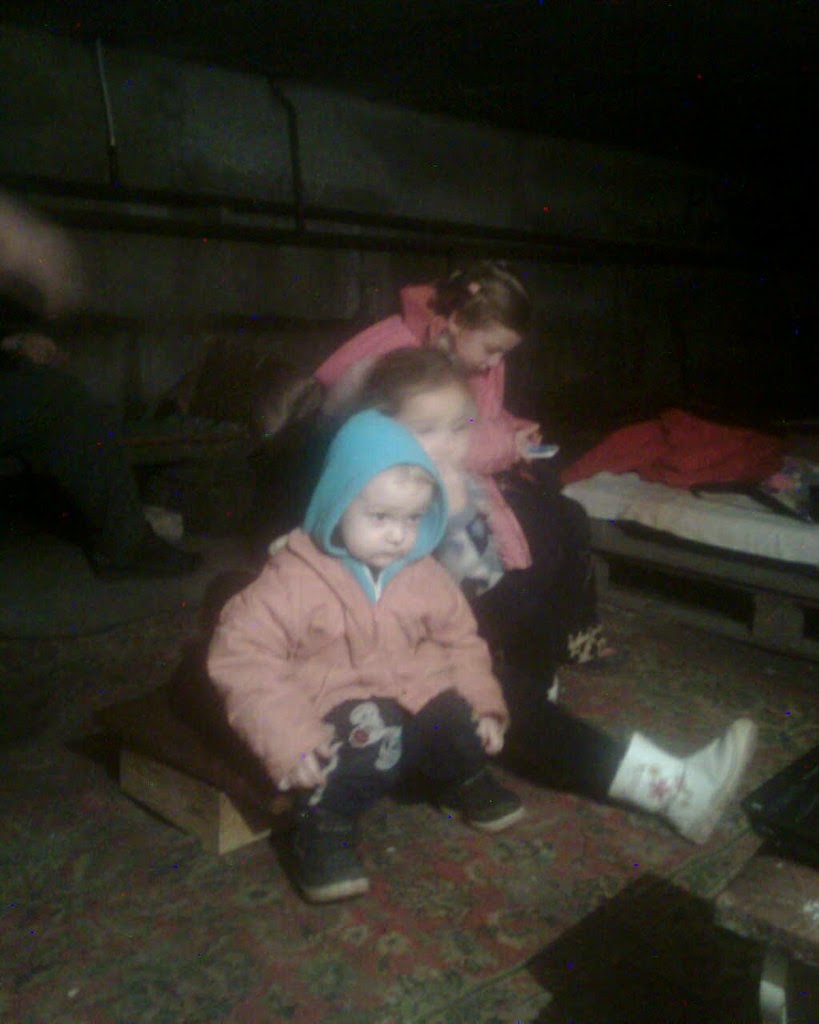
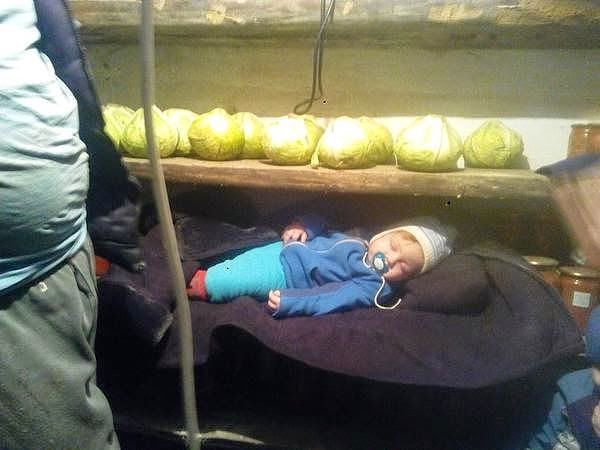
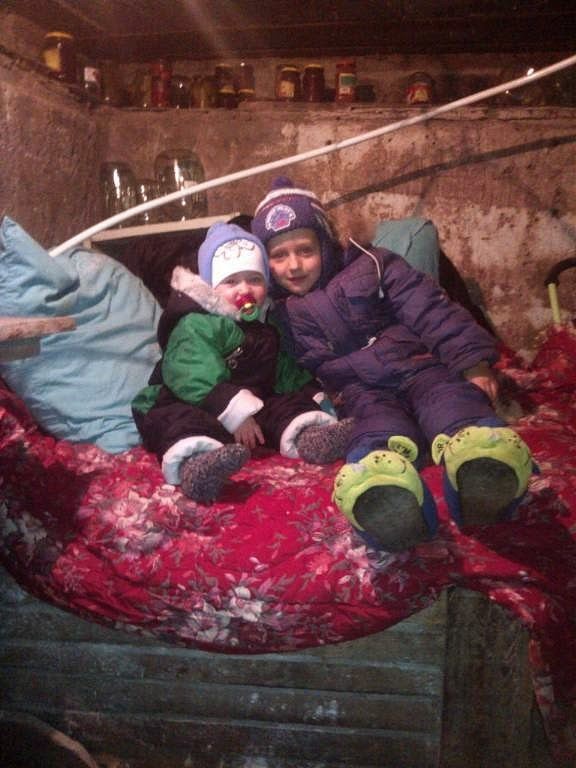
Poroshenko: “Let their children sit in the cellars!” — the children of Gorlovka.

Ukraine’s President, Petro Poroshenko, in an Odessa TV address to the nation, on November 13th, said:

“We will have our jobs. They will not. We will have our pensions. They will not. We will have care for children, for people, and retirees. They will not. Our children will go to schools and kindergartens. Theirs will hole up in basements [from our bombs]. Because they are not able to do anything. This is exactly how we will win this war! [I.e., we will starve and terrorize them into submission.]”

http://www.youtube.com/watch?v=aHWHqj8g7Bk

Posted on Fort Russ, January 28, 2015
Pictures from Cassad.
As he promised in his famous speech, Poroshenko must be delighted each day that Donbass kids spend in the cellars, in January, in the winter, while Gorlovka is being pounded daily around the clock by the brave Ukrainian army.

Kiev introduces state of emergency in Donbass, high alert across Ukraine

From RT, January 26, 2015

The Ukrainian government has introduced the state of emergency in the war-torn south-eastern Donetsk and Lugansk Regions, and put all other territories on high alert, Prime Minister Arseny Yatsenyuk announced.

“In accordance with the Ukrainian Code of Civil Protection, the Cabinet of Ministers has adopted a decision to recognize an emergency situation at a state level. The Ukrainian government has decided to impose the state of emergency in the Donetsk and Lugansk Regions,” Yatsenyuk is cited as saying by Interfax-Ukraine.

According to the PM, the move is aimed at providing the most efficient coordination of all government agencies in order to ensure civil protection and the safety of the population.

The statement was made after the field meeting of the Cabinet of Ministers, which took place at the headquarters of the State Emergency Service of Ukraine in Kiev on Monday.

READ MORE: Putin: Ukraine army is NATO legion aimed at restraining Russia

Yatsenyuk also said that the state of emergency in the southeast will be overseen by a special government commission.

It will be headed by the PM himself, with Deputy-PM Gennady Zubko and Emergencies Minister Sergey Bochkovsky being his deputies.

A man walks near a damaged residential building in Donetsk, eastern Ukraine January 19, 2015 (Reuters / Alexander Ermochenko)

A man walks near a damaged residential building in Donetsk, eastern Ukraine January 19, 2015 (Reuters / Alexander Ermochenko)

Kiev’s troops and Donbass militia forces are locked in renewed hostilities in southeastern Ukraine after a shaky ceasefire reached by the sides in September utterly collapsed.

Ukrainian forces launched a massive offensive in mid-January, but failed to gain any ground despite employing tanks, artillery and aviation.

On Saturday, a residential area in the port city of Mariupol, which has remained relatively insulated from violence throughout the majority of the conflict, was shelled.

The Kiev forces and the militias have been trading blame for the incident, which took the lives of at least 30 people and saw another 100 injured.

READ MORE: Inches away from death: Mariupol shelling caught on dashcam

Russia’s foreign minister, Sergey Lavrov, has blamed Kiev for trying to “derail the peace process” in the Donetsk and Lugansk Regions.

“Time and time again, we’re seeing attempts by the Kiev authorities to solve the problem by violent suppression of the southeast. These are blind-alley attempts, leading to even more casualties among the civilian population,” he said.

Lavrov gave a reminder of an agreement to start withdrawing heavy weaponry reached at a meeting of the foreign ministers of France, Germany, Russia and Ukraine on January 21. Several days later President Poroshenko announced the renewal of warfare.

“It would’ve been naive to expect that the militia forces will remain idle when on the Ukrainian president’s orders populated areas are being shelled … and come to term with the fact that they’ll be bombed out,” Lavrov noted.

The foreign minister said that according to his understanding the rebels began acting “in order to eliminate those positions of the Ukrainian military from where their towns and villages were being shelled with heavy weaponry.”

READ MORE: New military draft starts in Ukraine amid intensified assault on militia-held territories

The Ukrainian conflict began last April when Kiev launched a military operation in the southeastern Donetsk and Lugansk Regions, after they refused to recognize the country’s new, coup-imposed authorities.

The death toll in the Ukraine conflict has exceeded 5,000 people. Over 10,000 have been injured, according to UN estimates.


Source:
http://rt.com/news/226315-ukraine-state-emergency-alert/

More than 80 people died from hunger in the Donbass

More than 80 people died from hunger in Donbas  | Русская весна

From Russiya Vesna, December 30, 2014

Kyiv District Administrative Court postponed a decision on restoration of payments of pensions and other social benefits for civilians of war-torn Donbas region until the end of January next year.

«According to lawsuit against the Cabinet of Ministers should be reviewed within a month. But, despite the fact that millions of people in the conflict zone depend on this decision, the court postponed the review of the suit until January 29. This civil suit was joined and supported by hundreds of pensioners, veterans, Chernobyl liquidators across Ukraine.

Judge showed especial cynicism by congratulating everyone with the upcoming New Year celebration. It was done at the time when his decision affected the lives of millions of people, whether they will perish of hunger or not in the Donetsk and Lugansk regions»- said one of the opposition leaders Alexander Vilkul.

Official Kiev does not confirm information about the facts of starvation in the Donbas. But according to local residents and volunteers the population is in a dire situation. It is reported by German media company Deutsche Welle (DW).

Social structures are destroyed. Salaries, pensions and social benefits on the territory uncontrolled by Kiev government were not paid for several months. Attempts to organize financial assistance from a new government for multimillion Donbas residents did not significantly improve social tensions. Particularly difficult situation is in small towns and villages. An ongoing hostility despite Minsk agreement further complicates the delivery of humanitarian aid to civilians.

The anti-crisis media center AKMTS (coordinating headquarter is located in Dnepropetrovsk) reports the death toll of at least 80 people from hunger by December 19. They base their information on the reports of the organizers of the soup kitchens for the poor in Donbass. Cases of death from hunger were recorded in Krasnopartizansk, Snezhnoe and Kirov.

People waiting for humanitarian aid. It is frosty in Donetsk right now.

The extent of the humanitarian catastrophe is extremely difficult to determine accurately according to Deutsche Welle representatives of the Ukrainian authorities in Donetsk region, which is now housed in Kramatorsk. Volunteers shared their personal impression with the representative of Deutsche Welle.

«According to our data, three- quarters of the population of small towns of Donbass experience acute shortage of food» said Natalia Kirkach, the coordinator of the volunteer organization «The Slavic Heart».

Russia to send another humanitarian aid convoy to crisis-hit east Ukraine

From Press TV, January 3, 2015

A Russian convoy carrying humanitarian aid for residents of the Donetsk region in eastern Ukraine approaches the city of Makiyivka, December 12, 2014.

Russia plans to send another aid convoy to Ukraine’s restive east, where sporadic exchanges of fire between Ukrainian forces and pro-Russians have deteriorated the humanitarian situation.

The Russian Emergencies Ministry said on Saturday that a convoy of 120 trucks will unload some 1,400 tons of supplies, including foodstuff and baby formula, in the strife-torn Donbass region of Ukraine on January 8.

The shipment is the eleventh relief aid convoy that Russia has dispatched to the eastern regions of Ukraine since August 2014.

The humanitarian crisis is getting worse in eastern Ukraine ever since the central government in Kiev suspended funding and services there in November 2014.

Ukraine’s mainly Russian-speaking regions of Donetsk and Lugansk in the east have witnessed deadly clashes between pro-Russia forces and the Ukrainian army since Kiev launched military operations to silence the pro-Moscow protests in mid-April 2014.

Violence intensified later in May after the two flashpoint regions held local referendums in which their residents voted overwhelmingly in favor of independence from Ukraine and joining the Russian Federation.

According to the latest figures released by the United Nations, more than 4,700 people have been killed in the fighting.

Kiev and its Western allies accuse Russia of having a hand in the chaotic situation in eastern Ukraine. Moscow categorically denies the allegation.

MP/HSN/SS

http://www.presstv.ir/Detail/2015/01/03/391457/Russia-sends-new-aid-convoy-to-E-Ukraine