U.S. Congress orders review of Russian & Chinese leadership’s nuclear strike ‘survivability’

From RT
January 30, 2017

US Congress orders review of Russian & Chinese leadership’s nuclear strike ‘survivability’

Raising the stakes: Putin slams U.S. nuke threat with ultimatum

From Fort Russ

October 5, 2016 – Fort Russ –
– Rostislav Ishchenko, RIA Novosti
translated by J. Arnoldski –
Following the president of the Russian Federation’s decree on suspending Russia’s compliance with agreements with the US on the disposal of weapons-grade plutonium and the submission of the corresponding bill to the State Duma, disputes have begun in the media on whether this is connected to the rupture of the Syria deal. The second stumbling block is a question: Why is Russia, having known that the US has not fulfilled its part of the deal, only reacted now after a few years?
Some nuclear experts argue that the deal was objectively beneficial for Russia. Maybe. I’m not an expert in this sphere and it’s difficult for me to say how objective they are. Moreover, that which is beneficial from the standpoint of the nuclear industry might be disadvantageous from the point of view of security.
In principle, I think that there were no particular security problems. Russia has a sufficient nuclear arsenal capable of inflicting a deadly blow on the United States. Washington recognizes this as well. There was also more than enough material for the production of new warheads. In the event of full-scale nuclear strike exchanges, the production of another batch of weapons would already be redundant and, indeed, physically impossible. The real problem would be physically preserving the remains of civilization at least at the level of the stone age.
As for the Syria, this is not the first time, and not only in Syria, that the US concludes agreements only to disrupt their fulfillment and then conclude them again. The form of the Russian reaction is clearly not comparable to Washington’s public rejection of cooperation which, in fact, it has yet to do.
I think that in order to understand the scale of this incident, it is necessary to pay attention to the fact that Putin has not simply taken Russia out of a contract. He has announced the possibility of returning to it, but he has furnished certain conditions.
Let’s look at these conditions:
(1) the US must lift all sanctions against Russia;
(2) compensation should be paid not only for the losses from American sanctions, but also for the losses incurred by Russian counter-sanctions;
(3) the Magnitsky Act should be repealed;
(4) the US’ military presence in Eastern Europe should be sharply reduced; and
(5) the US should abandon its policy of confrontation with Moscow.
Only one word fits in determining the essence of Putin’s demands: “ultimatum.”
As far as a I remember, the last time that Washington was given an ultimatum was by the United Kingdom over the Trent vessel incident. And that was in 1861 during the American Civil War. Even then, in extremely difficult conditions, America agreed to partially meet British demands.
It should be noted that the British demands in  1861 did not contain anything humiliating for the US. The captain of a US Navy ship had indeed broken international law, arrested people on a neutral (British) ship, and thereby encroached upon the sovereignty of the UK, nearly provoking a war. Then America disavowed the actions of its captain and freed the prisoners, albeit refusing to apologize.
But Putin is not demanding any apologies or the release of a few prisoners, but for all of American policy to be changed, and still more for Russia to be compensated for losses due to the US’ sanctions. This is an unmeetable, humiliating demand. This demand essentially means complete and unconditional surrender in the hybrid war which Washington does not consider to be irreversibly lost. And there’s still all those indemnities payments and reparations.
Something similar was demanded from the US by the British Crown before the end of the war for independence, when the Americans were still King George III’s rebellious subjects. For the last 100 years no one has even imagined talking with Washington in such a tone.
And so, the first conclusion is: Putin has deliberately and demonstratively humiliated the US. He has shown that it is possible to talk tough to the US, even tougher than the US itself has gotten used to talking down to the rest of the world. 
How was this done? What did Putin actually react to? Did he actually think that the US would fulfill the Kerry-Lavrov deal and is now upset over what happened? Russia also knew that Washington has not been observing the plutonium deal for years, but Moscow has extracted serious profit from this for its nuclear industry by nearly becoming a global monopoly and is clearly not perturbed by the US’ technological backwardness preventing them from disposing of weapons-grade plutonium as stipulated in the agreement.  
Russia’s tough and almost immediate reaction followed the statements of the US Secretary of State’s spokesperson to the effect that Russia will have to start sending its troops home from Syria in body bags, is going to start losing planes, and that terrorist attacks will begin to plague Russian cities.
In addition, the State Department’s statement was immediately followed by the Pentagon’s announcement that it is ready to launch a preventative nuclear strike on Russia. The Russian Ministry of Foreign Affairs also reported that Moscow knows about the US’ intention to launch an air war against Syrian government forces, which also means against the Russian contingent legally stationed in Syria. 
What else formed the background for Putin’s ultimatum?: The exercises from six months ago involving air and missile defense and strategic missile systems which practiced repelling a nuclear attack on Russia and then launching a responsive counter strike. Add to this the other day’s emergency exercises involving up to 40 million Russian citizens that inspected the readiness of infrastructure and civil defense structures for a nuclear war and provided additional information to citizens on the plan of action in the cause of “X hour.”
If we take all of this together, then we can see that the US has long since informally frightened Russia with a nuclear conflict, and Moscow has regularly hinted that it is ready for such a turn of events and is not going to back down.
However, given the end of Obama’s rule and lacking absolute confidence in a Hillary Clinton victory in presidential elections, the Washington hawks have decided to raise their bets once again. And now things have reached an extremely dangerous limit in which conflict begins to reach the stage of developing independently. At this stage, nuclear Armageddon could begin over any kind of incident, including due to the incompetence of some senior Pentagon officials or White House administrators. 
At this precise moment, Moscow has seized the initiative and upped the ante, but by moving the confrontation onto another plane. Unlike America, Russia is not threatening war. It is simply demonstrating its capability of giving a harsh political and economic response which can, in the event of further inappropriate behavior by the US, realize just the opposite of Obama’s dream: tearing apart Washington’s economy and financial system.
In addition, with these actions, Russia has seriously undermined the international prestige of the US by showing the whole world that America can be beaten with its own weapons. The boomerang has come back. Given such dynamics and turn of events, we might see hundreds of representatives of the American elite at the dock in the Hague not only in our lifetime, but even before the next American president serves their first four-year term in the White House.
The US has been given a choice. Either it will carry through with its threats and start a nuclear war, or it will accept the fact that the world is no longer unipolar, and begin to integrate into the new format.
We don’t know what choice Washington will make. The American political establishment has a sufficient number of ideologically-blinded, incompetent figures who are ready to burn up in a nuclear fire with the rest of a humanity rather than recognize the end of US world hegemony, which has turned out to be short-lived, senseless, and criminal. But they have to make a choice, because the longer that Washington pretends that nothing has happened, the greater the number of its vassals (who are called their allies, but have long since been bogged down in dependency) will openly and explicitly ignore American ambitions and cross over to the other side of the new perspectives of global power arrangement.
In the end, the US could be faced with the status of one of the centers of the multipolar world no longer being available for it. Not only Africans, Asians, and Latin Americans, but also Europeans will gladly take revenge against the former hegemon for their former humiliation. And they are not so humane and peace-loving as Russia.
Finally, Putin’s ultimatum is a response to all of those who were outraged that Russian tanks didn’t take Kiev, Lvov, Warsaw, and Paris in 2014 and pondered over what Putin’s plan could possibly be. 
I can only repeat what I wrote back then. If you are going to confront the global hegemon, then you have to be sure that you will be capable of responding to any of its actions. The economy, army, society, and state and administrative structures should all be ready. If everything is not fully ready, then one needs to buy time and build muscle.
Now things are ready and the cards have been put on the table. Let us see what the US will respond with. But the geopolitical reality will never be the same. The world has already changed. The US has had the gauntlet publicly thrown down before it and they have not dared to pick it up right away. 

Paul Craig Roberts: Armageddon Approaches

Increasingly true.

July 22, 2016

Armageddon Approaches
Paul Craig Roberts

The Western public doesn’t know it, but Washington and its European vassals are convincing Russia that they are preparing to attack. Eric Zuesse reports on a German newspaper leak of a Bundeswehr decision to declare Russia to be an enemy nation of Germany.
http://www.strategic-culture.org/news/2016/06/09/germany-preparing-for-war-against-russia.html
This is the interpretation that some Russian politicians themselves have put on the NATO military bases that Washington is establishing on Russia’s borders.

Washington might intend the military buildup as pressure on President Putin to reduce Russian opposition to Washington’s unilateralism. However, it reminds some outspoken Russians such as Vladimir Zhirinovsky of Hitler’s troops on Russia’s border in 1941.

Zhirinovsky is the founder and leader of Russia’s Liberal Democratic Party and a vice chairman of the Russian parliament. In a confrontation with the editor of a German newspaper, Zhirinovsky tells him that German troops again on Russia’s border will provoke a preventive strike after which nothing will remain of German and NATO troops. “The more NATO soldiers in your territory, the faster you are going to die. To the last man. Remove NATO from your territory!”https://www.youtube.com/watch?v=aQm8L8d8uDc 

Russian Foreign Minister Sergey Lavrov has expressed his frustration with Washington’s reliance on force and coercion instead of diplomacy. It is reckless for Washington to convince Russia that diplomacy is a dead end without promise. When the Russians reach that conclusion, force will confront force.

Indeed Zhirinovsky has already reached that point and perhaps Vladimir Putin also. As I reported, Putin recently dressed down Western presstitutes for their role in fomenting nuclear war. http://www.paulcraigroberts.org/2016/07/08/are-you-planning-your-retirement-forget-about-it-you-wont-survive-to-experience-it/See also: http://www.informationclearinghouse.info/article45055.htm
Putin has made it clear that Russia will not accept US missile bases in Poland and Romania. He has informed Washington and the imbecilic Polish and Romanian governments. However, as Putin observed, “they don’t hear.”

The inability to hear means that Washington’s arrogance has made Washington too stupid to take seriously Putin’s warning. If Washington persists, it will provoke the preventive strike that Zhirinovsky told the German editor the Merkel regime was inviting.

Americans need to wake up to the dangerous situation that Washington has created, but I doubt they will. Most wars happen without the public’s knowledge until they happen. The main function of the American left-wing is to serve as a bogyman with which to scare conservatives about the country’s loss of morals, and the main function of conservatives is to create fear and hysteria about immigrants, Muslims, and Russians. There is no sign that Congress is aware of approaching Armageddon, and the media consists of propaganda.

I and a few others try to alert people to the real threats that they face, but our voices are not loud enough. Not even Vladimir Putin’s voice is loud enough. It looks like the West won’t hear until “there remains nothing at all of the German and NATO troops,” and of Poland and Romania and the rest of us.

Dr. Paul Craig Roberts was Assistant Secretary of the Treasury for Economic Policy and associate editor of the Wall Street Journal. He was columnist for Business Week, Scripps Howard News Service, and Creators Syndicate.

Armageddon Approaches — Paul Craig Roberts

Posted under Fair Use Rules.

Global rally for zero nuclear weapons, April 1, Washington DC

From Beyond Nuclear

Rally for Zero

Nuclear weapons do not equal security

On March 31 & April 1, world leaders are convening right here in DC to talk nuclear security. Not on the agenda: nuclear weapons.

That has to change. There are 15,000 nuclear weapons in the world today, thousands ready to fire at a moment’s notice. Nuclear weapons jeopardize global security – not strengthen it.

Join us as we rally to show world leaders that 15,000 nuclear weapons ≠ security. It’s time they take action for zero.

Who: Global Zero, the international movement to eliminate nuclear weapons, and you!

What: A rally featuring a life-size inflated nuclear missile and Global Zero movement leaders

When: Friday, April 1st, 12:00pm

Where: McPherson Square

RSVP at: http://www.globalzero.org/protest

Email ldaigle@globalzero.org for more information.

http://www.beyondnuclear.org/nuclear-weapons/2016/4/1/global-zero-rally-for-zero-april-1st-washington-dc.html

The threat of nuclear war: North Korea or the United States?

Global Research, February 08, 2016
RT Op-Edge 23 July 2013

This article was first published in July 2013. North Korea is not a threat to global security. The threat of nuclear war largely emanates from the US under the doctrine of pre-emptive nuclear (self-defense) against both nuclear and non-nuclear states.

While the Western media portrays North Korea’s nuclear weapons program as a threat to Global Security, it fails to acknowledge that the US has being threatening North Korea with a nuclear attack for more than half a century.

On July 27, 2013, Armistice Day, Koreans in the North and the South will be commemorating the end of the Korean war (1950-53). Unknown to the broader public, the US had envisaged the use of nuclear weapons against North Korea at the very outset of the Korean War in 1950. In the immediate wake of the war, the US deployed nuclear weapons in South Korea for use on a pre-emptive basis against the Democratic People’s Republic of Korea (DPRK) in violation of the July 1953 Armistice Agreement. 

Michel Chossudovsky’s keynote address at the 60th anniversary commemoration of the end of the Korean war, Seoul, South Korea, July 26, 2013 

“The Hiroshima Doctrine” applied to North Korea

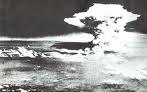
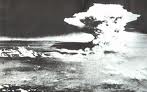
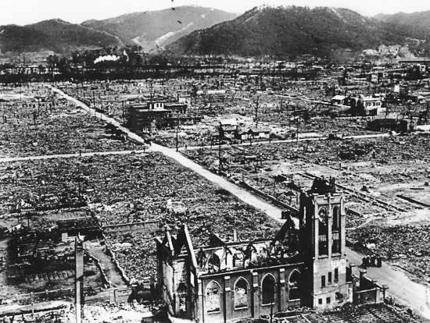
US nuclear doctrine pertaining to Korea was established following the bombings of Hiroshima and Nagasaki in August 1945, which were largely directed against civilians.

The strategic objective of a nuclear attack under the “Hiroshima doctrine” was to trigger a “massive casualty producing event” resulting in tens of thousands of deaths. The objective was to terrorize an entire nation, as a means of military conquest. Military targets were not the main objective: the notion of “collateral damage” was used as a justification for the mass killing of civilians, under the official pretence that Hiroshima was “a military base” and that civilians were not the target.

In the words of President Harry Truman:

“We have discovered the most terrible bomb in the history of the world. … This weapon is to be used against Japan … [We] will use it so that military objectives and soldiers and sailors are the target and not women and children. Even if the Japs are savages, ruthless, merciless and fanatic, we as the leader of the world for the common welfare cannot drop that terrible bomb on the old capital or the new. …  The target will be a purely military one… It seems to be the most terrible thing ever discovered, but it can be made the most useful.” (President Harry S. Truman, Diary, July 25, 1945)

“The World will note that the first atomic bomb was dropped on Hiroshima a military base. That was because we wished in this first attack to avoid, insofar as possible, the killing of civilians..” (President Harry S. Truman in a radio speech to the Nation, August 9, 1945).

[Note: the first atomic bomb was dropped on Hiroshima on August 6, 1945; the Second on Nagasaki, on August 9, on the same day as Truman’s radio speech to the Nation]

Nobody within the upper echelons of the US government and military believed that Hiroshima was a military base, Truman was lying to himself and to the American public. To this day the use of nuclear weapons against Japan is justified as a necessary cost for bringing the war to an end and ultimately “saving lives”.

US Nuclear Weapons Stockpiled and Deployed in South Korea

Barely a few years after the end of the Korean War, the US initiated its deployment of nuclear warheads in South Korea. This deployment in Uijongbu and Anyang-Ni had been envisaged as early as 1956.

It is worth noting that the US decision to bring nuclear warheads to South Korea was in blatant violation of  Paragraph 13(d) of the Armistice Agreement which prohibited the warring factions from introducing new weapons into Korea.

The actual deployment of nuclear warheads started in January 1958, four and a half years after the end of the Korean War, “with the introduction of five nuclear weapon systems: the Honest John surface-to-surface missile, the Matador cruise missile, the Atomic-Demolition Munition (ADM) nuclear landmine, and the 280-mm gun and 8-inch (203mm) howitzer.” (See The nuclear information project: US Nuclear Weapons in Korea)

The Davy Crockett projectile was deployed in South Korea between July 1962 and June 1968. The warhead had selective yields up to 0.25 kilotons. The projectile weighed only 34.5 kg (76 lbs). Nuclear bombs for fighter bombers arrived in March 1958, followed by three surface-to-surface missile systems (Lacrosse, Davy Crockett, and Sergeant) between July 1960 and September 1963. The dual-mission Nike Hercules anti-air and surface-to-surface missile arrived in January 1961, and finally the 155-mm Howitzer arrived in October 1964. At the peak of this build-up, nearly 950 warheads were deployed in South Korea.

Four of the weapon types only remained deployed for a few years, while the others stayed for decades. The 8-inch Howitzer stayed until late 1991, the only weapon to be deployed throughout the entire 33-year period of U.S. nuclear weapons deployment to South Korea. The other weapons that stayed till the end were the air delivered bombs (several different bomb types were deployed over the years, ending with the B61) and the 155-mm Howitzer nuclear artillery. (Ibid)

Officially the US deployment of nuclear weapons in South Korea lasted for 33 years. The deployment was targeted against North Korea as well as China and the Soviet Union.

This composite image shows the LGM-30G Minuteman intercontinental ballistic missile (ICBM) (L) and the LG-118A Peacekeeper missile(R). (AFP Photo/US DoD)

This composite image shows the LGM-30G Minuteman intercontinental ballistic missile (ICBM) (L) and the LG-118A Peacekeeper missile(R). (AFP Photo/US DoD)

South Korea’s Nuclear Weapons Program

Concurrent and in coordination with the US deployment of nuclear warheads in South Korea, the ROK had initiated its own nuclear weapons program in the early 1970s. The official story is that the US exerted pressure on Seoul to abandon their nuclear weapons program and “sign the Treaty on the Non-Proliferation of Nuclear Weapons (NPT) in April 1975 before it had produced any fissile material.” (Daniel A. Pinkston, “South Korea’s Nuclear Experiments,” CNS Research Story, 9 November 2004, http://cns.miis.edu.]

The ROK’s nuclear initiative was from the outset in the early 1970s under the supervision of the US and was developed as a component part of the US deployment of nuclear weapons, with a view to threatening North Korea.

Moreover, while this program was officially ended in 1978, the US promoted scientific expertise as well as training of the ROK military in the use of nuclear weapons. And bear in mind: under the ROK-US CFC agreement, all operational units of the ROK are under joint command headed by a US General. This means that all the military facilities and bases established by the Korean military are de facto joint facilities. There are a total of 27 US military facilities in the ROK (See List of United States Army installations in South Korea – Wikipedia)

The Planning of Nuclear Attacks against North Korea from the Continental US and from Strategic US Submarines

According to military sources, the removal of US nuclear weapons from South Korea was initiated in the mid 1970s. It was completed in 1991:

The nuclear weapons storage site at Osan Air base was deactivated in late 1977. This reduction continued over the following years and resulted in the number of nuclear weapons in South Korea dropping from some 540 in 1976 to approximately 150 artillery shells and bombs in 1985. By the time of the Presidential Nuclear Initiative in 1991, roughly 100 warheads remained, all of which had been withdrawn by December 1991. (The nuclear information project: withdrawal of US nuclear weapons from South Korea)

According to official statements, the US withdrew its nuclear weapons from South Korea in December 1991.

This withdrawal from Korea did not in any way modify the US threat of nuclear war directed against the DPRK. On the contrary: it was tied to changes in US military strategy with regard to the deployment of nuclear warheads. Major North Korean cities were to be targeted with nuclear warheads from US continental locations and from US strategic submarines (SSBN)  rather than military facilities in South Korea:

After the withdrawal of [US] nuclear weapons from South Korea in December 1991, the 4th Fighter Wing at Seymour Johnson Air Force Base has been tasked with nuclear strike planning against North Korea. Since then, strike planning against North Korea with non-strategic nuclear weapons has been the responsibility of fighter wings based in the continental United States. One of these is the 4th Fighter Wing at Seymour Johnson Air Force Base in North Carolina. …

“We simulated fighting a war in Korea, using a Korean scenario. … The scenario…simulated a decision by the National Command Authority about considering using nuclear weapons….We identified aircraft, crews, and [weapon] loaders to load up tactical nuclear weapons onto our aircraft….

With a capability to strike targets in less than 15 minutes, the Trident D5 sea-launched ballistic missile is a “mission critical system” for U.S. Forces Korea. Ballistic Missile Submarines and Long-Range Bombers

In addition to non-strategic air delivered bombs, sea-launched ballistic missiles onboard strategic Ohio-class submarines (SSBNs) patrolling in the Pacific appear also to have a mission against North Korea. A DOD General Inspector report from 1998 listed the Trident system as a “mission critical system” identified by U.S. Pacific Command and U.S. Forces Korea as “being of particular importance to them.”

Although the primary mission of the Trident system is directed against targets in Russia and China, a D5 missile launched in a low-trajectory flight provides a unique very short notice (12-13 minutes) strike capability against time-critical targets in North Korea. No other U.S. nuclear weapon system can get a warhead on target that fast. Two-three SSBNs are on “hard alert” in the Pacific at any given time, holding Russian, Chinese and North Korean targets at risk from designated patrol areas.

Long-range strategic bombers may also be assigned a nuclear strike role against North Korea although little specific is known. An Air Force map (see below) suggests a B-2 strike role against North Korea. As the designated carrier of the B61-11 earth penetrating nuclear bomb, the B-2 is a strong candidate for potential nuclear strike missions against North Korean deeply buried underground facilities.

As the designated carrier of the B61-11 earth penetrating nuclear bomb [with an explosive capacity between one third and six times a Hiroshima bomb] and a possible future Robust Nuclear Earth Penetrator, the B-2 stealth bomber could have an important role against targets in North Korea. Recent upgrades enable planning of a new B-2 nuclear strike mission in less than 8 hours. (Ibid)

“Although the South Korean government at the time confirmed the withdrawal, U.S. affirmations were not as clear. As a result, rumors persisted for a long time — particularly in North and South Korea — that nuclear weapons remained in South Korea. Yet the withdrawal was confirmed by Pacific Command in 1998 in a declassified portion of the CINCPAC Command History for 1991.” (The nuclear information project: withdrawal of US nuclear weapons from South Korea, emphasis added))

The Bush Administration’s 2001 Nuclear Posture Review: Pre-emptive Nuclear War

The Bush administration in its 2001 Nuclear Posture Review established the contours of a new post 9/11 “pre-emptive” nuclear war doctrine, namely that nuclear weapons could be used as an instrument of “self-defense” against non-nuclear states

“Requirements for U.S. nuclear strike capabilities” directed against North Korea were established as part of  a Global Strike mission under the helm of  US Strategic Command Headquarters in Omaha Nebraska, the so-called CONPLAN 8022, which was directed against a number of “rogue states” including North Korea as well as China and Russia.

On November 18, 2005, the new Space and Global Strike command became operational at STRATCOM after passing testing in a nuclear war exercise involving North Korea.

Current U.S. Nuclear strike planning against North Korea appears to serve three roles: The first is a vaguely defined traditional deterrence role intended to influence North Korean behavior prior to hostilities.

This role was broadened somewhat by the 2001 Nuclear Posture Review to not only deter but also dissuade North Korea from pursuing weapons of mass destruction.

Why, after five decades of confronting North Korea with nuclear weapons, the Bush administration believes that additional nuclear capabilities will somehow dissuade North Korea from pursuing weapons of mass destruction [nuclear weapons program] is a mystery. (Ibid, emphasis added)

Who is the Threat? North Korea or the United States?

The asymmetry of nuclear weapons capabilities between the US and the DPRK must be emphasised. According to ArmsControl.org (April 2013) the United States:

“possesses 5,113 nuclear warheads, including tactical, strategic, and non-deployed weapons.”

According to the latest official New START declaration, out of more than 5113 nuclear weapons,

“the US deploys 1,654 strategic nuclear warheads on 792 deployed ICBMs, SLBMs, and strategic bombers…” ArmsControl.org (April 2013).

Moreover, according to The Federation of American Scientists the U.S. possesses 500 tactical nuclear warheads. (ArmsControl.org April 2013)

In contrast  the DPRK, according to the same source:

 “has separated enough plutonium for roughly 4-8 nuclear warheads. North Korea unveiled a centrifuge facility in 2010, buts ability to produce highly-enriched uranium for weapons remains unclear.”

According to expert opinion:

“there is no evidence that North Korea has the means to lob a nuclear-armed missile at the United States or anyone else. So far, it has produced several atomic bombs and tested them, but it lacks the fuel and the technology to miniaturize a nuke and place it on a missile” ( North Korea: What’s really happening – Salon.com April 5, 2013)

According to Siegfried Hecker, one of America’s pre-eminent nuclear scientists:

“Despite its recent threats, North Korea does not yet have much of a nuclear arsenal because it lacks fissile materials and has limited nuclear testing experience,” (Ibid)

The threat of nuclear war does not emanate from the DPRK but from the US and its allies.

The Democratic People’s Republic of Korea, the unspoken victim of US military aggression, has been incessantly portrayed as a war mongering nation, a menace to the American Homeland and a  “threat to World peace”. These stylized accusations have become part of a media consensus.

Meanwhile, Washington is now implementing a $32 billion refurbishing of strategic nuclear weapons as well as a revamping of its tactical nuclear weapons, which according to a 2002 Senate decision “are harmless to the surrounding civilian population.”

These continuous threats and actions of latent aggression directed against the DPRK should also be understood as part of the broader US military agenda in East Asia, directed against China and Russia.

It is important that people across the land, in the US, Western countries, come to realize that the United States rather than North Korea or Iran is a threat to global security.

Russia’s national security strategy for 2016 in 9 key points

From RT
December 31. 2015

(Additional links and audio on website)

President Vladimir Putin has signed the country’s national security strategy for 2016 with color revolutions and biological weapons named as primary threats to Russia. Here are nine key points you want to know about the document.

1. “Color Revolutions” and corruption among key threats to Russia’s security

Listed among threats to national security are “color revolutions” and their instigation, the undermining of traditional values, and corruption.

READ MORE: Russian military to order major research to counter ‘color revolutions’

Who could be engaged in such activities? According to the document, “radical social groups which use nationalist and religious extremist ideologies, foreign and international NGOs, and also private citizens” who work to undermine Russia’s territorial integrity and destabilize political processes.

The activities of foreign intelligence services, terrorist and extremist organizations, and criminal groups are also classified as threats.

2. US complicates things with bio weapons threat

The growing number of countries in possession of nuclear weapons has also increased certain risks, the decree says. Indeed the risk of countries gaining possession of and using chemical weapons, as well as biological weapons, has risen as well, it elaborates.

READ MORE: US bioweapons labs, billions in research is a ‘real problem’ – Russian security chief

“The network of US biological military labs is expanding on the territories of countries neighboring Russia,” it said. “Russia’s independent foreign and domestic policy has been met with counteraction by the US and its allies, seeking to maintain its dominance in world affairs.”

3. NATO expansion goes overboard

The North Atlantic alliance advance towards Russia’s borders is a threat to national security, according to the document. Processes of militarization and arms build-ups are unfolding in regions neighboring Russia, it says, adding that “the principles of equal and indivisible security” are not being respected in the Euro-Atlantic, Eurasian and Asia-Pacific regions.

Nonetheless, Russia is still interested in a fair dialogue and good relations with NATO, the US and the EU, the strategy says. Under the partnership, it’s important to enhance mechanisms “provided by international treaties on arms control, confidence-building measures, issues related to non-proliferation of weapons of mass destruction, the expansion of cooperation in the fight against terrorism, the settlement of regional conflicts,” it says.

4. Ukraine figures

US and EU support of the coup in Ukraine has led to a deep split in Ukrainian society and prompted an armed conflict, the decree stated. The rise of far-right nationalist ideology and the intentionally-created image of Russia as an “enemy” in Ukraine have made it a “long-term source of instability in Europe and directly at the Russian border.”

5. No to nukes?

Russia may be ready to discuss curbing its nuclear potential, but only based on mutual agreements and multi-lateral talks, the document states. Curtailing Russia’s nuclear potential will only occur if it were also to “contribute to the creation of appropriate conditions that will enable a reduction of nuclear weapons, without damaging international security and strategic stability.”

At the same time, Russia plans to prevent any military conflicts by maintaining its nuclear capabilities as a deterent, but would resort to the military option only if all other non-military options had failed.

6. Info warfare

Secret services have become increasingly active in using their capabilities in the struggle for international influence, the document highlighted.

 READ MORE:#RT10 anniversary event on shape-shifting powers in today’s world

“An entire spectrum of political, financial, economic and information instruments has been brought into struggle for influence in the international arena.”

7. When to use military force

The strategy allows the use of military force only in cases when other measures to “protect the national interests” are ineffective.

8. Money matters

Russia’s economic stability is in danger mainly because of its low level of competitiveness and its resource-dependent economy.

Among other threats is “a lag in the development of advanced technologies, the vulnerability of the financial system, the imbalance of the budgetary system, the economy going offshore, the exhaustion of the raw materials base, the strength of the shadow economy, conditions leading to corruption and criminal activities, and uneven development of regions.”

The fact that Russia is dependent on the external economic environment doesn’t help matters, the document reads. Economic restrictions, global and regional crises, as well as the misuse use of the law, among other things, will have a negative impact on the economy, and in the future could lead to a deficit of mineral, water, and biological resources.

“The growing influence of political factors on economic processes, as well as attempts by individual states to use economic methods, tools of financial, trade, investment and technology policies to solve their geopolitical problems, weakens the stability of the system of international economic relations.

9. What’s next for the economy?

Understanding the problems faced by the country’s economy, the Russian government plans to take measures to deal with them. To ensure economic security, the country will need to balance its budget, prevent capital outflows, and reduce inflation, the document states.

“To resist the hazards to economic security, the government… will carry out a national social and economic policy involving … strengthening of the financial system, ensuring its sovereignty and the stability of the national currency”.

Russia also considers developing relations with China, India, Latin America and Africa as highly important.

https://www.rt.com/news/327608-russia-national-security-strategy/

Declassified documents reveal Pentagon’s 1950s planned nuclear holocaust: “Systematic destruction” and annihilation of Prague, Warsaw, Budapest, Moscow, Beijing, …. More than 1000 cities.

Global Research, December 27, 2015
Strategic Culture Foundation
Atomic bombs eight times the destructive force of that dropped by the US on Hiroshima

GR Editor’s Note

Publicly available military documents confirm that pre-emptive nuclear war is still on the drawing board  of the Pentagon.

Compared to the 1950s, the nuclear weapons are more advanced. The delivery system is more precise. In addition to China and Russia, Iran, Syria and North Korea are targets for pre-emptive nuclear war.  

Let us be under no illusions, the Pentagon’s plan to blow up the planet using advanced nuclear weapons is still on the books. 

Should we be concerned?  Blowing up the planet through the use of nuclear weapons is fully endorsed by presidential candidate Hillary Clinton, who believes that nuclear weapons are instruments of peace-making. Her campaign is financed by the corporations which produce WMDs. 

Scientists on contract to the Pentagon have endorsed the use of tactical nuclear weapons: they are “harmless to civilians because the explosion is underground.”

The people at the highest levels of government who make the decision regarding the use of nuclear weapons haven’t the foggiest idea as to the implications of their actions. 

Michel Chossudovsky, December 27, 2015

*        *       *

Recently-declassified nuclear targeting documents from 1959 describe how Washington planned to obliterate the capital cities of what are now America’s NATO allies in Eastern and Central Europe. The revelation casts doubt on Washington’s Cold War commitment to the protection of what it referred to as «captive nations» in Europe. The documents are contained in a report titled, «SAC (Strategic Air Command) Atomic Weapons Requirements Study for 1959».

The US Air Force study called for the «systematic destruction» of such major population centers as Warsaw, East Berlin, Prague, Bucharest, Tallinn, and others, as well as Peiping (Beijing), Leningrad (St. Petersburg), and Moscow.

Excerpt of list of 1200 cities targeted for nuclear attack in alphabetical order

Atomic bombs eight times to destructive force of that dropped by the United States on Hiroshima were trained on a number of targets in Moscow and St. Petersburg. There were 179 «designated ground zeros» for atomic bombs in Moscow and 145 in St. Petersburg.

US atomic weapons would have laid waste to Wittstock, just upwind of German Chancellor Angela Merkel’s hometown of Templin in Brandenburg in the former East Germany. It is most certain that had the US launched an atomic attack on Europe, Merkel, her parents Horst and Herlind Kasner, and brother Marcus would have been vaporized in the massive pre-targeted strike on East Berlin and the regions surrounding it.

Budapest would have been completely destroyed after the US hit the Tokol military airfield on the banks of the Danube River with one of its «city-busting» nuclear weapons. The blast would have rendered the Danube a radioactive drainage ditch and anyone exposed to the poisonous Danube waters downriver would have succumbed to an agonizing death from radiation sickness. Adding to the misery of anyone living alongside the Danube was the fact that Bratislava, also on the banks of the Danube, was also targeted for nuclear annihilation. The first major urban center casualties outside of Hungary and then-Czechoslovakia from the radioactive Danube would have been in Belgrade, the capital of neutral Yugoslavia.

The nuclear targeting of Vyborg on the Finnish border would have brought death and destruction to the border region of neutral Finland. Four atomic bombs were targeted on the former Finnish city: Koyvisto, Uras, Rempeti airfield, and Vyborg East.

Nuclear weapons, as the United States knew in 1959 and very well knows today, are not «precision-guided munitions».

For all of its propaganda beamed to Eastern Europe on Radio Free Europe and Radio Liberty, the United States was willing to sacrifice the very peoples it proclaimed to want to «free» from the Soviet bloc. America’s «mutually assured destruction» policy was based on increasing the «mega-death» count around the world by having the ability to hit the enemy with more nuclear «throw weight».

Increasing the mega-death count was why the United States targeted such large population centers as Peiping (Beijing), Shanghai, Mukden (Shenyang), and Tientsin in China. The pummeling of metro Moscow with atomic bombs was also designed to increase body count. The formerly Top Secret nuclear targeting document lists the following areas of Moscow for nuclear bombardment: Bykovo airport, central Moscow, Chertanovo, Fili, Izmaylovo, Khimki, Kuchino, Lyubertsy, Myachkovo airport, Orlovo, Salarevo, Shchelkovo, and Vnukovo airport.

Eighteen nuclear targets were programmed for Leningrad: Central Leningrad (including the historic Hermitage), Alexandrovskaya, Beloostrov, Gorelovo, Gorskaya, Kamenka North, Kasimovo, Kolomyagi, Kolpino, Krasnaya Polyana, Kudrovo, Lesnoy, Levashovo, Mishutkino, Myachkovo, Petrodvorets, Pushkin, Sablino, Sestroretsk, Tomilino, Uglovo, and Yanino.

Bucharest, Romania, was the target for three city busters aimed at Baneasa, Otopeni airport, and Pipera. Ulan Bator, the capital of the present America-idolizing Mongolia, would not have been spared. The Pentagon nuclear target list does not even list Mongolia as a separate country. The entry for the nuclear strike reads: «Ulaan Baatar, China».

Two uncomforting facts stand out from the disclosure of the targeting list. First, the United States remains as the only country in history that used nuclear weapons in warfare – hitting the Japanese cities of Hiroshima and Nagasaki in 1945. Second, some Pentagon officials, notably Air Force Chief of Staff Curtis LeMay and Chairman of the Joint Chiefs of Staff Lyman Lemnitzer, called for a nuclear first strike on the Soviet Union and its Warsaw Pact allies. In fact, while the USSR, China, and France rejected the first use of nuclear weapons, NATO and the United States, on the other hand, chiseled in stone the first use of tactical nuclear weapons in the event of a Soviet invasion of Western Europe. But, as seen with the wishes of LeMay, Lemnitzer, and others, a massive pre-emptive nuclear strike on the Soviet Union and its allies, including China, was on the wish list of the Pentagon’s top brass.

Because the Soviet Union had virtually no intercontinental ballistic missiles (ICBMs) in 1959 and hinged its nuclear warfare capabilities on strategic bombers, the Pentagon brass wanted to hit the Soviet Union in a pre-emptive strike before they reached missile parity with the United States. At the heart of the crazed Pentagon reasoning was what the nuclear warfare champions called the «missile gap».

There is not much of a leap from the «black comedy» nuclear Armageddon film «Dr Strangelove» to actual Cold War era meetings on pre-emptive nuclear strikes held in the White House and Pentagon. Attorney General Robert Kennedy walked out of one such meeting in disgust while Secretary of State Dean Rusk later wrote: «Under no circumstances would I have participated in an order to launch a first strike». In 1961, President John F Kennedy questioned the motives of his generals and admirals after one such nuclear war pep talk from the Pentagon brass by stating, «And we call ourselves the human race».

Kennedy and his brother Robert had every reason to be fearful that the Pentagon would circumvent civilian authority and launch a nuclear strike either against Cuba, the Soviet Union, or both during the 1962 Cuban Missile Crisis. According to Nikita Khrushchev’s memoirs, Robert Kennedy told Soviet ambassador to Washington Anatoly Dobrynin during the height of the crisis that «the President is not sure that the military will not overthrow him and seize power. The American military could get out of control».

Today, the peoples of Central and Eastern Europe continue having their love affair with NATO and the Americans. Yet, it was the same NATO and the forefathers of the present gung ho military interventionists in Washington who once wanted to rain nuclear fire upon the cities of Warsaw (six ground zeroes: Ozarow, Piastow, Pruszkow, Boernerowo, Modlin, and Okecie), Prague (14 designated ground zeroes at Beroun, Kladno, Kralupy nad Vltavou, Kraluv Dvor, Neratovice, Psary, Radotin, Roztoky, Slaky, Stechovice, Velvary, Kbely, Ryzyne, and Vodochody), Budapest, Bucharest, Sofia (three ground zeroes: Bozhurishte, Kumaritsa, and Vrazhdebna),  Bratislava, Kiev (three nuclear targets: Bortnichi, Post-Volynskiy airport, and Svyatoshino airport), Leipzig (where seven atomic bombs were targeted on Altenhain, Boehlen, Delitzsche, Grimma, Pegau, Wurzen, and Brandis), Weimar, and Wittenberg.

Also not to be spared nuclear annihilation were Potsdam, Vilnius (five nuclear ground zeroes: Novo Vilnya, Novaya Vileyka, Vilnyus (Center), Vilnyus East, and Vilnyus Southwest), Lepaya (Latvia), Leninakan (Gyumri) in Armenia, Alma Ata (Kazakhstan), Poznan, Lvov (three ground zeroes: Gorodok, Lvov Northwest, and Sknilov), Brno, Plovdiv in Bulgaria, Riga (four ground zeroes: Salaspils, Skirotava, Spilve, and Riga West), Ventspils in Latvia (two targets: Ventspils South and Targale), Tallinn (two ground zeroes: Lasnamae and Ulemiste), Tartu, Tirana, Vlone (Albania), Berat/Kucove (Albania), Kherson (Ukraine), Baku/Zabrat, Birobidzhan in the Jewish Autonomous Republic, Syktyvkar in the Komi Autonomous Republic, Nakhichevan Autonomous Republic on the Iranian border, Osh in Kyrgyzstan, Stalinabad (Dushanbe) in Tajikistan, Tashkent in Uzbekistan, and Tbilisi (seven ground zeroes at: Tbilisi central, Agtaglya, Orkhevi, Sandar, Sartichala, Soganlug, and Vaziani).

NATO and neo-conservative propagandists continue to paint Russia as an enemy of the peoples of central and eastern Europe. However, it was not Russia that had nuclear weapons once trained on the cities of the Eurasian land mass but the United States. Had the Pentagon generals and admirals had their way, today the eastern front of a rapidly expanding NATO would have been nothing more than a smoldering and radioactive nuclear wasteland, all courtesy of Uncle Sam’s nuclear arsenal.

Nuclear weapons and the American agenda — “coercive foreign policy instruments” intended for actual use

Global Research, June 26, 2015
Global Research 17 July 2002

This article published by Global Research in 2002 focusses on the role of nuclear war as a means to enforcing a coercive and extremist US foreign policy agenda. It also points to the dangers of a first strike nuclear attack by the US directed against non-nuclear states as formulated in the 2001 Nuclear Posture Review.

“Not since the dawn of the nuclear age at the end of World War II has the danger of nuclear war been greater.”1 – Richard Falk

“As the Bush administration relentlessly injects itself into conflicts around the world in the name of eradicating terror, rather than bringing peace, it only fans the flames of hatred. If this is allowed to continue, it may carry us to nuclear war, and to the annihilation of humankind.”2 – Haruko Moritaki, Hiroshima

UPDATE

In January 2015, the Bulletin of the Atomic Scientists set their Doomsday Clock at three minutes to midnight

Since the rigged election and judicial coup which resulted in the illegitimate installation of President George W.Bush, and his extremist foreign policy team of nuclear hard-liners, the world has careened wildly toward the nuclear precipice.3 Continuing and accelerating existing nuclear war-fighting policies, Bush has radically lowered the threshold to the actual use of nuclear weapons. The current risk as measured by the “Doomsday Clock” of the Bulletin of the Atomic Scientists reads seven minutes to midnight, the closest since 1990.4 Given the present confluence of international developments including 9-11, impending total war against Iraq, the Bush Nuclear Posture Review, political instability in the Middle East and Southeast Asia, and the abrogation of the antiballistic Missile Treaty, the Doomsday Clock is, perhaps, running a bit slow.

The purpose of nuclear weapons has never been about deterrence or mutually assured destruction (MAD), but rather to serve as a coercive foreign policy instrument designed and intended for actual war fighting. In the words of the Joint Chiefs of Staff rebuttal to Jimmy Carter’s 1976 proposal to reduce the U.S. nuclear arsenal to 200 warheads,

“U.S. nuclear strategy maintains military strength sufficient… to provide a war-fighting capability to respond to a wide range of conflict in order to control escalation and terminate the war on terms acceptable to the U.S..”5

First strike nuclear weapons, designed to back up military intervention and enforce geopolitical dictates, are seen by Pentagon war planners as the backbone of war-fighting strategy and in this capacity have been used at least 27 times between 1945 and 1998.6 Daniel Ellsberg, former RAND Corporation nuclear war planner wrote;

“Again and again, generally in secret from the American public, Nuclear weapons have been used: …in the precise way that a gun is used when you point it at someone’s head in a direct confrontation, whether or not the trigger is pulled.”7

The most powerful empire in world history, the U.S. will use any military force necessary, including the use of nuclear weapons, to expand, consolidate and maintain control.

Unfortunately, the ‘deadly connection’ between intervention and nuclear weapons is poorly understood.

“…few disarmament and arms-control activists or leaders have understood the relationship between the nuclear arms race and the global ambitions of the U.S.. Similarly, efforts to halt and restrain U.S. intervention in the third world have too often proceeded in ignorance of the nuclear ramifications of ‘conventional’ conflicts in Asia, the Middle East, Latin America, or Africa.”8

As Bush prepares public opinion for the invasion of Iraq, the overthrow and/or assassination of Saddam Hussein, and the possible use of nuclear weapons, General Pervez Musharaf is rattling the nuclear saber against India. Once again, the rational fear and anger of a mobilized public may be the only truly effective force against the mass-murder psychopathology of nuclear weapons. In his memoirs, Nixon claimed that the only reason he refrained from using nuclear weapons in autumn 1969 to “end” the Viet Nam war was the October 15 Mobilization which brought hundreds of thousands of protesters to the nation’s capital: “On October 14, I knew for sure that my (nuclear) ultimatum failed.”9

The Legacy of Hiroshima and Nagasaki

According to Francis A. Boyle, an eminent professor of International Law, the atomic bombings of Hiroshima and Nagasaki were war crimes which violated virtually every treaty of that era.

“…the atomic bombings of Hiroshima and Nagasaki were egregiously illegal under the relevant rules of international law that were fully subscribed to by the U.S. government as of 1945.”10

The targeting criteria used by the Interim Committee including giving no warning, and the selection of “a vital war plant employing a large number of workers and closely surrounded by worker’s houses,” were in direct contravention of numerous treaties.11 The deliberate mass murder of hundreds of thousands of Japanese civilians, overwhelmingly women, children, elders, and Korean war slaves, was celebrated by Harry Truman on August 9 in a blasphemous radio message to the American people: “We thank god that (the atomic bomb) came to us instead of to our enemies, and we pray that god may guide us to use it in his ways and for his purposes.”12

P.M.S. Blackett, a renowned British physicist and Nobel prize winner argued that there was no doubt that the atomic bombings were “not so much the last military act of the second World war, as the first major operation of the cold diplomatic war with Russia.”13 Arjun Makhijani wrote,

“If only implicitly, the decision to… explode the atomic bombs over Japan was partly in the hope that it would induce a quick surrender thereby providing a better postwar position for the U.S..”

He pointed out that had saving lives been the “main criteria” for the bombings, no harm would have come from waiting until mid-August when the Soviet Union was scheduled to enter the war against Japan.14

Of course, had the Soviets participated in the invasion and occupation of Japan, their geopolitical position in western Asia would have been greatly strengthened, an outcome totally unacceptable to U.S. post war imperial designs. In 1945, the U.S. launched a first strike with atomic weapons to consolidate and advance its unprecedented position of economic, political and military power. In 2002, the U.S. remains prepared to do precisely the same! The strategy has always been, and continues to be threaten to use nuclear weapons to advance U.S. interests and, if necessary, to launch a first strike.

“Containment”

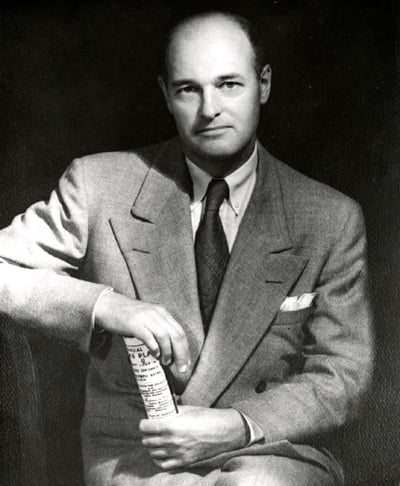
In an unusual moment of candor, George Kennan, the principal architect of the strategy of ‘containment’(see Paul Nitze’s definition below) wrote in a ‘top secret’ memo in 1948,


“We have about 50% of the world’s wealth, but only 6.3% of its population …we cannot fail to be the object of envy and resentment. Our real task in the coming period is to devise a pattern of relationships which will permit us to maintain this position of disparity….To do so, we will have to dispense with all sentimentality and daydreamings….We should cease to talk about vague and…unreal objectives such as human rights, the raising of the living standards, and democratization. …we are going to have to deal in straight power concepts. The less we are then hampered by idealistic slogans, the better.”15

This admission, ever more relevant as the U.S. becomes increasingly dependent on imports of nonrenewable resources, encapsulates the real purpose of military interventions and the nuclear arsenal; “The exercise of U.S. power is intended to preserve not only the international capitalist system but U.S. hegemony of that system.”16

Issued by Harry Truman in 1950, NSC-68, written largely by Paul Nitse, openly discussed a first strike against the Soviet Union, and articulated the war-fighting basis of the nuclear arsenal. The following extended excerpts illuminate the gist of U.S. nuclear policy at the dawn of the nuclear age, policies which are still largely operative to this day.

“… Without superior aggregate military strength, in being and readily mobilizable, a policy of “containment”–which is in effect a policy of calculated and gradual coercion–is no more than a policy of bluff.”..

.“Our overall policy at the present time may be described as one designed to foster a world environment in which the American system can survive and flourish.”… “A large measure of sacrifice and discipline will be demanded of the American people. They will be asked to give up some of the benefits which they have come to associate with their freedoms.”…

“The execution of such a (military) buildup, however, requires that the United States have an affirmative program beyond the solely defensive one of countering the threat posed by the Soviet Union.” ..

.“In the event we use atomic weapons either in retaliation for their prior use by the USSR or because there is no alternative method by which we can attain our objectives, it is imperative that the strategic and tactical targets against which they are used be appropriate and the manner in which they are used be consistent with those objectives.”….

“The United States now has an atomic capability, including both numbers and deliverability, estimated to be adequate, if effectively utilized, to deliver a serious blow against the war-making capacity of the USSR.”17

NSC-68 laid the foundation of modern U.S. ‘flexible response’, ‘counter-force’ and ‘escalation dominance’ nuclear war-fighting startegy.

Counterforce & Escalation Dominance

“The most ambitious (damage limiting) strategy dictates a first strike capability against an enemy’s strategic offensive forces which seeks to destroy as much of his megatonnage as possible before it can be brought into play. An enemy’s residual retaliation, assumed to be directed against urban-industrial targets, would be blunted still further by a combination of active & passive defenses, including ASW(anti-sub), ABMs, anti-bomber defenses, civil defense, stockpiles of food & other essentials, and even the dispersal & hardening of essential industry.” -Sec. of Defense Donald Rumsfeld from 1978 Nuclear Posture Review18

The U.S. enjoyed a quarter century of nuclear superiority, but by the late 1960s and early 1970s the Soviet Union had reached a rough nuclear parity, seriously eroding the Pentagon’s ability to wield a credible nuclear threat. In response, Henry Kissinger and others elaborated on Nitze’s policy of “calculated and gradual (nuclear) coercion” to develop a policy of “escalation dominance.” In essence, escalation dominance is the ability to control every level of conflict from conventional, to battlefield nuclear, to strategic. The principal theoretical problem with the theory(aside from the absolute insanity of nuclear war) was the inability to control the final rung of the ‘escalation ladder’- strategic nuclear war with the Soviets. According to nuclear dogma, control is essential at each escalation level, including all out nuclear war, otherwise the nuclear threat lacks credibility.

In 1976,‘moderate Democrat’ Jimmy Carter ran on a successful campaign of deep cuts in the U.S. nuclear arsenal, but was soon compelled by a bipartisan claque of nuclear cold-warriors, The Committee On the Present Danger founded by Paul Nitze, to launch a massive program to attempt to regain absolute nuclear superiority.19 Carter ordered development and production of the MX missile, Trident 2 submarine launched missile, and Pershing 2 missile, all three super accurate counter force weapons designed to destroy hardened Soviet targets like missile silos and command and control facilities. In 1980, Carter implemented Presidential Directive 59 which specifically targeted Soviet missile silos, a threatening escalation of formal U.S. policy which implied a first strike. A meaningless retaliation would destroy already empty silos.

Ronald Reagan continued and greatly accelerated the policies of Jimmy Carter, and embarked on his Star Wars program which was and is an integral part of first strike. The result of Reagan’s nuclear policies and outrageous political provocations was massive global anti-nuclear protests, especially in the U.S. and Europe. Faced with strong public opposition, Reagan negotiated the Intermediate Nuclear Forces(INF) treaty, which removed medium range U.S. and Soviet missiles from Europe, leaving the British & French arsenals still under NATO control. Reagan also negotiated the Strategic Nuclear Arms Reduction Treaty (START), which significantly reduced the nuclear arsenals by enabling the elimination of obsolete weapons while continuing to produce and deploy counterforce weapons; in essence, pruning the deadly nuclear tree to the U.S. advantage.

First Strike

While the sophistication and accuracy of the U.S. nuclear arsenal continued to improve, the Soviet arsenal, already substantially inferior to that of the U.S., began to deteriorate at every level. Already at a great disadvantage because of geographical ‘choke points’ and stunning advances in U.S. anti-submarine warfare (ASW), with the collapse of the Soviet Union, the aging Russian nuclear submarine fleet, containing only a small fraction of its nuclear warheads, became increasingly vulnerable to a pre-emptive strike. Their strategic bombers became easy targets for advanced U.S. technology like AWACS, sophisticated guidance systems and cruise missile. Meanwhile, their land-based missiles fell under the bulls eye of super accurate missiles like Trident 2, MX and Minuteman 3 with a circular error probable (CEP) of 400 feet, close enough to destroy them with a high degree of certainty. Star Wars, intended to ‘mop up’ surviving Soviet retaliatory missiles, was the only missing part of a renewed credible first strike strategy.

“The end of the Cold War marked a return to historical patterns repressed or obscured by the U.S.-Soviet confrontation.”20

The emphasis became access to resources and human rights, echoing imperialist propaganda from a century earlier. The specter of nuclear war was increasingly threatened against non-nuclear nations like Iran, Iraq, Libya and North Korea. When Clinton issued PDD-60 in 1997, the Washington Post reported,

“”general planning for potential nuclear strikes against other nations that have… ‘prospective access’ to nuclear weapons and that are now or may eventually become hostile to the United States. A separate official described these countries as ‘rogue States,’ specifically listed in the directive as possible targets in the event of regional conflicts or crises.”21

The problem with such repeated threats, even ambiguous ones like Clinton’s, is that, like ‘the little boy who cried wolf’, with each threat repetition without the use of nuclear weapons the threat credibility is diminished.

Dubya’s Excellent Nuclear Adventure

Rather than “a radical departure from established U.S.(nuclear) policy,”as widely reported in the mainstream media, the Bush Administration’s nuclear strategy is a continuity of policies developed during the Gulf by his father and further advanced by Clinton.22 The Bush Nuclear Posture Review(NPR)23 exposed by investigative journalist William Arkin in the Los Angeles Times, “…myopically ignores the political, moral and military implications- short-term and long -of crossing the nuclear threshold,” and indicates that Bush officials “are looking for nuclear weapons that could play a role in the kinds of challenges the U.S. faces with Al Qaeda.”24

The NPR calls for contingency plans to nuke Russia, China, Iraq, Iran, North Korea, Syria and Libya, and proposes the development of new nuclear weapons to destroy buried bunkers and reduce collateral damage. The Nuclear Posture Review

“is understood to identify three circumstances in which nuclear weapons could be used: against targets able to withstand non-nuclear attack; in retaliation for the use of nuclear, biological or chemical weapons; and ‘in the event of surprising military developments’.”25

The plan further blurs the already fuzzy distinction between nuclear and conventional weapons by calling for integration of “new non nuclear strategic capabilities” into nuclear-war plans, and for “incorporation of ‘nuclear capability’ into many conventional systems under development.”26 Although a continuation and elaboration of Clinton’s nuclear policies, the NPR represents a further lowering of the threshold for the actual use of nuclear weapons.

Prior to 9-11 it was widely understood that NMD, ‘Star Wars revisited,” was dead on arrival in the Democratically controlled Senate. However in the wake of the attacks on the twin towers and the Pentagon, Bush, by arguing “national security” and the fraudulent concept of ‘rogue nuclear states’,27 was able to ram through a massive increase in the “Defense” budget, including billions for an antiballistic missile system. (The current Pentagon budget now exceeds total expenditures of the next 25 largest militaries combined.28 ) Although the workability of such a system is highly questionable, the point is not whether such a system will work, but, rather, the perception that it might work. Russia, and especially China have both vehemently opposed NMD, and the Chinese have threatened to modernize their archaic and feeble ICBM arsenal in order to maintain deterrence.

The compelling logic of antiballistic missile defense- since no conceivable ABM system can stop a massive first strike, the only rational purpose for such a system is for “mopping up” after your own first strike- led Richard Nixon and Henry Kissinger to negotiate the first ABM treaty in 1973.29 Admiral Eugene Carroll with the Center for Defense Information said,

“Missile defense sends a signal to the rest of the world, ‘we will hide behind our nuclear weapon shield and you can’t do anything about it. We will use nuclear weapons when and if we choose.’ We’ve even said publicly that we will use them against non-nuclear states. Then we build what we say is a National Missile Defense System to make certain that we don’t suffer the consequences of our policies and actions.”30

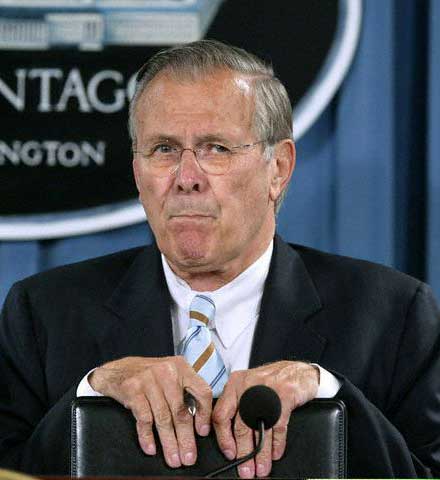
George W. Bush made ‘national missile defense’ a cornerstone of his campaign platform, and with Donald Rumsfeld in charge of the Pentagon, and with the Democratic ‘opposition’s’ abject aquiesence, this costly31 first strike weapon can only be stopped by an informed and mobilized public. The stakes are enormous, not only because NMD will destabilize the nuclear standoff making nuclear war more likely, but Rumsfeld’s plans include the weaponization and domination of space.

Rumsfeld Doctrine

Of all the Bush foreign policy team, Donald Rumsfeld is perhaps the most dangerous. Tellingly, Henry Kissinger called him ‘The most ruthless man he has ever known.’ 32 While Gerald Ford’s Secretary of Defense, Rumsfeld championed larger military budgets and advocated a return to U.S. nuclear superiority. He was responsible for initiating the B-1 Strategic Stealth Bomber, the Trident Submarine and the MX Missile, all first strike weapons.33 While Kissinger was in Moscow negotiating the SALT 2 treaty, Rumsfeld went behind Kissinger’s back and persuaded the Joint Chiefs of Staff to kill the treaty.

After leaving Government for the corporate boardroom, Rumsfeld continued to maintain a high profile as a nuclear hawk, especially his advocacy of missile defense.(In 1998 he received the ‘Keeper of the Flame Award’ from the Center for Security Policy, the ‘nerve center of the Star Wars lobby.’34 The 1998 Congressionally mandated Rumsfeld Commission predictably found that the U.S. faced a ballistic missile threat from “rogue states” within five years; a finding radically at odds with the CIA’s own estimates. In 2001, shortly before he became Defense Secretary, Rumsfeld chaired another commission on U.S. satellite security which implied “active… anti-satellite weapons(ASATs), including ones in space (for) ‘protective measures’.”35

Bill Berkowitz writing in Working for Change spelled out the basic principles of the Rumsfeld Doctrine.

“First, wars must be fought on multiple fronts — including economic, diplomatic, financial, intelligence-related and law-enforcement-related. Second, the U.S. military must operate as one seamless entity. Third, international coalitions, sometimes secretive, will be created and dissolved as the situation dictates. Fourth, these coalitions must not be allowed to bog down the mission — committees cannot fight wars. Fifth, pre-emptive action cannot be ruled out, and indeed, may be required. Sixth, no military option can be ruled out; wars will be fought by any means and with any weapon at our disposal. Seventh, highly skilled Special Forces should be used early and liberally.”36

Coupled with the emphasis on nuclear war fighting and new nuclear weapons development, the ‘Rumsfeld Doctrine’ is a recipie for disaster.

Pathways to Nuclear War

Any actual use of nuclear weapons will almost certainly follow a carefully scripted propaganda campaign, followed by one of a litany of rationalizations- ‘saving American lives’, ‘destroying a nuclear/chemical/biological weapons bunker’, ‘protecting Israel’, ‘responding to use of weapons of mass destruction(real or fabricated)’, etc.. The current highly visible nuclear threats, in conjunction with the calculated demonization of Iraq and the so called “rogue states”, can be seen as part of a strategy by Bush to reshape public opinion in support of using nuclear weapons. With the American public(and worldwide) strongly favoring nuclear disarmament, this would seem at first glance difficult if not impossible task.37

However, a Gallup Poll done during the Gulf War in 1991 showing 45% public support for the use of nuclear weapons to “save American lives” should give pause to those who believe that public opinion would not support U.S. use of nuclear weapons.38 The U.S. political leadership, especially under a reactionary, quasi-caretaker government like Bush(and Reagan), will not hesitate to use nuclear weapons against Iraq or any other opponent if they calculate that the end justifies the means.

In the likely event that the Pentagon is ordered to wage total war against Iraq, leading to the overthrow and assumed assassination of Saddam Hussein, and “war crimes” trials for the senior Iraqi leadership, several factors may come into play, any one of which could lead to nuclear war. A desperate, beleaguered Iraqi leadership could order attacks with biological or chemical weapons(whatever limited ability they may have) against U.S. forces or Israel, leading to retaliation with nuclear weapons. The Pentagon may use nuclear weapons against Iraqi ‘weapons of mass destruction,’ real or fabricated. A significant number of U.S. ground troops may become besieged, as in Khe-Sanh, Vietnam with resulting nuclear weapons use.(Modern battlefield nukes make this scenerio even more likely today.39) Iraqi leadership may take shelter in a highly fortified and defended bunker and nuclear weapons used against it. These scenarios are by no means the only potential contingencies described in the recent NPR.

The chaos and confusion sown by unilateral U.S. action against Iraq, and continuation of the mindless and ineffectual “war on terrorism” may have unintended consequences. Israel could attempt to take advantage of a U.S. attack to intensify its already near genocidal attempt at ethnic cleansing of the Palestinians, risking a military confrontation with the neighboring Arab states; a war which could easily become nuclear.40 (Those who doubt Israel’s willingness to use nuclear weapons should consider that in 1998 80% of Israelis supported the use of nuclear weapons.)41 Complicating the situation further, Israel has been openly weighing air strikes against a Russian built Iranian nuclear power reactor, a strategy similar to the destruction of the Iraqi Osirak reactor in 1981. Russia is currently an ally of Iraq and Israeli nuclear weapons are targeted against Moscow.

Pakistan and India on the brink

The present U.S. “military footprint”in Pakistan, Kyrgyzstan, Uzbekistan, Tajikistan, Turkmenistan and Afghanistan will destabilize all of South Asia and inflame Arab and Islamic nationalism, which could threaten the stability of several states in the region, especially Pakistan, which possesses an arsenal of several dozen atomic bombs.42 Destabilization of the Musharraf dictatorship, reportedly under attack by rogue elements in the Inter-Services Intelligence (ISI) Agency, could easily intensify the already near war situation between India and Pakistan over Kashmir, leading to nuclear conflict. Reversing years of India’s opposition to nuclear weapons, “the Hindu fundamentalist, right wing , Bharatiya Janata Party(BJP),”43 has strongly embraced nuclear weapons. Additionally, there are credible reports that the U.S., working in coordination with Israel, is contemplating raids to capture Pakistan’s nuclear arsenal, a harebrained scheme that if true is likely to backfire with potentially catastrophic results.44

India and Pakistan have brought the world to the brink of nuclear war. Most press accounts describe the deadly standoff in terms of a dispute over Kashmir, but the roots of the crisis are firmly interwoven with U.S. policy. Since the fall of the Shah of Iran in 1979, Pakistan has been a client state of the U.S. and the cornerstone of the CIA’s anti-Soviet terror campaign in Afghanistan. It was in the context of massive U.S. support that Pakistan, with help from China, developed its nuclear arsenal, a project which would have been seriously complicated without U.S. financial and diplomatic support. The Pakistani Intelligence(ISI) has been coordinating the terror war in Kashmir, largely fought by veterans of the CIA’s Afghan campaign.

“In late 1997, India’s… RAW(CIA equivalent) estimated that some 800 to 1,000 foreign guerrillas, many veterans of the Afghan jihad of the 1980s… were unleashed in the Kashmir battle.”45

In September, 1997 India reported killing 302 guerrillas, including 118 Afghans and 106 Pakistanis.46 This CIA initiated terror campaign is currently being replicated around the world from Chechnya to the Philippines to Macedonia.

India too has been the object of U.S. policies. During the Cold War, the U.S. tried, with limited success, to drive a wedge between India and the Soviet Union. Following the collapse of the Soviet Union, India has became a potential strategic asset in the campaign to surround and isolate China and Russia. Since 9-11 the U.S. has resumed weapons sales to India and announced renewed military cooperation. In return, India has voiced support for Bush’s Ballistic Missile Defense program. Meanwhile, the U.S. has also resumed direct military sales to Pakistan. Each side now sees itself as the favored U.S. client state. “The new relations of India and Pakistan with the U.S. A. have also promoted the prospects of a nuclear war between the two South Asian neighbors. “Each is interpreting statements and signals from the endless stream of U.S. and Western emissaries to the region over the recent period in terms that encourage them and exacerbate the tensions.”47

In a strategy reminiscent of the Iran-Iraq war and numerous other regional conflicts, the U.S. is arming and abetting both sides in the nuclear standoff. “Advise both sides on the conduct of war. Arm both sides in the conflict, fueling America’s military-industrial complex. Develop joint military and intelligence cooperation with both countries, enabling the U.S. to oversee the theatre of an eventual war. Fracture and impoverish both countries. Restore the Empire.”48 The purpose of the orchestrated escalation in South Asia is not just to extend the U.S. sphere of influence in Central and South Asia, but to complete the encirclement and isolation of Russia and China as part of a strategy to maintain hegemony and secure relatively untapped resources and markets.

Conclusions

There are still nearly 25,000 nuclear weapons in existence worldwide, with over 5,000 strategic weapons on hair trigger “launch on warning” alert; more than enough to precipitate “nuclear winter” and potentially destroy life on earth.49

The recent much ballyhooed nuclear arms reduction agreement with Russia is a PR sham designed only for public consumption. The treaty calls for unspecified reductions in nuclear warheads to a total of between 1,700 and 2,200 by 2012. The lower limit of 1,700 warheads is entirely voluntary and the treaty does nothing to restrain the proliferation of tactical nukes, a key element in Bush’s nuclear plans.

The real purpose is

“to create a diplomatic illusion of nuclear arms restraint to accelerate Russia’s integration into the U.S. led free market system, ensuring Russia’s role as a natural resource supplier.”50

This treaty allows the U.S. to increase its arsenal at any time, so long as the numbers are at 2,200 in 2012, at which point the treaty expires and the limits would balloon to the 6,000 mandated under START 1. Each side is required to give only 90 days notice of intent to withdraw.

“‘What we have now agreed to do under the treaty is what we wanted to do anyway,’ a senior administration official said today. ‘That’s our kind of treaty.’”51

The real key to preventing the use of nuclear weapons, an act which will inevitably have calamitous consequences for the entire world, lies in the ability of the anti-nuclear, anti-intervention, social justice and antiglobalisation movements to understand that their issues are inextricably linked. The task is not an easy one. For example, In the teeth of unprecedented nuclear sabre rattling by Bush, the April, 2002 mobilization which brought 100,000 to Washington featured only two speakers on the nuclear threa t(Helen Caldicott and Phil Berrigan), while the June 12, 1981 anti-nuclear protest in Central Park, during the height of the Israeli annihilation of Beirut, failed to address the intervention issue at all. At the April 2000 mass rally against the World Bank in Washington, DC, a single speaker was given just 2 minutes to talk about the connection between militarism, nuclear weapons and globalization. The task is complicated even further by the present jingoistic atmosphere and Constitutional lawlessness that have undoubtedly intimidated millions from speaking out.

In The Dialectics of War, Martin Shaw writes,

By the time nuclear war is even likely, war-resistance may be largely beside the point. The resistance to nuclear war has to be successful in the period of general war-preparation. The key question is the relationship between militarism and antimilitarism, and the wider social struggles of the society in which nuclear war is prepared.”52

He argues that “If the values which sustain all the social movements for change suffer when nuclear militarism is in the ascendancy …the relationship between nuclear militarism and society implies a general strategic relationship between peace movements and wider movements for social change.”53 The best strategy for abolishing nuclear weapons and fighting social injustice is broadening the people’s movement to challenge all aspects of the corporate imperial state.

May 29, 2002, The National Network to End the War Against Iraq issued this statement:

“The On August 6th, 2002, local Network members across the United States will be holding demonstrations, rallies and vigils in protest of the ongoing sanctions against Iraq, and U.S. plans to invade Iraq, including the possible use of nuclear weapons against Iraq.”54

Notes

1) Richard Falk & David Kreiger, “Taming the Nuclear Monster”, (Nuclear Age Peace Foundation, April 11, 2002), <www.wagingpeace.org>

2) Haruko Moritaki, Message to the American People, (Hiroshima, Hiroshima Alliance for Nuclear Weapons Abolition, 2002) Contact Steve Leeper at <leeps@mindspring.com  > for complete text.

3) Greg Palast, “Jim Crow In Cyberspace: The Unreported Story of How They Fixed the Vote In Florida,”The Best Democracy Money Can Buy, (London, Pluto Press, 20002) pp. 6 – 43

4) Bulletin of the Atomic Scientists<http://www-news.uchicago.edu/releases/02/020227.doomsday2.shtml >

5 Michio Kaku and Daniel Axelrod, “To Win A Nuclear War: the Pentagon’s Secret War Plans,” (Boston,South End Press, 1987) p.184

6 Arjun Makhijani, “A Chronology of Nuclear Threats,” (Takoma Park, Institute for Energy & Environmental Research, 1998) <www.ieer.org/ensec/no-6/threats.html >

7) Daniel Ellsberg, “A Call to Mutiny,” Protest and Survive, eds. E.P. Thompson and Dan Smith, (New York, Monthly Review Press, 1981) p. i

8) Joseph Gerson, “What is a Deadly Connection?,” The Deadly Connection: Nuclear War and U.S. Intervention, ed. Joseph Gerson, (Philadelphia, New Society Publishers, 1986) p.9

9 Kaku and Axelrod, pp 166-168

10) Francis A. Boyle, The Criminality of Nuclear Deterrence: Could the U.S. War On Terrorism Go Nuclear?, (Atlanta, Clarity Press, Inc., 2002) p. 57

11) ibid, pp. 67-68.

12) Louise Franklin-Ramirez and Howard Morland, Atomic Power and the Arms Race, Twin Evils of the Split Atom, (Washington, Visual Information Project, 1980, slide 26

13) P.M.S.. Blackett, Fear War and the Bomb: Military & Political Consequences of Atomic Energy, (New York, McGraw-Hill, 1949) p. 139

14) Arjun Makhijani and John Kelly, Target Japan: The Decision to Bomb Hiroshima and Nagasaki, (Washington, Unpublished Manuscript, 1985) P.32. (Published in Japan as Why Japan?) Contact Arjun Makhijani at <arjun@ieer.org  >

15) George Kennan, Policy Planning Study 23, (U.S. State Department, 1948) <www.marxmail.org/facts/quotes.htm >

16) Michael Parenti, Against Empire, (San Francisco, City Lights Books, 1995) P.36

17) Kaku and Axelrod, pp.  62 – 66

18) Robert Aldridge, The Counterforce Syndrome: A Guide to U.S. Nuclear Weapons and Strategic Doctrine, (Washington, Transnational Institute, 1978) p. 9

19) Kaku & Axelrod, pp. 184 – 192

20)Joseph Gerson, With Hiroshima Eyes: Atomic War, Nuclear Extortion and Moral Imagination, (Philadelphia, New Society Publishers, 1995) pp. 2-4

21) R. Jeffrey Smith, Clinton Directive Changes Strategy On Nuclear Arms, (Washington Post, 7 December 1997), p. A1.

22)Daniel Sneider, Bush Policy On Nuclear Weapons Traced to Cheney after Gulf War, (San Jose Mercury News, March 15, 2002) P. 2

23) periodically, the pentagon conducts a ‘nuclear posture review (NPR) for the purpose of updating and refining nuclear weapons strategy.

24) William M. Arkin, Secret Plan Outlines the Unthinkable, (Los Angeles Times, March 10, 2002) <http://www.latimes.com/news/opinion/la-op-arkinmar10.story >

25) David Wastell, US plans for first-strike nuclear attacks against seven countries (Sunday Telegraph, 10 Mar. 2002, p. 1

26) Arkin, op. cit.

27) Joseph Gerson, Continuity and Change in the Aftermath of September 11 , (Speech to Asian Regional Exchange for New Alternatives, May 8-9, 2002) <www.afsc.org/nero/pesp/jgarena.htm >

28) Joseph Gerson, Continuity and Change in the Aftermath of September 11

29) Robert M. Bowman, Star Wars: Defense or Death Star? , (Institute for Space and Security Studies, 1985) pp.58 – 63

30) Eugene J. Carroll, Nuclear Wars Past and Future, (C-SPAN, April 29, 2002

31 Nuclear Disarmament Partnership(NDP), Cost Implications of National Missile Defense, (NDP, June 2001) (The NDF estimates that NMD will cost at least $241 billion and probably much more)

32) Helen Caldicott, The New Nuclear Danger: George W. Bush’s Military Industrial Complex, (New York, The New Press, 2002) pp. 165-166 33 U.S. Department of Defense, Donald H. Rumsfeld, 13th Defense Secretary, <www.defenselink.mil/specials/secdef_histories/bios/rumsfeld.htm >

34) Caldicott, p. 27

35) Daniel Smith, Space Wars, (Washington, Center for Defense Information, 2001) <www.cdi.org/dm/2001/issue2/space.html >

36) Bill Berkowitz, Let them eat guns: Rumsfeld’s Rambo rumblings for a permanent ‘war on terrorism’. (Working for Change, February 8, 2002) <www.workingforchange.com/article.cfm?ItemId=12786 >

37) Abolition 2000, Recent Public Opinion Polls Indicate Overwhelming Support for Nuclear Weapons Abolition, (Abolition 2000, 2001) <www.abolition2000.org/polls.html >

38) William Arkin and Stan Norris, Nuclear Notebook, (Bulletin of the Atomic Scientists, April 1991)

39) Kaku and Axelrod, P. 159

40) John Steinbach, Israel’s Weapons of Mass Destruction, (Covert Action Quarterly, April-June, 2001), p. 22 41 Asher Arian, Israeli Public Opinion on National security, 1998, (Jaffee Center for Strategic Studies, 1998) <www.tau.ac.il/jcss/memoranda/memo49chp5.html >

42) Robert Burns, U.S. considers future military relations with former Soviet states, (Sacremento Bee, April 30,2002) <http://www.sacbee.com/24hour/special_reports/terrorism/story/386005p-3072835c.html>

43) Praful Bidwai, India Politics: Right-wing Party Hardens Nuclear Stance,

44) Praful Bidwai , Nuclear worries mount by the day, (Asia Times On-Line, November3, 2001) <www.atimes.com/ind-pak/CK03Df06.html >

45) John A. Cooley, Unholy Wars: Afghanistan, America and International Terrorism, (London, Pluto Press,2000) pp. 233-234

46) Cooley, p.234

47) J. Sri Raman, South Asia: Waiting for the U.S.A., (Global Network Against Weapons and Power In Space, June 1, 2002) <www.space4peace.org

48) Michael Chossudovsky, Washington is pushing India and Pakistan to the brink of war, (Centre for Research on Globalisation, 23 May, 2002) <http://globalresearch.ca/articles/CHO205C.html

49 John Pike, Status of Nuclear Powers and Their Nuclear Capabilities, (Federation of American Scientists, January, 1999) <www.fas.org/nuke/guide/summary.htm>

50) Natural Resources Defense Council, The Bush-Putin Treaty: An Orwellian Approach to Nuclear Arms Control, (NRDC, May, 2002 <www.nrdc,org/nuclear /atreaty02.asp >

51) Michael R. Gordon, Treaty Offers Pentagon New Flexibility for New Set of Nuclear Priorities, New York Times Foreign Desk, May 14, 2002

52) Martin Shaw, The Dialectics of War: An essay in the social theory of total war and peace, (London, Pluto Press, 1988) p. 102

53) Martin Shaw, p. 111

54) National Network to End the War Against Iraq, Plan to Oppose Impending Invasion of Iraq Adopted by Peace Activists at National Meeting, (National Network to End the War Against Iraq, May 28,2002) Peninsula Peace and Justice Center, 457 Kingsley Avenue, Palo Alto, CA 94301 <www.endthewar.org > <nnewai@usa.com  >  (650) 326-9057

http://www.globalresearch.ca/nuclear-nightmares-redux-first-strike-nuclear-attacks-seven-minutes-to-midnight/5458086

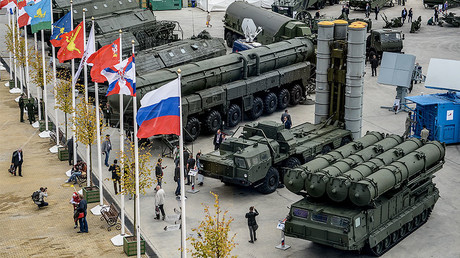
Will Washington kill us all?

By Paul Craig Roberts
Global Research, April 16, 2015

Did you know that Washington keeps 450 nuclear ICBMs on “hair-trigger alert”?  Washington thinks that this makes us “safe.”  The reasoning, if it can be called reason, is that by being able to launch in a few minutes, no one will try to attack the US with nuclear weapons.  US missiles are able to get on their way before the enemy’s missiles can reach the US to destroy ours.

If this makes you feel safe, you need to read Eric Schlosser’s book, Command and Control.

The trouble with hair-triggers is that they make mistaken, accidental, and unauthorized launch more likely. Schlosser provides a history of almost launches that would have brought armageddon to the world.

In Catalyst, a publication of the Union of Concerned Scientists, Elliott Negin tells the story of Soviet Lt. Col. Stanislav Petrov.  Just after midnight in 1983 the Soviet Union’s early warning satellite system set off the alarm that 5 US ICBMs were headed for the Soviet Union.

Col. Petrov was supposed to inform the Soviet leader, who would have 8 to 10 minutes to decide whether to launch in retaliation. Who knows what he would have decided. Instead Col. Petrov used his judgment.  There was no reason for the US to be attacking the Soviet Union.  Moreover, Petrov reasoned that an American attack would involve hundreds of ICBMs, possibly thousands.  He checked whether Soviet ground-based radar had detected incoming ICBMs, and it had not.  Petrov decided it was a false alarm, and sat on it.

It turned out that the early warning system had mistaken a pattern of sunlight reflection on clouds as missiles. This was a close call, but Negin reports that “a failed computer chip, and an improperly installed circuit card are some of the culprits” that could initiate nuclear war. In other words, the sources of false alarms are numerous.

Fast forward to today.  Imagine an American officer monitoring the US early warning system.  This officer has been listening to 15 years of war propaganda accompanied by US invasions and bombings of 8 countries.  Terrorist warnings and security alerts abound, as do calls from American and Israeli politicians for nuking Iran.  The media has convinced him that Russia has invaded Ukraine and is on the verge of invading the Baltics and Poland. American troops and tanks have been rushed to the Russian border. There is talk of arming Ukraine.  Putin is dangerous and is threatening nuclear war, running his strategic bombers close to our borders and holding nuclear drills.  The American officer has just heard a Fox News general again call for “killing Russians.”  The Republicans have convinced him that Obama is selling out America to Iran, with Senator Tom Cotton warning of nuclear war as a consequence. We will all be killed because there is a Muslim in the White House.

Why isn’t anyone standing up for America, the patriotic American officer wonders, just as the alarm goes off:  Incoming ICBMs. Are they Russian or Iranian?  Was Israel right after all?  A hidden Iranian nuclear weapons program?  Or has Putin decided that the US is in the way of his reconstruction of the Soviet Empire, which the American media affirms is Putin’s goal?  There is no room for judgment in the American officer’s mind.  It has been set on hair-trigger by the incessant propaganda that Americans call news.  He passes on the warning.

Obama’s Russophobic neocon National Security Advisor is screaming:  “You can’t let Putin get away with this!”  “It might be a false alarm,” replies the nervous and agitated president.  “You liberal pussy!  Don’t you know that Putin is dangerous!?  Push the button!”

And there goes the world.

Considering the extreme Russophobia being created among Americans by the Ministry of Propaganda, the demonization of Vladimir Putin–the “new Hitler,” Vlad the Impaler– the propagandistic creation of “the Russian threat,” the crazed neocon desire for US world hegemony, the hatred of Russia and China as rising rivals capable of exercising independent power, the loss of American Uni-power status and unconstrained unilateral action.  In the midst of these emotions and minds swayed not by facts but by propaganda, hubris, and ideology, there is a great chance that Washington’s response to a false alarm will bring the end of life on earth.

How much confidence do you have in Washington?  How many times has Washington–especially the crazed neocons–been wrong?

Remember the 3-week “cakewalk” Iraq war that would cost $70 billion and be paid out of Iraqi oil revenues?  Now the cost is $3,000 billion and rising, and after 12 years the radical Islamic State controls half of the country.  To pay for the wars the Republicans want to “privatize,” that is, take away, Social Security and Medicare.

Remember “Mission Accomplished” in Afghanistan? Twelve years later the Taliban again control the country and Washington, after murdering women, children, funerals, weddings, village elders, and kids’ soccer games,  has been driven out by a few thousand lightly armed Taliban.

The frustrations of these defeats have mounted in Washington and in the military.  The myth is that we lost because we didn’t use our full force.  We were intimidated by world opinion or by those damn student protesters, or blocked from victory by some gutless president, a liberal pussy who wouldn’t use all of our power.  For the right-wing, rage is a way of life.

The neocons believe fervently that History has chosen America to rule the world, and here we are defeated by Vietnamese guerrillas, by Afghan tribesmen, by Islamist fundamentalists, and now Putin has sent his missiles to finish the job.

Whoever the White House fool is, he will push the button.

The situation is deteriorating, not improving.  The Russians, hoping for some sign of intelligence in Europe, contradict Washington’s anti-Russian lies.  Washington calls truthful contradiction of its own propaganda to be Russian propaganda.  Washington has ordered the Broadcasting Board of Governors, a US government agency, headed by Andrew Lack, a former chairman of NBC news, to counteract an alleged, but non-existent, “Kremlin Troll Army” that is outshouting the Western prostitutes and “perpetuating a pro-Russian dialogue” on the Internet.  In case you don’t remember, Lack is the idiot who declared RT to be a “terrorist organization.”  In other words, in Lack’s opinion, one that he can enforce, a truth-teller is a terrorist.

Lack epitomizes well Washington’s view of truthful reporting: If it doesn’t serve Washington’s propaganda, it is not true. It is terrorism.

Lack hopes to control RT with intimidation:  In effect, he has told RT to shut up and say what we want or we will close you down as a terrorist organization.  We might even arrest your American employees as aiders and abettors of terrorism.

To counteract a Revanchist Russia and its Internet Troll Army, the Obama regime is handing $15,400,000 to the insane Lack to use to discredit every truthful statement that emerges from the English language versions of Russian media.  This amount, of course, will rise dramatically. Soon it will be in the billions of dollars, while Americans are evicted from their homes and sent to prison for their debts.

In his budget request, Lack, who seems to lack every aspect of humanity, including intelligence, integrity, and morality, justified his request, which will be granted, for the hard-earned money of Americans, whose standard of living is falling, with the wild assertion that Russia “threatens Russia’s neighbors and, by extension, the United States and its Western allies.”

Lack promises to do even more: “The US international media is now set forth to refute Russian propaganda and influence the minds of Russians and Russian-speakers in the former Soviet Union,  Europe and around the world.”  Lack is going to propagandize against Russia inside Russia.

Of course, the CIA organizations–the National Endowment for Democracy and Radio Free Europe/Radio Liberty–will be enriched by this anti-Russian propaganda campaign and will support it wholeheartedly.

Therefore, the Union of Concerned Scientists’ call for cooperation with Russia to take ICBMs off hair-trigger status is unlikely to occur. How can nuclear tensions be reduced when Washington is building tensions as fast as it possibly can?  Washington’s Ministry of Propaganda has reconstructed Putin as Osama bin Laden, as Saddam Hussein, demonized figures, bogymen who evoke fear from the brainwashed American sheeple.  Russia is transformed into al Qaeda lusting for another attack on the World Trade Center and for the Red Army (many Americans think Russia is still communist) to roll across Europe.

Gorbachev was a trick.  He deceived the old movie actor.  The deceived Americans are sitting ducks, and here come the ICBMs.  The crazed views of the American politicians, military, and people are unable to comprehend truth or to recognize reality.

The propagandistic American “media” and the crazed neoconservatives have set humanity on the path to destruction.

The Union of Concerned Scientists, of which I am a member, need to come to their senses. It is impossible to work out a reduction in nuclear threat as long as one side is going all out to demonize the other.  The demonization of Russia and its leader by the New York Times, Washington Post, CNN, Fox News, and the rest of the American Propaganda Ministry, by almost the entirety of the House and Senate, and by the White House makes reducing the threat of nuclear war impossible.

The American people and the entire world need to understand that the threat to life on earth resides in Washington and that until Washington is fundamentally and totally changed, this threat will remain as the worse threat to life on earth.  Global Warming can disappear instantly in Nuclear Winter.

http://www.globalresearch.ca/will-washington-kill-us-all/5443204

Christian Science Monitor: President Mahmoud Ahmadinejad never said that Israel should be “wiped off the map”

In honor of Persian New Year, here is a 2012 article from the mainstream American news.

From the Christian Science Monitor – CSMonitor.com

Iran’s nuclear program: 4 things you probably didn’t know

Tensions over Iran‘s nuclear program, which some in Israel and the US say is meant to produce nuclear weapons, continue to run high in the West. Most recently in a Iranian New Year’s sermon, Ayatollah Khamenei promised that Iran would respond “on the same level” as any attack against it.  But even as Israeli and Iranian officials take turns rattling their sabers, several key points remain misunderstood.  Do the US and Israel believe that Iran has a nuclear weapons program?  Did President Mahmoud Ahmadinejad really promise to “wipe Israel off the map”?  The answers may surprise you.

By Arthur Bright, Correspondent posted June 8, 2012 at 2:11 pm EDT

1.President Mahmoud Ahmadinejad never said that Israel should be “wiped off the map.”

One frequently proffered explanation for why a war with Iran is needed is because President Mahmoud Ahmadinejad wants Israel “wiped off the map,” and that with a nuclear weapon, he could.  But some argue that Mr. Ahmadinejad’s statement was mistranslated from less incidiary language.

Ahmadinejad’s alleged condemnation of Israel came at a “World Without Zionism” conference in Tehran in Oct. 2005, in which he was quoted by an English-language Iranian news site as saying “Israel must be wiped off the map.”  But as several analyses of the original Farsi statement show, this appears to be a mistranslation.

Arash Norouzi of the Mossadegh Project noted in 2007 that Ahmadinejad “never… uttered the words ‘map,’ ‘wipe out,’ or even ‘Israel'” in his statement.  Rather, he argued, the translation should have been that “this regime occupying Jerusalem must vanish from the page of time.”  (Both The Washington Post and The Atlantic came up with similarly variant translations.)

This is a key difference, Mr. Norouzi argued, because Ahmadinejad used the “vanish from the page of time” idiom elsewhere in his speech: when describing the governments of the Shah of Iran, the Soviet Union, and Saddam Hussein.  While war and revolution were involved in the three regimes’ collapse, none of them, Norouzi argued, were “wiped off the map.”  Rather, they underwent regime change.  This suggests in turn, he said, that Ahmadinejad was calling for regime change in Israel, not nuclear genocide.  Juan Cole, another critic of the speech’s translation, compared Ahmadinejad’s statement to Reagan-era calls for the end of the Soviet Union.

Critics note that the translation is a matter of semantics and that regardless, they show Ahmadinejad’s hostility to Israel.  Ahmadinejad did not help the case for mistranslation when in subsequent interviews he refused to clarify whether he truly meant that Israel should be wiped off the face of the Earth.  But the ambiguity of the words and the indications from context suggest that “wiped off the map” is not the best translation for his statement.

2.Supreme Leader Ayatollah Khamenei issued a fatwa against nuclear weapons.

Whatever words Ahmadinejad used to describe his attitude towards Israel, it is undeniable that he is not the true leader of Iran.  That role is filled by the country’s supreme leader and foremost religious figure, Ayatollah Ali Khamenei.  Mr. Khamenei’s words are highly influential among religious Shiites –thus making his 2005 fatwa against nuclear weapons a significant factor in discussing Iran’s nuclear program.

A fatwa is a ruling on Islamic law issued by a recognized religious figure.  While generally nonbinding, fatwas have influence among the faithful, and fatwas issued by Iran’s supreme leader have more influence than most in Iran, both politically and religiously.  So when on Aug. 9, 2005, Khamenei issued a fatwa against the production and use of nuclear weapons, it was not simply a sermon – it carried political weight.  As Jamil Maidan Flores wrote in a commentary last week for the Jakarta Globe, “Ayatollah Khamenei’s fatwa on nuclear weapons does count for something. He issued it as the supreme spiritual and temporal leader of Iran, and as a marja, a holy man. The fatwa should be binding to all Iranian Shiites, and most binding of all to he himself who issued it.”  Khamenei has repeated his commitment to the fatwa many times since. Most recently, in February he called having nuclear weapons a “sin.”

But there is another Shiite religious concept, that of taghiyeh, which “The Ayatollah Begs to Differ” author Hooman Majd translates as “dissimulation.” A byproduct of the early years of Shia’s split from the Sunni mainstream, taghiyeh allows Shiites to lie in order to avoid death.  Mr. Flores notes that taghiyeh could be a factor in Khamenei’s fatwa on nuclear weapons, if somehow lying about development of such weapons would protect Shiites.  But Mr. Majd notes that taghiyeh is meant only for the purpose of lying about one’s religion to avoid death – which is not the case here – and adds that neither Khamenei nor the former supreme leader, Ayatollah Khomeini, ever to anyone’s knowledge made use of taghiyeh.

3.Iran has a legitimate need for more energy, which is driving its nuclear efforts.

Iran has always insisted that its nuclear research was for peaceful purposes only: to provide more energy to a growing Iran.  In all the debate over the possibility of Iranian nuclear weapons, it is easy to overlook the fact that Iran does indeed need more power, power which nuclear plants could provide.

While Iran is a major supplier of both oil – it is the fourth largest producer in the world according to the CIA’s World Factbook – it is also a major consumer.  The Green Party of Iran (an environmental party not to be confused with the Green Movement behind the 2009 presidential protests) estimated in 2000 that Iran ranked second only to the US in gasoline consumption.  But despite Iran’s huge oil production, it lacks the facilities to refine it into gasoline, forcing it to import a barrel of oil for every eight it exports.  According to Majd, some Iranians blame their lack of refining infrastructure on Western sanctions.

Iran is also the world’s fifth largest producer of natural gas globally according to the CIA’s World Factbook.  But it consumed 137.5 billion cubic meters of natural gas in 2010, almost as much natural gas as it produced that year. (Editor’s note: This sentence was revised to correctly reflect Iran’s natural gas production in 2010.)

4.The US and Israel both say Iran does not have a nuclear weapons program.

It is perhaps the most important fact that is often ignored in the debate over war with Iran: Both US and Israeli intelligence agree that Iran is not pursuing a nuclear weapons program.

Just last month, National Intelligence Agency Director James Clapper wrote in a report to the Senate Armed Services Committee that “Iran is keeping open the option to develop nuclear weapons… should it choose to do so. We do not know, however, if Iran will eventually decide to build nuclear weapons.”

When asked in a hearing by Sen. Carl Levin (D) of Michigan to confirm that “Iran has not yet decided to develop nuclear weapons,” Mr. Clapper did so, saying “That is the intelligence community’s assessment …,” and he reiterated that he has doubts about whether Iran is attempting to create a nuclear weapon when pressed further by Sen. Lindsay Graham (R) of South Carolina.  Gen. Roland Burgess of the Defense Intelligence Agency, who also appeared at the hearing, agreed with Clapper’s assessment.

Secretary of Defense Leon Panetta made statements even more to the point than Clapper’s in January.  In the January 8 edition of CBS‘s Face the Nation, Mr. Panetta said flat out, “Are they [Iran] trying to develop a nuclear weapon? No.”

Israeli intelligence also does not believe that Iran is currently pursuing a nuclear weapon.  In January, Haaretz reported that Israel believes Iran “has not yet decided whether to translate [its efforts to improve its nuclear power] capabilities into a nuclear weapon – or, more specifically, a nuclear warhead mounted atop a missile.”  That same month, Israeli military intelligence chief Gen. Aviv Kochavi told a Knesset hearing that Iran is not working on building a nuclear bomb, reported Agence France-Presse.

Reposted under Fair Use Rules.

http://www.csmonitor.com/World/Middle-East/2012/0608/Iran-s-nuclear-program-4-things-you-probably-didn-t-know/President-Mahmoud-Ahmadinejad-never-said-that-Israel-should-be-wiped-off-the-map.