An important and interesting interview covering many topics despite Charlie Rose’s manner being patronizing and embarrassingly familiar at times. Not all of this was televised or translated correctly by CBS.
Posted on the Kremlin website http://en.kremlin.ru/events/president/news/50380
Interview to American TV channel CBS and PBS
Vladimir Putin gave an interview to American journalist Charlie Rose in the run-up to his address at the UN General Assembly’s 70th session.
September 29, 2015
CHARLIE ROSE: I want to thank you for inviting us to your home on what I would have described as a lovely Russian Sunday afternoon. You call it Old Wives’ summer.
We will do our interview, it will be broadcast on Sunday, and the next day you will speak to the United Nations in a much-anticipated address. It will be the first time you have been there in a number of years. What will you say to the UN, to America, to the world?
VLADIMIR PUTIN: Since this interview will be aired prior to my speech, I do not think it reasonable to go into much detail about everything I am going to speak about, but, broadly, I will certainly mention some facts from the history of the United Nations. Now I can already tell you that the decision to establish the United Nations was taken in our country at the Yalta Conference. It was in the Soviet Union that this decision was made. The Soviet Union, and Russia as the successor state to the Soviet Union, is a founding member state of the United Nations and a permanent member of its Security Council.
Of course, I will have to say a few words about the present day, about the evolving international situation, about the fact that the United Nations remains the sole universal international organisation designed to maintain global peace. And in this sense it has no alternative today. It is also apparent that it should adapt to the ever-changing world, which we discuss all the time: how it should evolve and at what rate, which components should undergo qualitative changes. Of course, I will have to or rather should use this international platform to explain Russia’s vision of today’s international relations, as well as the future of this organisation and the global community.
CHARLIE ROSE: We are expecting you to speak about the threat of the Islamic State and your presence in Syria that is related to that. What is the purpose of your presence in Syria and how does that relate to the challenge of ISIS?
VLADIMIR PUTIN: I believe, I am pretty certain that virtually everyone speaking from the United Nations platform is going to talk about the fight, about the need to fight terrorism, and I cannot avoid this issue, either. This is quite understandable because it is a serious common threat to all of us; it is a common challenge to all of us. Today, terrorism threatens a great number of states, a great number of people – hundreds of thousands, millions of people suffer from its criminal activity. And we all face the task of joining our efforts in the fight against this common evil.
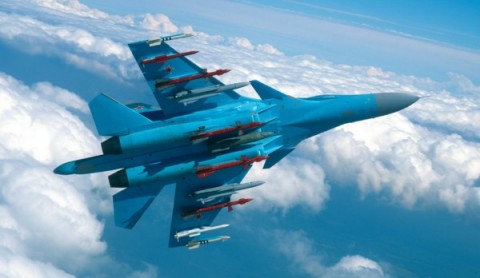
Concerning our, as you put it, presence in Syria, as of today it has taken the form of weapons supplies to the Syrian government, personnel training and humanitarian aid to the Syrian people. We act based on the United Nations Charter, i.e. the fundamental principles of modern international law, according to which this or that type of aid, including military assistance, can and must be provided exclusively to legitimate government of one country or another, upon its consent or request, or upon the decision of the United Nations Security Council. In this particular case, we act based on the request from the Syrian government to provide military and technical assistance, which we deliver under entirely legal international contracts.
CHARLIE ROSE: The Secretary of State John Kerry said that the United States welcomed your assistance in the fight against the Islamic State. Others have taken note of the fact that these are combat planes and manpad systems that are being used against the conventional army, not extremists.
VLADIMIR PUTIN: There is only one regular army there. That is the army of Syrian President al-Assad  al-Assad BasharPresident of Syria. And he is confronted with what some of our international partners interpret as an opposition. In reality, al-Assad’s army is fighting against terrorist organisations. You should know better than me about the hearings that have just taken place in the United States Senate, where the military and Pentagon representatives, if I am not mistaken, reported to the senators about what the United States had done to train the combat part of the opposition forces. The initial aim was to train between 5,000 and 6,000 fighters, and then 12,000 more. It turns out that only 60 of these fighters have been properly trained, and as few as 4 or 5 people actually carry weapons, while the rest of them have deserted with the American weapons to join ISIS. That is the first point.
Secondly, in my opinion, provision of military support to illegal structures runs counter to the principles of modern international law and the United Nations Charter. We have been providing assistance to legitimate government entities only.
In this connection, we have proposed cooperation to the countries in the region, we are trying to establish some kind of coordination framework. I personally informed the President of Turkey, the King of Jordan, as well as the Saudi Arabia of that, we informed the United States too, and Mr Kerry, whom you have mentioned, had an in-depth conversation with our Foreign Minister Sergei Lavrov  Lavrov SergeiForeign Minister of Russia on this matter; besides, our military stay in touch and discuss this issue. We would welcome a common platform for collective action against the terrorists.
CHARLIE ROSE: Are you ready to join forces with the United States against ISIS and is it why you are in Syria? Others believe that it might be part of your goal, that you are trying to save President al-Assad’s administration because they have been losing ground and the war has not been going well for them, and you are there to rescue them.
VLADIMIR PUTIN: That’s right, that’s how it is. We provide, as I have said twice during our interview and can repeat again, we provide assistance to legitimate Syrian authorities. Moreover, I strongly believe that by acting otherwise, acting to destroy the legitimate bodies of power we would create a situation that we are witnessing today in other countries of the region or in other regions of the world, for instance, in Libya, where all state institutions have completely disintegrated.
Unfortunately, we are witnessing a similar situation in Iraq. There is no other way to settle the Syrian conflict other than by strengthening the existing legitimate government agencies, support them in their fight against terrorism and, of course, at the same time encourage them to start a positive dialogue with the “healthy” part of the opposition and launch political transformations.
CHARLIE ROSE: As you know, some coalition partners want al-Assad to go before they can support the government.
VLADIMIR PUTIN: I would like to advise or recommend them to forward this suggestion not to al-Assad himself, but rather to the Syrian people. It is only up to the Syrian people living in Syria to determine who, how and based on what principles should rule their country, and any external advice of such kind would be absolutely inappropriate, harmful and against international law.
CHARLIE ROSE: We have already discussed this earlier, but do you think that President al-Assad, who you support… Do you support what he is doing in Syria and what is happening to those Syrians, to those millions of refugees, to hundreds of thousands of people who have been killed and many – by his own force?
VLADIMIR PUTIN: And do you think that those who support the armed opposition and, mainly, terrorist organisations just in order to overthrow al-Assad without thinking of what awaits the country after the complete destruction of state institutions are doing the right thing? We have already witnessed that, I have already mentioned Libya. That was not so long ago. The United States actively contributed to the destruction of these state institutions. Whether they were good or bad is a different question. But they were destroyed, and the United States suffered grave losses after that including the death of its ambassador. Do you understand what this leads to? That is why we provide assistance to the legal government agencies precisely, but – and I would like to stress it again – we do it hoping that Syria will launch political transformations necessary for the Syrian people.
Time and again, with perseverance worthy of a better cause, you are talking about the Syrian army fighting against its people. But take a look at those who control 60 percent of Syrian territory. Where is that civilised opposition? 60 percent of Syria is controlled either by ISIS, Jabhat al-Nusra or other terrorist organisations, organisations that have been recognised as terrorist by the United States, as well as other countries and the UN. It is them and not anyone else who have control over 60 percent of Syrian territory.
CHARLIE ROSE: You are worried about what might happen after al-Assad. You are worried about anarchy; you look at the threat of ISIS. Are they different? Are they unique as a terrorist organisation?
VLADIMIR PUTIN: It has become unique because it is going global. They have set a goal, which is to establish a caliphate on the territory stretching from Portugal to Pakistan. They already lay claims to the sacred Islamic sites like Mecca and Medina. Their actions and their activities reach far beyond the boundaries of the territories under their control.
As for the refugees, Syria is not their only country of origin. Who is fleeing Libya? Who is fleeing the countries of Central Africa where Islamists are in charge today? Who is fleeing Afghanistan and Iraq? Do the refugees come from Syria only? And why do you think that the Syrian refugees flee only as a result of President al-Assad’s actions to protect his country? Why don’t you think that the refugees flee from the atrocities of terrorists, from ISIS, who decapitate people, burn them alive, drown them alive and destroy cultural monuments? People flee from them too, they flee mainly from them. And from the war – this is clear. But there would be no war if these terrorist groups were not supplied with arms and money from the outside. It seems to me that somebody wants to use either certain units of ISIS or ISIS in general in order to overthrow al-Assad and only then think about how to get rid of ISIS. This task is difficult and, in my opinion, practically impossible.
CHARLIE ROSE: Do you fear that they may come to Russia? Do you fear that if it does not stop now they may come to Russia from Europe or even to the United States and that is why you have to step in because no one else is doing what’s necessary to lead the charge against ISIS?
VLADIMIR PUTIN: Indeed, few actors take serious steps to combat this threat. Few actors take serious effective measures. We learned about the effectiveness of the actions of our American partners during the Pentagon report in the US Senate. To tell the truth, their effectiveness is low. You know, I am not going to speak ironically here, or pick or point at anyone. We propose cooperation, we propose to join efforts.
Are we afraid or not? We have nothing to be afraid of. We are in our country and we are in control of the situation. But we have undergone a very difficult path of combating terrorism, international terrorism in the North Caucasus. That is point number one.
Point number two is that we know for certain that today there are at least 2,000 and may be even more than 2,000 militants in Syria who are from Russia or other former Soviet republics and, of course, there is the threat of their return to Russia. And this is why it is better to help al-Assad do away with them there than to wait until they come back here.
CHARLIE ROSE: Yes, but you say that you stepped in because you did not think that the job was being done well and you listen to what is going on in the American Senate, you heard the results and you said that Russia must act.
VLADIMIR PUTIN: We are already acting and we have always acted this way. We have cooperated with many countries and we continue to cooperate, including with the United States. We constantly send to our colleagues through special services’ channels the information necessary for the American special forces in order to make our contribution to ensuring security and safety, including safety of American citizens both in the United States and beyond. But I think that this level of coordination is insufficient today; we need to work more closely with each other.
CHARLIE ROSE: In your opinion, what is the strategy that you are recommending, other than supporting the al-Assad regime?
VLADIMIR PUTIN: I have already said, we should help President al-Assad’s army. And there is no one else at all who is fighting ISIS on the ground, except for President al-Assad’s army. So, I want you, your audience to finally realise that no one except for al-Assad’s army is fighting against ISIS or other terrorist organisations in Syria, no one else is fighting them on Syrian territory. Minor airstrikes, including those by the United States aircraft, do not resolve the issue in essence; in fact, they do not resolve it at all. The work should be conducted on the spot after these strikes and it should all be strictly coordinated. We need to understand what strikes are needed, where we need to strike and who will advance on the ground after these strikes. In Syria, there is no other force except for al-Assad’s army.
CHARLIE ROSE: Would Russia deploy its combat troops in Syria if it is necessary to defeat ISIS?
VLADIMIR PUTIN: Russia will not take part in any field operations on the territory of Syria or in other states; at least, we do not plan it for now. But we are thinking of how to intensify our work both with President al-Assad and our partners in other countries.
CHARLIE ROSE: What does it mean?
VLADIMIR PUTIN: It means that our armed forces will not take part in hostilities directly and they will not fight. We will support al-Assad’s army…
CHARLIE ROSE: Do you mean airstrikes?
VLADIMIR PUTIN: I mean war, combat operations on the territory, the infantry and motorised units.
CHARLIE ROSE: What else will be required? As we come back to the problem of many people considering that al-Assad is helping ISIS, that his terrible attitude towards the Syrian people and the use of barrel bombs and other actions are helping ISIS, and if he is removed, the transition period would be better at some point for the purposes of fighting ISIS.
VLADIMIR PUTIN: In secret services’ parlance, I can say that such an assessment is a blatant act by al-Assad’s enemies. It is anti-Syrian propaganda, there is nothing in common between al-Assad and ISIS, they fight against each other. And I repeat once again that President al-Assad and his army are the only force that actually fights ISIS.
CHARLIE ROSE: But there were reports earlier saying that you were getting ready to provide support to them, and that what you wanted to see was a negotiated political transition.
VLADIMIR PUTIN: We think that the issues of political nature should be solved in any country, including in Syria, primarily by its people – in this case by the Syrian people themselves. But we are ready to provide assistance both to the Syrian authorities and the healthy opposition for them to find some points of contact and agree on the political future of their country. It is for this purpose that we have organised a series of meetings between the representatives of the opposition and al-Assad’s government in Moscow. We took part in the Geneva Conference on this issue. We are ready to further act in this direction, urging sides, the official authorities and the opposition leaders, to agree with each other exclusively through peaceful means.
CHARLIE ROSE: The Washington Post wrote today: ”Into the vacuum of American leadership has stepped Russian President Vladimir Putin, who has dispatched troops and equipment to Syria in an effort to force the world to accept his solution to the war, which is the creation of a new coalition to fight the Islamic State that includes the Assad government“. It is interesting that they say you have stepped into a certain vacuum of American leadership. This is what The Washington Post writes.
VLADIMIR PUTIN: We are not stepping into the vacuum of American leadership, we are trying to prevent the creation of a power vacuum in Syria in general because as soon as the government agencies in a state, in a country are destroyed, a power vacuum sets in, and that vacuum is quickly filled with terrorists. This was the case in Libya and Iraq; this was the case in some other countries. The same is underway in Somalia, the same happened in Afghanistan. And challenging American leadership is not at stake.
CHARLIE ROSE: Well, a vacuum is an issue. It seems that you are a little irritated by one point: you are talking about a strong centralised government being Russia’s DNA and you have a huge fear that there is no strong government in Syria and in other countries, that there is some sort of anarchy.
VLADIMIR PUTIN: I am not saying that there is no strong government there. I mean that if there was no government at all, there would be anarchy and a vacuum, and the vacuum and the anarchy would soon evolve into terrorism.
For instance, in Iraq, there was a famous person, Saddam Hussein, who was either good or bad. It was at a certain stage (you might have forgotten, haven’t you?) that the United States actively collaborated with Saddam when he was at war with Iran: weapons were supplied, diplomatic and political support was provided and so on. Then the US fell out with him for some reason and decided to do away with him. But when Saddam Hussein was eliminated, the Iraqi statehood and thousands of people from the former Baath party were also eliminated. Thousands of Iraqi servicemen, who were part of the state’s Sunni elite, found themselves thrown out into the street. No one gave a thought about them, and today they end up in the ISIS army. That is what we stand against.
We are not against a country exercising leadership of any kind anywhere, we are against thoughtless actions that lead to such negative situations that are difficult to rectify.
CHARLIE ROSE: As you know, Iran’s representative General Soleimani has recently visited Moscow. What role will he as well as the Kurdish forces play in Syria? And what needs to be done in this respect?
VLADIMIR PUTIN: As I have already said, I think that all countries of the region should join their efforts in the fight against a common threat – terrorism in general and ISIS in particular. It concerns Iran as well, it concerns Saudi Arabia (although the two countries do not get along very well, ISIS threatens both of them), it concerns Jordan, it concerns Turkey (in spite of certain problems regarding the Kurdish issue), and, in my opinion, everybody is interested in resolving the situation. Our task is to join these efforts to fight against a common enemy.
CHARLIE ROSE: This wording is very broad, among other things, it can mean new efforts by Russia to take up the leadership role in the Middle East and it can mean that it represents your new strategy. Is it really a new strategy?
VLADIMIR PUTIN: No, we have already mentioned why we increasingly support al-Assad’s government and think about the prospects of the situation in the region.
I have already said it, you asked about it yourself and I replied. There are more than 2,000 militants in Syria from the former Soviet Union. So instead of waiting for them to return back home we should help President al-Assad fight them there, in Syria. This is the main incentive that impels us to help President al-Assad.
In general, we, of course, do not want the situation in the region to somaliarize, we do not want any new Somalias there because this is all in close vicinity of our borders; we want to develop normal relationships with these countries. We have traditionally, and I want to stress it, traditionally been on very friendly terms with the Middle East. We expect it to stay this way in the future.
CHARLIE ROSE: You are proud of Russia and it means that you want Russia to play a more significant role in the world. This is just one of the examples.
VLADIMIR PUTIN: This is not an end in itself. I am proud of Russia and I am sure that the vast majority of Russian citizens have great love and respect for their Motherland. We have much to be proud of: Russian culture and Russian history. We have every reason to believe in the future of our country. But we have no obsession that Russia must be a super power in the international arena. The only thing we do is protecting our vital interests.
CHARLIE ROSE: But you are a major power because of the nuclear weapons you possess. You are a force to be reckoned with.
VLADIMIR PUTIN: I hope so (laughing), otherwise what are these weapons for? We proceed from the assumption that nuclear weapons and other weapons are the means to protect our sovereignty and legitimate interests, not the means to behave aggressively or to fulfil some non-existent imperial ambitions.
CHARLIE ROSE: When in New York, will you request a meeting with President Obama?
VLADIMIR PUTIN: Meetings of this kind are arranged in advance. I know that during such events every second, let alone minutes, of President Obama’s day are scheduled, there are many delegations from all over the world, so…
CHARLIE ROSE: You think he will not have a spare minute for the President of Russia?
VLADIMIR PUTIN: Well, it is up to him. We are always open for contacts of any kind: at the highest level, at the level of ministries and agencies, at the level of special services, if necessary. But I would be happy if President Obama finds a few minutes for a meeting and then, of course, I would appreciate such a meeting. If for some reason it would not be possible for him, never mind, we will have an opportunity to talk at the G20, or at other events.
CHARLIE ROSE: You know, if you’d like to see the President, you can say: ”I have a plan for Syria, let’s work together. Let’s see what we can do. Not only let’s work together on Syria, let’s see what we can do on other things.“
VLADIMIR PUTIN: You know, the thing is that these are difficult issues; they can be finalised only at the top level between the presidents, but before that preparations are needed with preliminary consultations between foreign ministers, defence ministries, and special services. This means a lot of work and if this work is ready to be completed, then it makes sense to meet and complete it. If our colleagues have not approached the final stage, President Obama and I can meet, shake hands and discuss current issues, we – and I am personally – are always ready for such contacts.
CHARLIE ROSE: But we are talking about leadership and if you are going there to make a big speech you want the President of the United States to fully be on board as much as he can. Once you pick up the phone and call him and say… Same as you did after our conversation in St Petersburg, you called the President. You said, ”Let’s make sure we meet and discuss some issues. The issues that are too critical and the two of us can do better than one of us.“
VLADIMIR PUTIN: Yes, I have done so, I have called President Obama, and President Obama called me on various issues. This is part of our regular contacts, there is nothing unusual or extraordinary about it. Let me repeat once again: any personal meetings are usually prepared by our staff. I tell you for the third time that we are ready, but it is not just for us to decide. If Americans want to meet, we will meet.
CHARLIE ROSE: Your need to prepare is none because you deal with these issues every day. You need no preparation to see the President of the United States, nor does he. This is a diplomatic nicety you are suggesting. But I hear you; you are prepared to meet him.
VLADIMIR PUTIN: For how long have you been a journalist?
CHARLIE ROSE: For more years than I want to remember.
VLADIMIR PUTIN: It is difficult for me to advise you on what you are ready or not ready for. Why do you think that you can advise me on what I am ready or not ready for, as this is not my first term as President? But this is not the most important thing. What is most important is that Russia – the President of Russia, its Government and all my colleagues – we are ready for these contacts at the highest level, at the level of governments, ministries, agencies. We are ready to go as far as our American partners. Incidentally, the UN platform was created precisely for this, to seek compromise, to communicate with one another. So it will definitely be nice if we make use of this platform.
CHARLIE ROSE: What do you think of President Obama? What is your evaluation of him?
VLADIMIR PUTIN: I do not think I am entitled to assess the President of the United States. This is up to the American people. We have good personal relationship with President Obama, our relations are quite frank and business-like. And this is quite enough to do our job.
CHARLIE ROSE: Do you think his activities in foreign affairs reflect a weakness?
VLADIMIR PUTIN: Why? I do not think so at all. The point is that in any country, including the United States, may be in the United States even more often than in any other country, foreign policy is used for internal political struggle. An election campaign will soon start in the United States. They always play either Russian card or any other, political opponents bring accusations against the current head of state, and here there are a lot of lines of attack, including accusations of incompetence, weakness, of anything else. I do not think so and I will not meddle in America’s internal political squabbles.
CHARLIE ROSE: Let me ask you this question: Do you think he listens to you?
VLADIMIR PUTIN: I think that we all listen to each other when it does not contradict our own ideas of what we should and should not do. But, in any case, there is a dialogue and we hear each other.
CHARLIE ROSE: You said Russia is not a super power. Do you think he considers Russia an equal? Considers you an equal? Which is the way you want to be treated?
VLADIMIR PUTIN: (Laughing) Ask him, he is your President! How can I know what he thinks? I repeat we have peer-to-peer interpersonal relationships, we respect each other in any case and we have business contacts at quite a good working level. And what do the American President, the French President, the German Chancellor, the Japanese Prime Minister or the Chinese Premier of the State Council or the Chinese President think, how do I know? We judge not by what seems to us, but by what people do.
CHARLIE ROSE: Of course. You enjoy the work, you enjoy representing Russia, and I know you have been an intelligence officer. Intelligence officer knows how to read other people; that’s part of the job, right?
VLADIMIR PUTIN: It used to be my job. Now I have a different job and for quite a while already.
CHARLIE ROSE: Someone in Russia told me, “There is no such thing as a former KGB man. Once a KGB man, always a KGB man.”
VLADIMIR PUTIN: You know every stage of your life has an impact on you. Whatever we do, all the knowledge, the experience, they stay with us, we carry them on, use them in one way or another. In this sense, yes, you are right.
CHARLIE ROSE: Once, somebody from the CIA told me that the training you have is important, that you learn to be liked as well. Because you have to charm people, you have to seduce them.
VLADIMIR PUTIN: Well, if the CIA told you so, then it must be true. They are experts on that. (Laughing)
CHARLIE ROSE: Think out loud for me though, because this is important. How can the United States and Russia cooperate in the interest of a better world? Think out loud.
VLADIMIR PUTIN: We think about it all the time. One of our objectives today is very important for many people, for millions of people on our planet – it is joining efforts in the fight against terrorism and other similar challenges: countering drug trafficking and proliferation of weapons of mass destruction, fighting famine, preserving environment and biodiversity, taking efforts to make the world more predictable, more stable. And, finally, Russia…
CHARLIE ROSE: Stable where?
VLADIMIR PUTIN: Everywhere, in all parts of the world. You mentioned yourself that Russia and the United States are the biggest nuclear powers, this leaves us with an extra special responsibility. By the way, we manage to deal with it and work together in certain fields, particularly in resolving the issue of the Iranian nuclear programme. We worked together and we achieved positive results on the whole.
CHARLIE ROSE: How did it work? President Obama has often thanked you for the assistance that you gave in reaching the final accord. What did you do? What did you negotiators contribute, your Foreign Minister Sergei Lavrov?
VLADIMIR PUTIN: The thing is, however strange it may seem, that the interests of the United States and of the Russian Federation do coincide sometimes. And in this case, I just told you that we have a special responsibility for non-proliferation of weapons of mass destruction, our interests certainly coincide. That is why together with the United States we worked hard and consistently on resolving this problem. Russia was guided not only by these reasons but also by the fact that Iran is our neighbour, our traditional partner, and we wanted to bring the situation back on track. We believed that this settlement will help to improve the security situation in the Middle East. In this respect, our assessments of what happened on Iran’s nuclear programme almost fully coincide with the assessments of our American colleagues.
CHARLIE ROSE: As you know, the Republicans are likely to win the elections. There is a big debate as for the Iran’s nuclear deal. What would you tell them?
VLADIMIR PUTIN: I have just said it. If you need me to repeat it, I can. I am confident that the agreement we have achieved meets the interests of international security, strengthens the situation in the region, puts serious obstacles to proliferation of nuclear weapons because this situation is under a full and all-round control of the IAEA, and improves the situation in the Middle East on the whole, because it allows to build normal business, commercial, partner and political relations with all countries in the region.
CHARLIE ROSE: The popularity rating you have in Russia, I believe, makes every politician in the world envious. Why are you so popular?
VLADIMIR PUTIN: There is something that unites me and other citizens of Russia. It is love for our Motherland.
CHARLIE ROSE: It was an emotional moment at the time of the [World War II Memory], because of the sacrifices Russia had made. And you were staying with a picture of your father with tears in your eyes.
VLADIMIR PUTIN: Yes, my family and my relatives as a whole suffered heavy losses during the Second World War. That is true. In my father’s family there were five brothers and four of them were killed, I believe. On my mother’s side the situation is much the same. In general, Russia suffered heavily. No doubt, we cannot forget that and we must not forget, not to accuse anyone but to ensure that nothing of the kind ever happens again. As a matter of fact, we treat veterans with much respect and that includes the American veterans. They were at our Victory Parade on May 9, this year. We remember the sacrifices that suffered other allied nations, Great Britain, China. We do remember that. I believe that this is our common positive memory. Our joint struggle against Nazism will still be a good basis to cope with the challenges we are facing today.
CHARLIE ROSE: Is that what you would like to rekindle, the sense of partnership with America against common enemies?
VLADIMIR PUTIN: Not against common enemies, but in each other’s interests.
CHARLIE ROSE: As far as we know, you are very popular, but, forgive me, there are many people who are very critical towards you in Russia. As you know, they say it is more autocratic than democratic. They say that political opponents and journalists had been killed and imprisoned in Russia. They say your power is unchallenged. And they say that power, an absolute power corrupts absolutely. What would you say to those people who worry about the climate, the atmosphere in Russia?
VLADIMIR PUTIN: There can be no democracy without observing the law and everyone must observe it – that is the most basic and important thing that we all should remember.
As for those tragic incidents as losses of lives, including those of the journalists, unfortunately, it happens in all countries around the world. But if it occurs in Russia, we take every step possible to ensure that the perpetrators are found, identified and punished. We will work on all issues in the same way. But the most important thing is that we will continue improving our political system so that people and every citizen will feel that they can influence the life of state and society, they can influence the authorities, and so that the authorities will be aware of their responsibility before those people who gave their confidence to the representatives of the authorities in the elections.
CHARLIE ROSE: If you as the leader of this country insist that the rule of law be observed, if you insist that justice be done, if you because of your power do that, then it could go a long way eliminating that perception.
VLADIMIR PUTIN: A lot can be done, but not everyone immediately succeeds in everything. How long has it taken the democratic process to develop in the United States? Since it was founded. So, do you think that as regards democracy everything is settled now in America? If this were so, there would be no Ferguson issue, right? There would be no other issues of similar kind, there would be no police abuse. Our goal is to see all these issues and respond to them timely and properly. The same applies to Russia. We also have a lot of problems.
CHARLIE ROSE: The people who killed Nemtsov will be prosecuted to the fullest?
VLADIMIR PUTIN: I said it at once that this is a disgraceful chapter of our contemporary history and that the criminals must be found, identified and punished. And despite the fact that the investigation has been underway for a long time, it will eventually be concluded.
CHARLIE ROSE: You know that I admire Russia and the Russian culture very much, its literature, its music. It is a large country, a big country. Many people, including Stalin, have said Russia needs a strong, authoritative figure. They worship what Stalin said was that kind of figure. Was Stalin right?
VLADIMIR PUTIN: No. I don’t remember him saying that so I cannot confirm these quotes. Russia, as well as any other country, does not need dictators, but it needs equitable principles of organizing the state and society: just, effective, flexibly responding to changes inside and outside the country – that is what Russia needs.
CHARLIE ROSE: But there is a tradition of strong leadership here.
VLADIMIR PUTIN: Look, there is parliamentary democracy in most European countries, there is parliamentary democracy in Japan, there is parliamentary democracy in many countries, but in the United States, for some reason, the State is organized differently, there is quite a stringent presidential republic. Each country has its own particular features, its own traditions that find their reflection today and will find it in future. There are such traditions in Russia but it is not a question of a strong figure, although a strong figure is needed in power, it is a question of what is implied by this term. It is one thing if it is a person with dictatorial tendencies. But if it is a fair leader, who acts within the law and in the interests of a vast majority of society, who acts coherently and is guided by principles, it is a completely different matter.
CHARLIE ROSE: As you know, some have called you a tsar.
VLADIMIR PUTIN: So what? You know, they call me different things, you know what they say in Russia…
CHARLIE ROSE: Does this title fit you?
VLADIMIR PUTIN: No, it doesn’t. You know what they say in Russia: ”Hard words break no bones“. It is not what your supporters, friends or your political adversaries call you that matters. What is important is what you think you must do in the interests of the country, which put you in such position, such post as the Head of the Russian State.
CHARLIE ROSE: Are there people in Russia who are fearful of you?
VLADIMIR PUTIN: I do not think so. I assume most people trust me, if they vote for me in elections. And it is the most important thing. It places great responsibility on me, immense responsibility. I am grateful to the people for that trust, but I surely feel great responsibility for what I do and for the result of my work.
CHARLIE ROSE: As you know, you are very much talked about in America.
VLADIMIR PUTIN: Do they not have anything else to do? ( Laughs.)
CHARLIE ROSE: Or maybe they are curious people? Or maybe you are an interesting character, maybe that is what it is? They see you, first of all, as a strong leader who presents himself in a strong way. They know that you were the KGB agent, who retired and got into politics. In St. Petersburg you became deputy mayor, then moved to Moscow. And the interesting thing is that they see these images of you, bare-chested man on horseback, and they say there is a man who carefully cultivates his image of strength. I am asking is this image important to you?
VLADIMIR PUTIN: I am sure that, after all, any man in my place should set a positive example for other people. In those areas where he can do so, he must do so. In the 1990s and early 2000s, there was a grave social situation in Russia; our social protection system was destroyed; numerous problems emerged which we have not been able to cope with effectively yet, to get rid of them, in health, sports development. I believe a healthy lifestyle is an extremely important thing which underpins solution to numerous important problems, including the health of the nation. It is impossible to solve health problems of millions of people with the help of pills. People need to put it into practice, have passion for it; healthy lifestyle, fitness and sports should become fashionable.
That is why I believe it is right when not only me, but also my colleagues – the prime minister, ministers, deputies of the State Duma – when they, like today, for example, participate in two marathons, when they visit football matches, when they themselves take part in sport competitions. That is how, inter alia, millions of people start feeling interest in and love for fitness and sports. I believe it is extremely important.
CHARLIE ROSE: I hear you and it is important. But may I suggest that you do like the image that you present bare-chested, on a horseback. The image of a strong leader. That’s who you want to be seen as, for your people and for the world?
VLADIMIR PUTIN: I want everyone to know that Russia in general and the Russian leadership, it is something effective and properly functioning. That the country itself, its institutions, leaders are represented by healthy, capable people who are ready for cooperation with our partners in every single area: sports, politics, fight against modern threats. I have nothing but a positive feeling about it.
CHARLIE ROSE: Yes, people believe that you are a strong leader, because you have a strong central government and you can suggest what will happen if you do not have that. Are you curious about America more than simply another nation that you have to deal with? Because they are curious about you as I suggested. Are you curious? Are you watching the republican political debates?
VLADIMIR PUTIN: If you ask me whether I watch them on a daily basis – I would say no. But it is interesting for us to know what is happening in the US. It is a major world power, and today it is an economic and military leader – no doubt about it. That is why America has a strong influence on the situation in the world in general. Of course, it is interesting for us to know what is happening there. We closely follow the developments in the US, but if you wonder whether we follow the ups and downs of their political life on a daily basis – I would rather say no than yes.
CHARLIE ROSE: Well, Donald Trump, you know who he is, said he would like to meet you, because, he said, you would get along.
VLADIMIR PUTIN: Oh, yes, I have heard about it. We welcome any contacts with the future US president, whoever he or she will be. Any person who gains trust of the American people may rest assured of our cooperation.
CHARLIE ROSE: Marco Rubio is running for a Republican nomination and he says terrible things about you. This is a political debate, a political campaign, of course, I understand that. But he said you were a gangster, he was attacking you and he was attacking Russia.
VLADIMIR PUTIN: How can I be a gangster, if I worked for the KGB? It is absolutely ridiculous.
CHARLIE ROSE: What do you like most about America?
VLADIMIR PUTIN: America’s creative approach to solving the problems the country is faced with, its openness and open-mindedness which make it possible to unleash the potential of the people. I believe that largely due to these qualities America has made such tremendous strides in its development.
CHARLIE ROSE: Russia had Sputnik, your country got to space before the United States. Russia has extraordinary astrophysicists. Russia has extraordinary achievements in medicine, in science, and in physics. Do you hope that what you can do is restore Russia’s leadership and create the same kind of innovation, that you just admired America for? And will you do that?
VLADIMIR PUTIN: We should not lose what has been created over the previous decades, and provide precisely those conditions that I have mentioned to unlock the potential, the full potential, of our citizens. Our people are very talented, we have a very good basis, as you have mentioned. You said you love Russian culture, which is also a great basis for the inner development.
You have just mentioned Russian scientific achievements. We need to maintain them and create opportunities for people to develop freely and fulfil their potential. I am sure, I am totally convinced, that it will ensure sustainable development of science, high technology, and the entire economy of the country.
CHARLIE ROSE: In America, as you know, the Supreme Court discussed the issue of homosexuality. In America the Supreme Court discussed a constitutional right for same sex marriage. Do you applaud America for that? Do you think it is a good idea to make it a constitutional right for same-sex marriage?
VLADIMIR PUTIN: You know that it is a diverse group of people. For example, some homosexuals oppose adoption of children by these couples, oppose themselves. Are they less democratic than other members of this community, gay-community? No, probably not. This is simply a point of view of some people. The problem of sexual minorities in Russia has been deliberately made controversial in Russia. There is no such problem in Russia.
CHARLES ROSE: Please, explain it to us.
VLADIMIR PUTIN: Let me explain. It is well known that homosexuality is a criminal offense in the United States, in four US states. If it is good or bad, we know the decision of the Constitutional Court, but this problem has not been dealt with yet, it is still being addressed by the legislation of the Unites States. It is not the case in Russia. In the post-Soviet Russia…
CHARLES ROSE: Do you condemn it?
VLADIMIR PUTIN: Yes, I do. I think that a person cannot be criminally or otherwise prosecuted, his or her rights cannot be infringed upon the grounds of nationality, ethnicity or sexual orientation in the modern world. It is absolutely unacceptable. And it is not the case in Russia. If I am not mistaken there was Article 120 in the Penal Code of the former RSFSR that prosecuted homosexuality. We have abolished this provision; people aren’t prosecuted for it anymore. Homosexuals in Russia live in peace, work, are promoted, receive national awards for their achievements in science, art or any other sphere, medals are awarded to them, I have awarded them myself.
What was the question? The question concerned the ban on promoting homosexuality among minors. To my mind, there is nothing undemocratic about this legal act. Personally, I think that children should be left alone, they should be given an opportunity to grow up, to become aware of themselves and decide themselves who they are: men or women, if they want to have a traditional or homosexual marriage. I do not see here any infringement on gay rights. I think that some people intentionally speculate about this issue to represent Russia as an enemy. It is one of political instruments to attack Russia.
CHARLES ROSE: Who commits those attacks on Russia?
VLADIMIR PUTIN: Those who do this. You just look who does this.
CHARLES ROSE: There is as much recognition of gay rights and gay marriages as they have in the US? Is that your position?
VLADIMIR PUTIN: We do not only recognise, but ensure their rights. In Russia all people enjoy the equal rights, including homosexuals.
CHARLES ROSE: Ukraine, we have already discussed it. Many people believe that as a result of what happened in Crimea the United States and the West imposed sanctions. And those sanctions have hurt Russia. And that you believe [that by re-emerging and] that by trying to be a positive force around the world and in Syria you might somehow lessen the focus on Ukraine.
VLADIMIR PUTIN: You mean to divert attention from the Ukrainian issue? Our actions in Syria are aimed at diverting attention from Ukraine…
No, it is false. The Ukrainian issue is a separate huge issue for us, I will tell you why. Syria is another issue; I have already told you that we are against disintegration, the terrorists coming to the country, the return of people who are fighting there for terrorists to Russia. There is a whole range of problems there. As for Ukraine, it is a special issue. Ukraine is the closest country to us. We have always said that Ukraine is our sister country and it is true. It is not just a Slavic people, it is the closest people to Russia: we have similar languages, culture, common history, religion etc.
Here is what I believe is completely unacceptable for us. Addressing issues, including controversial ones, as well as domestic issues of the former Soviet Republics through the so-called coloured revolutions, through coups and unconstitutional means of toppling the current government. That is absolutely unacceptable. Our partners in the United States are not trying to hide the fact that they supported those opposed to President Yanukovych.
Some claimed to have spent nearly several billion dollars.
CHARLIE ROSE: You believe the United States had something to do with the ousting of Yanukovych, when he had to flee to Russia?
VLADIMIR PUTIN.: I know this for sure.
CHARLIE ROSE: How can you know for sure?
VLADIMIR PUTIN: It is very simple. We have thousands of contacts and thousands of connections with people who live in Ukraine. And we know who had meetings and worked with people who overthrew Viktor Yanukovych, as well as when and where they did it; we know the ways the assistance was provided, we know how much they paid them, we know which territories and countries hosted trainings and how it was done, we know who the instructors were. We know everything. Well, actually, our US partners are not keeping it a secret. They openly admit to providing assistance, training people and spending a specific amount of money on it. They are naming large sums of money: up to $5 billion; we are talking about billions of dollars here. This is why it is no longer a secret; no one is trying to argue about that.
CHARLIE ROSE: Doyou respect the sovereignty of Ukraine?
VLADIMIR PUTIN: Certainly. However, we would like other countries to respect the sovereignty of other states, including Ukraine, too. Respecting the sovereignty means preventing coups, unconstitutional actions and illegitimate overthrowing of the legitimate government. All these things should be totally prevented.
CHARLIE ROSE: How does the renewal of the legitimate power take place in your judgment? How will that come about? And what role will Russia play?
VLADIMIR PUTIN: At no time in the past, now or in the future has or will Russia take any part in actions aimed at overthrowing the legitimate government. I’m talking about something else right now – when someone does this, the outcome is very negative. Libya’s state is disintegrated, Iraq’s territory is flooded with terrorists, it looks like the scenario will be the same for Syria, and you know what the situation is in Afghanistan. What happened in Ukraine? The coup d’état in Ukraine has led to a civil war, because, yes, let’s say, many Ukrainians no longer trusted President Yanukovych. However, they should have legitimately come to the polls and voted for another head of state instead of staging a coup d’état. And after the coup d’état took place, someone supported it, someone was satisfied with it, while others were not. And those who did not like it were treated from the position of force. And that led to a civil war.
CHARLIE ROSE: I repeat, what are you prepared to do regarding Ukraine?
VLADIMIR PUTIN: Let me tell you. If that is your question, then I think that both Russia and other international actors, including those who are more actively engaged in the resolution of the Ukrainian crisis (that is the Federal Republic of Germany and France, the so-called Normandy Quartet, certainly, with close involvement of the United States, and we have intensified our dialogue on this issue), we should all be committed to the full and unconditional implementation of the agreements that were achieved in Minsk. The Minsk Agreements have to be implemented.
CHARLIE ROSE: That is what John Kerry said yesterday after his meeting with the British Foreign Minister. He mentioned Ukraine after Syria. He said: ”We have to have a full implementation of the Minsk Agreements“. Does it mean that you and John Kerry agree on this issue: to implement the Minks Agreements?
VLADIMIR PUTIN: Yes, we fully agree. Would you now exercise your patience and listen to me for two minutes without interruptions? I ask you not to censor this information. Can you do that? Do you have enough authority for that?
CHARLIE ROSE: Yes, I do.
VLADIMIR PUTIN: The implementation of the Minsk Agreements involves several issues, but I will get to the core points. Nothing matters for a drastic change in Ukraine more than political transformations.
Firstly, the Constitution should be amended as stipulated in the Minsk Agreements. And the most important thing, Minsk Agreements say that it must be done in coordination with Donetsk and Lugansk. It is a matter of principle. Right now Ukraine is in the process of amending its Constitution, the first reading is over, yet no one had discussed a single point with Donetsk and Lugansk, and nobody intends to either. That is the first point.
Secondly, (and it is clearly stated in the Minsk Agreements) the law on the special order for local self-government in these regions, which has already been adopted in Ukraine, has to be implemented. The law has been adopted, but its implementation was postponed. It means that the Minsk Agreements have not been implemented.
Thirdly, an amnesty law needs to be adopted. Do you think that it is possible to have a dialogue with the representatives of Lugansk and Donetsk if they all are being prosecuted and subject to criminal proceedings? That is exactly why the Minsk Agreements establish to adopt an amnesty law. However, it has not been adopted.
There is a number of other points. I mean conducting local elections, for instance, the Agreements say clearly to adopt a law on local elections in coordination with Donetsk and Lugansk. The law on local elections was adopted in Ukraine, the representatives of Donetsk and Lugansk forwarded their proposals on this law three times, but no one ever responded, though the Minsk Agreements say clearly: ”by agreement with Donetsk and Lugansk.“ You know, I respect and even like John Kerry, he is an experienced diplomat, he told me once, that he opposed Star Wars at some point, and he was right. Perhaps, if it was he who had to decide on the ABM, now we might have had no conflict regarding ballistic missile defense. However, he slants as far as the situation in Ukraine is concerned. The one side, Kiev, says that it has done a lot and implemented the Minsk Agreements, but it is not the case, since these actions should be agreed upon with Donetsk and Lugansk. However, there is no coordination at all.
As to the implementation of the already adopted law on the special order for local self-government in these regions, the Minsk Agreements state that it should be done ”within 30 days“. Nothing has been done, the implementation has been postponed. That is exactly why we stand for the full and unconditional implementation of the Minsk Agreements by both sides, in strict accordance with the Agreements’ language, rather than its biased interpretations.
CHARLIE ROSE: I gave you four minutes and I did not interrupt, did I?
VLADIMIR PUTIN: I could see that you tried hard not to interrupt. I am very grateful to you for that.
CHARLIE ROSE: You are right, I enjoyed your speech.
VLADIMIR PUTIN: In fact, I am telling you the truth.
CHARLIE ROSE: Americans are going to see you the way they have never seen you. You are more conversational and expressive. It is good, indeed.
VLADIMIR PUTIN: Thank you. In fact, everything that I have said is absolutely true. Do you understand it? The Minsk Agreements will not help to solve the issues if Kiev acts unilaterally all the time, though the Minsk Agreements state ”by agreement with Donbass“. [There is no coordination.] It is a matter of principle.
CHARLIE ROSE: Do you really think so?
VLADIMIR PUTIN: There is not much to think about, everything is written, the only thing to do is to read it. It is stated ”by agreement with Donetsk and Lugansk“, just read the document. I am telling you, there is no coordination there, that’s it. It is stipulated: ”to introduce a law on the special status within 30 days“. But it has not been introduced. The question is: who does not implement the Minsk Agreements?
CHARLIE ROSE: You have mentioned the Secretary of State; he also said that it is important not only to implement the Minsk Agreements but also for separatists to give up the idea of independent elections. John Kerry said that yesterday.
VLADIMIR PUTIN: I am familiar with the position of our American friends, and this is what I have to say. I have just said that, but it seems that I have to repeat. This is what the Minsk Agreements say about local elections: ”To pass a law on local elections by agreement with Donetsk and Lugansk“. What happened instead? Kiev passed the law on its own without any kind of discussion with Donetsk and Lugansk whatsoever and completely disregarding the draft project they had sent three times. There was no dialogue at all; they just passed the law without consultations. Moreover, the law adopted by Kiev states that no elections are to be held in Donbass. Now, what kind of law is that? In fact, they have prompted the representatives of Donetsk and Lugansk to hold elections of their own. That’s it. We are ready to discuss these issues with Mr. Kerry, but, first of all, we have to ensure that both sides implement their written commitments, instead of trying to pass their own initiatives off as something good.
CHARLIE ROSE: I hear you, but I wanted to repeat this, because Secretary Kerry emphasized separatists’ elections. Yes, I really hear you.
VLADIMIR PUTIN: In this case, the Secretary of State Kerry is dodging as a diplomat, but that is fine, this is his job. All diplomats dodge, and he is doing the same.
CHARLIE ROSE: You would never act like that, would you?
VLADIMIR PUTIN: I would not do that. I am not a diplomat.
CHARLIE ROSE: Who are you? How do you see yourself?
VLADIMIR PUTIN: I am a human being, a citizen of the Russian Federation, a Russian.
CHARLIE ROSE: You also said that the worst thing that happened in the last century was the disintegration of the Soviet Union, the Soviet empire. There are those who look at Ukraine and Georgia and think that you do not want to recreate the Soviet empire, but you do want to recreate a sphere of influence, which, you think, Russia deserves because of the relationship that has existed. Why are you smiling?
VLADIMIR PUTIN: (Laughing) Your questions make me happy [Kristina Rus on Fort Russ translates this: “You are making me smile (laugh).”]. Somebody is always suspecting Russia of having some ambitions, there are always those who are trying to misinterpret us or keep something back. I did say that I see the collapse of the Soviet Union as a great tragedy of the XX century. Do you know why? First of all, because 25 million of Russian people suddenly turned out to be outside the borders of the Russian Federation. They used to live in one state; the Soviet Union has traditionally been called Russia, the Soviet Russia, and it was the great Russia. Then the Soviet Union suddenly fell apart, in fact, overnight, and it turned out that in the former Soviet Union republics there were 25 million Russians. They used to live in one country and suddenly found themselves abroad. Can you imagine how many problems came out?
First, there were everyday issues, the separation of families, the economic and social problems. The list is endless. Do you think it is normal that 25 million people, Russian people, suddenly found themselves abroad? The Russians have turned out to be the largest divided nation in the world nowadays. Is that not a problem? It is not a problem for you as it is for me.
CHARLIE ROSE: How do you want to solve this problem?
VLADIMIR PUTIN: We want to, at least, preserve the common humanitarian space within the modern civilized framework, we want to ensure that there are no national boundaries, so that people could freely communicate with each other, and we want the joint economy to develop using the advantages that we inherited from the Soviet Union. What are they? They include the common infrastructure, railway transport, road network, power system and finally, I dare say, the great Russian language, which unites all former republics of the Soviet Union and gives us clear competitive advantages in promoting various integration projects in the former Soviet Union area.
You have probably heard that we had established the Customs Union first and then transformed it into the Eurasian Economic Union. When people communicate freely, when labour force, goods, services and funds move freely as well, when there are no state dividing lines and when we have common legal regulation, for example, in the social sphere — all that is good enough, people should feel free.
CHARLIE ROSE: Did you have to use the military force to accomplish that objective?
VLADIMIR PUTIN: Of course, no.
CHARLIE ROSE: Russia has military presence on the borders with Ukraine, and some argue that there have been Russian troops in Ukraine itself.
VLADIMIR PUTIN: Do you have a military presence in Europe?
CHARLIE ROSE: Yes.
VLADIMIR PUTIN: The US tactical nuclear weapons are in Europe, let us not forget this. Does it mean that the US has occupied Germany or that the US never stopped the occupation after World War II and only transformed the occupation troops into the NATO forces? That is one way of seeing it, but we do not say that. And if we keep our troops on our territory on the border with some state, you see it is a crime?
CHARLIE ROSE: I did not say it was a crime.
VLADIMIR PUTIN: All the processes that I mentioned, the natural economic, humanitarian and social integration, do not require any armed forces. We have established the Customs Union and the Eurasian Economic Union not by force, but through a compromise. It was a challenging, complicated, multi-year process based on agreement, compromise and mutually acceptable conditions in the hope of creating for our economies and for our people better competitive advantages in the world markets and in the world as a whole.
CHARLIE ROSE: So, why are we talking about this? Tell me about the Baltic states and your intentions towards the Baltic states.
VLADIMIR PUTIN: We would like to build friendly and partnership relations with them. Many Russians have been living there since the collapse of the Soviet Union. They are being discriminated there, their rights are being violated. Do you know that many Baltic states have invented something new in the international law? What citizenship-related notions did the international law have before? The answer is: a citizen, a foreigner, a stateless person and dual nationals, or people with dual citizenship. The Baltic republics have invented something totally new. Do you know what? They use the word ‘non-citizens’ for people who have been living for decades in the territory of Baltic states and have been deprived of a number of political rights. They cannot participate in the election campaigns; they have limited political and social rights. Everybody keeps quiet about it, as if this is the way it should be. Of course, this cannot but cause a certain reaction. I assume that our colleagues from both the United States and the European Union will proceed from current humanitarian law and ensure political freedoms and rights of all people, including those who are living in the territory of Baltic states after the disintegration of the Soviet Union. As for economic relations, we have sustainable and highly developed contacts with these countries.
But, you know, there are some things that confuse me (to put it mildly).
CHARLIE ROSE: Confuse you?
VLADIMIR PUTIN: They perplex me and disappoint me. We all say that we need to bring together our views, to pursue economic and political integration.
For example, the Baltic countries (I have already mentioned that since the Soviet times we have common power supply and power system) were, naturally, a part of the common energy grid of the Soviet Union. What are they doing now? Everyone seems to be talking about the convergence of Russia and the European Union. But what is really happening? Nowadays, there are plans to separate the Baltic states from the common power system of the former Soviet Union and to integrate them into the European system. What does it mean for us in practice? In practice, it means that a number of zones will emerge between several regions of the Russian Federation, where we will have no power transmission lines, since previously we used to have a loop transition through the Baltic countries. And it means that we will have to reform the system, spending billions of dollars, as well as our European partners who will also have to spend billions of dollars to integrate the Baltic countries into their power grid. What for? If we really seek some kind of joint work and integration, not just by words but also by deeds, what is the use of all this? And this is the case in many areas – they do the opposite of what they say.
In my opinion, these all are growth-related problems and I believe that common sense – in this or other area – will prevail in the end. We all are interested in an open development, without any prejudice; this refers particularly and, perhaps, primarily to the Baltic countries, for them it is more important than for Russia. Take, for example, Lithuania. Do you know, what was its population in the Soviet times? It was 3.4 mln people. It was a small country, a small republic. And what is it now? I have looked though the recent statistics, today the population of this country is 1.4 mln people. Where are the people? More than half of the citizens have left the country. Can you imagine a situation when more than half of the Americans left the territory of the United States? It would be a catastrophe! What does it mean? It means that the broken ties, first of all, in the economy, adversely affect all of us, including Russia. So, I am deeply convinced that we should abandon the phobias of the past, look forward into the future and, while acting on the basis of international law, establish good-neighbourly and equal relations.
CHARLIE ROSE: And, of course, we have to lift sanctions.
VLADIMIR PUTIN: If somebody prefers to work by means of sanctions, he is welcome to do so. But sanctions are a temporary measure. Firstly, they contradict the international law. Secondly, tell me where this policy of sanctions proved to be effective. The answer is nowhere; and sanctions against such country as Russia are unlikely to be effective.
CHARLIE ROSE: Since the sanctions were imposed, even your friends are worried about the Russian economy, because of the sanctions first, but also because of declining oil prices. Is that a huge challenge for you? Is that a troubling global economic reality?
VLADIMIR PUTIN: You know, the sanctions, as I said, are illegal actions, destroying the principles of the international global economy, the principles of the WTO and the UN. The sanctions may be imposed only by the decision of the UN Security Council. A unilateral imposition of sanctions is a violation of international law. Well, whatever, let’s put aside the legal aspect of the matter. Of course, they do damage, but they are not the main reason for the slowdown in the growth rates of the Russian economy or other problems related to inflation. For us, the main reason is, of course, the decrease in prices in the world markets of our traditional export goods, first, of oil and, consequently, of gas, and some other products. This is the core factor. Sanctions, of course, have a certain impact, but they are not of crucial and fundamental importance to our economy.
CHARLIE ROSE: Will you survive sanctions?
VLADIMIR PUTIN: Naturally, beyond any doubts, it is even out of discussion. Sanctions even have a certain advantage. Do you know what is it? The advantage is that previously we used to buy many goods, especially in the area of high technology, with petrodollars. Today, amid the sanctions, we cannot buy or we are afraid that we will be denied access to hi-tech goods, and we had to deploy large-scale programs to develop our own high-tech economy, industry, manufacturing and science. In fact, we would have to do this anyway, but we found it difficult as our own domestic markets were filled with foreign products, and we found it very difficult to support our local manufacturers within the WTO regulations. Now, with the sanctions imposed and our partners having left our market voluntarily, we have an opportunity to develop.
CHARLIE ROSE: There are two more questions. You were President, Prime Minister and once again President. How long do you want to serve and what do you want to be your legacy? This is one question.
VLADIMIR PUTIN: The period of my service will depend on two conditions. Firstly, of course, there are rules stipulated by the Constitution, and I surely will not infringe them. But I am not sure whether I should take full advantage of these constitutional rights. It will depend on the specific situation in the country, in the world and my own feelings about it.
CHARLIE ROSE: And what do you want your legacy to be?
VLADIMIR PUTIN: Russia should be an effective and competitive state with a sustainable economy, developed social and political system flexible to changes domestically and globally.
CHARLIE ROSE: Should it play the main role in the world?
VLADIMIR PUTIN: As I said, it should be competitive, be able to protect its own interests and influence the processes that are important to it.
CHARLIE ROSE: Many say that you are all-powerful and they believe you can have anything you want. What do you want? Tell America, tell the world what Vladimir Putin wants.
VLADIMIR PUTIN: I want Russia to be the way I just described it. It is my greatest desire, I want the people here to be happy and I want our partners around the world to seek to develop relations with Russia.
CHARLIE ROSE: Thank you. Thank you, it was a pleasure.
VLADIMIR PUTIN: Thank you.