America is regressing into a developing nation for most people

From AlterNet

A new book reveals that the U.S. is becoming two distinct countries, with separate economies, politics and opportunities.

By Lynn Stuart Parramore
April 22, 2017

This post originally appeared on the blog of the Institute for New Economic Thinking.

You’ve probably heard the news that the celebrated post-WW II beating heart of America known as the middle class has gone from “burdened,” to “squeezed” to “dying.” But you might have heard less about what exactly is emerging in its place.

In a new book, The Vanishing Middle Class: Prejudice and Power in a Dual Economy, Peter Temin, professor emeritus of economics at MIT, draws a portrait of the new reality in a way that is frighteningly, indelibly clear: America is not one country anymore. It is becoming two, each with vastly different resources, expectations and fates.

Two roads diverged

In one of these countries live members of what Temin calls the “FTE sector” (named for finance, technology and electronics, the industries that largely support its growth). These are the 20 percent of Americans who enjoy college educations, have good jobs and sleep soundly knowing that they have not only enough money to meet life’s challenges, but also social networks to bolster their success. They grow up with parents who read books to them, tutors to help with homework and plenty of stimulating things to do and places to go. They travel in planes and drive new cars. The citizens of this country see economic growth all around them and exciting possibilities for the future. They make plans, influence policies and count themselves lucky to be Americans.

The FTE citizens rarely visit the country where the other 80 percent of Americans live: the low-wage sector. Here, the world of possibility is shrinking, often dramatically. People are burdened with debt and anxious about their insecure jobs if they have a job at all. Many of them are getting sicker and dying younger than they used to. They get around by crumbling public transport and cars they have trouble paying for. Family life is uncertain here; people often don’t partner for the long-term even when they have children. If they go to college, they finance it by going heavily into debt. They are not thinking about the future; they are focused on surviving the present. The world in which they reside is very different from the one they were taught to believe in. While members of the first country act, these people are acted upon.

The two sectors, notes Temin, have entirely distinct financial systems, residential situations and educational opportunities. Quite different things happen when they get sick or when they interact with the law. They move independently of each other. Only one path exists by which the citizens of the low-wage country can enter the affluent one, and that path is fraught with obstacles. Most have no way out.

The richest large economy in the world, says Temin, is coming to have an economic and political structure more like a developing nation. We have entered a phase of regression and one of the easiest ways to see it is in our infrastructure: our roads and bridges look more like those in Thailand or Venezuela than the Netherlands or Japan. But it goes far deeper than that, which is why Temin uses a famous economic model created to understand developing nations to describe how far inequality has progressed in the United States. The model is the work of West Indian economist W. Arthur Lewis, the only person of African descent to win a Nobel Prize in economics. For the first time, this model is applied with systematic precision to the U.S.

The result is profoundly disturbing.

In the Lewis model of a dual economy, much of the low-wage sector has little influence over public policy. Check. The high-income sector will keep wages down in the other sector to provide cheap labor for its businesses. Check. Social control is used to keep the low-wage sector from challenging the policies favored by the high-income sector. Mass incarceration: check. The primary goal of the richest members of the high-income sector is to lower taxes. Check. Social and economic mobility is low. Check.

In the developing countries Lewis studied, people try to move from the low-wage sector to the affluent sector by transplanting from rural areas to the city to get a job. Occasionally it works; often it doesn’t. Temin says that today in the U.S., the ticket out is education, which is difficult for two reasons: you have to spend money over a long period of time, and the FTE sector is making those expenditures more and more costly by defunding public schools and making policies that increase student debt burdens.

Getting a good education, Temin observes, isn’t just about a college degree. It has to begin in early childhood, and you need parents who can afford to spend time and resources all along the long journey. If you aspire to college and your family can’t make transfers of money to you on the way, well, good luck to you. Even with a diploma, you will likely find that high-paying jobs come from networks of peers and relatives. Social capital, as well as economic capital, is critical, but because of America’s long history of racism and the obstacles it has created for accumulating both kinds of capital, black graduates often can only find jobs in education, social work, and government instead of higher-paying professional jobs like technology or finance— something most white people are not really aware of. Women are also held back by a long history of sexism and the burdens — made increasingly heavy — of making greater contributions to the unpaid care economy and lack of access to crucial healthcare.

How did we get this way?

Continue reading

“We Will Respond” – Russia states it will respond to Norwegian deployment of NATO missile systems

April 30th, 2017 – Fort Russ News –
– RusVesna – Translated by James Harmon

Russia has stated it will respond to the deployment of elements of a NATO missile defense system (NMD / Euro-ABM) in Norwegian territory.

In an interview with Dagbladet newspaper, Russia’s ambassador to Norway Teimuraz Ramishvili, stated Russia will respond.

“On our side, there will follow an answer not just to Norway but to the whole of NATO” – said the diplomat.

Ramishvili said that Russia and Norway may have different points of view on the issue of NATO missile shield, but neighbors should engage in dialogue and find a solution that satisfied both sides. According to him, the Scandinavian kingdom’s elites refuse to discuss with Moscow the disturbing question of the future role of Norway in the European missile defense system.

“Russia does not aspire to the militarization of the Arctic”, – assured Ramishvili. He also urged the Norwegian authorities to reflect on the implications of the new security policy before a decision on the Norwegian contribution to European missile defense will be accepted.

According to the diplomat, this is a serious problem in relations between Russia and Norway – the lack of dialogue. “Today Russia communicates regularly with the political leadership and the US military leaders, but not with the leadership of the Norwegian Armed Forces. It’s very sad”, said the ambassador.

He added that Moscow and Oslo until 2013 had a strong relationship, and the two countries have always been able to solve their problems.

“Look what is happening today. From 2014 to 2016 the Norwegian-Russian trade turnover has decreased by 70 percent, and this should not be the case.”, stated the ambassador.

The United States stressed that the main objective of these facilities, that is, a newly created European missile defense system planned for completion by 2018, is to protect Europe against a potential attack from Iran. In turn, Moscow states that the deployment of missile defense system in Europe is a threat to Russian national security.

In 2015, the Norwegian Prime Minister Erna Solberg announced the country’s readiness to contribute to the creation of the European missile defense system. Recommendations of the Norwegian Institute for Defense Studies and the US Missile Defense Agency in this regard must be submitted to the Norwegian government before the end of 2017. In particular, it is possible that the United States may place new radar on the Norwegian arctic island of Vardo in the borders of Russia, further exacerbating an already tense situation.

http://www.fort-russ.com/2017/04/we-will-respond-russia-states-it-will.html

America’s war against the people of Korea: The historical record of U.S. war crimes

…we have about 50% of the world’s wealth but only 6.3% of its population. This disparity is particularly great as between ourselves and the peoples of Asia. …Our real task in the coming period is to devise a pattern of relationships which will permit us to maintain this position of disparity without positive detriment to our national security. To do so, we will have to dispense with all sentimentality and day-dreaming; and our attention will have to be concentrated everywhere on our immediate national objectives…

We should dispense with the aspiration to “be liked” or to be regarded as the repository of a high-minded international altruism. We should stop putting ourselves in the position of being our brothers’ keeper and refrain from offering moral and ideological advice. We should cease to talk about vague and—for the Far East—unreal objectives such as human rights, the raising of the living standards, and democratization. The day is not far off when we are going to have to deal in straight power concepts. The less we are then hampered by idealistic slogans, the better.

George F. Kennan, State Department Brief, Washington DC, 1948


Global Research, April 30, 2017
Global Research 13 September 2013

The following text by Michel Chossudovsky was presented in Seoul, South Korea in the context of the Korea Armistice Day Commemoration, 27 July 2013

A Message for Peace. Towards a Peace Agreement and the Withdrawal of US Troops from Korea.

Introduction

Armistice Day, 27 July 1953 is day of Remembrance for the People of Korea.

It is a landmark date in the historical struggle for national reunification and sovereignty.

I am privileged to have this opportunity of participating in the 60th anniversary commemoration of Armistice Day on July 27, 2013.

I am much indebted to the “Anti-War, Peace Actualized, People Action” movement for this opportunity to contribute to the debate on peace and reunification.

An armistice is an agreement by the warring parties to stop fighting. It does signify the end of war.

What underlies the 1953 Armistice Agreement is that one of the warring parties, namely the US has consistently threatened to wage war on the DPRK for the last 60 years.

The US has on countless occasions violated the Armistice Agreement. It has remained on a war footing. Casually ignored by the Western media and the international community, the US has actively deployed nuclear weapons targeted at North Korea for more than half a century in violation of article 13b) of the Armistice agreement. 

The armistice remains in force. The US is still at war with Korea. It is not a peace treaty, a peace agreement was never signed.

The US has used the Armistice agreement to justify the presence of 37,000 American troops on Korean soil under a bogus United Nations mandate, as well as establish an environment of continuous and ongoing military threats. This situation of “latent warfare” has lasted for the last 60 years. It is important to emphasize that this US garrison in South Korea is the only U.S. military presence based permanently on the Asian continent.

Our objective in this venue is to call for a far-reaching peace treaty, which will not only render the armistice agreement signed on July 27, 1953 null and void, but will also lay the foundations for the speedy withdrawal of US troops from Korea as well as lay the foundations for the reunification of the Korean nation.

Michel Chossudovsky Presentation: 60th anniversary commemoration of Armistice Day on July 27, 2013, Seoul, ROK. 

<iframe width=”690″ height=”400″ src=”https://www.youtube.com/embed/U2xO7Cn_xDU&#8221; frameborder=”0″ allowfullscreen><!–iframe>

Armistice Day in a Broader Historical Perspective.

This commemoration is particularly significant in view of mounting US threats directed not only against Korea, but also against China and Russia as part of Washington’s “Asia Pivot”, not to mention the illegal occupation of Afghanistan and Iraq, the US-NATO wars against Libya and Syria, the military threats directed against Iran, the longstanding struggle of the Palestinian people against Israel, the US sponsored wars and insurrections in sub-Saharan Africa.

Armistice Day July 27, 1953, is a significant landmark in the history of US led wars.  Under the Truman Doctrine formulated in the late 1940s, the Korean War (1950-1953) had set the stage for a global process of militarization and US led wars. “Peace-making” in terms of a peace agreement is in direct contradiction with Washington “war-making” agenda.

Washington has formulated a global military agenda. In the words of four star General Wesley Clark (Ret) [image right], quoting a senior Pentagon official:

“We’re going to take out seven countries in 5 years, starting with Iraq, and then Syria, Lebanon, Libya, Somalia, Sudan and, finishing off, Iran” (Democracy Now March 2, 2007)

The Korean War (1950-1953) was the first major military operation  undertaken by the US in the wake of  World War II,  launched at the very outset of  what was euphemistically called “The Cold War”. In many respects it was a continuation of World War II, whereby Korean lands under Japanese colonial occupation were, from one day to the next, handed over to a new colonial power, the United States of America.

At the Potsdam Conference (July–August 1945), the US and the Soviet Union agreed to dividing Korea, along the 38th parallel.

There was no “Liberation” of Korea following the entry of US forces. Quite the opposite.

As we recall, a US military government was established in South Korea on September 8, 1945, three weeks after the surrender of Japan on August 15th 1945. Moreover,  Japanese officials in South Korea assisted the US Army Military Government (USAMG) (1945-48) led by General Hodge in ensuring this transition. Japanese colonial administrators in Seoul as well as their Korean police officials worked hand in glove with the new colonial masters.

From the outset, the US military government refused to recognize the provisional government of the People’s Republic of Korea (PRK), which was committed to major social reforms including land distribution, laws protecting the rights of workers, minimum wage legislation and  the reunification of North and South Korea.

The PRK was non-aligned with an anti-colonial mandate, calling for the “establishment of close relations with the United States, USSR, England, and China, and positive opposition to any foreign influences interfering with the domestic affairs of the state.”2

The PRK was abolished by military decree in September 1945 by the USAMG. There was no democracy, no liberation no independence.

While Japan was treated as a defeated Empire, South Korea was identified as a colonial territory to be administered under US military rule and US occupation forces.

America’s handpicked appointee Sygman Rhee [left] was flown into Seoul in October 1945, in General Douglas MacArthur’s personal airplane.

The Korean War (1950-1953)

The crimes committed by the US against the people of Korea in the course of the Korean War but also in its aftermath are unprecedented in modern history.

Continue reading

Russia’s measures to confront fake news

From Foreign Ministry of the Russian Federation
April 27, 2017
Spokesperson Maria Zakharova
Excerpts:

Question: At the 6th International Security Conference, which has just ended in Moscow, one of the topics discussed at a plenary session was information aggression and what to do about this phenomenon. Practical examples of its use by Ukraine etc. were cited.  How can this latest form of information aggression be countered under the current conditions?

Maria Zakharova: Although I was out of Moscow and could not take part in the conference, I followed all the speeches and comments. I paid attention to the reaction to them and to everything connected with information, information wars and information aggression. What are we doing to counter all this?

First of all, we work directly with the audience and present timely quality information, confirmed by facts, figures and concrete examples. I think this is the main means of countering information aggression.

Second, we expose the people and agencies hiding behind the media brands who smuggle in misinformation and create fake news. The Russian Foreign Ministry website has opened a section devoted to fake news. It is functioning, publishing several items every week. Our initiative met with a very skeptical reaction from our Western colleagues. They immediately started to criticise us claiming that Russia just names the articles and brands them as fakes without giving the reason. That is untrue. We provide very detailed information, give our assessment and identify what we consider to be absolutely untrue information. This is a very effective method and an effective instrument. Today, when they ask me why Russia is spreading fake news I ask them to cite at least one example. Our examples are on the Russian Foreign Ministry website, not all of them of course, but only some of the millions of fake reports flooding the media.

Third, we use international legal institutions. It is important that not only the Russian Foreign Ministry but the media community work with the organisations concerned. The media must become aware of the danger of the very profession of journalist being undermined by the biggest and oldest media holdings. Audiences are drifting away from the traditional media outlets and turning to the internet, which is absolutely impossible to control in terms of verifying the facts. This is the job of professional communities and international institutions.

Just the other day, as part of the work of the UN GA Committee on Information, we made a proposal for the text of the resolution on which the Information Committee members will be working in the next few days on developing a strategy to combat the spread of fake news. We talked with Acting UN Under-Secretary-General for Global Communications and Public Information Maher Nasser on the sidelines of the session. He was totally supportive of the idea, partly because he himself highlighted this problem in his speech to the Committee members. The initiative is meeting with support. I hope it will not be blocked by some countries. We shall see how it goes. If somebody attempts to block it, we will inform you promptly. That would be interesting.

The UN Secretariat has a Public Information Department. It is doing a good job although it is working against heavy odds because it upholds not a country or party position, but reflects the opinion of the UN. It has to be weighed and balanced. The Department’s work is very complicated and taxing professionally. They, of all people, should know and understand what a supranational approach could be to developing a strategy of countering the spread of fake news.

This involves several areas of effort. Besides, I think the voice of every country and every journalist must be heard. It is not right to be indifferent and to think that it is no big deal if someone has failed to react to fake reports. That is not so. Each fake brings another fake in its trail. As of today, I consider the Western media reports about Russia’s invasion of Ukraine when the first humanitarian convoys were sent to Donbass to be the most egregious and high-profile case of the spread of media fakes. This is not to mention Colin Powell, who probably feels very uncomfortable after the notorious episode with the vial. White vans with corresponding markings that were closely monitored by the Russian side, the Ukrainian colleagues and humanitarian groups started delivering humanitarian relief to the population which was deprived of bare necessities. The Western media unleashed a campaign alleging that Russia had started an invasion of Ukraine and that Russia was bringing in tanks in white vans. They claimed that the vehicles had not been inspected and that Russia opposed inspections. The reverse was the case. Russia was ready to comply with any inspections. I repeat, all this was happening before our eyes because the Russian Foreign Ministry was actively involved in this process. The media unleashed a barrage of fakes. Look it up online and find these media outlets. No one apologised, no one issued a disclaimer, no one sprinkled ashes on their heads and said they had been wrong and had been misled by false information. No one even wrote about it although very serious things were at issue. It was announced to the whole world that the world’s biggest country was perpetrating aggression against a neighbouring state. To me it was an ultimate example of the war of fakes.

These are just some illustrations of how fakes can be countered. In fact a strategy needs to be put in place. When I said that this is the job of the professional community I knew that it was already working on it. Some major organisations and social networks are currently negotiating among themselves the introduction of technologies to counter the spread of fakes. Major media outlets have made similar attempts to establish contacts. I think if the UN takes a step to work out a strategy and offer a venue for such experimental work, everyone will benefit from it.

Question: You mentioned the Acting Under-Secretary-General for Global Communications and Public Information and the reaction from the UN Department of Public Information. Have your other colleagues taken this initiative seriously? To what extent is this possible in the context of existing political and media realities, given the current media confrontation?

Maria Zakharova: You wouldn’t believe how seriously all of this was taken. The next day, someone sent me a link to a Washington Post article. I’ll read it in English and you please do the translating. I’ll read what it says. It’s not April 1, they really think this way: “Russians are fighting the war of words against the U.S. with American words.” We are accused of using American words in an information war with the US. This is the absolute limit! Read this amazing thing! We are being accused of having the nerve to use, I emphasise, “American” words in an information battle. I don’t know if there is any space left to fall any further. Are the US media probing the bottom? There are no other options. I think it is high time they started thinking about the heights, because they can’t fall any further.

Question: What about your colleagues at the UN?

Maria Zakharova: Our colleagues are working. The Committee will hold sessions until early May. Let me repeat that we are proceeding from what the UN Secretariat itself says. These were the remarks by the Acting Under-Secretary-General for Global Communications and Public Information. Many of our colleagues broached this theme in their remarks as well. Haven’t we had enough talk? It’s time we did something. This is why we made this proposal. The Washington Post article says we allegedly have the temerity to use “American” words. Personally I was accused of using the words “fake news,” but I couldn’t use this collocation because it was their find and invention that can be used only by them and not by us. Whose idea was this? The phenomenon is there, but you can’t say the words. It’s not serious.

Question: They are not English words, but American.

Maria Zakharova: This fits in well with the concept of exceptionalism.

http://www.mid.ru/en/press_service/spokesman/briefings/-/asset_publisher/D2wHaWMCU6Od/content/id/2739385

Foreign Ministry briefing: Syria, Deir ez-Zor, the White Helmets, and what democratization means to the West

If our Western colleagues continue to talk about the democratisation of the Middle East and North Africa, knowing that they cannot retrace their steps, maybe we should choose a simpler solution, that is, change the definition of democratisation?

Maybe we should write an article for Wikipedia saying that democratisation as understood in the West amounts to total destruction of states, and provide the numerous examples? 

From the Foreign Ministry of the Russian Federation
April 27, 2017
Spokesperson Maria Zakharova

Excerpts:

The situation in Syria

The situation in Syria is still a focus of our attention. We anxiously monitor reports about the situation in Syria. Unfortunately, there is still plenty of cause for concern.

On April 25, it was reported that Turkish jets carried out a series of strikes on the positions of Kurdish self-defence detachments near Mount Karachok in northeastern Syria and near Mount Sinjar in northern Iraq. I would like to remind you that Kurdish detachments are the most effective fighting force in the war against ISIS terrorists in northeastern Syria. We were greatly disturbed by reports of Ankara’s operations. There is reason to believe that if it was not for the hasty US attack on Syria’s Shayrat Airbase, which was outside the bounds of international law, Turkey would not have carried out the recent strikes. It is necessary to put an end to arbitrariness on Syrian soil. We urge all international and regional partners to respect the sovereignty and independence of Syria and Iraq, as well as of other countries.

I would like to draw your attention to another issue. The targets that the Turkish Air Force hit in Syria included media facilities: a local TV and radio broadcasting station. Reports say some of your colleagues from the media centre of Kurdish self-defence forces were killed, among others. I would like to see the reaction of the relevant organisations and the journalistic community.

Syria’s government forces are successfully advancing on the positions of ISIS and Jabhat al-Nusra terrorists. The offensive in the north of Hama Province is moving forward. Despite the fierce resistance put up by Nusra and its allies, the large towns of Halfaya and Taybat al-Imam have been liberated. At present, the army is exploiting its strategic success, advancing toward the border of Hama and Idlib Provinces.

On April 19 and 21, Russian Aerospace Forces aircraft destroyed Jabhat al-Nusra’s large training camps in Idlib Province. The strikes were carried out with coordinates received from the so-called competing group, Jaysh al-Izzah.

The dynamic of events in Syria underscores the pressing need for an international meeting on Syria in Astana. The next meeting is scheduled for May 3-4. We hope that the Astana process will help record positive trends in the development of the situation in Syria, prevent the deterioration of the military-political situation and help the Syrian parties in search of compromise solutions, which would put an end to the protracted intra-Syrian confrontation and prevent terrorists from gaining full control of Syria and the entire Middle East region.


The humanitarian situation in Deir ez-Zor

Improving the humanitarian situation in Syria and providing aid to those in need is one of Russia’s priorities in Syria.

We have often talked about the Russian military’s contribution to achieving this goal. They deliver food, water and basic necessities to the Syrian people, often at the risk of their lives.

The situation in Deir ez-Zor, where about 200,000 people have been under ISIS siege for over three years now, is also the focus of our attention. Russian airplanes regularly deliver humanitarian aid to the besieged people by using parachute platforms, including aid that the Syrian authorities receive from the UN. The most recent aid delivery – 21tonnes of food – was made on April 24-25.

According to the UN, more than a half of Syria’s population – 13.5 million people, including 6.5 million children – need humanitarian aid; 11.5 million people need medical care and 12.1 million have no access to drinking water.

Continue reading

Estonia’s Bronze Night, Odessa massacre anniversaries, kidnapping of Russian citizens by the U.S. — where is justice?

Foreign Ministry of the Russian Federation
April 27, 2017
Remarks by spokesperson Maria Zakharova:

10 years since Tallinn’s Bronze Night and Dmitry Ganin’s death

April 27 marks 10 years since the tragic events known as the Bronze Night took place in Tallinn when the monument to the Soldier Liberator was dismantled and the nearby remains of the Soviet soldiers who liberated the Estonian capital from the Nazis were exhumed despite repeated protests from the Russian side and in outrageous violation of the norms of international law and basic human moral principles. The street protests of those who tried to protect the memorial were put down by force.

That night’s events are still painful to remember for our compatriots and all those who care about the great exploit of the soldiers who sacrificed their lives to secure peace in Europe as it is today. Every year, hundreds of people come to pay tribute to the perished soldiers and the Bronze Soldier, which were moved to the war cemetery in Tallinn. The Immortal Regiment procession is organised, and a guard of honour protects the memorial.

We are extremely concerned about the way the Estonian authorities are conducting the investigation into the murder of Dmitry Ganin, a Russian citizen who died in the protests of April 2007. After 10 years of inaction, the Estonian law-enforcement bodies are clearly seeking to drop the case, citing the expiry of its period of limitation. They are also ignoring the Russian Investigative Committee’s proposals to provide legal assistance.

Such an approach is unacceptable. We demand that the Estonian side take all possible measures to identify the culprits behind the Russian citizen’s murder, and to hold them responsible.

Anniversary of the May 2 events in Odessa

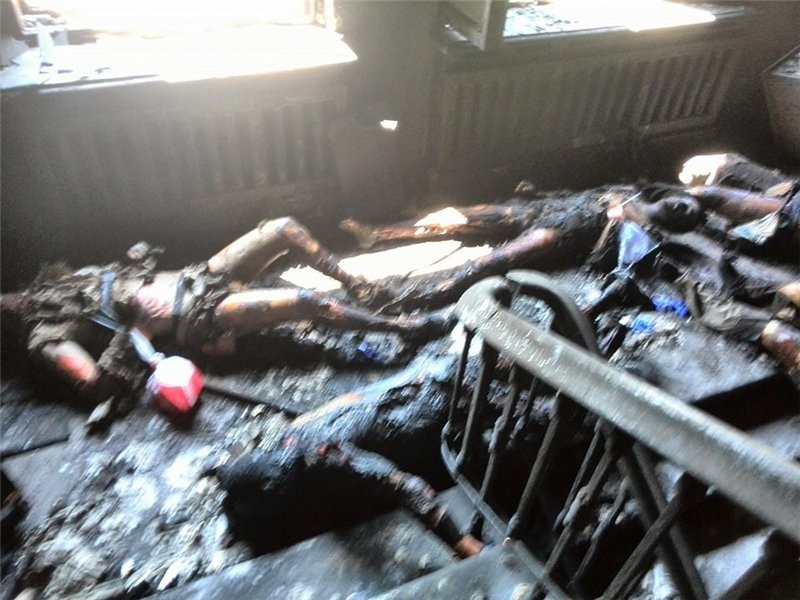
May 2 marks three years since the tragic events in Odessa, in which dozens of people died and hundreds were injured at the hands of thugs behaving like fascists. I regret to say that those responsible for that inhuman crime have not been punished yet and that the investigation has stalled in the face of the tacit indifference of the West and international human rights institutions. Just compare it with the storm of indignation, especially in EU parliamentary circles, that erupts over a visit by a European politician or a public figure or a member of parliament, for example, to Syria. A tidal wave erupts there. The man is humiliated to such a degree that he is ready to admit to anything, that he is an agent of every secret space agency, and to turn himself in to all authorities. He is utterly humiliated by the stream of media attacks.

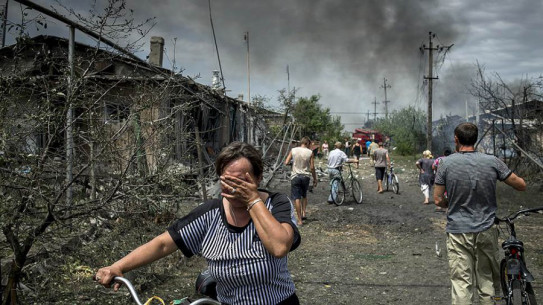
We have seen nothing of this kind over the past three years from the West in terms of demands to investigate the Odessa events. Let me repeat that this tragedy was not just a political rally, or the dispersal of demonstrators or mistreatment of people. People were burnt alive, and they were not servicemen but civilians who were defending their right to a dignified life.

The inaction of the Kiev authorities and the pure connivance of their external sponsors are fuelling radical sentiments in Ukraine. It is troubling that more and more often we hear extremist forces say that they intend to disrupt memorial events, and make threats against those who have not forgotten the victims of the Odessa tragedy.

Let me stress that the authorities, who have halted the investigation, are not the ones coming under pressure but rather those who witnessed the events and still care about the search for truth.

We are calling on Kiev to ensure law and order in Odessa in the coming days and swiftly handle any provocations by nationalist radicals.

Sadly, we are often right about these things. Once again we would like to warn our Ukrainian colleagues that condoning, inciting and nurturing radicals will come back to bite you hard. I will not even say “the day will come” – it has, in fact, already come.

The situation around Konstantin Yaroshenko

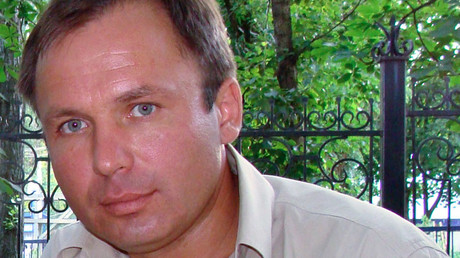
We were baffled to learn that the US authorities had decided against granting Russian citizen Konstantin Yaroshenko’s request to hand him over to Russia under the 1983 Council of Europe Convention on the Transfer of Sentenced Persons. As is common knowledge, our compatriot was abducted by US secret service agents in Liberia in 2010. He was forcibly and secretly taken to New York and sentenced to a 20-year prison term for alleged involvement in a drug transportation plot, of which there was no real hard evidence.

[He was also tortured. His poor health is related to the beatings and torture he endured from U.S. authorities, the lack of medical treatment for his injuries, and his continued poor treatment in the prison where he is being held which could be considered torture.(1)]

Regrettably, Washington’ latest preconceived decision is evidence that the US authorities are still unprepared to remove numerous irritants in bilateral relations, which have been created by the Obama administration. We have to state that this approach will not contribute to normalising the dialogue between Russia and the United States. It is also plain to see that [Washington] is disregarding the humanitarian factors, given that Konstantin Yaroshenko is facing serious health problems, something that we have repeatedly indicated to the US side and did our best to enable this Russian citizen to be given the required medical aid, particularly when his health deteriorated.

As is only natural, we will continue to insist on this Russian citizen being brought home. We will work actively to see that  Konstantin Yaroshenko receive the medical aid he rightly deserves, of which he is deprived in the US prison. We intend to continue taking all possible steps to defend his rights and legitimate interests.

The situation around Roman Seleznev

On April 21, a Washington district court sentenced Russian citizen Roman Seleznev to 27 years imprisonment. He was accused of wire fraud and stealing and selling credit card data.

First of all, we emphasise again that Roman Seleznev was illegally and forcibly transported from the Maldives in 2014 by US law enforcement, which actually amounted to the kidnapping of a Russian citizen. We think that the US actions of this kind are a gross violation of international law and demand that this criminal practice be immediately discontinued.

It is also clear that the US justice failed to take into account Seleznev’s acknowledgement of his guilt and his readiness to cooperate with the investigation. Neither were the humanitarian aspects of the case taken into consideration: he is a disabled victim of a 2011 terrorist attack in Morocco and has to take medication and remain under the care of physicians.

His defence attorney is planning to appeal.

The Russian Foreign Ministry continues to track events involving Roman Seleznev and take the necessary steps to render him consular and legal assistance.

(1) https://freeukrainenow.org/2016/05/08/there-is-no-justice-here-russian-pilot-jailed-in-us-tells-of-kidnap-torture-and-lies-abandons-faith-in-us-justice/

US ordered Russian pilot severely beaten and tortured after kidnapping in Liberia

http://www.mid.ru/en/press_service/spokesman/briefings/-/asset_publisher/D2wHaWMCU6Od/content/id/2739385

Foreign Ministry on upcoming Victory Day celebrations

Foreign Ministry of the Russian Federation
April 27, 2017
Spokesperson Maria Zakharova:

Upcoming celebration of the 72nd Victory anniversary

In connection with the upcoming celebration of the 72nd anniversary of Victory in the Great Patriotic War of 1941-1945, the Foreign Ministry and our missions abroad plan to hold a series of memorial, protocol, informational and cultural events. These include official receptions and gatherings, meetings with war veterans, ceremonies at monuments and memorials to Soviet soldiers and various public events with the participation of our compatriots.

The Victory anniversary celebration will feature the Immortal Regiment event, which will take place in over 50 countries, and the St George Ribbon campaign in more than 90 countries, both initiated by organisations of Russian compatriots. Other events will include the Memory Candle, the laying of flowers at the graves of those who laid down their lives in the fight against Nazism, requiem rallies, concerts and period song festivals.

I would like to note that these are public events organised by our compatriots and members of civil society. Needless to say, Russian missions abroad are providing them the required organisational assistance.

In addition, a dance festival called Victory Waltz, symbolising the bond of generations, countries and nations, will be held in some CIS countries, in particular, Armenia, Belarus, Kazakhstan, Kyrgyzstan and Tajikistan. Let me remind you of a line from Klavdiya Shulzhenko’s song: “Oh, how my head is spinning, how it’s spinning.”

We expect local residents, veterans and members of antifascist organisations to join these events in a number of countries together with our compatriots, as they did last year. We hope that the authorities of the countries where these formal and memorial ceremonies will be held will not obstruct them but on the contrary, will themselves pay tribute to the memory of those who defeated fascism.

Participants in the Great Patriotic War of 1941-1945 living abroad, survivors of the Leningrad siege and juvenile inmates of Nazi concentration camps will receive personal greetings from the Russian president.

Special attention is paid to performing maintenance on Russian (Soviet) war burial sites in other countries.

On May 9, the traditional military parade will take place on Red Square, which is due to be attended by the heads of foreign diplomatic missions accredited in Moscow.

We are confident that the celebration will, as always, take place in a special spirit, with a sense of enthusiasm, in an informal and warm atmosphere, and that it will attract all people who are eager to preserve historical memory and prevent the revival and glorification of Nazism.

There will be another special event. I will not go into detail at this point but will just raise the curtain a little. The Turetsky Choir is preparing a special surprise for us. We will keep you in suspense for a while but I will soon tell you about this event in detail.

http://www.mid.ru/en/press_service/spokesman/briefings/-/asset_publisher/D2wHaWMCU6Od/content/id/2739385

French presidential candidate Macron refuses to accredit RT, Radio Sputnik, and Ruptly

Foreign Ministry of the Russian Federation
April 27, 2017

Briefing by spokesperson Maria Zakharova

Refusal to accredit Radio Sputnik, RT and Ruptly video news agency by the French presidential candidate Emmanuel Macron’s electoral staff


We noted what we see as an outrageous decision to deny accreditation to three Russian media outlets – Sputnik, RT, and Ruptly video news agency – accepted by the French presidential candidate Emmanuel Macron’s electoral staff. It should be mentioned that these Russian media outlets submitted their relevant repeated requests in good time and observed all the formalities. Given that no obstacles were put in the way of other foreign media, we regard these prohibitive measures as purposeful and blatant discrimination of the Russian media by a candidate to the presidency of a state that historically stood up for freedom of speech.

Regrettably, this latest encroachment on the rights of the mass media by the Macron team fits in well with his associates’ earlier unsupported accusations against RT and Sputnik, including allegations that they influence the democratic life of the country. We think that democratic life can really be influenced by unhindered media operations promoting the pluralism of opinions and providing people with more opportunities to access information, including alternative points of view.

Many international acts, including the OSCE’s Astana final document of 2010, emphasised the special role of the media in ensuring free and honest elections. However,  despite their ostensible public defence of democratic values, French politicians disregard certain human rights imperatives formalised at top level.

We call on specialised international organisations and the relevant authorities of the French Republic to pay special attention to the violation of  media rights in the course of the presidential elections [in France], and take steps to prevent these encroachments from being repeated during the second electoral round in May.

http://www.mid.ru/en/press_service/spokesman/briefings/-/asset_publisher/D2wHaWMCU6Od/content/id/2739385

Russian Foreign Ministry: comments on French report, calls again for onsite OPCW investigation in Syria and an end to “dishonourable political games”

From the Foreign Ministry of the Russian Federation
April 27, 2017

A report by the French intelligence services containing France’s conclusions about the alleged use of chemical weapons in Khan Shaykhun in Idlib Province, Syria, has been released in Paris. France is the third country after Turkey and Britain to have conducted a probe into the chemical attack. The impression is that the above countries either do not trust the OPCW or are trying to steer its investigation in a particular direction.

Even the initial analysis of the five-page French document has raised quite a few questions. First, it begs the question as to the circumstances under which France has obtained samples that it claims were taken directly at the scene of the incident. If they were taken by the French intelligence services themselves, it means they have free access to an area controlled, according to the report, by the armed groups of Syrian opposition forces linked to al-Qaeda. If the samples were obtained from a different site located, for example, on the territory of one of Syria’s neighbours, the credibility of the analysis carried out by France would immediately be called into question.

It should be said again that in keeping with the international rules, the integrity of samples taken for analysis must be ensured all the way from the scene of an incident to the laboratory.

In a bid to prove that sarin gas that was allegedly used in Khan Shaykhun was produced in Syria, the contributors to the report refer to the sarin gas formulation, saying it points to the use of the techniques developed in Syrian laboratories. It remains unclear why they are so confident since Syria has never possessed sarin gas as a finished product – they had only the precursor ingredients for this gas, the entire arsenal of which was taken out of Syria in 2014. The mobile installations that could be used to synthesise sarin have been destroyed and this has also been confirmed by the Organisation for the Prohibition of Chemical Weapons.

The only evidence produced by the report’s authors is the alleged similarity between the results of the analysis that has recently been carried out and those obtained by France in 2013 when it tested samples taken at the site of another incident that was also associated with the use of sarin gas. However, this argument looks inconclusive because in 2013 the UN mission failed to either independently confirm the information contained in the French report about the incident in Saraqeb or check on compliance with the procedure for ensuring the integrity of evidence, including during the transportation of the samples taken at the scene of the incident. The only material evidence which the contributors to the report refer to is a hand-grenade filled, judging by the photograph, with sarin gas, which was allegedly dropped from a Syrian helicopter. Using a grenade to deliver sarin gas is something altogether new and, as far as we know, without precedent in the history of chemical weapons. To put it mildly, this exotic chemical piece of ammunition is not safe for those who use it.

In short, there are many obvious discrepancies which testify to the poor quality of the investigation. The only real possibility of establishing the truth would be to send the OPCW fact-finding mission to Khan Shaykhun and the Shayrat Airbase, where sarin gas that has been used in Khan Shaykhun was allegedly stored, to conduct a field investigation, using all the procedures provided for in the Chemical Weapons Convention and this mission’s mandate. It is also important that the make-up of the mission fully complies with Paragraph 8 of the mandate, under which the geographical basis for forming groups of experts should be as representative as possible. Only in this case, all the countries will be able to give credence to the conclusions of the international probe.

This was the aim of the draft proposal submitted recently by Russia and Iran at a special session of the OPCW Executive Committee. Regretfully, it has been vetoed primarily by Western countries, including France, which has carried out its own investigation – as an alternative to an unbiased international probe – and, frankly speaking, in terms of its professionalism, it was not perfect.

We are calling again to abandon the dishonourable political games involving the Syrian chemical track record and take the steps which Russia has been insisting on for three weeks now, that is, to send a group of specialists directly to Khan Shaykhun and the Shayrat Airbase which will include  representatives of countries not blinded by the hatred of the legitimate Syrian Government.

http://www.mid.ru/en/foreign_policy/news/-/asset_publisher/cKNonkJE02Bw/content/id/2739484

Russian Foreign Ministry’s comments on aggravated domestic political situation in Macedonia

Foreign Ministry of the Russian Federation

April 28, 2017

We are very concerned about the latest developments in the Republic of Macedonia. On April 27, the opposition that lost the parliamentary election basically attempted to seize power in the country by electing the Speaker of the Assembly (Parliament) basically by force on its own initiative and in violation of established procedures. People were injured during an ensuing fight that involved protesters opposing the “impostors,” and some of them were hospitalised.

Official representatives of the European Union, the ambassadors of some European countries and the ambassador of the United States unhesitatingly praised the new “Parliament speaker” who is, incidentally, a former field commander in the so-called pro-Albanian National Liberation Army. This well-coordinated and quick response, doubtless, attests to the fact that these developments had been planned in advance, with the covert connivance of “foreign curators” of the Macedonian opposition. This once again confirms the fact that the current domestic political crisis in the Republic of Macedonia has been mostly caused by blatant interference in the domestic affairs of this country. We are witnessing an impudent tampering with election returns through the removal of the legitimate government from power.

Subsequent developments along this scenario, attempts to change the country on the basis of the so-called “Tirana platform” are fraught with even greater risk, and the situation might escalate into a conflict, including an inter-ethnic conflict. That same day, a French court released Kosovar Ramush Haradinaj despite a Serbian extradition request to Interpol, and this event shows that the West is obviously pandering to the advocates of a Greater Albania.

In this situation, it is possible to find an adequate solution only through intra-Macedonian dialogue based on the national constitution and legislation. It is necessary to stop all external pressure and to allow the responsible political forces in the Republic of Macedonia to independently determine the country’s future.

http://www.mid.ru/en/foreign_policy/news/-/asset_publisher/cKNonkJE02Bw/content/id/2739769