Izmailov: Zakharchenko will beat Poroshenko with words, one “direct line” at a time; Tyutchev on unity

From Fort Russ

June 3, 2016 –
Oleg Izmailov, PolitNavigator – 
Translated by J. Arnoldski
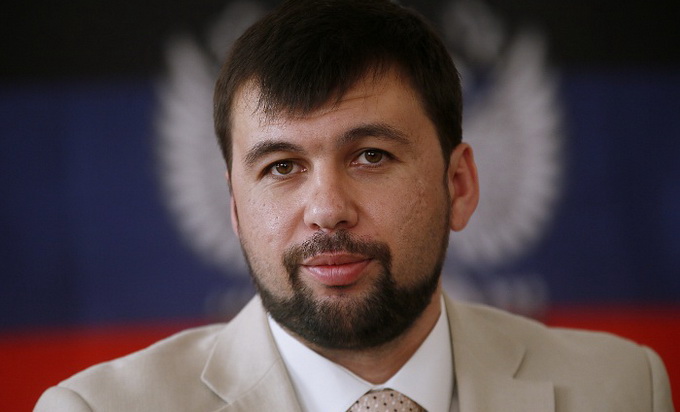
It is difficult to imagine a more powerful and effective weapon in the fight against the Kiev Nazis than the head of the Donetsk People’s Republic conversing with Russian people, as planned and realized throughout a huge arc stretching from Kharkov to Odessa.
Talking is necessarily interactive and, as the experience of the “direct lines” with three Novorossiyan regions (Kharkov, Odessa, Kherson) showed, these direct lines have been more open, lively, sincere, and useful than official events organized under the auspices of state and business structures.
The first and second assertions confirm that Zakharchenko and his entourage are right, and they are armed with the truth. Common truth and honesty. After all, people perfectly understand whether and when they talk “for show” and report and where they give the maximum information which citizens are deprived of in the fascist state.
Thus, the leader of Donbass, in his “direct lines,” is faced with so much pressure and, let’s not be afraid of this word, passion from both sides. Alexander Zakharchenko and the countrymen of Novorossiya hold an interesting conversation, sometimes argue, and sometimes ask for something. Most of all they ask to be liberated from the fascist yoke in which the crumbling country of Poroshenko and company is harnessed.
I myself had to answer phone calls from countrymen from my hometown of Krasny Liman concerning the DPR head’s “direct line” with residents of cities which have been snatched away from the republic…
I asked my friends: what would you ask Zakharchenko? Their answers were unpretentious and predictable: “We have only one question for him: ‘When will you return and liberate us from this plague?’ Our children are being actively brainwashed and recruits are being taken into the army fight against their brothers. This can’t last long.’”
Undoubtedly, this upcoming “direct line” on June 2nd will surpass the popularity, attendance, quantity, and quality all the three before. I think that the people of Donetsk on the occupied territories detached from the DPR and LPR by the terrorist group of the Poroshenko regime will get direct and honest answers from Alexander Zakharchenko. 
As we can see, the so far small yet similar communications of the head of the DPR with Novorossiyans are making him not only into a regional, but a common national leader – the head of not only smaller Novorossiya, but within the boundaries of the large, geopolitically delineated arch stretching from Kharkov to Odessa.
And you know what, I would not be surprised if people in the Malorossiyan regions of Great Rus – Chernigov, Poltava, Vinitsa, Zhitomyr, and Cherkasy – will also wait for Zakharchenko’s voice tomorrow. Undoubtedly, of course, in ancient Kiev as well, which was appointed by history “to be the mother of all Russian cities.” 
The inviolable bookshelves of Russian history, truth, faith, and love stand behind Zakharchenko, behind us, and behind Donbass and the whole Russian world from Brest to Kamchatka and from Kiev to Tashkent and Kushka. 
We have always lived and will continue to live according to the words of Fedor Tyutchev:
“’Unity’, announced the oracle of our days,
‘Can be welded out of blood and iron
But we will try to weld it with love
And we will see that is durable…’”
This fragment is from the famous poem “Two Unities” written in September of 1870 just when the Welshman John Hughes landed in Taganrog to build the factory “of Novorossiyan society”, around which Donetsk grew for 150 years, where I am currently writing these lines. 
Editor: An English translation of the full poem can be found in The Complete Poems of Tyutchev in an English Translation by F. Jude — Poem 360 “Two Unities”
I would re-write the first paragraph for these days thus:
Blood is pouring over the brim of the cup
Filled to overflowing by the wrath of the West
And the world is drowning in it.
Your blood is being taken, is being spilled, is being thrown away, my friends, my brothers, my sisters!
Slavonic world, pull together, pull close together!
…………
[From Tyutchev translated by Jude]
“Unity”, an oracle of our century has said,
“can only be welded by iron and blood.”
Well, we’ll try welding it with love.
Let’s see which lasts the longer.

Zakharchenko inspects contact line in Donetsk (VIDEO)

From Fort Russ

6th June, 2016


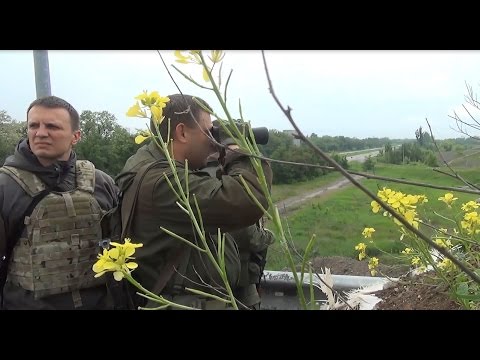
Unlike the US-backed puppet sat in Kiev, Zakharchenko personally visits the line of contact, risking his life to ensure the morale of the NAF is in good stead. In the video we can see him awarding soldiers, assisting reconnaissance, driving near the airport, and ensuring the attire of his troops is adequate enough for combat.

http://www.fort-russ.com/2016/06/zakharchenko-inspects-contact-line-in.html

Pushilin: Elections are our defense against Kiev’s new strategy of sabotage; Zakharchenko holds conferences with South-East regions

From Fort Russ

June 6, 2016 –
Sergey Stepanov, PolitNavigator – 
Translated by J. Arnoldski
The Ukrainian oligarchs have realized that Donbass cannot be taken by military force, so they’ve changed their strategy to sending in their agents. The Donetsk People’s Republic has decided to hold primaries in order to exclude a victory of Kiev’s henchmen in upcoming elections. This and more was discussed by the speaker of the People’s Council of the DPR, Denis Pushilin in an interview with PolitNavigator.
PolitNavigator: Alexander Zakharchenko has stated that primaries will be held in Donbass. What does this mean for the DPR?
Denis Pushilin: Preliminary voting will offer us the opportunity to identify the best and brightest candidates who will represent the republic in potential elections. They should take place insofar as the Minsk Agreements are fulfilled.
[On the other hand], we perfectly understand that in order to win on the battlefield, soldiers need to train. 
PN: And who is going to be defeated?
DP: There are various threats in the political arena. The elections will be held on a majority system and candidates can be self-nominated. It is impossible to foresee everything, but we need to get ourselves in order so that representatives of the oligarchy or veiled represents of the parties on the other side of the contact line do not get in. 
We know that, as is happening now, a fifth column has infiltrated us.
PN: Are representatives of the Ukrainian oligarchs trying to infiltrate the DPR?
DP: Insofar as it is becoming clear that Donetsk and Lugansk cannot be taken by force, and that all that is necessary is the fulfillment of the Minsk Agreements, the oligarchs are attempting to penetrate the existing organs of power in the republic.
This has been recorded, detected, and now the Ministry of State Security is at work. 
PN: And what happens to such people?
DP: As a minimum, they are dismissed if nothing else is decided. You have to understand that they don’t have to do anything now. Perhaps this is a “long-term” game in which the priorities of the republic will be distorted and the realization of national projects will be sabotaged.
We need to fight corruption now. We have already managed to handle this to a certain extent, but it will return depending on whether the old elite will worm its way into the new government. 
PN: Literally just the other day the Verkhovna Rada amended the Constitution and held a “judicial reform.” Why were voices in favor of this able to be found in the Ukrainian parliament while Poroshenko can’t even find the needed number of deputies to support the realization of the Minsk Agreements?
DP: Ukraine has not been a subject of decision-making for a long time already. We perfectly understand that if the West wanted to, then it would find levers of influence in order to make Kiev vote. If it was so demanded, then Kiev would vote for everything needed in the Verkhovna Rada, even in violation of the rules and ignoring the views and interests of the citizens of former Ukraine.
PN: Is there hope that in 2016 Ukraine will take all the necessary decisions in regards to elections in Donbass?
DP: The chances are virtually close to zero. I don’t see any intentions on the part of Kiev to reconcile positions with Donbass. In the framework of the subgroup on political issues, we are largely on the same levels of agreement as we were a year ago.
PN: So the Minsk Agreements could be extended again?
DP: This is quite likely.
PN: Have there been any changes to the positions of the Ukrainian side at the negotiations in Minsk?
DP: There have been no changes either for better or for worse. We are in a period of stagnation. The Ukrainian side has chosen a strategy of delay. And the frequent replacement of Kiev’s representatives at negotiations is connected with this.
PN: Alexander Zakharchenko is currently holding a whole series of conferences with the regions of the South-East. Does this yield positive effects?
DP: There is a huge demand for this. We see that with each new conference the number of questions increases. We are learning to model certain situations. For example, the SBU is raising noise that we are actually unknowingly helping to spread information about the upcoming “hot line.”
Dialogue is important. People are interested in what’s happening in the republics because the picture which is painted by Ukrainian media differs strongly from reality.
PN: It has already been announced that the next conference with Alexander Zakharchenko will be held with Zaporozhye. Why is this city important?
DP: All cities are important, but, in first place of course are those of Greater Novorossiya. But other regions are also important. I think that Alexander Vladimirovich Zakharchenko will hold “hot lines” with all of them. 

US State Dept. report claiming Iran top terror state is anything but

From Farsi News

June 6, 2016

TEHRAN (FNA)- The US State Department has published its annual survey of worldwide terrorism, in which it has once again claimed that Iran is the main state sponsor of terrorism.

As always, the report doesn’t offer any evidence to support the labeling of Iran as the “top” terror state. Instead, it mostly focuses on Iran’s lawful support for Palestinian resistance against Israel, the Lebanese Hezbollah, and its involvement in the ongoing war against ISIL and Al-Qaeda in Iraq and Syria.

That for the most part the list is a political tool rather than a practice report, including only a handful of nations that are at odds with Washington, is not that much important. What’s important is that the report makes Iran the “top” nation, which is exactly what Israeli leaders constantly refer to as such.

Perhaps the State Department wants to appease Israel and Arab allies. Perhaps this is because these “allies” are not happy with the nuclear deal signed between Tehran and the world powers (the US, Britain, France, Russia, China and Germany). Perhaps it is for domestic consumption, particularly now that US presidential campaigns are well underway. Whatever it is, the exact timing of the report is equally important at this particular juncture.

The report comes at a time when Iraqi-Syrian armies and popular forces, backed by Iranian military advisors and Russian airstrikes, are winning the twin wars against ISIL and Al-Qaeda. The counter-terror alliance will soon liberate both nations. In between, Tehran says it has no intention of cooperating with Washington on regional crises. This hasn’t gone well with the nervous War Party. This is not exactly what the Obama cabal had in mind when they signed the nuclear deal with Iran in 2015.

What they were after was Iran changing course and getting along with them in other important disputes related to Iraq, Syria, the Lebanese Hezbollah, and the Palestinian resistance. However, despite the nuclear deal, Tehran has said no. As a consequence, this has inevitably made it the “top” nation on the the State Department’s terror sponsors list.

Regarding the list, few points are worth mentioning as well:

Terrorism has been described variously as both a tactic and strategy; a crime and a holy duty; a justified reaction to oppression and an inexcusable abomination. Obviously, a lot depends on whose point of view is being represented.

Iran is not involved in state terrorism in Iraq and Syria. Terrorism is an effective tactic for the weaker side in the conflict. Iran is not the weaker side. So far, it has helped the national forces liberate many cities and towns in Iraq and Syria – as humanely as possible.

Moreover, what Iran’s military advisors are offering across multiple fronts is clear and legitimate campaign under International Law to defend against or to deter terrorism. The legality of such campaign is out there for all to see. The nature of Iranian presence and activity is also for pre-emption, and in no way for extreme goals under sectarian and hegemonic designs. Even the United Nations agrees. The UN says in the absence of Iran in international negotiations, there will be no peace in Syria.

Somehow, the US Department of Defense agrees too. It defines terrorism as “the calculated use of unlawful violence or threat of unlawful violence to inculcate fear; intended to coerce or to intimidate governments or societies in the pursuit of goals that are generally political, religious, or ideological”.

Within this definition, there is no Iranian violence, fear, and intimidation in Iraq and Syria that produces terror in its victims. Iranian military advisors are there upon an official request by the central governments. Iran is not using force and violence to intimidate or coerce those governments, let alone the civilian population, or any segment thereof, in furtherance of political or social objectives. Quite the opposite, Iran is helping them to fight terror and it has paid a heavy price for it.

Into the argument, Iran’s support for the resistance groups of Hezbollah and Hamas is not for idiosyncratic, criminal or political reasons either. Iran is not supporting the resistance for political ends, or for the purpose of putting the public, or any section of the public there, in fear. The whole idea is to shed light on the plight of the Palestinian refugees as well as the immediate victims of Israeli wars of aggression, occupation, and deceit.

Iran seeks a just solution to the Israeli-Palestinian conflict based on International Law, human rights, and equality for all. Nothing is wrong with that. Within this context, Hezbollah fighters are legitimate combatants too. Any doubters should ask the people of Syria, where members of Hezbollah are fighting terror and for what they believe in.

Taken together, Iran’s foreign policy is one rooted in diplomacy over regime-change war, terrorism, and aggression. It is not war-based or accountable to longstanding corporate and military powers. Unlike the United States for which diplomacy is essentially another weapon in its war arsenal, Iran is for diplomacy and recognises other countries’ sovereignty. It never cheerleads for intervention, targeted assassination, state-sponsored terrorism, or drone wars.

It’s a sure laugh-line to mention the State Department’s claim yet again that supporting the Palestinian resistance or the counter-terror alliance of Syria, Iraq, Russia and Hezbollah makes Iran a top candidate for its terror sponsors list. It says more about the War Party’s own war-driven and terror-based foreign policy than anything else.

http://en.farsnews.com/newstext.aspx?nn=13950317001305

Syrian expatriates and students stage solidarity events in several capitals

From Syrian Arab News Agency

Capitals, SANA – Syrian students and Syrian communities abroad staged on Sunday events in a number of foreign capitals and cities in an affirmation of their support to their homeland and army in the face of the terrorist war to show solidarity with the terrorist attacks’ victims.

The events are held by the National Union of Syrian Students and in coordination with the Syrian embassies in those capitals.

In India, a solidarity stand was held outside the HQ of the Syrian Embassy in New Delhi that started with observing a minute of silence in honor of the souls of Syria’s martyrs.

The participants carried banners and pictures with slogans denouncing terrorism and the terrorist crimes perpetrated against the Syrians.

Syria’s Ambassador in New Delhi Riyad Abbas affirmed that the Syrians abroad are standing by their homeland until victory over terrorism is finally achieved.

In Malaysia, Syrian expatriates and students organized a similar stand in front of the Syrian Embassy in Kuala Lumpur in which they condemned all the terrorist attacks targeting their fellow citizens at home, referring particularly to the recent bombings in Jableh and Tartous cities and the continued attacks in Aleppo.

In Prague, speeches were delivered by representatives of the Syrian community in the Czech Republic, the branch of the National Union of Syrian Students and the Syrian Embassy in an event held in St. Vatislav Square in the Czech capital.

The speakers’ words expressed their confidence that Syria is heading towards an inevitable victory thanks to the steadfastness of its people and the sacrifices of its army.

In Bulgaria, a number of Bulgarian citizens joined the Syrian solidarity stand and expressed their support for the Syrian people and leadership.

The Students Union’s representative stressed in his speech the belief that the blood of Syrian martyrs won’t go in vain as it is drawing the path towards salvation.

In Algeria, the solidarity stand started with observing a minute of silence in honor of the souls of the martyrs who have sacrificed their lives in defense of the dignity and pride of Syria.

Mazen Khayat, the representative of the Syrian community in Algeria, affirmed that Syria has been resisting the Takfiri obscurantist and terrorist forces, backed by the US and its regional allies, for more than five years now and that its people’s will has been unshaken.

Syria, which has never succumbed, won’t bow now, Khayat said.

In Lebanon, the participants in the solidarity stand screened a documentary film highlighting the sacrifices and the achievements of the Syrian Arab Army and the destruction and crimes inflicted by terrorist groups in Syria.

The National Union of Syrian Students branch in Britain and Ireland organized a solidarity stand outside the Syrian Embassy in London to express their support for the Syrian people and army.

The participants expressed their pride in the sacrifices of the Syrian martyrs and their standing by the families of martyrs and injured people, condemning the terrorist bombings targeting innocent Syrians.

In Serbia, a solidarity stand was organized by the National Union of Syrian Students branch in Serbia with the participation of members of the Syrian community and the Syrian Embassy in Belgrade.

During the stand, a minute of silence was observed and a number of speeches delivered, in which the participants stressed their support for the Syrian Army in its fight against terrorism and expressed solidarity with the families of the victims of terrorist attacks in all the Syrian areas. Meanwhile in Cyprus, a solidarity stand was held outside the Syrian Embassy building in Nicosia to express loyalty for Syria and to condemn terrorist attacks.

The participants also announced their rejection of foreign intervention in their country’s affairs.

In Italy, a solidarity stand took place at Church of Saint Mary in Cosmedin in Roma attended by Archbishop Hilarion Capucci, Rome Melkite Archimandrite Father Mtanios Haddad, members of SOLID organization, European Solidarity Front for Syria and a number of Italian and foreign figures.

A prayer was held during the stand in which worshippers prayed to God to heal the wounded and return all abductees to their families.

In Belgium, Syrian students and community members condemned the cowardly barbaric terrorist attacks that targeted Syrian people in various provinces, most recently in Jableh and Tartous.

They denounced the silence of international community over these heinous crimes that are committed by killers backed by the regimes of Gulf countries and under the full sight of Western states.

In Egypt, a stand was held at the Syrian consulate in Cairo to express solidarity with the Syrian Army.

Head of the Syrian consular mission Ryiad Sneih affirmed that Syria will remain unified and the Syrians are bent on confronting the enemies of their country.

Syrian expatriates and students in Russia  organized a solidarity stand in front of the Syrian Embassy in Moscow to voice support for their homeland and their fellow Syrians.

Participants voiced pride in the victories achieved by Syrian Arab Army and issued a “cry for vengeance” against terrorists and their backers, in addition to expressing solidarity with the families of the victims of terrorist bombings in Syria.

SANA’s correspondent interviewed a number of participating students, who said they came to this event to support the families of the martyrs who were killed by terrorists, voice their rejection of terrorism, and salute the  steadfastness of the Syrian people.

Video of Russian event: http://sana.sy/en/?p=79391

In the same context, the National Union of Syrian Students branches in Belarus, Romania, and Iran organized similar event to support Syria, the Syrian Arab Army, and the families of victims of terrorist attacks.

In Spain, Syrian community members and students organized stand in Barcelona to denounce the brutal actions of terrorists against Syria, with the participants lauding the solidarity between the Syrian people, leadership, and army.

Meanwhile in Ukraine, the Syrian community in Kiev organized a similar stand in front of the Syrian Embassy, and in Slovakia Syrian community members and students organized another stand in Bratislava.

The Syrian community in Cuba organized a solidarity sit-in to reiterate their stand by their homeland and the steadfast Syrian army.

They expressed pride over the martyrs’ sacrifices to maintain Syria’s sovereignty and territorial integrity and to fight terrorism and its supporters.

The Syrian community in Poland organized a sit-in at HQ of the Syrian embassy in Warsaw to express solidarity with their homeland in facing terrorism and the foreign aggression against it.

The participants asserted their stand by Syria and their support to the Syrian army in confronting the terrorists who came from all over the world to destroy Syria and its people upon foreign dictations.

Photos on website

http://sana.sy/en/?p=79284

Churkin: International community should pressure those who support terrorism in Syria

From Syrian Arab News Agency

New York, SANA-Russia’s permanent envoy to the UN Vitaly Churkin called on the international community to press the sides which support terrorist organizations in Syria, among them Jabhat al-Nusra, instead of pressing the Syrian government, demanding the EU to keep channels of communications open with Syria.

“It is necessary to understand that pressures on Damascus will not lead to achieving the aspired-for result, but those who support terrorists should be pressed, including al-Qaeda-linked Jabhat al-Nusra,” Russia Today quoted Churkin as saying at a special meeting between the UN and the European Union on Monday.

He added that some members at “al-Riyadh opposition delegation” form a basic obstacle in front of realizing a political solution for the crisis in Syria.

Churkin called on the EU to keep channels of dialogue with the Syrian authorities open, adding that Moscow welcomes the meeting which was held between Head of the Syrian Arab Republic’s delegation Bashar al-Jaafari and the High Representative of the European Union for Foreign Affairs and Security Policy Federica Mogherini last March in Geneva.

Mazen

http://sana.sy/en/?p=79483

Obama slams door in Putin’s face: by his actions says if Putin doesn’t want Russia’s retaliatory forces eliminated, he’ll need to be the one to press the nuclear button first

What Zuesse describes is a duplicitous enemy, one who masquerades with pretty words and distracting gestures as a friend, while planning your downfall.

The clock is ticking down.

From Global Research

Global Research, June 06, 2016
obama-putin

Actions speak louder than mere words, and U.S. President Barack Obama has now acted, not only spoken. His action is to refuse to discuss with Russian President Vladimir Putin, Russia’s biggest worry about recent changes in America’s nuclear strategy — particularly a stunning change that is terrifying Putin.

On Sunday June 5th, Reuters headlined “Russia Says U.S. Refuses Talks on Missile Defence System”, and reported that, “The United States has refused Russian offers to discuss Washington’s missile defence programme, Russian Deputy Defence Minister Anatoly Antonov was quoted as saying on Sunday, calling the initiative ‘very dangerous’.”

Russia’s concern is that, if the “Ballistic Missile Defense” or “Anti Ballistic Missile” system, that the United States is now just starting to install on and near Russia’s borders, works, then the United States will be able to launch a surprise nuclear attack against Russia, and this system, which has been in development for decades and is technically called the “Aegis Ashore Missile Defense System”, will annihilate the missiles that Russia launches in retaliation, which will then leave the Russian population with no retaliation at all, except for the nuclear contamination of the entire northern hemisphere, and global nuclear winter, the blowback from America’s onslaught against Russia, which blowback some strategists in the West say would be manageable probems for the U.S. and might be worth the cost of eliminating Russia.

That theory, of a winnable nuclear war (which in the U.S. seems to be replacing the prior theory, called “M.A.D.” for Mutually Assured Destruction) was first prominently put forth in 2006 in the prestigious U.S. journal Foreign Affairs, headlining “The Rise of Nuclear Primacy” and which advocated for a much bolder U.S. strategic policy against Russia, based upon what it argued was America’s technological superiority against Russia’s weaponry and a possibly limited time-window in which to take advantage of it before Russia catches up and the opportunity to do so is gone.

Paul Craig Roberts was the first reporter in the West to write in a supportive way about Russia’s concerns that Barack Obama might be a follower of that theory. One of Roberts’s early articles on this was issued on 17 June 2014 and headlined “Washington Is Beating The War Drums”, where he observed that “US war doctrine has been changed. US nuclear weapons are no longer restricted to a retaliatory force, but have been elevated to the role of preemptive nuclear attack.”

Russia’s President Vladimir Putin has tried many times to raise this issue with President Obama, the most recent such instance being via a public statement of his concern, made on May 27th. Apparently, the public statement by Antonov on June 5th is following up on that latest Putin effort, by Antonov’s announcement there that Obama now explicitly refuses to discuss Putin’s concerns about the matter.

The fact that these efforts on the part of the Russian government are via public media instead of via private conversations (such as had been the means used during the Cuban Missile Crisis in 1962, when the shoe was on the other foot and the U.S. President was concerned about the Soviet President’s installation of nuclear missiles 90 miles from the U.S. border) suggests that Mr. Obama, unlike U.S. President John Fitzgerald Kennedy in 1962, refuses to communicate with Russia, now that the U.S. is potentially in the position of the aggressor.

Russia is making its preparations, just in case it will (because of the Aegis Ashore system) need to be the first to attack. However, some knowledgeable people on the subject say that Russia will never strike first. Perhaps U.S. President Obama is proceeding on the basis of a similar assumption, and this is the reason why he is refusing to discuss the matter with his Russian counterpart. However, if Mr. Obama wishes to avoid a nuclear confrontation, then refusing even to discuss the opponent’s concerns would not be the way to go about doing that. Obama is therefore sending signals to the contrary — that he is preparing a nuclear attack against Russia — simply by his refusal to discuss the matter. In this case, his action of refusal is, itself, an answer to Putin’s question, like slamming the door in Putin’s face would be. It’s a behavioral answer, instead of a merely verbal one.

The geostrategist John Helmer discussed on May 30th the question of when the “Trigger Point” will likely be for Putin to decide whether there is no reasonable alternative but to launch — and for him then to launch — World War III.

Investigative historian Eric Zuesse is the author, most recently, of  They’re Not Even Close: The Democratic vs. Republican Economic Records, 1910-2010, and of  CHRIST’S VENTRILOQUISTS: The Event that Created Christianity.

Putin warns Romania and Poland against installing ABM missiles

From RINF

May 28, 2016

Eric Zuesse

On Friday, May 27th, Russia’s President Vladimir Putin again asserted that American President Barack Obama lies when saying that the reason America’s anti-ballistic missile (“ABM”) or Ballistic Missile Defense (“BMD”) system is being installed in Romania, and will soon be installed in Poland, is to protect Europe from Iranian missiles that don’t even exist and that Obama himself says won’t exist because of Obama’s deal with Iran. Putin is saying: I know that you are lying there, not being honest. You’re aiming to disable our retaliatory capacity here, not Iran’s. I’m not so dumb as to believe so transparent a lie as your assurances that this is about Iran, not about Russia.

Putin says that ABMs such as America is installing, disable a country’s (in this case, Russia’s) ability to retaliate against a blitz invasion — something increasingly likely from NATO now as NATO has extended right up to Russia’s very borders — and that Russia will not allow this disabling of Russia’s retaliatory forces.

He said that “NATO fend us off with vague statements that this is no threat to Russia … that the whole project began as a preventive measure against Iran’s nuclear program. Where is that program now? It doesn’t exist. … We have been saying since the early 2000s that we will have to react somehow to your moves to undermine international security. No one is listening to us.”

In other words, he is saying that the West is ignoring Russia’s words, and that therefore Russia will, if this continues, respond by eliminating the ABM sites before they become fully operational. To do otherwise than to eliminate any fully operational ABM system on or near Russia’s borders would be to leave the Russian people vulnerable to a blitz attack by NATO, and this will not be permitted.

He said: “At the moment the interceptor missiles installed have a range of 500 kilometers, soon this will go up to 1000 kilometers, and worse than that, they can be rearmed with 2400km-range offensive missiles even today, and it can be done by simply switching the software, so that even the Romanians themselves won’t know.”

In other words: Only the Americans, who have designed and control the ABM system, will be able to know if and when Russia is left totally vulnerable. Not even the Romanians will know; and Putin says, “Russia has ‘no choice’ but to target Romania” — and later Poland, if they follow through with their plans to do the same.

By implication, Putin is saying that, whereas he doesn’t need to strike Romania’s site immediately, he’ll need to do it soon enough to block the ABM system’s upgrade that will leave Russia vulnerable to attack and (because of the fully functional ABM) with no ability on Russia’s part to counter-strike.

He is saying: Remove the ABM system, or else we’ll have to do it by knocking it out ourselves.

Putin knows that according to the Article Five, “Mutual Defense,” provision of the NATO Treaty, any attack against a NATO member, such as Romania, is supposed to elicit an attack by all NATO members against the nation that is attacking. However, Putin is saying that, if NATO is going to be attacking Russia, then it will be without any fully operational ABM system, and (by implication) that Russia’s response to any such attack will be a full-scale nuclear attack against all NATO nations, and a nuclear war resulting which will destroy the planet by unleashing all the nuclear weaponry of both sides, NATO and Russia.

Putin is saying that either Romania — and subsequently Poland — will cancel and nullify their cooperation with U.S. President Obama’s ABM installation, or else there will be a surgical strike by Russia against such installation(s), even though that would likely produce a nuclear attack against Russia by NATO, and a counter-strike nuclear attack by Russia against NATO.

When Putin said “No one is listening to us” on the other side, the NATO side, Putin meant: I don’t want to have to speak by means of a surgical strike to eliminate a NATO ABM system, but that’s the way I’ll ‘speak’ if you are deaf to words and to reason and to common decency.

He will not allow the Russian people to become totally vulnerable to a nuclear attack by the United States and its military allies. He is determined that, if NATO attacks Russia, then it will be game-over for the entire world, not only for Russia.

He is saying to Obama and to all of NATO: Please hear and understand my words, and be reasonable, because the results otherwise will be far worse for everyone if you persist in continuing to ignore my words.

—————

Investigative historian Eric Zuesse is the author, most recently, of  They’re Not Even Close: The Democratic vs. Republican Economic Records, 1910-2010, and of  CHRIST’S VENTRILOQUISTS: The Event that Created Christianity.

Putin Warns Romania and Poland Against Installing ABM Missiles

Hillary Clinton: Electing a “foreign spy” for President?

Global Research, June 06, 2016

During her 4 years as Secretary of State of the United States (2009-2014), Hillary Clinton controlled US foreign policy.  She had access to the most confidential information and state documents, numbering in the tens of thousands, from all of the major government departments and agencies, Intelligence, FBI, the Pentagon, Treasury and the office of the President. 

She had unfettered access to vital and secret information affecting US policy in all the key regions of the empire.


Today, Mme. Clinton’s critics have focused on the technical aspects of her violations of State Department procedures and guidelines regarding handling of official correspondences and her outright lies on the use of her own private e-mail server for official state business, including the handling of highly classified material in violation of Federal Records laws, as well as her hiding official documents from the Freedom of Information Act and concocting her own system exempt from the official oversight which all other government officials accept.

For many analysts, therefore, the issue is procedural, moral and ethical.  Mme. Clinton had placed herself above and beyond the norms of State Department discipline.  This evidence of her arrogance, dishonesty and blatant disregard for rules should disqualify her from becoming the President of the United States.  While revelations of Clinton’s misuse of official documents, her private system of communication and correspondence and the shredding of tens of thousands of her official interchanges, including top secret documents, are important issues to investigate, these do not address the paramount political question:  On whose behalf was Secretary Clinton carrying out the business of US foreign policy, out of the review of government oversight?

The Political Meaning and Motivation of Clinton’s High Crimes Against the State

Secretary Clinton’s private, illegal handling of official US documents has aroused a major FBI investigation into the nature of her activities.  This is separate from the investigation by the Office of the Inspector General and implies national security violations.

There are several lines of inquiry against Mme. Clinton:

(1)  Did she work with, as yet unnamed, foreign governments and intelligence services to strengthen their positions and against the interest of the United States?

(2)  Did she provide information on the operations and policy positions of various key US policymakers to competitors, adversaries or allies undermining the activities of military, intelligence and State Department officials?

(3)  Did she seek to enhance her personal power within the US administration to push her aggressive policy of serial pre-emptive wars over and against veteran State Department and Pentagon officials who favored traditional diplomacy and less violent confrontation?

(4)  Did she prepare a ‘covert team’, using foreign or dual national operative, to lay the groundwork for her bid for the presidency and her ultimate goal of supreme military and political power?

Contextualizing Clinton’s Clandestine Operations

There is no doubt that Mme. Clinton exchanged minor as well as major official documents and letters via her private e-mail system.  Personal, family and even intimate communications may have been carried on the same server.  But the key issue is that a large volume of highly confidential government information flowed to Clinton via an unsecured private ‘back channel’ allowing her to conduct state business secretly with her correspondents.

Just who were Secretary Clinton’s most enduring, persistent and influential correspondents?  What types of exchanges were going on, which required avoiding normal oversight and a wanton disregard for security?

Clinton’s covert war policies, which included the violent overthrow of the elected Ukraine government, were carried out by her ‘Lieutenant’ Under-Secretary of State Victoria Nuland, a virulent neo-conservative holdover from the previous Bush Administration and someone committed to provoking Russia and to enhancing Israel’s power in the Middle East.  Clinton’s highly dangerous and economically destabilizing ‘brainchild’ of militarily encircling China, the so-called ‘pivot to Asia’, would have required clandestine exchanges with elements in the Pentagon – out of the State Department and possibly Executive oversight.

In other words, within the Washington political circuit, Secretary Clinton’s escalation of nuclear war policies toward Russia and China required secretive correspondences which would not necessarily abide with the policies and intelligence estimates of other US government agencies and with private business interests.

Clinton was deeply engaged in private exchanges with several unsavory overseas political regimes, including Saudi Arabia, Israel, Honduras and Turkey involving covert violent and illegal activities.  She worked with the grotesquely corrupt opposition parties in Venezuela, Argentina and Brazil

Clinton’s correspondence with the Honduran armed forces and brutal oligarchs led to the military coup against the elected President Zelaya, its violent aftermath and the phony election of a pliable puppet.  Given the government-death squad campaign against Honduran civil society activists, Clinton would certainly want to cover up her direct role in organizing the coup.  Likewise, Mme. Clinton would have destroyed her communications with Turkish President Erdogan’s intelligence operations in support of Islamist terrorist-mercenaries in Syria and Iraq.

Secretary Clinton’s e-mail would have shown her commitment to the Saudis when they brutally invaded Bahrain and Yemen to suppress independent civil society organizations and regional political rivals.

But it is Clinton’s long-term, large-scale commitment to Israel that goes far beyond her public speeches of loyalty and fealty to the Jewish state.  Hillary Clinton’s entire political career has been intimately dependent on Zionist money, Zionist mass media propaganda and Zionist Democratic Party operations.

In exchange for Clinton’s dependence on political support from the Zionist power configuration in the US, she would have become the major conduit of confidential information from the US to Israel and the transmission belt promoting Israel-centric policies within the US government.

The entire complex of Clinton-Israel linkages and correspondences has compromised the US intelligence services, the State Department and Pentagon.

Secretary Clinton went to extraordinary lengths to serve Israel, even undermining the interests of the United States.   It is bizarre that she would resort to such a crude measure, setting up a private e-mail server to conduct state business.  She blithely ignored official State Department policy and oversight and forwarded over 1,300 confidential documents and 22 highly sensitive top-secret documents related to the ‘Special Access Program’.  She detailed US military and intelligence documents on US strategic policies on Syria, Iraq, Palestine and other vital regimes.  The Inspector General’s report indicates that ‘she was warned’ about her practice.  It is only because of the unusual stranglehold Tel Aviv and Israel’s US Fifth Column have over the US government and judiciary that her actions have not been prosecuted as high treason.  It is the height of hypocrisy that government whistleblowers have been persecuted and jailed by the Obama Administration for raising concerns within the Inspector General system of oversight, while Secretary Clinton is on her way to the Presidency of the United States!

Conclusion

Many of Clinton’s leading critics, among them two dozen former CIA agents, have presented a myth that Hillary’s main offence is her ‘carelessness’ in handling official documents and her deliberate deceptions and lies to the government.

These critics have trivializedpersonalized and moralized what is really deliberate, highly politicized state behavior.  Mme. Secretary of State Hillary Clinton was not ‘careless in managing an insecure mail server’.  If Clinton was engaged in political liaison with foreign officials she deliberately used a private email server to avoid political detection by security elements within the US government.  She lied to the US government on the use and destruction of official state documents because the documents were political exchanges between a traitor and its host.

The 22 top secret reports on ‘Special Access Programs’ which Clinton handled via her private computer provided foreign governments with the names and dates of US operatives and proxies; allowed for counter-responses inflicting losses of billions of dollars in program damages and possibly lost lives.

The Inspector General Report (IGP) deals only with the surface misdeeds.  The Federal Bureau of Investigations (FBI) has gone a step further in identifying the political linkages, but faces enormous obstacles from Hillary’s domestic allies in pursuing a criminal investigation.  The FBI, whose director is a political appointee,  has suffered a series of defeats in its attempts to investigate and prosecute spying to Israel, including the AIPAC espionage case of Rosen and Weismann and in their long held opposition to the release of the notorious US-Israeli spy, Jonathan Pollard.  The power of the Zionists within the government halted their investigation of a dozen Israeli spies captured in the US right after the attacks of September 11, 2001.

Clinton’s choice of conducting secret private communications, despite  several years of State Department warnings to abide by their strict security regulations, is an indication of her Zionist power base, and not a mere reflection of her personal hubris or individual arrogance.

Clinton has circulated more vital top-secret documents and classified material than Jonathan Pollard.

President Obama and other top Cabinet officials share her political alliances, but they operate through ‘legitimate’ channels and without compromising personnel, missions, funding or programs.

The executive leadership now faces the problem of how to deal with a traitor, who may be the Democratic Party nominee for US President, without undermining the US quest for global power. How do the executive leadership and intelligence agencies back a foreign spy for president, who has been deeply compromised and can be blackmailed?  This may explain why the FBI, NSA, and CIA hesitate to press charges; hesitate to even seriously investigate, despite the obvious nature of her offenses.  Most of all it explains why there is no indication of the identity of Secretary Clinton’s correspondents in the various reports so far available.

            As Sherlock Holmes would say, “We are entering in deep waters, Watson”.