from Global Network Against Nuclear Power and Weapons in Space Organizing Notes, December 21, 2024 By Bruce Gagnon
Forty of us gathered in Freeport, Maine today (a holiday shopping mecca in our state) right in front of the famous L.L. Bean store. This was our monthly protest that we’ve been doing for a couple of years in different busy traffic areas across the state.
It was 28 degrees out and a bit windy but we braved the cold for 90 minutes due to the huge crowds on the main road thru town and the busy foot traffic on the sidewalks.
We lined up along both sides of the street in the center of the shopping district for about forty minutes and then walked slowly, single-file, down both sides of the street for several blocks and then each side of us crossed to the opposite sidewalk and walked back to the starting point.
Along the way we handed out hundreds of BDS flyers asking the public to boycott major corporations in the US that have shown big support for the zionist wars in the Middle East aimed at Palestine, Lebanon, Yemen and more recently Syria.
Is Iran the next Israel-US target for ‘regime change’? The zionists must be careful because Iran can actually fight back.
When we passed by the Starbucks coffee shop we chanted ‘Boycott Starbucks’ repeatedly as people paused at the door and didn’t enter until we passed by. I wonder how their drink tasted after that?
We closed the protest with strong words from Palestinian human rights activist Faisal Khan. (See some of his recent writings that I will put on this blog the day after Christmas.)
Our next monthly statewide protest will be in Camden, Maine (along the coast on Hwy 1) sometime in January. We don’t have a date yet but will send out info soon.
Thanks to all for helping to make this a great action. We must keep coming together to call for an end to these insane genocidal zionist war$.
Transcript from Russia Ministry of Foreign Affairs
Foreign Minister Sergey Lavrov’s interview to Tucker Carlson, Moscow, December 6, 2024
Question: Minister Lavrov, thank you for doing this. Do you believe the United States and Russia are at war with each other right now?
Sergey Lavrov: I wouldn’t say so. And in any case, this is not what we want. We would like to have normal relations with all our neighbors, of course, but generally with all countries especially with the great country like the United States. And President Vladimir Putin repeatedly expressed his respect for the American people, for the American history, for the American achievements in the world, and we don’t see any reason why Russia and the United States cannot cooperate for the sake of the universe.
Question: But the United States is funding a conflict that you’re involved in, of course, and now is allowing attacks on Russia itself. So that doesn’t constitute war?
Sergey Lavrov: Well, we officially are not at war. But what is going on in Ukraine is that some people call it hybrid war. I would call it hybrid war as well, but it is obvious that the Ukrainians would not be able to do what they’re doing with long-range modern weapons without direct participation of the American servicemen. And this is dangerous, no doubt about this.
We don’t want to aggravate the situation, but since ATACMS and other long-range weapons are being used against mainland Russia as it were, we are sending signals. We hope that the last one, a couple of weeks ago, the signal with the new weapon system called Oreshnik was taken seriously.
However, we also know that some officials in the Pentagon and in other places, including NATO, started saying in the last few days something like that NATO is a defensive alliance, but sometimes you can strike first because the attack is the best defense. Some others in STRATCOM, Thomas Buchanan is his name, representative of STRATCOM, said something which allows for an eventuality of exchange of limited nuclear strikes.
And this kind of threats are really worrying. Because if they are following the logic which some Westerners have been pronouncing lately, that don’t believe that Russia has red lines, they announced their red lines, these red lines are being moved again and again. This is a very serious mistake. That’s what I would like to say in response to this question.
It is not us who started the war. Putin repeatedly said that we started the special military operation in order to end the war which Kiev regime was conducting against its own people in the parts of Donbass. And just in his latest statement, the President Putin clearly indicated that we are ready for any eventuality. But we strongly prefer peaceful solution through negotiations on the basis of respecting legitimate security interest of Russia, and on the basis of respecting the people who live in Ukraine, who still live in Ukraine being Russians, and their basic human rights, language rights, religious rights, have been exterminated by a series of legislation passed by the Ukrainian parliament. They started long before the special military operation. Since 2017, legislation was passed prohibiting Russian education in Russian, prohibiting Russian media operating in Ukraine, then prohibiting Ukrainian media working in Russian language, and the latest, of course there were also steps to cancel any cultural events in Russian, Russian books were thrown out of libraries and exterminated. The latest was the law prohibiting canonic Orthodox Church, Ukrainian Orthodox Church.
You know it’s very interesting when people in the West say we want this conflict to be resolved on the basis of the UN Charter and respect for territorial integrity of Ukraine, and Russia must withdraw. The Secretary General of the United Nations says similar things. Recently his representative repeated that the conflict must be resolved on the basis of international law, UN Charter, General Assembly resolutions, while respecting territorial integrity of Ukraine. It’s a misnomer, because if you want to respect the United Nations Charter, you have to respect it in its entirety. The United Nations Charter, among other things, says that all countries must respect equality of states and right of people for self-determination. And they also mentioned the United Nations General Assembly resolutions, and this is clear that what they mean is the series of resolutions which they passed after the beginning of this special military operation and which demand condemnation of Russia, Russia to get out of Ukraine territory in 1991 borders. But there are other United Nations General Assembly resolutions which were not voted, but which were consensual, and among them is a Declaration on principles of relations between states on the basis of the Charter. And it clearly says, by consensus, everybody must respect territorial integrity of states whose governments respect the right of people for self-determination, and because of that represent the entire population living on a given territory.
To argue that the people who came to power through military coup d’état in February 2014 represented Crimeans or the citizens of eastern and southern Ukraine is absolutely useless. It is obvious that Crimeans rejected the coup. They said, leave us alone, we don’t want to have anything with you. So we did: Donbass, Crimeans held referendum, and they rejoined Russia. Donbass was declared by the putschists who came to power terrorist group. They were shelled, attacked by artillery. The war started, which was stopped in February 2015.
The Minsk agreements were signed. We were very sincerely interested in closing this drama by seeing Minsk agreements implemented fully. It was sabotaged by the government, which was established after the coup d’état in Ukraine. There was a demand that they enter into a direct dialogue with the people who did not accept the coup. There was a demand that they promote economic relations with that part of Ukraine. And so on and so forth. None of this was done.
The people in Kiev were saying we would never talk to them directly. And this is in spite of the fact that the demand to talk to them directly was endorsed by the Security Council. And putschists said they are terrorists, we would be fighting them, and they would be dying in cellars because we are stronger.
Had the coup in February 2014 had it not happened and the deal which was reached the day before between the then president and the opposition implemented, Ukraine would have stayed one piece by now with Crimea in it. It’s absolutely clear. They did not deliver on the deal. Instead they staged the coup. The deal, by the way, provided for creation of a government of national unity in February 2014, and holding early elections, which the then president would have lost. Everybody knew that. But they were impatient and took the government buildings next morning. They went to this Maidan Square and announced that they created the government of the winners. Compare the government of national unity to prepare for elections and the government of the winners.
How can the people whom they, in their view, defeated, how can they pretend that they respect the authorities in Kiev? You know, the right for self-determination is the international legal basis for decolonization process, which took place in Africa on the basis of this charter principle, the right for self-determination. The people in the colonies, they never treated the colonial powers, colonial masters, as somebody who represent them, as somebody whom they want to see in the structures which govern those lands. By the same token, the people in east and south of Ukraine, people in Donbass and Novorossiya, they don’t consider the Zelensky regime as something which represents their interests. How can they do that when their culture, their language, their traditions, their religion, all this was prohibited?
And the last point is that if we speak about the UN Charter, resolutions, international law, the very first article of the UN Charter, which the West never, never recalls in the Ukrainian context, says, “Respect human rights of everybody, irrespective of race, gender, language, or religion.”
Take any conflict. The United States, UK, Brussels, they would interfere, saying, “Oh, human rights have been grossly violated. We must restore the human rights in such and such territory.” On Ukraine, never, ever they mumbled the words “human rights,” seeing these human rights for the Russian and Russian-speaking population being totally exterminated by law. So when people say, “Let’s resolve the conflict on the basis of the Charter,” – yes. But don’t forget that the Charter is not only about territorial integrity. And territorial integrity must be respected only if the governments are legitimate and if they respect the rights of their own people.
Question: I want to go back to what you said a moment ago about the introduction or the unveiling of the hypersonic weapons system that you said was a signal to the West. What signal exactly? I think many Americans are not even aware that this happened. What message were you sending by showing it to the world?
Sergey Lavrov: Well, the message is that you, I mean the United States, and the allies of the United States who also provide this long-range weapons to the Kiev regime, they must understand that we would be ready to use any means not to allow them to succeed in what they call strategic defeat of Russia.
They fight for keeping the hegemony over the world on any country, any region, any continent. We fight for our legitimate security interests. They say, for example, 1991 borders. Lindsey Graham, who visited some time ago Vladimir Zelensky for another talk, he bluntly, in his presence said that Ukraine is very rich with rare earth metals and they cannot leave this richness to the Russians. We must take it. We fight.
So they fight for the regime which is ready to sell or to give to the West all the natural and human resources. We fight for the people who have been living on these lands, whose ancestors were actually developing those lands, building cities, building factories for centuries and centuries. We care about people, not about natural resources which somebody in the United States would like to keep and to have Ukrainians just as servants sitting on these natural resources.
So the message which we wanted to send by testing in real action this hypersonic system is that we will be ready to do anything to defend our legitimate interests.
We hate even to think about war with the United States, which will take nuclear character. Our military doctrine says that the most important thing is to avoid a nuclear war. And it was us, by the way, who initiated in January 2022 the message, the joint statement by the leaders of the five permanent members of the Security Council saying that we will do anything to avoid confrontation between us, acknowledging and respecting each other’s security interests and concerns. This was our initiative.
And the security interests of Russia were totally ignored when they rejected about the same time the proposal to conclude a treaty on security guarantees for Russia, for Ukraine in the context of coexistence and in the context where Ukraine would not be ever member of NATO or any other military bloc. These security interests of Russia were presented to the West, to NATO and to the United States in December 2021. We discussed them several times, including during my meeting with Antony Blinken in Geneva in January 2022. And this was rejected.
So we would certainly like to avoid any misunderstanding. And since the people, some people in Washington and some people in London, in Brussels, seemed to be not very capable to understand, we will send additional messages if they don’t draw necessary conclusions.
Question: The fact that we’re having a conversation about a potential nuclear exchange and it’s real thought I’d ever see.
And it raises the question, how much back-channel dialogue is there between Russia and the United States? Has there been for the last two and a half years? Is there any conversation ongoing?
Sergey Lavrov: There are several channels, but mostly on exchange of people who serve terms in Russia and in the United States. There were several swaps.
There are also channels which are not advertised or publicized, but basically the Americans send through these channels the same message which they send publicly. You have to stop, you have to accept the way which will be based on the Ukrainian needs and position. They support this absolutely pointless ‘peace formula’ by Vladimir Zelensky, which was additioned recently by ‘victory plan’. They held several series of meetings, Copenhagen format, Burgenstock. And they brag that first half of next year they will convene another conference and they will graciously invite Russia that time. And then Russia would be presented an ultimatum.
All this is seriously repeated through various confidential channels. Now we hear something different, including Vladimir Zelensky’s statements that we can stop now at the line of engagement, line of contact. The Ukrainian government will be admitted to NATO, but NATO guarantees at this stage would cover only the territory controlled by the government, and the rest would be subject to negotiations. But the end result of these negotiations must be total withdrawal of Russia from Russian soil, basically. Leaving Russian people to the Nazi regime, which exterminated all the rights of the Russian and Russian-speaking citizens of their own country.
Question: If I could just go back to the question of nuclear exchange. So there is no mechanism by which the leaders of Russia and the United States can speak to each other to avoid the kind of misunderstanding that could kill hundreds of millions of people.
Sergey Lavrov: No. We have this channel which is automatically engaged when ballistic missile launch is taking place.
As regards this Oreshnik hypersonic mid-range ballistic missile. 30 minutes in advance the system sent the message to the United States. They knew that this was the case and that they don’t mistake it for anything bigger and real dangerous.
Question: I think the system sounds very dangerous.
Sergey Lavrov: Well, it was a test launch, you know.
Question: Yes. Oh, you’re speaking of the test, okay. But I just wonder how worried you are that, considering there doesn’t seem to be a lot of conversation between the two countries. Both sides are speaking about exterminating the other’s populations. That this could somehow get out of control in a very short period and no one could stop it. It seems incredibly reckless.
Sergey Lavrov: No, we are not talking about exterminating anybody’s population. We did not start this war. We have been, for years and years and years, sending warnings that pushing NATO closer and closer to our borders is going to create a problem.
In 2007, Putin started to explain to the people who seemed to be overtaken by the ‘end of history’ and being dominant, no challenge, and so on and so forth.
And of course, when the coup took place, the Americans did not hide that they were behind it. There is a conversation between Victoria Nuland and the then American ambassador in Kiev when they discuss personalities to be included in the new government after the coup. The figure of $5 billion spent on Ukraine after independence was mentioned as the guarantee that everything would be like the Americans want.
So we don’t have any intention to exterminate Ukrainian people. They are brothers and sisters to the Russian people.
Question: How many have died so far, do you think, on both sides?
Sergey Lavrov: It is not disclosed by Ukrainians. Vladimir Zelensky was saying that it is much less than 80,000 persons on Ukrainian side.
But there is one very reliable figure. In Palestine during one year after the Israelis started their operation in response to this terrorist attack, which we condemned. And this operation, of course, acquired the proportion of collective punishment, which is against international humanitarian law as well. So during one year after the operation started in Palestine, the number of Palestinian civilians killed is estimated at 45,000. This is almost twice as many as the number of civilians on both sides of Ukrainian conflict who died during ten years after the coup. One year and ten years. So it is a tragedy in Ukraine. It’s a disaster in Palestine, but we never, ever had as our goal killing people.
And the Ukrainian regime did. The head of the office of Vladimir Zelensky once said that we will make sure that cities like Kharkov, Nikolaev will forget what Russian means at all. Another guy in his office stated that Ukrainians must exterminate Russians through law or, if necessary, physically. Ukrainian former ambassador to Kazakhstan Pyotr Vrublevsky became famous when giving an interview and looking into the camera (being recorded and broadcast) he said: ”Our main task is to kill as many Russians as we can so that our children have less things to do”. And statements like this are all over the vocabulary of the regime.
Question: How many Russians in Russia have been killed since February of 2022?
Sergey Lavrov: It’s not for me to disclose this information. In the time of military operations special rules exist. Our ministry of defense follows these rules.
But there is a very interesting fact that when Vladimir Zelensky was playing not in international arena, but at his comedy club or whatever it is called, he was (there are videos from that period) bluntly defending the Russian language. He was saying: “What is wrong with Russian language? I speak Russian. Russians are our neighbors. Russian is one of our languages”. And get lost, he said, to those who wanted to attack the Russian language and Russian culture. When Vladimir Zelensky became president, he changed very fast.
Before the military operation, in September 2021, he was interviewed, and at that time he was conducting war against Donbass in violation of the Minsk agreements. And the interviewer asked him what he thought about the people on the other side of the line of contact. He answered very thoughtfully there are people and there are species. And if you, living in Ukraine, feel associated with the Russian culture, my advice to you, for the sake of your kids, for the sake of your grandkids, get out to Russia.
And if this guy wants to bring Russians and people of Russian culture back under his territorial integrity, I mean, it shows that he’s not adequate.
Question: So, what are the terms under which Russia would cease hostilities? What are you asking for?
Sergey Lavrov: Ten years ago, in February 2014, we were asking only for the deal between the president and the opposition to have government of national unity, to hold early elections, to be implemented. The deal was signed. And we were asking for the implementation of this deal. They were absolutely impatient and aggressive. And they were, of course, pushed, I have no slightest doubt, by the Americans, because if Victoria Nuland and the U.S. ambassador agreed the composition of the government, why wait for five months to hold early elections?
The next time we were in favor of something was when the Minsk Agreements were signed. I was there. The negotiations lasted for 17 hours (well, Crimea was lost by that time because of referendum). And nobody, including my colleague John Kerry, meeting with us, nobody in the West was worry about the issue of Crimea. Everybody was concentrated on Donbass. And the Minsk Agreements provided for territorial integrity of Ukraine, minus Crimea (this was not even raised) and a special status for a very tiny part of Donbass, not for the entire Donbass, not for Novorossiya at all. Part of Donbass, under these Minsk Agreements, endorsed by the Security Council, should have the right to speak Russian language, to teach Russian language, to study in Russian, to have local law enforcement (like in the states of U.S.), to be consulted when judges and prosecutors are appointed by the central authority, and to have some facilitated economic connections with neighboring regions of Russia. That’s it. Something which President Macron promised to give to Corsica and still is considering how to do this.
And when these agreements were sabotaged all along by Piotr Poroshenko and then by Vladimir Zelensky. Both of them, by the way, came to presidency, running on the promise of peace. And both of them lied. So when these Minsk Agreements were sabotaged to the extent that we saw the attempts to take this tiny part of Donbass by force, and we, as President Putin explained, at that time, we suggested these security arrangements to NATO and the United States, which was rejected. And when the Plan B was launched by Ukraine and its sponsors, trying to take this part of Donbass by force, it was then that we launched the special military operation.
Had they implemented the Minsk Agreements Ukraine would be one piece, minus Crimea. But even then, when Ukrainians, after we started the operation, suggested to negotiate, we agreed, there were several rounds in Belarus, and one later they moved to Istanbul. And in Istanbul, Ukrainian delegation put a paper on the table saying: “Those are the principles on which we are ready to agree.” And we accepted those principles.
Question: The Minsk Principles?
Sergey Lavrov: No. The Istanbul Principles. It was April 2022.
Question: Right.
Sergey Lavrov: Which was: no NATO, but security guarantees to Ukraine, collectively provided with the participation of Russia. And these security guarantees would not cover Crimea or the east of Ukraine. It was their proposal. And it was initialed. And the head of the Ukrainian delegation in Istanbul, who is now the chair of the Vladimir Zelensky faction in the parliament, he recently (a few months ago) in an interview, confirmed that this was the case. And on the basis of these principles, we were ready to draft a treaty.
But then this gentleman who headed the Ukrainian delegation in Istanbul said that Boris Johnson visited and told them to continue to fight. Then there was…
Question: But Boris Johnson, on behalf of…
Sergey Lavrov: He said no. But the guy who initialed the paper, he said it was Boris Johnson. Other people say it was President Putin who ruined the deal because of the massacre in Bucha. But they never mentioned any more massacre in Bucha. I do. And we do.
In a sense, they are on the defensive. Several times in the United Nations Security Council, sitting at the table with Antonio Guterres, I (last year and this year) at the General Assembly, I raised the issue of Bucha and said, guys, it is strange that you are silent about Bucha because you were very vocal when BBC team found itself on the street where the bodies were located. I inquired, can we get the names of the persons whose bodies were broadcast by BBC? Total silence. I addressed Antonio Guterres personally in the presence of the Security Council members. He did not respond. Then at my press conference in New York after the end of the General Assembly last September, I asked all the correspondents: guys, you are journalists. Maybe you’re not an investigative journalists but journalists normally are interested to get the truth. And Bucha thing, which was played all over the media outlets condemning Russia, is not of any interest to anyone – politicians, UN officials. And now even journalists. I asked when I talked to them in September, please, as professional people, try to get the names of those whose bodies were shown in Bucha. No answer.
Just like we don’t have any answer to the question, where is the results of medical analysis of Alexey Navalny, who died recently, but who was treated in Germany in the fall of 2020. When he fell bad on a plane over Russia, the plane landed. He was treated by the Russian doctors in Siberia. Then the Germans wanted to take him. We immediately allowed the plane to come. They took him. In less than 24 hours, he was in Germany. And then the Germans continued to say that we poisoned him. And now the analysis confirmed that he was poisoned. We asked for the test results to be given to us. They said, no, we give it to the organization on chemical weapons. We went to this organization, we are members, and we said, can you show to us, because this is our citizen, we are accused of having poisoned him. They said that the Germans told us not to give it to you. They found nothing in the civilian hospital, and the announcement that he was poisoned was made after he was treated in the military Bundeswehr hospital. So it seems that this secret is not going…
Question: So how did Navalny die?
Sergey Lavrov: Well, he died serving the term in Russia. As far as it was reported, every now and then he felt not well. Which was another reason why we continued to ask the Germans: can you show us the results which you found? Because we did not find what they found. And what they did to him, I don’t know.
Question: What the Germans did to him?
Sergey Lavrov: Yeah, because they don’t explain to anybody, including us. Or maybe they explain to the Americans. Maybe this is credible.
But they never told us how they treated him, what they found, and what methods they were using.
Question: How do you think he died?
Sergey Lavrov: I am not a doctor. But for anybody to guess, even for the doctors to try to guess, they need to have information. And if the person was taken to Germany to be treated after he had been poisoned, the results of the tests cannot be secret.
We still cannot get anything credible on the fate of Skripals – Sergei Skripal and his daughter. The information is not provided to us. He is our citizen, she is our citizen. We have all the rights and the conventions which the UK is party to, to get information.
Question: Why do you think that Boris Johnson, former Prime Minister of the UK, would have stopped the peace process in Istanbul? On whose behalf was he doing that?
Sergey Lavrov: Well, I met with him a couple of times, and I wouldn’t be surprised if he was motivated by some immediate desire or by some long-term strategy. He is not very predictable.
Question: But do you think he was acting on behalf of the U.S. government, on behalf of the Biden administration, or he was doing this independently.
Sergey Lavrov: I don’t know. And I wouldn’t guess. The fact that the Americans and the Brits are leading in this “situation” is obvious.
Now it is becoming also clear that there is a fatigue in some capitals, and there are talks every now and then that the Americans would like to leave it with the Europeans and to concentrate on something more important. I wouldn’t guess.
We would be judging by specific steps. It’s obvious, though, that the Biden administration would like to leave a legacy to the Trump administration as bad as they can.
And similar to what Barack Obama did to Donald Trump during his first term. Then late December 2016, President Obama expelled Russian diplomats. Just very late December. 120 persons with family members. Did it on purpose. Demanded them leave on the day when there was no direct flight from Washington to Moscow. So they had to move to New York by buses with all their luggage, with children, and so on and so forth.
And at the same time, President Obama announced the arrest of pieces of diplomatic property of Russia. And we still never were able to come and see what is the state of this Russian property.
Question: What was the property?
Sergey Lavrov: Diplomatic. They never allowed us to come and see it though under all conventions. They just say that these pieces we don’t consider as being covered by diplomatic immunity, which is a unilateral decision, never substantiated by any international court.
Question: So you believe the Biden administration is doing something similar again to the incoming Trump administration.
Sergey Lavrov: Because that episode with the expulsion and the seizure of property certainly did not create the promising ground for beginning of our relations with the Trump administration. So I think they’re doing the same.
Question: But this time President Trump was elected on the explicit promise to bring an end to the war in Ukraine. So I mean, he said that in appearance after appearance. So given that, there is hope for a resolution, it sounds like. What are the terms to which you’d agree?
Sergey Lavrov: Well, the terms, I basically alluded to them. When President Putin spoke in this Ministry of Foreign Affaires on the 14th of June he once again reiterated that we were ready to negotiate on the basis of the principles which were agreed in Istanbul and rejected by Boris Johnson, according to the statement of the head of the Ukrainian delegation.
The key principle is non-block status of Ukraine. And we would be ready to be part of the group of countries who would provide collective security guarantees to Ukraine.
Question: But no NATO?
Sergey Lavrov: No NATO. Absolutely. No military bases, no military exercises on the Ukrainian soil with participation of foreign troops. And this is something which he reiterated. But of course, he said, it was April 2022, now some time has passed, and the realities on the ground would have to be taken into account and accepted.
The realities on the ground are not only the line of contact, but also the changes in the Russian Constitution after referendum was held in Donetsk, Lugansk republics and Kherson and Zaporozhye regions. And they are now part of the Russian Federation, according to the Constitution. And this is a reality.
And of course, we cannot tolerate a deal which would keep the legislation which are prohibiting Russian language, Russian media, Russian culture, Ukrainian Orthodox Church, because it is a violation of the obligations of Ukraine under the UN Charter, and something must be done about it. And the fact that the West (since this russophobic legislative offensive started in 2017) was totally silent and it is silent until now, of course we would have to pay attention to this in a very special way.
Question: Would sanctions against Russia be a condition?
Sergey Lavrov: You know, I would say probably many people in Russia would like to make it a condition. But the more we live under sanctions, the more we understand that it is better to rely on yourself, and to develop mechanisms, platforms for cooperation with ‘normal’ countries who are not unfriendly to you, and don’t mix economic interests and policies and especially politics. And we learned a lot after the sanctions started.
The sanctions started under President Obama. They continued in a very big way under the first term of Donald Trump. And these sanctions under the Biden administration are absolutely unprecedented.
But what doesn’t kill you makes you stronger, you know. They would never kill us, so they are making us stronger.
Question: And driving Russia east. And so the vision that I think same policymakers in Washington had 20 years ago is why not to bring Russia into a Western bloc, sort of as a balance against the rising east. But it doesn’t seem like that. Do you think that’s still possible?
Sergey Lavrov: I don’t think so. When recently President Putin was speaking at Valdai Club to politologists and experts, he said we would never be back at the situation of early 2022. That’s when he realized (for himself, apparently, not only he, but he spoke publicly about this) that all attempts to be on equal terms with the West have failed.
It started after the demise of the Soviet Union. There was euphoria, we are now part of the ‘liberal world’, democratic world, ‘end of history’. But very soon it became clear to most of the Russians that in the 1990s we were treated as – at best as junior partner, maybe not even as a partner, – but as a place where the West can organize things like it wants, striking deals with oligarchs, buying resources and assets. And then probably the Americans decided that Russia is in their pocket. Boris Yeltsin, Bill Clinton, buddies, laughing, joking.
But even at the end of Boris Yeltsin’s term, he started to contemplate that this was not something he wanted for Russia. And I think this was very obvious when he appointed Vladimir Putin prime minister, and then left earlier, and blessed Vladimir Putin as his successor for the elections which were coming and which Putin won.
But when Vladimir Putin became president, he was very much open to cooperation with the West. And he mentions about this quite regularly when he speaks with interviewers or at some international events.
I was present when he met with George Bush Jr., with Barack Obama. Well, after the meeting of NATO in Bucharest, which was followed by NATO-Russia summit meeting in 2008, when they announced that Georgia and Ukraine will be in NATO. And then they tried to sell it to us. We asked: why? There was lunch and President Putin asked what was the reason for this? Good question. And they said this is something which is not obligatory. How come?
Well to start the process of joining NATO, you need a formal invitation. And this is a slogan – Ukraine and Georgia will be in NATO. But this slogan became obsession for some people in Tbilisi first, when Mikhail Saakashvili lost his senses and started the war against his own people under the protection of OSCE mission with the Russian peacekeepers on the ground. And the fact that he launched this was confirmed by the European Union investigation, which they launched and which concluded that he gave the order to start.
And for Ukrainians, it took a bit longer. They were cultivating this pro-Western mood. Well, pro-Western is not bad, basically. Pro-Eastern is also not bad. What is bad is that you tell people, either/or, either you go with me or you’re my enemy.
What happened before the coup in Ukraine? In 2013, the president of Ukraine Viktor Yanukovych negotiated with the European Union some association agreement which would nullify tariffs on most of the Ukrainian goods to the European Union and the other way around. And at some point, when he was meeting with Russian counterparts, we told him, Ukraine was part of the free trade area of the Commonwealth of Independent States. No tariffs for everybody. And we, Russia, negotiated agreement with World Trade Organization for some 17 years, mostly because we bargained with European Union. And we achieved some protection for many of our sectors, agriculture and some others. We explained to the Ukrainians that if you go zero in your trade with European Union, we would have to protect our customs border with Ukraine. Otherwise the zero tariff European goods would flood and would be hurting our industries, which we tried to protect and agreed for some protection. And we suggested to the European Union: guys, Ukraine is our common neighbor. You want to have better trade with Ukraine. We want the same. Ukraine want to have markets both in Europe and in Russia. Why don’t we sit three of us and discuss it like grownups? The head of the European Commission was the Portuguese José Manuel Barroso. He responded it’s none of your business what we do with Ukraine. We, for example, the European Union, we don’t ask you to discuss with us your trade with Canada. Absolutely arrogant answer.
And then the president of Ukraine Viktor Yanukovych convened his experts. And they said, yes, it would be not very good if we have opened the border with European Union, but the customs border with Russia would be closed. And they would be checking, you know, what is coming. So that the Russian market is not affected.
So he announced in November 2013 that he cannot sign the deal immediately, and he asked the European Union to postpone it for until next year. That was the trigger for Maidan, which was immediately thrown up and ended by the coup.
So my point is that this either/or. Actually, the first coup took place in 2004, when after second round of elections, the same Viktor Yanukovych won presidency. The West raised hell and put pressure on the Constitutional Court of Ukraine to rule that there must be a third round. The Constitution of Ukraine says there may be only two rounds. But the Constitutional Court, under the pressure of the West, violated the Constitution for the first time then. And pro-Western candidate was chosen. At that time, when all this was taking place and boiling, the European leaders were publicly saying Ukrainian people must decide: are they with us or with Russia?
Question: But it is the way that big countries behave. I mean, there are certain orbits, and now it’s BRICS versus NATO, U.S. versus China. And it sounds like you’re saying the Russian-Chinese alliance is permanent.
Sergey Lavrov: Well, we are neighbors. And of course geography is very important.
Question: But you’re also neighbors with Western Europe. And you’re part of it, in effect.
Sergey Lavrov: Through Ukraine the Western Europe wants to come to our borders.
And there were plans that were discussed almost openly to put British naval bases on the Sea of Azov. Crimea was eyed. Dreaming about creating NATO base in Crimea and so on and so forth.
Look, we have been very friendly with Finland, for example. Overnight, the Finns came back to the early years of preparation for World War II when they were best allies of Hitler. And all this neutrality, all this friendship, going to sauna together, playing hockey together, all this disappeared overnight. So maybe this was deep in their hearts, and the neutrality was burdening them, and niceties were burdening for them. I don’t know.
Question: They’re mad about the ‘winter war’. That’s totally possible.
Can you negotiate with Zelensky? You’ve pointed out that he has exceeded his term. He’s not democratically elected president of Ukraine anymore. So do you consider him a suitable partner for negotiations?
Sergey Lavrov: President Putin addressed many times this issue as well. In September 2022, during the first year of the special military operation, Vladimir Zelensky, in his conviction that he would be dictating the terms of the situation also to the West, he signed a decree prohibiting any negotiations with Putin’s government.
During public events after that episode, President Vladimir Putin is asked why Russia is not ready for negotiations. He said, don’t turn it upside down. We are ready for negotiations, provided it will be based on the balance of interest, -tomorrow. But Vladimir Zelensky signed this decree prohibiting negotiations. For starters, why don’t you tell him to cancel it publicly? This will be a signal that he wants negotiations. Instead, Vladimir Zelensky invented his ‘peace formula’. Lately, it was complemented by a ‘victory plan’. They keep saying, we know what they say when they meet with European Union ambassadors and in other formats, they say no deal unless the deal is on our terms.
I mentioned to you that they are planning now the second summit on the basis of this peace formula, and they don’t shy away from saying, we will invite Russia to put in front of it the deal which we agreed already with the West.
When our Western colleagues sometimes say nothing about Ukraine without Ukraine in effect, this implies that anything about Russia without Russia. Because they discuss what kind of conditions we must accept.
By the way, recently they already violated, tacitly, the concept nothing about Ukraine without Ukraine. There are passes, there are messages. They know our position. We are not playing double game. What President Putin announced is the goal of our operation. It’s fair. It’s fully in line with the United Nations Charter. First of all, the rights: language rights, minority rights, national minority rights, religious rights, and it’s fully in line with OSCE principles.
There is an Organization for Security and Cooperation in Europe which is still alive. And well, several summits of this organization clearly stated that security must be indivisible, that nobody should expand his security at the expense of security of others, and that, most important, no organization in Euro-Atlantic space shall claim dominance. This was last time it was confirmed by OSCE in 2010.
NATO was doing exactly the opposite. So we have legitimacy in our position. No NATO on our doorsteps because OSCE agreed that this should not be the case if it hurts us. And please restore the rights of Russians.
Question: Who do you think has been making foreign policy decisions in the United States? This is a question in the United States. Who is making these decisions?
Sergey Lavrov: I wouldn’t guess. I haven’t seen Antony Blinken for years. When it was the last time? Two years ago, I think, at the G20 summit. Was it in Rome or somewhere? In the margins. I was representing President Putin there. His assistant came up to me during a meeting and said that Antony wants to talk just for 10 minutes. I left the room. We shook hands, and he said something about the need to de-escalate and so on and so forth. I hope he’s not going to be angry with me since I am disclosing this. But we were meeting in front of many people present in the room, and I said, “We don’t want to escalate. You want to inflict strategic defeat upon Russia.” He said, “No. It is not strategic defeat globally. It is only in Ukraine.”
Question: You’ve not spoken to him since?
Sergey Lavrov: No.
Question: Have you spoken to any officials in the Biden administration since then?
Sergey Lavrov: I don’t want to ruin their career.
Question: But have you had meaningful conversations?
Sergey Lavrov: No. Not at all.
When I met in international events one or another person whom I know, an American, some of them say hello, some of them exchange a few words, but I never impose myself.
It’s becoming contagious when somebody sees an American talking to me or a European talking to me. Europeans are running away when they see me. During the last G20 meeting, it was ridiculous. Grown-up people, mature people. They behave like kids. So childish. Unbelievable.
Question: So you said that when in 2016, in December, the final moments of the Biden administration, Biden made the relationship between the United States and Russia more difficult.
Sergey Lavrov: Obama. Biden was vice-president.
Question: Exactly. I’m so sorry.
The Obama administration left a bunch of bombs, basically, for the incoming Trump administration.
In the last month since the election, you have all sorts of things going on politically in bordering states in this region. In Georgia, in Belarus, in Romania, and then, of course, most dramatically in Syria, you have turmoil.
Does this seem like part of an effort by the United States to make the resolution more difficult?
Sergey Lavrov: There is nothing new, frankly. Because the U.S., historically, in foreign policy, was motivated by making some trouble and then to see if they can fish in the muddy water.
Iraqi aggression, Libyan adventure – ruining the state, basically. Fleeing from Afghanistan. Now trying to get back through the back door, using the United Nations to organize some ‘event’ where the U.S. can be present, in spite of the fact that they left Afghanistan in very bad shape and arrested money and don’t want to give it back.
I think this is, if you analyze the American foreign policy steps, adventures, most of them are the right word – the pattern. They create some trouble, and then they see how to use it.
When the OSCE monitors elections, when it used to monitor elections in Russia, they would always be very negative, and in other countries as well, Belarus, Kazakhstan. This time, in Georgia, the monitoring mission of OSCE presented a positive report. And it is being ignored.
So when you need endorsement of the procedures, you do it when you like the results of the election. If you don’t like the results of elections, you ignore it.
It’s like when the United States and other Western countries recognized unilateral declaration of independence of Kosovo, they said this is the self-determination being implemented. There was no referendum in Kosovo – unilateral declaration of independence. By the way, after that the Serbs approached International Court of Justice, which ruled that (well, normally they are not very specific in their judgment, but they ruled) that when part of a territory declares independence, it is not necessarily to be agreed with the central authorities.
And when a few years later, Crimeans were holding referendum with invitation of many international observers, not from international organizations, but from parliamentarians in Europe, in Asia, in post-Soviet space, they said, no, we cannot accept this because this is violation of territorial integrity.
You know, you pick and choose. The UN Charter is not a menu. You have to respect it in all its entirety.
Question: So who’s paying the rebels who’ve taken parts of Aleppo? Is the Assad government in danger of falling? What is happening exactly, in your view, in Syria?
Sergey Lavrov: Well, we had a deal when this crisis started. We organized the Astana process (Russia, Turkey and Iran). We meet regularly. Another meeting is being planned before the end of the year or early next year, to discuss the situation on the ground.
The rules of the game are to help Syrians to come to terms with each other and to prevent separatist threats from getting strong. That’s what the Americans are doing in the east of Syria when they groom some Kurdish separatists using the profits from oil and grain sold, the resources which they occupy.
This Astana format is a useful combination of players, if you wish. We are very much concerned. And when this happened, with Aleppo and surroundings, I had a conversation with the Turkish minister of foreign affairs and with Iranian colleague. We agreed to try to meet this week. Hopefully in Doha at the margins of this international conference. We would like to discuss the need to come back to strict implementation of the deals on Idlib area, because Idlib de-escalation zone was the place from where the terrorists moved to take Aleppo. The arrangements reached in 2019 and 2020 provided for our Turkish friends to control the situation in the Idlib de-escalation zone and to separate the Hayat Tahrir al-Sham (former Nusra) from the opposition, which is non-terrorist and which cooperates with Turkey.
And another deal was the opening of M5 route from Damascus to Aleppo, which is also now taken completely by the terrorists. So we, as ministers of foreign affairs, would discuss the situation, hopefully, this coming Friday. And the military of all three countries and the security people are in contact with each other.
Question: But the Islamist groups, the terrorists you just described, who is backing them?
Sergey Lavrov: Well, we have some information. We would like to discuss with all our partners in this process the way to cut the channels of financing and arming them.
The information which is being floated and it’s in the public domain mentions among others the Americans, the Brits. Some people say that Israel is interested in making this situation aggravate. So that Gaza is not under very close scrutiny. It’s a complicated game. Many actors are involved. I hope that the context which we are planning for this week will help stabilize the situation.
Question: What do you think of Donald Trump?
Sergey Lavrov: I met him several times when he was having meetings with President Putin and when he received me twice in the Oval Office when I was visiting for bilateral talks.
Well, I think he’s a very strong person. A person who wants results. Who doesn’t like procrastination on anything. This is my impression. He’s very friendly in discussions. But this does not mean that he’s pro-Russian as some people try to present him. The amount of sanctions we received under the Trump administration was very big.
We respect any choice which is made by the people when they vote. We respect the choice of American people. As President Putin said, we are and we have been open all along to the contacts with the current administration. We hope that when Donald Trump is inaugurated, we will understand. The ball, as President Putin said, is on their side. We never severed our contacts, our ties in the economy, trade, security, anything.
Question: My final question is: how sincerely worried are you about an escalation in conflict between Russia and the United States, knowing what you do?
Sergey Lavrov: Well, we started with this question, more or less.
Question: It seems the central question.
Sergey Lavrov: Yes. The Europeans whisper to each other that it is not for Vladimir Zelensky to dictate the terms of the deal – it’s for the U.S. and Russia.
I don’t think we should be presenting our relations as two guys decide for everybody. Not at all. It is not our style.
We prefer the manners which dominate in BRICS, in Shanghai Cooperation Organization, where the UN Charter principle of sovereign equality of states is really embodied.
The U.S. is not used to respect sovereign equality of states. When the U.S. says we cannot allow Russia to win on Ukraine because this would undermine our rules-based world order. And rules-based world order is American domination.
Now, by the way, NATO, at least under Biden administration, is eyeing the entire Eurasian continent, Indo-Pacific strategies, South China Sea, East China Sea, is already on NATO agenda. NATO is moving infrastructure there. AUKUS, building ‘quartet’ Indo-Pacific Four as they call it (Japan, Australia, New Zealand, South Korea). U.S., South Korea, and Japan are building military alliance with some nuclear components. And Jens Stoltenberg, the former Secretary General of NATO, last year after the summit he said that the Euro-Atlantic security is indivisible from Indo-Pacific security. When he was asked does it mean that you go beyond territorial defense, he answered – no, it doesn’t go beyond territorial defense, but to defend our territory, we need to be present there. This element of preemption is more and more present.
We don’t want war with anybody. And as I said, five nuclear states declared at the top level in January 2022 that we don’t want confrontation with each other and that we shall respect each other’s security interests and concerns. And it also stated nuclear war can never be won, and therefore nuclear war is not possible.
And the same was reiterated bilaterally between Russia and the United States, Putin-Biden, when they met in 2021 in Geneva in June. Basically, they reproduced the statement by Reagan-Gorbachev of 1987 ‘no nuclear war’. And this is absolutely in our vital interest, and we hope that this is also in vital interest of the United States.
I say so because some time ago John Kirby, who is the White House communications coordinator, was answering questions about escalation and about possibility of nuclear weapons being employed. And he said, “Oh, no, we don’t want escalation because then if there is some nuclear element, then our European allies would suffer.” So even mentally, he excludes that the United States can suffer. And this is something which makes the situation a bit risky. It might – if this mentality prevails, then some reckless steps would be taken, and this is bad.
Question: What you’re saying is American policy makers imagine there could be a nuclear exchange that doesn’t directly affect the United States, and you’re saying that’s not true.
Sergey Lavrov: That’s what I said, yes. But professionals in deterrence, nuclear deterrence policy, they know very well that it’s a very dangerous game. And to speak about limited exchange of nuclear strikes is an invitation to disaster, which we don’t want to have.
From the Ministry of Foreign MInistry of the Russian Federation
Statement by Foreign Minister Sergey Lavrov during the UN Security Council meeting on multilateral cooperation in the interest of a more just, democratic and sustainable world order, New York, July 16, 2024
16 July 2024
I would like to extend a warm welcome to distinguished dignitaries present in the Security Council Chamber. Their participation in today’s meeting confirms the importance of the subject under review. In accordance with Rule 37 of the Council’s provisional rules of procedure, I invite the representatives of Australia, Bangladesh, Belarus, the Plurinational State of Bolivia, Brazil, Cambodia, Chile, Cuba, the Dominican Republic, Egypt, Ethiopia, Ghana, Guatemala, Hungary, India, Indonesia, Islamic Republic of Iran, Iraq, Kazakhstan, Kuwait, Maldives, Morocco, Nepal, Nicaragua, Pakistan, the Philippines, Saudi Arabia, Serbia, South Africa, Syrian Arab Republic, Thailand, Timor-Leste, Türkiye, the UAE, Uganda, Vietnam, and the Bolivarian Republic of Venezuela to take part in the session.
In accordance with Rule 39 of the Council’s provisional rules of procedure, I invite His Excellency Stavros Lambrinidis, Head of the European Union Delegation to the United Nations, to participate in this meeting.
The Security Council will now begin its consideration of agenda item 2. I would like to draw the attention of the Council members to document S/2024/537, a cover letter dated July 9, 2024 from the Permanent Representative of the Russian Federation to the United Nations addressed to Secretary-General of the United Nations Antonio Guterres for a policy brief on the item under review.
Distinguished Ladies and Gentlemen,
Your Excellency,
Today, the very foundations of the international legal order – strategic stability and the UN-centric system of international politics – are put to the test. We won’t be able to resolve the mounting conflicts unless we understand their root causes and restore faith in our ability to join forces for the common good and justice for all.
Let’s face it: not all countries represented in this chamber recognise the key principle of the UN Charter which is the sovereign equality of all states. Speaking through its presidents, the United States has long declared its exceptionalism. This applies to Washington’s attitude towards its allies, whom it demands to be unquestioningly obedient even to the detriment of their national interests.
Rule, America! This is the thrust of the notorious “rules-based order” which presents a direct threat to multilateralism and international peace.
The most important components of international law – the UN Charter and the resolutions of our Council – are interpreted by the collective West in a perverse and selective manner, depending on the instructions coming from the White House. Numerous Security Council resolutions have been ignored altogether, among them Resolution 2202, which approved the Minsk agreements on Ukraine, and Resolution 1031, which approved the Dayton Agreement on peace in BiH on the basis of the principle of equal rights of the three constituent peoples and two entities. We can discuss endlessly the sabotage of the resolutions on the Middle East. Just think back to what Antony Blinken had to say in an interview with CNN in February 2021 taking a question about what he thinks about the decision of the previous US administration to recognise the Syrian Golan Heights as part of Israel. In case someone is not sure what his answer was, I will refresh your memory. The Secretary of State said, “Leaving aside the legalities of that question, as a practical matter, the Golan is very important to Israel’s security.” This is despite the fact that UN Security Council Resolution 497 of 1981, which you and I are well aware of and which no one has cancelled, qualifies annexation of the Golan Heights by Israel as illegal. However, according to those very “rules,” to quote Mr Blinken, “legal questions are something else.” And, of course, everyone remembers the statement by the US Ambassador to the UN that Resolution 2728 adopted on March 25 demanding an immediate ceasefire in the Gaza Strip “is not legally binding,” meaning that the American “rules” supersede Article 25 of the UN Charter.
Ministry of Foreign Affairs of the People’s Republic of China
US Hegemony and Its Perils
February 2023
Contents
Introduction
I. Political Hegemony—Throwing Its Weight Around
II. Military Hegemony—Wanton Use of Force
III. Economic Hegemony—Looting and Exploitation
IV. Technological Hegemony—Monopoly and Suppression
V. Cultural Hegemony—Spreading False Narratives
Conclusion
Introduction
Since becoming the world’s most powerful country after the two world wars and the Cold War, the United States has acted more boldly to interfere in the internal affairs of other countries, pursue, maintain and abuse hegemony, advance subversion and infiltration, and willfully wage wars, bringing harm to the international community.
The United States has developed a hegemonic playbook to stage “color revolutions,” instigate regional disputes, and even directly launch wars under the guise of promoting democracy, freedom and human rights. Clinging to the Cold War mentality, the United States has ramped up bloc politics and stoked conflict and confrontation. It has overstretched the concept of national security, abused export controls and forced unilateral sanctions upon others. It has taken a selective approach to international law and rules, utilizing or discarding them as it sees fit, and has sought to impose rules that serve its own interests in the name of upholding a “rules-based international order.”
This report, by presenting the relevant facts, seeks to expose the U.S. abuse of hegemony in the political, military, economic, financial, technological and cultural fields, and to draw greater international attention to the perils of the U.S. practices to world peace and stability and the well-being of all peoples.
I. Political Hegemony — Throwing Its Weight Around
The United States has long been attempting to mold other countries and the world order with its own values and political system in the name of promoting democracy and human rights.
◆ Instances of U.S. interference in other countries’ internal affairs abound. In the name of “promoting democracy,” the United States practiced a “Neo-Monroe Doctrine” in Latin America, instigated “color revolutions” in Eurasia, and orchestrated the “Arab Spring” in West Asia and North Africa, bringing chaos and disaster to many countries.
In 1823, the United States announced the Monroe Doctrine. While touting an “America for the Americans,” what it truly wanted was an “America for the United States.”
Since then, the policies of successive U.S. governments toward Latin America and the Caribbean Region have been riddled with political interference, military intervention and regime subversion. From its 61-year hostility toward and blockade of Cuba to its overthrow of the Allende government of Chile, U.S. policy on this region has been built on one maxim-those who submit will prosper; those who resist shall perish.
The year 2003 marked the beginning of a succession of “color revolutions” — the “Rose Revolution” in Georgia, the “Orange Revolution” in Ukraine and the “Tulip Revolution” in Kyrgyzstan. The U.S. Department of State openly admitted playing a “central role” in these “regime changes.” The United States also interfered in the internal affairs of the Philippines, ousting President Ferdinand Marcos Sr. in 1986 and President Joseph Estrada in 2001 through the so-called “People Power Revolutions.”
In January 2023, former U.S. Secretary of State Mike Pompeo released his new book Never Give an Inch: Fighting for the America I Love. He revealed in it that the United States had plotted to intervene in Venezuela. The plan was to force the Maduro government to reach an agreement with the opposition, deprive Venezuela of its ability to sell oil and gold for foreign exchange, exert high pressure on its economy, and influence the 2018 presidential election.
◆ The U.S. exercises double standards on international rules. Placing its self-interest first, the United States has walked away from international treaties and organizations, and put its domestic law above international law. In April 2017, the Trump administration announced that it would cut off all U.S. funding to the United Nations Population Fund (UNFPA) with the excuse that the organization “supports, or participates in the management of a programme of coercive abortion or involuntary sterilization.” The United States quit UNESCO twice in 1984 and 2017. In 2017, it announced leaving the Paris Agreement on climate change. In 2018, it announced its exit from the UN Human Rights Council, citing the organization’s “bias” against Israel and failure to protect human rights effectively. In 2019, the United States announced its withdrawal from the Intermediate-Range Nuclear Forces Treaty to seek unfettered development of advanced weapons. In 2020, it announced pulling out of the Treaty on Open Skies.
The United States has also been a stumbling block to biological arms control by opposing negotiations on a verification protocol for the Biological Weapons Convention (BWC) and impeding international verification of countries’ activities relating to biological weapons. As the only country in possession of a chemical weapons stockpile, the United States has repeatedly delayed the destruction of chemical weapons and remained reluctant in fulfilling its obligations. It has become the biggest obstacle to realizing “a world free of chemical weapons.”
◆ The United States is piecing together small blocs through its alliance system. It has been forcing an “Indo-Pacific Strategy” onto the Asia-Pacific region, assembling exclusive clubs like the Five Eyes, the Quad and AUKUS, and forcing regional countries to take sides. Such practices are essentially meant to create division in the region, stoke confrontation and undermine peace.
◆ The U.S. arbitrarily passes judgment on democracy in other countries, and fabricates a false narrative of “democracy versus authoritarianism” to incite estrangement, division, rivalry and confrontation. In December 2021, the United States hosted the first “Summit for Democracy,” which drew criticism and opposition from many countries for making a mockery of the spirit of democracy and dividing the world. In March 2023, the United States will host another “Summit for Democracy,” which remains unwelcome and will again find no support.
II. Military Hegemony — Wanton Use of Force
The history of the United States is characterized by violence and expansion. Since it gained independence in 1776, the United States has constantly sought expansion by force: it slaughtered Indians, invaded Canada, waged a war against Mexico, instigated the American-Spanish War, and annexed Hawaii. After World War II, the wars either provoked or launched by the United States included the Korean War, the Vietnam War, the Gulf War, the Kosovo War, the War in Afghanistan, the Iraq War, the Libyan War and the Syrian War, abusing its military hegemony to pave the way for expansionist objectives. In recent years, the U.S. average annual military budget has exceeded 700 billion U.S. dollars, accounting for 40 percent of the world’s total, more than the 15 countries behind it combined. The United States has about 800 overseas military bases, with 173,000 troops deployed in 159 countries.
According to the book America Invades: How We’ve Invaded or been Militarily Involved with almost Every Country on Earth, the United States has fought or been militarily involved with almost all the 190-odd countries recognized by the United Nations with only three exceptions. The three countries were “spared” because the United States did not find them on the map.
◆ As former U.S. President Jimmy Carter put it, the United States is undoubtedly the most warlike nation in the history of the world. According to a Tufts University report, “Introducing the Military Intervention Project: A new Dataset on U.S. Military Interventions, 1776-2019,” the United States undertook nearly 400 military interventions globally between those years, 34 percent of which were in Latin America and the Caribbean, 23 percent in East Asia and the Pacific, 14 percent in the Middle East and North Africa, and 13 percent in Europe. Currently, its military intervention in the Middle East and North Africa and sub-Saharan Africa is on the rise.
Alex Lo, a South China Morning Post columnist, pointed out that the United States has rarely distinguished between diplomacy and war since its founding. It overthrew democratically elected governments in many developing countries in the 20th century and immediately replaced them with pro-American puppet regimes. Today, in Ukraine, Iraq, Afghanistan, Libya, Syria, Pakistan and Yemen, the United States is repeating its old tactics of waging proxy, low-intensity, and drone wars.
◆ U.S. military hegemony has caused humanitarian tragedies. Since 2001, the wars and military operations launched by the United States in the name of fighting terrorism have claimed over 900,000 lives with some 335,000 of them civilians, injured millions and displaced tens of millions. The 2003 Iraq War resulted in some 200,000 to 250,000 civilian deaths, including over 16,000 directly killed by the U.S. military, and left more than a million homeless.
The United States has created 37 million refugees around the world. Since 2012, the number of Syrian refugees alone has increased tenfold. Between 2016 and 2019, 33,584 civilian deaths were documented in the Syrian fightings, including 3,833 killed by U.S.-led coalition bombings, half of them women and children. The Public Broadcasting Service (PBS) reported on 9 November 2018 that the air strikes launched by U.S. forces on Raqqa alone killed 1,600 Syrian civilians.
The two-decades-long war in Afghanistan devastated the country. A total of 47,000 Afghan civilians and 66,000 to 69,000 Afghan soldiers and police officers unrelated to the September 11 attacks were killed in U.S. military operations, and more than 10 million people were displaced. The war in Afghanistan destroyed the foundation of economic development there and plunged the Afghan people into destitution. After the “Kabul debacle” in 2021, the United States announced that it would freeze some 9.5 billion dollars in assets belonging to the Afghan central bank, a move considered as “pure looting.”
In September 2022, Turkish Interior Minister Suleyman Soylu commented at a rally that the United States has waged a proxy war in Syria, turned Afghanistan into an opium field and heroin factory, thrown Pakistan into turmoil, and left Libya in incessant civil unrest. The United States does whatever it takes to rob and enslave the people of any country with underground resources.
The United States has also adopted appalling methods in war. During the Korean War, the Vietnam War, the Gulf War, the Kosovo War, the War in Afghanistan and the Iraq War, the United States used massive quantities of chemical and biological weapons as well as cluster bombs, fuel-air bombs, graphite bombs and depleted uranium bombs, causing enormous damage on civilian facilities, countless civilian casualties and lasting environmental pollution.
III. Economic Hegemony — Looting and Exploitation
After World War II, the United States led efforts to set up the Bretton Woods System, the International Monetary Fund and the World Bank, which, together with the Marshall Plan, formed the international monetary system centered around the U.S. dollar. In addition, the United States has also established institutional hegemony in the international economic and financial sector by manipulating the weighted voting systems, rules and arrangements of international organizations including “approval by 85 percent majority,” and its domestic trade laws and regulations. By taking advantage of the dollar’s status as the major international reserve currency, the United States is basically collecting “seigniorage” from around the world; and using its control over international organizations, it coerces other countries into serving America’s political and economic strategy.
◆ The United States exploits the world’s wealth with the help of “seigniorage.” It costs only about 17 cents to produce a 100 dollar bill, but other countries had to pony up 100 dollar of actual goods in order to obtain one. It was pointed out more than half a century ago, that the United States enjoyed exorbitant privilege and deficit without tears created by its dollar, and used the worthless paper note to plunder the resources and factories of other nations.
◆ The hegemony of U.S. dollar is the main source of instability and uncertainty in the world economy. During the COVID-19 pandemic, the United States abused its global financial hegemony and injected trillions of dollars into the global market, leaving other countries, especially emerging economies, to pay the price. In 2022, the Fed ended its ultra-easy monetary policy and turned to aggressive interest rate hike, causing turmoil in the international financial market and substantial depreciation of other currencies such as the Euro, many of which dropped to a 20-year low. As a result, a large number of developing countries were challenged by high inflation, currency depreciation and capital outflows. This was exactly what Nixon’s secretary of the treasury John Connally once remarked, with self-satisfaction yet sharp precision, that “the dollar is our currency, but it is your problem.”
◆ With its control over international economic and financial organizations, the United States imposes additional conditions to their assistance to other countries. In order to reduce obstacles to U.S. capital inflow and speculation, the recipient countries are required to advance financial liberalization and open up financial markets so that their economic policies would fall in line with America’s strategy. According to the Review of International Political Economy, along with the 1,550 debt relief programs extended by the IMF to its 131 member countries from 1985 to 2014, as many as 55,465 additional political conditions had been attached.
◆ The United States willfully suppresses its opponents with economic coercion. In the 1980s, to eliminate the economic threat posed by Japan, and to control and use the latter in service of America’s strategic goal of confronting the Soviet Union and dominating the world, the United States leveraged its hegemonic financial power against Japan, and concluded the Plaza Accord. As a result, Yen was pushed up, and Japan was pressed to open up its financial market and reform its financial system. The Plaza Accord dealt a heavy blow to the growth momentum of the Japanese economy, leaving Japan to what was later called “three lost decades.”
◆ America’s economic and financial hegemony has become a geopolitical weapon. Doubling down on unilateral sanctions and “long-arm jurisdiction,” the United States has enacted such domestic laws as the International Emergency Economic Powers Act, the Global Magnitsky Human Rights Accountability Act, and the Countering America’s Adversaries Through Sanctions Act, and introduced a series of executive orders to sanction specific countries, organizations or individuals. Statistics show that U.S. sanctions against foreign entities increased by 933 percent from 2000 to 2021. The Trump administration alone has imposed more than 3,900 sanctions, which means three sanctions per day. So far, the United States had or has imposed economic sanctions on nearly 40 countries across the world, including Cuba, China, Russia, the DPRK, Iran and Venezuela, affecting nearly half of the world’s population. “The United States of America” has turned itself into “the United States of Sanctions.” And “long-arm jurisdiction” has been reduced to nothing but a tool for the United States to use its means of state power to suppress economic competitors and interfere in normal international business. This is a serious departure from the principles of liberal market economy that the United States has long boasted.
IV. Technological Hegemony — Monopoly and Suppression
The United States seeks to deter other countries’ scientific, technological and economic development by wielding monopoly power, suppression measures and technology restrictions in high-tech fields.
◆ The United States monopolizes intellectual property in the name of protection. Taking advantage of the weak position of other countries, especially developing ones, on intellectual property rights and the institutional vacancy in relevant fields, the United States reaps excessive profits through monopoly. In 1994, the United States pushed forward the Agreement on Trade-Related Aspects of Intellectual Property Rights (TRIPS), forcing the Americanized process and standards in intellectual property protection in an attempt to solidify its monopoly on technology.
In the 1980s, to contain the development of Japan’s semiconductor industry, the United States launched the “301” investigation, built bargaining power in bilateral negotiations through multilateral agreements, threatened to label Japan as conducting unfair trade, and imposed retaliatory tariffs, forcing Japan to sign the U.S.-Japan Semiconductor Agreement. As a result, Japanese semiconductor enterprises were almost completely driven out of global competition, and their market share dropped from 50 percent to 10 percent. Meanwhile, with the support of the U.S. government, a large number of U.S. semiconductor enterprises took the opportunity and grabbed larger market share.
◆ The United States politicizes, weaponizes technological issues and uses them as ideological tools. Overstretching the concept of national security, the United States mobilized state power to suppress and sanction Chinese company Huawei, restricted the entry of Huawei products into the U.S. market, cut off its supply of chips and operating systems, and coerced other countries to ban Huawei from undertaking local 5G network construction. It even talked Canada into unwarrantedly detaining Huawei’s CFO Meng Wanzhou for nearly three years.
The United States has fabricated a slew of excuses to clamp down on China’s high-tech enterprises with global competitiveness, and has put more than 1,000 Chinese enterprises on sanction lists. In addition, the United States has also imposed controls on biotechnology, artificial intelligence and other high-end technologies, reinforced export restrictions, tightened investment screening, suppressed Chinese social media apps such as TikTok and WeChat, and lobbied the Netherlands and Japan to restrict exports of chips and related equipment or technology to China.
The United States has also practiced double standards in its policy on China-related technological professionals. To sideline and suppress Chinese researchers, since June 2018, visa validity has been shortened for Chinese students majoring in certain high-tech-related disciplines, repeated cases have occurred where Chinese scholars and students going to the United States for exchange programs and study were unjustifiably denied and harassed, and large-scale investigation on Chinese scholars working in the United States was carried out.
◆ The United States solidifies its technological monopoly in the name of protecting democracy. By building small blocs on technology such as the “chips alliance” and “clean network,” the United States has put “democracy” and “human rights” labels on high-technology, and turned technological issues into political and ideological issues, so as to fabricate excuses for its technological blockade against other countries. In May 2019, the United States enlisted 32 countries to the Prague 5G Security Conference in the Czech Republic and issued the Prague Proposal in an attempt to exclude China’s 5G products. In April 2020, then U.S. Secretary of State Mike Pompeo announced the “5G clean path,” a plan designed to build technological alliance in the 5G field with partners bonded by their shared ideology on democracy and the need to protect “cyber security.” The measures, in essence, are the U.S. attempts to maintain its technological hegemony through technological alliances.
◆ The United States abuses its technological hegemony by carrying out cyber attacks and eavesdropping. The United States has long been notorious as an “empire of hackers,” blamed for its rampant acts of cyber theft around the world. It has all kinds of means to enforce pervasive cyber attacks and surveillance, including using analog base station signals to access mobile phones for data theft, manipulating mobile apps, infiltrating cloud servers, and stealing through undersea cables. The list goes on.
U.S. surveillance is indiscriminate. All can be targets of its surveillance, be they rivals or allies, even leaders of allied countries such as former German Chancellor Angela Merkel and several French Presidents. Cyber surveillance and attacks launched by the United States such as “Prism,” “Dirtbox,” “Irritant Horn” and “Telescreen Operation” are all proof that the United States is closely monitoring its allies and partners. Such eavesdropping on allies and partners has already caused worldwide outrage. Julian Assange, the founder of Wikileaks, a website that has exposed U.S. surveillance programs, said that “do not expect a global surveillance superpower to act with honor or respect. There is only one rule: there are no rules.“
V. Cultural Hegemony — Spreading False Narratives
The global expansion of American culture is an important part of its external strategy. The United States has often used cultural tools to strengthen and maintain its hegemony in the world.
◆ The United States embeds American values in its products such as movies. American values and lifestyle are a tied product to its movies and TV shows, publications, media content, and programs by the government-funded non-profit cultural institutions. It thus shapes a cultural and public opinion space in which American culture reigns and maintains cultural hegemony. In his article The Americanization of the World, John Yemma, an American scholar, exposed the real weapons in U.S. cultural expansion: the Hollywood, the image design factories on Madison Avenue and the production lines of Mattel Company and Coca-Cola.
There are various vehicles the United States uses to keep its cultural hegemony. American movies are the most used; they now occupy more than 70 percent of the world’s market share. The United States skilfully exploits its cultural diversity to appeal to various ethnicities. When Hollywood movies descend on the world, they scream the American values tied to them.
◆ American cultural hegemony not only shows itself in “direct intervention,” but also in “media infiltration” and as “a trumpet for the world.” U.S.-dominated Western media has a particularly important role in shaping global public opinion in favor of U.S. meddling in the internal affairs of other countries.
The U.S. government strictly censors all social media companies and demands their obedience. Twitter CEO Elon Musk admitted on 27 December 2022 that all social media platforms work with the U.S. government to censor content, reported Fox Business Network. Public opinion in the United States is subject to government intervention to restrict all unfavorable remarks. Google often makes pages disappear.
U.S. Department of Defense manipulates social media. In December 2022, The Intercept, an independent U.S. investigative website, revealed that in July 2017, U.S. Central Command official Nathaniel Kahler instructed Twitter’s public policy team to augment the presence of 52 Arabic-language accounts on a list he sent, six of which were to be given priority. One of the six was dedicated to justifying U.S. drone attacks in Yemen, such as by claiming that the attacks were precise and killed only terrorists, not civilians. Following Kahler’s directive, Twitter put those Arabic-language accounts on a “white list” to amplify certain messages.
◆The United States practices double standards on the freedom of the press. It brutally suppresses and silences media of other countries by various means. The United States and Europe bar mainstream Russian media such as Russia Today and the Sputnik from their countries. Platforms such as Twitter, Facebook and YouTube openly restrict official accounts of Russia. Netflix, Apple and Google have removed Russian channels and applications from their services and app stores. Unprecedented draconian censorship is imposed on Russia-related contents.
◆The United States abuses its cultural hegemony to instigate “peaceful evolution” in socialist countries. It sets up news media and cultural outfits targeting socialist countries. It pours staggering amounts of public funds into radio and TV networks to support their ideological infiltration, and these mouthpieces bombard socialist countries in dozens of languages with inflammatory propaganda day and night.
The United States uses misinformation as a spear to attack other countries, and has built an industrial chain around it: there are groups and individuals making up stories, and peddling them worldwide to mislead public opinion with the support of nearly limitless financial resources.
Conclusion
While a just cause wins its champion wide support, an unjust one condemns its pursuer to be an outcast. The hegemonic, domineering, and bullying practices of using strength to intimidate the weak, taking from others by force and subterfuge, and playing zero-sum games are exerting grave harm. The historical trends of peace, development, cooperation, and mutual benefit are unstoppable. The United States has been overriding truth with its power and trampling justice to serve self-interest. These unilateral, egoistic and regressive hegemonic practices have drawn growing, intense criticism and opposition from the international community.
Countries need to respect each other and treat each other as equals. Big countries should behave in a manner befitting their status and take the lead in pursuing a new model of state-to-state relations featuring dialogue and partnership, not confrontation or alliance. China opposes all forms of hegemonism and power politics, and rejects interference in other countries’ internal affairs. The United States must conduct serious soul-searching. It must critically examine what it has done, let go of its arrogance and prejudice, and quit its hegemonic, domineering and bullying practices.
“At the outset, my delegation wishes to thank both the Russian Federation and Bolivia that joined us in calling for the convening of this urgent meeting.
I have a question at the very outset to the under-Secretary General who stated that Syrian Arab Republic perpetrated an act of aggression without defining that act by the terms of the Charter of the United Nations.
The United States at 3:42 at dawn today, April 7, 2017, waged a barbaric, flagrant act of aggression against a base of the Syrian Arab Air Force in the central area of the country using a number of missiles which led to a number of martyrs, many injured, including women and children, and wide-ranging material damage.
This treacherous act of aggression is a grave violation of the Charter of the United Nations as well as all international norms and laws.
The United States attempted to justify it with empty pretexts, fabricated arguments, claiming that the Syrian Arab Army had used the chemical weapons in Khan Sheikhoun, without genuine knowledge of what happened, without identifying who was responsible, the very same pretexts shouted out by terrorist organizations as well as their handlers in Washington and in ___Riyadh, ____Tex Aviv, London, and Paris, as well as their media.
The Syrian Arab Republic has stressed that the Syrian Arab Army does not have chemical weapons in the first place, and that it would never use such weapons in any of its operations against armed terrorist groups, that it condemns the use of such weapons as being unjustified under any conditions.
Let me stress that it is well-known that those weapons had been used and stockpiled in many parts of Syria by terrorist armed organizations in cooperation, or rather with a wink and a nudge, by some ruling regimes in the region and outside, including Turkey, Saudi Arabia, Qatar, and some European states.
They completely ignore all the facts and documented information on the use of chemical weapons by terrorists in many parts of the Syrian Arab Republic.
This aggression would surely send erroneous messages to these terrorist groups, emboldening them to use chemical weapons in the future and to continue perpetrating terrorist acts against the Syrian civilians. Jabhat al Nusra and ISIL, both terrorist organizations, and associated terrorist organizations, following this aggression, did wage many attacks on many parts of Syria. The Syrian Arab Army and its allies in the war against terrorism are confronting them, despite attempts to support them. The American aggression is under this umbrella.
This condemnable aggression is a grave extrapolation of the same erroneous American strategy that began six years ago: one of providing all forms of assistance to what the United States called moderate armed opposition groups. This strategy harms counterterrorism by the Syrian Arab Army and its partners. It makes the United States of America a partner of ISIL and Jabhat al Nusra and other terrorist groups that since day one of the unjust war against Syria have attacked army positions and military bases as well as the infrastructure.
Let me recall in this Council that the United States of America leads a purported alliance against ISIL. However, the real achievements of that coalition is to kill civilians and to strike at infrastructure in Syria. Its real objective is to weaken the Syrian Arab Army and its allies when confronting terrorist groups. In this regard, we see the air strike by the aircraft of this coalition illegally against the Syrian Arab Army in the Jabal Tharda in the city of Deir Ezzor on 17 September 2016 in an attempt to protect ISIL elements falling between Syrian and Iraqi territory and opening a corridor for them.
Today’s aggression aimed at saving the Jabhat al Nusra following the grave damage that was done to them by the Syrian Arab Army and its allies in the center of the country following their attack on cities and peaceful villages in the region.
Let me also stress that media reports tell us that the U.S. Congress some time ago approved a law allowing the U.S. administration to send manpads to armed terrorist groups in Syria.
We have warned only two days ago in this very Council that these colonialists, permanent member states in the Security Council, the three colonialists have a renewed appetite to renew their lies and their stories that have been spread by the United States and the United Kingdom 14 years ago in this very hall to justify the destruction and occupation of Iraq using a major lie – being WMDs. Perhaps history has come full circle now in a regrettable scenario when we saw Secretary of State Colin Powell at the time trying to delude the international community and the United Nations to justify the aggression of his country against Iraq by talking about highly credible information.
Today the United States of America in its policy, in an attempt to justify its aggression against Syria, is using fabricated information provided by the Jabhat al Nusra terrorists.
This aggression incontrovertibly proves that Syria has been correct: that successive American administrations will not change their sterile policies, which is to target states to make peoples kneel to their will and spread hegemony around the world.
International public opinion, the people of the free world, have no doubt that the successive United States, UK, and French administrations for decades have not cared for democracy or freedom or human rights, indeed, let alone the welfare of people or their security and stability. These are just pretexts to wage war, to occupy other states, to divide them, to control their wealth and energy resources.
What is truly disgusting today is that these governments that supported the Wahhabi thinking, the terrorist extremist ideology of the House of Saud since its creation, is today orchestrating terrorism and investing in it without any care for the lives of people, even their own peoples when terrorism reaches their own threshold because of these wrong and hypocritical policies.
The Syrian Arab Republic strongly condemns the active aggression by the United States of America which is counter to the principles and purposes of the Charter of the United Nations, indeed with the status of the United States as a permanent member of the Security Council which is responsible for the maintenance of international peace and security. Let alone that these aggressions really promise total chaos in many parts of the world and will make the law of the jungle the only way to deal with the regional and economic crises without any heed to the Charter of the United Nations.
When you kill millions of innocents starting in South Asia all the way through Latin America, what was your position? A member from France spoke on the issue and spoke about exceptions.
You should not be the exception.
You should be made accountable for the killings in July of 2017 [2016?] of hundreds by your war planes.
You in the international coalition must be held accountable for the killing of 800 civilians in Syria at the beginning of 2017.
You must be made accountable for your support of armed terrorist groups and their political cover there, too, as they continue their terrorist acts.
The government of the Syrian Arab Republic, proceeding from its belief that all efforts must be mobilized to counteract terrorism, as it respects the rules of international law, the Charter of the United Nations, calls on the Security Council to shoulder its responsibilities according to the Charter to condemn this act of aggression and to ensure that it shall not be repeated.
It is an act that threatens peace and security in the region and the world.”
Open your eyes and see for yourself. Unclog your ears and hear. Discard your preconceptions, of all those propaganda refrains that are accompanying the myriad of brainwashing tunes that are being spread by the Western indoctrination media.
For decades, smearing Beijing, while negating its greatness, has been one of the most effective weapons used by the US and Europe in their cultural anti-revolutionary war against all those great independent nations of the planet, especially China.
For those who want to taste the reality, the best advice would be: enter Beijing and let Beijing speak for itself, without an intermediary or ‘interpreter’. But could it be done? Aren’t biases already too deeply engrained in the psyche of most of the people worldwide, people that are bombarded by professional disinformation campaigns manufactured by the Empire and its mouthpieces?
“I used to cry almost every night, from hopelessness and pain,” I was once told by one of the greatest contemporary concert pianists, Yuan Sheng, who decided to return to his native Beijing many years ago. “When I lived in New York, when I read and heard all those lies about my country and my city, I felt so helpless. I couldn’t explain the truth, as nobody around me was willing to listen.”
Old rattles have been played day and night on the BBC, the CNN and many other official channels of the West: the tear-jerking stories depicting the plights of the migrant workers, or some gruesome portrayals of China’s human rights record (all based on extremely arrogant Western dogmas, thoroughly incompatible with Chinese and Asian culture), or the mainstream interpretation of the Tiananmen Square events, or the loud and hypocritical laments about the disappearance of some old neighborhoods, and not to speak of the loud salvoes fired against Beijing’s ‘disastrous’ air pollution and traffic jams.
When a tremendous effort by the government had been made to accommodate the migrant workers arriving from the poorer provinces to Beijing and to other major cities, and when, simultaneously, the standard of living began to rise dramatically all over the Chinese countryside, the topic got quietly shelved. Hardly any credit has been given to the country’s leadership.
When new evidence about the 1989 Tiananmen events began to surface, when it was proved, again and again, that the West actually infiltrated and supported the so called ‘student pro-democracy movement’; and when the facts about the extremely violent nature of many of those ‘students’ became simply undisputable, the Western media clenched its fists and never backpedaled, never bothered to present arguments ‘from the other side’. On the contrary, it turned up the volume of its monotonous propagandist cacophony. Until now, in the eyes of the general Western public, Tiananmen Square is synonymous with ‘oppression’ and not with the great revolutionary history and stunning monumental beauty.
Brian Becker wrote for LiberationNews.org :
The fictionalized version of the “massacre” was later corrected in some very small measure by Western reporters who had participated in the fabrications and who were keen to touch up the record so that they could say they made “corrections.” But by then it was too late and they knew that too. Public consciousness had been shaped. The false narrative became the dominant narrative. They had successfully massacred the facts to fit the political needs of the U.S. government.
“Most of the hundreds of foreign journalists that night, including me, were in other parts of the city… Those who tried to remain close filed dramatic accounts that, in some cases, buttressed the myth of a student massacre,” wrote Jay Mathews, the Washington Post’s first Bureau Chief in Beijing, in a 1998 article in the Columbia Journalism Review.
Mathews’ article, which includes his own admissions to using the terminology of the Tiananmen Square massacre, came nine years after the fact and he acknowledged that corrections later had little impact.
As for violations of human rights in China in general and Beijing in particular, only one (Western) view is commonly presented in the West. As Tom Zwart (professor of cross-cultural law and human rights at Utrecht University) wrote on January 21st, 2017 for China Daily:
Generally, Western states seem to be strongly attached to promoting their own position and using it as a benchmark to judge others… While Western states are uncompromising about their own stance on human rights, China is keen on achieving harmony and therefore attaches less value to human rights dogma.
That is certainly a nobler approach, but the loud shouting, simplifications and vulgar insults coming from the Western media, politicians and academia, are effectively indoctrinating billions worldwide.
But let’s return to Beijing.
The Demolition of several old hutons in the capital was never presented (by Western media) for what it really was: as part of the great effort to improve living conditions and sanitation of the poor people. Instead it was portrayed as some atrocious crime against the city’s history and culture. Never mind that all truly architecturally valuable old neighborhoods were painstakingly preserved and restored, as were actually almost all important structures of the capital. Never mind that when asked, most huton dwellers are actually grateful for being awarded with comfortable and modern flats.
What about pollution? I encountered people in all corners of the world, who swore that they would never set foot in Beijing, as the pollution levels there are hazardous, almost murderous. Most of these same people said that they’d have no objections to travel to much more polluted cities which are located in the ‘client’ states of the West and therefore managed to escape the toughest criticism: Jakarta, Manila, Phnom Penh and Bangkok, to give just a few examples.
There is hardly any mention, at least in the West, that for years and decades Beijing has been engaged in an epic fight against pollution and in support of the environment: the massive improvement of ecological public transportation (already 17 mostly modern metro lines are in service, countless trolley bus lines, encouragement of electric vehicles, wide sidewalks and introduction of shared bicycles, plus several revolutionary new forms of public transportation soon to be introduced). There are tough emission controls in place, and a ban on scooters. There is also the huge expansion of green areas around and inside the city, as well as the recently imposed ban on smoking (one of the toughest in the world).
It was recently reported by local Chinese media outlets (including China Daily) that:
The Beijing-Tianjin-Hebei region saw improvements in air quality in 2016… the average concentration of PM2.5, a hazardous pollutant, has decreased by 33 percent compared to the level of 2013…
Many other indicators have improved as well, although mentioning this fact on regular basis in the mainstream Western media would be ‘unacceptably pro-Chinese’.
*
In the last two decades, Beijing has become one of the world’s most exciting cities.
Its cultural life is second to none.
One of the curators of the National Center for Performing Arts (also known as “The Egg”, the largest opera house and performing center in the world) once explained to me:
When I used to live in London, I was dreaming about all those great world-class musicians and performers. Now I’m having meetings and dinners with them, all the time. It is because almost all great artists want to come to Beijing; to perform here.
One of the greatest (and free for all) museums on Earth, the China National Museum, is presently hosting two parallel world-class exhibitions: on the archeological treasures of Saudi Arabia, and the other on the collection from the Louvre Museum. In that institution, some of the greatest masterpieces of Salvador Dali rub shoulders with Chinese revolutionary art and anti-imperialist manifestos.
But now there are actually dozens of world-class museums and concert halls all over Beijing. In the iconic “798” (an old and massive weapons factory located on the outskirts of the city, which used to cover several square kilometers), literally hundreds of avant-garde art galleries are exhibiting everything from Western mainstream art including Andy Warhol or fashion images of Conde Nast, to the most ‘outrageous’ and politically daring ‘radical’ art, critical of the West, of capitalism, in China, and even of the government itself, is on display. It is mind-blowing! There is nothing like this anywhere in the West. Beijing artists are without any doubt much more innovative, daring and free than those in Paris, London or New York.
And on the other side of the city, around the ancient lakes and canals, dozens of clubs are hosting great bands from Africa and other parts of the world.
A prolific writer based in China, Jeff Brown contributed to this essay:
Beijing is one of the world’s greatest repositories of ancient history and modern humanities, showing off hundreds of world class museums, galleries, parks, temples, squares, shrines, monuments, mountains, lakes and rivers – all within a one-hour drive of the city center. You don’t need a car anyway. Beijing has the world’s largest metro system, 1,000 public bus routes and 66,000 licensed taxis to get you to all these myriad sites.
Since 1949, metropolitan Beijing has planted over a half a billion trees, shrubs and flowering bushes, as well as millions of square kilometers of green belts along the fringes of the nearby Gobi Desert, to stop its southern advance and to reduce dust levels blowing in from the north. By 2050, Beijing will have planted 100 billion trees to its north, covering more than ten percent of the country’s landmass
This greenification program continues with a passion and love for nature. Beijing has identified and coddles, like rock stars, 40,000 urban trees that are over 100 years old, some dating back more than 1,000 years
Contrary to ceaseless propaganda in the West, Beijing and all of China’s cities have shown nonstop improvement in air quality, and Beijing is spending billions to keep bettering its environment. This has been going on since the 1990s, something I can personally attest to
Tetovo, Cairo, Kathmandu, Accra, Manila, Delhi, Beirut, Ulaanbaatar, Baku, Dhaka and Sao Paulo, among others, all had higher 2016 pollution indexes than China’s capital, but only Beijing gets the mainstream media black eye
Why? Because Beijing is the heart and soul of the Communist Party of China (CPC) and thus, is not a NATO doormat and puppet, an intolerable affront to Western capitalism.
Proud, forward-looking, full of hope and dreams, Beijing is marching forward.
The West which is clearly in permanent decay, is shooting its poisonous but powerless arrows tinted with nihilism and spite, towards the great capital of this enormous nation which, after a long and dark period of humiliation and suffering is finally reclaiming its rightful place in the world.*
Andre Vltchek is a philosopher, novelist, filmmaker and investigative journalist. He has covered wars and conflicts in dozens of countries. Three of his latest books are revolutionary novel “Aurora” and two bestselling works of political non-fiction: “Exposing Lies Of The Empire” and “Fighting Against Western Imperialism”. View his other books here. Andre is making films for teleSUR and Al-Mayadeen. Watch Rwanda Gambit, his groundbreaking documentary about Rwanda and DRCongo. After having lived in Latin America, Africa and Oceania, Vltchek presently resides in East Asia and the Middle East, and continues to work around the world. He can be reached through his website and his Twitter.
[Co-author] Karen AbuZayd is a director of the Washington based Middle East Policy Council, itself a strong supporter of the US-led dirty war on Syria. Other MEPC directors include present and former US military, intelligence, oil industry and other US corporate figures.
A UN committee has produced another one-sided, bogus ‘human rights’ report on last year’s liberation of Aleppo, Syria’s second city. Co-authored by US diplomat Karen AbuZayd and BrazilianPaulo Pinheiro, the report attacks both the Syrian Army and the al Qaeda groups (UNGA 2017).
However its stronger condemnation of the Syrian Army is notable, as part of constant attempts to delegitimise the Syrian people’s struggle to liberate their own country from the NATO-backed terrorists. This report follows similar partisan attacks from ‘watchdog’ groups embedded with the US State Department, Human Rights Watch and Amnesty USA.
None of these groups have condemned the anti-ISIS operation in Mosul (Iraq) in the way they did the anti-al Qaeda operations in Aleppo (Syria).
The principal effect of the one-sided and bogus ‘human rights’ reports on Syria is to prolong the war and embolden foreign powers who, in open breach of international law, arm and finance all the al Qaeda groups in Syria and Iraq.
Although the latest AbuZayd-Pinheiro report is poorly referenced it follows much the same method as other US-backed ‘human rights’ denunciations: (i) speak to a number of anonymous al Qaeda ‘victims’ and their families, mainly in Turkey but some also by phone in the al Qaeda occupied parts of Syria, (ii) collate the latest claims from US-funded and jihadist-linked groups, (iii) make no visit to Syria nor communicate with Syrian organisations (e.g. there is no sign the committee tried to speak with the 4,000 member Aleppo Medical Association) and then (iv) present a thoroughly one-sided judgement.
The western media mounted furious propaganda resistance to the Syrian Army’s operation to take back Aleppo, claiming there were ‘indiscriminate’ airstrikes, and so on. Syria and Russia denied these accusations and the AbuZayd-Pinheiro report has backed them all.
Notable features of the report include: obviously false assertions about supposed ‘daily airstrikes’ on Aleppo city, the suggestion that al Qaeda makeshift clinics were the only ‘hospitals’ in Aleppo, and the baseless claim that Syrian-Russian airstrikes destroyed a humanitarian convoy.
The report claims that “Syrian and Russian air forces conducted daily air strikes in Aleppo throughout most of the period under review”, that is July-December 2016. On this basis the committee adopts the armed groups’ claims that eastern Aleppo was subject to constant ‘barrel bomb’ and chemical weapons attacks (UNGA 2017).
However, unlike the AbuZayd-Pinheiro report, much of the western media did report that air strikes on the city were halted in mid-October, as humanitarian corridors were established for the evacuation of civilians. When Russian air strikes resumed several weeks later, in mid-November (despite efforts by the New York Times on 16 November to fudge this detail), they were on al Qaeda and ISIS groups in rural Idlib and rural Aleppo; not on the city. The liberation of Aleppo between October and December was almost entirely through Syrian ground forces smashing resistance street by street. So the ‘daily airstrikes’ on Aleppo city, spoken of in the AbuZayd-Pinheiro report, is an obvious falsehood.
On hospitals, the report names several armed group makeshift clinics in eastern Aleppo, none of which were marked and registered hospitals. (Clinics lose their protection under international law when they become covert military support installations.) By contrast there is not one single mention of the large hospitals of western Aleppo (Dabbit, Ibn Rush and al Razi), which were bombed by the al Qaeda groups in 2016.
The attack on a UN humanitarian convoy on 20 September (just days after the 17 September US-led airstrike massacre of 80 Syrian soldiers fighting ISIS in Deir Ezzor) was blamed squarely on a Syrian or Russian airstrike, it seems on the basis of evidence from anonymous ‘witnesses’. There is no plausible motive for this. Syria and Russia were and remain the largest providers of services and humanitarian aid to all Aleppo communities.
The report fails to mention the fact that the armed groups in eastern Aleppo had emphatically rejected humanitarian aid, holding a demonstration just one week before the burning of those trucks. A UN spokesperson at the time claimed the armed groups were blocking the delivery of aid for “political gain” (Sanchez 2016). Further, the Russian military had observed that there were no craters on the road nor destruction of the trucks’ chassis, as would be the case with aerial bombing (RT 2016). The area had been occupied by al Qaeda groups who have a record of murder of civilian drivers and burning trucks; they did this two months later when civilian trucks traveled through Idlib to the besieged Shi’a villages of al Fouaa and Kefraya (Pasha-Robinson 2016). The AbuZayd-Pinheiro claims about Russian-Syrian airstrikes on this convoy and therefore baseless and contrary to the known evidence.
The AbuZayd-Pinheiro committee is the same one which, from Geneva, fabricated a report on the terrible Houla massacre of May 2012, in which over 100 villagers were killed by the NATO-backed Farouq Brigade (FSA). At least 15 independent witnesses identified Farouq brigade (FSA) leaders (Abdulrazzq Tlass and Yahya Yusuf) and local collaborators (Haitham al Housan, Saiid Fayes al Okesh, Haitham al Halq and Nidal Bakkur) for the massacre (see Anderson 2016: Ch. 8). The AbuZayd-Pinheiro committee, however, tried to blame un-named “shabiha” militia loyal to President Assad. No motive was given. Some of these villagers had participated in the recent National Assembly elections, over which the jihadists had demanded a boycott. The obvious partisan nature of the Houla report led Russia, China, India and others to withdraw their support from this and future UN Security Council resolutions on Syria.
Karen AbuZayd is a director of the Washington based Middle East Policy Council, itself a strong supporter of the US-led dirty war on Syria. Other MEPC directors include present and former US military, intelligence, oil industry and other US corporate figures. On simple conflict of interest principles she should never have been appointed to such a committee, as a diplomat from one of the warring parties. Former UN Secretary general Ban Ki Moon was responsible for this error. Washington, for its part, has been too absorbed in hubris to notice that it is unseemly to pretend to be both assailant and mediator.
UN special envoy Stefan di Mistura, despite being ‘appalled and shocked’ that the armed gangs were targeting and killing ‘scores’ of civilians in western Aleppo by ‘relentless and indiscriminate’ rocket attacks (BBC 30 October), nevertheless proposed an ‘autonomous zone’ in eastern Aleppo to protect the al Qaeda controlled areas. The proposal was emphatically rejected by the Syrian Government (Reuters 20 November), which went on to eject all the al Qaeda groups from Aleppo in late December 2016.
The 13th report of the UN High Commissioner for Human Rights on the human rights situation in Ukraine between 16 November 2015 and 15 February 2016, when the Minsk Agreements were in force, has come as a shock to Kiev.
According to the UN, more than three million people live in the areas directly affected by the conflict. The exact number of people who have left Ukraine-controlled territory is still unknown, although rough estimates range from 800,000 to 1,000,000 people. The Ukrainian government has estimated that more than a million people have left southeast Ukraine for Russia, Belarus and Europe. This figure does not match that of the Russian federal migration service, however: in 2015, around four million Ukrainians crossed the border, with nearly 2.6 million settling in Russia. More than a million people have arrived from southeast Ukraine. Residents of the Donetsk and Luhansk regions are permitted to live freely in Russia.
The discrepancy in the figures clearly shows that Ukraine is not interested in keeping track of its citizens, whether within the country or abroad. This means that one of the aims of the military campaign launched in the east of the country is to displace the population from the area of conflict, predominantly to Russia. Given that refugees from the republics to Ukraine are facing discrimination in access to public services, according to the UN report, the authorities in Kiev do not seem to want the residents of Donbass either.
The UN also states that those living close to the contact line (nearly 800,000 people) are particularly suffering, and the lives of these people are constantly at risk. The UN mission believes that the assistance being given to the residents of Donbass is insufficient, even given Russia’s humanitarian convoys, although the fact that it was Ukraine that shut down all the social programmes and introduced the ‘blockade’ unfortunately remained beyond the scope of the report.
The UN believes that the permit regime introduced by Ukraine and the disorder at checkpoints are negatively reinforcing the isolation of those living in the DPR and LPR. Queues of up to 300-400 cars waiting on either side of the checkpoints are observed on a regular basis and this recently ended in tragedy. Due to the fact that the Ukrainian checkpoint is not open at night, civilians who had been queuing in their cars overnight were fired at by the Ukrainian side using illegal-calibre weapons (122 mm), resulting in the deaths of five people, including a pregnant woman.
During the period covered in the report, the Ukrainian armed forces have advanced even further into populated areas and the numerous attacks on the residential areas of Horlivka, Shakhtarsk and Debaltseve are also mentioned in the report.
Since the Minsk ceasefire agreements entered into force (i.e. since 15 February 2015), there have been 843 civilian casualties – 235 killed (216 adults and 19 children) and 608 injured (554 adults and 44 children). At the same time, the UN mission notes that it is unable to attribute some of the victims to either side of the conflict. It also emphasises that the real number of those killed and injured could be higher than that given in the report.
The number of people missing is particularly shocking. The Ukrainian side has reported 741 persons missing, while the DPR has registered 420 missing persons. In addition, the UN mission has ascertained that approximately 1,000 bodies held in morgues in government-controlled territory have still not been identified.
And once again the numbers are crying out that the Ukrainian government does not believe people to be important. The number of persons that Kiev has declared missing is a third less than the number of unidentified bodies! And the numbers also ignore the mortal remains in areas where hostilies took place – search operations are virtually non-existent. As the UN report states, there is not even a dedicated mechanism in place to gather statements from the relatives of missing persons.
The UN mission has also not taken into account the number of unmarked graves in cemeteries. The overwhelming majority of missing persons should not be looked for in the Donetsk and Luhansk republics, but among the thousands of bodies that have already been quietly buried or are still lying in morgues. It is possible that the official number of those who will never return has been hugely underestimated.
The efforts of the Ukrainian side aimed at searching for and identifying those killed and those missing are referred to in the UN report using the word «inaction».
Kiev cannot admit that to avoid responsibility, it is secretly carrying out a policy of ‘unidentified bodies’. It is also being suggested to relatives that missing persons are being held captive by DPR and LPR ‘separatists’.
The report concedes that some people recorded as missing may be alive, but are being held in secret places of detention either in the republics or in Ukrainian-controlled territory.
The UN mission has finally figured out that the secret prisons and torture in Ukraine are an established system that has become part of the state and its policies. Of the 1,925 criminal investigations launched into allegations of torture in 2015, 1,450 were closed.
The report has also provided yet more evidence that it is not a civil war. It is a war between those who seized power by means of a military coup and the people of Ukraine, a war that is hypocritically being referred to as an ‘anti-terrorist operation’.
As noted in the report,
throughout the country, OHCHR continued to receive allegations of enforced disappearances, arbitrary and incommunicado detention, and torture and ill-treatment of people accused by the Ukrainian authorities of ‘trespassing territorial integrity’, ‘terrorism’ or related offenses, or of individuals suspected of being members of, or affiliated with, the armed groups.
People are not just being tortured, but are also being executed without trial. In Sloviansk, for example, the basement of the local college is being used for this purpose. A basement used for torture and summary executions was also discovered by UN inspectors in Izium, Kharkiv district. In addition, «a network of unofficial places of detention, often located in the basement of regional SBU buildings, have been identified». The SBU also has such basements in Odessa and Kharkiv. In February 2016, between 20 to 30 people were detained in the basement of the Kharkiv regional SBU building, and the vast majority of prisoners were not arrested in accordance with legal procedures and were not charged.
The report also notes that the SBU obtains confessions of terrorism using torture, and those who sign the confessions are told that should they complain, then their families, including their children, will also be made to suffer. The Security Service of Ukraine refers to such methods as the use of «proportional» and «justified» force.
The 13th report of the UN High Commissioner for Human Rights on the human rights situation in Ukraine appeared on 3 March 2016, but it is only now that the information bomb has exploded following an article in The Times, in which Ivan Simonovic, UN assistant secretary-general for human rights, talks about the report and also about five secret SBU prisons that a delegation of the UN Subcommittee on Prevention of Torture was not allowed access to, resulting in the delegation cutting short its visit to Ukraine…
The 13th report also completely destroys the myth that there are thousands of prisoners in the DPR and LPR. There is no trace of the thousands – in February 2016, the SBU gave the UN mission a list of 136 people who are allegedly being detained in custody in the republics, but nothing is known about this for sure. The list provided by the DPR authorities, however, looks completely different. «Some 1,110 persons were detained by the Government of Ukraine, including 363 members of the armed groups. This includes 577 people arrested for ‘their political views’ and 170 civilians ‘who have nothing to do with the conflict’», says the UN report. The SBU has gone overboard by essentially creating a system of concentration camps. The UN report likens the actions of the SBU to the seizure of hostages.
It has been impossible to keep the scandal hushed up, but while this regime exists in Ukraine, investigations into its criminal activities will be carried out along the same lines as the investigations into the people burned alive in Odessa on 2 May 2014. Namely that the executioners will remain free or under house arrest while the victims are imprisoned. For years.
A Message for the Left [and all people of conscience]
The question facing leftists internationally is no longer whether they believe there are fascists in Ukraine, or whether they are an important part of the political establishment in the country; this is now impossible to refute. Rather, the challenge before the international left is whether it can overcome its deep-seated mistrust of Russia, and consequent inability to separate fact from fiction, and unwaveringly defend its comrades in Ukraine with the conviction and aplomb of its historical antecedents.
There is a whole history that is under assault, a whole people being oppressed, a leftist tradition being ground to dust under the heel of an imperialist agenda and comprador oligarch bourgeoisie. Some on the left choose to snicker derisively at this struggle, aligning themselves once again with the Empire just as they so often have in Libya, Syria, and elsewhere. And then there those who, like this author, refuse to be cowed by the baseless slur of “Russian apologist” and “Putin puppet”; those of us who choose not to look away while our comrades in Ukraine are beaten, kidnapped, tortured, imprisoned, and disappeared.
For while they speak out in the face of reprisals, in the midst of brutal repression, under threat of prison and death, the least we can do is speak out from our comfortable chairs. Anything less is moral cowardice and utter betrayal.
Posted on Novorossiya Today
Genocide by Non-payment of Retirement Pensions by Konstantin Dolgov
Ukraine wants to improve the state of its economy at the expense of a million of lives of the retired people in Donbass.
The Universal Declaration of Human Rights adopted in 1948 by the UN General Assembly secured the key rights that all the people should possess. The regime that was established in Kiev after the coup of 2014 had de facto abolished the implementation of this document in regard to a group of citizens of Ukraine.
As we know, Kiev keeps on considering the territories of the Donetsk and Lugansk people’s Republics as part of Ukraine. Hypocritically declaring “the unity of the country” and “the anti-terrorist operation” in order to please the West, in reality Kiev authorities are engaged in the genocide of the population of the region with the aim of improvement of Ukraine’ s economy at the expense of human lives.
Only in accordance with the official data, in the territories of Donbass not controlled by Kiev government more than a million of Ukrainian citizens live, who are living exclusively off the retirement pensions and other social payments. They are the elderly, the WWII veterans, who defeated Hitler or went through Buchenwald or Oswensim. They are the disabled people. They are the people, who have the credit of Ukraine. They had worked for the Ukrainian state all their lives long and paid taxes in Ukraine. Social payment is the natural obligation of the state to these people — they are the only means of livelihood for many of them. Nevertheless since the summer of 2014 Ukraine terminated all social payments to the citizens living in these territories.
In autumn it became a real problem. A million (!) of the elderly and disabled people were forced to travel to the distance of hundreds kilometers for their homes to the territories controlled by Ukraine in order to receive deserved by them payments. However, eventually the Ukrainian government went even further. Since January 1, 2014 Yatsenyuk’s Cabinet terminated social payments to the people living on these territories. Millions of people were faced with a choice: to leave homes and move for good to the territories controlled by Ukraine (then the payments, although hilariously meager, are resumed), or lose the only source of livelihood and starve. Article 13 of the above mentioned Declaration says that “every person has the right to move freely and chose his/her residence within the limits of each state”. However, the “democratic” Kiev government is not going to pay attention to such trifle as the Universal Declaration of Human Rights in its strive to reach its goals.
Moreover, the first mentioned option is unrealistic in principle. The average retirement pension in Ukraine amounts to 1600 Hryvnya now (about 65 Euro) per month. The average cost of a bedsitter rent in Ukraine is about 2500 Hryvnya per month (a bit less than 100 Euro). A retired person cannot afford to leave his apartment in Donetsk, Lugansk, Snezhnoye, Ilovaysk and rent an apartment in a city under Ukrainian control. Kiev regime deliberately made such a decision in order to free itself from the obligations in regard to social payments – at the expense of the lives of a million of Donetsk retired people.
On March 12 the International Monetary Fund demanded that Ukraine should resume the payments, but the memorandum adopted implies the settlement of this issue toll the end of 2015, and a million of people have not been receiving the routine payments for half a year already.
Notably, this resolution of Kiev government contradicts Ukrainian laws as well. Article 175 of the Criminal Code of Ukraine states responsibility for the non-payment of pensions and other legally asserted payments. Predictably, the retired dwellers of Donbass started to sue the social bodies of Ukraine. Nevertheless the lawsuits proceeded in accordance with the predictable scenario.
The most well-known precedent is the cases handled by human right activists Kirill Beloshytskiy, Tatyana Volkova and Irina Khyzhnyak. 15 inhabitants of Donbass sued Ukrainian government for the refusal in payment of envisaged by the law pensions with the support of these layers. Surprisingly, the court verdict was just, and the first lawsuit was won by the appellants. On February11, 2015 Kiev District Administrative Court ruled the relevant government statement illegal and ordered to resume social payments to the dwellers of Donbass. However it was just the beginning of the epic.
At once after this court ruling the Ukrainian government submitted an appeal, the consideration of which is still being delayed deliberately. Although Kiev did not stop at that and decided to repress the judges who dared to defend the constitutional rights of the citizens of Ukraine living in Donbass.
As early as on February 16 search was carried out in the building of Kiev District Administrative Court. The search was conducted by the inevitable armed people in face masks, and only later the Prosecutor of Kiev Yuldashev informed the public that the search was sanctioned by him. Moreover, one of the judges concerned, Valeriy Kuzmenko, received an enlistment note soon after that. Sending of disagreeable people to war has long been viewed by Kiev as the repressive means, but it was the first time it had been used as the method of squeeze on court.
The Convention of Prevention of Genocide Crime and Punishment for It, recognized by the entire civilized world, defines genocide as “actions committed with the aim of extermination, complete or partial, of some national, ethnic, racial or religious group as such”, including by way of “deliberate creation for such group of such living conditions, which are aimed at total or partial physical elimination of it”.
If Kiev’s deprivation of a million of the Donbass aged people of all means of livelihood does not suit this definition, then in reality the Convention is not worth of the paper it is written on.
Konstantin Dolgov, the Co-Chairman of the Peoples’ Front of Novorossia, specially for “Russkaya vesna”.

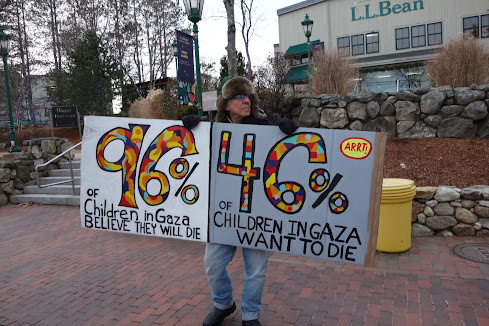
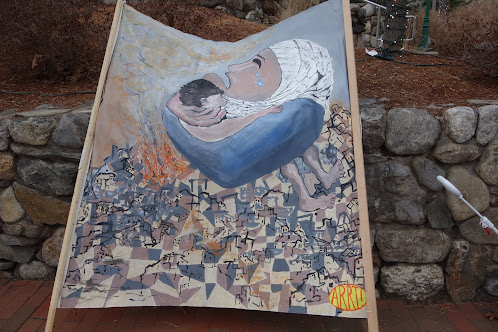




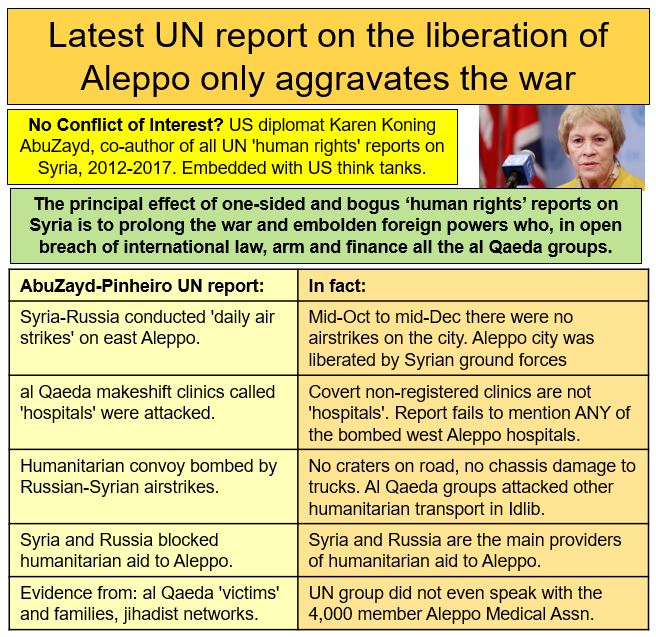


 Free Ukraine Now