Peace would be too easy. Respect is not a U.S. government value. A peace treaty and peace talks have been requested by North Korea for years. The U.S. government doesn’t want independent states to exist which have alternate economic models or values.
What about Americans? What are they willing to fight for? Is their allegiance to this state or to the planet’s peoples — all of them?
And what about the nuclear facilities, if the U.S. was to strike them? The fallout and radioactive contamination would impact the Northern Pacific region and certainly South Korea. And it would spread worldwide.
This hatred displayed by American leaders is pathological, insanity. What they propose is more genocide.
alk is growing in the United States of the possibility of using military strikes to take out North Korea’s nuclear and missile capabilities after the North’s leader, Kim Jong-un, threatened he’s close to testing a long-range missile apparently capable of hitting the U.S.
Kim said in his New Year’s Day address that the communist nation has reached the final stage of preparations to test-launch an intercontinental ballistic missile. The remark was seen as a thinly veiled threat that Pyongyang is close to developing a nuclear-tipped missile capable of striking the continental U.S.
The threat appears to have stoked genuine fears of security among Americans, with reporters bombarding the Defense Department with questions of what the U.S. is going to do about the North’s missile, including whether it’s going to shoot it down or even launch a preemptive strike before it’s fired.
It also prompted President-elect Donald Trump to send a tweet: “North Korea just stated that it is in the final stages of developing a nuclear weapon capable of reaching parts of the U.S. It won’t happen!”
On Wednesday, a private intelligence analysis firm, Stratfor, even laid out a list of potential targets in North Korea, including the Yongbyon nuclear complex, home to the North’s plutonium-producing reactor and reprocessing facility.
“When considering an attack on North Korea, there are two broad categories of strikes to deliberate. The first is a minimalist strike, specifically focused on dismantling the North’s nuclear weapons program. In this scenario, the United States would engage North Korean nuclear objectives only,” Stratfor said in an analysis piece carried by MarketWatch and, titled, “How the U.S. could derail North Korea’s nuclear program by force.”
“By not launching strikes on other North Korean targets, Washington leaves the door open, if only slightly, for de-escalation if Pyongyang can be convinced that the strike is not part of a regime change operation. What benefits Pentagon planners in this scenario is that a limited strike requires less resources and preparation, enhancing the element of surprise,”
Potential targets in the minimalist strike include the Yongbyon complex, including the 5-megawatt nuclear reactor and the reprocessing plant, as well as the Pyongsan uranium mine that provides fuel for the reactor, and the Pyongsong nuclear research and development facility, known as the North’s “Silicon Valley,” Stratfor said.
“These facilities form the heart of North Korean nuclear production infrastructure. If they were destroyed or disabled, the North Korean nuclear production network would be crippled, set back years at least,” it said.
U.S. defense officials were quoted by Reuters as saying that if ordered, the U.S. military has three options to respond to a North Korean missile test: a pre-emptive strike before it is launched, intercepting the missile in flight, or allowing a launch to take place unhindered.
Still, many arms and defense experts agree that a military strike is too risky to consider, especially in consideration of the proximity of Seoul to the border with North Korea and the possibility of the North showering artillery shells on the bustling capital area.
Military strikes “would be a wild gamble, especially with the Seoul-Inchon region — South Korea’s commercial, political and population heart — so close to the border. Although the DPRK would lose any war, it could cause horrendous casualties before succumbing,” said Doug Bandow, a senior fellow at the Cato Institute and a former special assistant to President Ronald Reagan.
“Yet the great achievement of America’s military presence for the past six decades has been to prevent precisely such a conflict from occurring,” he said in a recent piece carried by the National Interest.
Jeffrey Lewis, an expert on North Korea’s military, was also quoted by Reuters as questioning whether U.S. missile defenses could shoot down a test missile, saying destroying North Korea’s nuclear and missile programs would be a huge and risky undertaking.
Lewis, director of the East Asia Nonproliferation Program at the James Martin Center for Nonproliferation Studies (CNS), was also quoted as saying that the North’s main nuclear and missile test sites were on different sides of the country, and an ICBM can be launched from anywhere in the country because it’s mobile.
Robert Manning, a senior Atlantic Council analyst, said U.S. options are limited on the North.
“While everyone says North Korea is at the top of the U.S. foreign policy agenda, other than strengthening deterrence, imposing tough sanctions that remove North Korea from the international financial system, there is little the U.S. can do in the near-term that does not risk a war, thousands of U.S. and hundreds of thousands of South Korean deaths,” he said.
International law prohibits the use of food as a weapon. However, the new sanctions declared by the United States drastically inhibit the ability of the Democratic People’s Republic of Korea to export coal and other commodities on the international market. The new sanctions are part of long history of the United States attacking North Korea’s economy and harming its ability to provide food for the population.
Since the collapse of the Soviet Union in 1991, US leaders have continuously inhibited the ability of the DPRK to maintain its agriculture system while simultaneously accusing the country’s leaders of “starving their own people.”
Struggling for Agricultural Self-Reliance
The Korean Peninsula has been divided since 1945. The flat lands that can be used for growing food are mainly in the southern part of the country, where tens of thousands of US troops prop up the Republic of Korea.
The Democratic People’s Republic of Korea has control of the mountainous regions. Socialism has taken hold in the hills and valleys where Kim Il Sung (whose name means ‘becomes the sun’) fought the Japanese occupiers for decades as a beloved folk hero. Kim Il Sung came to lead the Korean Worker Party which calls for Peaceful Re-Unification of the Korean Peninsula, and has established a centrally planned, Soviet-style economy.
While the Democratic People’s Republic of Korea has very little arable land, it has plenty of mineral resources. The overwhelming majority of the coal deposits on the Korean Peninsula can be found in the northern regions.
In 1953, when an armistice ended the fighting in the Korean War, one of the greatest challenges facing the Democratic People’s Republic of Korea was its lack of arable land. Throughout the 1950s and 1960s, the DPRK constructed a vast coal mining and steel manufacturing apparatus. The DPRK exported coal to other socialist countries in exchange, not just for food, but for the resources to advance its own domestic agricultural system.
Though the DPRK could import food from the COMECON bloc of countries led by socialist governments, this was still a weakness. Kim Il Sung and the Korean Workers Party emphasized “Juche,” or “self-reliance” and pushed the country to carry out the very difficult task of ending reliance on food imports. The stated goal was “food independence.” The DPRK began constructing wheat fields on the sides of mountains, making huge efforts to grow food in mountainous regions and ending the reliance on imported food.
According to the US Central Intelligence Agency, the DPRK achieved food and energy self-sufficiency by the 1970s. David Barkin, a researcher for the Institute for Food and Development Policy, visited the Democratic People’s Republic of Korea in 1986 and was amazed at what he saw. He published a short booklet on the DPRK’s agricultural policies, and urged the United Nations to help Latin American countries where food production remained sub-par to adopt an agricultural system similar to what was done in the DPRK.
Though the DPRK became food self-sufficient in the 1970s, the agriculture in North Korea depended on one specific import. In order for the highly complex food system to work, it needed lots of petroleum.
The DPRK imported oil from the Soviet Union, and used it to power its tractors as they climbed through rocky areas, plowing artificially constructed fields. Soviet oil enabled the DPRK to transport food to more remote parts of the country which were far from any arable land.
When the Soviet Union collapsed in 1991, along with the various socialist governments of Eastern Europe, the international oil markets were dramatically altered. The DPRK could no longer purchase oil from the Soviet Union. With COMECON no longer in existence, OPEC was dominated by US and British aligned governments, and mandated that the purchasing of oil only be done with US dollars. The DPRK was also unable to continue exporting coal and other products like it once had.
The highly efficient, but oil-dependent agricultural system of the DPRK then came to a grinding halt. The country experienced a horrific food crisis as US sanctions prevented the DPRK from acquiring the US dollars needed to buy petroleum on the international market, and use it to grow food.
While US officials continue to talk of the DPRK “starving its own people” they fail to mention that the food crisis of the 1990s was imposed on the country by economic sanctions and the inability to buy oil. It’s not Kim Il Sung or Kim Jong Il who starved the Korean people in the early 1990s. The food crisis was created by the policies imposed on the country.
This period is known as the “Arduous March” by Koreans because it was so difficult for the people. The World Food Program, various religious groups, and other charities helped to relieve those who were starving to death. People from the southern part of the Korean peninsula participated in providing humanitarian assistance to their northern countryfolk, and were imprisoned for their efforts under the autocratic National Security Laws of the Republic of Korea. South Korea’s National Security Laws have been widely condemned as inconsistent with international standards of human rights and civil liberties.
Economic Warfare Against the Korean People
As a starvation swept the northern part of the Korean Peninsula, the administration of former US President Bill Clinton reached an agreement with the DPRK which allowed the country to receive some oil imports in exchange for not developing nuclear weapons. The Clinton administration also agreed to assist the DPRK in developing peaceful nuclear energy, as long as arms inspectors were allowed to monitor the sites and ensure that they were not working to develop nuclear weapons.
Following Sept. 11th, 2001, the administration of former US President George W. Bush described the DPRK as part of the “Axis of Evil.” The oil shipments were terminated. At this point, the DPRK withdrew from the Nuclear Non-Proliferation Treaty and began actively developing nuclear weapons—a choice that seems quite logical based on the betrayal of the previous agreement.
Since that time, the DPRK’s agricultural system seems to gradually be recovering and adapting. Political shifts on the global stage have enabled the DPRK to import oil outside of the official OPEC market. Food is also being imported. In 2013, Tom Morrison, an agronomist with the World Food Program, predicted that the DPRK will achieve food self-sufficiency at some point in the near future. The DPRK has experienced substantial economic growth in the last few years, with a boom in housing construction and talk of joint ventures with foreign corporations.
The announcement by US officials of new sanctions on the DPRK, crippling its ability to export coal, was described as a “declaration of war” by North Korean leaders. This is not some wild, extreme claim or accusation.
The DPRK is trying to repair its economy from the disaster of the 1990s. Preventing the DPRK from selling coal on the international markets is, in essence, taking food from the mouths of Korean people. This is an act of economic warfare, and the Korean people are greatly outraged by it.
US leaders are economically strangling the DPRK, and say they are doing it because of concerns about “human rights.” At the same time US oil companies continue to do business with the most blatantly autocratic and repressive dictatorships on earth in Saudi Arabia, Qatar, Bahrain, and the United Arab Emirates. The US sells weapons and props up the economies of brutal absolute monarchies where even basic notions of human rights do not exist, while continuing to threaten the DPRK based on allegations about labor camps.
According to even its harshest critics, the government in the northern part of the Korean Peninsula has a constitution and voting, while providing universal housing to the population. These facts alone put the DPRK miles ahead of Saudi Arabia, Bahrain, Qatar, and United Arab Emirates in terms of human rights.
The blatant hypocrisy of US leaders, who sabotage the DPRK’s economy and then tell the world that Kim Jong-Un is “starving his own people” is astonishing. There is no reason that the DPRK should not be able to sell its products on the world market like any other country. The harsh response of the DPRK to the new sanctions should not be shocking to anyone.
Caleb Maupin is a political analyst and activist based in New York. He studied political science at Baldwin-Wallace College and was inspired and involved in the Occupy Wall Street movement, especially for the online magazine “New Eastern Outlook”.
That the Russians and Chinese have joined the US in [imposing sanctions] instead of calling for sanctions against the US for its threats against the DPRK and its new military exercises which are a clear and present danger to the DPRK is shameful. If the Russians and Chinese are sincere why don’t they insist that the US draw down its forces there so the DPRK feels less threatened and take steps to guarantee the security of the DPRK? They do not explain their actions but their actions make them collaborators with the USA against the DPRK.”
New sanctions, and once again, new US-ROK military exercises right next door; new intimidations and new insults. For no other reason than because the country that never attacked anyone, is still determined to defend itself against appalling military, economic and propaganda provocations.
How much more can one country endure?
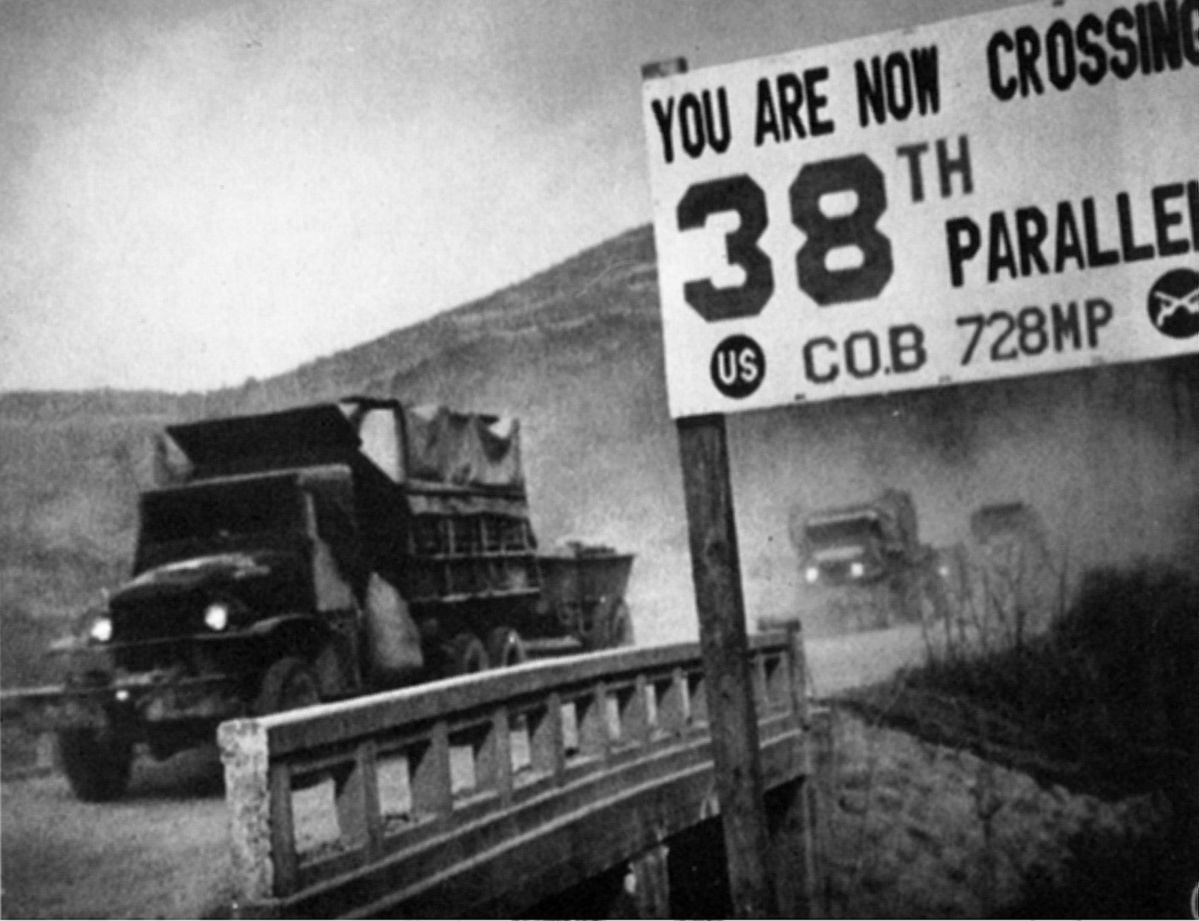
More than 60 years ago, millions of people above the 38th parallel died, were literally slaughtered by the US-led coalition.
After that, after its victory, the North Korea was never left in peace. The West has been provoking it, threatening it, imposing brutal sanctions and of course, manipulating global public opinion.
Why? There are several answers. The simple one is: because it is Communist and because it wants to follow its own course! As Cuba has been doing for decades… As several Latin American countries were doing lately.
But there is one more, much more complex answer: because the DPRK fought for its principles at home, and it fought against Western imperialism abroad. It helped to liberate colonized and oppressed nations. And, like Cuba, it did it selflessly, as a true internationalist state.
African continent benefited the most, including Namibia and Angola, when they were suffering from horrific apartheid regimes imposed on them by South Africa. It goes without saying that these regimes were fully sponsored by the West, as was the racist madness coming from Pretoria (let us also not forget that the fascist, apartheid South Africa was one of the countries that was fighting, on the side of the West, during the Korean War).
The West never forgot nor ‘forgave’ the DPRK’s internationalist help to many African nations. North Korean pilots were flying Egyptian fighter planes in the 1973 Arab-Israeli War. The DPRK was taking part in the liberation struggle in Angola (it participated in combat operations, alongside the People’s Armed Forces for the Liberation of Angola (FAPLA)), it fought in Rhodesia, Lesotho, Namibia (decisively supporting SWAPO) and in the Seychelles. It aided African National Congress and its struggle against the apartheid in South Africa. In the past, it had provided assistance to then progressive African nations, including Guinea, Ethiopia, Zimbabwe, Mali and Tanzania.
The fact that people of the DPRK spilled their blood for freedom of the most devastated (by the Western imperialism) continent on earth – Africa – is one of the main reasons why the West is willing to go ‘all the way’, trying to “punish”, systematically discredit, even to liquidate this proud nation. The West is obsessed with harming North Korea, as it was, for decades, obsessed with destroying Cuba.
The West plundered Africa, an enormous continent rich in resources, for centuries. It grew wealthy on this loot. Anybody who tried to stop it, had to be liquidated.
The DPRK was pushed to the corner, tormented and provoked. When Pyongyang reacted, determined to protect itself, the West declared that defense was actually “illegal” and that it represented true “danger to the world”.
The DPRK refused to surrender its independence and its path – it continued developing its defensive nuclear program. The West’s propaganda apparatus kept going into top gear, spreading toxic fabrications, and then polluting entire Planet with them. As a result, entire world is convinced that the “North Korea is evil”, but it has absolutely no idea, why? Entire charade is only built on clichés, but almost no one is challenging it.
Christopher Black, a prominent international lawyer based in Toronto, Canada, considers new sanctions against the DPRK as a true danger to the world peace:
“Chapter VII of the UN Charter states that the Security Council can take measures against a country if there is a threat to the peace and this is the justification they are using for imposing the sanctions. However, it is not the DPRK that is creating a threat to the peace, but the USA which is militarily threatening the DPRK with annihilation. The DPRK has clearly stated its nuclear weapons are only to deter an American attack which is the threat to the peace.
The fact that the US, as part of the SC is imposing sanctions on a country it is threatening is hypocritical and unjust. That the Russians and Chinese have joined the US in this instead of calling for sanctions against the US for its threats against the DPRK and its new military exercises which are a clear and present danger to the DPRK is shameful. If the Russians and Chinese are sincere why don’t they insist that the US draw down its forces there so the DPRK feels less threatened and take steps to guarantee the security of the DPRK? They do not explain their actions but their actions make them collaborators with the USA against the DPRK.”
US/NATO Threatens the DPRK, China and Russia’s Far East
The US/NATO military bases in Asia (and in other parts of the world) are actually the main danger to the DPRK, to China and to the Russian “Far East”.
Enormous air force bases located in Okinawa (Kadena and Futenma), as well as the military bases on the territory of the ROK, are directly threatening North Korea, which has all rights to defend itself and its citizens.
It is also thoroughly illogical to impose sanctions on the victim and not on the empire, which is responsible for hundreds of millions of lost human lives in all corners of the Globe.
Andre Vltchek is a philosopher, novelist, filmmaker and investigative journalist. He covered wars and conflicts in dozens of countries. His latest books are: “Exposing Lies Of The Empire” and “Fighting Against Western Imperialism”. Discussion with Noam Chomsky:On Western Terrorism. Point of No Return is his critically acclaimed political novel. Oceania – a book on Western imperialism in the South Pacific. His provocative book about Indonesia: “Indonesia – The Archipelago of Fear”. Andre is making films for teleSUR and Press TV. After living for many years in Latin America and Oceania, Vltchek presently resides and works in East Asia and the Middle East. He can be reached through his website or his Twitter.
The original source of this article is Global Research
America has excelled at marketing since its inception. Hollywood and Madison Avenue are the visible marks of that success — selling “America” to the world which is no more real, lasting,or good than a Western stage set.
Edward Bernays was hired to push American products and American adventures abroad.
Demonizing is another form as well as an American pastime. And bingo! it works, at least for gullible Americans, who seem allergic to doing their own investigation and love playing the victim.
The latest Gallup poll showed who Americans regard as the biggest threat.
A Gallup poll among Americans revealed that U.S citizens have changed their mind, and have highlighted a new main threat to the country.
According to the survey, the leading position on the list of threats to the United States in the opinion of Americans is North Korea (16%), followed by Russia (15%), followed by Iran (14%) and China (12%), reports RIA Novosti.
According to Gallup, this year respondent’s views on the main enemy were more varied than ever. Only four countries which Americans fear have remained unchanged over the last three years. The survey, which was conducted by telephone from 3rd to 7th February, involved 1021 participants.
This article was first published in July 2013. North Korea is not a threat to global security. The threat of nuclear war largely emanates from the US under the doctrine of pre-emptive nuclear (self-defense) against both nuclear and non-nuclear states.
While the Western media portrays North Korea’s nuclear weapons program as a threat to Global Security, it fails to acknowledge that the US has being threatening North Korea with a nuclear attack for more than half a century.
On July 27, 2013, Armistice Day, Koreans in the North and the South will be commemorating the end of the Korean war (1950-53). Unknown to the broader public, the US had envisaged the use of nuclear weapons against North Korea at the very outset of the Korean War in 1950. In the immediate wake of the war, the US deployed nuclear weapons in South Korea for use on a pre-emptive basis against the Democratic People’s Republic of Korea (DPRK) in violation of the July 1953 Armistice Agreement.
Michel Chossudovsky’s keynote address at the 60th anniversary commemoration of the end of the Korean war, Seoul, South Korea, July 26, 2013
“The Hiroshima Doctrine” applied to North Korea
US nuclear doctrine pertaining to Korea was established following the bombings of Hiroshima and Nagasaki in August 1945, which were largely directed against civilians.
The strategic objective of a nuclear attack under the “Hiroshima doctrine” was to trigger a “massive casualty producing event” resulting in tens of thousands of deaths. The objective was to terrorize an entire nation, as a means of military conquest. Military targets were not the main objective: the notion of “collateral damage” was used as a justification for the mass killing of civilians, under the official pretence that Hiroshima was “a military base” and that civilians were not the target.
In the words of President Harry Truman:
“We have discovered the most terrible bomb in the history of the world. … This weapon is to be used against Japan … [We] will use it so that military objectives and soldiers and sailors are the target and not women and children. Even if the Japs are savages, ruthless, merciless and fanatic, we as the leader of the world for the common welfare cannot drop that terrible bomb on the old capital or the new. … The target will be a purely military one… It seems to be the most terrible thing ever discovered, but it can be made the most useful.” (President Harry S. Truman, Diary, July 25, 1945)
“The World will note that the first atomic bomb was dropped on Hiroshima a military base. That was because we wished in this first attack to avoid, insofar as possible, the killing of civilians..” (President Harry S. Truman in a radio speech to the Nation, August 9, 1945).
[Note: the first atomic bomb was dropped on Hiroshima on August 6, 1945; the Second on Nagasaki, on August 9, on the same day as Truman’s radio speech to the Nation]
Nobody within the upper echelons of the US government and military believed that Hiroshima was a military base, Truman was lying to himself and to the American public. To this day the use of nuclear weapons against Japan is justified as a necessary cost for bringing the war to an end and ultimately “saving lives”.
US Nuclear Weapons Stockpiled and Deployed in South Korea
Barely a few years after the end of the Korean War, the US initiated its deployment of nuclear warheads in South Korea. This deployment in Uijongbu and Anyang-Ni had been envisaged as early as 1956.
It is worth noting that the US decision to bring nuclear warheads to South Korea was in blatant violation of Paragraph 13(d) of the Armistice Agreement which prohibited the warring factions from introducing new weapons into Korea.
The actual deployment of nuclear warheads started in January 1958, four and a half years after the end of the Korean War, “with the introduction of five nuclear weapon systems: the Honest John surface-to-surface missile, the Matador cruise missile, the Atomic-Demolition Munition (ADM) nuclear landmine, and the 280-mm gun and 8-inch (203mm) howitzer.” (See The nuclear information project: US Nuclear Weapons in Korea)
The Davy Crockett projectile was deployed in South Korea between July 1962 and June 1968. The warhead had selective yields up to 0.25 kilotons. The projectile weighed only 34.5 kg (76 lbs). Nuclear bombs for fighter bombers arrived in March 1958, followed by three surface-to-surface missile systems (Lacrosse, Davy Crockett, and Sergeant) between July 1960 and September 1963. The dual-mission Nike Hercules anti-air and surface-to-surface missile arrived in January 1961, and finally the 155-mm Howitzer arrived in October 1964. At the peak of this build-up, nearly 950 warheads were deployed in South Korea.
Four of the weapon types only remained deployed for a few years, while the others stayed for decades. The 8-inch Howitzer stayed until late 1991, the only weapon to be deployed throughout the entire 33-year period of U.S. nuclear weapons deployment to South Korea. The other weapons that stayed till the end were the air delivered bombs (several different bomb types were deployed over the years, ending with the B61) and the 155-mm Howitzer nuclear artillery. (Ibid)
Officially the US deployment of nuclear weapons in South Korea lasted for 33 years. The deployment was targeted against North Korea as well as China and the Soviet Union.
This composite image shows the LGM-30G Minuteman intercontinental ballistic missile (ICBM) (L) and the LG-118A Peacekeeper missile(R). (AFP Photo/US DoD)
South Korea’s Nuclear Weapons Program
Concurrent and in coordination with the US deployment of nuclear warheads in South Korea, the ROK had initiated its own nuclear weapons program in the early 1970s. The official story is that the US exerted pressure on Seoul to abandon their nuclear weapons program and “sign the Treaty on the Non-Proliferation of Nuclear Weapons (NPT) in April 1975 before it had produced any fissile material.” (Daniel A. Pinkston, “South Korea’s Nuclear Experiments,” CNS Research Story, 9 November 2004, http://cns.miis.edu.]
The ROK’s nuclear initiative was from the outset in the early 1970s under the supervision of the US and was developed as a component part of the US deployment of nuclear weapons, with a view to threatening North Korea.
Moreover, while this program was officially ended in 1978, the US promoted scientific expertise as well as training of the ROK military in the use of nuclear weapons. And bear in mind: under the ROK-US CFC agreement, all operational units of the ROK are under joint command headed by a US General. This means that all the military facilities and bases established by the Korean military are de facto joint facilities. There are a total of 27 US military facilities in the ROK (See List of United States Army installations in South Korea – Wikipedia)
The Planning of Nuclear Attacks against North Korea from the Continental US and from Strategic US Submarines
According to military sources, the removal of US nuclear weapons from South Korea was initiated in the mid 1970s. It was completed in 1991:
The nuclear weapons storage site at Osan Air base was deactivated in late 1977. This reduction continued over the following years and resulted in the number of nuclear weapons in South Korea dropping from some 540 in 1976 to approximately 150 artillery shells and bombs in 1985. By the time of the Presidential Nuclear Initiative in 1991, roughly 100 warheads remained, all of which had been withdrawn by December 1991. (The nuclear information project: withdrawal of US nuclear weapons from South Korea)
According to official statements, the US withdrew its nuclear weapons from South Korea in December 1991.
This withdrawal from Korea did not in any way modify the US threat of nuclear war directed against the DPRK. On the contrary: it was tied to changes in US military strategy with regard to the deployment of nuclear warheads. Major North Korean cities were to be targeted with nuclear warheads from US continental locations and from US strategic submarines (SSBN) rather than military facilities in South Korea:
After the withdrawal of [US] nuclear weapons from South Korea in December 1991, the 4th Fighter Wing at Seymour Johnson Air Force Base has been tasked with nuclear strike planning against North Korea. Since then, strike planning against North Korea with non-strategic nuclear weapons has been the responsibility of fighter wings based in the continental United States. One of these is the 4th Fighter Wing at Seymour Johnson Air Force Base in North Carolina. …
“We simulated fighting a war in Korea, using a Korean scenario. … The scenario…simulated a decision by the National Command Authority about considering using nuclear weapons….We identified aircraft, crews, and [weapon] loaders to load up tactical nuclear weapons onto our aircraft….
With a capability to strike targets in less than 15 minutes, the Trident D5 sea-launched ballistic missile is a “mission critical system” for U.S. Forces Korea. Ballistic Missile Submarines and Long-Range Bombers
In addition to non-strategic air delivered bombs, sea-launched ballistic missiles onboard strategic Ohio-class submarines (SSBNs) patrolling in the Pacific appear also to have a mission against North Korea. A DOD General Inspector report from 1998 listed the Trident system as a “mission critical system” identified by U.S. Pacific Command and U.S. Forces Korea as “being of particular importance to them.”
Although the primary mission of the Trident system is directed against targets in Russia and China, a D5 missile launched in a low-trajectory flight provides a unique very short notice (12-13 minutes) strike capability against time-critical targets in North Korea. No other U.S. nuclear weapon system can get a warhead on target that fast. Two-three SSBNs are on “hard alert” in the Pacific at any given time, holding Russian, Chinese and North Korean targets at risk from designated patrol areas.
Long-range strategic bombers may also be assigned a nuclear strike role against North Korea although little specific is known. An Air Force map (see below) suggests a B-2 strike role against North Korea. As the designated carrier of the B61-11 earth penetrating nuclear bomb, the B-2 is a strong candidate for potential nuclear strike missions against North Korean deeply buried underground facilities.
As the designated carrier of the B61-11 earth penetrating nuclear bomb [with an explosive capacity between one third and six times a Hiroshima bomb] and a possible future Robust Nuclear Earth Penetrator, the B-2 stealth bomber could have an important role against targets in North Korea. Recent upgrades enable planning of a new B-2 nuclear strike mission in less than 8 hours. (Ibid)
“Although the South Korean government at the time confirmed the withdrawal, U.S. affirmations were not as clear. As a result, rumors persisted for a long time — particularly in North and South Korea — that nuclear weapons remained in South Korea. Yet the withdrawal was confirmed by Pacific Command in 1998 in a declassified portion of the CINCPAC Command History for 1991.” (The nuclear information project: withdrawal of US nuclear weapons from South Korea, emphasis added))
The Bush Administration’s 2001 Nuclear Posture Review: Pre-emptive Nuclear War
The Bush administration in its 2001 Nuclear Posture Review established the contours of a new post 9/11 “pre-emptive” nuclear war doctrine, namely that nuclear weapons could be used as an instrument of “self-defense” against non-nuclear states
“Requirements for U.S. nuclear strike capabilities” directed against North Korea were established as part of a Global Strike mission under the helm of US Strategic Command Headquarters in Omaha Nebraska, the so-called CONPLAN 8022, which was directed against a number of “rogue states” including North Korea as well as China and Russia.
On November 18, 2005, the new Space and Global Strike command became operational at STRATCOM after passing testing in a nuclear war exercise involving North Korea.
Current U.S. Nuclear strike planning against North Korea appears to serve three roles: The first is a vaguely defined traditional deterrence role intended to influence North Korean behavior prior to hostilities.
This role was broadened somewhat by the 2001 Nuclear Posture Review to not only deter but also dissuade North Korea from pursuing weapons of mass destruction.
Why, after five decades of confronting North Korea with nuclear weapons, the Bush administration believes that additional nuclear capabilities will somehow dissuade North Korea from pursuing weapons of mass destruction [nuclear weapons program] is a mystery. (Ibid, emphasis added)
Who is the Threat? North Korea or the United States?
The asymmetry of nuclear weapons capabilities between the US and the DPRK must be emphasised. According to ArmsControl.org (April 2013) the United States:
“possesses 5,113 nuclear warheads, including tactical, strategic, and non-deployed weapons.”
According to the latest official New START declaration, out of more than 5113 nuclear weapons,
“the US deploys 1,654 strategic nuclear warheads on 792 deployed ICBMs, SLBMs, and strategic bombers…”ArmsControl.org (April 2013).
Moreover, according to The Federation of American Scientists the U.S. possesses 500 tactical nuclear warheads. (ArmsControl.org April 2013)
In contrast the DPRK, according to the same source:
“has separated enough plutonium for roughly 4-8 nuclear warheads. North Korea unveiled a centrifuge facility in 2010, buts ability to produce highly-enriched uranium for weapons remains unclear.”
According to expert opinion:
“there is no evidence that North Korea has the means to lob a nuclear-armed missile at the United States or anyone else. So far, it has produced several atomic bombs and tested them, but it lacks the fuel and the technology to miniaturize a nuke and place it on a missile” ( North Korea: What’s really happening – Salon.com April 5, 2013)
According to Siegfried Hecker, one of America’s pre-eminent nuclear scientists:
“Despite its recent threats, North Korea does not yet have much of a nuclear arsenal because it lacks fissile materials and has limited nuclear testing experience,” (Ibid)
The threat of nuclear war does not emanate from the DPRK but from the US and its allies.
The Democratic People’s Republic of Korea, the unspoken victim of US military aggression, has been incessantly portrayed as a war mongering nation, a menace to the American Homeland and a “threat to World peace”. These stylized accusations have become part of a media consensus.
Meanwhile, Washington is now implementing a $32 billion refurbishing of strategic nuclear weapons as well as a revamping of its tactical nuclear weapons, which according to a 2002 Senate decision “are harmless to the surrounding civilian population.”
These continuous threats and actions of latent aggression directed against the DPRK should also be understood as part of the broader US military agenda in East Asia, directed against China and Russia.
It is important that people across the land, in the US, Western countries, come to realize that the United States rather than North Korea or Iran is a threat to global security.
On May 24, 2015, thirty international women peacemakers from around the world will walk with Korean women, north and south, to call for an end to the Korean War and for a new beginning for a reunified Korea. We will hold international peace symposiums in Pyongyang and Seoul where we can listen to Korean women and share our experiences and ideas of mobilizing women to bring an end to violent conflict. Our hope is to cross the 2-mile wide De-Militarized Zone (DMZ) that separates millions of Korean families as a symbolic act of peace.
2015 marks the 70th anniversary of Korea’s division into two separate states by Cold War powers, which precipitated the 1950-53 Korean War. After nearly 4 million people were killed, mostly Korean civilians, fighting was halted when North Korea, China, and the United States representing the UN Command signed a ceasefire agreement. They promised within three months to sign a peace treaty; over 60 years later, we’re still waiting.
Meanwhile, thousands of Korean elders die every year waiting on a government list to see their children or siblings after being separated by the DMZ. In North Korea, crippling sanctions against the government make it difficult for ordinary people to access the basics needed for survival. The unresolved Korean conflict gives all governments in the region justification to further militarize and prepare for war, depriving funds for schools, hospitals, and the welfare of the people and the environment. That’s why women are walking for peace, to reunite families, and end the state of war in Korea.
“Convincing a population to be self-absorbed moral and social degenerates is “mind-altering,” however it has little or nothing to do with the pursuit of freedom. The weakness sown amongst populations encouraged to break up first their families, then their local communities, is tantamount to a domestic military campaign of sociopolitical “divide and conquer.” Local communities that are incapable of organizing themselves, because individuals themselves are incapable of building families, reduces the potential of competitors rising up and challenging the status quo established by Wall Street and Washington.
More importantly, it encourages servile dependency on a particular type of consumerist paradigm perfected and exclusively dominated by Western interests that best feeds the sort of self-absorbed behavior endlessly promoted across Western media.
I Love Lucy, Gunsmoke, Father Knows Best, Happy Days, Golden Girls, Friends, MTV, Gilligan’s Island, Cops, Cheers, Desperate Housewives, and the endless sitcoms and now “reality” shows, Dancing with the Stars and American Idol — there is so much to distract from real people, relationships, community, and issues. While “I Love Lucy” was popular, the U.S. was doing atomic weapons testing. “My Three Sons” played while the Vietnam War raged and the civil rights movement struggled. Millions of Americans, glued to their TV screens, watch “heart-warming” dramas or “cute” comedies, while critical issues are neglected and people die. Children grow up expecting all the things they see on TV, including the “Lifestyles of the Rich and Famous”, as reality. TV advertisements say that happiness comes from buying the right things. American young people aim for “good-paying” jobs which will allow them to accumulate material luxuries and retire early.
It’s been very successful, this social engineering. Advertisements show happy families having quality time together…around a television set. A TV or screen in every room. People don’t talk to each other, even lose the ability to connect with each other. Children go outside to play less and less, don’t go camping with their families or on picnics, and don’t get together with neighborhood kids to play. Together with technology’s intrusion, what the industry itself calls “disruptive”, many American families are increasingly empty and fragmented. Decreasing satisfaction from family life and married life leads to greater consumerism — it’s a self-feeding cycle. The toll that online pornography has taken on young men is well known; that fewer and fewer are able to have a healthy relationship is a frightening societal trend. Finally, it seems that community focus and community life is diminishing rapidly.
TV doesn’t shatter illusions; it builds them. That is part of the allure.And while we are watching even the most noteworthy program, life is going by around us — real opportunities, real people, real recreation, real life.
On an old BBC series, “All Creatures Great and Small”, one of the characters remarked about the coming of television to England, “Think of it — millions of people are watching exactly the same thing at exactly the same time.” That fact has not escaped the attention of our respective governments.
The best thing for ourselves, our communities, and our countries would be for people to turn TVs and technology off.
From New Eastern Outlook, 3-20-15
By Tony Cartalucci
When Wired published its article, “The Plot to Free North Korea with Smuggled Episodes of ‘Friends,’” it probably hoped that its impressionable, politically ignorant audience would not pick up on the underlying facts and their implications, and simply see a “cute” anecdote poking fun at the besieged East Asian country while inflating their own sense of unwarranted cultural superiority.
What they missed, of course, is the fact that the program peddled by Wired as the work of “the North Korea Strategy Center and its 46-year-old founder, Kang Chol-hwan,” is in fact funded and organized instead by the US State Department.
Readers of Wired’s latest, long-winded spin on US-backed sedition abroad also most likely missed the fact that if TV shows from America are considered a tool for social engineering in North Korea, they are most likely being used as a tool of social engineering in the United States as well. The degradation of American culture, the family, and weakening of local communities, versus the growing centralized dominance of corporate-financier monopolies and their increasingly draconian police and surveillance state is a direct result of this.
Wired would admit in their article that:
Kang likens the USB sticks to the red pill from The Matrix: a mind-altering treatment that has the power to shatter a world of illusions. “When North Koreans watch Desperate Housewives, they see that Americans aren’t all war-loving imperialists,” Kang says. “They’re just people having affairs or whatever. They see the leisure, the freedom. They realize that this isn’t the enemy; it’s what they want for themselves. It cancels out everything they’ve been told. And when that happens, it starts a revolution in their mind.”
Indeed, convincing a population to be self-absorbed moral and social degenerates is “mind-altering,” however it has little or nothing to do with the pursuit of freedom. The weakness sown amongst populations encouraged to break up first their families, then their local communities, is tantamount to a domestic military campaign of sociopolitical “divide and conquer.” Local communities that are incapable of organizing themselves, because individuals themselves are incapable of building families, reduces the potential of competitors rising up and challenging the status quo established by Wall Street and Washington.
More importantly, it encourages servile dependency on a particular type of consumerist paradigm perfected and exclusively dominated by Western interests that best feeds the sort of self-absorbed behavior endlessly promoted across Western media.
Essentially, NKSC is not working to “free” anyone. Instead, they are working to corral North Koreans out of one cage, and into another. Some might argue this “other cage” is more comfortable, but it is still a cage nonetheless. It is not done for any altruistic purpose, but simply to enroll millions more from yet another region of the planet into Wall Street’s global-spanning, unsustainable, exploitative consumerist paradigm – one which strangles the environment, society, and individuals.
How can NKSC Show People the “Truth” if it Can’t Even be Honest About Who is Behind its Work?It is also a consumerist paradigm admittedly being built up and sustained with US taxpayers’ money, through the US State Department whose mission is allegedly to represent the American people and their best interests, but which is instead demonstrably imposing US corporate-financier interests on other people, through tricks when possible, and through force when necessary.
Wired’s article, like many others it has written to spin what is essentially colonialism 2.0, is meant to give readers a sense of moral superiority over the West’s many perceived enemies.
That Wired never mentions the US State Department’s role in this particular propaganda campaign illustrates that not only are people being manipulated, they are being manipulated through an extraordinarily dishonest campaign. Would Kang’s sedition be as palatable to North Koreans if they knew it was in fact fully funded, supported, and even the creation of the US State Department? Would that bolster Kang’s allegations that North Korea is unreasonably paranoid regarding American designs to subvert, destroy, and overrun the nation? Or does the fact that his work is fully underwritten by the US State Department undermine entirely the lies he uses to defend it?
When offering “freedom” to others, truth and transparency is essential. The ill-informed or misinformed cannot make truly honest decisions about their future. If North Korea’s crime is deceiving its people about the state of the world beyond its borders, than Kang and the North Korea Strategy Center’s campaign to show them the “true world” with propaganda funded by the US State Department – a fact never mentioned by Kang and the NKSC – is just as deceptive.
As is often said, two wrongs don’t make a right – and that’s if one foolishly assumes the US State Department is seeking to make a right in the first place.




 Free Ukraine Now