The United States targets civilians. When will the United States apologize for its war crimes? When will US citizens stop its war crimes?

From Global Research
By S. Brian Willson

Originally published in 2001: When will the United States apologize for its war crimes?
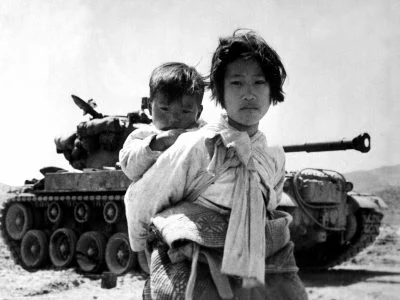
U.S. President Clinton’s recent refusal to explicitly apologize for the murder of Korean civilians by U.S. military forces during the Korean War is another lost moment of desperately needed “American” honesty.

*

The United States inquiry, and Clinton’s statement of mere “regret,” was focused on only one crime scene at a particular location. It implied that the deaths were merely unfortunate rather than part of a systematic pattern that cumulatively murdered as many as three million civilians. Careful examination of the empirical record reveals multiple dozens, perhaps a couple hundred, massacre sites at various locations throughout the entire Korean Peninsula. The suggestion of malicious intent is incontrovertible. There was an overwhelming pattern of systematic targeting the Korean people, with no serious effort to distinguish “civilians” from “combatants.”

This should come as no surprise! Beginning in 1945 the U.S. record in Korea is horrendous! It would behoove our political leaders, and academicians, to learn an authentic history of Korea. Simply relying on popular comic book demonization of North Koreans without recognizing the U.S. role in creating the conditions that led to the war in the first place continues a tragic disservice to history. When the Japanese were finally defeated on August 15, 1945, the vast majority of the people who resided on the Korean Peninsula immediately began to celebrate, then organize for a return to Korean sovereignty after 40 years of hated foreign occupation. When the U.S. immediately insisted on creating the peninsula as a Cold War arena with the Russians, people throughout Korea organized resistance, at first nonviolent, later in the form of a guerrilla war. The U.S. created a puppet government, similar to what it later did in Vietnam, and between 1945-1950 oversaw the systematic repression and murder of hundreds of thousands of Koreans who rightfully demanded independence. That U.S. military and political policy to this day does not understand this fundamental Korean history continues one of the most tragic chapters of the Twentieth Century.

During the Korean “hot” war, General Douglas MacArthur ordered the U.S. Air Force to “destroy every means of communication, every installation, factory, city, and village” south of the Yalu River boundary with China. Massive saturation bombings alone, especially with napalm and other incendiaries, murdered perhaps 2.5 million civiliansMajor General William B. Kean of the 25th Infantry Division ordered “civilians in the combat zone” to be considered enemies. The famous July 25, 1950 Fifth Air Force memorandum to General Timberlake declared that adherence to Army orders to “strafe all civilian refugees [have been] complied with.” USA Today (Oct. 1, 1999) and the New York Times (Dec. 29, 1999) reported from declassified U.S. Air Force documents the “deliberate” strafings and bombings of Korean “civilians” and “people in white.” In the August 21, 1950 issue of Life, John Osborne reported that U.S. officers ordered troops to fire into clusters of civilians.

U.S. racism has been an unfortunate but tragic feature (along with arrogant ethnocentrism) of the origins of the U.S. American Republic. This institutionalized racism has substantially contributed to the cruelty of a long imperial history under the rubric of “American Manifest Destiny” that has engineered well over 400 overt military, and as many as 6,000-10,000 covert, interventions in over 100 countries. Directed toward the Korean (and later Vietnamese) people, who we regularly called “gooks,” racism helped justify commission of a gruesome, almost unlimited and careless war. In Korea this included use of germ warfare and the regular threat of dropping nuclear bombs. The highest law officer in the land, President Truman’s second Attorney General, J. Howard McGrath, referred to the Koreans as “rodents.” During World War II, massive saturation bombings in Germany and Japan had been conducted with no pretense of striking only military targets. This precedent legitimized bombing with no concern for civilians, despite explicit prohibition by the U.S. Field Manual 27-10 Rules of Land Warfare. Such indiscriminate saturation bombings were routinely and relentlessly continued in Korea.

The roots of U.S. racism are deep and historic. The defining and enabling experience of the Republic of the United States of America continues to be the genocidal elimination of the human beings who originally lived on our lands. Eurocentric racism and so-called divinely inspired ethnocentrism have been inherent characteristics facilitating the “development ” of our civilization. This development has been accomplished through a long history of exploitation of land, labor, and natural resources that first began on the North American Continent, but now stretches to every corner of the globe.

In the early 1600s Captain John Smith of the Virginia colony referred to our original inhabitants as “subanimals” and “beasts” worthy only of “extermination.” Puritan leader John Endecott of the Massachusetts Bay Colony regularly ordered “death” to the Pequot Indians. Our founding document, the Declaration of Independence, refers to our original inhabitants as “merciless savages” and George Washington termed them “beasts of prey” to be “destroyed.” European settlers regularly called them “brutes” or “vermin” to be “destroyed.” General William Tecumseh Sherman in the 1870s ordered “extermination” as the “final solution” to the “Indian problem.”

During what we call the Spanish-American War U.S. forces fought against Filipino citizens, calling them “goo-goos,” while murdering upwards of a half million of them under orders such as “burn and kill the natives” issued by General Jacob H. (“Hell-Raising”) Smith to U.S. Marines.

Lyman Frank Baum, author of the ever popular The Wonderful Wizard of Oz (1900), called for the “annihilation” of all Native Americans.

Another name for our racism is native-hating, whether “Redskins,” “Niggers,” “Chinks,” “Japs,” “Greasers,” “Dagoes,” “Wops,” – or “Gooks.” The fact is that from the very beginning the people whom our European ancestors were demonizing, both here and abroad, were real human beings, tragically caught in the path of merciless “American Manifest Destiny.” Under any legal or moral definition, virtually all would be considered “civilians,” until some chose to defend their sovereignty and land from the invaders and exploiters from the West in which case they became “combatants.”

With the advent of aerial bombings during World War I, the number of civilians murdered in war dramatically increased. The bombing of civilian targets by U.S. forces preceded similar crimes by Italy in Ethiopia in 1936-37 and Germany in Guernica, Spain in 1937. The U.S. used aerial bombings in Haiti in 1919 and Nicaragua in 1927 in efforts to rout native people resisting U.S. occupation forces, murdering countless civilians in the process, always disregarding the cries of the people for due recognition. The stage was set for the massive indiscriminate bombings of World War II, Korea, Vietnam, Iraq, and Serbia/Kosovo.

This cultural trait also contributes to a long pattern of misrepresentations and out-and-out lies. For example, in 1973, as part of the Paris Peace Accords ending the U.S. War against Vietnam, Henry Kissinger, representing President Nixon, promised the Vietnamese over $4 billion in reparations as part of the cease-fire agreement. The United States dishonored that agreement, consistent with Native Americans’ long-standing conclusion that the “White Man speaks with forked tongue,” citing the U.S. government’s violation of each of the 400 treaties signed with the Indigenous.

President Clinton came close to apologizing to Guatemala in 1999 for the earlier decades-long role of the U.S. in supporting repressive forces that murdered over 200,000 Mayan Indians. He stated that U.S. policy was “wrong,” even as it continues to support economic policies destined to preserve miserable poverty there. Former U.S. Defense Secretary Robert McNamara confessed in his book, In Retrospect (1995), that what the U.S. did in Vietnam was “wrong,” though he did not acknowledge that we had violated moral or legal codes. When Clinton’s Defense Secretary William Cohen visited Vietnam in March 1999, he explicitly refused to apologize. Clinton, during his visit to Vietnam in November 1999, also failed to issue an apology or to explain why the reparations promised in 1973 have never been paid.

The question continues to beg: when will the United States ‘fess up to its long history of crimes against humanity, thereby revealing that a genuine humility has replaced U.S. arrogance? Failing that, the lives of all the people of the world, including our own, are endangered by an arrogance continually nourished by insidious racism that seeks to mercilessly spread its unwanted “neoliberal” values. The American Way Of Life (AWOL) inevitably creates rage among billions of people who resent the forced imposition of U.S. values and policies.

An apology by the United States, followed by an offer of appropriate reparations to the Korean people, would be a tremendous new omen for a peaceful world based on mutual respect and justice.

*

Brian Willson, Viet Nam veteran and trained lawyer, has been a lifelong critic of US domestic and foreign policy. His essays and biography are found at his website: brianwillson.com. His recent book, “Don’t Thank Me for My Service: My Viet Nam Awakening to the Long History of US Lies” is published by Clarity Press (2018). His psycho-historical memoir, “Blood on the Tracks: The Life and Times of S. Brian Willson” was published by PM Press (2011). A documentary, “Paying the Price for Peace: The Story of S. Brian Willson” was produced in 2016 by Bo Boudart Productions.

He is a Research Associate of the Centre for Research on Globalization (CRG).

Featured image: With her brother on her back a war weary Korean girl tiredly trudges by a stalled M-46 tank, at Haengju, Korea (Public Domain)

https://www.globalresearch.ca/when-united-states-apologize-war-crimes/5939653

Russian civilization is at stake in Novorossia

This provocative article and its vision are in stark contrast to the narrow, ethnically cleansed goals promoted by leaders for a Social Nationalist Ukraine.

The article about Ramzan Kadyrov
http://vineyardsaker.blogspot.com/2014/12/ramzan-kadyrov-offers-putin-his-own.html
is an example of the broad homeland that is Russia.

By Rostislav ISCHENKO (Ukraine), September 17, 2014
Posted on Oriental Review

After the army of Novorossia launched a major offensive and began rapidly expanding the area under its control, it became clear to even the most skeptical observers that it was only a matter of time until the militia would inflict a decisive military victory over Kiev. But after Novorossia’s military victory in Ukraine, we will very quickly see the next (and this time, the definitive) Russian geopolitical victory in its confrontation with the combined forces of the West (the United States and the EU’s pro-American lobby).

America’s inability to defend Mikhail Saakashvili’s regime in 2008 raised some eyebrows among its allies, but in general the affair was viewed as nothing more than an unfortunate setback (which could happen to anyone). But when the stakes were twice as high, the US failure in Syria, where Russia has been able to keep Bashar al-Assad in power, undermined Washington’s credibility in the Middle East and stripped the “Arab Spring” of its significance. Nevertheless, the EU remains a dependable US ally, and once there is a victory in Ukraine, after the stakes are doubled yet again, all lost ground should be recovered and Russia will be removed from the concert of the great powers. But an extremely risky operation, which will be disastrous should it end in defeat, will be required for any significant victory.

Each time the US has lost as much as it has wanted to win from Russia. The current defeat will result in a sharp curtailment of the role of Washington (and with it, the role of the combined forces of the West) in global politics. The US, NATO, and the EU are being transformed into large, important, and yet regional organizations, which can influence the fate of the world only by coordinating their positions and finding a compromise with the Rest.

Both China and the West offer the world a universalist, imperial ideology. In China this consists of the traditional Han culture, and in the West – the American “melting pot” that turns Germans, Irish, English, Italians, Hispanics, African Americans, and former Russians into red-blooded Americans. The difference is that Chinese culture is more static, while Western culture is more malleable. In the US, the traditional Anglo-Saxon, Protestant culture has been almost entirely replaced by an African-American/Hispanic, pagan/Christian/Muslim symbiosis that is making dogged inroads even in the Old World (classical Europe). But despite this shift, the culture and ideology of the West have lost neither their universalist character, nor their aggressive messianism.

Thus, Russia is faced with the challenge of providing the world with a universalist ideology rooted in an analogous cultural foundation. And such an ideology exists. It is the ideology of the Russian World.

A historical joint creation

Some opponents of the Russian World argue that such an ideology does not exist as a formalized system of beliefs. Others see it as the ideology of aggressive Russian nationalism, which is attempting to rebuild its empire within the old Soviet borders and to ensure stability through a coerced Russification of its perimeter.

Neither side has any idea what it is talking about.

First of all, an imperialist, universalist ideology cannot be nationalistic. An empire cannot use bloodlines as a criterion, but must be based on the principle of citizenship and of legal equality.

Second, cultural unity in an empire is not achieved by suppressing other cultures, but through cultural convergence – when different cultures make contact, mingle, and ultimately complement one another. An empire is always multicultural. Even China, which is officially mono-national, has absorbed the cultures of all the peoples that have been assimilated and diffused into that Han sea. Borrowings from the cultures of the Tibetans, Mongolians, Manchus, Uyghurs, and Miao and Yao tribes so shape the image of Han culture today that China would be unrecognizable without them.

Third, one cannot fight for an abstraction. And a war is underway in Novorossia for the Russian World. Shall we try to analyze the basis of the cultural and ideological system of the Russian World and why mankind is attracted by what it has to offer, so that the decline of American hegemony, followed by the inevitable economic and military/political costs (and in some cases – such as in Ukraine – disasters) have not been perceived as the apocalypse?

Not only does the Russian World not fit within the boundaries of a national state consisting of Russians, it even precludes the very construction of such a state. Today, it is not only Russians who are battling for the Russian World in Novorossia, but also Serbs, French, Ossetians, Chechens, and representatives of other nations, many of whom are indifferent to Russian-ness, Slavdom, Orthodoxy, and even Christianity. But all these people not only represent the Russian World, they are dying for it. And we should not be surprised that, despite their dissimilarities, they feel at ease within the Russian World. After all, it originally arose as a multi-ethnic and multi-religious community.

From its inception to the present day, Russia as a political state has been the fruit of the creative efforts of many ethnic groups, not only Russians. Of course, their role in forming that state can neither be denied nor minimized, but without the freely given, creative input of other nations and tribes, the Russian people could have created nothing. First of all, the Russian nation itself (which encompasses far more than merely its Eastern Slavic roots) would never have been established, and if the Russians had been as nationally and religiously insular as the Jews, for example, then (assuming they had survived) they would ultimately have inhabited a territory not much larger than Israel.

The Russian World is also unique in that the Russians within it can consist of people without a drop of Russian blood. The Russian World is a cultural, ideological, and political choice – one does not make one’s way there via citizenship or right of birth.

And in the Russian world the Russian Orthodox Church holds the same position as do the Russian people: each is accorded a place of honor but does not hold sway. Even during the centuries when Orthodoxy was the state religion of the Russian Empire, its subjects who held other faiths (not only Muslims, but also Catholics, Protestants, and even Jews) were permitted the unrestricted right to their own beliefs. Conversion to Orthodoxy facilitated a career in public service, but overall the state remained low-key, not only in regard to other religions, but even toward heresies within the state church itself. In particular, the maltreatment of the Old Believers never reached the scale or brutality of the persecution of heretics in Europe. Orthodoxy peacefully coexists with other religions, carrying out its mission of sharing the teachings of Christ, not by fire and sword, but by example and admonition.

In general, the Russian World is Russian and Orthodox only to the extent that the nations within its purview recognize the central role of the Russian Orthodox people and of Russian culture in the formation of such a comfortable communal setting, in which even the smallest ethnic groups and most primitive cultures have a chance to survive and develop, enriched by the achievements of their neighbors and sharing their own achievements.

An ideological, supranational structure

In essence, the Russian World is grounded in the long-established precept of uniting nations, cultures, and religions in accordance with rules that are consistent, understandable, and acceptable to all. It differs from the American “melting pot” and the Chinese “heavenly mandate” in that the Russian World does not assimilate the surrounding cultures, turning everyone into Han Chinese, for example (yet borrowing from many of the achievements of the peoples being assimilated). And the Russian World does not impose a “single democratic standard,” as does the American model. The Russian World creates a setting in which all can flourish. The watchword of the Russian World is “non-interference.” Freedom of conscience, freedom of thought, freedom of speech – all these freedoms are fully exercised, but only to the extent that one freedom does not conflict with another. But for all its diversity, this world is unified by common interests (security, economics, and culture), as well as a common understanding of the crucial, cementing role played by the Russian Orthodox people in the provision of the very existence of not only the Russian World, but also its member nations.

As such, the Russian world is really a universal ideology that is well suited to either Russians, Americans, the French, or the Japanese, because it does not infringe upon anyone’s cultural distinctions, proclaiming not a competition, but a convergence of cultures.

Within this context, the Russian World can exist only because its scope today encompasses much more than merely the Russian state. As previously mentioned, Novorossia is fighting for the Russian World, and it is not yet clear whether Novorossia will ultimately become part of Russia or retain its political independence. Serbia envisions itself within the Russian World, and similar sentiments are growing in Bulgaria. But not all who envision themselves in the Russian World also envision themselves in the Russian state. This should not necessarily be seen as a weakness. Herein lies the strength of the Russian world as an ideology that is capable of transcending borders. It is important to remember that the United States can be found not only in those places where it has transgressed its own borders, or even where it has military bases, but also everywhere there is a McDonald’s. The Russian World, however, unites people around a premise that is more trustworthy, more elevated, and more acceptable to all nations than the vapid American urge to consume. The Russian World ensures a respect for tradition as well as the promise that any necessary changes will be carried out in the most conservative manner possible, in order to avoid the revolutionary turmoil that can sever the ties between generations.

The Russian World will never create a Russian Russia. That would be the death of the Russian World, as well as of Russia and of Russians. The concept of a Russian Russia is no different from the concept of a Ukrainian Ukraine and, if pursued, would lead to the same catastrophic and immutable consequences. The Russian World is not a state consisting of one nation, but states (in the plural) of an idea – a sort of confederation of justice that provides equal rights and opportunities for all its member nations. This ideological, supranational structure ensures that all its members accept the same moral and ethical standards. And the question of political integration is a matter for a future time, should the acknowledged necessity arise over the course of this experiment in coexistence.

Rostislav Ischenko is the President of Centre for System Analysis and Forecasting (Kiev).

Source in Russian: Expert

Original text adapted and translated by ORIENTAL REVIEW.

Related video

<iframe width=”420″ height=”315″ src=”//www.youtube.com/embed/VFUVl0HHio8″ frameborder=”0″ allowfullscreen>

Renaissance of Novorossia: a tradition projected to the future

Novorossia (New Russia) is an old well-forgotten toponym related to the lands annexed to the Russian from Ottoman Empire in XVIII century by Catherine the Great. For the last 90 years these territories were administrated by Kiev. In modern terms this historic territory overlaid what is now Donetsk, Lugansk, Dnepropetrovsk, Zaporozhie, Nikolaev, Kherson and Odessa regions of Ukraine, populated by predominantly Russian-speakers and strongly opposing ultra-nationalist regime in Kiev which came to power as a result of coup d’état in February 2014. The rebirth of Novorossia project was triggered by the blind ambitions of the regime in Kiev to impose anti-Russian ideology on the people feeling indissoluble link with their cultural Motherland. The video presents faces, monuments and landmarks of this fascinating country eager for renaissance under St.Andrew’s banner.

Source:

http://orientalreview.org/2014/09/17/what-civilization-is-at-stake-in-novorossia/