State Department resources “for sale”? Oversight Committee requests more documents from John Kerry

From Town Hall

by Katie Pavlich
Aug 26, 2016

New revelations this week showing the Clinton Foundation used the State Department to find and recruit employees during Hillary Clinton’s tenure as Secretary are prompting questions from House Oversight Committee Jason Chaffetz.

In a letter sent to Secretary of State John Kerry Thursday, Chaffetz wants details about taxpayers resources used to recruit State Department experts for Clinton Foundation donors and wants to know whether federal ethics codes were violated in the process.

“State Department employees interviewed applicants for Clinton Foundation positions  and sought a Libya expert on behalf of Clinton Foundation donors. According to one report, Clinton Foundation employees also contacted the State Department in an effort to find jobs for Clinton Foundation donors. Moreover, earlier this week, the Associated Press reported ‘[m]ore than half the people outside of government who met with [Secretary] Clinton while she was secretary of state gave money – either personally or through companies or groups – to the Clinton Foundation.’ These reports give rise to a perception that access to our State Department’s official resources, were for sale,” Chaffetz states in the letter. “The allegations contained in the Associated Press report and others also raise questions as to whether State Department employees acted to benefit the Clinton Foundation in violation of executive branch ethics guidelines.”

“In addition, work on behalf of the Clinton Foundation on personal time may also violate section 2635.705 of the executive branch ethics code, which generally prohibits a superior from coercing a subordinate from performing activities other than official duties,” the letter continues.

Earlier this week the Associated Press published a report showing 50 percent of individuals who were granted interviews with Secretary Clinton were big time donors to the Clinton Foundation. We also learned long time Clinton aide Huma Abedin regularly denied requested meetings with Secretary Clinton, rerouted individuals through the Clinton Foundation, donations would be made and then meetings would be granted. Chaffetz makes the argument in his letter to Kerry that these revelations further show official State Department resources were “up for sale.”

Chaffetz has requested Kerry produce a number of documents, communications and a list of all individuals on Clinton’s official calendar during her time as Secretary by September 7.

http://townhall.com/tipsheet/katiepavlich/2016/08/26/oversight-comittee-to-john-kerry-explain-why-state-department-was-used-to-find-clinton-foundation-employees-n2210369

Posted under Fair Use Rules

The power of “Nyet”. The US decides what it wants Russia to do. Russia says “Nyet”

Global Research, July 28, 2016
Cluborlov 26 July 2016

The way things are supposed to work on this planet is like this: in the United States, the power structures (public and private) decide what they want the rest of the world to do. They communicate their wishes through official and unofficial channels, expecting automatic cooperation. If cooperation is not immediately forthcoming, they apply political, financial and economic pressure. If that still doesn’t produce the intended effect, they attempt regime change through a color revolution or a military coup, or organize and finance an insurgency leading to terrorist attacks and civil war in the recalcitrant nation. If that still doesn’t work, they bomb the country back to the stone age. This is the way it worked in the 1990s and the 2000s, but as of late a new dynamic has emerged.

In the beginning it was centered on Russia, but the phenomenon has since spread around the world and is about to engulf the United States itself. It works like this: the United States decides what it wants Russia to do and communicates its wishes, expecting automatic cooperation. Russia says “Nyet.” The United States then runs through all of the above steps up to but not including the bombing campaign, from which it is deterred by Russia’s nuclear deterrent. The answer remains “Nyet.” One could perhaps imagine that some smart person within the US power structure would pipe up and say: “Based on the evidence before us, dictating our terms to Russia doesn’t work; let’s try negotiating with Russia in good faith as equals.” And then everybody else would slap their heads and say, “Wow! That’s brilliant! Why didn’t we think of that?” But instead that person would be fired that very same day because, you see, American global hegemony is nonnegotiable. And so what happens instead is that the Americans act baffled, regroup and try again, making for quite an amusing spectacle.

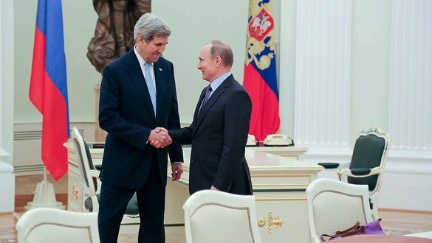
The whole Edward Snowden imbroglio was particularly fun to watch. The US demanded his extradition. The Russians said: “Nyet, our constitution forbids it.” And then, hilariously, some voices in the West demanded in response that Russia change its constitution! The response, requiring no translation, was “Xa-xa-xa-xa-xa!” Less funny is the impasse over Syria: the Americans have been continuously demanding that Russia go along with their plan to overthrow Bashar Assad. The unchanging Russian response has been: “Nyet, the Syrians get to decide on their leadership, not Russia, and not the US.” Each time they hear it, the Americans scratch their heads and… try again. John Kerry was just recently in Moscow, holding a marathon “negotiating session” with Putin and Lavrov. Above is a photo of Kerry talking to Putin and Lavrov in Moscow a week or so ago and their facial expressions are hard to misread. There’s Kerry, with his back to the camera, babbling away as per usual. Lavrov’s face says: “I can’t believe I have to sit here and listen to this nonsense again.” Putin’s face says: “Oh the poor idiot, he can’t bring himself to understand that we’re just going to say ‘nyet’ again.” Kerry flew home with yet another “nyet.”

What’s worse, other countries are now getting into the act. The Americans told the Brits exactly how to vote, and yet the Brits said “nyet” and voted for Brexit. The Americans told the Europeans to accept the horrendous corporate power grab that is the Transatlantic Trade and Investment Partnership (TTIP), and the French said “nyet, it shall not pass.” The US organized yet another military coup in Turkey to replace Erdoǧan with somebody who won’t try to play nice with Russia, and the Turks said “nyet” to that too. And now, horror of horrors, there is Donald Trump saying “nyet” to all sorts of things—NATO, offshoring American jobs, letting in a flood of migrants, globalization, weapons for Ukrainian Nazis, free trade…

The corrosive psychological effect of “nyet” on the American hegemonic psyche cannot be underestimated. If you are supposed to think and act like a hegemon, but only the thinking part still works, then the result is cognitive dissonance. If your job is to bully nations around, and the nations can no longer be bullied, then your job becomes a joke, and you turn into a mental patient. The resulting madness has recently produced quite an interesting symptom: some number of US State Department staffers signed a letter, which was promptly leaked, calling for a bombing campaign against Syria in order to overthrow Bashar Assad. These are diplomats. Diplomacy is the art of avoiding war by talking. Diplomats who call for war are not being exactly… diplomatic. You could say that they are incompetent diplomats, but that wouldn’t go far enough (most of the competent diplomats left the service during the second Bush administration, many of them in disgust over having to lie about the rationale for the Iraq war). The truth is, they are sick, deranged non-diplomatic warmongers. Such is the power of this one simple Russian word that they have quite literally lost their minds.

But it would be unfair to single out the State Department. It is as if the entire American body politic has been infected by a putrid miasma. It permeates all things and makes life miserable. In spite of the mounting problems, most other things in the US are still somewhat manageable, but this one thing—the draining away of the ability to bully the whole world—ruins everything. It’s mid-summer, the nation is at the beach. The beach blanket is moth-eaten and threadbare, the beach umbrella has holes in it, the soft drinks in the cooler are laced with nasty chemicals and the summer reading is boring… and then there is a dead whale decomposing nearby, whose name is “Nyet.” It just ruins the whole ambiance!

The media chattering heads and the establishment politicos are at this point painfully aware of this problem, and their predictable reaction is to blame it on what they perceive as its ultimate source: Russia, conveniently personified by Putin. “If you aren’t voting for Clinton, you are voting for Putin” is one recently minted political trope. Another is that Trump is Putin’s agent. Any public figure that declines to take a pro-establishment stance is automatically labeled “Putin’s useful idiot.” Taken at face value, such claims are preposterous. But there is a deeper explanation for them: what ties them all together is the power of “nyet.” A vote for Sanders is a “nyet” vote: the Democratic establishment produced a candidate and told people to vote for her, and most of the young people said “nyet.” Same thing with Trump: the Republican establishment trotted out its Seven Dwarfs and told people to vote for any one of them, and yet most of the disenfranchised working-class white people said “nyet” and voted for Snow White the outsider.

It is a hopeful sign that people throughout the Washington-dominated world are discovering the power of “nyet.” The establishment may still look spiffy on the outside, but under the shiny new paint there hides a rotten hull, with water coming in though every open seam. A sufficiently resounding “nyet” will probably be enough to cause it to founder, suddenly making room for some very necessary changes. When that happens, please remember to thank Russia… or, if you insist, Putin.

[O poder do “não”]

U.S State Department’s collective madness: Launch military strikes against Syrian army

Global Research, June 18, 2016
Consortium News 18 June 2016

More than 50 U.S. State Department “diplomats” sent a “dissent” memo urging President Obama to launch military strikes against the Syrian army, another sign that Foggy Bottom has collectively gone nuts, writes Robert Parry.

Over the past several decades, the U.S. State Department has deteriorated from a reasonably professional home for diplomacy and realism into a den of armchair warriors possessed of imperial delusions, a dangerous phenomenon underscored by the recent mass “dissent” in favor of blowing up more people in Syria.

Some 51 State Department “diplomats” signed a memo distributed through the official “dissent channel,” seeking military strikes against the Syrian government of Bashar al-Assad whose forces have been leading the pushback against Islamist extremists who are seeking control of this important Mideast nation.

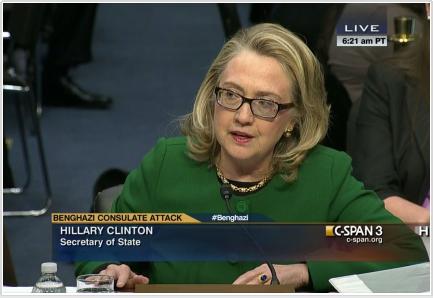
Secretary of State Hillary Clinton testifies before Congress on Jan. 23, 2013, about the fatal attack on the U.S. mission in Benghazi, Libya, on Sept. 11. 2012. (Photo from C-SPAN coverage)

Secretary of State Hillary Clinton testifies before Congress on Jan. 23, 2013, about the fatal attack on the U.S. mission in Benghazi, Libya, on Sept. 11. 2012. (Photo from C-SPAN coverage)

The fact that such a large contingent of State Department officials would openly advocate for an expanded aggressive war in line with the neoconservative agenda, which put Syria on a hit list some two decades ago, reveals how crazy the State Department has become.

The State Department now seems to be a combination of true-believing neocons along with their liberal-interventionist followers and some careerists who realize that the smart play is to behave toward the world as global proconsuls dictating solutions or seeking “regime change” rather than as diplomats engaging foreigners respectfully and seeking genuine compromise.

Even some State Department officials, whom I personally know and who are not neocons/liberal-hawks per se, act as if they have fully swallowed the Kool-Aid. They talk tough and behave arrogantly toward inhabitants of countries under their supervision. Foreigners are treated as mindless objects to be coerced or bribed.

So, it’s not entirely surprising that several dozen U.S. “diplomats” would attack President Barack Obama’s more temperate position on Syria while positioning themselves favorably in anticipation of a Hillary Clinton administration, which is expected to authorize an illegal invasion of Syria — under the guise of establishing “no-fly zones” and “safe zones” — which will mean the slaughter of young Syrian soldiers. The “diplomats” urge the use of “stand-off and air weapons.”

These hawks are so eager for more war that they don’t mind risking a direct conflict with Russia, breezily dismissing the possibility of a clash with the nuclear power by saying they are not “advocating for a slippery slope that ends in a military confrontation with Russia.” That’s reassuring to hear.

Risking a Jihadist Victory

There’s also the danger that a direct U.S. military intervention could collapse the Syrian army and clear the way for victory by Al Qaeda’s Nusra Front or the Islamic State. The memo did not make clear how the delicate calibration of doing just enough damage to Syria’s military while avoiding an outright jihadist victory and averting a clash with Russia would be accomplished.

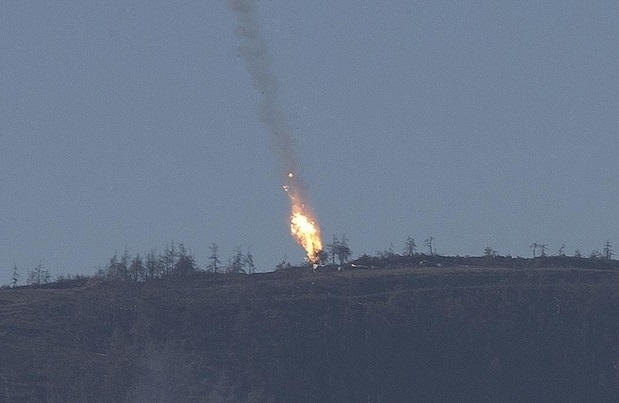
Video of the Russian SU-24 exploding in flames inside Syrian territory after it was shot down by Turkish air-to-air missiles on Nov. 24, 2015.

Video of the Russian SU-24 exploding in flames inside Syrian territory after it was shot down by Turkish air-to-air missiles on Nov. 24, 2015.


Presumably, whatever messes are created, the U.S. military would be left to clean up, assuming that shooting down some Russian warplanes and killing Russian military personnel wouldn’t escalate into a full-scale thermonuclear conflagration.

In short, it appears that the State Department has become a collective insane asylum where the inmates are in control. But this madness isn’t some short-term aberration that can be easily reversed. It has been a long time coming and would require a root-to-branch ripping out of today’s “diplomatic” corps to restore the State Department to its traditional role of avoiding wars rather than demanding them.

Though there have always been crazies in the State Department – usually found in the senior political ranks – the phenomenon of an institutional insanity has only evolved over the past several decades. And I have seen the change.

I have covered U.S. foreign policy since the late 1970s when there was appreciably more sanity in the diplomatic corps. There were people like Robert White and Patricia Derian (both now deceased) who stood up for justice and human rights, representing the best of America.

But the descent of the U.S. State Department into little more than well-dressed, well-spoken but thuggish enforcers of U.S. hegemony began with the Reagan administration. President Ronald Reagan and his team possessed a pathological hatred of Central American social movements seeking freedom from oppressive oligarchies and their brutal security forces.

During the 1980s, American diplomats with integrity were systematically marginalized, hounded or removed. (Human rights coordinator Derian left at the end of the Carter administration and was replaced by neocon Elliott Abrams; White was fired as U.S. ambassador to El Salvador, explaining: “I refused a demand by the secretary of state, Alexander M. Haig Jr., that I use official channels to cover up the Salvadoran military’s responsibility for the murders of four American churchwomen.”)

The Neocons Rise

As the old-guard professionals left, a new breed of aggressive neoconservatives was brought in, the likes of Paul Wolfowitz, Robert McFarlane, Robert Kagan and Abrams. After eight years of Reagan and four years of George H.W. Bush, the State Department was reshaped into a home for neocons, but some pockets of professionalism survived the onslaughts.

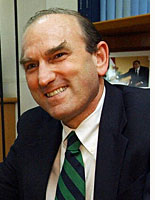
Former Assistant Secretary of State Elliott Abrams, who was a leading neocon inside President George W. Bush's National Security Council.

Former Assistant Secretary of State Elliott Abrams, a leading neocon.

While one might have expected the Democrats of the Clinton administration to reverse those trends, they didn’t. Instead, Bill Clinton’s “triangulation” applied to U.S. foreign policy as much as to domestic programs. He was always searching for that politically safe “middle.”

As the 1990s wore on, the decimation of foreign policy experts in the mold of White and Derian left few on the Democratic side who had the courage or skills to challenge the deeply entrenched neocons. Many Clinton-era Democrats accommodated to the neocon dominance by reinventing themselves as “liberal interventionists,” sharing the neocons’ love for military force but justifying the killing on “humanitarian” grounds.

This approach was a way for “liberals” to protect themselves against right-wing charges that they were “weak,” a charge that had scarred Democrats deeply during the Reagan/Bush-41 years, but this Democratic “tough-guy/gal-ism” further sidelined serious diplomats favoring traditional give-and-take with foreign leaders and their people.

So, you had Democrats like then-U.S. Ambassador to the United Nations (and later Secretary of State) Madeleine Albright justifying Bill Clinton’s brutal sanctions policies toward Iraq, which the U.N. blamed for killing 500,000 Iraqi children, as “a very hard choice, but the price – we think the price is worth it.”

Bill Clinton’s eight years of “triangulation,” which included the brutal air war against Serbia, was followed by eight years of George W. Bush, which further ensconced the neocons as the U.S. foreign policy establishment.

By then, what was left of the old Republican “realists,” the likes of Henry Kissinger and Brent Scowcroft, was aging out or had been so thoroughly compromised that the neocons faced no significant opposition within Republican circles. And, Official Washington’s foreign-policy Democrats had become almost indistinguishable from the neocons, except for their use of “humanitarian” arguments to justify aggressive wars.

Media Capitulation

Before George W. Bush’s invasion of Iraq, much of the “liberal” media establishment – from The New York Times to The New Yorker – fell in line behind the war, asking few tough questions and presenting almost no obstacles. Favoring war had become the “safe” career play.

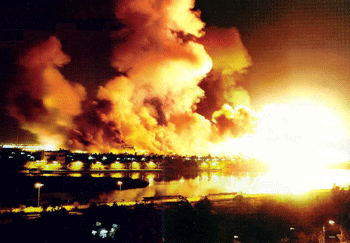
At the start of the U.S. invasion of Iraq in 2003, President George W. Bush ordered the U.S. military to conduct a devastating aerial assault on Baghdad, known as "shock and awe."

At the start of the U.S. invasion of Iraq in 2003, President George W. Bush ordered the U.S. military to conduct a devastating aerial assault on Baghdad, known as “shock and awe.”

At the start of the U.S. invasion of Iraq in 2003, President George W. Bush ordered the U.S. military to conduct a devastating aerial assault on Baghdad, known as “shock and awe.”

But a nascent anti-war movement among rank-and-file Democrats did emerge, propelling Barack Obama, an anti-Iraq War Democrat, to the 2008 presidential nomination over Iraq War supporter Hillary Clinton. But those peaceful sentiments among the Democratic “base” did not reach very deeply into the ranks of Democratic foreign policy mavens.

So, when Obama entered the White House, he faced a difficult challenge. The State Department needed a thorough purging of the neocons and the liberal hawks, but there were few Democratic foreign policy experts who hadn’t sold out to the neocons. An entire generation of Democratic policy-makers had been raised in the world of neocon-dominated conferences, meetings, op-eds and think tanks, where tough talk made you sound good while talk of traditional diplomacy made you sound soft.

By contrast, more of the U.S. military and even the CIA favored less belligerent approaches to the world, in part, because they had actually fought Bush’s hopeless “global war on terror.” But Bush’s hand-picked, neocon-oriented high command – the likes of General David Petraeus – remained in place and favored expanded wars in both Iraq and Afghanistan.

Obama then made one of the most fateful decisions of his presidency. Instead of cleaning house at State and at the Pentagon, he listened to some advisers who came up with the clever P.R. theme “Team of Rivals” – a reference to Abraham Lincoln’s first Civil War cabinet – and Obama kept in place Bush’s military leadership, including Robert Gates as Secretary of Defense, and reached out to hawkish Sen. Hillary Clinton to be his Secretary of State.

In other words, Obama not only didn’t take control of the foreign-policy apparatus, he strengthened the power of the neocons and liberal hawks. He then let this powerful bloc of Clinton-Gates-Petraeus steer him into a foolhardy counterinsurgency “surge” in Afghanistan that did little more than get 1,000 more U.S. soldiers killed along with many more Afghans.

Obama also let Clinton sabotage his attempted outreach to Iran in 2010 seeking constraints on its nuclear program and he succumbed to her pressure in 2011 to invade Libya under the false pretense of establishing a “no-fly zone” to protect civilians, what became a “regime change” disaster that Obama has ranked as his biggest foreign policy mistake.

The Syrian Conflict

Obama did resist Secretary Clinton’s calls for another military intervention in Syria although he authorized some limited military support to the allegedly “moderate” rebels and allowed Saudi Arabia, Qatar and Turkey to do much more in supporting jihadists connected to Al Qaeda and even the Islamic State.

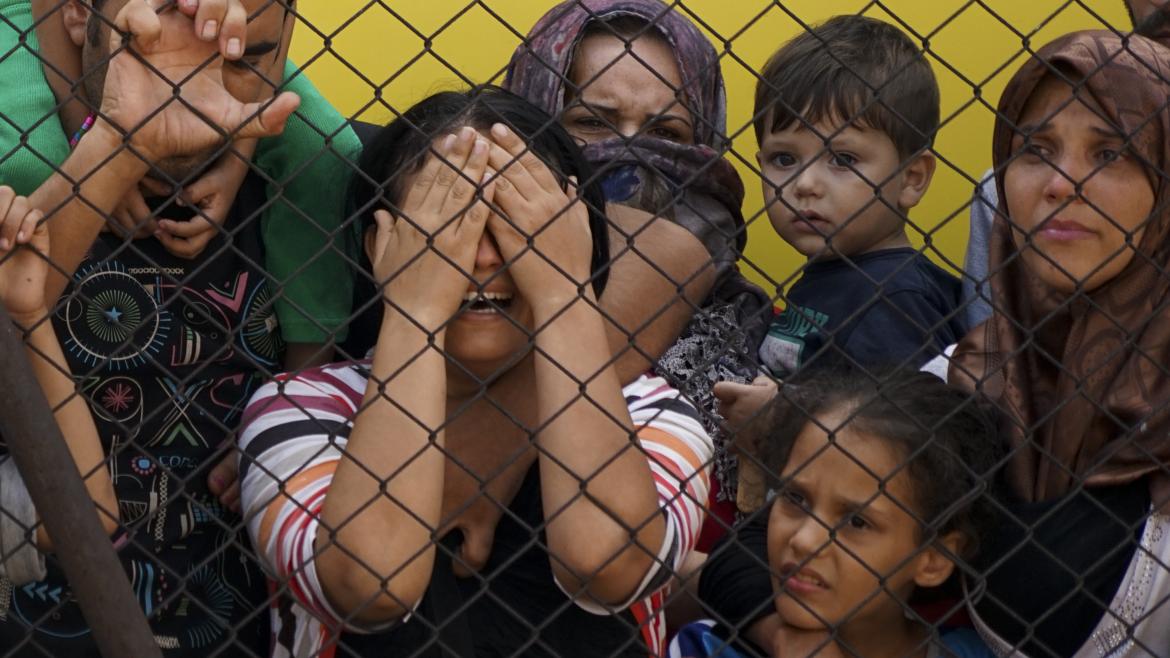
Syrian women and children refugees at Budapest railway station. (Photo from Wikipedia)

Syrian women and children refugees at Budapest railway station. (Photo from Wikipedia)

Under Secretary Clinton, the neocon/liberal-hawk bloc consolidated its control of the State Department diplomatic corps. Under neocon domination, the State Department moved from one “group think” to the next. Having learned nothing from the Iraq War, the conformity continued to apply toward Libya, Syria, Afghanistan, Ukraine, Russia, China, Venezuela, etc.

Everywhere the goal was same: to impose U.S. hegemony, to force the locals to bow to American dictates, to steer them into neo-liberal “free market” solutions which were often equated with “democracy” even if most of the people of the affected countries disagreed.

Double-talk and double-think replaced reality-driven policies. “Strategic communications,” i.e., the aggressive use of propaganda to advance U.S. interests, was one watchword. “Smart power,” i.e., the application of financial sanctions, threats of arrests, limited military strikes and other forms of intimidation, was another.

Every propaganda opportunity, such as the Syrian sarin attack in 2013 or the Malaysia Airlines Flight 17 shoot-down over eastern Ukraine, was exploited to the hilt to throw adversaries on the defensive even if U.S. intelligence analysts doubted that evidence supported the accusations.

Lying at the highest levels of the U.S. government – but especially among the State Department’s senior officials – became epidemic. Perhaps even worse, U.S. “diplomats” seemed to believe their own propaganda.

Meanwhile, the mainstream U.S. news media experienced a similar drift into the gravity pull of neocon dominance and professional careerism, eliminating major news outlets as any kind of check on official falsehoods.

The Up-and-Comers

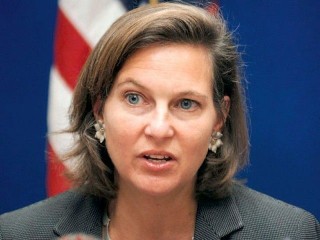
The new State Department star – expected to receive a high-level appointment from President Clinton-45 – is neocon Assistant Secretary of State for European Affairs Victoria Nuland, who orchestrated the 2014 putsch in Ukraine, toppling an elected, Russia-friendly president and replacing him with a hard-line Ukrainian nationalist regime that then launched violent military attacks against ethnic Russians in the east who resisted the coup leadership.

Assistant Secretary of State for European Affairs Victoria Nuland, who pushed for the Ukraine coup and helped pick the post-coup leaders.

Assistant Secretary of State for European Affairs Victoria Nuland, who pushed for the Ukraine coup and helped pick the post-coup leaders.

When Russia came to the assistance of these embattled Ukrainian citizens, including agreeing to Crimea’s request to rejoin Russia, the State Department and U.S. mass media spoke as one in decrying a “Russian invasion” and supporting NATO military maneuvers on Russia’s borders to deter “Russian aggression.”

Anyone who dares question this latest “group think” – as it plunges the world into a dangerous new Cold War – is dismissed as a “Kremlin apologist” or “Moscow stooge” just as skeptics about the Iraq War were derided as “Saddam apologists.” Virtually everyone important in Official Washington marches in lock step toward war and more war. (Victoria Nuland is married to Robert Kagan, making them one of Washington’s supreme power couples.)

So, that is the context of the latest State Department rebellion against Obama’s more tempered policies on Syria. Looking forward to a likely Hillary Clinton administration, these 51 “diplomats” have signed their name to a “dissent” that advocates bombing the Syrian military to protect Syria’s “moderate” rebels who – to the degree they even exist – fight mostly under the umbrella of Al Qaeda’s Nusra Front and its close ally, Ahrar al Sham.

The muddled thinking in this “dissent” is that by bombing the Syrian military, the U.S. government can enhance the power of the rebels and supposedly force Assad to negotiate his own removal. But there is no reason to think that this plan would work.

In early 2014, when the rebels held a relatively strong position, U.S.-arranged peace talks amounted to a rebel-dominated conference that made Assad’s departure a pre-condition and excluded Syria’s Iranian allies from attending. Not surprisingly, Assad’s representative went home and the talks collapsed.

Now, with Assad holding a relatively strong hand, backed by Russian air power and Iranian ground forces, the “dissenting” U.S. diplomats say peace is impossible because the rebels are in no position to compel Assad’s departure. Thus, the “dissenters” recommend that the U.S. expand its role in the war to again lift the rebels, but that would only mean more maximalist demands from the rebels.

Serious Risks

This proposed wider war, however, would carry some very serious risks, including the possibility that the Syrian army could collapse, opening the gates of Damascus to Al Qaeda’s Nusra Front (and its allies) or the Islamic State – a scenario that, as The New York Times noted, the “memo doesn’t address.”

Russian President Vladimir Putin greets Secretary of State John Kerry before meetings at the Kremlin on Dec. 15, 2015. (State Department photo)

Russian President Vladimir Putin greets Secretary of State John Kerry before meetings at the Kremlin on Dec. 15, 2015. (State Department photo)

Currently, the Islamic State and – to a lesser degree – the Nusra Front are in retreat, chased by the Syrian army with Russian air support and by some Kurdish forces with U.S. backing. But those gains could easily be reversed. There is also the risk of sparking a wider war with Iran and/or Russia.

But such cavalier waving aside of grave dangers is nothing new for the neocons and liberal hawks. They have consistently dreamt up schemes that may sound good at a think-tank conference or read well in an op-ed article, but fail in the face of ground truth where usually U.S. soldiers are expected to fix the mess.

We have seen this wishful thinking go awry in Iraq, Afghanistan, Libya, Ukraine and even Syria, where Obama’s acquiescence to provide arms and training for the so-called “unicorns” – the hard-to-detect “moderate” rebels – saw those combatants and their weapons absorbed into Al Qaeda’s or Islamic State’s ranks.

Yet, the neocons and liberal hawks who control the State Department – and are eagerly looking forward to a Hillary Clinton presidency – will never stop coming up with these crazy notions until a concerted effort is made to assess accountability for all the failures that that they have inflicted on U.S. foreign policy.

As long as there is no accountability – as long as the U.S. president won’t rein in these warmongers – the madness will continue and only grow more dangerous.

[For more on this topic, see Consortiumnews.com’s “Democrats Are Now the Aggressive War Party” and “Would a Clinton Win Mean More Wars?’]

Investigative reporter Robert Parry broke many of the Iran-Contra stories for The Associated Press and Newsweek in the 1980s. You can buy his latest book, America’s Stolen Narrative, either in print here or as an e-book (from Amazon andbarnesandnoble.com).

Read this before the US government uses the Orlando shooting to start another war

Global Research, June 19, 2016
Antimedia 17 June 2016

Late Thursday evening, the Wall Street Journal reported, 51 State Department officials signed a statement condemning U.S. policy in Syria in which they repeatedly call for “targeted military strikes against the Damascus government and urging regime change as the only way to defeat the Islamic State.”

“In other words,” as Zero Hedge summarized,

“over 50 top ‘diplomats’ are urging to eliminate [Syrian Pres. Bashar al] Assad in order to ‘defeat ISIS’, the same ISIS which top US ‘diplomats’ had unleashed previously in order to … eliminate Assad.”

This gordian knot created by United States foreign policy — and intensified by that same policy — means not only could war with Syria be on the horizon, but if that happens, the U.S. could be facing a far more serious threat.

While discontented officials used what’s known as the “Dissent Channel” — “an official forum that allows employees to express opposing views,” State Department spokesman John Kirby explained in the WSJ — Saudi government officials employed more direct means to press their interests with the U.S. in Syria.

In a meeting with President Obama on Friday, Saudi foreign minister Adel al Jubair asserted, “Saudi Arabia supports a more aggressive military approach in Syria to get Assad to agree to a political solution,” as CBS’ Mark Knoller tweeted.

Of course, this meeting and the push for increased military force couldn’t be more timely to drum up public support, as a heated national debate has ensued following the deadly attack on an Orlando nightclub purportedly carried out by Omar Mateen — who pledged loyalty to ISIS as he killed 49 people and wounded over 50 others.

Despite the CIA’s report acknowledging it found no tangible connectionsbetween Mateen and the so-called Islamic state — also released on Friday — the narrative concerning his ISIS ties saturated mainstream headlinesfor days, almost certainly cementing the link in the public’s mind.

Disgruntled politicians eager to overthrow Assad — thus also carrying out Saudi goals — can now facilely flip the script to assert deposing the Syrian government is necessary in the fight against everyone’s enemy, the Islamic State.

“Failure to stem Assad’s flagrant abuses will only bolster the ideological appeal of groups such as Daesh [ISIS, etc.], even as they endure tactical setbacks on the battlefield,” the WSJ reported the dissenting cable stated.

But concerns about bloating ISIS’ following borders on comical, except for the potential waterfall of repercussions from carrying out targeted strikes on the Syrian government, considering the U.S. government, itself, once expressed the desire for the rise of an Islamic State to aid in the overthrow of — you guessed it — Assad.

According to declassified documents obtained by Judicial Watch last year:

If the situation unravels there is the possibility of establishing a declared or undeclared Salafist Principality in eastern Syria (Hasaka and Der Zor), and this is exactly what the supporting powers to the opposition want, in order to isolate the Syrian regime, which is considered the strategic depth of the Shia expansion (Iraq and Iran).

Former Director of National Intelligence and retired U.S. Army Lt. Gen. Michael Flynn, however, spoke to Al Jazeera about this ill-fated, notorious strategical blunder.

“You’re on record as saying that the handling of Syria by this administration has been a mistake. Many people would argue that the U.S. actually saw the rise of ISIL coming and turned a blind eye, or even encouraged as a counterpoint to Assad,” journalist Mehdi Hasan prefaced his query, adding,“The U.S. saw the ISIL caliphate coming and did nothing.”

Flynn responded, “Yeah, I think that we — where we missed the point. I mean, where we totally blew it, I think, was in the very beginning.”

Besides backing and blessings from the Saudi government for aggression on the Syrian front, dissent among U.S. officials couldn’t be more imperative in their eyes, because, as the WSJ reported:

The internal cable may be an attempt to shape the foreign policy outlook for the next administration, the official familiar with the document said. President Barack Obama has balked at taking military action against Mr. Assad, while the Democratic hopeful Hillary Clinton has promised a more hawkish stance against the Syrian leader. Republican candidate Donald Trump has said he would hit Islamic State hard but has also said he would be prepared to work with Russia and Syria.

In fact, as Zero Hedge also noted, an albeit contested report from earlier this week claimed Saudi Deputy Crown Prince Mohammed bin Salman made comments including “a claim that Riyadh has provided 20 percent of the total funding to” Clinton’s campaign.

Politicians and officials, in other words, are fast aligning a narrative touting the need to wage war with Syria in order to have it carried out by the candidate they assume will next take the White House.

And despite being a risky move in its own right — not to mention a potentially superficial, if not muddying, solution to an almost solely U.S.-created problem — ramping up military airstrikes in Syria could quite literally spark war with Russia.

“The Russian Air Force bombed U.S.-trained rebels in southern Syria not once, but twice Thursday, and the second wave of attacks came after the U.S. military called Russia on an emergency hotline to demand that it stop,” an unnamed defense official with knowledge of the situation told Fox News.

Russia has repeatedly warned against U.S. moves to oust Assad, which President Vladimir Putin’s spokesman, Dmitry Peskov, reiterated following the tense situation Thursday and the report calling for increased military targeting of the Syrian government saying, it “wouldn’t help a successful fight against terrorism and could plunge the region into total chaos.”

As recently as February, Saudi Arabia proposed sending its own troops to join the fight against ISIS — which Russia wholly condemned. As head of the State Duma committee, Pavel Krasheninnikov, warned“Syria has to give official consent, to invite, otherwise it will be a war.”

Now, it appears, that war might be closer than ever.

Syria doesn’t constitute the only arena of contention between the U.S. and Russia. As Anti-Media reported this week, continued buildup of NATO forces along the old Cold War foe’s borders in the Balkans and Poland — and particularly also in the Black Sea — has provoked Russia sufficiently enough for officials to caution the move might amount to aggression.

“This is not NATO’s maritime space and it has no relation to the alliance,”Russia’s director of European affairs told Interfax.

Nonetheless, the U.S. and E.U. have proffered a policy whereby defense of its installations on foreign soil is being carried out under the cloak of the NATO alliance — possibly with the intent of posturing dominance in the region to create a buffer zone for operations in Syria.

Pipelines through Syria would specifically allow oil and natural gas to flow to the European Union, which currently sources that fuel primarily from Russia. In other words, if Russia wants to defend its profitable relationship with the E.U., it must defend against the U.S.-led, Saudi-supported overthrow of its Syrian ally, Assad.

Meanwhile, civilians in Syria have been treated like cannon fodder and are fleeing for their lives — but the intensifying geopolitical maneuvers appear more likely than ever to have brought us all to the brink of a third world war.

US State Dept. report claiming Iran top terror state is anything but

From Farsi News

June 6, 2016

TEHRAN (FNA)- The US State Department has published its annual survey of worldwide terrorism, in which it has once again claimed that Iran is the main state sponsor of terrorism.

As always, the report doesn’t offer any evidence to support the labeling of Iran as the “top” terror state. Instead, it mostly focuses on Iran’s lawful support for Palestinian resistance against Israel, the Lebanese Hezbollah, and its involvement in the ongoing war against ISIL and Al-Qaeda in Iraq and Syria.

That for the most part the list is a political tool rather than a practice report, including only a handful of nations that are at odds with Washington, is not that much important. What’s important is that the report makes Iran the “top” nation, which is exactly what Israeli leaders constantly refer to as such.

Perhaps the State Department wants to appease Israel and Arab allies. Perhaps this is because these “allies” are not happy with the nuclear deal signed between Tehran and the world powers (the US, Britain, France, Russia, China and Germany). Perhaps it is for domestic consumption, particularly now that US presidential campaigns are well underway. Whatever it is, the exact timing of the report is equally important at this particular juncture.

The report comes at a time when Iraqi-Syrian armies and popular forces, backed by Iranian military advisors and Russian airstrikes, are winning the twin wars against ISIL and Al-Qaeda. The counter-terror alliance will soon liberate both nations. In between, Tehran says it has no intention of cooperating with Washington on regional crises. This hasn’t gone well with the nervous War Party. This is not exactly what the Obama cabal had in mind when they signed the nuclear deal with Iran in 2015.

What they were after was Iran changing course and getting along with them in other important disputes related to Iraq, Syria, the Lebanese Hezbollah, and the Palestinian resistance. However, despite the nuclear deal, Tehran has said no. As a consequence, this has inevitably made it the “top” nation on the the State Department’s terror sponsors list.

Regarding the list, few points are worth mentioning as well:

Terrorism has been described variously as both a tactic and strategy; a crime and a holy duty; a justified reaction to oppression and an inexcusable abomination. Obviously, a lot depends on whose point of view is being represented.

Iran is not involved in state terrorism in Iraq and Syria. Terrorism is an effective tactic for the weaker side in the conflict. Iran is not the weaker side. So far, it has helped the national forces liberate many cities and towns in Iraq and Syria – as humanely as possible.

Moreover, what Iran’s military advisors are offering across multiple fronts is clear and legitimate campaign under International Law to defend against or to deter terrorism. The legality of such campaign is out there for all to see. The nature of Iranian presence and activity is also for pre-emption, and in no way for extreme goals under sectarian and hegemonic designs. Even the United Nations agrees. The UN says in the absence of Iran in international negotiations, there will be no peace in Syria.

Somehow, the US Department of Defense agrees too. It defines terrorism as “the calculated use of unlawful violence or threat of unlawful violence to inculcate fear; intended to coerce or to intimidate governments or societies in the pursuit of goals that are generally political, religious, or ideological”.

Within this definition, there is no Iranian violence, fear, and intimidation in Iraq and Syria that produces terror in its victims. Iranian military advisors are there upon an official request by the central governments. Iran is not using force and violence to intimidate or coerce those governments, let alone the civilian population, or any segment thereof, in furtherance of political or social objectives. Quite the opposite, Iran is helping them to fight terror and it has paid a heavy price for it.

Into the argument, Iran’s support for the resistance groups of Hezbollah and Hamas is not for idiosyncratic, criminal or political reasons either. Iran is not supporting the resistance for political ends, or for the purpose of putting the public, or any section of the public there, in fear. The whole idea is to shed light on the plight of the Palestinian refugees as well as the immediate victims of Israeli wars of aggression, occupation, and deceit.

Iran seeks a just solution to the Israeli-Palestinian conflict based on International Law, human rights, and equality for all. Nothing is wrong with that. Within this context, Hezbollah fighters are legitimate combatants too. Any doubters should ask the people of Syria, where members of Hezbollah are fighting terror and for what they believe in.

Taken together, Iran’s foreign policy is one rooted in diplomacy over regime-change war, terrorism, and aggression. It is not war-based or accountable to longstanding corporate and military powers. Unlike the United States for which diplomacy is essentially another weapon in its war arsenal, Iran is for diplomacy and recognises other countries’ sovereignty. It never cheerleads for intervention, targeted assassination, state-sponsored terrorism, or drone wars.

It’s a sure laugh-line to mention the State Department’s claim yet again that supporting the Palestinian resistance or the counter-terror alliance of Syria, Iraq, Russia and Hezbollah makes Iran a top candidate for its terror sponsors list. It says more about the War Party’s own war-driven and terror-based foreign policy than anything else.

http://en.farsnews.com/newstext.aspx?nn=13950317001305

Al Qaeda goes to Washington

Global Research, May 22, 2016
Syrian Al Qaeda Affiliated Leader Visited Washington, for Consultations with U.S. State Department?
A senior figure from a Syrian rebel group with links to al Qaida was allowed into the United States for a brief visit, raising questions about how much the Obama administration will compromise in the search for partners in the conflict.”  McClatchy, May 21, 2016Labib al Nahhas is known as the foreign affairs director for the Islamist fighting group Ahrar al Sham. He visited Washington in December. The leader of a terrorist entity linked to Al Qaeda was granted entry by US immigration:

That suggests that authorities granted him entry at a time when U.S. immigration authorities face political pressure to block visitors with even tenuous ties to extremist groups. Four months after Nahhas entered the United States on a European passport, U.S. authorities denied entry to a well-known Syrian humanitarian leader who had been approved to visit Washington to receive an award from international aid groups. McClatchy 

While the purpose of his visit was not disclosed, the report nonetheless intimates that he was in Washington for talks with US government officials. “His previously undisclosed visit is a delicate matter for both sides – the conservative Salafist insurgents risk their credibility with even perceived ties to the United States, and the U.S. government risks looking soft on screenings by allowing entry to a member of an Islamist paramilitary force.”

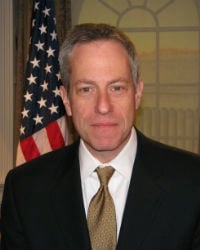
Moreover,  shortly prior to his visit to Washington, Nahhas together with other rebel leaders met with Michael Ratney (image right), U.S. State Department special envoy for Syria, in Istanbul on December 5, 2015.

Was this Istanbul meeting intended to establish the groundwork for further consultations with the jihadist leader in Washington DC?

The report suggested that the Ahrar al Sham “moderate” terrorist leader (who appears to have the profile of a US “intelligence asset”)  would be meeting with “third parties” in Washington DC  ”who might influence policymakers” –e.g. D.C. think tanks, research institutes, media, US intelligence, etc. as well as  ”lobbyists and Middle East researchers”.

The State Department declined to answer whether any U.S. officials knew in advance or expressed reservations about Nahhas’s presence in Washington, or whether State Department officials had assisted his entry.

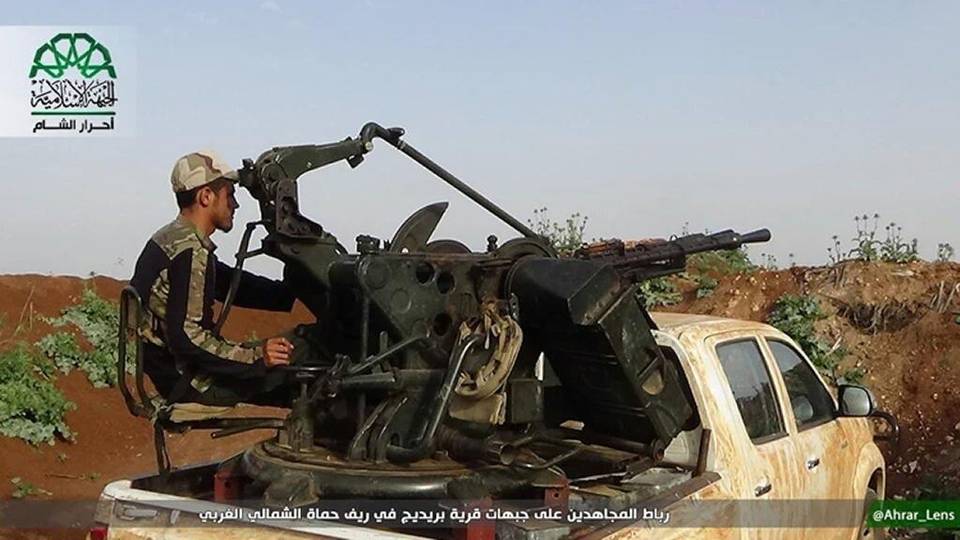
In this image posted on the Twitter page of Ahrar al-Sham on May 6, 2016, an Ahrar al Sham fighter guards the front lines of Breidige village in northwest Syria. Unlike the Islamic State group and al-Qaida's branch in Syria, the Nusra Front, Ahrar al-Sham is not on the U.S. list of terrorist organizations.

In this image posted on the Twitter page of Ahrar al-Sham on May 6, 2016, an Ahrar al Sham fighter guards the front lines of Breidige village in northwest Syria. Unlike the Islamic State group and al-Qaida’s branch in Syria, the Nusra Front, Ahrar al-Sham is not on the U.S. list of terrorist organizations.

National security analysts say U.S. authorities likely knew of Nahhas’ arrival – intelligence agencies for years have watched his group’s interactions with al Qaida’s Syrian branch, the Nusra Front.

“They could make, quickly, the decision that he’s persona non grata in the United States and yet they haven’t.” Faysal Itani, a Syria specialist with the Atlantic Council’s Rafik Hariri Center for the Middle East

Links to al Qaeda

Nahhas denies his affiliation to al Qaeda:

“We have been falsely accused of having organizational links to Al-Qaeda and of espousing Al-Qaeda’s ideology. Nothing could be further from the truth.”

According to Charles Lister (Brookings):

These are bold words [above] from such a senior Ahrar al-Sham official, … , this author still finds it nearly impossible to get any group, including those already successfully “vetted” by the United States, to commit to condemning Jabhat al-Nusra in front of others, Syrian or foreign.

So was Nahhas’ omission of Jabhat al-Nusra merely an extension of this broader reality? Thus far, it would seem so. By explicitly singling out al-Qaida, Nahhas was distinguishing its Syrian affiliate, or at least much of the 60 to 70 percent Syrian portion of it, as still being a potential partner [al Nusra] in a broader and more medium-term Syrian project. Brookings, July 14, 2015

In this regard, the McClatchy report confirms that

The group’s ultimate vision is Islamist rule for Syria and its old links to al Qaida are no secret: One of the group’s founders, Abu Khalid al Suri, was memorialized by al Qaida leader Ayman al Zawahiri after his death in a bombing.

By all accounts, Ahrar al Sham is much more ideologically diverse than al Qaida, encompassing members ranging from followers of a more moderate, Muslim Brotherhood-style Islamism to Salafist jihadists whose beliefs are virtually identical to al Qaida’s.

“They’re not al Qaida but they are Salafi jihadists – they’re just not transnational ones,” Itani said of Ahrar al Sham. (McClatchy, op cit)

Al Qaeda goes to Washington! This should come as no surprise. It’s part of a routine. US officials have been working hand in glove with Al Qaeda since the onslaught of the war on Afghanistan in 1979.

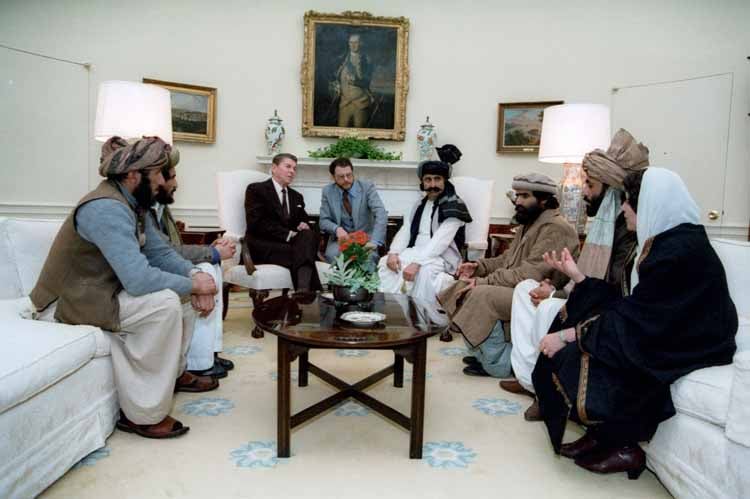
President Reagan meets with Mujahideen leaders, 1980s

The original source of this article is Global Research

Visas for Al Qaeda: CIA Handouts That Rocked The World – An Insider’s View.

Global Research, December 28, 2015
Guns and Butter 9 September 2015

Michael Springmann was Chief of the Non-Immigrant Visa Section in Jeddah, Saudi Arabia, from 1987 to 1989. In his position in Jeddah, he was routinely overruled by superiors when he denied VISA applications submitted by unqualified travelers to the United States.

The events of September 11th gave him a more profound understanding of the troubles he experienced in that job. He is the author of “VISAs for Al Qaeda: CIA Handouts That Rocked The World – An Insider’s View”. He describes the American VISAs For Terrorists Program and the Arab-Afghan Legion

Transcript:

This is Guns and Butter.

I think it’s bigger than I even suspected. I had thought originally that it was a small, rogue operation and as time went by and I talked to people and started researching the book I saw that it was bigger than ever. Given the pushback and the blocking of people, I really think that it goes wider and deeper than even I suspect. I think one of the reasons for this is that nobody wants to believe the entire government is corrupt from top to bottom, that you can talk about Edward Snowden or Tom Drake or William Binney and the very focused, very tightly organized situations for a particular person for a particular item. What I’m saying is that the United States of America and all of the branches – the executive, the judicial, and the legislative – know about this and are covering up essentially state sponsored terrorism, and nobody wants to hear this. Nobody wants to go any deeper in it than I’ve got.

I’m Bonnie Faulkner. Today on Guns and Butter, J. Michael Springmann. Today’s show: Visas for Al Qaeda.

Michael Springmann is a former diplomat in the State Department’s Foreign Service, with postings to Germany, India, Saudi Arabia, and the Bureau of Intelligence and Research in Washington, D.C. He was Chief of the Non-Immigrant Visa Section in Jeddah, Saudi Arabia, from 1987 to 1989. In his position in Jeddah, he was routinely overruled by superiors when he denied visa applications submitted by unqualified travelers to the United States. The events of September 11th gave him a more profound understanding of the troubles he experienced in that job. He is the author of Visas for Al Qaeda: CIA Handouts That Rocked the World – An Insider’s View. His articles on national security themes have been published in Covert Action Quarterly, Unclassified, Global Research, OpEd News, The Public Record and Foreign Policy Journal. He is now an attorney in private practice in the Washington, D.C. area.
* * * * *
Bonnie Faulkner: Michael Springmann, welcome.

Michael Springmann: Thank you. I’m pleased and honored to be able to talk to you and talk to your listeners.

Bonnie Faulkner: Your book, Visas for Al Qaeda: CIA Handouts that Rocked the World – An Insider’s View, is a blockbuster starting from the first page. I’d like to read the dedication of your book. “This opus is dedicated to the people of Afghanistan, Iraq, Libya, Russia, Syria and Yugoslavia. I offer it as a small commemoration to both the living and the dead of those unfortunate countries, particularly those who were murdered in their millions by the United States of America.”

According to what you write, you’ve come a long way in your thinking about American foreign and now domestic policy. You are a former US diplomat having worked in many foreign posts, most significantly as a visa officer in Jeddah, Saudi Arabia from 1987 to 1989. How did you come to work in the Foreign Service and what different posts were you assigned to?

Michael Springmann: I had gotten very much interested in foreign affairs when I was in high school. I had read Lederer and Burdick’s book, The Ugly American, and thought the State Department needed somebody who wasn’t quite so hide-bound and wearing blinders.

So after I went to Georgetown University School of Foreign Service I graduated and tried to take the Foreign Service exam, passing the written test but failing the oral. Unfortunately, I drew the former ambassador to Vietnam, Ellsworth Bunker, who was a war hawk and when they asked me, “What kind of foreign policy problems do you see in the world today?” I mentioned Vietnam and said that the American government was keeping its actions in Southeast Asia from the American people but the folks in Southeast Asia, the Vietnamese, the Cambodians and the Laotians, they all knew they were being bombed to hell. And boy, the interview went downhill from there. I wasn’t the right kind of person they wanted.

So over the next few years I kept re-taking the exam and always passing the written but never the oral. I sort of wondered sometimes whether I was the right person since I didn’t come from the upper-class, Ivy League educated elite that normally goes into the Foreign Service, the folks from Harvard and Yale and come from big money. So in my situation, I went abroad with the State Commerce Exchange Program, which was a program set up to give Washington assignments to State Department people who needed to be in DC for some reason, and in return, Commerce Department employees got positions as Foreign Service officers abroad. I was sent to Stuttgart.

Later, when they created the Foreign Commercial Service, taking it away from the State Department, I went to India as commercial attaché in New Delhi. Then eventually, presumably citing my background in the State Commerce Exchange Program and the Foreign Commercial Service, I eventually got through the oral exam and then was commissioned to Foreign Service officer, and as a reward, was sent to Saudi Arabia, which was not on any of my lists of perspective assignments and, in fact, I had been told I was going to the embassy in what was then East Berlin.

Bonnie Faulkner: In your introduction, “What is this about?” you discuss al Qaeda. What is al Qaeda?

Michael Springmann: Well, al Qaeda is one of the brand names for the American visas for terrorists program. Initially, they were the mujahedeen, the people who recruited around the world and sent to the US for training and to Pakistan for training and then sent to Afghanistan to shoot things down and blow things up, hopefully with Soviet soldiers inside.

They then became al Qaeda in another brand change, but it was basically the same fanatical Muslims who were doing America’s bidding in destabilizing first Yugoslavia and then Iraq and then Libya and then Syria. And now they’re calling them ISIL or ISIS or Daesh and it’s the same people. It’s the Arab Afghan Legion, it’s the guys originally recruited as the mujahedeen 25 years ago or more.

They’re not as organized as the Marine Corps but they are crazy people that have been recruited and trained by the Americans and supplied by the Saudis and the Gulf states and others, and they’re turned loose to destabilize, de-house, de-culturalize and destroy countries the United States doesn’t like or governments the United States doesn’t like.

They did it in Iraq, they did it in Yugoslavia, they did it in Libya, which had one of the highest standards of living in all of Africa, and they’re doing it to Syria, which I think is in a worse condition now after four years of American-sponsored war than Iraq was or is. There are at least a million dead in Iraq and still four million people as refugees or internally displaced, and Syria has the same problem. There are four million people outside the country.

Bonnie Faulkner: One of your introductions is entitled “Why did I write this book?” Why did you write this book?

Michael Springmann: Well, I wrote the book because more than 20 years of speaking out against what was being done to me and the rest of the world, analyzing the disastrous American foreign policy, the imperial American foreign policy, and not getting a whole lot of response, I said, well, all right. I had done Freedom of Information Act requests with the State Department and got nowhere. I did that in 1992 when I was fired and wanted to find out why, and when State stalled me for two years and gave me no information I filed a lawsuit in US District court. It was sealed and shut down as a threat to national security – and I still wonder why finding out what was going on about my firing was a threat to national security, but I think now we know.

The second impetus to this was several years ago when I filed another Freedom of Information Act request and again got stonewalled by the State Department. I wanted the original visa applications I had refused years ago and had been repeatedly overruled by Jay Freres who I believe to be a CIA official. And he was the driving force behind all of these illegal visas, people had no ties to their own country or Saudi Arabia yet wanted to go to America for reasons none of them could articulate. That was shut down because the State Department claimed, “Well, we can’t find any of these records. They’ve all been shredded.” I said, “Well, that’s not true because we interviewed 45,000 applicants a year and we had, when I was there, filing cabinets filled to overflowing with applications 5, 10, 15 years old. If they had been shredded,” which I doubted, “I want to know the names of the people who shredded them, their rank and the dates they were shredded.” State would never do this and Reggie Walton, the judge who was also on the Foreign Intelligence Surveillance Act court, simply closed down my Freedom of Information Act lawsuit as having used up all of my administrative remedies.

So I said, all right. I’ve had enough. I’m going to write a book. I’m going to try and tie this all up together and I’m going to get it out to people who really need to know about this. And that’s what I’ve been doing since February 6th.

Bonnie Faulkner: Is that February 6th of this year?

Michael Springmann: Of this year, that’s right. I closed down the research in December of last year, 2014, and said I can’t do this. I’m going to keep going on forever. This book is timely, it’s important, people need to know about it and sent it off to the printers and was done with it February 6th and it was on the street I think later that month.

Bonnie Faulkner: What kind of people does the US government hire to formulate and manage its imperialist foreign policy?

Michael Springmann: Idiots, and they’re generally people who do not work for the Department of State. State claims it wants the best and the brightest, but some of the ones I’ve met aren’t the best and the brightest anywhere in the world. Unfortunately, most of the people who work for the State Department work for the intelligence services. I had a former chief of station and a real Foreign Service officer, Jay Hawley, tell me that the average is about one in three Foreign Service officers work for one of the American intelligence services. There was a former ambassador, who’s now died, he said about half of the people in many Foreign Service posts work for the intelligence services. When I was in Jeddah, out of 20 Americans there were only 3 people, myself, Mike Springmann, Lonnie Washington, the only State Department communicator, and Jim Page, an administrative officer, we were the only people who had no ties professional or familial with any of the American intelligence services.

According to a book that was published in Canada that ran about 12 pages, that I’ve not yet seen but found on Namebase.org, two-thirds of the people who work for the State Department as Foreign Service officers are really intelligence officers. These are the people who are incredibly arrogant, self-centered and contemptuous of everybody else in the world.

Bonnie Faulkner: With regard to some of your experiences in Jeddah, didn’t you discover things yourself going on there that the US government itself wasn’t even aware of?

Michael Springmann: Yes and no. When I was in Jeddah I was getting some really strange people as visa applicants and later found out they were sent to me by the intelligence services. But in one instance my ability to make contacts and talk to people brought in a major revelation. The Saudis, beginning about 1988, had been very much interested in buying Chinese made silkworm missiles. These were intermediate range ballistic missiles. I was going out to dinner with some Europeans one day and they came over to the house for a couple of beers before we went out and this guy said, “Well, you know, I’m working down at the port and you know those Chinese silkworm missiles?” I said, “Yeah.” “Well, they’re bringing them in. they’re unloading them and they’re moving containers around to block the sight lines.”

As luck would have it, the air attaché was down from Riyadh and I called him up the first thing the next morning and told him what I had gotten from the fellow, and he said, “That’s news to me. I’m not down here about this. I came down to do scuba diving.” So he went and got pictures taken either through a satellite, overhead imagery, or through a flyover with a reconnaissance plane, and the National Security Agency hadn’t heard about that, and the CIA, Karen Sasahara, the case officer whose diplomatic cover was political officer, she didn’t know about it. The State Department’s secretary for the consul general who had once worked with the CIA, she was mad because she had to come in on her day off and write the cable about this. As a footnote, Karen Sasahara is now deputy chief of mission in Sana’a and she’s working with her husband, Michael Ratney, who had been consul general in Jerusalem and is now American ambassador to Syria. So they’re keeping terrorism and warfare in the family.

Bonnie Faulkner: What’s it like in Jeddah, Saudi Arabia?

Michael Springmann: Well, Lonnie Washington, the communicator, said that, well, the Saudis put a lot of restrictions on everybody and the Americans put restrictions on top of them. You had to take your liquor bottles and beer cans to be crushed so the Saudis wouldn’t know you were drinking beer even though Saudis came to American functions on the compound where everybody was drinking and they drank, too. The place was amazing. If you had the right connections, if you had what the Arabs call “wasta,” you could get almost anything done you wanted. I had dinner at a high-level Saudi fellow’s house and he said before dinner, “Mike, would you like whiskey before dinner or would you want an apéritif of some kind? We can get you sherry or you name it, we’ve got it.” I said, “Wow.”

But it was an amazing place. You could do anything if you kept it hidden. If you went out and influenced Muslims to drink you’d get tossed in jail and lashed and deported, but if you had the right connections you could do anything you wanted. They had undercover priests saying mass at J. Phillip Frerer’s house. He was the American consul general and supposedly a devout Catholic. It was kind of like Europe at the time of Henry VIII. You had hidden priests posing as travel agents, doing their ministry there. You had Protestants having religious services on the American consulate compound. It was absolutely astonishing.

Bonnie Faulkner: You talk about how the US Foreign Service was professionalized and merged with the Central Intelligence Agency. You’ve started to talk about this. How does the CIA operate within the Foreign Service?

Michael Springmann: They have people called “under official cover.” They are supposedly real Foreign Service officers with black diplomatic passports. There were two CIA case officers in my A-100 class, the class teaching you how to be a Foreign Service officer, when I was hired by State. They simply go out and they’re given assignments in the political section, the economic section, the commercial section, the administrative section, but they don’t necessarily work full time in those sections. For example, Andy Weber, who is now assistant secretary of defense for nuclear, biological and chemical weapons, he was a CIA case officer in Jeddah supposedly assigned to the consular section, but he worked there maybe half a day and we really only had him in there full time when we had a flood of visa applicants after the end of major holidays in Saudi Arabia.

Bonnie Faulkner: I tend to think of terrorist training as taking place in foreign countries, such as Jordan or Turkey or wherever. In fact, a lot of the training of terrorists took place right here in the United States. What was or is the visas for terrorists program?

Michael Springmann: That’s essentially what I called what I was being told to do in Jeddah. It was the mujahedeen recruits that they were brining from all over the Middle East and even as far as East Asia. They were people who wanted to be taught to shoot things down and blow things up. They brought them by the thousands to the US to be taught in US military training facilities, either in North Carolina with the Navy or near Williamsburg, Virginia with the CIA organization called The Farm. They’re also being fought in Jordan now. There are a number of American bases there that are teaching them how to do this. There are apparently bases in Turkey that are giving them the full treatment on how to destroy Syria and before, how to destroy Libya. It’s amazing. You would have thought they would have done it easier and cheaper abroad but who knows what goes on in these people’s minds?

Bonnie Faulkner: In your chapter “Enter the Patsy,” I assume that you were the patsy.

Michael Springmann: Exactly. Had they told me what they wanted me to do, I probably would have been dumb enough at the time to say, “Yeah, we work for the same government. Yeah, you want a visa for a guy to overthrow the evil, godless Soviet empire? Sure. I’ll stamp the visa for you.” But they never did that.

I had this bizarre conversation with the then American ambassador, Walter Cutler. I was in Area Studies at the State Department’s Foreign Service Institute. They were training an education arm. I got a call from one of the desk officers for Saudi Arabia, the people who follow what goes on in the country and are essentially the State Department’s embassy in Washington for Saudi Arabia or India or Germany or whatever country you’re talking about. He said, “Cutler’s in town. Do you want to meet him?” I said, “Yeah, sure.”

I figured it would be a five-minute hello and goodbye session, and Cutler kept me there for 45 minutes talking about all the problems my predecessor, Greta Holtz, had created for him and the embassy in Riyadh. She was refusing visas to servants for rich Saudi women who couldn’t travel to the US without seamstresses, hairdressers and other factotums. I said, this is the most bizarre thing. He’s telling me my predecessor is an absolute incompetent and a trouble maker and he wants me to do something but I can’t quite figure what it is he wants me to do or what message he’s trying to get across.

Once it was over, I asked the desk officer who was there with me, “What was that all about?” He said, “Well, I don’t know. Cutler was just a queer duck.” Well, Greta Holtz, who refused to answer three letters asking about what was life in Jeddah, what she wished she had known before she got there and so forth, told me on the phone one day after I was out of the Foreign Service, “Oh, I was so upset I couldn’t tell you about this.” I found this really peculiar because Greta Holtz is now American ambassador to Oman, and if she had all these problems how is it that she’s in the Foreign Service still and I’m out, when all I was doing was my job, which was essentially to support and defend the Constitution of the United States against all enemies, foreign and domestic?

So far as I’ve seen in my career in the State Department and since then, the only enemies there are around are domestic enemies, and they generally work for the United States government.

Bonnie Faulkner: Now, what were the three recruiting offices in Saudi Arabia? You worked in Jeddah. Weren’t there two other centers?

Michael Springmann: There was one in Dhahran at the consul there, but I’ve never been able to figure it out, and one in Riyadh. Nobody’s been able to tell me their exact addresses. It was just, yeah, the cities, they were there, but they never really gave me any concrete information. Try as I might, I couldn’t find anybody who would tell me otherwise.

Bonnie Faulkner: The problem that you ran up against professionally in your job is that you were actually denying visas. Isn’t that right?

Michael Springmann: Yeah. With a visa application you’ve got to establish some kind of connection to the place of application or your own country. You have a job, you’re going to school, you’re running a business, you have an investment, whatever that’s going to be strong enough to bring you back from the United States for whatever reason you’re going here. For example, people go for tourism, to visit relatives, to sign a contract with a business in the United States, whatever. Then they can’t stay here. They have to go back to managing their own business, they have to graduate from their university, they have to manage their job, they’re either a manager in a company and they just can’t go away and leave it.

None of these people had any of those ties. They were people that couldn’t name the city they were going to, couldn’t tell me why they were going there, had absolutely no information available to me as to what they were doing or why they were going. I thought once I had yelled and screamed and filed lawsuits that this had all stopped. Yet after September 11th, and in researching the book, I found that Shayna Steinger had been the consular officer in Jeddah who had issued 11 visas to people who were participants in the September 11th attacks, and I was thunderstruck at this. Shayna Steinger, who from my research on the Internet had given equivocable answers to the 9-11 Commission, she still has a job and has gotten promotions.

Bonnie Faulkner: You’re saying that 11 of the, what, 19 …

Michael Springmann: Twenty. I think 19 or 20. 15 got their visas in Saudi Arabia and 11 of the 15 got them in Jeddah.

Bonnie Faulkner: I see, at the very office where you worked.

Michael Springmann: Exactly.

Bonnie Faulkner: You complained because you were being overruled when you denied visas, right? Who did you complain to?

Michael Springmann: I complained first to Justice Stevens, and Justice is the given name. He was head of the consular section. I complained to Jay Frerers. I complained to Stephanie Smith, who I have since found out is a CIA official. When she was counsel for consular affairs in Riyadh and she told me, “This is a very bad thing. When you go back to Washington, tell the Bureau of Consular Affairs about this,” which I did and they had absolutely no interest.

Once I was out of the State Department I complained to the Government Accounting Office, as it was known at the time. I complained to the Justice Department and to the Federal Bureau of Investigation. They told me after September 11th, after I called office after office at headquarters, to call the Washington District office and when I did, they said, “Well, we’ll get back to you. That was 15 years ago and I’m still waiting.

Bonnie Faulkner: So how massive would you say the cover-up is?

Michael Springmann: I think it’s bigger than I even suspected. I had thought originally that it was a small, rogue operation and as time went by and I talked to people and started researching the book I saw that it was bigger than ever. Given the pushback and the blocking of people, like Amy Goodman on DemocracyNow! and Tom Devine at the Government Accountability Project, I really think that it goes wider and deeper than even I suspect.

I think one of the reasons for this is that nobody wants to believe the entire government is corrupt from top to bottom, that you can talk about Edward Snowden or Tom Drake or William Binney and the very focused, very tightly organized situations for a particular person for a particular item. What I’m saying is that the United States of America and all of the branches – the executive, the judicial, and the legislative – know about this and are covering up essentially state sponsored terrorism, and nobody wants to hear this. Nobody wants to go any deeper in it than I’ve gotten, and I think there’s a lot more to be uncovered if you can ever find the right person to talk.

Bonnie Faulkner: You write, “What I was protesting was in reality an effort to bring recruits, rounded up by Osama bin Laden, to the United States for terrorist training by the CIA. They would then be returned to Afghanistan to fight against the then-Soviets.”

Michael Springmann: Exactly. They went all in with the mujahedeen. They had recruited them, they had trained them, and along the way I think they realized that, hey, we’ve got a cadre of people who are really good at destroying governments and countries. Why don’t we apply this group to other countries where we have an interest in having an unstable government with a failing economy? And I think they brought them to Yugoslavia first. They had Osama bin Laden and 5,000 or more Saudis there. They had people that they had trained and had worked with NATO in Yugoslavia to destroy the country, and according to this guy, John Schingler, who had been with the National Security Agency and the Naval War College in Providence, Rhode Island, they got a lot of help from the American government to get them there, to keep them there, and provide them with intelligence and weapons and training and so forth.

After that, they sent them to Iraq and we’ve all seen what’s happened to Iraq. It’s been split into virtually three pieces with no functioning government and no functioning economy. They moved them to Libya. They had more arms amongst the so-called rebels in Libya than they had in the British Army’s inventory. Once they had gotten these people there and had killed the American ambassador because he was apparently in the middle of their efforts to move weapons from Libya to Syria to help destabilize the country there, they had this great opportunity to just shift people and weapons to other countries they wanted to get rid of, and the Turks are helping. The Turks ship planeloads and shiploads of arms and ammunition. They were shipped in Saudi aircraft, as well. They were shipped in Turkish aircraft and Jordanian aircraft.

Bonnie Faulkner: President Carter and his national security advisor, Zbigniew Brzezinski, authorized, at the urging of the CIA, the secret American backing for Afghans resisting the Soviet support communist government in Kabul. This then triggered the Soviet invasion of Afghanistan, which was predicted by Brzezinski, so the arming of the mujahedeen was not in response to a Soviet invasion but the cause of it. Isn’t that right?

Michael Springmann: That’s right. They were working on this before the Soviets invaded on, what was it, December 24th 1979 or thereabouts – or earlier. Anyway, yeah. They drew them in and this was the beginning of the mujahedeen and the visas for terrorists program, which is now called ISIL, after another brand change.

Bonnie Faulkner: How would you characterize what you refer to as the Arab Afghan Legion, and what was its origin?

Michael Springmann: These are the people – I picked the name up after looking at this perhaps as something of a clever play on words, but it’s basically the terrorists the Americans recruited along with the help of the Saudis and the Pakistanis to fight in Afghanistan. There were these people called the Afghan Arabs. They were not Afghans but they were Arabs and other people from other countries such as Indonesia or the Philippines who were brought into Afghanistan and were trained to fight the Soviets. They were thought to be easier to work with than the Afghans, and they sort of gave them the sobriquet The Arab Afghans, which I turned into the Arab Afghan Legion.

But it’s the same crowd of really fanatical Arabs and Muslims and Arabs who, as Cheryl Benard, the wife of Zalmay Khalilzad, the former American ambassador to Afghanistan, Iraq and the United Nations, we went out, and saw the only way to get the Soviets out of Afghanistan was to find the wildest, most fanatical crazies we could and that’s why there are no moderates in the country, that’s why there are no left-wing people in the country, that’s why all we have in Afghanistan is a bunch of fanatical Muslims.

Bonnie Faulkner: Isn’t it also a fact that certain countries actually emptied their jails and sent the criminals there?

Michael Springmann: Exactly right. They did that in Egypt and I would imagine other places as well. You want wild men? You want troublemakers? Well, we’ve got whole prisons full of them.

Bonnie Faulkner: Who is Abdullah Azzam, cofounder of the Services Office, and what was his role in creating international terrorism?

Michael Springmann: He was the guy who worked with Osama bin Laden. In fact, he was Osama’s mentor, as I recall. I’m trying to remember his ethnic identity. I want to say North African but I’m not sure. He was a fellow who worked with Osama bin Laden to create the support for the Arab Afghan Legion, to support the people who were fighting the Soviets in Afghanistan.

Bonnie Faulkner: What is the Services Office that he cofounded?

Michael Springmann: That was basically an administrative office that handled recruiting, it handled publicity. He had said in one of his newsletters that the people who have the money are in the United States. The people who don’t have the money are in poor Arab and Muslim countries around the world, and that we want help from these people, and the best way to get help is to get it from the US.

Bonnie Faulkner: I recall from your book, didn’t he also publish some sort of a jihad magazine?

Michael Springmann: Yeah, that’s right. That circulated all over the world, and in various languages. They set up the Services Office to manage recruitment, training and weapons, and they handled the Arab Afghan transfer to Bosnia, for example. He was their think tank. He set up the Al Kifah center in Brooklyn at the mosque there that worked also with Bosnia to recruit people for the war in the Balkans.

Bonnie Faulkner: What is Operation Cyclone, and what role does it play in the Arab Afghan Legion?

Michael Springmann: According to John Pilger, the Australian journalist, CIA director William Casey had given his backing to this crazy plan produced by Pakistan’s InterServices Intelligence agency to recruit people from all around the world to join the Afghan jihad. In addition to training them in Pakistan, they trained also people here at the CIA camp in Virginia at Camp Perry, or The Farm, which is near Williamsburg. That was Operation Cyclone, and it continued long after the Soviets had withdrawn from Afghanistan in 1989.

Bonnie Faulkner: As far as you know, is Operation Cyclone still in existence?

Michael Springmann:
 Well, I would imagine so, given that they’re training people in Jordan by the CIA’s paramilitary arm, along with the US military forces and they’re doing this in Turkey, so I think it’s still going on. They just gave a different name for it maybe and they’re probably doing it now more abroad than here, but until somebody comes clean we’re never going to really know.

Bonnie Faulkner: Where were the terrorists trained in the US and who trained them? Now, you mentioned one place.

Michael Springmann: At Camp Perry, yeah. They trained in them in North Carolina at military facilities, as well, and I would imagine the Blackwater people were somehow involved, and they operated out of North Carolina.

Bonnie Faulkner: Who else do you think was training them? Didn’t you mention the Green Beret in your book?

Michael Springmann: Yeah. The US Special Forces were involved in that. I think that they would have the skills and abilities to disrupt a given government using small group forces, much like T.E. Lawrence did in Saudi Arabia.

Bonnie Faulkner: You write, “Not even Adolph Hitler and the Nazis brought terrorists to Germany trained them thoroughly and then allowed them to operate against the German people. The United States did, though, and used its foreign ministry and intelligence service to help, and then covered it up and still works very hard to keep the lid on.”

Michael Springmann: Yeah, I think that’s unfortunately true. Adolph Hitler is not the world’s kindest, most gentlest person but I think that he kept the fanatics out of Germany. But the Americans brought them here, trained them, and then used them against American interests around the world. I think it’s outrageous. I’ve met real live Nazis during my five years in Germany and I swear to God, some of the ones I met were a lot better than people I dealt with in the American government.

Bonnie Faulkner: What do we know about taking the Afghan war into the former Soviet Union?

Michael Springmann: That’s another bit of craziness. The guy involved in that was a fellow who worked for the Central Intelligence Agency, and his daughter married the uncle of Dzhokhar Tsarnaev and Tamilan Tsarnaev. His daughter, Samantha, married Ruslan Tsarnaev, their uncle. These were the guys who supposedly were responsibility for the Boston Marathon bombing.

But Graham Fuller, the CIA officer, he managed the attacks on the Muslim republics in the Soviet Union. They sent the crazies across the Amu Darya River and they trained them and funneled the CIA’s supplies for scattered strikes against various military installations, factories and storage tanks in the old Soviet Union. I think that’s remarkably dangerous given that the Soviets had half the supply of the world’s atomic bombs.

Bonnie Faulkner: You also point out in your book the similarities between the former Yugoslavia and the former USSR in that they both contained a very diverse population, ethnically, religious-wise, so then I guess it would have been easier to stir up trouble in these areas.

Michael Springmann: Oh, yeah. For example, in Yugoslavia the Americans set the Orthodox and the Catholics against the Muslims and the Slovenes and the Croats against the Serbians. You pick your nationality and minority group and the Americans were backing somebody on the other side. When Germany, I guess with the encouragement of the United States, recognized the two most economically viable sections of Yugoslavia, such as Slovenia and Croatia, to secede and form their own country, that helped immensely with the breakup of Yugoslavia.

Michael Parenti in his article about the breakup of Yugoslavia talked about how even the American government got Congress to block funding for any organization that still adhered to the old Yugoslav government and didn’t declare themselves an independent country, which I think is absolutely madness.

Bonnie Faulkner: What is the Maktab al-Khidamat?

Michael Springmann: That’s the Arabic for the Services Office that Abdullah Azzam and Abdul Anas were running to support the Arab Afghans, the people they recruited to fight the Soviets in Afghanistan who were not Afghan nationals.

Bonnie Faulkner: Didn’t Sheik Omar Abdel Rahman, the blind sheik, himself get a tourist visa to come to the United States?

Michael Springmann: Yes, indeed.

Bonnie Faulkner: And what role had he been playing with the CIA?

Michael Springmann: Well, nobody really talks about what he was doing. He supposedly was this bad boy, yet traveled on American visas all around the world and in going in and out of the United States despite being on a watch list. The interesting thing is that when he got the visa in the Sudan the deputy chief of mission at the time was the fellow who gave me such problems in Saudi Arabia, Joseph P. O’Neill Jr. He had gotten his job there through a CIA family and according to his statement in the Georgetown University Oral History Project, there was another CIA agent like the blind sheik who got a visa and nobody talks about him. And O’Neill blamed the local staff for doing this when it was a CIA case officer who was there who supposedly didn’t bother to check the microfiche lookout book for names of terrorists and other bad boys.

Bonnie Faulkner: It seems to me with regard to the blind sheik that we often see the people that work with the government then become the enemy, and they turn around and attack them or accuse them of something. I mean, the blind sheik is doing life, isn’t he?

Michael Springmann: Yeah. He’s down in, I think, Texas. He had been at the al Farouk mosque in Brooklyn at the al Kifah center and they just simply let him go back and forth with no problem whatsoever. The thing of it was the blind sheik isn’t by himself. Osama bin Laden was another CIA recruit, and he suddenly became on their outs when he had served his purposes.

I once interviewed this Toto Constant, this murderer, war criminal and human rights violator in Haiti that was one of the CIA people in place down there, and when they were tired of him they threw him in jail. So they’re like Kleenex. You use them to blow your nose and when that’s done you throw them away.

Bonnie Faulkner: How was the al Farouk mosque in Brooklyn used?

Michael Springmann: It was a transfer point for recruits. It was a transfer point for money. They sent them funds and operatives to Bosnia. They found this out after the war in Yugoslavia was over. And it’s by and large a way station. They got money from the US, Muslims and Arabs in the United States, they laundered it there and they sent it on to Afghanistan and to Bosnia and to other places in the former Yugoslavia.

Bonnie Faulkner: Are the Arab Afghan Legion, al Qaeda and ISIS all one in the same?

Michael Springmann: 
Pretty much. They’re rebranded. You’ve got roughly the same fanatical people that are recruited and trained and armed with American, Saudi, Gulf, Turkish, Jordanian and Israeli help. These are the same people. They may not be the guys they recruited 25 years ago but they may be the people that they trained, or people that they trained who then later trained somebody else.
I put that question to former Senator Mike Gravel from Alaska, and also to retired Army officer, Colonel Tony Shaffer. I said to them, “Are these the same guys that we trained here who are now fighting American soldiers?” and both of them said, “Yes, these are the same folks.” They’ve been rebranded, they changed their name, they’ve got different people. I won’t say it’s as organized as the United States Marine Corps but they are a pretty good shotgun. You load them and you aim them and fire in the general direction of something you want to hit and sooner or later, you fire enough pellets, you’ll hit something.

Bonnie Faulkner: You write that the visas issued in Jeddah for the mujahedeen and ultimately al Qaeda and ISIS were not a one-off program. Could you explain that? Were there other centers doing this and continue to issue these visas?

Michael Springmann: I think that at the time I thought it was an original, one-time deal and then I began hearing about the recruiting offices in Dhahran in the eastern province and I said, “Wait a minute.” And then as time went by and I was out of the State Department and started hearing about al Qaeda, I said, “Well, this is still going on.” And when I read about Shayna Steinger binger at the CIA’s Jeddah consulate issuing visas to 11 of the 20 hijackers for September 11th I said, “My God, it’s still going on.” When I read in John Schindler’s book, Unholy Terror, he had drawn links between Bosnia and Afghanistan and the September 11th people. He names names in his book which I repeated in mine, of people who were tied in with the September 11th planning and execution. I said, “My God, this is still going on,” and from what I could see in the daily newspapers, they haven’t given up recruiting these characters.

Bonnie Faulkner: So then, is the Arab Afghan Legion still marching?

Michael Springmann: I think they are. They just have a different brand name. They’re no longer the mujahedeen and they’re no longer al Qaeda. They’re now ISIL or ISIS or IS or Daesh, pick it.

Bonnie Faulkner: The US has supported Muslim fundamentalists and opposed Arab secular nationalism. What has been the overall effect of this foreign policy?

Michael Springmann: Disaster. Who was it, Robert Dreyfuss wrote in his book, The Devil’s Game, that originally the Americans saw Islam as a shield against the godless communists. And then they came around to the idea of, well, you know, let’s use them as a sword against the godless communists. And up until the Afghan war, using these people as a sword and as a shield was kind of an ad hoc thing. If you wanted to try and get rid of the government of Egypt and try and get Gamal Abdel Nasser assassinated in Damascus, well, you hired somebody to do this. If you wanted to destabilize Syria because it was too socialist you tried to hire someone in the intelligence services there to overthrow the government.

But that was a catch as catch can thing. It was a one-off business, but with the creation of the Arab Afghan Legion, the many rebrands of the mujahedeen, you’ve now got a cadre of people available any time, any where the United States government wants to de-house, destabilize,
de-culturalize a country.

Bonnie Faulkner: Michael Springmann, thank you so much.

Michael Springmann: Well, thank you. I am honored and delighted and quite happy to have helped to get the word out to people who are interested in hearing it.

** * * *

I’ve been speaking with J. Michael Springmann. Today’s show has been: Visas for Al Qaeda. Michael Springmann is a former diplomat in the State Department’s Foreign Service, with postings to Germany, India, Saudi Arabia, and the Bureau of Intelligence and Research in Washington, D.C. He was Chief of the Non-Immigrant Visa Section in Jeddah, Saudi Arabia, from 1987 to 1989. He is the author of Visas for Al Qaeda: CIA Handouts That Rocked The World – An Insider’s View. He is the published author of several articles on national security themes, particularly those dealing with relations between the CIA and the Department of State.  He is now an attorney in private practice, admitted to the bars of Washington, D.C., Maryland, and Virginia. Contact him at info@daenapub.com. Visit his website at www.michaelspringmann.com .

Guns and Butter is produced by Bonnie Faulkner, Yarrow Mahko and Tony Rango. Email us at faulkner@gunsandbutter.org. Visit www.gunsandbutter.org to sign up for our email list and receive our newsletter. Guns and Butter online now includes a new website, an active Twitter feed, show archives and a blog. Follow us at #gandbradio. 

The transcript is made available through Global Research.

Links and Resources:

The original source of this article is Guns and Butter

State Department tells Americans not to travel to Crimea or Donbass

From Fort Russ

Translated by Ollie Richardson for Fort Russ
15th December, 2015
Tvzvezda

The U.S. State Department has asked Americans not to travel to Crimea and the Donetsk and Lugansk regions of Ukraine. Those who currently dwell there are recommended by experts to urgently return home, or, in the very least, to leave the territories. The State Department has extended the warning against travel to these regions until July 2016.
The main threat to U.S. citizens comes from the forces of the militia. They, according to diplomats, can detain and even kidnap Americans in Crimea and in Donbass. “In addition, the government of Ukraine has stated that foreigners, including U.S. citizens who enter Ukraine from Russia through the territory of the separatist control will not be allowed to pass through checkpoints in government-controlled territory,” notes the state Department.
As a reminder, in April of last year the Ukrainian authorities waged war against the self-proclaimed Donetsk and Lugansk national republics. According to the United Nations, victims of the armed conflict reached more than 9 thousand people. To resolve the crisis in Donbass, a variety of ways are being tried, including meetings of the contact group in Minsk, which after a year already regulate three documents outlining specific steps to de-escalate the conflict.

Aaron Klein’s “The Real Benghazi Story”: CIA Ops finally revealed

It seems the world owes the U.S. Republican Party a big “thank you” for keeping this story in the news, so that more details could become public.
Whether any of the Republicans in Congress or on Fox News care about this and other background information is another issue entirely. It will also be interesting if Democrats in Congress and in the public publicly denounce what was done, or continue making excuses or hiding this information.
Stay tuned to see if integrity still exists in the United States.
Global Research, October 23, 2015
World Net Daily 8 September 2015
What the US Ambassador in Benghazi was Really Doing
The U.S. special mission in Benghazi and the nearby CIA annex were utilized in part to coordinate arms shipments to the jihadist rebels fighting the Syrian regime, with Ambassador Christopher Stevens playing a central role, documents an explosive new book released today.

The activities, which included a separate, unprecedented multi-million-dollar weapons collection effort from Libyan militias who did not want to give up their weapons, may have prompted the Sept. 11, 2012, attack, charges the new book.

The findings and more are revealed in the new work by radio host and WND reporter Aaron Klein, “The REAL Benghazi Story: What the White House and Hillary Don’t Want You to Know.”

Klein asserts the arms-to-rebels scheme that ran through Benghazi “might amount to the Fast and Furious of the Middle East, the Iran-Contra of the Obama administration.”

real-beghaziA key issue is that until the end of April 2013, the White House had repeatedly denied it was involved in helping to arm the Syrian rebels. However, “The REAL Benghazi Story” cites evidence of arms transfers throughout the summer of 2012, escalating with a major shipment from Libya to Turkey just days prior to the Sept. 11 attack.

It’s finally here: “The REAL Benghazi Story: What the White House and Hillary Don’t Want You to Know.” Get it now at the WND Superstore!

(image: http://mobile.wnd.com/files/2014/09/real-beghazi.jpg)

The book finds members of the 17th of February Martyrs Brigade, a militia linked to the Ansar al-Sharia terrorist organization, may have been used as cut outs to aid in the weapons transfers to Syrian rebels.

Perplexingly, armed members of the Martyrs Brigade were hired by the State Department to provide internal “security” at the U.S. special mission.

Stevens an ‘arms dealer’?

According to information cited by Klein, Stevens served less as a diplomat and more as an arms dealer and intelligence coordinator for assistance to the so-called Arab Spring, with particular emphasis on the Syrian rebels.

As was widely reported, Stevens originally arrived in Libya during the revolution aboard a Greek cargo ship carrying equipment and vehicles. His original task in Libya was to serve as the main interlocutor between the Obama administration and the rebels based in Benghazi. Stevens never abandoned that role, even after becoming ambassador, according to Klein.

Indeed, the New York Times reported in December 2012 that Stevens himself facilitated an application to the State Department for the sale of weapons filed by one Marc Turi, whom the Times’ describes as an “American arms merchant who had sought to provide weapons to Libya.”

The Times reported Turi’s first application was rejected in March 2011 but was approved two months later after he stated “only that he planned to ship arms worth more than $200 million to Qatar.” Qatar was Turkey’s partner in aiding the Syrian rebels.

Klein notes the Times did not question why a U.S. ambassador would help facilitate government applications for arms dealers. Nor did the Times bother to investigate the possible connection of those activities to the Benghazi attack.

Continued Klein: “After all, it doesn’t take Sherlock Holmes to divine a possible link to the Benghazi assaults amid reports of Stevens supporting a weapons dealer’s application while American intelligence officers hiding in ‘secret locations’ were helping Arab governments shop for weapons to be sent to Mideast rebels, including some of the same groups linked to the September 11, 2012 attacks.”

Klein points out Stevens held his final meeting with a diplomat from Turkey, which was one of the main backers of the Syrian rebels.

What do YOU think? Has the Obama administration covered up the Benghazi truth? Sound off in today’s WND poll!

Arms to jihadists

Klein’s statement about U.S. intelligence officers aiding weapons shipments from “secret locations” is a reference to the larger arms-to-rebels pipeline that is thoroughly documented in the book.

The story began prior to the establishment of the U.S. mission in Benghazi, when the United States and NATO supported Arab airlifts of aid to the rebels who eventually toppled Libya’s Moammar Gadhafi.

The Obama administration’s “Arab Spring” adventures pivoted westward, reports Klein, when the CIA started helping Arab governments and Turkey obtain and ship weapons to the rebels fighting Bashar al-Assad’s regime in Syria.

The New York Times reported March 25, 2013, that the covert aid to the Syrian rebels started on a small scale and continued intermittently through the fall of 2012, expanding into a steady and much heavier flow later that year, including a large procurement from Croatia.

However, Klein cites sources saying the airlifts actually began several months before the fall of 2012, including a massive arm shipment from Benghazi to the Syrian rebels in August 2012 days before the Benghazi attack. That massive weapons shipment departed the port in Benghazi and arrived in early September at the Turkish port of Iskenderun, 35 miles from the Syrian border, purportedly to deliver humanitarian aid.

The Times, meanwhile, reported that from offices at “secret locations,” American intelligence officers “helped the Arab governments shop for weapons … and have vetted rebel commanders and groups to determine who should receive the weapons as they arrive.”

Jihadist cut outs

The exact nature of the U.S. involvement with the February 17 Brigade that guarded the U.S. special mission might have been unintentionally exposed when a Libyan weapons dealer formerly with the Brigade told Reuters in an in-person interview he had helped ship weapons from Benghazi to the rebels fighting in Syria.

Klein noted that no one seems to have connected the dots from what the weapons dealer said to the activities taking place inside the Benghazi compound and whether the Brigade serves as a cut out to ship weapons.

In the Reuters interview published June 18, 2013, Libyan warlord Abdul Basit Haroun declared he is behind some of the biggest shipments of weapons from Libya to Syria. Most of the weapons were sent to Turkey, he said, where they were, in turn, smuggled into neighboring Syria.

Ismail Salabi, a commander of the February 17 Brigade, told Reuters Haroun was a member of the brigade until he quit to form a group of his own.

Haroun told Reuters his weapons-smuggling operation was run with an associate, who helped him coordinate about a dozen people in Libyan cities collecting weapons for Syria.

Collecting weapons

Besides arming the Syrian rebels, Klein documents that from the U.S. mission and CIA annex, American agents ran an unprecedented multi-million-dollar U.S. effort to secure anti-aircraft weapons in Libya after the fall of Gadhafi’s regime.

This weapons-collection effort may go a long way to explain the motive behind the Benghazi attack. The various jihadist organizations that looted Gaddafi’s MANPAD reserves and the rebel groups that received weapons during the NATO campaign in Libya obviously would feel threatened by an American effort to try to retrieve the weapons.

In March 2013, Sen. Lindsey Graham, R-S.C., connected Stevens to that effort. He told Fox News that Stevens was in the Libyan city to keep weapons caches from falling into the hands of terrorists.

Previously, one source told Fox News that Stevens was in Benghazi the very night of the attack “to negotiate a weapons transfer in an effort to get SA-7 missiles out of the hands of Libya-based extremists.”

In August 2013, CNN reported there is “speculation” on Capitol Hill that U.S. agencies operating in Benghazi “were secretly helping to move surface-to-air missiles out of Libya, through Turkey, and into the hands of Syrian rebels.”

In “The REAL Benghazi Story,” Klein fully exposes the extent of the weapons-collection effort, which took place in Benghazi, where a leading U.S. expert was deployed.

Klein relates then-Secretary of State Hillary Clinton committed to providing $40 million to assist Libya’s efforts to secure and recover its weapons stockpiles. Of that funding, $3 million went to unspecified nongovernmental organizations that specialize in conventional weapons destruction and stockpile security.

The NGOs and a U.S. team coordinated all efforts with Libya’s Transitional National Council, or TNC. The U.S. team was led by Mark Adams, a State Department expert from the MANPADS Task Force.

Klein cites Andrew J. Shapiro, assistant secretary of state for the Bureau of Political-Military Affairs, who conceded that the Western-backed rebels did not want to give up the weapons, particularly Man-Portable-Air-Defense-Systems, or MANPADS, which were the focus of the weapons collection efforts.

Breaks new ground on Benghazi

Klein’s extensively sourced book breaks news on significant issues related to the Benghazi attack.

A sampling of what the publisher says is contained in the book:

  • Everything is covered from the secretive activities transpiring inside the doomed facility to shocking new details about the withholding of critical protection at the U.S. special mission.
  • Hillary Clinton’s personal role in the Benghazi scandal.
  • Information that raises new questions about what really happened to Ambassador Chris Stevens that night.
  • Answered for the first time is why the State Department hired armed members of the al-Qaida-linked February 17 Martyrs Brigade to “protect” the facility.
  • New reasons are revealed for not sending air support or Special Forces during the assault, while extensively probing jihadist groups behind the attack.
  • How Benghazi has implications that go beyond the Sept. 11, 2012, attack and may have created major national security threats we now face, fueling conflicts from Mali to Syria to Gaza and beyond.

Read more at http://mobile.wnd.com/2014/09/finally-revealed-what-ambassador-in-benghazi-was-really-doing/#XFc1gPY2m6cy2rLX.99

“Swarming adolescents”, technology, branding, NGOs – US/NATO regime change operations

By Brandon Turbeville
Activist Post
April 9, 2015

As NATO-backed protests were beginning to take off in Ukraine after then-president Viktor Yanukovich agreed to accept a financial deal with Russia as opposed to the greater integration/austerity package proposed by the European Union, evidence of US involvement in the Euromaidan color revolution began to surface in the Ukrainian Rada.

Indeed, early on, there were individuals in the Ukrainian government who recognized that there was an international and NATO-centered plot at work in their country designed to overthrow the President and other elected officials using “swarming adolescents” and other more violent elements of protest and destabilization.

While color revolutions are often manifested through a variety of channels — the National Endowment for Democracy, USAID, IRI, NDI, are just a few examples, — there were a number of relatively new participants in the game of national destabilization at play in Ukraine this time around.

For instance, even something as a seemingly innocuous “TechCamp” acted as a front for the color revolution apparatus in Ukraine. While the “TechCamp” concept is one that is presented as bringing influential and important members of the public together with members of the technology community for the purposes of greater training and understanding, the truth is that these “TechCamps” are actually operations used to disseminate methodologies for the implementation of color revolutions throughout the target country.

This was recognized early on by Oleg Tsarev, former Deputy of Ukraine and now a member of the separatist parliament in Eastern Ukraine. In November, 2013, before he was ousted from his position in the Ukrainian government, Tsarev attempted to warn the Rada of the involvement of the West with the protests taking off in Ukraine and the use of the “TechCamp” as a tool of destabilization.

[Transcript — http://vineyardsaker.blogspot.com/2015/01/must-watch-ukrainian-deputy-us-to-stage.html%5D

Tsarev took his chance to speak to the Rada amongst howls of protest and managed to produce a speech that ultimately went unheeded to say the least. He stated,

In my role as a representative of the Ukrainian people…activists of the public organisation “Volya” turned to me…providing clear evidence…that within our territory…with support and direct participation…of the US Embassy in Kiev…the “TechCamp” project is realised…under which preparations are being made for a civil war in Ukraine.

The “TechCamp” project prepares specialists for information warfare…and the discrediting of state institutions using modern media…potential revolutionaries……for organising protests…and the toppling of the State Order.

The project is currently overseen and under the responsibility…of the US ambassador to Ukraine…Geoffrey R. Pyatt.

After the conversation with the organisation “Volya“… I have learned…that they succeeded to access Facilities in the project “TechCamp“…disguising as a team of IT specialists.

To their surprise, briefings on peculiarities of modern media were held.

American instructors explained how social networks and Internet technologies…can be used for targeted manipulation of public opinion…as well as to activate protest potential…to provoke violent unrest on the territory of Ukraine…Radicalisation of the population and triggering of infighting.

American instructors show examples of successful use of social networks…used to organise protests…in Egypt, Tunisia and Libya.

“TechCamp” representatives currently hold conferences throughout Ukraine. A total of five events have been held so far.

About 300 people were trained as operatives, which are now active throughout Ukraine.

The last conference “TechCamp” took place on 14 and 15 November 2013…in the Heart of Kiev on the territory of the US Embassy!

You tell me which country in the world would allow…a NGO to operate out of the US Embassy?

This is disrespectful to the Ukrainian government, and against the Ukrainian People!

I appeal to the Constitutional Authorities of Ukraine with the following question:

Is it conceivable that representatives of the US Embassy…which organise the “TechCamp” Conferences…misuse their diplomatic mission?

At this point, Tsarev was interrupted to the point that the officer chairing the session was forced to intervene in order to restore order and allow him to continue.

He picked back up where he left off and finished his statement. Tsarev said,
Continue reading