RAND Corporation’s plan for dicing up Syria

February 26, – Fort Russ News –

– Deutsche Wirtschafts Nachrichten, translated by Tom Winter –

“Suggestion for the division of Syria. (Graphic: RAND Corporation)” Interesting note: But what about the Golan Heights?

US plan for the division of Syria may set off a new wave of refugees

The think tank of the Pentagon wants to divide Syria according to the model of Bosnia. The result would be ethnic cleansing and new, massive flood of immigrants.

The RAND Corporation, a leading US think tank close to the Pentagon, has published a report proposing a “Bosnian model” to resolve the Syrian conflict.

“In this sense, as in Bosnia in the mid-1990s, peace will be facilitated by demographic changes on the ground, external approval for such changes, and exhaustion of the combat parties. Unlike in Bosnia, however, peace would not arise from a detailed formal agreement but from a set of local and international understandings. In order to achieve the various understandings, the cease-fire agreement between Russia, Turkey and Iran is a good starting point, but it is insufficient. Sustainable long-term agreements will be most effective if they involve the consent of other key stakeholders, including the US, its golf partners and other supporters of the opposition to Assad.”

The RAND Corporation calls for a decentralization of the country in control zones. The area from the west coast to Deir Ezzor with the exclusion of Rakka is to be controlled by the government in Damascus and the Russians. The area liberated by Turkey under Operation Euphrates Shield and the province of Idlib would be under Turkish control. The southern area of Daraa, on the border with Israel, would also be controlled by an “opposition” not described in detail by the RAND Corporation. A large part of Northern Syria would be controlled by the Syrian Democratic Forces (SDF), consisting of Kurdish militia and led by the US.

It is particularly noteworthy that the RAND Corporation is proposing to place the ISIS strongholds and oil centers Rakka and Deir Ezzor under an “international administration.” “We therefore recommend that the United States place the Rakka province, after its liberation, under an international transitional administration, creating a neutral territory that is not held by either the regime or the opposition until the final solution of the civil war.” The area should be controlled by the UN, which in turn uses provincial councils. RAND Corporation, on the other hand, argues against sending a purely UN peacekeeping force to the international zone. Instead, the US and Russia would have to organize the deployment of a “coalition force,” which is given a UN mandate. Such a solution would not only tolerate the US and Russia, but also Turkey and other regional US allies, which would not leave Rakka and Deir Ezzor either under the control of the ISIS terrorist militia or control by the Kurdish militia, according to RAND Corporation.

On the Syrian map, it is noticeable that the city of Manbij is placed in the Turkish zone in northern Syria. The Turkish army has not yet taken Manbij, and the Kurdish militants of the YPG are against the city being occupied by the Turks. However, the Turkish President, Recep Tayyip Erdoğan, said at the beginning of the week that after the liberation of Al-Bab, Turkey would move to take Manbij.

Last year, Manbij was taken by the Kurdish militia. There are currently numerous associations of the Kurdish militia in Manbij, but the majority of the population is Arab and Turkmen.

The plans for the division of Syria are highly problematic: already in the Syrian war, massive ethnic cleansings have already taken place. These were carried out based on the planned petroleum pipelines. A territorial breakdown by ethnicity would greatly accelerate the trend towards expulsion. New escape movements would be the result. These would then come to Europe – which is desperately trying to shut itself off.

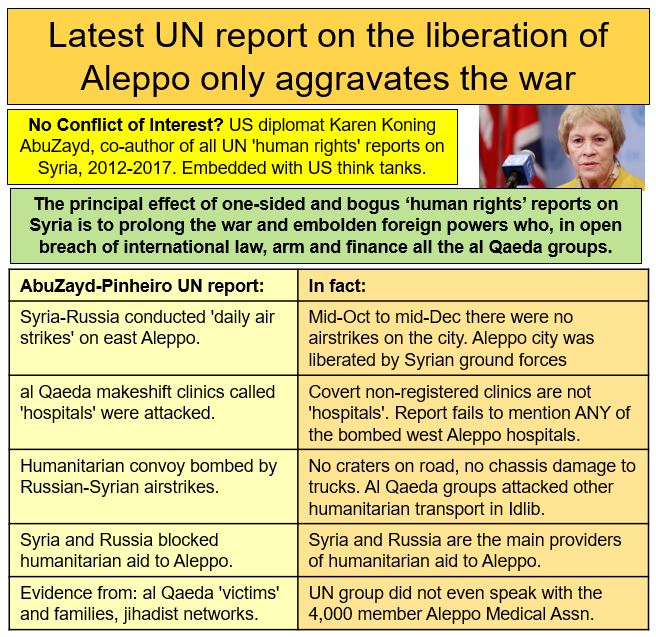
UN committee’s bogus Syria “human rights” report ignores evidence. Co-author’s blatant conflict of interest

[Co-author] Karen AbuZayd is a director of the Washington based Middle East Policy Council, itself a strong supporter of the US-led dirty war on Syria. Other MEPC directors include present and former US military, intelligence, oil industry and other US corporate figures.
Global Research, March 03, 2017

A UN committee has produced another one-sided, bogus ‘human rights’ report on last year’s liberation of Aleppo, Syria’s second city. Co-authored by US diplomat Karen AbuZayd and Brazilian Paulo Pinheiro, the report attacks both the Syrian Army and the al Qaeda groups (UNGA 2017).

However its stronger condemnation of the Syrian Army is notable, as part of constant attempts to delegitimise the Syrian people’s struggle to liberate their own country from the NATO-backed terrorists. This report follows similar partisan attacks from ‘watchdog’ groups embedded with the US State Department, Human Rights Watch and Amnesty USA.

None of these groups have condemned the anti-ISIS operation in Mosul (Iraq) in the way they did the anti-al Qaeda operations in Aleppo (Syria).

The principal effect of the one-sided and bogus ‘human rights’ reports on Syria is to prolong the war and embolden foreign powers who, in open breach of international law, arm and finance all the al Qaeda groups in Syria and Iraq.

Although the latest AbuZayd-Pinheiro report is poorly referenced it follows much the same method as other US-backed ‘human rights’ denunciations: (i) speak to a number of anonymous al Qaeda ‘victims’ and their families, mainly in Turkey but some also by phone in the al Qaeda occupied parts of Syria, (ii) collate the latest claims from US-funded and jihadist-linked groups, (iii) make no visit to Syria nor communicate with Syrian organisations (e.g. there is no sign the committee tried to speak with the 4,000 member Aleppo Medical Association) and then (iv) present a thoroughly one-sided judgement.

The western media mounted furious propaganda resistance to the Syrian Army’s operation to take back Aleppo, claiming there were ‘indiscriminate’ airstrikes, and so on. Syria and Russia denied these accusations and the AbuZayd-Pinheiro report has backed them all.

Notable features of the report include: obviously false assertions about supposed ‘daily airstrikes’ on Aleppo city, the suggestion that al Qaeda makeshift clinics were the only ‘hospitals’ in Aleppo, and the baseless claim that Syrian-Russian airstrikes destroyed a humanitarian convoy.

The report claims that “Syrian and Russian air forces conducted daily air strikes in Aleppo throughout most of the period under review”, that is July-December 2016. On this basis the committee adopts the armed groups’ claims that eastern Aleppo was subject to constant ‘barrel bomb’ and chemical weapons attacks (UNGA 2017).

However, unlike the AbuZayd-Pinheiro report, much of the western media did report that air strikes on the city were halted in mid-October, as humanitarian corridors were established for the evacuation of civilians. When Russian air strikes resumed several weeks later, in mid-November (despite efforts by the New York Times on 16 November to fudge this detail), they were on al Qaeda and ISIS groups in rural Idlib and rural Aleppo; not on the city. The liberation of Aleppo between October and December was almost entirely through Syrian ground forces smashing resistance street by street. So the ‘daily airstrikes’ on Aleppo city, spoken of in the AbuZayd-Pinheiro report, is an obvious falsehood.

On hospitals, the report names several armed group makeshift clinics in eastern Aleppo, none of which were marked and registered hospitals. (Clinics lose their protection under international law when they become covert military support installations.) By contrast there is not one single mention of the large hospitals of western Aleppo (Dabbit, Ibn Rush and al Razi), which were bombed by the al Qaeda groups in 2016.

The attack on a UN humanitarian convoy on 20 September (just days after the 17 September US-led airstrike massacre of 80 Syrian soldiers fighting ISIS in Deir Ezzor) was blamed squarely on a Syrian or Russian airstrike, it seems on the basis of evidence from anonymous ‘witnesses’. There is no plausible motive for this. Syria and Russia were and remain the largest providers of services and humanitarian aid to all Aleppo communities.

The report fails to mention the fact that the armed groups in eastern Aleppo had emphatically rejected humanitarian aid, holding a demonstration just one week before the burning of those trucks. A UN spokesperson at the time claimed the armed groups were blocking the delivery of aid for “political gain” (Sanchez 2016). Further, the Russian military had observed that there were no craters on the road nor destruction of the trucks’ chassis, as would be the case with aerial bombing (RT 2016). The area had been occupied by al Qaeda groups who have a record of murder of civilian drivers and burning trucks; they did this two months later when civilian trucks traveled through Idlib to the besieged Shi’a villages of al Fouaa and Kefraya (Pasha-Robinson 2016). The AbuZayd-Pinheiro claims about Russian-Syrian airstrikes on this convoy and therefore baseless and contrary to the known evidence.

The AbuZayd-Pinheiro committee is the same one which, from Geneva, fabricated a report on the terrible Houla massacre of May 2012, in which over 100 villagers were killed by the NATO-backed Farouq Brigade (FSA). At least 15 independent witnesses identified Farouq brigade (FSA) leaders (Abdulrazzq Tlass and Yahya Yusuf) and local collaborators (Haitham al Housan, Saiid Fayes al Okesh, Haitham al Halq and Nidal Bakkur) for the massacre (see Anderson 2016: Ch. 8). The AbuZayd-Pinheiro committee, however, tried to blame un-named “shabiha” militia loyal to President Assad. No motive was given. Some of these villagers had participated in the recent National Assembly elections, over which the jihadists had demanded a boycott. The obvious partisan nature of the Houla report led Russia, China, India and others to withdraw their support from this and future UN Security Council resolutions on Syria.

Karen AbuZayd is a director of the Washington based Middle East Policy Council, itself a strong supporter of the US-led dirty war on Syria. Other MEPC directors include present and former US military, intelligence, oil industry and other US corporate figures. On simple conflict of interest principles she should never have been appointed to such a committee, as a diplomat from one of the warring parties. Former UN Secretary general Ban Ki Moon was responsible for this error. Washington, for its part, has been too absorbed in hubris to notice that it is unseemly to pretend to be both assailant and mediator.

UN special envoy Stefan di Mistura, despite being ‘appalled and shocked’ that the armed gangs were targeting and killing ‘scores’ of civilians in western Aleppo by ‘relentless and indiscriminate’ rocket attacks (BBC 30 October), nevertheless proposed an ‘autonomous zone’ in eastern Aleppo to protect the al Qaeda controlled areas. The proposal was emphatically rejected by the Syrian Government (Reuters 20 November), which went on to eject all the al Qaeda groups from Aleppo in late December 2016.

Purchase Tim Anderson’s book “The Dirty War on Syria” directly from Global Research Publishers

ISBN Number: 978-0-9737147-8-4

Year: 2016

Pages: 240

Author: Tim Anderson

List Price: $23.95

Special Price: $15.00 – click to order

Sources:

Anderson, Tim (2016) The Dirty War on Syria, Global Research, Montreal

Barnard, Anne and Ivan Nechepurenko (2016) ‘Airstrikes on Aleppo Resume as Russia Begins New Offensive in Syria’, New York Times, 16 November, online: https://www.nytimes.com/2016/11/16/world/middleeast/syria-aleppo-russia-airstrikes.html

BBC (2016) ‘Aleppo siege: UN envoy Mistura ‘appalled’ by rebel attacks’, 30 October, online: http://www.bbc.com/news/world-middle-east-37816938

Pestano, Andrew (2016) ‘Aleppo airstrikes resume after 3-week pause’, UPI, 15 November, online: http://www.upi.com/Top_News/World-News/2016/11/15/Aleppo-airstrikes-resume-after-3-week-pause/8561479211543/

Pasha-Robinson, Lucy (2016) ‘Buses used to evacuate Syrians from villages ‘attacked and burned’’, 19 December, online: http://www.independent.co.uk/news/world/middle-east/syria-crisis-aleppo-what-is-happening-villages-buses-attacked-and-burned-a7482736.html

Reuters (2016) ‘Syria foreign minister says no to east Aleppo autonomous zone’, 20 November, online: http://www.reuters.com/article/us-mideast-crisis-syria-aleppo-idUSKBN13F0J1

RT (2016) ‘Russian, Syrian Air Forces did not strike UN aid convoy in Aleppo – Russian MoD’, 20 September, online: https://www.rt.com/news/359990-russia-denies-aleppo-strike/

Sanchez, Raf (2016) ‘UN says armed Syrian groups blocking Aleppo aid for ‘political gain’, UK telegraph, 14 September, online: http://www.telegraph.co.uk/news/2016/09/14/un-says-armed-syrian-groups-blocking-aid-to-aleppo-for-political/

SOTT (2016) ‘Keeping their word: No Russian or Syrian airstrikes on Aleppo for 7 days, humanitarian corridors open’, SOTT News, 25 October, online: https://www.sott.net/article/332069-Keeping-their-word-No-Russian-or-Syrian-airstrikes-on-Aleppo-for-7-days-humanitarian-corridors-open

UNGA (2017) ‘Report of the Independent International Commission of Inquiry on the Syrian Arab Republic’, 34th session, A/HRC/34/64, 2 February, online: https://documents-dds-ny.un.org/doc/UNDOC/GEN/G17/026/63/PDF/G1702663.pdf?OpenElement

To help refugees, stop arming terrorists – Rep. Tulsi Gabbard

From RT

March 1, 2017

To help refugees, stop arming terrorists – Rep. Tulsi Gabbard

Damascus demands UN action against illegal Turkish incursions, reveals location of main Turkish base inside Syria

From Fort Russ

February 18th, 2017 – Fort Russ News
– Al Binaa – translated by Samer Hussein –

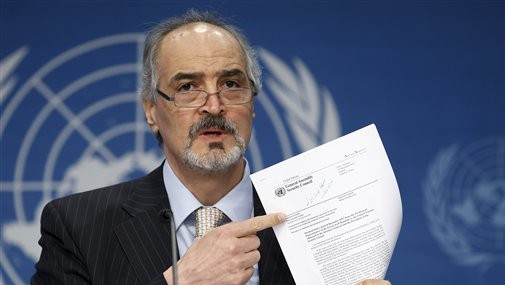
Syrian Ministry of Foreign Affairs has renewed calls to the UN Security Council for an immediate end of the violations of The Syrian sovereignty by the Turkish Armed Forces.

The Ministry also published a list of all violations that occurred since last December.

The letter, which was addressed to the UN Secretary General and the President of the UN Security Council, mentions illegal incursions into Syrian territory, building a wall within the so-called Turkish buffer zones (which exist on the sovereign Syrian territory), destruction of the property belonging to the Syrian citizens such as uprooting of hundreds of olive trees in order to build roads for the tanks of the Turkish army (as recently seen in the village of Qljabreen in the Azaz area of Aleppo province) and illegal backing of the terrorist groups which are loyal to the regime in Ankara.
The letter further states that the Turkish authorities recently established a military base inside Syrian territory, more precisely in the village of Jtrar, North of the town of Tal Rifaat, located in the province of Aleppo. The base includes the headquarters for the Turkish army personnel and their allies who are stationed on the Syrian soil and are allegedly involved in the so-called “Operation Euphrates Shield”. Ammunition depots are also being mentioned.

The letter reads: “The Syrian Government renews calls to the UN Security Council to hold to its responsibilities and act in accordance with the International Law and to pressure Turkey in order to stop the violations of the Syrian Arab Republic’s sovereignty and territorial integrity. ”

Syria: ISIS attempts to flood eastern Aleppo; Russian bombers strike ISIS with cruise missiles in Raqqa, Syria

From Fort Russ

February 18th, 2017 – Fort Russ News
– Al Mayadeen – translated by Samer Hussein –

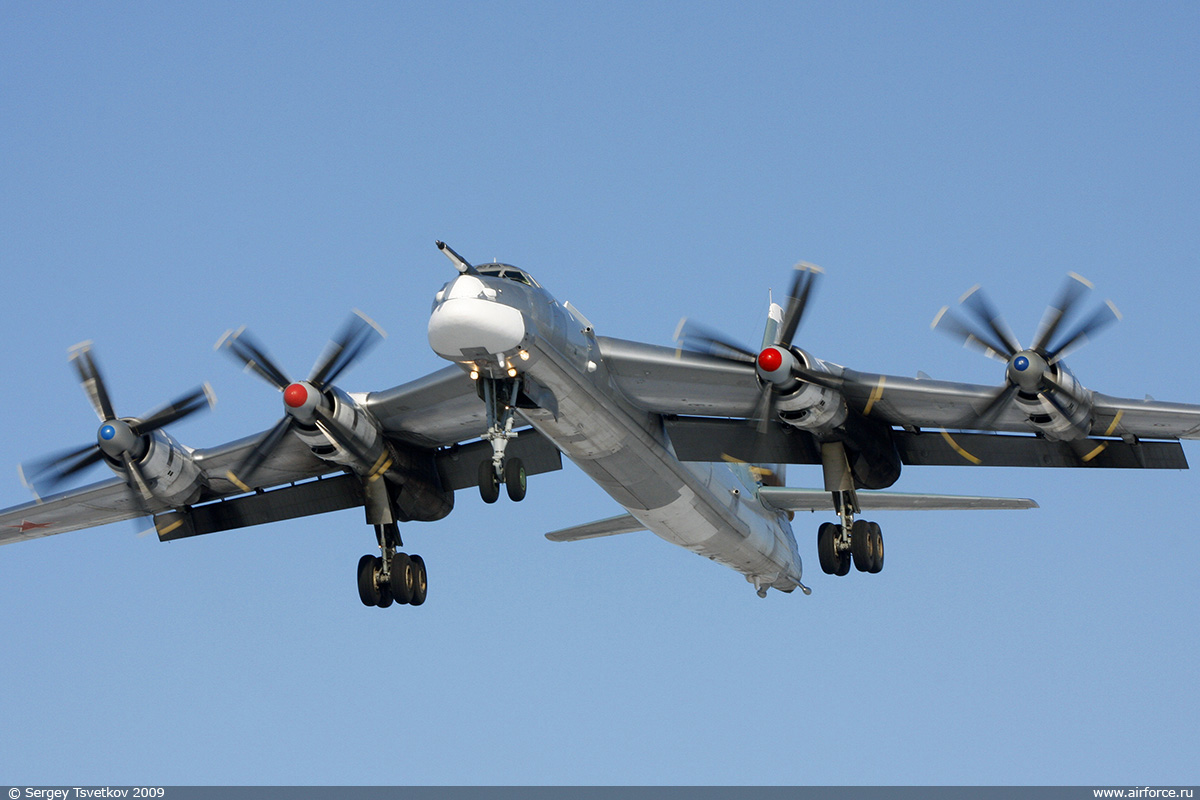
In a statement published on Saturday, Russian Defense Ministry announced that the bombers “Tu-95 MS” delivered directed blows against ISIS positions in Raqqa province, after taking off from the Russian territory and flying over Iran and Iraq. The bombers destroyed the training grounds and camps belonging to the terrorist group ISIS. According to the statement, all targets were successfully destroyed.

The mission was supported by Su-30 SM” and “Su-35 S”, the two Russian fighter jets stationed at Humaimam base. The jets provided the aerial coverage.
After their mission was successfully accomplished in Syria, the bombers returned to their bases.

In the meantime, the Syrian Army was able to successfully expand its operations in the Eastern side of the Homs province. According to the military source provided to SANA, the army also restored the security to the village of Al Kilabiyah.

The Syrian Army and its allies also made advancements towards Palmyra as they have moved closer for about 2km.

Earlier on Saturday, ISIS began to pump large quantities of water from Euphrates river through Al Babira station located in the eastern part of Aleppo province in order to cause flooding in the villages and destroy utility stations and agricultural areas in the countryside of the Aleppo province’s eastern regions. The Aleppian municipal authorities have already sent out a team of experts who will work on redirecting the flooding waters.

In Aleppo province the Turkish armed forces are continuing their incursions. The latest Turkish shelling in the eastern parts of Aleppo city resulted in 4 civilian deaths, bringing the death toll to about 50 in the past 4 days of the Turkish operations.

Since September 2015, the Russian armed forces are successfully destroying ISIS targets in Syria. The Russian counter-terrorist activities are coordinated with the government of Syria.

U.S. used toxic depleted uranium in Syria

From RT
February 14, 2017

US admits using toxic depleted uranium against ISIS in Syria
A-10 Thunderbolt II. © SRA Greg L. Davis, USAF / Wikipedia

More than 5,000 rounds of depleted uranium (DU) ammunition were used in two attacks on Islamic State oil tankers in eastern Syria, the US military has confirmed. The US-led coalition previously pledged it would not use the controversial ordnance.

A spokesman for the US Central Command (CENTCOM) told Foreign Policy that 5,265 armor-piercing DU rounds were used in November 2015, during two air raids against Islamic State (IS, formerly ISIS/ISIL) oil tanker convoys in the Deir ez-Zor and Hasakah provinces in eastern Syria.

A-10 ground attack aircraft fired the projectiles from their 30mm rotating cannons, destroying about 350 tanker trucks, according to CENTCOM spokesman Major Josh Jacques.

Officials confirm the US used depleted uranium weapons on the battlefield in Iraq and Syria: http://www.stripes.com/news/middle-east/the-united-states-used-depleted-uranium-in-syria-1.453925 

Photo published for The United States used depleted uranium in Syria

The United States used depleted uranium in Syria

Officials have confirmed that the U.S. military, despite vowing not to use depleted uranium weapons on the battlefield in Iraq and Syria, fired thousands of rounds of the such munitions during two…

stripes.com

In March 2015, spokesman for the US-led coalition John Moore had explicitly ruled out the use of the controversial ammunition, saying that “US and coalition aircraft have not been and will not be using depleted uranium munitions in Iraq or Syria during Operation Inherent Resolve.” The Pentagon explained that armor-piercing DU rounds were not necessary because IS did not have the tanks it was designed to penetrate.

Investigative reporter Samuel Oakford first brought up the use of DU ammunition by the coalition in October 2016, when a US Air Force congressional liaison told Representative Martha McSally (R-Arizona) that A-10s flying missions over Syria had fired 6,479 rounds of “combat mix” on two occasions. The officer explained that a fifth of the “combat mix” consisted of high-explosive incendiary (HEI) rounds, while the rest were DU armor-piercers. [in other words, 4/5 DU]

The first attack took place on November 16, near Al-Bukamal in the Deir ez-Zor province, with four US planes destroying 46 vehicles. The strike took place entirely in Syrian territory. According to CENTCOM, 1,790 rounds of “combat mix” were used during the strike, including 1,490 rounds of DU.

<iframe width=”631″ height=”480″ src=”https://www.youtube.com/embed/ZQkG-RWxFfY&#8221; frameborder=”0″ allowfullscreen><!–iframe>

The second attack, on November 22, destroyed 293 oil tankers in the desert between Deir ez-Zor and Hasakah. On this occasion, the four A-10s fired 4,530 rounds – of which 3,775 were DU armor-piercers.

“The combination of Armored Piercing Incendiary (DU) rounds mixed with HEI rounds was used to ensure a higher probability of destruction of the truck fleet ISIS was using to transport its illicit oil,” Major Jacques told RT.

Depleted uranium is prized by the US military for exceptional toughness, which enables it to pierce heavy tank armor. However, airborne DU particles can contaminate nearby ground and water and pose a significant risk of toxicity, birth defects and cancer when inhaled or ingested by humans or animals.

The coalition’s promise not to use DU munitions in Iraq was made after an estimated one million rounds were used during the 1991 Gulf War and the 2003 invasion. Between Iraq and the Balkans, where they were also used in the 1990s, DU rounds have been blamed on a massive increase in cancer and birth defects.

These DU contaminated locations in pose a risk to civilian health and must be isolated and addressed as soon as conditions allow. https://twitter.com/airwars/status/831506092454723584 

US Special Forces on the ground in Syria: US-backed advance on Raqqah ISIS stronghold. What is going on?

Beware the Americans bearing gifts.
Global Research, February 12, 2017
South Front 10 February 2017

The US-baсked Syrian Democratic Forces, predominantly Kurdish YPG units, have been developing an advance in the eastern countryside of the ISIS self-proclaimed Syrian capital of Raqqah.

The decision to flank the ISIS stronghold from eastern direction followed a failed attempt of the US Special Forces and some SDF units to infiltrate the area of the strategic Tabqa dam.

De-facto, this meant that the US-led forces were not able to achieve their strategic goal west of Raqqah. However, the SDF announced the end of the 2nd and the start of the 3rd stage of the Operation Wrath of Euphrates.

https://southfront.org/us-backed-advance-on-raqqa-what-is-going-on/

The goal of the 3rd stage is to further isolate the ISIS-held city, including seizing the road to Deir Ezzor. If the SDF captures the road, ISIS units in Deir Ezzor will be cut off from their allies in Raqqah. This will decrease significantly the terrorist group’s ability to redeploy reinforcements from one front to another. Nevertheless, this is under a big question. The US strategists are well known due to their will to keep open exit roads for ISIS terrorists in besieged cities in Syria and Iraq. If the road remains open, ISIS units will likely flow from Raqqah to Deir Ezzor, escalating confrontation with the Syrian army in the besieged city.

While the new US administration is considering a new plan of the Raqqah operation, SDF representative, Rojda Felat, has already claimed that the SDF will need more heavy military equipment, including battle tanks, to storm the city. In other words, the YPG wants to get more equipment to increase its military capabilities. But this doesn’t mean that the group will throw all what it has to storm Raqqah.

Indeed, the fate of Raqqah depends on the decision of the US administration on the issue. Earlier this month, Lieutenant General Jon Davis emphasized that the US would need not only additional airstrikes.

There are already between 300 and 500 US Special Forces troops and unknown number of French and German special forces. This number will likely be increased to retake the ISIS capital in Syria. It could indicate that the Pentagon is going to involve US and NATO forces during the operation, repeating the Mosul case. The real role of the SDF is now unclear. In any case, its goal will be to show that its “local Syrian forces” storm the ISIS stronghold.

If you’re able, and if you like our content and approach, please support the project. Our work wouldn’t be possible without your help: PayPal: southfront@list.ru or via: http://southfront.org/donate/ or via: https://www.patreon.com/southfront

Kremlin confirms accidental Russian airstrike kills Turkish soldiers in Syria

From Sputnik

February 9, 2017

Kremlin spokesman Dmitry Peskov confirmed to Sputnik that Russian President Vladimir Putin expressed condolences to Turkish President Recep Tayyip Erdogan over an accidental Russian airstrike that had killed Turkish soldiers in Syria.

Peskov said that Russia and Turkey will jointly investigate the deadly incident. The Kremlin spokesman said that Putin told Erdogan that Turkish soldiers had died as a result of lack of coordination regarding coordinates during Russian military jets’ strikes in Syria.

Russia and Turkey will improve coordination of activities in Syria after the unintentional strike, Peskov said.

“President Putin informed… about the recent telephone conversation with Turkish President Erdogan, said that he expressed condolences to the Turkish counterpart over the fact that early this morning as a result of non-coordination of coordinates Turkish soldiers had been killed during a joint operation to liberate al-Bab by Russian Aerospace Forces’ airstrikes,” Peskov said.

The Russian and Turkish presidents held a phone conversation earlier on Thursday. Putin expressed condolences to Erdogan over the deaths of Turkish soldiers near Syria’s al-Bab, the Kremlin said earlier. They also agreed to expand military coordination during the operation against militants from Daesh and other extremist groups in Syria.

Earlier in the day, the Turkish General Staff said that an accidental Russian airstrike killed three Turkish soldiers and wounded 11 others in northern Syria.

“Today, around 08.40, during airstrikes against Daesh targets [in Syria], Russian combat planes accidentally hit a building hosting Turkish servicemen taking part in Euphrates Shield operation. As a result, three Turkish soldiers were killed, 11 were wounded, including one seriously,” the Turkish General Staff said in a statement.

The Russian Defense Ministry has also confirmed the unintentional strike, killing Turkish servicemen in Syria. The ministry said that Russian bombers had been on a mission to destroy Daesh terrorists’ positions near al-Bab, where Turkish soldiers had been accidentally bombed.

“Russian bombers have been carrying out a combat mission destroying Daesh positions in al-Bab area. The chiefs of the [Russian and Turkish] general staffs agreed to closer coordinate joint actions and exchange information about the situation on the ground.”

Chief of the Russian General Staff General Valery Gerasimov held telephone talks with his Turkish counterpart, during which the issues of the fight against international terrorist groups in Syria and the situation in the northeast of the province of Aleppo were discussed.

“Chief of the General Staff of the Armed Forces of the Russian Federation Army General Valery Gerasimov expressed condolences to [Turkish] General Hulusi Akar in connection with the death of three Turkish soldiers operating in the area of the city of al-Bab as a result of unintentional strike by a Russian aircraft.”

The news comes as the Turkish military operation in Syria’s al-Bab has entered the final stage. Turkey’s units entered central al-Bab, the operation is being conducted in coordination with Russia to prevent clashes with Syrian government forces.

Russian and Turkish military jets have repeatedly jointly bombed Daesh targets near al-Bab in Syria. Al-Bab is one of Daesh’s last remaining strongholds near the Turkish border. Capturing the city is of strategic importance to Turkey in order to prevent the Syrian Kurds taking it and unifying their own territories.

https://sputniknews.com/politics/201702091050514274-turkey-russia-strike-syria/

13,000 executed? Amnesty International’s “Human Slaughterhouse” report lacks evidence, credibility; State Dept. propaganda?


From Activist Post

By Brandon Turbeville
February 8, 2017

In yet another act of “convenient” timing, Amnesty International has released a bombshell report alleging the execution by hanging of 13,000 Syrian prisoners by the Syrian government from 2011-2015. The report, “Human Slaughterhouse: Mass Hangings And Extermination At Saydnaya Prison, Syria,” which contains rather detailed descriptions of torture, rape, and execution as well as other horrific activity has no doubt caught the attention of many people, even those who have followed the events transpiring in Syria for the last six years. However, there is one important aspect of the report that Amnesty International lacks . . . evidence.

While the report, at first glance, might sound convincing, an adequate reading of the text reveals it to be yet another Western propaganda piece designed to demonize the Assad government shortly before important talks take place in Switzerland. The report contains the right buzzwords such as “extermination campaign” and reads like a story recounting Nazi concentration camps so as to jog the ever-present memory of the Holocaust, thus causing the reader to subconsciously and consciously associate the Nazi slaughter of the Jews with the alleged Assad execution of 13,000 prisoners. Still, while we must give credit to good writing, we must point out that good writing with no evidence is just a piece of fiction.

Below are a number of reasons to question the report and, as a result, another list of reasons to question the integrity of Amnesty International. Continue reading

Belgian Members of Parliament: EU Governments Supported Terrorists in Syria

Global Research, February 03, 2017
The Syria Times 2 February 2017

Reported by the Syrian Times:

“Instead of supporting the legitimate Syrian government the European countries supported Wahhabi terrorists who have sought destroying Syria and establishing a Wahhabi terrorist state, Member of Belgium’s Federal Parliament Filip Dewinter, leader of the Belgian parliamentary delegation visiting Syria, has stressed.

Excerpts from this report:

Dewinter made the remarks during the delegation’s visit to Aleppo on Thursday and their meeting with Aleppo Governor Hussein Diyab.

The Belgian lawmaker said he visited Syria two years ago and warned that the danger of the terrorism currently hitting Syria will backfire on its supporters and will hit America and the European countries and this is what actually happened.

Dewinter hoped that the Syrian Army’s victory over terrorism in Aleppo will help open the eyes of the European politicians and change the way they deal with events in Syria. He pointed out that the European people have realized the danger of terrorism particularly after the terrorist attacks which targeted several European countries.

Leader of the Belgian delegation, went on to say that the delegation’s visit to Aleppo aims at getting acquainted with what is really happening in Syria away from the false news reported by some western media and at conveying a real image about Syria events to the Belgian people and the European public opinion in general.  ….

During its visit to Aleppo, the delegation also had the opportunity to meet a number of Islamic and Christian men of religion at “Shahba Halab” Hotel. Head of the delegation Filip Dewinter said that he can well understand the Syrian people’s anger over the wrong policies of the Belgian government as well as the governments of the rest of the European countries.

The delegation members pointed out that they will try to convey the Syrians’ message to the European people when they are back in their country.

To read the complete Syria Times article click here

http://www.globalresearch.ca/belgian-members-of-parliament-eu-governments-supported-terrorists-in-syria/5572572?print=1