Damascus demands UN action against illegal Turkish incursions, reveals location of main Turkish base inside Syria

From Fort Russ

February 18th, 2017 – Fort Russ News
– Al Binaa – translated by Samer Hussein –

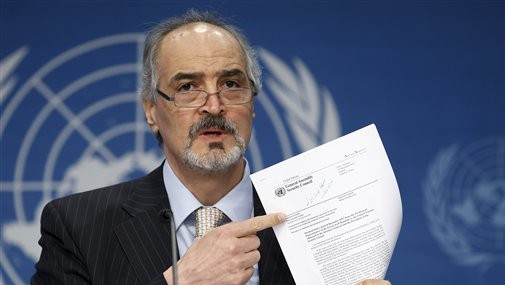
Syrian Ministry of Foreign Affairs has renewed calls to the UN Security Council for an immediate end of the violations of The Syrian sovereignty by the Turkish Armed Forces.

The Ministry also published a list of all violations that occurred since last December.

The letter, which was addressed to the UN Secretary General and the President of the UN Security Council, mentions illegal incursions into Syrian territory, building a wall within the so-called Turkish buffer zones (which exist on the sovereign Syrian territory), destruction of the property belonging to the Syrian citizens such as uprooting of hundreds of olive trees in order to build roads for the tanks of the Turkish army (as recently seen in the village of Qljabreen in the Azaz area of Aleppo province) and illegal backing of the terrorist groups which are loyal to the regime in Ankara.
The letter further states that the Turkish authorities recently established a military base inside Syrian territory, more precisely in the village of Jtrar, North of the town of Tal Rifaat, located in the province of Aleppo. The base includes the headquarters for the Turkish army personnel and their allies who are stationed on the Syrian soil and are allegedly involved in the so-called “Operation Euphrates Shield”. Ammunition depots are also being mentioned.

The letter reads: “The Syrian Government renews calls to the UN Security Council to hold to its responsibilities and act in accordance with the International Law and to pressure Turkey in order to stop the violations of the Syrian Arab Republic’s sovereignty and territorial integrity. ”

Briefing by Foreign Ministry spokesperson Maria Zakharova, Moscow, January 19, 2017; on Obama’s impact on Russian-American relations and UN statement by Samantha Power

From the Ministry of Foreign Affairs of the Russian Federation
January 19, 2017

Excerpts:

Obama presidency impact on Russian-American relations


As you may know, the new US President, Donald Trump, is to be inaugurated on January 20. This offers hope that the tensions in Russian-US relations that were engineered by the former Obama team will be supplanted. In recent days, we have heard a lot about Russia, particularly on the foreign policy track, from the US administration and its representatives. Apart from the inauguration, today is the last day for the outgoing administration. It seems that the statements made by foreign policy officials – our colleagues, or our partners, as we call them – over the past few days present an occasion to sum up the relations between our two countries during Barack Obama’s eight years in power. There is a lot to talk about, and so I’ll take the time to talk about it.

The results, regrettably, are lamentable. The outgoing Democratic team has consciously ruined bilateral relations, allowing them to fall to Cold War levels. Moreover, this approach has continued to its final day and even continues in its last hours in an attempt to batter their foundation.

In retrospect, it will be recalled that it was Barack Obama who declared a reset in and an all-out development of relations with Russia at the start of his first term of office in 2009. At a certain stage, we managed to sign a number of important bilateral agreements, including the START Treaty (2010).

But our partnership didn’t last long. While in word promising to cooperate respectfully, Washington really envisioned a style of cooperation that looked more like the leader and the led. This is the approach that the White House is accustomed to using with the Western European countries. When it became clear that it would not work with Russia, the US began to fear that we would strengthen our position in the world and began steering towards a confrontation, which, among other things, included using various forms of pressure.

I would like to stress in particular that this began well before the events in Ukraine. Everything that was later covered up and explained by Crimea, Donbass and so on, had nothing to do with reality. We expressed this on many occasions. I can cite several examples: the anti-Russian Magnitsky Act of December 2012; we also recall that, even before the events in Ukraine, US secret services launched a real hunt for Russians in third countries. The most notorious case in point is the abduction of Viktor Bout, but there were another 27 Russian nationals who fell victim to this vile game thereafter. US secret services and the administration were acting on the sly: they did not advise Russian law enforcement about the grievances against our fellow citizens (although the laws needed for this were in place) but they abducted them during their travels abroad.

Washington even avoided consultations on a joint effort against cybercrime, although 60 per cent of the said arrests in third countries were related to accusations of stealing credit card data or account fraud. Russia regularly and repeatedly offered proposals to cooperate in this area. Similarly, they were reluctant to go along with us on other issues on the bilateral agenda.

Still fresh in our memory were attempts to discredit the Winter Olympic Games in Sochi (incidentally, this was also before Crimea), which were made both shortly before and directly during the Olympics. Later this took the form of an unprecedented public harassment campaign directed against Russia’s entire sports organisation. Symptomatically, the US Anti-Doping Agency played first string in attempts to cut Russian athletes from international competitions. Let me remind you that the USADA is financed by the US.

The coup in Kiev three years ago, in which the Obama administration was involved, put everything in the right perspective in our relations with it. Since the Obama administration openly proclaimed a policy for the systematic containment of Russia, our American partners have suspended many communication channels, including the Bilateral Presidential Commission and its 21 working groups.

Using sanctions to pressure Russia, Washington has imposed or expanded various restrictions against Russia 35 times under a variety of pretexts since 2014. The United States has blacklisted 172 Russian citizens and 350 legal entities, including Russia’s leading companies in energy, the defence industry and the financial sector.

To justify this policy, they have invented a completely unsubstantiated thesis about Russia’s “aggressive behaviour” and unleashed a powerful propaganda campaign to support it. The United States used this pretext to build up the Pentagon’s and NATO capabilities on the Russian border, continued with BMD deployment and carried out other military preparations. We have talked about this in detail and have provided our views on it. Acting within this policy, which has been undermining European and global security, the White House referred to the Baltic countries and Poland as “frontline states,” as if they seriously believed that a military confrontation with Russia was possible.

Initially, Washington’s policy of isolating Russia caused only misunderstanding. It was difficult to take the stated objectives seriously, and we were right, because this policy suffered a crushing defeat. But they provided a philosophical and politological basis for their defeat. US Secretary of State John Kerry said while on a visit in Moscow that the United States cannot do without Russia in tackling international issues. It took them only a few years – not decades – to invent an isolation concept, attempts to implement it and then explain why it failed.

I would like to provide proof of the absurdity of this concept: over 14 months from May 2015 to July 2016, US Secretary of State John Kerry visited Russia four times at his initiative. Also, 66 of the 70 telephone conversations with Foreign Minister Sergey Lavrov were held at his request last year alone, at the height of Russia’s alleged isolation. I wonder how many telephone conversations we could have had if the situation in bilateral relations were close to normal.

However, our attempts to work with the United States on some international issues were complicated by the Obama Administration’s inconsistency. For example, Washington kept advancing new demands regarding Syria but failed to implement its commitment to separate the so-called moderate opposition from the terrorist groups. They had more than enough time to do this. The United States made this commitment a year ago, but as you know, it has not implemented it. On the contrary, instead of following through on White House pledges to proceed towards a peaceful settlement, they did their best to protect the terrorists from strikes and even supplied weapons to them, including Jabhat al-Nusra. They planned to use the terrorists to overthrow the government in Damascus. Mind you, we are not talking about imaginary moderates but a combat division of al-Qaeda, an organisation that killed 3,000 Americans on September 11, 2001. Under American law, support for terrorists is a serious crime. Americans have all heard about the alleged Russian hackers, but nobody knows that the US administration supported an organisation that killed Americans.

The state of affairs in the economy was no better. Washington’s targeted efforts provided all the opportunities for this purpose, using all available leverage on the international scene to make life more difficult for Russian economic operators and the entire Russian economy. You may recall that Barack Obama noted with satisfaction some time later that the Russian economy was “in tatters.” Of course, this could have been true, but I would like to say that leading US companies did not want to leave the Russian market despite the White House’s insistence. It proved impossible to engineer Russia’s complete isolation even within the United States, although bilateral economic relations were damaged. As you understand, we had to do something. So, we took advantage of the emerging situation to promote our own economic development agenda and diversified our global trade ties.

It should be specially noted that, several years ago, the Obama administration started exerting routine pressure on Russian diplomatic missions in the United States. Unfortunately, attempts by the secret service to recruit Russian officials became an extremely unpleasant part of the daily routine. Last year, out of the blue, came a ban on Russian diplomatic missions using some of  their vehicles, including large-capacity buses, which lasted for several months. This was followed by toughening the regulations for the stay of official Russian delegations in the United States: now they had to notify the US Department of State about any trips outside the 25-mile (41-kilometre) zone around Russia’s diplomatic missions. Just think how much this limited their opportunities.

We are now discussing this openly. All this time, we tried to cooperate constructively with the US Department of State on all these issues. This was our day-to-day work which involved the Russian Embassy and the Foreign Ministry, and continued during talks between the Russian Foreign Minister and the US Secretary of State. We raised and discussed all these issues. On the other hand, we do perceive a desire of State Department representatives to sort things out; many of their efforts proved sincere but were blocked  at the administration level. Our work became increasingly difficult.

In 2013, US authorities began to persecute American citizens planning to take part in introductory tours organised by the Federal Agency for the Commonwealth of Independent States, Compatriots Living Abroad and International Humanitarian Cooperation (Rossotrudnichestvo). As you may remember, we have discussed this issue in the past. The FBI began to summon them for interrogations and openly intimidate them. In January 2016, US authorities went as far as to strip five of the six Russian honourary consuls of their accreditation in various states. These honourary consuls also helped expand bilateral ties, conducted practical work and maintained cooperation involving ordinary people. That is the environment in which we had to work.

It is also hard to assess from positions of common sense the russophobic hysteria that began to be incited in the US in the run-up to the presidential election. The US presidential election is a special factor and a special stage in bilateral Russian-US relations. In the summer of 2016, the White House leaked groundless accusations of Russia interfering in the election campaign and information about “Russian hackers” allegedly tampering with servers, websites, etc. to the media. The media and US secret services incited this all the time through “leaks” and through reports published by their “pocket” media. They forced the public to consume this media concoction involving pseudo-facts.

After the November 8 vote, as I see it, the Obama administration just went over the edge. One had the impression that they had decided to vent their entire wrath on us. It was not simply a conceptual story, where we were a factor in their political infighting. No sir, it was base household vengeance that admitted of all expedients. And the whole reason was that the Democratic candidate, Hillary Clinton, lost the election. This was done in order to maximally complicate things for the President-elect, Donald Trump, and call into question his victory. All of that, in our view, assumed morbid forms. Lies and not just concoctions about “hacking” and “Moscow’s stolen election” were pouring in torrents.

We have yet another version. Among other things, all of this might have been done and continues in the same vein today because the Democrats want to vindicate themselves before the numerous sponsors of their campaign. That campaign was not simply expensive: it was one of the costliest or even the costliest in history. A huge amount of money was circulating in the race. The mainstream media were trying to leave people in no doubt that Clinton and no other was to win. This was being done to attract even more money. Now they have to give an account to their donors. Some unseemly things are coming to the surface, like improper use of the media, plants and suppression of information. They have to bear not only moral but also financial responsibility before these people. But they always have an answer at the ready as to who is to blame. That’s right, Russia is to blame. Many millions of dollars were invested in the hope of future political and commercial dividends. Of course, they have to acquit themselves. But regardless of their motives, additional serious damage was done on purpose to our relations, primarily to the trust between our countries and peoples.

The expulsion from the United States of 35 Russian diplomats on New Year’s Eve and the barring of access to the Russian Embassy’s and the Russia UN Mission’s recreational facilities enjoying diplomatic immunity (for they have no other status under the law) is a story apart. This is a case of actual confiscation of property that is owned by the Russian government and enjoys diplomatic immunity, which is a gross violation of the 1961 Vienna Convention on Diplomatic Relations.

As you may know, we have decided to refrain from a mirror-like response to these totally inadequate escapades. But the principle of reciprocity in diplomacy is still in effect. The Obama administration’s behaviour is so absurd and shameful for such a great country as the United States that one is hard put to associate these convulsive actions with what the American people stand for.

We sincerely regret that the Obama presidency, particularly its second term, was a period of lost opportunities for bilateral relations. It did little good for the rest of the world as well, with instability increasing over the past eight years, including because of Washington’s reckless moves.

We would like to hope that following the changes in the White House it will become possible to reverse the dangerous trend towards decay in Russian-American ties and lead our relations out of the nosedive where they were sent by Barack Obama. We expect the new administration to display wisdom and willingness for a normal pragmatic dialogue, for which Russia has always been ready.


The situation with Russian recreation facility in Oyster Bay


I would like to note that according to our data and press reports, unidentified persons, accompanied by the police, broke the locks on the fence and entered the property. All this is clearly a violation of diplomatic immunity and ownership rights, and it is also a very dangerous trend that generally violates all the existing norms and ideas regarding the legality of the authorities’ actions.

Let me reiterate, we will monitor the situation, and we will definitely comment on it as soon as we get updates.


Statement by US Permanent Representative to the United Nations Ambassador Samantha Power


And the last remark to wrap up the topic. I cannot leave this without comment because to a large extent the actions taken by our American colleagues regarding Russia were based on unreasonably high ambitions, and at times it simply looked like ignorance. This is confirmed by a recent statement by US Permanent Representative to the United Nations Ambassador Samantha Power. She claims that the United States “defeated the forces of fascism and communism” and “now confront the forces of authoritarianism and nihilism.”  

Let us get this straight. She referred to four phenomena. Who defeated fascism? This claim is made by a person who works at the United Nations, which was established by the international community following the outcome of World War II. Isn’t it embarrassing to make such a claim? What about the anti-Hitler coalition and its members’ contribution? Is it the US alone that defeated Nazism? She should have said that they defeated fascism on their territory to testify to her total ignorance.

The United States “defeated the forces of communism.” The UNSC has 15 chairs around its table with five of them occupied by permanent members.  Every day Samantha Power faces the Permanent Representative of China. She might at least have wondered how big the membership of the Communist Party in that country is, so as not to feel embarrassed to enter the UNSC.

Now they “confront the forces of authoritarianism.” So much has been voiced during the election race! The administration was totally engaged in the US presidential election. We watched all that, there is nothing to hide. All the administrative backup was aimed at one thing – Hillary Clinton’s victory. I wonder if Samantha Power knows which countries made contributions to the Clinton Foundation? This is regarding confronting the forces of authoritarianism. Or maybe she believes they are fighting authoritarianism by getting money from it? The list of countries should be made public, and then it will become absolutely clear with whom the US cooperates and from whom the Democratic presidential candidate gets the funding.

I don’t even want to comment on confronting the forces of nihilism. It is nothing but historical and philosophical obscurantism to claim that the world’s largest country is fighting nihilism; this is beyond comment.

Those claims have cleared up a lot of things.


Persisting violations of migrant rights in EU countries


We have noticed the information coming from the European Border and Coast Guard Agency, that recorded 503,700 attempts to illegally cross European Union borders in 2016. Most of these people, 364,000 of 503,700, arrived in EU countries via the Mediterranean Sea.

We would like to note that, despite the reduced migrant traffic via the Aegean Sea, the situation in the central Mediterranean region remains tense. In 2016, 181,000 people arrived via Libya in Italy alone last year from Nigeria, Eritrea, Guinea and other African countries; this is 20 per cent more than 2015 levels. And this figure includes 24,000 unattended minors. Of course, this is the most vulnerable category in need of special attention and protection, so that it will not be victimised by organised crime. They arrive in another country absolutely illegally and completely unattended. Doubtless, a tragic fate awaits most of these children.

Obviously, illegal migration via the Mediterranean will continue through 2017, and could lead to new violations and fatalities. According to the International Organisation for Migration (IOM), 219 people died since early January 2017.

We would also like to voice our regret in connection with the absolute sluggishness of the concerned agencies of the EU member-states, including Germany, that have failed to review about 943,000 requests by asylum-seekers in a timely manner. As a result, people have to live in uncomfortable and degrading conditions while waiting for a decision. We urge our European partners to honour their obligations under the 1951 Convention Relating to the Status of Refugees and the 1967 Protocol Relating to the Status of Refugees.

We would like to once again recall that the migration situation has been aggravated by an irresponsible and ill-conceived policy aiming to destabilise states and replace undesirable governments in the Middle East and North Africa. Only a revision of this policy and the attainment of peace and stability in Syria, Libya, Iraq, Yemen and other countries can significantly change the situation for the better.


Anti-Russia insinuations in the context of talks on a Cyprus political settlement


We have reacted with dismay to comments by some Cypriot media outlets in the context of the recent conference on a Cyprus political settlement in Geneva. For example, some stories claim that Russia is allegedly trying to prevent the island’s reunification. According to the logic of these media outlets, EU-Turkey rapprochement, as well as EU-NATO cooperation that has been blocked by the unresolved situation at the talks between the two Cypriot communities, allegedly don’t meet Russian interests.

We clearly see the discontent of certain pro-US and pro-UK political circles with the principled Russian stand implying that ready-made prescriptions and artificial haste should not be imposed on the parties to the Cypriot conflict to quickly achieve a final resolution to the Cypriot issue at any cost.

In this connection, we would like to once again emphasise our conviction that a long-term and lasting resolution to the Cypriot issue is only possible if it reflects the political will of Greek and Turkish Cypriots, and if it is accepted by the entire population of the island. To the best of our knowledge, the leaders of both Cypriot communities agree with this precept. This is simply common sense.

Claims about any Russian attempts to block, obstruct or hamper the negotiating process are not backed by fact and are unreasonable.

We would like to note that anti-Russia insinuations are like a “smokescreen” for obscuring the real problems that need to be resolved in a Cypriot political settlement. For example, Russia only maintains a cultural-humanitarian and economic presence in Cyprus. At the same time, sovereign UK bases are still maintained on the island under the 1960 Zurich-London agreements. This is an obvious anachronism in the current situation. However, the Western press does not consider this situation in any way, and we are not seeing any mood of protest in the Western media.

Russia successfully develops its relations with the Republic of Cyprus in various areas, and we are confident that these relations will continue to be strengthened in the event of the island’s reunification. We know that Cypriot leaders advocate the sustained development of bilateral cooperation. We believe that anti-Russia comments by a number of media outlets do not benefit this process and do not meet the interests of the Cypriots themselves. We hope that the Cypriot authorities will respond accordingly.


Alleged Russian involvement in cyberattacks against the OSCE


Unfortunately, a new page has been added to the unprecedented campaign to discredit Russia in the eyes of the global public.

Washington tried to explain its losses by blaming the alleged Russian high-tech intervention in the US election system. It also did this to shift the image of the top global cyber aggressor from itself to Russia, although we know, from materials which have sent many people in the United States to prison, who staged cyberattacks and who were the targets. Instead of remorse and ceasing cyber interference in the global information space, some Western countries continue to work to present Russia as a cyber-aggressor country that is a threat to global cyberspace.

We regret that Germany has taken this path too, choosing to follow in the footsteps of its senior partners. In particular, German security services have accused Russia of attacking OSCE servers, an international organisation responsible for security and stability in Europe. How should we respond to this?

I don’t have to tell you that we have not received any response to the official requests we sent to the related organisations in charge of investigating any such incidents. You only find information in the information space, which prompts the conclusion that our partners never had and still have no proof or facts to implicate our alleged crimes.

These accusations sound especially absurd considering that a month ago Foreign Minister Sergey Lavrov proposed at the OSCE Ministerial Council meeting in Hamburg, Germany, an action plan aimed at strengthening confidence in the information space. The first measure was to identify ways to improve the OSCE role in resolving cyber incidents and for the OSCE to provide a platform for direct dialogue on this issue.

Russia has proposed many initiatives on international information security over the past years. These include a concept for a UN Convention on International Information Security, the International Code of Conduct for Information Security drafted by the SCO member states, the above action plan for the OSCE and many other documents.

Russia has long urged its partners to adopt a special legal instrument for fighting mercenary cybercrime and cyber bullying.

This could be the universal UN convention on cooperation in fighting information crime, which Russia drafted. The drafted convention includes several provisions on fighting the deliberate abuse of online information, which is, in plain English, hacking.

Russia is ready for any form of cooperation in fighting cyberattacks and has formulated certain proposals in this sphere, whereas the unconstructive Western position is hindering the development of international cooperation in this area. We hope our partners will stop shifting the blame onto us and will instead look at the situation soberly and without bias.


For the full press conference:

http://www.mid.ru/en/press_service/spokesman/briefings/-/asset_publisher/D2wHaWMCU6Od/content/id/2605982
Conflict instigators must foot humanitarian crises’ bills – Russian Emergencies Minister to UN

From RT

December 9, 2016
Get short URL

© EMERCOM of Russia

UN admits role in Haiti cholera outbreak that killed 10,000 people

From RT
August 18, 2016

United Nations officials acknowledged, for the first time, the role peacekeepers played in the 2010 deadly cholera outbreak in Haiti that killed 10,000 people and sickened hundreds of thousands of others.

The Office of Secretary General Ban Ki-moon in an email this week said “the UN has become convinced that it needs to do much more regarding its own involvement in the initial outbreak and the suffering of those affected by cholera,” reported the New York Times.

For six years, UN officials refused to accept blame for bringing cholera to Haiti, but suspicions settled on a group of UN troops from Nepal who arrived after the January 2010 earthquake. Nepal had a cholera epidemic underway at the time and raw sewage from the latrines at the UN troops’ came was allowed to seep into an adjacent river.

The earthquake crippled the capital of Port-au-Prince, killing 200,000 people, then the cholera outbreak sickened hundreds of thousands of others, and killing 10,000.

The families of 5,000 Haitian cholera victims petitioned the United Nations in 2011 for redress, but its Office of Legal Affairs simply declared their claims “not receivable.

An attorney who represents Haitian cholera victims who have filed a suit in US federal court seeking reparations from the UN told the Washington Post that acceptance of culpability could make it more likely plaintiffs will finally receive financial compensation.

“The UN has broad immunity from national courts, but that has always been conditioned on providing remedies out of court to victims who are harmed by UN operations,” Beatrice Lindstrom told the Washington Post. “It has been in breach of the treaty granting it immunity in the first place, so if the UN follows through on remedies, that would make questions of immunity mute.”

UN “peacekeepers” were deployed to Haiti following the 2004 ouster of then-president Jean-Bertrand Aristide.

The deputy spokesman for the secretary-general, Farhan Haq, told the New York Times the United Nations will draft a new response within two months and present it “once it has been fully elaborated, agreed with the Haitian authorities and discussed with member states.”

“This is a major victory for the thousands of Haitians who have been marching for justice, writing to the UN and bringing the UN to court,” said Mario Joseph, a Haitian human rights lawyer representing victims of the epidemic.

The UN acknowledgment comes after top officials were provided a draft 19-page report by an adviser criticizing their handling of the cholera outbreak.

The report written by NYU law professor Philip Alston, the special rapporteur on extreme poverty and human rights, will likely be published in September and present by Ban at the UN General Assembly in October.

Alston wrote that the United Nations’ Haiti cholera policy “is morally unconscionable, legally indefensible and politically self-defeatingaccording to the New York Times.

Alston went beyond criticizing the Department of Peacekeeping Operations to blame the entire United Nations system. As the magnitude of the disaster became known, key international officials carefully avoided acknowledging that the outbreak had resulted from discharges from the camp,” he noted.

When the outbreak occurred it spread rapidly in the muddy, crowded tent camps where Haitians had sought refuge after the quake. The disease continues to sicken Haitians, especially in rural parts of the country without access to clean drinking water. A new spike of infections has been reported this year.

A recent report by Doctors Without Borders has raised the possibility the disease may have killed far more Haitians than previously estimated.

The secretary-general stopped short of saying the United Nations caused the outbreak. The organization continues to hold the position it is immune from legal action as a result of the outbreak.

https://www.rt.com/usa/356428-un-admits-role-haiti-cholera/

Churkin writes letter to UN: A final warning for Ukraine?

From Fort Russ

July 22, 2016 –
By Eduard Popov for Fort Russ
Translated by J. Arnoldski

Russia’s permanent representative to the UN, Vitaly Churkin, has appealed to the UN with an official letter in which he requests that pressure be put on Ukraine in order to prevent the resumption of full-scale hostilities in Donbass. In Churkin’s opinion, Kiev is preparing a military operation, and his letter cites data on Ukrainian security forces’ shelling of civilian residential areas in Donbass “within the last week alone.” The number of these bombardments has grown dramatically.
Churkin is known for his professionalism and poise. Obviously, only the most extreme circumstances could have compelled him take such an extraordinary step. Moreover, this is not the first appeal by such a high-ranking Russian diplomat to international and foreign institutions. The Foreign Ministry of Russia’s State Secretary Grigory Karasin already met with the ambassadors of France and Germany on this subject and Russian President Vladimir Putin held a telephone talk with the presidents of the US, France, and the German Chancellor. According to Karl Marx’s famous formula, quantity turns into quality. In our case, the number of shellings of Donbass’ cities by the UAF and neo-Nazi battalions risks turning into a new, full-scale war. 
It should be admitted that Kiev’s tactics are quite effective. Shellings cause tangible losses while also exerting psychological pressure on the republics. The purpose of such frequent attacks is provoking return fire by the DPR and LPR’s armies. Then Kiev would accuse the Donbass republics (and of course Russia) of tearing up the Minsk Agreements, and call upon the international community to intervene in the conflict. By “international community,” of course, is meant NATO. At the NATO summit in Warsaw, words of support for Kiev against “Russian aggression” were heard along with promises to provide military and technological assistance. It is possible that these and other measures of support are being prepared. Most likely, this is not Ukraine’s accession to NATO, but NATO’s accession to Ukraine, i.e., an actual occupation of Ukrainian territory by the alliance. This could come about in the form of establishing permanent military bases and upgrading equipment and manpower.
My friends from the military and political circles of the DPR report that the sheer force of UAF attacks is reminiscent of the most difficult days of summer, 2014. But the republics are not afraid of fire. On the contrary, they are waiting for when Ukraine will go on a new offensive in order to then bury the Ukrainian army on Donbass land. Ukraine has already been given two chances to stop (and survive), but has not taken any of these. Churkin’s letter is perhaps one of the last warnings for Ukraine. 

‘Bloody massacres’: Syria appeals to UN after French & US airstrikes ‘kill over 140 civilians’

From RT

https://www.rt.com/news/352255-france-syria-civilians-dead/video/

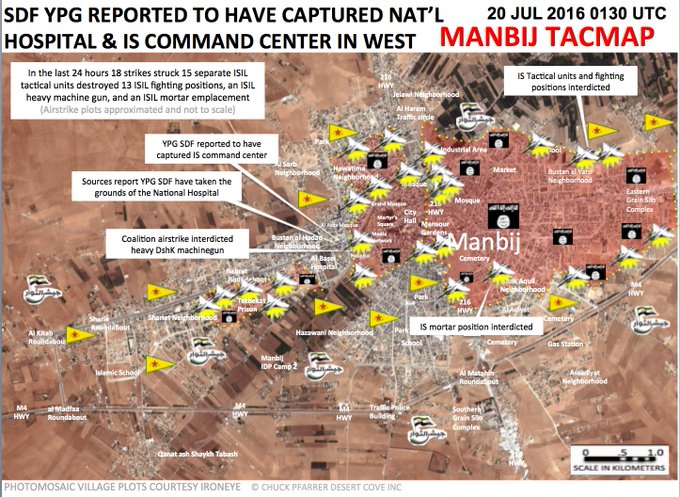
Syria is demanding the UN take action after it says French war planes killed more than 120 civilians during airstrikes on Tuesday near the Turkish-Syrian border. The deaths came just a day after US air assaults killed a further 20 people in Manbij.

Damascus wants the organization to look into atrocities committed by France, which is a member of the US-led international coalition, after it targeted the village of Toukhan Al-Kubra, located near the Turkish-Syrian border and the city of Manbij.

“The French unjust aggression claimed the lives of more than 120 civilians, most of them are children, women and elderly, in addition to tens of wounded citizens, the majority of them are also children and women as reports say that the fate of scores of other civilians who still under debris are unknown too,” the Syrian Foreign Ministry wrote, as cited by the Syrian Arab News Agency.

The mass death toll in Toukhan Al-Kubra came just a day after US war planes killed around 20 people, mainly women and children, while many more were injured in and around the city of Manbij, the Foreign Ministry states.

“The government of the Syrian Arab Republic condemns, with the strongest terms, the two bloody massacres perpetrated by the French and US warplanes and those affiliated to the so-called international coalition which send their missiles and bombs to the civilians instead of directing them to the terrorist gangs… Syria also affirms that those who want to combat terrorism seriously should coordinate with the Syrian government and army,” the ministry added.

In the letter, the Syrian Foreign Ministry added that it condemns the continued support by the US, France, Saudi Arabia, the UK and Qatar to terrorist organizations such as Al-Nusra Front and Jaish Al-Islam, despite these groups having clear links to Islamic State (IS, formerly ISIS/ISIL) and Al-Qaeda.

MANBIJ: 20 JUL 2016. 0130 UTC. Heavy airstrikes continue. Nat’l Hospital taken. Fighting in W urban areas.

The human rights watchdog Amnesty International also hit out at the US-led coalition, saying that it needs to do more to prevent the deaths of civilians.

“Anyone responsible for violations of international humanitarian law must be brought to justice and victims and their families should receive full reparation,” Amnesty’s interim Middle East director Magdalena Mughrabi said, as cited by Reuters.

A spokesman for the US Department of Defense says that it is aware of the loss of civilian life in Syria.

“We are aware of reports alleging civilian casualties near Manbij, Syria, recently. As with any allegation we receive, we will review any information we have about the incident,” Matthew Allen said in a statement.

“We take all measures during the targeting process to avoid or minimize civilian casualties or collateral damage and to comply with the principles of the Law of Armed Conflict,” he added.

The US-led coalition has been providing air support to the rebel group the Syrian Arab Coalition, which is involved in heavy fighting around the city of Manbij, currently under the control of Islamic State.

The terrorist group has been in control of the city since it seized large swathes of Syria and Iraq in the summer of 2014.

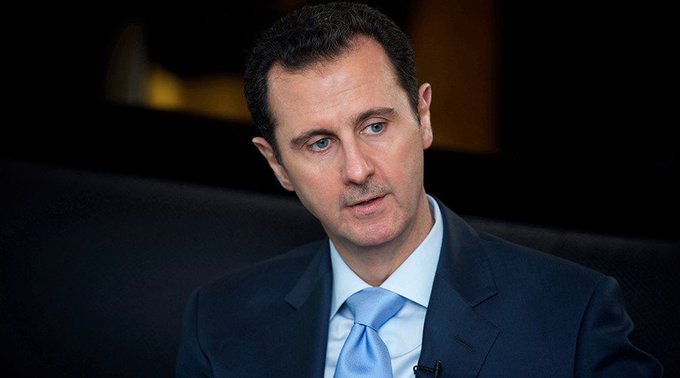
In an interview with NBC News last week, Syrian President Bashar Assad said that the US is not interested in defeating terrorists in Syria as it really wants “to control and use them.”

Western leaders support terror groups in Syria, get extremism at home – Assadhttp://on.rt.com/7iiq 

“The reality is telling that, since the beginning of the American airstrikes, terrorism has been expanding and prevailing,” he told the channel, specifying that “during the American and alliance airstrikes, ISIS was expanding and taking over new areas in Syria.”

“It’s about being serious, having the will. The United States doesn’t have the will to defeat the terrorists. It had the will to control them and to use them as a card, like they did in Afghanistan. That will reflect on the military aspect of the issue,” Assad said.

https://www.rt.com/news/352255-france-syria-civilians-dead/

U.S.-South Korea hypocrisy: Wargame invasion of DPRK, decide to install THAAD Missile “Defense System”, violate UN Security Council Resolution

Global Research, July 10, 2016

The decision of Seoul and Washington to place on the territory of South Korea American missile defense systems THAAD violates the provisions of the UN security Council resolution No. 2270 on North Korea. That’s the words of an influential legal expert on international sanctions issued to the Rossiyskaya Gazeta on condition of anonymity.

Other experts noted that the United States and the Republic of Korea constantly allow themselves actions that are destabilizing the situation, which  is also contrary to the provisions of the resolution, although Seoul and Washington are in the forefront of those calling to comply with this resolution as closely as possible.

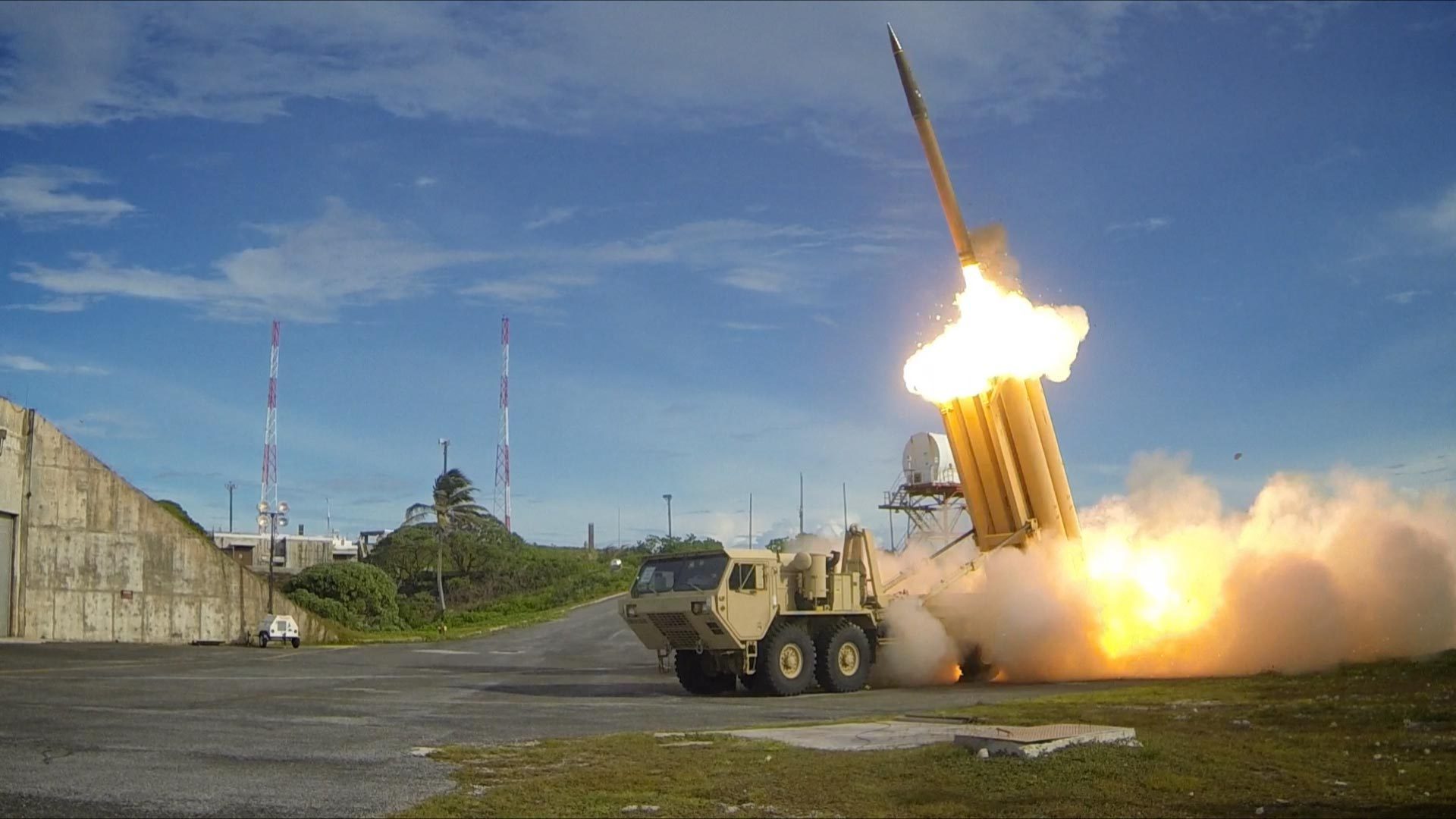
We can remind you that the UN security Council resolution No. 2270 was adopted on March 2, 2016 in response to the nuclear and missile tests by Pyongyang in January and February of this year. The main content of the document were the new sanctions against the DPRK, but there are also a number of General provisions. Yesterday, the United States and the Republic of Korea stated that they intend to place on the Korean peninsula American anti-missile complexes THAAD before the end of 2017, which caused a sharp condemnation from Russia and China, as well as a mixed reaction in South Korea.

Terminal High Altitude Area Defense (THAAD) produced by Lockheed Martin

“Seoul and Washington are usually very keen on keeping an eye on othes, so that they would very strictly adhere to UN security Council resolution No. 2270, but they forget about their behavior. They should have to read the whole text if that resolution. Their decision on THAAD is totally contrary to the provisions of this resolution,” – said to Rossiyskaya Gazeta a competent source in the field of application of sanctions who asked not to be named.

The expert explained that it concerns in particular the paragraph 49 of the resolution No. 2270, where it is stressed that the UN security Council

“reaffirms the importance of maintaining peace and stability on the Korean Peninsula and throughout northeast Asia, reiterates its commitment to a peaceful, diplomatic and political solution to the situation and welcomes efforts by Council members as well as other States to facilitate a peaceful and comprehensive solution through dialogue and to avoid any action which might increase tensions”.

“Placing missile defense systems THAAD just increases the tension on the Korean Peninsula, in northeast Asia and does not contribute to the maintenance of peace and stability,” he said, pointing out that after the statement of Seoul and Washington about THAAD instability and tension in the region are increasing rapidly

He added that this view is supported by the Ministries of Foreign Affairs of the Russian Federation and of the People’s Republic of China who yesterday issued their statements about plans to place of antimissile systems. In particular, the statement of the Russian Foreign Ministry says that “such actions, no matter how they were substantiated, have the most negative impact on global strategic stability, the commitment about which they love to talk so much in Washington. They also increase regional tensions, creating new challenges to solve complex problems of the Korean Peninsula including its denuclearization”.

Another expert on regional issues said that the US and South Korea consistently make actions which are a violation of the resolution and do not contribute to stability.

“They like to say about THAAD in Seoul  that this is a purely defensive weapons. OK, then let’s talk about the following. Right now, artillery, aviation, and marine corps of South Korea and the United States are involved  in yet another exercises on the Korean Peninsula, which work out how to attack the DPRK, practicing the seizure of footholds and the development of further advance. The exercises started on June 27 and will last until July 14. Earlier, the US Army Command in the Asia Pacific region informed that they have conducted exercises the aim of which was also how to invade the DPRK, a practice on bombing of North Korea with the participation of the strategic B-52 bombers and attacking aircraft.

The military of both the United States and South Korea not only did not conceal the offensive nature of the exercises, but even emphasized it. So, they want to present such actions, too,  as “contributing to peace and stability”? And can after that anybody be surprised that Pyongyang is starting to get agitate?!”- he asked rhetorically, stressing that these exercises  also undoubtedly violate the UN security Council resolution No. 2270.

“… Please, let’s remember that this document has provisions mandatory for all, including the US and South Korea. Today they shout in unison that the launch of ballistic missile from a North Korean submarine violates the UN resolution. But they constantly allow themselves actions that are inconsistent with the document on the thorough implementation of which they themselves insist,” said the expert.

Abridged translation from Russian.

Original article in Russian:

https://rg.ru/2016/07/09/reshenie-seula-po-kompleksam-pro-thaad-narushilo-rezoliuciiu-sb-oon.html

Shocking UN report lists crimes by the Ukrainian authorities

From Strategic Culture Foundation

By Arina Tsukanova
June 11, 2016
Shocking UN Report Lists Crimes by the Ukrainian Authorities

The 13th report of the UN High Commissioner for Human Rights on the human rights situation in Ukraine between 16 November 2015 and 15 February 2016, when the Minsk Agreements were in force, has come as a shock to Kiev.

According to the UN, more than three million people live in the areas directly affected by the conflict. The exact number of people who have left Ukraine-controlled territory is still unknown, although rough estimates range from 800,000 to 1,000,000 people. The Ukrainian government has estimated that more than a million people have left southeast Ukraine for Russia, Belarus and Europe. This figure does not match that of the Russian federal migration service, however: in 2015, around four million Ukrainians crossed the border, with nearly 2.6 million settling in Russia. More than a million people have arrived from southeast Ukraine. Residents of the Donetsk and Luhansk regions are permitted to live freely in Russia.

The discrepancy in the figures clearly shows that Ukraine is not interested in keeping track of its citizens, whether within the country or abroad. This means that one of the aims of the military campaign launched in the east of the country is to displace the population from the area of conflict, predominantly to Russia. Given that refugees from the republics to Ukraine are facing discrimination in access to public services, according to the UN report, the authorities in Kiev do not seem to want the residents of Donbass either.

The UN also states that those living close to the contact line (nearly 800,000 people) are particularly suffering, and the lives of these people are constantly at risk. The UN mission believes that the assistance being given to the residents of Donbass is insufficient, even given Russia’s humanitarian convoys, although the fact that it was Ukraine that shut down all the social programmes and introduced the ‘blockade’ unfortunately remained beyond the scope of the report.

The UN believes that the permit regime introduced by Ukraine and the disorder at checkpoints are negatively reinforcing the isolation of those living in the DPR and LPR. Queues of up to 300-400 cars waiting on either side of the checkpoints are observed on a regular basis and this recently ended in tragedy. Due to the fact that the Ukrainian checkpoint is not open at night, civilians who had been queuing in their cars overnight were fired at by the Ukrainian side using illegal-calibre weapons (122 mm), resulting in the deaths of five people, including a pregnant woman.

During the period covered in the report, the Ukrainian armed forces have advanced even further into populated areas and the numerous attacks on the residential areas of Horlivka, Shakhtarsk and Debaltseve are also mentioned in the report.

Since the Minsk ceasefire agreements entered into force (i.e. since 15 February 2015), there have been 843 civilian casualties – 235 killed (216 adults and 19 children) and 608 injured (554 adults and 44 children). At the same time, the UN mission notes that it is unable to attribute some of the victims to either side of the conflict. It also emphasises that the real number of those killed and injured could be higher than that given in the report.

The number of people missing is particularly shocking. The Ukrainian side has reported 741 persons missing, while the DPR has registered 420 missing persons. In addition, the UN mission has ascertained that approximately 1,000 bodies held in morgues in government-controlled territory have still not been identified.

And once again the numbers are crying out that the Ukrainian government does not believe people to be important. The number of persons that Kiev has declared missing is a third less than the number of unidentified bodies! And the numbers also ignore the mortal remains in areas where hostilies took place – search operations are virtually non-existent. As the UN report states, there is not even a dedicated mechanism in place to gather statements from the relatives of missing persons.

The UN mission has also not taken into account the number of unmarked graves in cemeteries. The overwhelming majority of missing persons should not be looked for in the Donetsk and Luhansk republics, but among the thousands of bodies that have already been quietly buried or are still lying in morgues. It is possible that the official number of those who will never return has been hugely underestimated.

The efforts of the Ukrainian side aimed at searching for and identifying those killed and those missing are referred to in the UN report using the word «inaction».

Kiev cannot admit that to avoid responsibility, it is secretly carrying out a policy of ‘unidentified bodies’. It is also being suggested to relatives that missing persons are being held captive by DPR and LPR ‘separatists’.

The report concedes that some people recorded as missing may be alive, but are being held in secret places of detention either in the republics or in Ukrainian-controlled territory.

The UN mission has finally figured out that the secret prisons and torture in Ukraine are an established system that has become part of the state and its policies. Of the 1,925 criminal investigations launched into allegations of torture in 2015, 1,450 were closed.

The report has also provided yet more evidence that it is not a civil war. It is a war between those who seized power by means of a military coup and the people of Ukraine, a war that is hypocritically being referred to as an ‘anti-terrorist operation’.

As noted in the report,

throughout the country, OHCHR continued to receive allegations of enforced disappearances, arbitrary and incommunicado detention, and torture and ill-treatment of people accused by the Ukrainian authorities of ‘trespassing territorial integrity’, ‘terrorism’ or related offenses, or of individuals suspected of being members of, or affiliated with, the armed groups.

People are not just being tortured, but are also being executed without trial. In Sloviansk, for example, the basement of the local college is being used for this purpose. A basement used for torture and summary executions was also discovered by UN inspectors in Izium, Kharkiv district. In addition, «a network of unofficial places of detention, often located in the basement of regional SBU buildings, have been identified». The SBU also has such basements in Odessa and Kharkiv. In February 2016, between 20 to 30 people were detained in the basement of the Kharkiv regional SBU building, and the vast majority of prisoners were not arrested in accordance with legal procedures and were not charged.

The report also notes that the SBU obtains confessions of terrorism using torture, and those who sign the confessions are told that should they complain, then their families, including their children, will also be made to suffer. The Security Service of Ukraine refers to such methods as the use of «proportional» and «justified» force.

The 13th report of the UN High Commissioner for Human Rights on the human rights situation in Ukraine appeared on 3 March 2016, but it is only now that the information bomb has exploded following an article in The Times, in which Ivan Simonovic, UN assistant secretary-general for human rights, talks about the report and also about five secret SBU prisons that a delegation of the UN Subcommittee on Prevention of Torture was not allowed access to, resulting in the delegation cutting short its visit to Ukraine…

The 13th report also completely destroys the myth that there are thousands of prisoners in the DPR and LPR. There is no trace of the thousands – in February 2016, the SBU gave the UN mission a list of 136 people who are allegedly being detained in custody in the republics, but nothing is known about this for sure. The list provided by the DPR authorities, however, looks completely different. «Some 1,110 persons were detained by the Government of Ukraine, including 363 members of the armed groups. This includes 577 people arrested for ‘their political views’ and 170 civilians ‘who have nothing to do with the conflict’», says the UN report. The SBU has gone overboard by essentially creating a system of concentration camps. The UN report likens the actions of the SBU to the seizure of hostages.

It has been impossible to keep the scandal hushed up, but while this regime exists in Ukraine, investigations into its criminal activities will be carried out along the same lines as the investigations into the people burned alive in Odessa on 2 May 2014. Namely that the executioners will remain free or under house arrest while the victims are imprisoned. For years.


http://www.strategic-culture.org/news/2016/06/11/shocking-un-report-lists-crimes-ukrainian-authorities.html

http://www.globalresearch.ca/shocking-un-report-lists-crimes-by-the-ukrainian-authorities/5530494

Saudi-led coalition demands removal from ‘wildly exaggerated’ UN blacklist of child-killers in Yemen; UN caves to pressure

From RT

© Khaled Abdullah

Salafist shades of gray: US uses veto to protect proxies in Syria

From Fort Russ

By Ollie Richardson for Fort Russ
12th May, 2016
On Tuesday, 10th May 2016, the UN held a vote on the inclusion of the extremist groups Ahrar Al-Sham and Jaish al-Islam on the list of “terrorist” groups.The United States, France, UK, and Ukraine all voted against this resolution. This vote was the result of a proposal made by Russia in April, where even then the US implied that it would opt to block such a move in the future.
As was explained in this Fort Russ article, Russia finds itself caught in an Atlanticist web, where one week Group X are ‘terrorists’, and 7 days later they magically become “moderate”. The US has the ability to do this of course because of their imposing influence not only at the UN, but also in the world of Non Governmental Organisations. The Syrian Observatory for Human Rights, for example, provides Pentagon-funded agencies like Reuters with falsified information, which then travels along the NGO spider’s web, ending in such information being the top search result in Google or Yahoo. This method of information spin relies on idle minds and habitual behaviour, something that the State Department’s own Vice News feasts on (Hipsters).
Assuming that the majority of people obtain their knowledge from the US-controlled Wikipedia, it can be said that it is common knowledge that Jahbat Al-Nusra are “Al Qaeda in Syria”, and that they represent the Salafist ideology.
https://en.wikipedia.org/wiki/Al-Nusra_Front
It can also be said that Ahrar Al-Sham, besides being Qatar’s finger in the Syrian pie, are also widely known to be loyal to the Salafist ideology:
https://en.wikipedia.org/wiki/Ahrar_ash-Sham
And finally, it can also be presumed that Jaish Al-Islam are widely known to be loyal to the Salafist ideology:
https://en.wikipedia.org/wiki/Jaysh_al-Islam
So despite all 3 groups sharing the same ideology, only 1 has been placed on the UN list of terrorist organisations.
Taking into account what is known about the events on the ground in Syria, Al-Nusra have been able to capitalise on Russia’s postponement of the assault on Aleppo. In order to appease not only the Higher Negotiations Committee, but  John Kerry also, Russia moved some toys out of Syria, and seemingly thought that the US, in return, would offer to rein-in the groups they have influence over in Aleppo.
Unfortunately, Putin was left feeling disappointed at the US’ semantic games, and now looks like a villain in the eyes of Iran and the Syrian Army, who are now lacking air support when they need it the most.
Robert Fisk’s excellent article entitled “After splitting with Al-Qaeda, Al-Nusra is being presented to the West as a moderate force. It’s nothing of the sorthighlights that the West uses an non-existent group (Cameron’s 70,000 for example)  that are earmarked as ‘moderates’ who can behave as a Trojan Horse in the Levant. This role was initially played by “ISIS”, but Russia quickly removed them from the main equation, and now Al-Nusra are Obama’s go-to guys. They have inherited a magic shield that protects them from Russian KAB-500Kr and OFAB-500 bombs. Maybe soon they will give them MANPADs too – a throwback to the 80’s…
The US’ plan in Syria hinges now on Al Qaeda, who must somehow arrange themselves in Aleppo in a way where Samantha Power, US’ permanent representative at the UN, can help them to dissimulate their true objective – to create a Salafist Emirate in Syria.
On a separate note – Ukraine vetoing the resolution is a statement in itself, and really confirms that Kiev is acting as an auxiliary ammo depot for Takfiri Jihadists. US Gladio-B outposts outside Syria provide the IMF with fresh blood and Angela Merkel with more banana republics inside the now frail EU.
Russia can only counter this hybrid encircling by attacking the head of the snake – Jabhat Al-Nusra – and by offering the Syrian Army and the Iranian Al-Sabereen units the air support they need to liberate Aleppo district by district. This war still has a long way to go…