Putin: “I am not your friend, I am the President of Russia” [Video]

From Fort Russ

July 24th, 2016 – Fort Russ News –
– Rossia 1- Translated by Inessa Sinchougova

When German journalists asked the very simplistic question on whether Putin considered himself a friend or a foe to the West- he answered neither.
There is the simple concept of national interests, which may or may not be at odds with other countries. Diplomacy is the art of being able to reconcile your national interests, alongside those of other States, compromising on certain aspects along the way. 
However, the Atlanticist world view (EU/US/NATO) has shown not to allow for mutual respect, nor for cooperation. Through a number of covert means, they ask for nothing less than for Russia to no longer ascertain its national interests, which makes President Putin #1 Boogeyman in the world today.

Russians bomb U.S. base in Syria — twice

From Fort Russ

July 24th, 2016 – Fort Russ – 
Katehon – Fort Russ News – J. Flores

Various news outlets have confirmed reports that last month, Russian air-forces destroyed a US and UK military base in Syria. Within moments of the first bombing run, US liaison offices contacted their Russian counterparts, warning them that in fact they had hit a US run installation. Russian air-forces responded by flying a second sortie and hitting the same facility again.

Katehon reports:

According to The Wall Street Journal, a month ago, the Russian air-forces destroyed a top-secret military facility, used by Special Forces of the USA and the UK in Syria. The Government and military in all three countries, according to the newspaper, ignore this fact.

On June 16 Russian planes in Syria hit a remote military installation at “Al-Tanf” in the south-east of the country. As the publication of The Wall Street Journal, citing military sources states, the aim was a secret base of the US and the UK. Coincidence or not, but the strike occurred after the base was left by the 20 people of the UK military personnel.

The US military states, that some cluster bombs were dropped on the base. After that, the representatives of the US Central Command in Qatar called Russian colleagues in Latakia, explaining that the facility that was bombed is a part of the American infrastructure. But a second blow was delivered some 30 minutes after this.

Katehon experts comment on this:

“US is known for its official support of the so called “moderate opposition” and the secret support of the ISIS extremist group. US uses its bases not to fight terrorism as they claim, but to overthrow Assad’s Government. The US-UK base has been created illegally and as a violation of both the sovereignty of Syria and International Law.”

The Wall Street Journal reports:

An outpost near the Jordanian border that is used by U.S. and British special forces was hit by the airstrikes last month

When Russian aircraft bombed a remote garrison in southeastern Syria last month, alarm bells sounded at the Pentagon and the Ministry of Defense in London.

The Russians weren’t bombarding a run-of-the-mill rebel outpost, according to U.S. officials. Their target was a secret base of operations for elite American and British forces. In fact, a contingent of about 20 British special forces had pulled out of the garrison 24 hours earlier. British officials declined to comment.

U.S. military and intelligence officials say the previously unreported close call for Western forces on June 16, and a subsequent Russian strike on a site linked to the Central Intelligence Agency, were part of a campaign by Moscow to pressure the Obama administration to agree to closer cooperation in the skies over Syria.

Twice Targeted

Russian aircraft bombed a remote outpost in Syria used by U.S. and British special forces in June, and then in July hit a camp housing families of Central Intelligence Agency-backed Syrian fighters.

http://www.fort-russ.com/2016/07/massive-russians-bomb-us-base-in-syria.html

Australian First Nation children are tortured and abused at Don Dale Detention Centre, Australia’s Abu Ghraib

By Ken Canning
Asia-Pacific Research, July 26, 2016
Green Left Weekly 26 July 2016

The following article from Australia is a sharp rebuke of Australian Prime Minister Malcolm B. Turnbull by an Aborigine candidate of the Australian Senate that rightly criticizes his government for doing nothing to stop the torture and widespread abuse of children and juveniles at the Don Dale Detention Centre that was exposed by investigative journalist Caro Meldrum-Hanna on Australian national television on July 25, 2016. The indigenous or Aborigine Australian community repeatedly demanded that the Australian government take legal action. Reports about Aborigine or First Nation children and juveniles, which are the bulk of the detention wards in the Northern Territory, being brutalized were frequently made without meaningful consequences.

Leaks from Don Dale Detention Centre show children being forcefully stripped naked, hog tied like cattle, carried by the neck, knocked down, and thrown by facility staff. Prison guards systematically de-humanized and humiliated children and juveniles with insults, beatings, and gassing in what amounts to nothing short of unjust abuse of authority and criminal acts. Prior to the leaked footage aired by the Australian Broadcasting Corporation’s Four Corners program that explicitly shows children and juveniles being abused and tortured by guards, current and past Australian governments were well aware of what was happening at the youth detention centre for approximately two  to five years. These governments, however, refused to take any action. Only when the broader general public became aware of the horrific crimes at Don Dale Dentention Centre did the Australian government feign outrage and pledge to take action by saying that it would establish a royal commission of inquiry. This is utter hypocrisy and dishonesty on the part of the federal government of Australia, which has been motivated by the self-interest of saving face.

Along with the long history of the Australian state to abuse vulnerable peoples, the racist attitudes that serve to justify the marginalization of the Aborigine of Australia are deeply entrenched in Australian society and have enabled what has happened in Don Dale Detention Centre. The victims were not seen or respected as being equals. Instead the victims were viewed as lesser people by virtue of their socio-economic and ethnic backgrounds. Essentially they were treated as non-people that could be abused with impunity. This is why Don Dale Detention Centre should be viewed as nothing short of being Australia’s own Abu Ghraib. The Iraqis that were tortured by the US military in Abu Ghraib were also viewed as non-people by the US personnel stationed there, which for the US perpetrators excused the violation of the rights of their Iraqi victims. Moreover, the comparison between Abu Ghraib and Don Dale is especially fitting since many of the wards at Don Dale are children and juveniles from Australian indigenous communities, which are a dispossessed people that have been driven off their ancestral lands by the colonial process that established Australia.

 Mahdi Darius Nazemroaya, Asia-Pacific Research Editor, 26 July 2016.

Dylan Voller, a thirteen-year old boy, being strangled at  Don Dale Detention Centre.

Dylan, age seventeen, is seen above and below being tied to a chair in adult prison.

Malcolm Turnbull has called for a Royal Commission after seeing on ABC’s Four Corners the brutality that has been happening under both his government and the previous Labor government.

He said this evidence had not been brought forth at previous inquiries. Not good enough Turnbull!

People have been screaming for the past five years about the Don Dale detention centre and your government and the Labor government have chosen to ignore this pure evil. You not only ignored it, you let it fester.

You either knew and thus are complicit, or you did not know and are simply not fit to govern. You cannot get out of this one with a slippery smile, Turnbull.

A Royal Commission? What a joke! You have all the evidence you need; it shocked a whole nation. Predominantly First Nations children are being brutalised by a system you let continue in your pretence of ignorance.

The evidence is there. Sack everyone in Corrective Services in the Northern Territory. Those who did not actually do anything would have known of these practices and allowed it to happen.

Sack the NT government and while you are at it, sweep the federal parliament of the rubbish currently holding seats of power who sat by and watched while our kids were being tortured.

This is an international disgrace and this country should be dragged before the United Nations and stripped of its powers. The Australian government had its racist intervention into the NT so maybe its time for an international intervention into Australia?

Put simply the Coalition and Labor have lost the ability to govern.

Ken Canning is a First Nations activist who was a Senate candidate for the Socialist Alliance in the July 2 elections.

To read a past report about abuse at Don Dale Detention Centre please click here

The original source of this article is Green Left Weekly

Copyright © Ken Canning, Green Left Weekly, 2016

Australia’s Abu Ghraib: Australian Government Complicit in Torture of Children at Don Dale Detention Centre


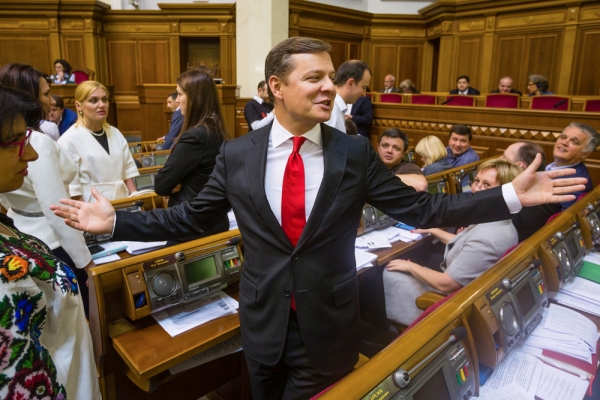
“Make yourself at home”: Ukrainian Radical leader invites Russian opposition leaders

From Fort Russ

July 22, 2016 –
PolitRussia –
Translated by J. Arnoldski

Comfortable conditions for the Russian opposition should be created in Ukraine so that they can feel at home. Such an opinion was expressed by the head of the Radical Party of Ukraine, Oleg Lyashko, while commenting on the publication of the “Friends of Ukraine 2016” list. 
The head Ukrainian Radical expressed words of gratitude to all opposition figures in Russia who support the territorial integrity of Ukraine and are telling the “truth” about the situation in the country.
“Everyone who supports Ukraine’s territorial integrity, our independence, and our sovereignty are without a doubt our allies. We are sincerely grateful that they have the strength to tell the truth about the situation in Ukraine,” he stated.
Lyashko urged Ukraine to help these people in any way and, if necessary, offer them shelter.
“Everyone in Ukraine feels free. And Ukraine’s friends should also feel themselves at home in our country,” the radical asserted. 
The list of “Friends of Ukraine” included: Mikhail Khodorkovsky, Vladimir Ryzhkov, Grigory Yavlinsky, Mikhail Kasyanov, Garry Kasparov, Andrey Makarevich, Ilya Ponomarev, Dmitry Gudkov, Ilya Yashin, Oleg Kashin, Alexei Navalny, Ksenia Sobchak, Liya Akhedzhakova, Viktor Shenderovich, Boris Akunin, Alexander Nevzorov, Evgeny Chirikov, Matvey Ganapolsky, Mikhail Kozyrev, Dmitry Oreshkin, Konstantin Borovoy, Gennady Gudkov, Artemy Troitsky and Yuri Shevchuk.

Historic civil law suit against alleged war criminal George W. Bush in California: Chilcot Report submitted to the Ninth Circuit Court

Global Research, July 25, 2016
Witness Iraq 23 July 2016

We are pleased to announce that excerpts from the Chilcot Report by the British Iraq Inquiry Committee have been submitted to the Ninth Circuit in support of the plaintiff’s case in Saleh v. Bush, et al.

What is the current status of the case?

Currently, Saleh v. Bush is on appeal before the Ninth Circuit.  Ms. Saleh’s lawsuit in federal court against US government leaders named as Defendants — George W. Bush, Richard Cheney, Donald Rumsfeld, Colin Powell, Condoleezza Rice and Paul Wolfowitz — was dismissed in December 2014 after the district court immunized the Defendants, ruling they were acting within the lawful scope of their employment when they planned and executed the Iraq War.

Former British Prime Minister Tony Blair shaking hands with Defendant-Appellee George W. Bush.

Ms. Saleh is arguing on appeal that the Defendants should not be immunized. She alleges that the Defendants  were acting from personally held convictions that the US should invade Iraq, regardless of any legitimate policy reasons. Specifically, she is pointing to a record of statements made by some of the Defendants in leading neoconservative outlets in which they called for the military overthrow of the Hussein regime as early as 1997.

She is also arguing that Bush administration officials knowingly lied to the public by fraudulently tying Hussein to Al Qaida and the threat of weapons of mass destruction. Such misrepresentations would also make them personally liable for their conduct under relevant law.

The Ninth Circuit has not indicated when it will issue a ruling on the appeal.

What is the Chilcot Report?

The Chilcot Report is the final report issued by the Iraq Inquiry, a committee established by the British Government in 2009 to investigate what happened during the run up to the Iraq War. Composed of British “privy counsellors,” the report was released on July 6, 2016 after more than 6 years of investigation, research, and drafting.

Why is the Chilcot Report important to the Saleh v. Bush lawsuit?

The Chilcot Report contains (i) factual conclusions by the privy counsellors about what happened during the run up to the Iraq War, (ii) actual documentation (including written notes between Blair and Bush) that show a plan to go to war in Iraq as early as October 2001, and (iii) statements of international law by distinguished experts who have concluded that the Iraq War was illegal and constituted aggression against Iraq.

What are some of the pieces of evidence submitted to the Ninth Circuit?

These are some of the excerpts that we highlighted for the Ninth Circuit as evidence that the Iraq War was illegal, and that government leaders were not acting within the lawful scope of their employment authority when they planned and executed the Iraq War:

Conclusions of the Iraq Inquiry Committee:

  1. President Bush decided at the end of 2001 to pursue a policy of regime change in Iraq.
  1. On 26 February 2002, Sir Richard Dearlove, the Chief of the Secret Intelligence Service, advised that the US Administration had concluded that containment would not work, was drawing up plans for a military campaign later in the year, and was considering presenting Saddam Hussein with an ultimatum for the return of inspectors while setting the bar “so high that Saddam Hussein would be unable to comply.”
  1. Mr Straw’s advice of 25 March proposed that the US and UK should seek an ultimatum to Saddam Hussein to re-admit weapons inspectors. That would provide a route for the UK to align itself with the US without adopting the US objective of regime change. This reflected advice that regime change would be unlawful.
  1. Sir Richard Dearlove reported that he had been told that the US had already taken a decision on action – “the question was only how and when;” and that he had been told it intended to set the threshold on weapons inspections so high that Iraq would not be able to hold up US policy.

Conclusions of the Iraq Inquiry Committee related to the legal analysis of the British government leading up to the war:

  1. Despite being told that advice was not needed for Mr Blair’s meeting with President Bush on 31 January, Lord Goldsmith wrote on 30 January to emphasise that his view remained that resolution 1441 did not authorise the use of military force without a further determination by the Security Council.
  1. Mr Wood had warned Mr Straw on 24 January that “without a further decision by the Council, and absent extraordinary circumstances”, the UK would not be able lawfully to use force against Iraq.
  1. Mr Wood wrote that Kosovo was “no precedent”: the legal basis was the need to avert an overwhelming humanitarian catastrophe; no draft resolution had been put to the Security Council; and no draft had been vetoed. He hoped there was: “… no doubt in anyone’s mind that without a further decision of the Council, and absent extraordinary circumstances (of which at present there is no sign), the United Kingdom cannot lawfully use force against Iraq to ensure compliance with its SCR WMD obligations. To use force without Security Council authority would amount to the crime of aggression.”
  1. Lord Goldsmith recognised that there was a possibility of a legal challenge

Underlying statements and facts relied on by the Iraq Inquiry Committee

15 January 2010 Statement by Foreign & Commonwealth Office legal advisor Sir Michael Wood to the Iraq Inquiry Committee

I considered that the use of force against Iraq in March 2003 was contrary to international law. In my opinion, that use of force had not been authorized by the Security Council, and had no other legal basis in international law.

18 January 2010 Statement by Foreign & Commonwealth Office legal advisor Elizabeth Wilmshurst to the Iraq Inquiry Committee

I regarded the invasion of Iraq as illegal, and I therefore did not feel able to continue in my post. I would have been required to support and maintain the Government’s position in international fora. The rules of international law on the use of force by States are at the heart of international law. Collective security, as opposed to unilateral military action, is a central purpose of the Charter of the United Nations. Acting contrary to the Charter, as I perceived the Government to be doing, would have the consequence of damaging the United Kingdom’s reputation as a State committed to the rule of law in international relations and to the United Nations.

12 July 2010 Statement by Carne Ross, First Secretary of the U.K. Permanent Mission to the U.N. to the Iraq Inquiry Committee

This process of exaggeration was gradual, and proceeded by accretion and editing from document to document, in a way that allowed those participating to convince themselves that they were not engaged in blatant dishonesty. But this process led to highly misleading statements about the UK assessment of the Iraqi threat that were, in their totality, lies.

October 11, 2001 message from former British Prime Minister Tony Blair to George W. Bush

I have no doubt we need to deal with Saddam. But if we hit Iraq now, we would lose the Arab world, Russia, probably half of the EU …

However, I am sure we can devise a strategy for Saddam deliverable at a later date. My suggestion is, in order to give ourselves space that we say: phase 1 is the military action focused on Afghanistan because it’s there that perpetrators of 11 September hide. Phase 2 is the medium and longer term campaign against terrorism in all its forms. …

(Mr. Blair was apparently discussing with Defendant-Appellee Bush regime change in Iraq just one month after the attacks that took place on September 11, 2001. Mr. Blair’s suggestion for “phase 1” of the U.S.-U.K. strategy on the war on terrorism to first direct military action toward “Afghanistan because it’s there that perpetrators of 11 September hide,” further supports allegations that U.S. officials used an unrelated terrorist attack to execute a pre-existing plan of regime change in Iraq.  Mr. Blair then went on to discuss a “phase 2” that would include invading Iraq).

December 4, 2001 message from  former British Prime Minister Tony Blair to George W. Bush

Iraq is a threat because it has WMD capability … But any link to 11 September and AQ [Al Qaeda] is at best very tenuous; and at present international opinion would be reluctant, outside the US/UK, to support immediate military action … So we need a strategy for regime change that builds over time. …

(This note supports allegations that U.S. government leaders were aware that Iraq had no link to the 9/11 attacks or Al Qaeda and support allegations that U.S. government leaders made false statements to the public about the threat Iraq posed, or its connection to Al Qaeda, in order to support a war and satisfy personally-held objectives of regime change that had no legitimate policy underpinning)

July 28, 2002 message from former British Prime Minister Tony Blair to George W. Bush:

I will be with you, whatever …

The Evidence. Again, I have been told the US thinks this unnecessary. But we still need to make the case. If we recapitulate all the WMD evidence; add his attempts to secure nuclear capability; and, as seems possible, add on Al Qaida link, it will be hugely persuasive over here.

(This note confirms that U.S. government official’s intent to invade Iraq was well-formed by July 2002. Mr. Blair’s July 2002 note to George W. Bush observed that U.S. officials thought evidence supporting regime change was “unnecessary” and that an “Al Qaida link” could be simply be tacked onto government messaging in order to sell the war).

Statements by legal experts who have concluded that the Iraq War was illegal

10 September 2010 Submission by Philippe Sands QC to the Iraq Inquiry Committee

Distinguished members of the legal community in the United Kingdom have also concluded without ambiguity that the war was unlawful.

9 September 2010 Statement by Professor Nicholas Grief to the Iraq Inquiry Committee (emphasis added).

A second Security Council resolution specifically and unambiguously authorising military action was required. The vague warning of ‘serious consequences’ in resolution 1441 did not suffice, and to interpret resolution 678 as granting the necessary authority was not ‘good faith’ interpretation as required by international law. Without such a resolution, the invasion of Iraq constituted an act of aggression, contrary to Article 2(4) of the UN Charter.

What happens next?

The Department of Justice has indicated that it will oppose the filing of these portions from the Chilcot Report with the Ninth Circuit. We will circulate the DOJ opposition once it has been filed.

Chilcot Report ignores secret US/UK Operation Southern Force air war against Iraq

Global Research, July 26, 2016
Antiwar.com 26 July 2016

The Chilcot Inquiry, set up to look into the British role in the war in Iraq, reported on July 6, and although it was overshadowed by the political fallout from the Brexit vote to leave the European Union, received a largely favorable reception from the media and commentators. It is unclear why those commentators judged it to be “hard-hitting” because in terms of its conclusions all it did was tell us what we already knew.

Then British Prime Minister Tony Blair pursued a war that was arguably illegal has had disastrous consequences, not least for the 179 British servicemen and women killed and their loved ones, but also for Iraq, its people and the fight against terrorism.

I was staggered by the rush to say the report was hard hitting. It wasn’t. It simply laid out the facts in a narrative format and let the reader decide. Those facts were of course damning but I struggle to find anything in the report that a well informed reader of British newspapers wouldn’t already know.

It was a very workmanlike narrative of what happened taken from secret documents and witness testimony and therefore providing far more detail than had been previously available but it was not anything like a proper inquiry in the real sense. It was more like a neutral court report than the solid analysis which was required, and what we actually got from the curiously much derided Butler report.

As a result of the Chilcot’s failure to carry out any detailed analysis of the evidence presented to his inquiry, it completely missed the extensive and conclusive evidence of a ten-month illegal air war by Britain and the U.S. designed to provoke Saddam Hussein into giving the allies an excuse to go to war in Iraq.

All modern wars begin with an air war in which the enemy positions on the ground are “softened up” to make them easier to overcome. The Iraq War was no different in many ways. Except there was a difference. George W. Bush and Tony Blair didn’t tell us it was happening.

So why does this matter now?

It matters because the Iraq War didn’t begin on March 20, 2003 as everybody thought, it began ten months earlier on May 20, 2002 when the allies started the secret air war. It was definitely illegal because it started six months before the UN Security Council passed Resolution 1441 which Tony Blair’s government later used to claim the war was legal.

(U.S. readers might also care to note that it started five months before Congress passed the so-called Iraq Resolution which authorized military action against Iraq.)

The secret air war, codenamed Operation Southern Force, was carried out under cover of the UN-authorized operation under which U.S. and RAF aircraft patrolled a so-called no-fly zone over southern Iraq to protect the Shia majority from Saddam’s forces.

Lt.-Gen. Michael Moseley, the U.S. Air Force commander of allied air operations over Iraq, told a conference at Nellis Air Force Base in Nevada in July 2003 that during Operation Southern Force allied aircraft dropped more than 600 bombs on “391 carefully selected targets.”

British and U.S. officials claimed at the time that the reason behind the increased air strikes carried out in the southern no-fly zone, was an increase in Iraqi attacks on allied aircraft. But Lt.-Gen. Moseley said the bombing of Iraqi positions in southern Iraq paved the way for the invasion and was the reason the allies were able to begin the ground campaign without first waging an extensive air war as they had done during the 1991 Gulf War.

Planning for the illegal air war began shortly after Tony Blair attended a summit with George Bush at the U.S. President’s ranch in Crawford, Texas on April 6 and 7, 2002. Chilcot confirmed evidence from a Cabinet Office Briefing Paper leaked to me as part of the “Downing Street Memos” back in the spring of 2005 that Mr. Blair agreed at Crawford “to support military action to bring about regime change” in Iraq.

The British Prime Minister didn’t waste any time sorting out what would happen next. Chilcot records that the very next day, April 8, 2002, Geoff Hoon, the U.K. Defense Secretary, called in Chief of Defense Staff Admiral Sir Michael Boyce (now Lord Boyce) and the Permanent Undersecretary at the Ministry of Defense (MoD) Sir Kevin Tebbit to discuss “military options” in Iraq.

Ten days later, Air Marshal Brian Burridge, Deputy Commander of RAF Strike Command, was sent to the U.S. to act as liaison with General Tommy Franks, commander of the U.S. Central Command, who would lead the invasion force. Now Sir Brian, he told the Chilcot Inquiry that he had a meeting with Gen. Franks shortly after arriving at Central Command’s headquarters in Tampa, Florida, discussing the no-fly zones over Iraq “at some length.”

Nine days later, on April 26, Franks flew to London with Burridge for discussions with the U.K. defense chiefs. The Chilcot Report says they talked about the patrols of the no-fly zones with details of the discussions “circulated on very limited distribution.”

A week later, there was a top secret meeting in 10, Downing St. chaired by Blair and attended by Hoon, British Foreign Secretary Jack Straw and Adm. Boyce. The Chilcot Report notes briefly that “Mr. Blair had a meeting on Iraq with Mr. Straw, Mr. Hoon and Adm. Boyce on 2 May but there is no record of the discussion.”

It’s worth pointing out that the Downing Street note which describes that key meeting in such brazenly bare detail was initially provided to the Butler Inquiry which first looked at the intelligence provided to back the war in Iraq in 2004. So the cover-up goes back at least to then and in reality far beyond.

Three days later after that secretive Downing Street meeting, Donald Rumsfeld, U.S. Defense Secretary, flew to London for talks with Mr. Hoon, following which British officials announced changes to the rules of engagement in the no-fly zones making it easier for allied aircraft to attack Iraqi military positions.

Simon Webb, then Mod policy director, told the Chilcot inquiry that the Americans had proposed “changing the nature of the no-fly zone, quite a lot of which we were persuaded about but which a part of we weren’t persuaded about … and stood aside from.”

As one of the Mod’s most senior civil servants, Webb was spouting the sort of doublespeak of which the writers of BBC Television’s Yes, Minister would have been very proud. The key words there are not “stood aside from” but “quite a lot of which we were persuaded about.”

On 20 May 2002, allied aircraft began ramping up the number of attacks on Iraqi positions. Throughout the first few months of 2002, they had dropped barely any bombs on Iraq. But answers to parliamentary questions asked by Liberal Democrat MP Sir Menzies Campbell (now Lord Campbell), reveal that during those last ten days of May alone, U.S. and U.K. aircraft patrolling the southern no-fly zone dropped 7.3 tons of bombs on Iraqi positions.

Far from standing aside, as Webb claimed in his testimony to the Chilcot Inquiry, RAF aircraft dropped more than two thirds of those bombs, a total of 4.9 tons.

Throughout the summer of 2002, both British and U.S. aircraft continued to bomb southern Iraq under cover of the no-fly zone while Blair and Hoon insisted that nothing was happening. The Defense Secretary told a cabinet meeting on 20 June 2002 that “except for continuing patrols in the no-fly zones, no decisions have been taken in relation to military operations in Iraq.”

During defense questions in the House of Commons on Monday 15 July 2002, Hoon told Labour MP Alice Mahon that: “Absolutely no decisions have been taken by the British Government in relation to operations in Iraq or anywhere near Iraq … I can assure the House that any such decision would be properly reported to the House.”

The next day, Blair appeared before the Parliamentary Liaison Committee. Asked if the U.K. was “preparing for possible military action against Iraq,” Blair replied: “No, there are no decisions which have been taken about military action.”

Tony Blair and his Defense Secretary Geoff Hoon were able to claim throughout 2002 that no decision had been taken on military action because the truth of what was taking place in southern Iraq under cover of the UN-authorized no-fly zones was kept on an extremely tight “need to know” basis. Even fairly senior British officials believed the increased air strikes were simply the result of the relaxation of the rules of engagement.

A week later, on Tuesday 23 July 2002, Blair was due to have a meeting with his war cabinet. In preparation for that meeting, the Cabinet Office produced a briefing paper which was one of the Downing St. Memos leaked to me when I was on the Sunday Times. It warned the participants that: “When the Prime Minister discussed Iraq with President Bush at Crawford in April he said that the U.K. would support military action to bring about regime change.”

This represented a problem for British policy-makers, the Cabinet Office briefing paper said.

“We need now to … encourage the U.S. Government to place its military planning within a political framework, partly to forestall the risk that military action is precipitated in an unplanned way by, for example, an incident in the no fly zones,” the briefing paper said. “This is particularly important for the U.K. because it is necessary to create the conditions in which we could legally support military action.”

This is all the evidence we need to show that the air war was illegal. Those conditions in which Britain could legally support military action did not yet exist. They had to be created. So although it was clearly not known to the officials who drafted the briefing paper, RAF aircraft and for that matter RAF servicemen were already involved in military action against Iraq which was not legal under the U.K. interpretation of international law.

The minutes of that war cabinet meeting on July 23 became best known for comments by Sir Richard Dearlove, the then head of MI6, who had just returned from a trip to Washington DC to see his CIA counterpart George Tenet. He told the meeting that the intelligence was being “fixed around the policy” in America.

But Hoon said something even more interesting. U.S. aircraft overflying southern Iraq had begun “spikes of activity to put pressure on the regime.” He did not mention that RAF aircraft were also taking part in the attacks. Presumably some of his colleagues in the war cabinet were unaware of that fact and the lack of an official record for the May 2 meeting suggests that both Blair and Hoon thought it sensible not to have the British participation on record.

The attacks continued through June, July and August with both U.S. and British aircraft carrying out increased bombing but nevertheless failing to provoke the Iraqis into a reaction which might give the allies an excuse for war.

The attacks needed to be ramped up still further.

On September 5 2002, more than 100 allied aircraft, both U.S. and British, attacked an Iraqi air defense facility in western Iraq on September 5, 2002, in what was believed to be a prelude to the infiltration of special forces into Iraq from Jordan. The RAF saw it as such a success that it was reported on the front page of the official publication RAF News.

During September, allied aircraft dropped 54.6 tons of munitions on southern Iraq of which 21.1 tons were dropped by RAF aircraft. In October, they dropped 17.7 tons of which 11.4 tons, roughly two-thirds, were British.

The Iraq Resolution authorizing U.S. military action against Iraq was not passed by Congress until the early hours of October 11, 2002, five months after the start of Operation Southern Force, the secret air war preparing the way for the invasion.

UN Security Council Resolution 1441, which the U.K. Government would later claim made the war legal, was not passed until November 8, 2002, six months after the secret air war began.

It was not until March 17, 2003 that British Attorney-General Lord Goldsmith formally confirmed that military action was legal on the basis of UN Security Council Resolution 1441. A day later, the British parliament backed U.K. military action in Iraq.

Two days, later allied troops invaded Iraq. It was and remains widely regarded as the start of the Iraq War. Only a very few people knew that was not the truth. The war had begun ten months earlier on 20 May 2002 when British and American aircraft began bombing the 391 “carefully selected” targets assigned to Operation Southern Force, the illegal joint British and American bombing campaign that Chilcot completely missed.

Intelligence beast reporter Michael Smith broke the story of the secret “Downing Street Memos” in 2005. This article was originally published on Michael Smith’s blog.

IPT rules Indonesia guilty of crimes against humanity in 1965 massacre; rules UK, US, Australia complicit in massacre

From Sputnik

July 20, 2016

A non-binding international tribunal at The Hague has ruled that Australia, the UK and the United States were complicit in 1965 mass killings and human rights atrocities in Indonesia.

During that period, some 500,000 to one million people died in one of the bloodiest massacres of the 20th century. What began as a purge of communists after a failed coup attempt, went on to encompass ethnic Chinese and alleged leftists, which led to the massacre being referred to as “politicide.”

According to the ruling by the International People’s Tribunal (IPT) at The Hague, the 1965 government of Indonesia committed crimes against humanity, but the finding, similar to that ruled against China by the Philippines last week regarding disputed territories in the South China Sea, is non-binding and carries no punitive consequences.

The judges found that allegations of “cruel and unspeakable murders” and the “unjustifiable imprisonment of hundreds of thousands of people without trial” were well founded.

“It has also been demonstrated that sexual violence, particularly against women, was systematic and routine, especially during the period 1965 to 1967,” the Tribunal report says.

The Tribunal demanded an apology from the present-day Indonesian government and demanded investigations and prosecutions into those perpetrators still alive. The Tribunal also demanded a public opening of archives and an unveiling of truth about the events.

Moreover, three countries — the UK, the US and Australia — were found complicit in facilitating the massacre by using propaganda to manipulate international opinion in favor of the Indonesian army.

According to the report, Australia and the UK, “… shared the US aim of seeking to bring about the overthrow of President Sukarno.”

“They continued with this policy even after it had become abundantly clear that killings were taking place on a mass and indiscriminate basis. On balance, this appears to justify the charge of complicity,” the report says.

The details of the crimes committed by the Indonesian army, which include brutal murder, imprisonment under inhumane conditions, enslavement, torture, forced disappearance, and sexual violence, can be found in the full text of the report.

The Indonesian government recently refused to apologize, and reaffirmed its stance regarding the victims and survivors of the 1965 atrocities.

“Our country is a great nation. We acknowledge and we will resolve this problem [the 1965 massacre] in our way and through universal values,” Coordinating Political, Legal and Security Affairs Minister of Indonesia Luhut Pandjaitan told reporters at the Presidential Palace on Wednesday.

http://sputniknews.com/asia/20160721/1043375620/UK-US-Australia-Complicit-Indonesia-Massacre.html

Construction of Russian Navy base on Kuril Islands to start in 2016

From Sputnik

29.06.2016

Construction of the Russian Navy’s Pacific Fleet base on the Kuril Islands will begin this year.

MOSCOW (Sputnik) – Construction of the Russian Navy’s Pacific Fleet base on Matua in the Kuril Islands chain will begin as soon as this year, a high-level military source told RIA Novosti on Wednesday.

“The decision to establish a Pacific Fleet naval base on the island has been made, construction will start this year,” the source said.

The Russian Defense Ministry was considering building the base on Matua, which hosts three World War II-era airstrips, Commander of the Eastern Military District Col. Gen. Sergei Surovikin said in May.

02.07.2016

US May Form Military Alliance in Pacific in Response to New Russian Base

A new naval base on the Kuril Islands will bolster Russia’s military presence in the Pacific region. Some players will not be happy about this move, a military expert said.

Russia will start this year construction of a new Pacific Fleet base on Matua in the Kuril Islands chain.

In May, the Defense Ministry along with the Russian Geographical Society sent a research expedition to Matua Island.

A new Russian facility would disfavor some regional actors, Ivan Konovalov, head of the Center of Strategic Environment, told Radio Sputnik.

“A new base will be a headache for the United States. President Barack Obama announced a strategic shift to the Pacific. This is why Washington will not be happy about a new Russian base in the region,” he said.

At the same time, the base will not affect relations between Moscow and Tokyo, especially over Japan’s claims to the so-called Northern Territories in the Kuril chain.

The expert suggested that the initiative would force the US to strengthen its naval force in the Pacific.

“The Americans see that when an airfield is built on Matua Russia’s long-range aviation would significantly increase its capabilities in the region. I think there will be some response from the US. For example, it may strengthen its military force in the region. Washington may also intensify military cooperation with Japan and South Korea,” he said.

Konovalov assumed that a new military alliance in the Pacific may be established.

“The military and political situation would change, taking into account standoff between Japan and China and tensions between the US and China. A new military alliance may be established, including Australia. It would comprise Washington’s allies, but not members of NATO. This scenario is possible,” he suggested.

http://sputniknews.com/military/20160629/1042139221/navy-base-kurils.html

http://sputniknews.com/military/20160702/1042341173/us-alliance-russian-base.html


Donbass: un primo (parziale) bilancio sulla guerra civile

Opinione Pubblica

Luglio ha visto visto impennarsi il numero della vittime del governo di Kiev

Questo luglio le attività militari dell’esercito ucraino nel Donbass hanno raggiunto il picco. Il numero di attacchi sul territorio del Donbass ammonta a centinaia al giorno. Difficilmente passa giorno senza che civili residenti nelle Repubbliche Popolari di Donetsk e Lugansk (DNR e LNR) cadano sotto gli attacchi ucraini, e che case ed infrastrutture delle città vengano distrutte. Ogni giorno, i rappresentanti delle Repubbliche del Donbass registrano l’arrivo di armi pesanti ucraine sul confine, vietate dall’accordo di Minsk.
Al vertice della NATO a Varsavia è stata osservata la violazione della tregua da entrambe le parti, ma la NATO ha dovuto ammettere la responsabilità ucraina.
Il 6 luglio, il vice Ministro degli Esteri russo, Karasin, ha incontrato gli ambasciatori di Francia e Germania in Russia, e ha espresso preoccupazione per la situazione nel Donbass per via delle azioni pericolose dell’Ucraina. In un comunicato che Karasin ha rilasciato dopo l’incontro, è stato affermato apertamente che le autorità di Kiev si stanno preparando a riprendere la guerra nel Donbass. Lo stesso giorno, su iniziativa del presidente Putin, si è tenuto un colloquio telefonico tra il leader russo ed il presidente Obama. Uno dei temi principali del colloquio è stata proprio la situazione nel Donbass.
Gli USA rifiutano, tuttavia, di fare pressione su Kiev e di forzare il governo ucraino a sottostare agli accordi di Minsk. In occasione del vertice NATO, la Russia è stata accusata di aggressione contro l’Ucraina in Crimea e nel Donbass, e al governo di Kiev sono stati promessi aiuti militari statunitensi per il valore di 500 milioni di dollari.
Inoltre, è stata istituita una commissione G5 + Ucraina per sostituire il procedimento “formato Normandia” per la soluzione del conflitto in Donbas. La Russia è esclusa dalle trattative di negoziazione per il Donbass, ma continua ad essere ritenuta responsabile per la realizzazione degli accordi di Minsk.
La Russia si troverebbe quindi ad affrontare un ulteriore isolamento, oltre che la pressione militare e politica della NATO, mentre le Repubbliche del Donbass devono affrontare i nuovi bombardamenti.
Secondo i rappresentanti del DNI locale, la situazione dell’estate 2016 nel Donbass ricorda le settimane più buie dell’estate del 2014. L’artiglieria ucraina in questo periodo sta bombardando le città del territorio, tra cui Donetsk, città di un milione di persone. L’Ucraina ha concentrato quasi tutte le unità disponibili del suo equipaggiamento militare sulla linea di demarcazione con le Repubbliche di Donetsk e Lugansk — oltre alle truppe, anche i lanciarazzi “Grad”, che si trovavano in origine vicino a Chernobyl. Si tratta di un meccanismo radioattivo, e perciò pericoloso per la salute dell’equipaggio.
Secondo i rappresentanti del DNI locale, tutto questo verrebbe svolto al fine di mettere in atto una “blitzkrieg”: la sconfitta delle Repubbliche del Donbass in una battaglia rapida.
Al momento, la popolazione di Donetsk ammonta a circa ¾ rispetto al numero degli abitanti prima della guerra, ed i bombardamenti continuano. Kiev sembrerebbe condurre la politica della terra bruciata nel Donbass, zona dissidente al governo, anche al fine di minare il morale dei cittadini locali.
Pertanto, la Russia si vedrebbe costretta a proteggere la popolazione del Donbass con qualsiasi mezzo, compresi mezzi militari. Ma finora sono ancora in corso i mezzi diplomatici. Il 13 luglio, il presidente Putin ha tenuto colloqui telefonici con Angela Merkel e François Hollande, e ancora una volta ha espresso profonda preoccupazione per i pesanti bombardamenti ucraini sul Donbass.

Silvia Vittoria Missotti