Kiev regime’s official policy of genocide for East Ukraine: starvation, torture, rape, and murder

From Global Research, December 30, 2014
by George Eliason

Imagine a sign pinned to the podium on the floor of the US Senate that reads Ferguson will be ours! Pictured on it is an armored personnel carrier with the United States flag driving over a mountain of corpses. This picture shown below says just that about Donbass. This is Kiev’s official statement on mass murder for the area. This was pinned to the podium on the floor of the Ukrainian Senate (Verkhovna Rada).

President Petro Poroshenko and his government have run out of wiggle room to deflect charges of genocide any more.

On December 18th the newly appointed Verkhovna Rada (Ukrainian Senate) deputy Semen Semenchenko, formerly commander of the battalion “Donbass” warned that Ukraine intends to pursue terrorists from Donbass anywhere in the world. The terrorists from Donbass Semenchenko wants to pursue is anyone that did not leave when the ATO began.

Andrey Biletsky, former “Azov” battalion commander, Ukrainian nationalist ideologist, and a favorite in Victoria Nuland’s circles ( Biletsky was made a Verkhovna Rada deputy by Arseni Yatsenyuk) made clear who those terrorists are in an interview with Foreign Policy .

“Unfortunately, among the Ukrainian people today there are a lot of ‘Russians’ (by their mentality, not their blood), ‘kikes,’ ‘Americans,’ ‘Europeans’ (of the democratic-liberal European Union), ‘Arabs,’ ‘Chinese’ and so forth, but there is not much specifically Ukrainian… It’s unclear how much time and effort will be needed to eradicate these dangerous viruses from our people.”

Biletsky, a new Senator who is being groomed for the Ukrainian presidency thinks even his American handlers are part of the virus infecting Ukraine.

Rape is Official Policy in Ukraine?

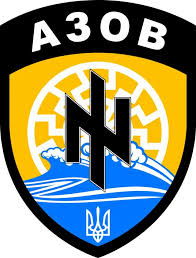
His Azov battalion (with Nazi insignia)  are showing their true American and European values in Mariupol by gang raping women prisoners at prison every night, torturing, and murdering some of them. This is someone that describes Americans and democratic values as a dangerous virus that need to be eradicated making sure your US tax dollars hard at work again.

According to an article that was published in the Kharkov News by Rita Samoilov on December 25th 15-20 women prisoners at penal colony #107 are taken to the military camp every night and raped by the Azov battalion. Earlier in the year I reported the same behavior at the mines in Lower Krynka by Aydar battalion which resulted in reports of mass rape, torture, and mass graves found on the site where over 5000 Ukrainian cleansing troops and national guard were camped. Upon checking the allegations the OSCE found them to be true. Kiev responded by making Aydar the new model of policing in Ukraine. Continue reading →

President Poroshenko — U.S. State Department agent?

This article is from June. If anything, the situation has hardened since then.

President Petro Poroshenko, “Our Ukraine Insider” for the U.S. State Department
By Michael Collins
Global Research, June 13, 2014

Two diplomatic messages from the WikiLeaks Public Library on U.S. Diplomacy indicate that newly elected President of Ukraine, Petro Poroshenko was an agent for US States State Department. A confidential message from the U.S. Embassy in Kiev on April 29, 2006 mentions the newly elected Ukraine president twice.

“During an April 28 meeting with Ambassador, Our Ukraine (OU) insider Petro Poroshenko emphatically denied he was using his influence with the Prosecutor General to put pressure on Tymoshenko lieutenant Oleksandr.”

” During an April 28 meeting with Ambassador, Our Ukraine (OU) insider Petro Poroshenko denied that he was behind Prosecutor General Oleksandr Medvedko’s recent decision to issue an arrest warrant for Tymoshenko lieutenant Oleksandr Turchynov. … [to] question him about the alleged destruction of SBU [Ukraine intel] files on organized crime figure Seymon Mogilievich.” [Russian Mafia Boss of Bosses] WikiLeaks Public Library of U.S. Diplomacy

The motivation for alleged destruction of files appeared in an embassy message from April 14, 2006.

“– The files contained information about Tymoshenko’s cooperation with Mogilievich when she ran United Energy Systems in the mid-late 1990s.” WikiLeaks

Yulia Tymoshenko, an aspiring oligarch, is the darling of the both the Bush and Obama administrations for her role in the 2004 Orange Revolution that brought the first modern anti-Russian Ukraine government to power. She helped negotiate the natural gas deals between Ukraine and Russia. In the message above, Poroshenko is making excuses for seeking Timoshenko’s prosecution by Ukraine legal authorities.

Another mention of Poroshenko made it clear that the State Department saw the future value of Poroshenko’s insider role.

“OU-insider Petro Poroshenko was in the running for the PM job.” WikiLeaks

Secretary of State Hillary Clinton met with the current president in 2009 when he served as Ukraine Foreign Minister. The content of the meeting was described in a confidential message from the U.S. Embassy in Kiev on December 18, 2009:

[Speaking to Ukraine Foreign Minister Petro Poroshenko] “She [Secretary of State Clinton] emphasized that the United States envisioned multiple pathways to NATO membership.” WikiLeaks

Ask yourself, how would you regard a high level U.S. politician who met regularly at a foreign embassy and consistently advanced the interests of that country. Poroshenko was instrumental in a now defunct Ukraine faction called Our Ukraine. However, the pertinent information is that newly elected president had meetings (recounted in secret State Department messages) with the U.S. Ambassador, staff, and then Secretary of State Hillary Clinton, and others. The two cited concern critical U.S. interests (going light on Tymoshenko corruptions charges and plans to have Ukraine join NATO). Since he was doing his work in secret, he was “our insider.” It follows that Poroshenko played the role of agent: ” someone hired or recruited by an intelligence agency to do its bidding. The person to whom the agent reports — the actual agency employee–is known as an operative.” Encyclopedia of Espionage, Intelligence, and Security.

Poroshenko is a Ukrainian oligarch, one of the fifty or so wealthiest citizens who run the country. It is unlikely the president got cash for his services but highly likely that he extracted financial advantage as a result.

Amidst the chaos and ruin visited upon Ukraine, Poroshenko’s recent election may mean a full synchronization of U.S. – Ukraine policies regarding the eastern regions where citizens of Ukraine are subject to bombardment by land an air in their towns and cities.

False Hope at D-Day Gathering?

At the recent D-Day commemoration in France, German Chancellor Angela Merkel and French President Francois Holland arranged a fifteen-minute meeting between Russian President Vladimir Putin and the newly elected Ukrainian president. Both leaders agreed that military actions must stop and set up a date for meetings to accomplish that goal. Putin went beyond military settlement by offering Ukraine its former discounts on Russian gas.

According to the Guardian, “Putin said he welcomed Poroshenko’s call for an end to the bloodshed and liked his approach to settling the crisis but wanted to wait until the Ukrainian leader could deliver it in detail to the nation.” (Authors emphasis) Poroshenko delivered some detail to the nation but it wasn’t what Putin wanted to hear in order to move forward. The inauguration speech in Kiev included the new president’s desire to sign the European Union (EU) association agreement and seek full integration into the EU, which implies NATO membership.

“Dear friends, my pen is already in my hands. I am ready now. As soon as the EU takes a relevant decision, the signature of the Ukrainian president will immediately appear under this document. We see the association agreement as only the first step towards Ukraine’s fully-fledged membership in the European Union ” Petro Poroshenko, June 7

As Poroshenko spoke, “Residents [of Slavyansk, eastern Ukraine] said the sounds of shelling reverberated around the city on Friday.” ABC, June 7

Which Poroshenko can we believe? The president who worked for the U.S. as “Our Ukraine insider” or the elected head of a sovereign state engaged in honest diplomacy?

Right now, it’s safe to stick with the bellicose rhetoric of the inaugural speech. In a heavily documented report, RT showed the handiwork of President Poroshenko’s troops in Slavyansk – eight dead yesterday from aerial bombardment of the separatist occupied city administrative building.

“Death and destruction is reported in eastern Ukraine as Kiev’s artillery has resumed shelling the rebellious city of Slavyansk. Locals tell RT they have been without running water and power for days, and that hope is fading.” RT, June 8

The $5 billion spent to get a U.S. friendly government in the Ukraine worked. “Our Ukraine insider,” Petro Poroshenko is president. He was informed five years ago that the U.S. wanted Ukraine in NATO, and he no doubt heard Vice President Joseph Biden’s speech in Kiev. Without a vote by Congress or a valid treaty, Biden assured the then coup-run government that our government would be there to help.

U.S. will stand by Ukraine in face of Russian aggression, Biden says

“I came here to Kiev to let you know, Mr. Prime Minister, and every Ukrainian know that the United States stands with you and is working to support all Ukrainians seeking a better future. You should know that you will not walk this road alone. We will walk it with you.” Vice President Joseph Biden, April 22

The players and plans have been in place for years and it’s all paid off. The White House and their masters finally have their insider in place in charge of Ukraine. It’s worth listening to the assessment of former U.S. Ambassador to Ukraine John E. Herbst and his Deputy around the time they handled Poroshenko. The ambassador saw him as a “disgraced oligarch” and his deputy pointed out that “”Poroshenko was tainted by credible corruption allegations.”

Spreading brand democracy around the world is a tough job.

Somebody’s got to do it.

Source: http://www.globalresearch.ca/president-petro-poroshenko-our-ukraine-insider-for-the-u-s-state-department/5386891

The real meaning of the 1914 Christmas truce

From Antiwar, December 29, 2014
By Ron Paul

One hundred years ago last week, on Christmas Eve, 1914, German and British soldiers emerged from the horrors of World War One trench warfare to greet each other, exchange food and gifts, and to wish each other a Merry Christmas. What we remember now as the “Christmas Truce” began with soldiers singing Christmas carols together from in the trenches. Eventually the two sides climbed out of the trenches and met in person. In the course of this two day truce, which lasted until December 26, 1914, the two sides also exchanged prisoners, buried their dead, and even played soccer with each other.

How amazing to think that the celebration of the birth of the Prince of Peace could bring a brief pause in one of the most destructive wars in history. How sad that it was not to last.

The Christmas Truce showed that given the choice, people do not want to be out fighting and killing each other. It is incredibly damaging to most participants in war to face the task of killing their fellow man. That is one reason we see today an epidemic of PTSD and suicides among US soldiers sent overseas on multiple deployments.

The Christmas Truce in 1914 was joyous for the soldiers, but it was dangerous for the political leadership on both sides. Such fraternization with the “enemy” could not be tolerated by the war-makers. Never again was the Christmas Truce repeated on such a scale, as the governments of both sides explicitly prohibited any repeat of such a meeting. Those who had been greeting each other had to go back to killing each other on orders from those well out of harm’s way.

As much as governments would like to stamp out such humanization of the “enemy,” it is still the case today that soldiers on the ground will meet and share thoughts with those they are meant to be killing. Earlier this month, soldiers from opposing sides of the Ukraine civil war met in eastern Ukraine to facilitate the transfer of supplies and the rotation of troops. They shook hands and wished that the war would be over. One army battalion commander was quoted as saying at the meeting, “I think it’s a war between brothers that nobody wants. The top brass should sort things out. And us? We are soldiers, we do what we’re told.” [***]

I am sure these same sentiments exist in many of the ongoing conflicts that are pushed by the governments involved — and in many cases by third party governments seeking to benefit from the conflict.

The encouraging message we should take from the Christmas Truce of 100 years ago is that given the opportunity, most humans do not wish to kill each other. As Nazi leader Hermann Goring said during the Nuremberg war crimes trials, “naturally, the common people don’t want war; neither in Russia nor in England nor in America, nor for that matter in Germany.” But, as he added, “the people can always be brought to the bidding of the leaders. That is easy. All you have to do is tell them they are being attacked and denounce the pacifists for lack of patriotism and exposing the country to danger. It works the same way in any country.”

The Ron Paul Institute for Peace & Prosperity

http://original.antiwar.com/paul/2014/12/28/the-real-meaning-of-the-1914-christmas-truce/

[***]Editor’s comment: We have to move beyond society’s conditioning. We cannot just do what we’re told. It is not appropriate to say “I’m just doing my job” when that job harms other people.

If we don’t care about each other, no one else will. Unless we treat all people as part of our own family, there will never, ever be peace for any of us.

This message isn’t just for soldiers. This is for everyone. Each of us has to see where we compromise with truth and stop doing that — today, now.

The future of our families, our communities, and the entire world is at stake. It will only be saved if each of us take responsibility in every way we can.

We are family. We are kin. We must become clear about who our real enemies really are and work to defeat them together.

Not jumping for joy: Ukraine, a year later

By Nebojsa Malic

Published on RT, November 24, 2014

Just over a year ago, thousands of Ukrainians took to Kiev’s main square, angry at oligarchs and corruption. But instead of “Europe” and prosperity, they got a coup, more oligarchy, and war.

During the three-month “people power” spectacle in Kiev’s Independence Square (Maidan Nezalezhnosti) that began on November 21, 2013, one of the protesters’ favorite chants was “Who doesn’t jump is a Moskal” (a derogatory term for Russians). After three months of “jumping” – which involved attacking the police, attempting to storm government buildings, and cheering US and European officials who came to support them, the protesters overthrew the legally elected president and establish their own government on February 22, 2014. It has been nine months since then – and a whole year since the “Maidan” protests began; let’s try to see what they’ve been “jumping” for.

Much like the 2004 “Orange Revolution,” the Maidan protest was an exercise in perception management. Officially, the reason the protesters gathered was the government’s balking at signing the EU accession treaty. A TV, internet and social media campaign – the very name “EuroMaidan” was a Twitter hashtag coined by some clever PR professional – got the people riled up against the government presented as corrupt, incompetent and selfish.

Was this so? Part of the problem with the EU treaty was that it demanded Ukraine restructure its entire apparatus of state and society to the Union’s standards, which would have cost something like $19 billion a year for the next decade (per The Telegraph). But Brussels was willing to offer a paltry $750 million (€610 million) in loans. Ukraine needed much more just to stay solvent. It was, by all metrics, a bad deal for Ukraine.

Meanwhile, Russia was offering $15 billion in favorable loans – and warning that if Ukraine signed a treaty with the EU, that would mean breaking the free trade treaty it had with Russia (and several other countries), causing further economic losses. But the Maidan organizers spun this as Russia trying to “steal Ukraine’s European future.”

Early in December, EU’s Foreign Policy Commissioner Catherine Ashton and US Assistant Secretary of State Victoria Nuland came to Kiev and met with the protesters, giving them encouragement – in Nuland’s case, distributing biscuits as a publicity stunt. President Yanukovich’s cabinet was challenged in the legislature – but survived a no-confidence vote easily. But the Maidan refused to accept the outcome of this democratic process. Yanukovich tried to appease them, offering the premiership to one of the protest leaders, Arseny Yatsenyuk. The “Maidan” said no, as the original protesters gave way to masked, helmeted and armed thugs dubbing themselves the “Right Sector” and wearing Nazi insignia.

On February 18, the protests turned violent. After two days of violence that saw dozens of dead protesters and police – videos of “peaceful democratic protesters” butchering police officers and setting them on fire were quickly banished from public view in the West – Yanukovich gave in. On February 21, he signed an agreement with the Maidan leaders, brokered by German, Polish and French foreign ministers, to call early elections and give a general amnesty to rioters. The “Right Sector” refused to accept the surrender, and its “activists” stormed government offices the next day.

Celebrated in the West as a popular revolution for liberty and democracy, the Maidan was nothing of the sort. Research by independent journalists has revealed that the funding for various “non-governmental organizations,” “citizen initiatives,” and “free media” instrumental in mobilizing the Maidan rebellion came from the United States. Moreover, Nuland herself admitted in December 2013 that Washington had spent $5 billion since 1991 to “secure and prosperous and democratic Ukraine.” What that translated to in practice is best described by columnist Brendan O’Neill, writing three days after the February 22 coup: “we have just witnessed European and American leaders remove an elected politician and replace him with a friendlier new government.”

Reuters / Maxim Zmeyev

Reuters / Maxim Zmeyev

In late January, Nuland would be caught discussing how to “midwife this thing” with the US Ambassador to Kiev Geoffrey Pyatt, and having some choice words for the EU. Yet even though “our man Yats” was indeed appointed Prime Minister after the February coup, Nuland’s admission about her country pulling the Maidan’s strings has gone persistently unmentioned in the Western press.

The coup was not the end, but just the beginning of Ukraine’s agony. As “Right Sector” thugs went around brutalizing dissenters and intimidating legislators and the media, the new government proposed a law outlawing the use of Russian. Crowds gathered in multiple cities in the south and east of the country to protest the coup. Crimea seceded in mid-March, and was admitted to the Russian Federation within days. In the eastern regions of Donetsk and Lugansk, the local population declared independence. But while Washington and Brussels previously demanded Kiev refrain from violence against the Maidan, they fully endorsed a violent crackdown on these protests.

On May 2 in Odessa, pro-junta militants attacked demonstrators protesting the coup, surrounding them at the Trade Union House and setting it on fire. Official reports tell of 42 people who died in the blaze. Amateur video footage showed junta supporters shooting and beating to death people who tried to escape. Western and junta-loyal media spun this as “clashes” with “pro-Russian protesters.” A week later, junta militants opened fire on civilians in Mariupol.

On May 25, in this atmosphere of terror and intimidation, the presidential election called by the junta was won by Petro Poroshenko – an oligarch. Donetsk and Lugansk didn’t vote – they had held their own independence plebiscites earlier, with the overwhelming majority in favor. Poroshenko promised Ukraine would get massive aid from the West – “$15 to $25 billion” from the IMF, as he said in a Washington Post interview in April. All Kiev actually got was $1 billion in US loan guarantees.

Just days after Poroshenko was anointed president, Kiev began a massive military offensive to crush the rebels in the east. Tanks, airplanes, artillery and eventually missiles were used against cities and civilians. Thousands have died. Yet the military could not crush the rebels’ militia, prompting anguished cries of “Russian invasion” by Kiev’s spokesmen every week and dutifully echoed by the Western press and governments.

In mid-July, a Malaysian passenger jet routed over Donetsk by the air traffic control in Dnepropetrovsk (seat of the notorious oligarch and junta supporter Igor Kolomoisky) was shot down. Kiev and the West immediately blamed Russia outright, and then the “pro-Russian rebels”, then abruptly fell silent after Moscow presented radar and satellite evidence showing the plane could only have been shot down by the government forces.

In August, the Kiev forces suffered a catastrophic defeat, with their trapped units surrendering en masse to the rebels or even escaping across the border to Russia. By early September it looked like the rebels might take Mariupol. The advance was halted by the September 5 ceasefire signed in Minsk. An adviser to President Poroshenko has since stated that Kiev ought to follow the example of Croatia in 1995, and storm the rebel republics once it had enough American political and military support.

Mass riots at the Trade Union House in Odessa.(RIA Novosti / Maxim Voitenko)

Mass riots at the Trade Union House in Odessa.(RIA Novosti / Maxim Voitenko)

Officially, the Minsk ceasefire has been holding. Both Kiev and the rebels have held parliamentary elections earlier this month; as usual, the West praised the former and condemned the latter. But the war continues: over 300 people had died since the ceasefire went into effect, according to a UN report from early October. The same report cites the fighting had claimed “at least 3,660” lives, while 8,756 people had been injured and 375,000 displaced. Some 40,000 businesses were forced to shut down. These estimates are almost certainly too low.

Recently released official figures put Ukraine’s GDP as down by 7-8% in 2014. However, considering that most of the country’s industrial and mining output was in the now-disputed regions in the east, Kiev has literally destroyed its revenue stream. Ukraine has unpaid gas bills, mounting loans, and almost no gold left (as recently admitted by the Central Bank Governor Valeriya Gontareva) – credible reports indicate all of Kiev’s gold was taken to the US shortly after the February coup.

And what of the fabled EU agreement that supposedly started it all? The junta government signed the political part of it in March, while Poroshenko signed the economic portion in June – but the whole thing has been put on ice till December 2015. Far from the promised phantom prosperity, it always stood to cause “a great deal of pain and disruption” (a BBC description). Ukraine wasn’t able to handle it a year ago, before its society, economy and politics were destroyed by the coup and the civil war.

Leaders of the Maidan protests and their Western backers wanted a united Ukraine dominated by the anti-Russian ideology of Stepan Bandera and his heirs. Instead, they got a smoldering wreck, terrorized by Nazi militias, oligarchs and their private armies, and a government in Kiev entirely out of touch with reality.

All “color revolutions,” from Serbia to the so-called “Arab Spring” and now the Maidan, have only created a wasteland and called it democracy. Whether they knew it or not, that’s what the Maidan supporters were “jumping” for.

Nebojsa Malic for RT

Nebojsa Malic is a foreign policy analyst and blogger, working in Washington, DC. A columnist for Antiwar.com and Strategic Culture Foundation, he occasionally appears on RT.

The statements, views and opinions expressed in this column are solely those of the author and do not necessarily represent those of RT.

http://rt.com/op-edge/208363-ukraine-maidan-protest-coup/

The Game Is Rigged: Why Americans Keep Losing to the Police State

By John W. Whitehead
December 09, 2014

“The truth is that the State is a conspiracy designed not only to exploit, but above all to corrupt its citizens.”—Leo Tolstoy

My 7-year-old granddaughter has suddenly developed a keen interest in card games: Go Fish, Crazy Eights, Old Maid, Blackjack, and War. We’ve fallen into a set pattern now: every time we play, she deals the cards, and I pretend not to see her stacking the deck in her favor. And of course, I always lose.

I don’t mind losing to my granddaughter at Old Maid, knowing full well the game is rigged. For now, it’s fun and games, and she’s winning. Where the rub comes in is in knowing that someday she’ll be old enough to realize that being a citizen in the American police state is much like playing against a stacked deck: you’re always going to lose.

The game is rigged, and “we the people” keep getting dealt the same losing hand. Even so, we stay in the game, against all odds, trusting that our luck will change.

The problem, of course, is that luck will not save us. The people dealing the cards—the politicians, the corporations, the judges, the prosecutors, the police, the bureaucrats, the military, the media, etc.—have only one prevailing concern, and that is to maintain their power and control over the country and us.

It really doesn’t matter what you call them—the 1%, the elite, the controllers, the masterminds, the shadow government, the police state, the surveillance state, the military industrial complex—so long as you understand that while they are dealing the cards, the deck will always be stacked in their favor.

Incredibly, no matter how many times we see this played out, Americans continue to naively buy into the idea that it’s our politics that divide us as a nation. As if there were really a difference between the Democrats and Republicans. As if the policies of George W. Bush were any different from those of Barack Obama. As if we weren’t a nation of sheep being fattened for the kill by a ravenous government of wolves. Continue reading →

“Vote or Suffer” — United States message to Bosnia

Posted on Gray Falcon, October 6, 2014
By Nebojsa Malic

I have already written about some incongruities in the campaign preceding the Bosnian general elections, scheduled for next weekend, but there is one thing I left out, as it deserved a post of its own.

Local TV stations aired two ads in the third and fourth week of September, produced by USAID – the Empire’s “Agency for International Development.” Both had the punchline “Vote or Suffer” (Glasaj ili trpi).

Still from the USAID propaganda video - "Vote or Suffer"

Still from the USAID propaganda video – “Vote or Suffer”

The first ad (watch on YouTube) blames the Bosnian authorities for failing to help the victims of May and August floods (!). On the same day it aired, the Imperial embassy website published a blog post co-authored by the military attache and the USAID head of mission, which accused the Bosnian authorities of embezzling the flood aid funds!

Both the Serb Republic and Federation authorities responded right away that the Empire was flat-out lying: they couldn’t have embezzled anything, as not a penny of the promised flood aid from the US and the EU had actually arrived. But the Imperial officials refused to retract their claims. A few days later, another ad appeared, this time criticizing the economic situation (watch on YouTube).

There is no question that Bosnia is in a dire economic predicament, but a great deal of blame for that lies in the absurd legislation the locals outright copied from the US and the EU, under constant pressure from Washington and Brussels. One example is a 2009 law on “animal rights” which turned the Sarajevo Canton into a free range for feral dogs.

Let’s also remember that US and EU officials supported the “demonstrators” with supposedly economic and democratic grievances, who earlier this year torched government offices in Sarajevo, Zenica and Tuzla, Maidan-style.

Lest you think this is someone impersonating USAID on YouTube, you can see both videos featured on the agency’s official website. The claim by the agency head and Embassy officials that this is purely a “get out the vote” campaign is absurd. The ads very specifically urge the voters to elect a different government – presumably one more willing to obey orders from Washington. More to the point, USAID is engaging in behavior that would be blatantly illegal in America itself. Imagine a foreign agency running TV ads urging Americans to “vote or suffer”!

This is but the latest in a series of attempts by the Empire to influence the outcome of Bosnian elections. Imperial officials have turned a blind eye to jihadist activity (even when directed against the US!) in Bosnia for years, backed the rioters who torched government offices in February, sent in additional troops as a way of signaling support to those they back and threaten those they oppose, and outright “midwifed” the opposition coalition in the Serb Republic, recycling a name of a previous creation in the process. Thanks to genuine activists on the ground, their interference has been documented and brought to light.

Keep that in mind when Empire’s stooges begin crying foul, after they lose at the polls.


http://grayfalcon.blogspot.com/2014/10/vote-or-suffer.html

Nebojsa Malic was formerly the Director of the R. Archibald Reiss Institute for Serbian Studies.

[Interesting comment posted on this article: The key for Yugoslavia/Bulgaria/Slavs is cooperation. And friendship. That’s what the empire fears most. LOVE. ]

Radiation levels spike at Ukrainian Zaporizhyenuclear plant: DPR Official

According to Donetsk People’s Republic official radiation spike was caused by a failed attempt to replace Russian-made fuel rods with US components.

MOSCOW, December 29 (Sputnik) — Radiation levels at the Zaporizhia nuclear power plant are 14 times higher than normal, according to DPR representative Denis Pushilin cited by LifeNews.

The DPR official claims that the radiation spike was caused by a failed attempt to replace Russian-made fuel rods with US components.

He pointed out that a similar incident had previously occurred at the Temelin nuclear power plant in Czech Republic, prompting the station to switch to Russian-supplied nuclear fuel.

Representatives of the Ukrainian state nuclear corporation, Energoatom, denied Pushilin’s claims and declared that currently, radiation levels at the Zaporizhia nuclear power plant and in its vicinity are within acceptable parameters.

http://sputniknews.com/europe/20141229/1016364567.html

Other excerpts posted on ENE News, December 29, 2014
http://enenews.com/accident-one-worlds-largest-nuclear-plants-local-official-radiation-14-times-higher-acceptable-norm-area-warns-chernobyl-type-disaster-govt-levels-acceptable-limits-incident-investigation

AP, Dec 29, 2014 (emphasis added): One unit of Ukraine’s Zaporozhiya nuclear power plant, the largest in Europe, has been taken offline… State nuclear power company Energoatom says the unit was disconnected… to prevent internal damage to the generator. It did not give further details, but said radiation in the area is within acceptable limits. It is the second time this month that a unit at the plant has been taken out of service…

The Independent, Dec 28, 2014: Ukraine turns off reactor at its most powerful nuclear plant after ‘accident’; Prime Minister calls for the truth as electrical fault revives memories of Chernobyl… An official statement said the plant was “operating at 40 per cent power… The reasons for the outage are being investigated”… Prime Minister, Arseniy Yatsenyuk, noted the previous outage… urging ministers to tell the truth about “the accident”… In May, the power station was the backdrop to an armed confrontation… the pro-Ukrainian paramilitary force… said it had come to remove “pro-Russian” agitators who, it claimed, had been operating inside the plant.

Rossiya Segodnya (Russian gov’t news agency), Dec 29, 2014: Radiation Levels Spike at Zaporhizhia Nuclear Plant: DPR Official — According to Donetsk People’s Republic official radiation spike was caused by a failed attempt to replace Russian-made fuel rods with US components. Radiation levels at the Zaporizhia nuclear power plant are 14 times higher than normal, according to DPR representative Denis Pushilin… Energoatom denied Pushilin’s claims…

RFE, Dec 29, 2014: Interfax reported that in a statement on Dec. 28, Pushilin said Ukraine faces “a second Chornobyl” due to Kyiv’s decision to use nuclear fuel supplied by Westinghouse… Westinghouse has a contract to supply some 10 percent to 15 percent of Ukraine’s nuclear fuel.

RFE, Dec 28, 2014: Separatist Official Warns Of Second Chornobyl… Pushilin said “currently the level of radiation is 14 times higher than the acceptable norm” in the area… [Interfax] noted that it could not confirm “from any other source” the separatist official’s claim of dangerous levels of radioactivity.

RT, Dec 29, 2014: Emergency shutdown at Ukraine’s largest nuclear power plant… This accident took place on Sunday morning… Causes are still being investigated… Two Zaporizhia NPP reactors are to be decommissioned for complete overhaul in February 2015… Throughout 2014 Zaporizhzhya NPP came into the spotlight of world media on several occasions. In May, Ukrainian police prevented a group of armed men… from entering… Then the news came that Kiev had signed a new deal with America’s leading nuclear fuel producer, Westinghouse… This was done despite the fact that using US fuel rods was banned in 2012 due to dangerous incompatibility… In August, Greenpeace expressed concern that Zaporizhia NPP is vulnerable to ‘direct bombardment’ in Ukraine if caught in the conflict.

Video about the initial incident here

Russia will send electricity and 500,000 tons of coal per month to Ukraine

In agreements just made, Russia will provide electricity and heat to Ukraine. Russia will be supplying the electricity at internal Russian prices, not higher export prices, and they are supplying it even though there has been no payment. “Under the instructions of the Russian president, the decision has been made to carry out such a delivery. Hopefully, the payments will be made in future,” said Russian Deputy Prime Minister Dmitry Kozak according to Russia 24 TV channel.

Has the coal been paid for or is it also a gift?

Are there any conditions on Ukraine, such as stopping the anti-Russian accusations, rhetoric, and preparations for war, halting the internal war against fellow Ukrainians, suspending shipments of arms into Ukraine, fully and openly cooperating with the MH17 investigation?

When the article below states that one unit of Khmelnytskyi nuclear power plant has broken down, what does that mean? Is this a nuclear incident?

“We are doing it deliberately, due to the fact that one [power] unit at [Ukraine’s] Khmelnytskyi Nuclear Power Plant has broken down,” Kozak said.

Ukraine has to decide its future now before the catastrophe worsens.

Ukraine has to decide who its real enemies are. Will it continue to believe the lies of its government and US-NATO that have already led to such war, suffering, and economic collapse, or will it believe the actions of its brother nation Russia which is supplying shipment after shipment of humanitarian aid, electricity, coal, and spearheaded not an invasion force, but peace talks in Minsk?

If Ukraine does not change its policies, if it continues to talk and act like an enemy, and acquire weapons systems and create military buildup, Russian citizens may decide that providing fuel for Ukraine is not in their best security interests, except to maintain grid power to nuclear facilities to prevent nuclear accidents.


http://sputniknews.com/business/20141227/1016297029.html
Russia to Deliver 500 Thousand Tons of Coal Per Month to Ukraine: Official

December 27, 2014

Russian Deputy Prime Minister Dmitry Kozak stated that Russia is ready to deliver more than one million tons of coal per month to Ukraine in order to reduce the country’s existing energy problems if an additional agreement is signed.

MOSCOW, December 27 (Sputnik) — Russia will supply Ukraine with 500 thousand tons of coal per month and 500 thousand tons more, in case an additional agreement is signed, Russian Deputy Prime Minister Dmitry Kozak said.

“We will deliver 500 thousand tons of coal from Russia and possibly, in case an additional agreement will be reached, another 500 thousand tons, which means we are ready to deliver up to one million tons of coal per month to Ukraine in order to reduce the country’s existing energy problems,” Kozak told Russis 24 TV channel.

Ukraine is currently experiencing problems with power generation due to coal shortages. After a military operation was launched by Kiev forces in mid-April against independence supporters in eastern Ukraine, Kiev lost access to many coal mines located in the region.

http://sputniknews.com/business/20141227/1016296851.html
Moscow, Kiev Sign Agreement on Electricity Supply to Ukraine: Official

December 27, 2014

Russia and Ukraine have signed an agreement, providing Kiev 9 billion kilowatt-hours of electricity, Moscow has started the delivery.

MOSCOW, December 27 (Sputnik) — Moscow and Kiev have signed an agreement on the supply of 9 billion kilowatt-hours of electricity to Ukraine, Russian Deputy Prime Minister Dmitry Kozak said.

He added that Russia has already started the delivery, despite the fact that the terms of the agreement have not been fulfilled yet, and hopes for the subsequent payment.

“In order to reduce the blackouts and other existing problems we [Moscow and Kiev] have held negotiations on the supply of 9 billion kilowatt-hours of electricity to Ukraine. We have signed an agreement, but the terms of the contract are not currently fulfilled… Nevertheless, under the instructions of the Russian president, the decision has been made to carry out such a delivery. Hopefully, the payments will be made in future,” Russia 24 TV channel has quoted Kozak on its website as saying.

In 2013, electricity consumption in Ukraine amounted to nearly 147 billion kilowatt-hours.

Russian deputy prime minister also stated that the electricity will be delivered to Ukraine on favorable terms.

“The supply of electricity is carried out at internal Russian prices, while the prices on Ukraine’s energy market are much higher. We are doing it deliberately, due to the fact that one [power] unit at [Ukraine’s] Khmelnytskyi Nuclear Power Plant has broken down,” Kozak said.

Due to the conflict in Ukraine’s eastern regions, Kiev has lost a big part of its coal mines. The country is currently suffering from the lack of fuel for power generation and heating.


Chevron’s shale gas exit shreds Ukraine’s hope of energy independence

From Bloomberg, December 17, 2014

Shale gas was supposed to be Ukraine’s ticket to greater energy independence from Russia. Chevron Corp. (CVX)’s decision to pull the plug has smashed those hopes.

The second-largest U.S. energy producer will pull out of an agreement for exploring the Oleska field in western Ukraine, a government official said this week. It was the final blow to the country’s dream of becoming a big shale-gas producer after Royal Dutch Shell Plc (RDSA) retreated earlier this year from a similar deal in eastern provinces riven by a bloody war with pro-Russian separatists.

While Chevron can walk away unscathed, for Ukraine it’s another blow to the prospects of reviving a chaotic economy that remains dependent on Russia, a country it claims to be in armed conflict with. Already weighed down by the war that’s killed more than 4,600 people and teetering on the verge of default, Ukraine was counting on foreign capital to develop its domestic gas resources.

“Foreign investment will start to flow only if there is a healthy, predictable investment environment based on the rule of law,” said Ulrich Benterbusch, managing director at German energy agency Dena. “This includes drastic measures to reduce the endemic corruption.”

Chevron grew frustrated with the Ukrainian government’s failure to modify tax rules under which foreign explorers have to operate in the country, said Allen Good, an energy industry analyst at Morningstar Inc. in Chicago.

The second-largest U.S. oil producer never even got an opportunity to drill any exploratory wells, which indicates the reason for pulling out was regulatory rather than any problems with the geology, Good said.

Chevron declined to comment beyond a statement that they’ve given the Ukrainian government their decision.

Mammoth Discoveries

The $10 billion value of the prospect Ukraine politicians had mooted was ’’an inflated, blue-sky’’ estimate that assumed mammoth discoveries, decades of drilling and no obstacles to bringing the fields into production, Good said.

Other western explorers including Exxon Mobil Corp. (XOM) and Eni SpA (ENI) saw their aspirations in Ukraine wither after the February collapse of the pro-Russian regime. Shortly after the ouster of then-president Viktor Yanukovych, Russia invaded and annexed Crimea, appropriating potentially gas-rich offshore fields in the Black Sea.

Ukraine is grappling with the deepest recession since 2009, with the hryvnia plunging 48 percent against the dollar this year. The $17 billion bailout from the International Monetary Fund is proving insufficient and President Petro Poroshenko has pleaded with the U.S. government to provide at least $10 billion more to stave off default.

Gas Exporter

The country is locked in a dispute over the price of gas with Russia, which used to supply more than half of Ukraine’s needs. Russian gas exporter OAO Gazprom (GAZP) halted deliveries to Ukraine from June to last month over a dispute on prices and unpaid bills, while also lowering supplies to neighbors such as Hungary and Slovakia to discourage them from sending the fuel back to Ukraine through reverse flows.

Ukraine has the potential to cut its gas consumption by half simply by improving its energy efficiency through measures such as better building insulation and modern infrastructure, Dena’s Benterbusch said. The country could reduce its import costs by up to $9 billion a year if it managed to get to German efficiency levels, according to the European Bank for Reconstruction and Development.

However, that comes with a steep price tag: modernizing the country’s energy sector will cost “multiple billions” of euros, EBRD said.

Chevron Departure

Ukraine may have as much as 1.2 trillion cubic meters of gas trapped in its shale rocks, Europe’s third-largest deposit after France and Norway, according to the U.S. Energy Information Administration estimate.

Chevron’s departure again demonstrates the failure of repeating the U.S. shale boom in Europe, where investors have repeatedly clashed with bureaucratic obstacles, popular opposition to fracking, difficult geology and, in some cases, corruption. Even in Poland, once viewed as a very promising territory, red tape and difficult-to-exploit deposits discouraged investors, including Chevron.

“Ukraine and the rest of eastern Europe, despite the potential, haven’t come to fruition,” as shale gas suppliers, Good said.

To contact the reporters on this story: Ladka Bauerova in Prague at lbauerova@bloomberg.net; Joe Carroll in Chicago at jcarroll8@bloomberg.net

To contact the editors responsible for this story: Will Kennedy at wkennedy3@bloomberg.net Dylan Griffiths

http://www.bloomberg.com/news/2014-12-17/chevron-shale-exit-shreds-ukraine-s-hope-of-energy-independence.html

Reprinted under Fair Use Rules.