PolitNavigator – translated for Fort Russ by Joaquin Flores –
In Lugansk there is a rapidly growing number of supporters for joining Russia, according to Alexander Protsenko, director of the sociological center “Особое мнение.”
According to him, in 2014, on the eve of the referendum, in Lugansk the predominant sentiment was in favor of preserving the region within Ukraine, but based upon regional rights in the context of federalization.
“In May last year before the referendum, we conducted a study. We asked people what the future should hold for their region, what they would like to see? The choice to enter the Russian Federation at the time was about a quarter of respondents. The most popular option was to remain a part of Ukraine, but within a federation. Figuratively speaking, they wanted to show the people sitting in Kiev the mess, and to give them a slap, “- said the expert.
However, Protsenko said, “then something happened that radically changed the mood” [could that have been death squads and shelling civilian areas? – .ed]
According to the sociologist, a February 2015 study shows a steady increase in the number of supporters for Donbass reunification with Russia.
Thus, in May 2015 the figure was 52%, and in August, the figure reached 61%.
“The opinion has changed dramatically. The growing number is reflecting how people’s hopes have melted away that someone will come to power in Ukraine who can carry on normal partner-like relations with Donbass” – said Protensko
“If the question is about the referendum, the rate will be higher, we can say unambiguously,” – says the sociologist.
“Now Donbass is slowly but surely drifting towards the Russian Federation. If there is no improvement from the Ukrainian side and if there will be a political outcome, the drifting attains cruising speed “, – he concluded
September 2nd, 2015
u-f.ru news – translated for Fort Russ by Joaquin Flores
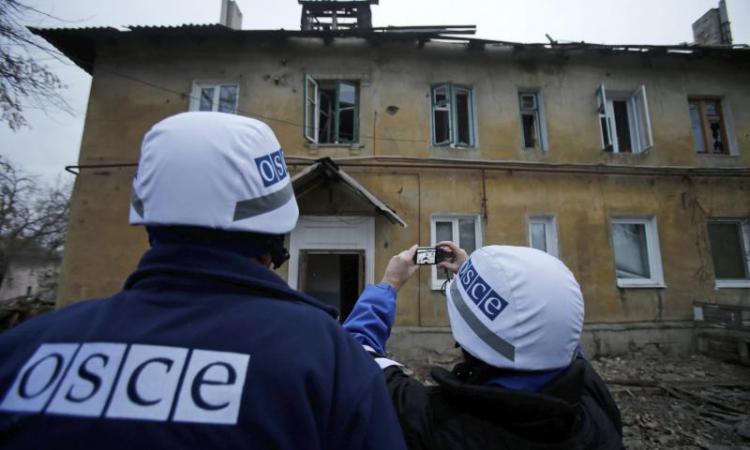
Chairman of the National Council of the DPR, Andrew Purgin, revealed details in an interview with reporters, about the “cunning” practices of the OSCE mission in the territory of Donbass, writes the Federal News Agency.
According to Purgin, representative of the OSCE mission in the conflict zone have a much narrower mandate than what one may imagine. “They have been at it a year and were allegedly trying to change things, but it does not change” – he said.
“They have such a mandate, that they cannot write, for example ‘there is a dead man’, and instead write ‘lay bodies’. Nor can the OSCE write ‘from the Ukrainian side a heavy shell was launched’, but instead can only write ‘This or that caliber projectile flew in such and such direction to such and such point.'”, explains the head of the parliament of the DPR.
“Now, if you open the map and take a look at the direction, then you will understand that the projectile could have only flown in from the territory of Ukraine. Howevver, the OSCE representatives have direct orders that they cannot write this”, says Purgin.
In addtiion, the OSCE mission, explains the Chairman, is also engaged in diverting press attention away from the real hot spots of Donbass and over to irrelevent subjects.
“For example, we are not interested in Shirokino. This is an empty village, it is not important for anyone to see, and it is not of tactical or strategic importance. But now Gorlovka is shelled. But the OSCE pulls the reporters, taking them to Shirokino. Instead they turn their attention to already destroyed places. ” said Purgin.
*Fort Russ note – here is a video from Essence of Time showing OSCE ‘observers’ … and outraged locals of Gorlovka who must clean up the mess of a recently destroyed school.
September 18th, 2015 – Novorossia – translated for Fort Russ by Joaquin Flores
Ukraine announced the resumption of hostilities. The operation involves thousands of soldiers and hundreds of military vehicles, said the advisor to the President of Ukraine ,Yuriy Biryukov.
“Officially: in the zone of military action army began an operation to search and destroy sabotage and reconnaissance groups of the enemy. Throughout the war zone, do not look for “holes” – he wrote on his page on Facebook.
He stressed that this operation include “the best UAF force.”
We can only guess what more of Kiev’s crimes this will justify, in the name of anti-seperatism, under the guise of beautiful words.
* ed’s note – given the recent ‘calm’ on the Ukraine front, it’s hard not to see a connection between this declared ‘resumption’ and the increased direct presence of Russia in Syria. These should be considered to be among two fronts in a single undeclared global conflict.
This article originally appeared at DWN, translated by Frank Jakob exclusively for SouthFront
In a surprise move Germany left the anti-Putin-alliance formed by the USA: Germany is now officially welcoming Moscow’s readiness to act in Syria and is starting an initiative together with the Russians and the French to bring an end to the war. This is to stop the constant stream of refugees. Germany has ordered thousands of soldiers into readiness.
Germany surprisingly left the alliance formed together with the United States which intended to block Russia’s entry into the Syrian conflict.
Minister of Defence Ursula von der Leyen told Der Spiegel that she welcomed president Putin’s intentions of joining the fight against the extremist organization “Islamic State”. It would be a matter of mutual interests, she said.
A speaker of the Ministry of Foreign Affairs added, Germany would welcome additional efforts of Russia in the fight against IS. Foreign Minister Frank-Walter Steinmeier even announced the starting of a joint venture between him, Russian foreign minister Lavrov and their French colleague Laurent Fabius with the aim of bringing the Syrian civil war to an end. Lavrov and Fabius are expected to arrive in Berlin this Saturday.
Russian Foreign Minister Sergey Lavrov called upon the US-Ministry of Defence to coordinate their efforts with the Russian military.Because both sides are actively invested in Syria it would be paramount for the US to reinstate the previously ceased operational cooperation with Russia, said Lavrov on Friday in Moscow. This was intended to avoid “unintentional incidents”. Russia’s military drills in the Mediterranean would be in accordance to international law. Larvrov explained furthermore, that Russia would keep delivering weapons to the troops of Syrian president Bashar al-Assad to support their struggle against the extremist organization of Islamic State (IS).
Russia already began a diplomatic offensive weeks ago. The Americans did not precisely indicate whether they would support the Russian initiative. Under no circumstances would the US give Russia credit for solving the deadlocked situation, should Russia in fact be successful. Therefore the US-government warned precautionary of a worsening in the refugee crisis should Russia intervene.
Especially the neocons are issuing warnings of any cooperation with Russia in whatever matter. US-President Obama did not clearly state whether the Russian initiative was done in coordination with the White House. Foreign Minister John Kerry went on a surprise visit to Russia in spring which, however, remained without results regarding the Syrian matter. It is likely that the US-government changed their mind in the face of the worsening of the refugee crisis so that they are now willing to cooperate with Russia in the middle east.
German Frank-Walther Steinmeier has long been trying to conciliate behind the curtains and is therefore constantly in touch with his Russian colleague Lavrov. It looks like he is the only one in the German government who realizes that the refugee crisis will get completely out of control if the war in the Middle East continues. Austria and Spain signaled days ago that a Russian participation in the battle against IS was crucial. Russia began expanding its military activities in Syria.
German Minister of Defence Ursula von der Leyen wants to expand the deployment of the Bundeswehr in Iraq. Bundeswehr would be ready to continue its successful work in Kurdish regions in cooperation with the Iraqi government, she told Der Spiegel on Saturday. First steps would already be undertaken. Germany delivered medical supplies, helmets and hazard-protections masks. Up to 100 Bundeswehr soldiers are training Kurdish Peshmerga fighters in northern Iraq. Weapons were also delivered.
Von-der Leyen also ordered thousands of German soldiers into readiness in the wake of the refugee crisis. If this was done because of the refugees or hints of terror threats is still unknown. The order was given to the troops a day before, said a speaker of the ministry on Friday in response to a report by Der Spiegel. Up to 4000 soldiers are under constant readiness to be deployed. Hundreds of soldiers were deployed to help accommodate newly-arrived refugees last weekend. The solders are financially compensated for their services under this deployment order.
Translators comment:
It has been reported that Russian Foreign Minister Sergey Lavrov called into question the effectiveness of the US-led coalition against Islamic State (IS). According to PNP magazine he stated, that concerned colleagues from within the US-led coalition turned to him. They informed him that the US-military did not give clearances to their fighter pilots even though they clearly located and identified Islamic State positions.
“Obama administration officials, who have been negotiating with Turkey for months, said Thursday that they had reached an agreement for manned and unmanned American warplanes to carry out aerial attacks on Islamic State positions from air bases at Incirlik and Diyarbakir. The agreement was described by one senior administration official as a “game changer.” New York Times, July 23, 2015
The Syrian war can be divided into two parts: The pre-Incirlik period and the post-Incirlik period. The pre-Incirlik period is roughly the four year stretch during which US-backed Islamic militias and al Qaida-linked groups fought the Syrian army with the intention of removing President Bashar al Assad from power. This first phase of the war ended in a draw.
The post-Incirlik period looks like it could produce an entirely different outcome due to the fact that the US will be able to deploy its drones and warplanes from a Turkish airbase (Incirlik) that’s just 15 minutes flying-time from Syria. That will boost the number of sorties the USAF can able to carry out while increasing the effectiveness of its jihadi forces on the ground which will conduct their operations under the protection of US air cover. This will greatly improve their chances for success.
The New York Times calls the Incirlik deal a “game-changer” which is an understatement. By allowing US F-16s to patrol the skies over Syria, Washington will impose a de facto no-fly zone over the country severely limiting Assad’s ability to battle the US-backed militias that have seized large swaths of the countryside and are now descending on Damascus. And while the war cannot be won by airpower alone, this new tactical reality tilts the playing field in favor the jihadis. In other words, the Incirlik agreement changes everything.
The Obama administration now believes that regime change is within its reach. Yes, they know it will require some back-up from US Special Forces and Turkish combat troops, but it’s all doable. This is why Obama has shrugged off Russia’s plan for forming a coalition to defeat ISIS. The US doesn’t have to compromise on these matters because, after all, it has a strategically-located airbase from which it can protect its proxy-army, bomb cross-border targets, and control the skies over Syria. All Obama needs to do is intensify the war effort, put a little more pressure on Assad, and wait for the regime to collapse. This is why we should expect a dramatic escalation as we begin Phase 2 of the conflict.
Russian President Vladimir Putin knows this, which is why he’s sending more weapons, supplies and advisors to Syria. He’s signaling to Washington that he knows what they’re up to and that he’ll respond if they carry things too far. In an interview with Russia’s state Channel 1, Putin said, “We have our ideas about what we will do and how we will do it in case the situation develops toward the use of force or otherwise. We have our plans.”
The administration is very nervous about Putin’s plans which is why they keep probing to see if they can figure out what he has up his sleeve. Just days ago, Secretary of State John Kerry phoned his Russian counterpart Sergei Lavrov to express his concerns about “an imminent enhanced Russian military buildup” in Syria. The call was a clumsy attempt to trick Lavrov into volunteering information that might shed light on what Moscow intends to do if Washington goes ahead with its regime change strategy. But Russia’s foreign minister didn’t take the bait. He stuck to his script and didn’t tell Kerry anything he didn’t already know.
But the fact is, Putin is not going to allow Assad to be removed by force. It’s that simple. Obama and his advisors suspect this, but they are not 100 percent certain so they keep looking for confirmation one way or the other. But Putin is not going to provide a clear answer because he doesn’t want to tip his hand or appear confrontational. But that doesn’t mean he’s not resolute. He is, and Washington knows it. In effect, Putin has drawn a line in the sand and told the US that if they cross that line, there’s going to trouble.
So it’s up to Obama really. He can either seek a peaceful solution along the lines that Moscow has recommended or push for regime change and risk a confrontation with Russia. Those are the two choices.
Unfortunately, Washington doesn’t have an “off” switch anymore, so changing policy is really not in the cards. Instead, the US war machine will continue to lumber ahead erratically until it hits an impasse and sputters to a halt. Once again, the immovable object will prevail over the unstoppable force (as it did in Ukraine), albeit at great cost to the battered people of Syria, their nation and the entire region.
Keep in mind, that the imperial plan for Syria is subtler than many people realize. As the Brookings Institute’s Michael E. O’Hanlon states in his piece titled “Deconstructing Syria: A new strategy for America’s most hopeless war”:
“The plan… would not explicitly seek to overthrow him (Assad), so much as deny him control of territory that he might still aspire to govern again. The autonomous zones would be liberated with the clear understanding that there was no going back to rule by Assad or a successor. In any case, Assad would not be a military target under this concept, but areas he currently controls… would be. And if Assad delayed too long in accepting a deal for exile, he could inevitably face direct dangers to his rule and even his person.” (“Deconstructing Syria: A new strategy for America’s most hopeless war”, Michael E. O’Hanlon, Brookings Institute)
This is the basic plan: To seize major cities and large parts of the countryside, disrupt supply-lines and destroy vital civilian infrastructure, and to progressively undermine Assad’s ability to govern the country. The ultimate goal is to break the state into a million disconnected enclaves ruled by armed mercenaries, al Qaida-linked affiliates, and local warlords. This is Washington’s diabolical plan for Syria. It is strikingly similar to the Zionist plan to “effect the division of the whole area into small states by the dissolution of all existing Arab states.” (“The Zionist Plan for the Middle East”, Israel Shahak) In fact, it is virtually identical.
It’s clear that Obama is emboldened by the Incirlik deal and believes that, with Turkey’s help, he can achieve US imperial ambitions in Syria. But it’s not going to happen. Russia, Iran and Hezbollah are prepared to defend their ally Assad and stop Washington dead-in-its-tracks. Obama will have succeeded in destroying another sovereign nation and scattering its people across the Middle East and Europe. But the US mission will fall short of its original objectives. There will be no regime change in Syria. Putin, Nasrallah and Khamenei will make sure of it.
September 17, 2015 – TASS – Translated for Fort Russ by J. Arnoldski
“The reaction of Russian politicians and public figures to the expansion of Ukrainian sanctions”
On September 16, President of Ukraine Petr Poroshenko signed a decree on expanding the list of sanctions against Russia. The president reported that 388 individuals and 90 entities were included in the list adopted by the Council of National Security and Defense of Ukraine.
The Russian defense minister, Sergey Shoigu, the head of Chechnya, Ramzan Kadyrov, deputy of the State Duma and head of the Commitee on International Affairs, Alexey Pushkov, Minister of Agriculture Alexander Tkachev, deputy of the State Duma from the Russian Communist Party Valery Rashkin, State Duma speaker Sergey Naryshkin, Minister of Communications Nikolay Nikiforov, and deputy of the State Duma and leader of “A Just Russia” Sergey Mironov ended up on the sanctions list of Ukraine.
Among the companies included in the list, Aeroflot, Gazpromavia, Bank of Moscow, and anti-virus software manufacturer Kaspersky Lab and its subsidiary in Ukraine are listed.
In addition, the sanctions list includes media representatives.
“Silence the mouths of human rights defenders”
Member of the presidential council on the development of civil society and human rights, Alexander Brod, believes his inclusion in the sanctions list by Ukrainian authorities is an attempt to silence human rights defenders.
“Earlier, human rights defenders weren’t on the list. There were journalists and cultural figures. Now they’re turning towards human rights defenders. I think this will be a sign for the international human rights community that the Kiev regime is silencing human rights defenders,” Brod said.
“Fascists are fascists”
Deputy Chairman of the Central Committee of the Communist Party of the Russian Federation, Valery Rashkin, believes that the sanctions imposed against him by the Kiev regime prove that he is is “going down the right path.”
“This not only doesn’t worry me, it means that I’m doing everything right. If fascist thugs condemn me and introduce some lists, this means I’m going down the right path,” Rashkin told TASS, commenting on sanctions introduced against him.
“If I collect humanitarian aid for Donbass because children are dying from hunger, and if I took issue with the property of Poroshenko and ensured that his business was nationalized in Russia (the profits from this business are reaped by fascist elements in Ukraine), then I understand why I ended up on the sanctions list. Fascists are fascists,” he added.
On this note, he stressed that he stands for friendship and good, neighborly relations with the Ukrainian people. “But this seems to contradict the approach of Poroshenko and his team,” Rashkin added.
“This is a political and state outrage”
The head of the Moscow journalists union, Pavel Gusev, called the sanctions imposed against Russian journalists a political and state outrage.
“I believe that this is a political and state outrage when there is a war against journalists,” Gusev said, “Yes, there are disagreements at the political level, and there is a hatred of Russian politicians and companies, but journalists – this is a totally different profession.”
“Crimean Tatars joyfully greeted Putin in Bakhchisarae”
A video has been published which captures rare footage of Vladimir Putin that did not pass through the sieve of official press services.
It shows how very emotionally, yet happily, residents of the Crimean regional center, where a large part of the Crimean Tatar population resides, met the Russian president.
For comparison, Russian Spring is also publishing footage of the meeting between Poroshenko and locals in Simferopol in February, 2014.
Silenzio totale dell’Occidente sulla tragedia del Donbass e sui bambini che continuano a morire sotto le bombe nell’Ucraina sudorientale. Anche se dai media occidentali e italiani non si direbbe, ma la guerra nel Donbass, che giunge al suo secondo anno, continua.
Perché in Italia dei bambini morti per i bombardamenti nell’est ucraino non si dice nulla? Sono bambini forse di un’altra categoria o non rappresentano alcun interesse per l’Italia, rispetto alle notizie sul calcio e i gossip estivi?
Ennio Bordato, presidente dell’Associazione “Aiutateci a salvare i bambini”
Sputnik Italia ne ha parlato con Ennio Bordato, presidente dell’Associazione “Aiutateci a salvare i bambini”, che aiuta direttamente i bambini e le vittime della guerra nel Donbass.
— La guerra nel Donbass continua, ma in Italia non se ne parla. Perché secondo te?
— Dire la verità sul Donbass vuol dire far pensare la gente, far capire alle persone dove questa Europa è finita. Cioè in ostaggio agli Stati Uniti e serva di una politica americana che vuole assolutamente strappare la Russia dall’Europa e l’Italia dalla Russia.
— La guerra nel Donbass fa quindi parte di un progetto ancora più grande secondo te?
— Certo, è una guerra principalmente economica, di prospettiva. L’Europa che stava crescendo nella relazione non solo economica ma anche culturale tra i vari Paesi sta mettendo in crisi l’economia americana, la quale non può permettersi di perdere l’Europa e di far crescere il dialogo e le relazioni economiche tra la Russia e l’Europa.
— Nella sola città di Gorlovka sono morti 16 bambini nella prima metà del 2015. Il silenzio dell’Occidente sui bambini uccisi del Donbass quanto potrà durare? Se ne parlerà mai?
— Io credo che non se ne parlerà mai. Questa è una guerra molto strana: c’è un esercito, rappezzato e sostenuto dai soldi europei e americani, che sta bombardando a una distanza di 20 chilometri case e abitazioni civili, ospedali, orfanotrofi, scuole. È una guerra particolarmente feroce e inumana. Tra le vittime civili ci sono dei bambini che non sono potuti sfuggire ed essere accolti dalla Federazione russa.
Ricordiamo che sono più di un milione e mezzo i civili sfollati dall’Est ucraino che hanno trovato accoglienza e servizi sociali in Russia.
— I profughi fuggiti in Russia sono molti, ma in tanti sono rimasti nel Donbass, dove non ci sono più infrastrutture né sussidi…
— È la tragedia nella tragedia. Ci sono dei bambini che da mesi non escono dalle cantine, se non per prendere un po’ d’aria come i carcerati per un’oretta, sperando che in quel momento non cada qualche bomba in testa.
— Non sappiamo quanto durerà questa guerra. Quando finirà tutto quanto, secondo te cosa ne sarà delle città dilaniate del Donbass?
— Si tratta della distruzione di ogni attività imprenditoriale e civile. Parliamo di un popolo bombardato militarmente, ma anche dal punto di vista della relazione sociale. È una tragedia che durerà per i prossimi 20-30 anni. Se e quando finirà la guerra, sarà la politica che dovrà risolvere i problemi. Nella fase attuale la politica è morta come anche la capacità di dialogo. Il disegno americano si sta compiendo in termini perfetti.
Noi dovremo continuare a dire che esiste questa guerra aprendo gli occhi alla gente. Bisogna cercare di far capire che la soluzione è un’autonomia europea, un’Europa che non si basa sulla moneta, ma sulla cultura, sulle relazioni con tutti, con gli Stati Uniti, ma anche con la Russia.
— Aiutare i bambini del Donbass è possibile anche attraverso la vostra Associazione “Aiutateci a salvare i bambini”. Ci puoi parlare della vostra raccolta fondi?
L’Associazione Aiutateci a Salvare i Bambini Onlus
—Noi siamo partiti subito allo scoppio del conflitto contro la popolazione del Donbass e abbiamo già aiutato 8 casi particolari. Oggi abbiamo fatto l’ultimo bonifico per una bambina di Lugansk, sfollata a Kursk e ricoverata a San Pietroburgo per un tumore al rene destro. Abbiamo anche aiutato in casi drammatici, come il bambino che ha perso le braccia, le mani e anche forse la vista. Abbiamo aiutato Anna Tuv di Gorlovka, che ha perso il marito, la figlia e un braccio e si è trovata con due bambini piccoli da accudire. Lei ha perso la casa, il lavoro. La solidarietà italiana grazie anche ad “Aiutateci a salvare i bambini” è una solidarietà concreta.
Nel prossimo mese invieremo circa mezza tonnellata di aiuti umanitari nel Donbass e complessivamente siamo già oltre i 30 mila euro che abbiamo raccolto e inviato per i singoli casi, a vittime di guerra particolarmente gravi.
— Dare il proprio contributo è facile quindi, direttamente tramite il vostro sito?
È importante che le persone del Donbass sappiano che noi ci siamo. In questo modo si fa capire che da una parte c’è la gente, contraria alla guerra, e dall’altra i governi.
Nel vergognoso silenzio dei media occidentali su questa guerra nel centro dell’Europa, nel tuo piccolo puoi essere utile.
Total silence of the West on the tragedy of Donbass and the children who continue to die under the bombs in Southeast Ukraine. Even though the media in Italy and the west won’t tell you, the war in the Donbass is continuing into the second year.
Why is nothing being said in Italy about the children dying from the bombing in eastern Ukraine? Do children somehow fall into some different category or not represent any interest in Italy, compared to the football news and the summer gossip?
Sputnik Italy spoke with Ennio Bordato, president of the “Help us save the children,” which directly helps children and victims of war in the Donbass.
Tatiana Santi: The war continues in the Donbass, but nothing is reported about it in Italy. Why do you think that is?
Ennio Bordato: Telling the truth about Donbass means making people think, making people understand where Europe is headed. Europe is hostage to the US, and serves an American policy that absolutely wants to snatch Russia from Europe and Italy from Russia.
Tatiana Santi: The war in the Donbass is therefore part of an even larger project in your opinion?
Ennio Bordato: Yes, it’s a war principally economic in outlook. The Europe that was growing in economic and cultural ties between countries is undermining the US economy, which can not afford to lose Europe and let dialogue and economic relations prosper between Russia and Europe.
Tatiana SantiJust in the city of Gorlovka 16 children died in the first half of 2015. How long will this silence of the West go on, about the children killed in the Donbass? Will this ever get into the press?
Ennio Bordato I believe that it will never. This is a very strange war: there is an army, patched together and supported by European and American money, which is bombing houses and residential buildings, hospitals, orphanages, and schools — from 20 kilometers away.
It is a particularly vicious and inhumane war. Among the civilian casualties are children who were unable to escape and be greeted by the Russian Federation.
Recall that are more than one and half million civilians, displaced from Eastern Ukraine, have found shelter and social services in Russia.
Over 900,000 refugees from Donbass want to stay in Russia.
Many have fled as refugees to Russia, but many remained in the Donbass, where there’s no longer any infrastructure, not to speak of subsidies.
It is the tragedy in the tragedy. There are children who do not get out of the cellars for months, if only to get some air for an hour, like prisoners, hoping the while that some bomb does not fall on their head.
Tatiana Santi We do not know how long this war is going to last. When will it end? What do you think will become of the rubbled cities of the Donbass?
Ennio Bordato: It’s a matter of the destruction of every economic and civil activity. We speak of people getting bombed out, but let’s also consider the social impact. It is a tragedy that will last for the next 20-30 years. If and when the war will end, it will be up to the political side to solve the problems. At the current stage the policy is dead and so is the capacity for dialogue. The American project is being carried out in perfect conditions.
We have to continue to open people’s eyes, to state that this war exists! We have to try to make it clear that the solution is European autonomy, a Europe that is not based on money, but on its culture, on relations with all, with the United States, sure, but also with Russia.
Qu’Obama craigne un conflit avec la Chine ou la Russie, ne surprendra pas. Mais avec l’Europe aussi ? Cette amitié, «fondée sur des valeurs» nous dit-on, ne serait pas éternelle ? L’écrivain Michel Collon répond.
Obama avertit les néocons opposés à l’accord nucléaire avec l’Iran : «Nos plus proches alliés en Europe [n’acceptent plus] les sanctions. Une guerre renforcerait l’Iran et isolerait les Etats-Unis»Un haut diplomate à Washington confirme : «Si le Congrès US rejette l’accord, ce serait un cauchemar et une catastrophe.» Bien sûr ! Immédiatement après l’accord les firmes allemandes se sont ruées à Téhéran pour signer des contrats bloqués par Washington depuis des années ! En fait, le principe «Les grandes puissances n’ont pas de principes, seulement des intérêts» s’applique aussi aux alliances : une «amitié» éternelle peut vite se transformer en conflit aigu.
«Démocratique» signifiant «soumis aux USA», Brzezinski emploie l’UE pour empêcher une alliance Berlin – Moscou.
Pour contrôler l’Eurasie, Brzezinzki proposait en 1997 de bien contrôler l’Europe : «Le problème central pour l’Amérique est de bâtir une Europe fondée sur les relations franco-allemandes, viable, liée aux Etats-Unis et qui élargisse le système international de coopération démocratique dont dépend l’exercice de l’hégémonie globale de l’Amérique.»
«Démocratique» signifiant «soumis aux USA», Brzezinski emploie l’UE pour empêcher une alliance Berlin – Moscou. La Russie étant un partenaire géographiquement «naturel» des sociétés allemandes, la politique US sèmera donc la zizanie. L’Ukraine a servi à cela. Quand l’UE obtint à Kiev un accord entre toutes les parties pour des élections anticipées, Washington organisa le lendemain un coup d’Etat en s’appuyant sur des groupes néonazis ! L’envoyée spéciale US Nuland le résumant avec classe : «Fuck the EU !» (Baisez l’UE !)
Nouveau ? Non, dès 1997, Brzezinski annonçait : «L’Europe doit être un tremplin pour poursuivre la percée de la démocratie en Eurasie. Entre 2005 et 2010, l’Ukraine doit être prête à des discussions sérieuses avec l’OTAN.» Brzezinski voulait centrer l’Europe sur un axe Paris – Berlin – Varsovie – Kiev. Contre Moscou. Il craignait que l’unification européenne échoue (on y vient ?), et que Berlin se tourne vers l’Est. «Les trois grands impératifs géostratégiques se résumeraient ainsi : éviter les collusions entre les vassaux (sic) et les maintenir dans l’état de dépendance (…), cultiver la docilité (sic) des sujets protégés ; empêcher les barbares (sic) de former des coalitions offensives».
Derrière les sourires officiels à la télé, les «amis» occidentaux ne s’aiment pas du tout
Stratégie dépassée ? Non. Récemment, l’influent analyste US Georges Friedmann, à qui on demandait «Daesh est-il une menace pour les Etats-Unis ?», a répondu de façon ahurissante : «Ce n’est pas une menace existentielle. On doit s’en occuper de manière convenable, mais nous avons d’autres intérêts en politique internationale. L’intérêt principal (…), c’est la relation entre Allemagne et Russie, car unis, ils pourraient nous menacer. Notre but principal est de nous assurer que cela n’arrivera jamais.» Pour empêcher les multinationales européennes de se tourner vers la Nouvelle Route de la Soie proposée par Pékin, la clé est d’empêcher toute entente entre Berlin et Moscou. Et détourner l’UE de l’énergie russe. Bref, derrière les sourires officiels à la télé, les «amis» occidentaux ne s’aiment pas du tout. L’espionnage NSA l’a confirmé : il n’y a pas d’amis dans le business.
La relation USA – UE a deux aspects : unité et rivalité. Les multinationales européennes ont besoin du gendarme US pour intimider le tiers monde et en tenir la Chine à distance. Mais les multinationales US profitent de chaque guerre pour voler des parts de marché à leurs rivales européennes. Et Washington est très forte pour faire payer par ses «amis» des guerres qui servent ses intérêts au détriment des «amis».
Toutes ces guerres US créent des chaos qui rejaillissent sur l’Europe «amie»
En fait, derrière l’ennemi direct et déclaré, chaque guerre possède un second niveau de conflit. En 91, Bush attaque l’Irak aussi pour saper les contrats français et russes. En Yougoslavie, Clinton veut neutraliser la France et surtout empêcher la formation d’une Euro-armée. En Libye, Obama (avec Sarkozy) sape les contrats allemands et italiens signés avec Kadhafi. En Syrie, Obama (avec Hollande) travaille encore contre l’Allemagne. En Ukraine, idem. Et toutes ces guerres US créent des chaos qui rejaillissent sur l’Europe «amie» (crise migratoire, attentats terroristes, perte de partenaires économiques).
A terme, l’Otan est pour l’Europe un suicide. Suivra-t-elle les USA jusqu’en enfer ? L’avenir du monde en dépend.