NATO-trained and armed foreign mercenaries deploy against Donbass to back Kiev regime

March 10, 2017 – Fort Russ News –
– TzVezda – Translated by James Harmon

Several hundred foreign fighters were deployed to the line of contact in the Donbass, reporters learned at a briefing with spokesman of the People’s Militia of independant Lugansk People’s Republic, Andrei Marochko.
“According to available information, in the settlements located near the line of contact, several hundred mercenaries from Canada, the Baltic states, Poland and Georgia, armed with small arms and light armored vehicles were deployed” – said the representative of the People’s Militia.
According to Marochko, in various localities, placement of field mercenaries in field camps, where foreign military instructors train soldiers of the Armed Forces of Ukraine. They are armed with small arms, via NATO’s “unofficial” support.
Marochko said that mercenaries are preparing snipers whom are taught to perform conducting sweeps in urban environments, as well as training of subterfuge operation groups engaged in sabotage, which are planned to send later into the Donbass.

8,000 NATO troops launch exercise near Russian-Norwegian border (PHOTOS, VIDEO)

Oslo dismissed the notion that the deployment goes against the old commitment, saying that American troops would be rotated rather than stationed permanently. NATO routinely applies the same reasoning to all its deployments in Eastern Europe as a way of circumventing the alliance’s agreement with Russia, which bans permanent deployments of “significant” forces near Russia.

They all lie so easily and think they are so clever, looking us straight in the eye and smiling. They misuse language and try to confuse, while assuring us of their friendship and utmost respect.

 If a country or alliance is permanently present in a country, regardless of personnel changes, that country or alliance is permanently deployed there. NATO  and Norway have violated their agreements with Russia. 

From RT

March 6, 2017

8,000 NATO troops launch exercise near Russian-Norwegian border (PHOTOS, VIDEO)

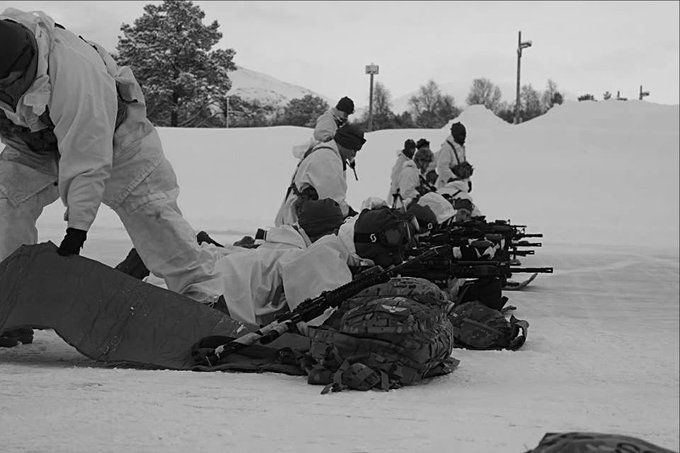
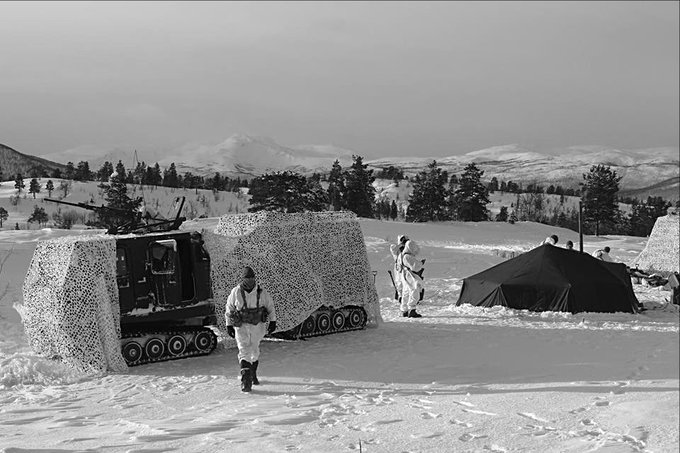
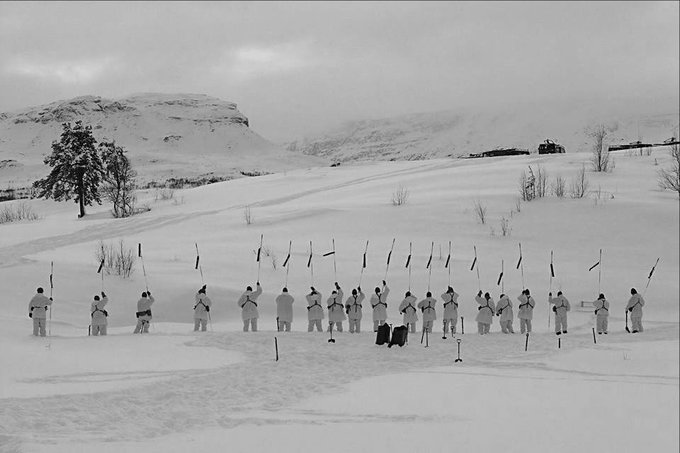
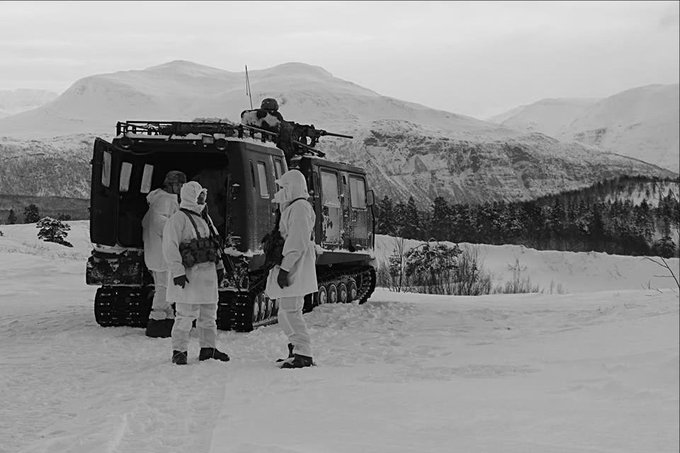
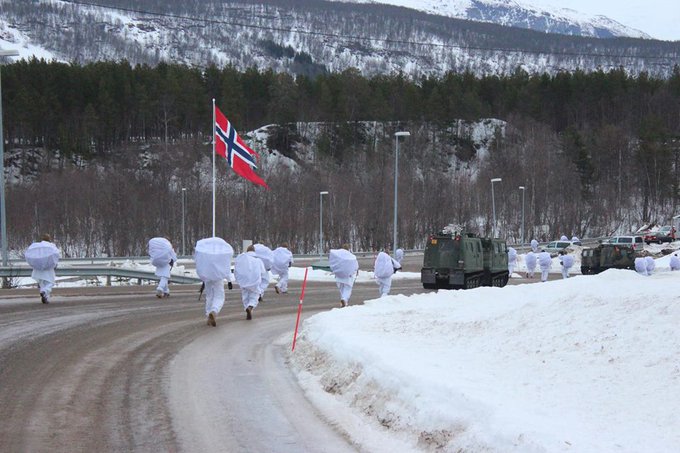
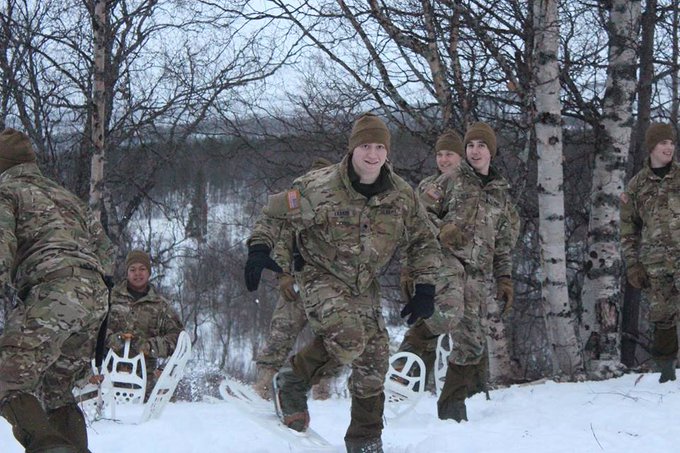
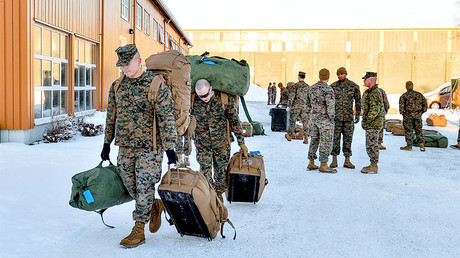
A total of 8,000 NATO soldiers have been deployed to the Finnmark region of northern Norway, 160-300 km from the Russian border, for a series of joint military exercises.

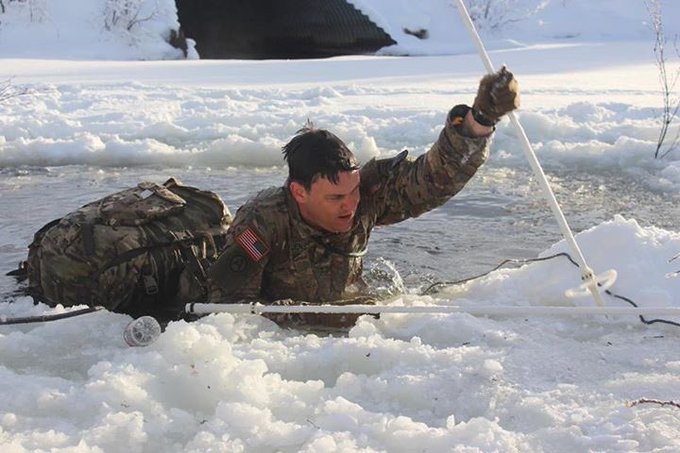
The Joint Viking 2017 exercises, which involve British, American and Norwegian troops, kicked off Monday and are expected to last until March 15. According to the Norwegian Armed Forces website, the exercises’ primary goals are to practice crisis management and the defense of Norway.

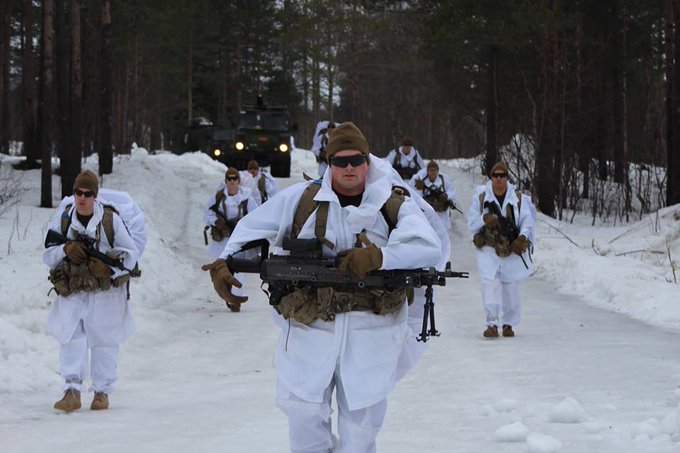
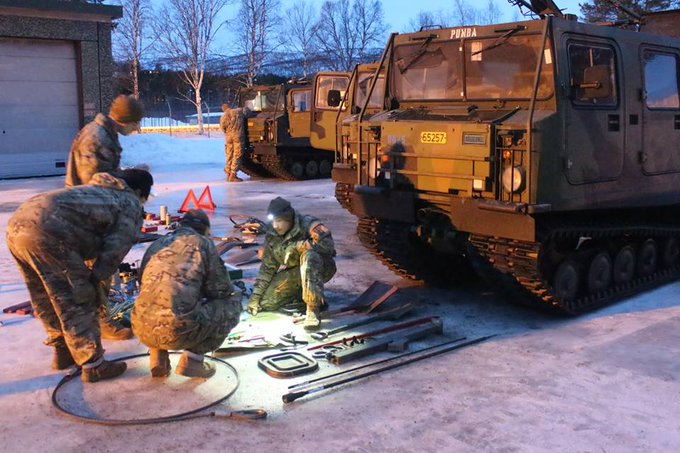
A total of 8,000 troops are taking part, including 700 soldiers from the US Marine Corps, US Army and the British Royal Marines, which have been integrated into Norwegian units. The British and American troops took part in preparatory exercises to acclimatize them to the harsh Norwegian weather.

View image on Twitter

: Cpt. Thomas Huens, B Troop 1-91 CAV Cdr. Leads from the front testing the water in advance of his troopers.

View image on TwitterView image on TwitterView image on TwitterView image on Twitter

📸 : Soldiers are in Norway conducting Winter Warfare Training in preparation for .

For the duration of the exercise, drones have been banned from local airspace.

“The Armed Forces will have a lot of activity in the air, with fighter jets, helicopters and transport aircraft. To ensure safety in the air, we therefore introduced a drone ban,” military spokesman Ivar Moen told the Norwegian public radio station NRK.

In previous years, Joint Viking exercises have been held in Hordaland in 2013, Tromso in 2014, Finnmark in 2015 and Trøndelag in 2016. The previous exercise in Finnmark was seen as a provocation in Russia, where in response a large-scale exercise was launched in the Kola Peninsula.

This year, however, Moscow was notified of the planned maneuvers in advance, Moen told NRK.

In January, 300 US Marines from Camp Lejeune, North Carolina, were deployed to Norway. Both Norway and the US denied the notion that the deployment was meant to irk Russia as part of NATO’s wider campaign to oppose what it calls “Russian aggression” in Europe, by sending additional troops and weapons closer to the Russian border.

A founding member of NATO, Norway pledged not to host foreign forces to allay Moscow’s concerns that it could serve as a platform for a surprise attack. For decades, the Scandinavian country only allowed in other allies’ troops for training purposes.


Oslo dismissed the notion that the deployment goes against the old commitment, saying that American troops would be rotated rather than stationed permanently. NATO routinely applies the same reasoning to all its deployments in Eastern Europe as a way of circumventing the alliance’s agreement with Russia, which bans permanent deployments of “significant” forces near Russia.

https://www.rt.com/news/379641-8000-nato-exercise-russia-norway/

Top British NATO General wants cyber-attacks to trigger article 5 collective response

From RT

https://www.rt.com/uk/379371-nato-cyber-attack-war/video/

March 3, 2017

NATO’s top European commander wants cyber-attacks to be considered a strong enough reason to trigger the alliance’s Article 5 which contains the principle of collective self-defense.

General Adrian Bradshaw, the Deputy Supreme Allied Commander Europe accused Moscow of cyber and informational attacks, telling the BBC the West needs “a grand strategy” to combat Russian “hybrid warfare.”

Currently, Article 5 declares that an “armed attack” against one or more NATO member states shall be considered an attack against all of them, leading to an appropriate collective response.

For Bradshaw, however, this definition is not broad enough to ensure the effective operation of the Alliance.

The West must respond by using all the tools at its disposal – economic, political, diplomatic as well as military – to deter Russian aggression”, the general reportedly said.

He wants the interpretation of Article 5 to be stretched to include other pretexts for collective self-defense other than an “armed attack”, which is what the wording of the article currently states.

Continue reading

EU not welcome: Serbian Parliament shouts down Mogherini [VIDEO]

From Fort Russ and RT

March 4, 2017 –
By J. Arnoldski –
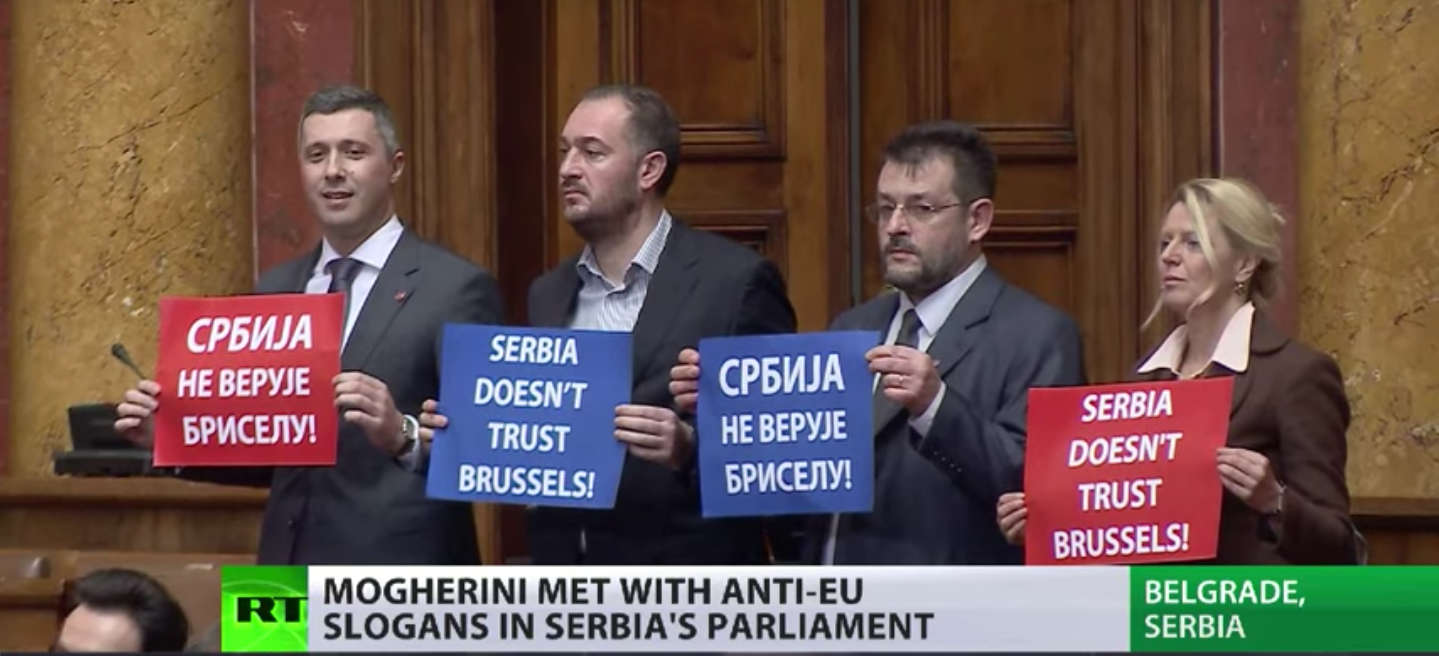
The European Union’s High Representative for Foreign Affairs and Security Policy, Federica Mogherini, was met with a “less than warm welcome” in the Serbian parliament on March 3rd amidst her tour of the Balkans. Chants of “Serbia! Russia! We don’t need the EU” left Mogherini sitting uneasily in her seat.
Political analyst John Bosnitch explained this event to RT as “a door slammed shut in her [Mogherini’s] face.” Calling the protest in the Serbian parliament a “fair bit of resistance”, Bosnitch emphasized, is “an understatement of the first calibre.”
“The message that she was given was: ‘Go away; the people of this region do not want to join the EU…and please don’t try and start a Hitler-style two-front war fighting the English and fighting the Serbs at the same time, because you’ll lose,'” Bosnitch clarified.
When asked by RT why Mogherini was met with such fierce rejection by Serbian representatives, Bosnitch posited that the EU is a “carbon copy” of NATO, the “most powerful, aggressive military force on the earth” that bombed Serbia in 1999 “without any legal grounds” and subsequently partitioned the country.
In Bosnitch’s words, “Hey guys, now that we’ve bombed you, divided you, impoverished you, and demonized you, we’d like to invite you to become a lower member of the EU” is the real translation of Mogherini’s attempt to coax Serbia into the union.
“There is no outlet for the EU in this battle,” Bosnitch says. In his opinion, even if the Serbian people “are dragged into the EU kicking and screaming”, they would contribute to the implosion of Brussels’ union just as much they would while remaining outside of the EU. In this spirit, Bosnitch likened Serbia’s resistance to “European integration” to Brexit.

“If they take Serbia in, they get a trojan horse. If they don’t get Serbia in, they have another force along with the English and Brexit ripping the EU apart,” Bosnitch concluded.

http://www.fort-russ.com/2017/03/eu-not-welcome-serbian-parliament.html

SOFA agreement with Baltic states quietly signed by Obama before departure clearing way for permanent US military presence

This will mean lucrative contracts for U.S. companies.

How much money was paid to secure this “agreement”, money which then disappeared into protected personal bank accounts?

From Fort Russ

-Our exercises are a warning to Russia!
– Should we beep?

March 2, 2016 – Fort Russ News
Rubaltic – Translated by Kristina Kharlova

The Baltic States have recognized the special status of the US military in its territory

By Alexander Shamshiev

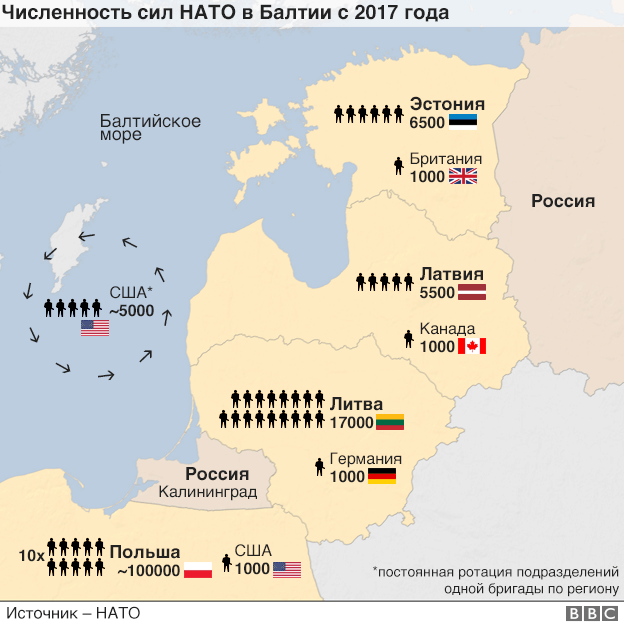
The US soldiers will receive special legal treatment in Lithuania, Latvia and Estonia. New rules involve tax incentives, lower prices, immunity from criminal prosecution and potential conflicts with local population.

The Baltic States have agreed with the United States about status of presence of American troops on their territory.

Local media agreed in opinion that negotiations with the American party took place at an accelerated pace to wrap up before the inauguration of Donald Trump, scheduled for January 20. Previously American soldiers visited Lithuania, Latvia and Estonia to participate in military exercises and short-term maneuvers. The agreements actually create a legal framework for permanent presence of US military in the three republics. This is what is expected by local authorities. “I am convinced that the presence of US forces is one of the most important factors that will make people of Lithuania feel safer in the current situation, – said Lithuanian defense Minister Karoblis, – and I hope that a permanent presence will continue in the future.” Preparations to welcome Americans are in full swing.

The authorities are actively building barracks, and investing in upgrading infrastructure at the bases in Rukla, Adazhi and Tapa, which in the spring will begin to accept the multinational battalions of NATO.

The purpose of SOFAs [Status of Forces Agreements] is to: “Protect against U.S. personnel being subject to host country criminal or civil justice systems. This is important not only to protect U.S. personnel’s rights and to vindicate the U.S. interest in exercising disciplinary authority over its personnel, but also because U.S. willingness to deploy forces overseas – and public support for such deployments – could suffer significant setbacks if U.S. personnel were at risk of being tried in a potentially unfair system. The United States also has an interest in preserving the principle that U.S. military discipline is enforced by the U.S. military justice system.” – Lsm.lv


NATO forces in the Baltics – 2017

Model agreements on the status of forces and amendments are an integral part of any stable presence of the US army abroad. The Pentagon has signed more than 100 agreements governing the relationship between its military and host countries. Signing a SOFA is considered a prestigious event for the allies. It means that the White house took their defense seriously. Therefore, if the agreements facilitate certain developments, in the long term in can propell Lithuania, Latvia and Estonia to the level of America’s closest allies, such as Japan, South Korea and Germany.

The Baltic States promised to create a military haven with an abundance of benefits. Among them – preferential tax regime without VAT, taxes on sales and excise taxes, and special stores for the sale of goods at competitive prices. It is indicated that the receiving party does not seek to obtain “additional income” from foreign troops. This fact will certainly depress the municipal authorities and local residents, who planned to cash in on foreign soldiers. In response to the generous reception the American side agrees to strictly comply with Lithuanian, Latvian and Estonian laws and not get rowdy.

But from the experience of friendly visits by NATO military incidents can not be avoided.

Guests often provoke an adverse reaction. Last year was no exception: Americans staged a pogrom in Druskininkai waterpark, tore down Lithuanian flag from the building of the prosecutor’s office in Kaunas and desecrated it; the servants of Bundeswehr beat a Lithuanian colleague at Rukla base; the British attacked a Latvian in Riga “McDonald’s” and broke his nose; Japanese seamen invaded Klaipeda, flooded bars and harassed local residents. Typically, such antics were committed in a drunken state. Defiant behavior and disorderly conduct of the military led the mayor of Ventspils Aivars Lembergs to compare them with occupants. Similar cases periodically happen in other countries – for example, in May 2016 in the Italian Vicenza 13 soldiers of the elite 173rd airborne brigade of the United States were arrested for their part in a mass brawl.

http://www.fort-russ.com/2017/03/sofa-agreement-with-baltic-states.html

US deploys Black Hawk choppers in Latvia to protect ‘sovereignty & bright future’ (VIDEO)

From RT

March 2, 2017

US deploys Black Hawk choppers in Latvia to protect ‘sovereignty & bright future’ (VIDEO)
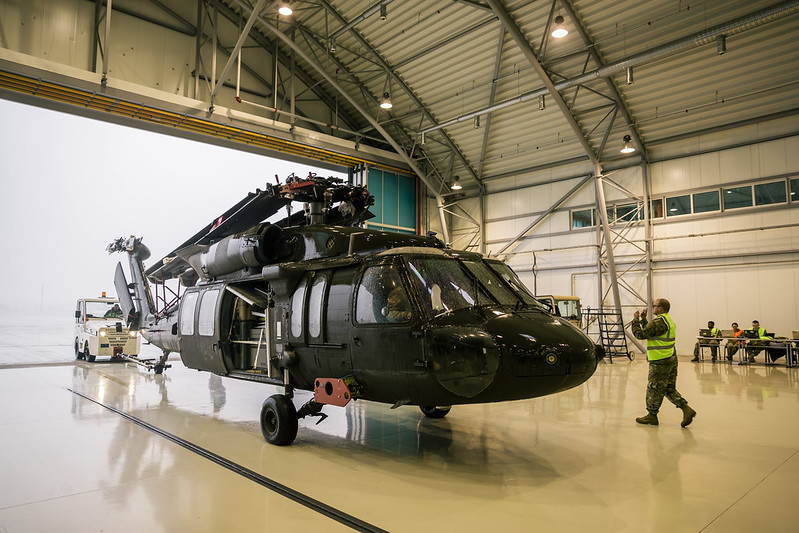
Five UH-60 Black Hawk helicopters and nearly 50 crew members have arrived in the Latvian capital of Riga as part of NATO’s Atlantic Resolve operation which sees an enhancement of American forces across the Baltic States.

The helicopters were unloaded from a transport plane on Wednesday and welcomed by officials including US Ambassador to Latvia Nancy Bikoff Pettit.

“US Air Force transport aircraft with UH-60 Black Hawk helicopters and military units Phoenix 10th Air Brigade of the US Army arrived at Riga airport,” the Latvian Defense Ministry reported. The ministry said earlier that the new arrivals will replace the existing unit of Black Hawk helicopters deployed at the Lielvarde Air Base in central Latvia.

“We are thrilled to welcome so many excellent American soldiers, who will serve as members of the continuing US aviation presence deployed to NATO’s eastern flank in support of Operation Atlantic Resolve,” Ambassador Pettit said at Riga International Airport.

“This year, thousands of US soldiers will rotate through Latvia…,” Pettit added. “You can be assured that they… are committed to standing shoulder to shoulder with our Latvian allies to protect the independence, sovereignty, and security of Latvia.”

“I see nothing but an incredibly bright future for US and Latvian relations because of how closely our two countries work together,”said Maj. Gen. Timothy Zadalis, US Air Forces in Europe vice commander.

The deployment of the choppers in Latvia marks another phase of Operation Atlantic Resolve, which began in April 2014, following the Crimean referendum where people voted to split from coup-stricken Ukraine and join Russia.

In total, the US Air Force is offering the Eastern European countries a total of 85 aircraft, including CH-47 Chinooks, UH-60 Black Hawks, and AH-64 Apaches. Medical evacuation helicopters and some 2,200 soldiers will also be deployed to assist the helicopter forces in Eastern Europe.

Ar lidmašīnu "Galaxy" no ASV Latvijā nogādā helikopterus "Black Hawk"

Atlantic Resolve is perceived by Washington as a demonstration of continued US commitment to the collective security of Europe in view of alleged Russian “assertiveness.” US troops and hardware will be constantly stationed in the Eastern European countries on a rotational basis in this operation.

“Task Force Phoenix, led by the 3rd General Support Aviation Battalion, 10th Aviation Regiment, signifies the first rotational combat aviation brigade deployed to provide a persistent presence in Eastern Europe,” the US Air Force said in a press release.

Russia has continuously criticized the buildup of NATO forces on its borders, where the military bloc has also fortified its naval positions in the Black Sea. In Romania, the US and NATO maintain a naval task force, along with Aegis Ashore ballistic missile defense sites which became operational earlier this year.

Last month, speaking at the Munich Security Conference in Germany, the Russian Foreign Minister Sergey Lavrov, noted that “NATO’s expansion has led to an unprecedented level of tension over the last 30 years in Europe.”

President Vladimir Putin has accused NATO of meddling in Russian affairs and trying to provoke a conflict. Putin warned that the alliance, with its “newly-declared official mission to deter Russia,” and repeated attempts to “draw us into a confrontation” poses a threat to global security.

READ MORE: NATO expansion led to tension in Europe unprecedented in last 30 years – Lavrov

“They are provoking us constantly and are trying to draw us into a confrontation,” the Russian leader stated in February, adding that NATO states are continuing their attempts to “interfere in our internal affairs in a bid to destabilize the social and political situation in Russia itself.”

https://www.rt.com/news/379127-us-black-hawk-helicopters-latvia/

Building a post-West world order of sovereignty, international law, and mutual respect — Foreign Minister Sergey Lavrov, Munich Security Conference, February 18, 2017

Leaders with a sense of responsibility must now make their choice. I hope that this choice will be made in favour of building a democratic and fair world order, a post-West world order, if you will, in which each country develops its own sovereignty within the framework of international law, and will strive to balance their own national interests with those of their partners, with respect for each country’s cultural, historical and civilisational identity.

From the Ministry of Foreign Affairs of the Russian Federation:

Foreign Minister Sergey Lavrov’s address and answers to questions at the 53rd Munich Security Conference, Munich, February 18, 2017

Ladies and gentlemen,

Ten years ago, President of Russia Vladimir Putin addressed this conference with a speech that many in the West saw as a challenge and even a threat, although what his message emphasised above all was the need to renounce unilateral action in favour of honest cooperation based on mutual respect, international law, joint assessment of global problems and collective decision-making. Unfortunately, the warnings he sounded then about the negative consequences of attempting to obstruct the emergence of a multipolar world have become reality.

Humanity stands at a crossroads today. The historic era that could be called the post-Cold War order has come to an end. Its main result, as we see it, was the complete failure of the Cold War institutions to adapt to new realities. The world has become neither ‘Western-centric’, nor a safer and more stable place. This is evident in the results of ‘democratisation’ in the Middle East and North Africa, and in other places too.

NATO expansion has created a level of tension in Europe unseen in the last thirty years. Yet this year marks the 20th anniversary of the signing of the Russia-NATO Founding Act in Paris, and 15 years since the Rome Declaration on a new quality of Russia-NATO relations was adopted. These documents’ basic premise was that Russia and the West took on a joint commitment to guarantee security on the basis of respect for each other’s interests, to strengthen mutual trust, prevent a Euro-Atlantic split and erase dividing lines. This did not happen, above all because NATO remained a Cold War institution. It is said that wars start in people’s heads, but according to this logic, it is also in people’s heads that they should end. This is not the case yet with the Cold War. Some statements by politicians in Europe and the United States seem to confirm this particularly clearly, including statements made here yesterday and today during this conference.

I mentioned NATO expansion just now. We categorically reject the allegations of those who accuse Russia and the new centres of global influence of attempting to undermine the so-called ‘liberal world order’. This global model was pre-programmed for crisis right from the time when this vision of economic and political globalisation was conceived primarily as an instrument for ensuring the growth of an elite club of countries and its domination over everyone else. It is clear that such a system could not last forever. Leaders with a sense of responsibility must now make their choice. I hope that this choice will be made in favour of building a democratic and fair world order, a post-West world order, if you will, in which each country develops its own sovereignty within the framework of international law, and will strive to balance their own national interests with those of their partners, with respect for each country’s cultural, historical and civilisational identity.

Russia has never hidden its views, and has always been sincere in advocating work based on equal footing in order to create a common space of security, good-neighbourliness and development from Vancouver to Vladivostok. The tensions of recent years between North America, Europe and Russia are unnatural; I would even say they go against nature.

Russia is a Eurasian state with a variety of cultures and ethnicities. Predictability and goodwill in relations with all countries, primarily, its neighbours, have always been inherent to our policies. This line of thinking underlies our close work within the CIS, the Eurasian Economic Union, the CSTO, the SCO, and BRICS.

Good-neighbourliness and mutual benefits underlie our relations with Europe as well. We are part of the same continent, we wrote our history together, and we were successful when we worked hand-in-hand to achieve prosperity for our peoples.

Many millions of Soviet people gave up their lives for the freedom of Europe. We want to see Europe strong, independent in international affairs and taking good care of our common past and future, while staying open to the world around it. We are appalled by the fact that the EU is unable to muster enough strength and give up its Russian policy based on the least denominator principle where fundamental and pragmatic interests of its member states are being sacrificed to Russophobic speculations out of sheer “solidarity.” We look forward to seeing common sense take the upper hand.

What kind of relationship do we want to establish with the United States? We want relations based on pragmatism, mutual respect, and understanding of our special responsibility for global stability. Our two countries have never been in direct confrontation with each other. Our history is steeped in friendliness more than confrontation. Russia did a lot to support the independence of the United States as it proceeded to become a united powerful state. Constructive Russia-US relations are in our common interest. Moreover, America is our close neighbour, just like the European Union. We are divided by just 4 km of the Bering Strait. The potential of our cooperation in politics, the economy, and the humanitarian sphere is enormous. But, of course, it has to be tapped. We are willing to go ahead and do so inasmuch as the United States is prepared to do so on its part.

Today there is no shortage in evaluations of the genesis of global challenges such as terrorism, drug trafficking, or the crises that engulfed territories from Libya to Afghanistan, leaving countries such as Syria, Iraq, Libya and Yemen bleeding. Certainly, the Munich debate will provide an opportunity to review in detail all these issues, as well as the continuing conflicts in Europe. Most importantly, a settlement cannot be achieved by military means.

This fully applies to the internal Ukrainian conflict. There’s no alternative to complying with the Minsk Package of Measures through a direct dialogue between Kiev, Donetsk and Lugansk. This is a firm position adopted by Russia, the West and the UN Security Council. Importantly, the Kiev authorities should embark on that path and honour their obligations.

Today, more than ever, we need a dialogue on all complex issues in order to find mutually acceptable compromises. Actions based on confrontation and the zero-sum-game approach will not cut any ice. Russia is not looking for conflicts with anyone, but it will always be in a position to uphold its interests.

Our absolute priority is to use dialogue to achieve our goals and mutually beneficial consensus. It is appropriate to quote a directive which Chancellor Gorchakov, back in the times of imperial Russia, sent to Russian Envoy in the United States Eduard von Stoeckle in July 1861: “there are no such divergent interests that cannot be reconciled through zealous and hard work … in the spirit of fairness and moderation.”

If everyone could subscribe to such an approach, we’d be able to quickly overcome the post-truth period, to reject hysterical information wars imposed on the international community and to proceed to keep up the honest work without being distracted by lies and falsehoods. Let this be a post-fake era.

Thank you.

Question: I have a concrete question about military exercises. Why are Russian military exercises held without prior announcement, and why are they so non-transparent? This year you will hold the largest Zapad (West) exercises in 20 years, which have alarmed your neighbours. What should be done to build up confidence regarding this issue?

Sergey Lavrov: As you know, Russia-NATO relations and the Russia-NATO Council have been suspended at the bloc’s initiative, although after the 2008 Caucasus crisis our American colleagues, including then US Secretary of State Condoleezza Rice, admitted that the suspension of the Russia-NATO Council was a mistake and that it should be more active especially in times of trouble. However, they continue to step on the same rake. NATO has decided to suspend all practical contacts with Russia, as NATO Secretary General Jens Stoltenberg told me yesterday. He said they would maintain contact at the level of ambassadors at the Russia-NATO Council and between himself and me, but that they had curtailed all practical contacts.

At some stage, Sauli Niinisto, the President of Finland which is not a NATO member, expressed concern that not just Russian aircraft but also the planes of NATO states fly over the Baltic with their transponders switched off. He mentioned his concern at a meeting with President Putin during his visit to Russia. Following that, President Putin instructed the Russian military to prepare proposals to settle the issues of transponders and aviation security over the Baltic. Our military experts brought detailed proposals to Brussels in July 2016, when the Russia-NATO Council held a meeting there. We believed that these concrete proposals would prompt a response, and that experts would get together to coordinate security enhancement methods. This did not happen. We still cannot start working on this issue. NATO Secretary General Jens Stoltenberg told me yesterday that an expert meeting might hopefully convene in March. It is taking too long, of course, but we are not to blame for the delay.

He also mentioned the issue of military exercises yesterday and expressed satisfaction that the Russian military held a briefing on the exercises held last autumn. He also expressed hope that special briefings would be held on the exercises we plan for this year.

As for the surprise factor, I am not a military man, but I know that military attachés working in Moscow, including from NATO countries, are invited to such military exercises. But the best answer to this question, as I told Mr Stoltenberg yesterday, is that we should resume military cooperation to remove all these concerns and suspicions. The NATO Secretary General, who was accompanied by his deputies, could not say that NATO is ready to do this, which is a pity, because without military cooperation our diplomats’ meetings will be of little importance for security issues.

As for our relations with NATO, we proposed resuming them long ago. Instead of accusing each other and discussing and implementing plans to deploy NATO combat capabilities on the border with Russia for the first time in a decade, we should sit down to discuss the situation. We proposed looking at the maps to see how many weapons and military personnel NATO and Russia have, and where. After we collect this data, we will be able to gauge the real measures of military security in Europe. And then we will be able to use this information to consider arms control agreements and additional security measures.

Once again, it was not Russia who suspended practical cooperation in the framework of the Russia-NATO Council.

Question: Russia has submitted the first three provisions of Minsk-2 for discussion by the UN Security Council: the cease-fire, the withdrawal of heavy weapons and admission of the OSCE observers to all the Ukrainian regions. Why doesn’t Russia find it possible to meet these obligations and thereby send a message about an increased level of confidence and improved overall situation?

Closer to the end of your remarks, you mentioned the post-fake era. Russia’s interference in the US election campaign was mentioned while it was underway. An election campaign is underway in France, and one of the candidates complained of Russia’s interference as well. French President Hollande even convened an extraordinary meeting of the Security Council to discuss this.

Sergey Lavrov: Regarding your first question, I’m pleased that you are familiar with the Minsk agreements, though it’s a pity you didn’t read them to the end, apparently. Indeed, the first item is the withdrawal of heavy weapons, but then it says that on the 30th day after the start of such withdrawal, which began in April 2014, the Kiev authorities will prepare a draft law on elections and begin consultations thereon with Donetsk and Lugansk. You can ask all kinds of questions about the timeframe of a particular item in the Minsk arrangements – they don’t always offer fixed dates. However, this date is specified and it’s 30 days. The withdrawal has begun. The beginning of consultations with Donetsk and Lugansk did not hinge on the completion of this process. As you may be aware, a lot has changed since then: the weapons were first withdrawn and then disappeared from the warehouses. The OSCE Special Monitoring Mission, which worked in very difficult conditions – and whose work we highly appreciate and hope that the mission will represent more OSCE members, not just  NATO and EU member countries – repeatedly noted violations on both sides with regard to the ceasefire, and the presence of heavy weapons in the security zone. However, the Ukrainian armed forces have always been the champion when it came to heavy weapons missing from warehouses. Again, other kinds of violations happen on both sides.

There have been repeated accusations (interviews with several Ukrainian political pundits have been published recently) that President Putin uses women and children in Donbass as human shields and tries to convince the Ukrainians living to the left of the contact line that people in Donbass hate them, while people in Donbass are being told that the Ukrainian government wants to destroy them. These arguments are false and hold no water. They also wrote that Donbass self-defence forces and unnamed Russian troops shell Donetsk in order to blame everything on Ukraine.

Getting back to your question, I have many times mentioned  how to make a ceasefire stick. No matter what you think about the Russian media, we can see our reporters doing their jobs along the  contact line in Donetsk and Lugansk on a daily basis. They run their stories live showing us destroyed residential areas and social infrastructure buildings, including children’s homes, schools, outpatient clinics, and civilian casualties. I became interested in what’s happening to the west of the contact line and started watching CNN, Fox News, Euronews, and BBC. I haven’t seen anything like that done by Western reporters on the western side of the contact line. They don’t run live reports, which our reporters do, risking their lives and getting wounded and even killed in the process. I asked my Western colleagues whether Western reporters are instructed to stay away from the other side of the contact line for security reasons. There’s no answer. Then we asked the OSCE SMM to focus, in their reports, on the destruction of civilian infrastructure to the left and to the right of the contact line. So far, we haven’t received exhaustive information. This may give an idea of why Western reporters, who are so bent on bringing the truth about the events in Ukraine to the world, do not show what’s happening in the areas to the west of the contact line, which are controlled by the armed forces of Ukraine. Are they discouraged from going there for safety reasons or are they doing some self-censorship? I would like to figure that out.

Our stats show that there are many times more destroyed social infrastructure buildings on the side controlled by Donbass as compared with the situation on the left side of the contact line. In most cases, fire is aimed at the positions controlled by the Ukrainian armed forces. Nonetheless, some members of the media make it into the war zone.

Not long ago, I saw a report by the Washington office of the International Institute for Strategic Studies and Washington Post articles by journalists who have been on the line of contact. They wrote that volunteer battalions are the ones provoking violence in Donbass. These forces do not obey anyone, they do not take orders from Ukraine’s Armed Forces and act solely at their own discretion. The journalists wrote that thousands of ultra-nationalists from the Right Sector are fighting there and are not controlled by Kiev in any way whatsoever. The reporters concluded that Kiev may be interested in armed and angry radicals staying on the line of contact in Donbass instead of staging another Maidan uprising in the capital. These articles also mentioned neo-Nazi foreigners who are fighting in Donbass, while others tend to turn a blind eye to their presence there.

We discuss these issues in the Normandy format. Today, a meeting of French, German, Ukrainian and Russian foreign ministers will take place. The question remains: why is there so little information about what is going on to the west of the line of contact? It is key to answering your question about why so little progress has been achieved in terms of security. However, making progress on security issues is not a goal in itself. Our common aim is to ensure full implementation of the Minsk agreements that provide for security on the line of contact (and I mentioned why it has not been achieved so far), constitutional reform to introduce a constitutional provision on the special status, amnesty for all who took part in hostilities in Donbass (just as all those who took part in what happened during Maidan uprisings benefited from amnesty), and the holding of elections. Under the Minsk agreements, the Ukrainian government can restore full control of the border with the Russian Federation only when these provisions are implemented. As I have already said, we are not there yet.

As for what our European partners are saying regarding sanctions, I have already commented on the illogical and artificial nature of the formula whereby the EU lifts sanctions once Russia implements the Minsk agreements. Russia also wants the Minsk agreements to be implemented, and will not lift its sanctions against the European Union until the Minsk agreements are implemented. There has to be clarity on this issue. Paris, Berlin and hopefully Washington and other capitals, including NATO headquarters, know all too well what is really happening in Ukraine and why the Minsk agreements are not working properly. But they are unable to recognise it in public due to a distorted sense of solidarity with those who decided to bring freedom and European values to Ukraine. When our good friend, the EU High Representative for Foreign Affairs and Security Federica Mogherini says that sanctions are a tool for ensuring implementation of the second Minsk agreements, I see this as a way to use sanctions for regulating the crisis in Ukraine, since sanctions unambiguously shift the blame on Russia. As Federica Mogherini said, maybe it was a Freudian slip, ‘We will wait until Russia concedes and departs from Minsk-2 by undertaking something unilaterally and forcing Donbass fighters to take unilateral action.’ The hidden message behind this position is that there is no need to work with Kiev, Kiev is doing everything right. That said, I strongly believe that the key capitals know the truth. I do hope that they send signals to this effect to the Ukrainian government during their contacts, if not publicly. Not only do I hope but I know that this is the case. It is hard to tell whether these signals come across.

Regarding the second question, on Russia’s alleged interference in election campaigns and other events in countries abroad, if you recall, when Donald Trump said that the election was not very honest and that the Democrats got votes from ‘dead souls’, the Democratic Party demanded to see the facts, but for some reason, when it comes to us, no one demands to see the facts. I have not seen any evidence regarding our alleged hacking of Democratic Party sites, or of whatever we are alleged to have done in France, Germany or Italy. We know that there were facts several years ago in Germany, when the eavesdropping on the entire German senior leadership was revealed. Leaks emerged a few days ago, suggesting that the CIA engaged in cyber-espionage throughout the entirety of France’s 2012 presidential race.  A CIA representative told a journalist today that he had no comment on this subject. No comment. But my good friend, French Foreign Minister Jean-Marc Ayrault, speaking in  parliament after the information came out about suspicions that the CIA had meddled in the 2012 election (though, as I understand it, there are not just suspicions but also concrete facts), said that they oppose all cyber-espionage, no matter whether it comes from Russia or any other country. Modesty is always a fine thing, of course, but in this case, once again, I ask to see the evidence.

Let me remind you that Russia was the first country to initiate work in the UN many years ago on coordinating our positions on international information and cyber-security. Our Western partners evaded tackling these issues for a very long time. Finally, a couple of years ago, we adopted a resolution by consensus and a group of government experts was established, which produced a good report, which formed the foundation for a new resolution. Another expert group has been set up and will continue working on this matter now. We proposed long ago that our colleagues work more actively on the professional, technical and technology aspects of cyber-security issues. When the USA, during Barack Obama’s presidency, started hunting down our citizens in violation of the agreement our countries have, and did not inform us that they were catching these people on suspicion that they were involved in cybercrime, we proposed that both sides sit down together and settle all these issues. We have absolutely no desire to see our citizens involved in these illegal cyber activities. In November 2015, we proposed to the Obama administration that we meet and begin bilateral work on cyber-espionage, cyber-security and other cyber-related areas. A year went by without a response, even though I mentioned the matter to John Kerry every time we met. In the end, they proposed meeting in December 2016, but then said that everything would have to be postponed because of the new administration coming in.

Federal Chancellor Angela Merkel, when she spoke about cyber-security today, put forward the interesting idea that the Russia-NATO Council should address this issue. Let me return to my answer to the first question. We always wanted to see the Russia-NATO Council work on real substantive issues. We were not the ones who broke off practical cooperation. If the Federal Chancellor of Germany, one of the main NATO member countries, wants the Russia-NATO Council to work on cyber-security, we see this as a signal that Berlin, at least, wants the Russia-NATO Council to resume real work and not just limit itself to discussions.

http://www.mid.ru/en/vistupleniya_ministra/-/asset_publisher/MCZ7HQuMdqBY/content/id/2648249
Vladimir Putin’s speech to the Federal Security Service, February 16, 2017

From the Kremlin
February 16, 2017

Vladimir Putin took part in an annual expanded meeting of the Federal Security Service (FSB) Board to discuss the FSB’s results for 2016 and the priority tasks for ensuring Russia’s national security.

President of Russia Vladimir Putin: Good afternoon.

These annual FSB Board meetings give us a chance to meet and not only thoroughly analyse and review the results of the agency’s work over the period, but also to discuss at length all important national security issues in general and outline the priorities for the immediate future and the longer-term.

The FSB plays a key part in protecting our constitutional order and our country’s sovereignty, and in protecting our people from threats at home and abroad.

Let me say from the start that last year’s results were positive and show good development. This concerns your work to counter terrorism and extremism, a series of successful counterintelligence operations, your efforts to combat economic crime, and other areas.

You ensured a high standard of security for major public events, including the State Duma election and regional and local elections.

I would like to thank both the executives and staff for their conscientious attitude towards their work and their timely and efficient performance of their duties.

At the same time, demands on the quality and results of your work grow constantly. The global situation has not become any more stable or better over the past year. On the contrary, many existing threats and challenges have only become more acute.

Military-political and economic rivalry between global and regional policy makers and between individual countries has increased. We see bloody conflicts continue in a number of countries in the Middle East, Asia, and Africa. International terrorist groups, essentially terrorist armies, receiving tacit and sometimes even open support from some countries, take active part in these conflicts.

At the NATO summit last July in Warsaw, Russia was declared the main threat to the alliance for the first time since 1989, and NATO officially proclaimed containing Russia its new mission. It is with this aim that NATO continues its expansion. This expansion was already underway earlier, but now they believe they have more serious reasons for doing so. They have stepped up the deployment of strategic and conventional arms beyond the national borders of the principal NATO member states.

They are provoking us constantly and are trying to draw us into confrontation. We see continued attempts to interfere in our internal affairs in a bid to destabilise the social and political situation in Russia itself.

We also see the recent serious flare-up in southeast Ukraine. This escalation pursues the clear aim of preventing the Minsk Agreements from going ahead. The current Ukrainian authorities are obviously not seeking a peaceful solution to this very complex problem and have decided to opt for the use of force instead. What is more, they speak openly about organising sabotage and terrorism, particularly in Russia. Obviously, this is a matter of great concern.

The events and circumstances I have mentioned require our security and intelligence services, especially the Federal Security Service, to concentrate their utmost attention and effort on the paramount task of fighting terrorism.

We have already seen that our intelligence services dealt some serious blows to terrorists and their accomplices. Last year’s results confirm this: the number of terrorism related crimes has decreased.

Preventive work has also brought results. The FSB and other security agencies, with the National Antiterrorist Committee acting as coordinator, prevented 45 terrorism related crimes, including 16 planned terrorist attacks. You deserve special gratitude for this.

You need to continue your active efforts to identify and block terrorist groups’ activity, eliminate their financial base, prevent the activities of their emissaries from abroad and their dangerous activity on the internet, and take into account in this work Russian and international experience in this area.

The murder of our ambassador to Turkey was a terrible crime that particularly highlighted the need to protect our citizens and missions abroad. I ask you to work together with the Foreign Ministry and the Foreign Intelligence Service to take additional measures to ensure their safety.

You must also work to take our counterterrorism cooperation with partners abroad to a new level, despite the difficulties that we see in various areas of international life. It is a priority, of course, to intensify work with our partners in organisations such as the UN, the CSTO, and the Shanghai Cooperation Organisation.

It is in our common interests to restore dialogue with the US intelligence services and with other NATO member countries. It is not our fault that these ties were broken off and are not developing. It is very clear that all responsible countries and international groups should work together on counterterrorism, because even simply exchanging information on terrorists’ financing channels and sources and on people involved in or suspected of links with terrorism can substantially improve the results of our common efforts.

Our priorities include firmly suppressing extremism. Security methods must go hand-in-hand with constant prevention work. It is essential to prevent extremism from drawing young people into its criminal networks, and to form an overall firm rejection of nationalism, xenophobia, and aggressive radicalism. In this context, of great importance is open dialogue with civil society institutions and representatives of Russia’s traditional religions.

Counterintelligence services also face greater demands today. Operational data show that foreign intelligence services’ activity in Russia has not decreased. Last year, our counterintelligence services put a stop to the work of 53 foreign intelligence officers and 386 agents.

It is important to neutralise foreign intelligence services’ efforts to gain access to confidential information, particularly information concerning our military-technical capabilities.

This makes it a priority to improve our system for protecting classified information comprising state secrets, particularly with agencies going over to an electronic document circulation system.

I would like to note that the number of cyberattacks on official information resources tripled in 2016 compared to 2015. In this context, each agency must develop its segment of the state system for detecting and preventing cyberattacks on information resources and eliminating their consequences.

The public expects greater results in such key areas as economic security and the fight against corruption. I ask you to be particularly thorough in monitoring the funds allocated for state defence procurement (a subject I have spoken about before), major infrastructure projects, preparation of big international events, and implementing federal targeted and socially important programmes. Regrettably, we still see many cases of state funds being embezzled or misappropriated.

Reliable protection of our state borders plays a big part in ensuring our country’s comprehensive security. The priority here is to close off channels through which members of international terrorist and extremist groups enter Russia, and put a firm stop to all forms of smuggling, from weapons to drugs and various bio-resources.

Of course, we must continue the work to develop border infrastructure where it is not yet sufficiently developed, particularly in the Far East and in the Arctic.

Colleagues, let me stress that we will continue to bolster the FSB’s central and regional branches and ensure you have the most advanced arms and equipment. We will also continue to give attention to social provisions for FSB personnel and their family members.

I wish you success in protecting our national interests and the security of our country and our people. I am confident that you will continue working towards your targets with dignity.

Thank you for your attention.

http://en.kremlin.ru/events/president/news/53883

NATO agrees to increase presence in Black Sea – Stoltenberg

From RT
February 16, 2017

NATO agrees increased presence in Black Sea – Stoltenberg

U.S. troops deployed to Bulgaria as NATO boosts Eastern European presence

From RT

February 15, 2017

US troops deployed to Bulgaria as NATO boosts Eastern European presence
US troops arrived in Bulgaria on Wednesday, with armored vehicles and heavy equipment to be shipped by the end of the week as part of NATO’s significant buildup in Eastern Europe, the Bulgarian Defense Ministry has said.

Around 120 US servicemen from Fort Carson, Colorado were accommodated at the Novo Selo military base in the east of the Black Sea country, according to Bulgarian officials.

“Joint drills and training at Novo Selo training range will be increased this year. The US army troops will be rotated for the drills,” the defense ministry said as cited by Reuters.

On Tuesday, tanks and hardware accompanied by another 500 American troops arrived in Romania.

The deployment is part of Atlantic Resolve, the operation to reassure NATO’s allies in the region following Russia’s reunion with Crimea and accusations of Moscow being involved in the Ukrainian conflict.

Russia has denied the claims.

Last summer, NATO members agreed to boost its NATO presence in Eastern Europe and the Baltic region to levels not seen since the Cold War – posting four rotating multinational battalions to Estonia, Latvia, Lithuania, and Poland.

In January, 2,800 pieces of US military hardware, including Abrams tanks, Paladin artillery, and Bradley fighting vehicles, and 4,000 troops arrived in Europe as part of the operation.

READ MORE: Spain plans to send 6 tanks & 350 troops to Latvia as part of NATO buildup – reports

The forces took part in drills in Poland and were then deployed across seven countries, including the Baltic States, Bulgaria, Romania, and Germany.

American troop deployment accelerated in the last months of the President Barack Obama’s presidency as his successor, Donald Trump, announced plans of mending relations with Moscow.

However, Trump’s rhetoric towards Russia has changed since he took office, with White House spokesman, Sean Spicer, saying on Tuesday that the new president “expects the Russian government to de-escalate violence in Ukraine and return Crimea” to Kiev.

READ MORE: ‘No incidents over Black Sea’: Russian MoD denies ‘unprofessional & unsafe’ flyby of USS Porter

On Wednesday, the new US Defense Secretary, James Mattis, who was on his first European visit, warned NATO allies that America will “moderate its commitment” to the alliance if other members don’t increase their financial contribution.

“No longer can the American taxpayer carry a disproportionate share of the defense of western values,” Mattis said.

But the Defense Secretary assured President Trump’s “strong support” for NATO, calling the block “a fundamental bedrock for the United States and for all the transatlantic community.”

Moscow has criticized the expansive NATO military buildup on its borders, saying it increases the risk of incidents and poses a threat to Russian national security.

“This deployment is, of course, a threat for us,” Russian Deputy Foreign Minister Aleksey Meshkov said last week, adding that “it is obvious that the steps by NATO gravely increase the risk of incidents.”

https://www.rt.com/news/377494-nato-bulgaria-us-troops/