February 18, Putin signs Executive Order recognizing DPR/LPR documents, visa-free travel to Russia

From the Kremlin
February 18, 2017

Vladimir Putin signed Executive Order On Recognition in the Russian Federation of Documents and Vehicle Registration Plates Issued to Ukrainian Citizens and Stateless Persons Permanently Residing in Certain Districts of Ukraine’s Donetsk and Lugansk Regions.

Being guided by universally recognised principles and standards of the international humanitarian law and in order to protect the rights and freedoms of individuals, the President has resolved that temporarily, during the political settlement period of the crisis in certain districts of Ukraine’s Donetsk and Lugansk regions pursuant to the Minsk Agreements, personal identification documents, education and (or) qualification certificates, birth certificates, marriage, divorce, name change and death certificates, vehicle registration certificates, and vehicle registration plates issued by the corresponding authorities (organisations), valid in the specified district, will be recognised in the Russian Federation as valid for Ukrainian citizens and stateless persons permanently residing in those areas.

Pursuant to the Executive Order, Ukrainian citizens and stateless persons permanently residing in certain districts of Ukraine’s Donetsk and Lugansk regions can enter and leave the Russian Federation without applying for visas upon showing identification documents (birth certificates for children under the age of 16), issued by the corresponding authorities which are valid in the said districts.

The Government of the Russian Federation has been instructed to take the necessary measures to implement this Executive Order.

The Executive Order will come into effect upon its signing.

http://en.kremlin.ru/events/president/news/53895

Damascus demands UN action against illegal Turkish incursions, reveals location of main Turkish base inside Syria

From Fort Russ

February 18th, 2017 – Fort Russ News
– Al Binaa – translated by Samer Hussein –

Syrian Ministry of Foreign Affairs has renewed calls to the UN Security Council for an immediate end of the violations of The Syrian sovereignty by the Turkish Armed Forces.

The Ministry also published a list of all violations that occurred since last December.

The letter, which was addressed to the UN Secretary General and the President of the UN Security Council, mentions illegal incursions into Syrian territory, building a wall within the so-called Turkish buffer zones (which exist on the sovereign Syrian territory), destruction of the property belonging to the Syrian citizens such as uprooting of hundreds of olive trees in order to build roads for the tanks of the Turkish army (as recently seen in the village of Qljabreen in the Azaz area of Aleppo province) and illegal backing of the terrorist groups which are loyal to the regime in Ankara.
The letter further states that the Turkish authorities recently established a military base inside Syrian territory, more precisely in the village of Jtrar, North of the town of Tal Rifaat, located in the province of Aleppo. The base includes the headquarters for the Turkish army personnel and their allies who are stationed on the Syrian soil and are allegedly involved in the so-called “Operation Euphrates Shield”. Ammunition depots are also being mentioned.

The letter reads: “The Syrian Government renews calls to the UN Security Council to hold to its responsibilities and act in accordance with the International Law and to pressure Turkey in order to stop the violations of the Syrian Arab Republic’s sovereignty and territorial integrity. ”

Syria: ISIS attempts to flood eastern Aleppo; Russian bombers strike ISIS with cruise missiles in Raqqa, Syria

From Fort Russ

February 18th, 2017 – Fort Russ News
– Al Mayadeen – translated by Samer Hussein –

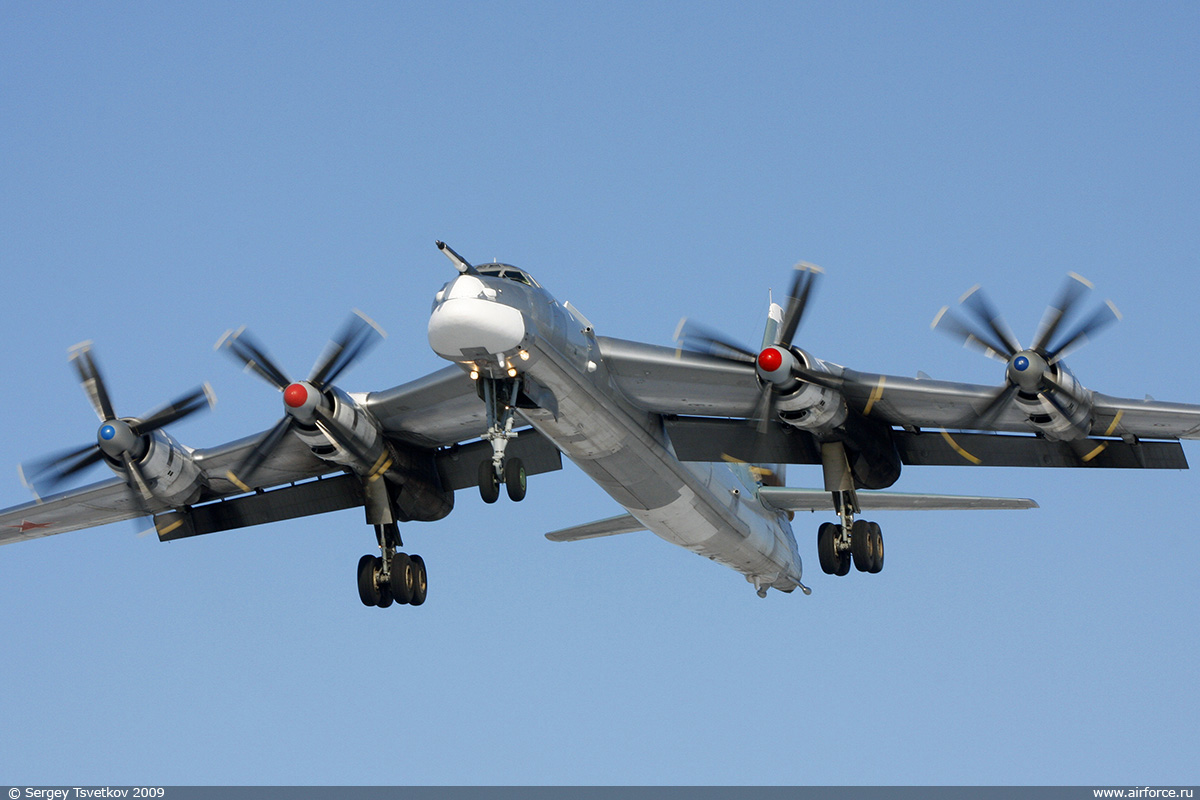
In a statement published on Saturday, Russian Defense Ministry announced that the bombers “Tu-95 MS” delivered directed blows against ISIS positions in Raqqa province, after taking off from the Russian territory and flying over Iran and Iraq. The bombers destroyed the training grounds and camps belonging to the terrorist group ISIS. According to the statement, all targets were successfully destroyed.

The mission was supported by Su-30 SM” and “Su-35 S”, the two Russian fighter jets stationed at Humaimam base. The jets provided the aerial coverage.
After their mission was successfully accomplished in Syria, the bombers returned to their bases.

In the meantime, the Syrian Army was able to successfully expand its operations in the Eastern side of the Homs province. According to the military source provided to SANA, the army also restored the security to the village of Al Kilabiyah.

The Syrian Army and its allies also made advancements towards Palmyra as they have moved closer for about 2km.

Earlier on Saturday, ISIS began to pump large quantities of water from Euphrates river through Al Babira station located in the eastern part of Aleppo province in order to cause flooding in the villages and destroy utility stations and agricultural areas in the countryside of the Aleppo province’s eastern regions. The Aleppian municipal authorities have already sent out a team of experts who will work on redirecting the flooding waters.

In Aleppo province the Turkish armed forces are continuing their incursions. The latest Turkish shelling in the eastern parts of Aleppo city resulted in 4 civilian deaths, bringing the death toll to about 50 in the past 4 days of the Turkish operations.

Since September 2015, the Russian armed forces are successfully destroying ISIS targets in Syria. The Russian counter-terrorist activities are coordinated with the government of Syria.

Vladimir Putin’s speech to the Federal Security Service, February 16, 2017

From the Kremlin
February 16, 2017

Vladimir Putin took part in an annual expanded meeting of the Federal Security Service (FSB) Board to discuss the FSB’s results for 2016 and the priority tasks for ensuring Russia’s national security.

President of Russia Vladimir Putin: Good afternoon.

These annual FSB Board meetings give us a chance to meet and not only thoroughly analyse and review the results of the agency’s work over the period, but also to discuss at length all important national security issues in general and outline the priorities for the immediate future and the longer-term.

The FSB plays a key part in protecting our constitutional order and our country’s sovereignty, and in protecting our people from threats at home and abroad.

Let me say from the start that last year’s results were positive and show good development. This concerns your work to counter terrorism and extremism, a series of successful counterintelligence operations, your efforts to combat economic crime, and other areas.

You ensured a high standard of security for major public events, including the State Duma election and regional and local elections.

I would like to thank both the executives and staff for their conscientious attitude towards their work and their timely and efficient performance of their duties.

At the same time, demands on the quality and results of your work grow constantly. The global situation has not become any more stable or better over the past year. On the contrary, many existing threats and challenges have only become more acute.

Military-political and economic rivalry between global and regional policy makers and between individual countries has increased. We see bloody conflicts continue in a number of countries in the Middle East, Asia, and Africa. International terrorist groups, essentially terrorist armies, receiving tacit and sometimes even open support from some countries, take active part in these conflicts.

At the NATO summit last July in Warsaw, Russia was declared the main threat to the alliance for the first time since 1989, and NATO officially proclaimed containing Russia its new mission. It is with this aim that NATO continues its expansion. This expansion was already underway earlier, but now they believe they have more serious reasons for doing so. They have stepped up the deployment of strategic and conventional arms beyond the national borders of the principal NATO member states.

They are provoking us constantly and are trying to draw us into confrontation. We see continued attempts to interfere in our internal affairs in a bid to destabilise the social and political situation in Russia itself.

We also see the recent serious flare-up in southeast Ukraine. This escalation pursues the clear aim of preventing the Minsk Agreements from going ahead. The current Ukrainian authorities are obviously not seeking a peaceful solution to this very complex problem and have decided to opt for the use of force instead. What is more, they speak openly about organising sabotage and terrorism, particularly in Russia. Obviously, this is a matter of great concern.

The events and circumstances I have mentioned require our security and intelligence services, especially the Federal Security Service, to concentrate their utmost attention and effort on the paramount task of fighting terrorism.

We have already seen that our intelligence services dealt some serious blows to terrorists and their accomplices. Last year’s results confirm this: the number of terrorism related crimes has decreased.

Preventive work has also brought results. The FSB and other security agencies, with the National Antiterrorist Committee acting as coordinator, prevented 45 terrorism related crimes, including 16 planned terrorist attacks. You deserve special gratitude for this.

You need to continue your active efforts to identify and block terrorist groups’ activity, eliminate their financial base, prevent the activities of their emissaries from abroad and their dangerous activity on the internet, and take into account in this work Russian and international experience in this area.

The murder of our ambassador to Turkey was a terrible crime that particularly highlighted the need to protect our citizens and missions abroad. I ask you to work together with the Foreign Ministry and the Foreign Intelligence Service to take additional measures to ensure their safety.

You must also work to take our counterterrorism cooperation with partners abroad to a new level, despite the difficulties that we see in various areas of international life. It is a priority, of course, to intensify work with our partners in organisations such as the UN, the CSTO, and the Shanghai Cooperation Organisation.

It is in our common interests to restore dialogue with the US intelligence services and with other NATO member countries. It is not our fault that these ties were broken off and are not developing. It is very clear that all responsible countries and international groups should work together on counterterrorism, because even simply exchanging information on terrorists’ financing channels and sources and on people involved in or suspected of links with terrorism can substantially improve the results of our common efforts.

Our priorities include firmly suppressing extremism. Security methods must go hand-in-hand with constant prevention work. It is essential to prevent extremism from drawing young people into its criminal networks, and to form an overall firm rejection of nationalism, xenophobia, and aggressive radicalism. In this context, of great importance is open dialogue with civil society institutions and representatives of Russia’s traditional religions.

Counterintelligence services also face greater demands today. Operational data show that foreign intelligence services’ activity in Russia has not decreased. Last year, our counterintelligence services put a stop to the work of 53 foreign intelligence officers and 386 agents.

It is important to neutralise foreign intelligence services’ efforts to gain access to confidential information, particularly information concerning our military-technical capabilities.

This makes it a priority to improve our system for protecting classified information comprising state secrets, particularly with agencies going over to an electronic document circulation system.

I would like to note that the number of cyberattacks on official information resources tripled in 2016 compared to 2015. In this context, each agency must develop its segment of the state system for detecting and preventing cyberattacks on information resources and eliminating their consequences.

The public expects greater results in such key areas as economic security and the fight against corruption. I ask you to be particularly thorough in monitoring the funds allocated for state defence procurement (a subject I have spoken about before), major infrastructure projects, preparation of big international events, and implementing federal targeted and socially important programmes. Regrettably, we still see many cases of state funds being embezzled or misappropriated.

Reliable protection of our state borders plays a big part in ensuring our country’s comprehensive security. The priority here is to close off channels through which members of international terrorist and extremist groups enter Russia, and put a firm stop to all forms of smuggling, from weapons to drugs and various bio-resources.

Of course, we must continue the work to develop border infrastructure where it is not yet sufficiently developed, particularly in the Far East and in the Arctic.

Colleagues, let me stress that we will continue to bolster the FSB’s central and regional branches and ensure you have the most advanced arms and equipment. We will also continue to give attention to social provisions for FSB personnel and their family members.

I wish you success in protecting our national interests and the security of our country and our people. I am confident that you will continue working towards your targets with dignity.

Thank you for your attention.

http://en.kremlin.ru/events/president/news/53883
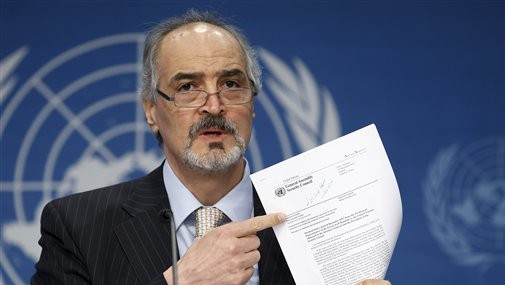
The real meaning behind Putin’s “Ukrainian terrorism” speech

“…We also see the recent serious flare-up in southeast Ukraine. This escalation pursues the clear aim of preventing the Minsk Agreements from going ahead. The current Ukrainian authorities are obviously not seeking a peaceful solution to this very complex problem and have decided to opt for the use of force instead. What is more, they speak openly about organising sabotage and terrorism, particularly in Russia. Obviously, this is a matter of great concern…”

Vladimir Putin’s speech at meeting of Federal Security Service Board, February 16, 2017
http://en.kremlin.ru/events/president/news/53883
From Fort Russ

February 18, 2017 – Fort Russ –
Rostislav Ishchenko, RIA Analytics – translated by J. Arnoldski –
February 16, 2017

On Thursday, February 16th, at the annual meeting of the Collegium of Russia’s Federal Security Service (FSB), Vladimir Putin drew particular attention to the situation in South-East Ukraine. According to the president, Ukrainian authorities are deliberately aggravating the situation in the conflict zone in Donbass in order to disrupt the Minsk Agreements and are betting on a military solution to the problem.
The head of state also emphasized that the Kiev authorities “are openly speaking of the organization of sabotage and terroristic, subversive work, including in Russia.”
A signal to the West
It is clear that anti-terrorist and counter-intelligence work lies at the heart of the FSB’s operations. But it is also clear that such statements by the president, by being made public, were aimed primarily at an external audience.
After all, the FSB leadership can be instructed in secret. Moreover, no one doubts that since the very beginning of the civil war in Ukraine, the FSB has followed attempts to spill the war over into Russian territory. Since 2014, the press has periodically been given information on the arrest of both Ukrainian and Russian citizens caught trying to conduct intelligence reconnaissance on the territory of Russia in the interests of Kiev, as well as prepare terrorist attacks.
Thus, the president’s statement was intended not for a Russian, but for a foreign audience. But this audience is not Ukrainian. If there was a desire to appeal to the Ukrainian government, then this would be done through diplomatic channels. And this statement is also not a threat of military response to Ukrainian provocations. Otherwise it would have been made at the collegium of the Ministry of Defense of Security Council.
The choice of place and format for this statement clearly indicates that it is a signal sent to our Western partners. 
 
The FSB has great capacity for conducting counter-terrorist operations. It should be noted that preventative actions against terrorists and their masterminds are one of the main work components of the FSB not necessarily limited to Russian territory.
Sure, their operations on the territory of another state are limited by stringent conditions. In order for preventative counter-terrorism measures on a foreign territory to be justified from the point of view of international law, the concerned state must either be in a state of war or have suffered an unprovoked attack. 
There is yet another scenario which is enshrined at the level of the UN Security Council: the loss by an acting government of control over territory from which terrorist activities are being conducted. This scenario is not relevant in this case, however, insofar as the international community does not consider the Kiev government to be incapable of controlling the situation on the territory of Ukraine.
Yet to this day Kiev has explained away all sorts of provocations against Russia, including bloody ones (in Crimea) as the independent initiatives of individuals and refused to recognize their belonging to Ukraine’s security agencies. Russia’s reaction, however, has been limited to diplomatic protests, documenting the facts of provocations, collecting evidence on the involvement of Ukraine’s Main Intelligence Directorate (GUR), SBU, and General Staff in them, and presenting these reports to relevant international organizations.
State Terrorism
Apparently, a critical mass of facts has been collected and a second aspect – international law – is now going to be activated. 

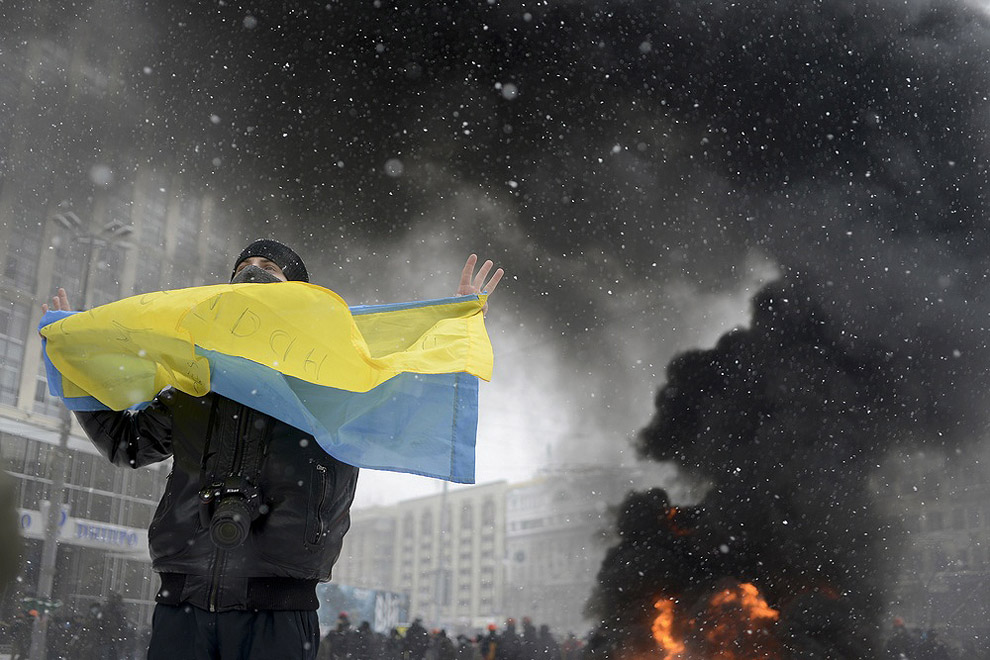
February 20, Kiev: new Maidan or build up to civil war?

From Fort Russ
February 17, 2017 –
By Eduard Popov for Fort Russ – translated by J. Arnoldski –


On February 16th, Zoryan Shkiryak, an adviser to the minister of internal affairs of Ukraine, appealed to block Odnoklassniki and VKontakte social networks in the country. In his opinion, this is necessary to defend the Ukrainian info-field. Parallel to this, Anton Gerashchenko, an assistant to the minister of internal affairs and a Verkhovna Rada deputy, accused Russia of preparing to blockade railway lines with the republics of Donbass, which is actually being carried out by members of neo-Nazi gangs headed by Rada deputy Parasyuk.
These statements by “Avakov’s clowns” (the words of Mikhail Pogrebinsky, a leading Ukrainian political analyst) were, without a doubt, coordinated and focused on one goal: preventing the recurrence of a new Maidan in Kiev. More precisely: not allowing a Maidan created by competitors.
A number of Ukrainian organizations intend to hold protests on February 20th, the third anniversary of the Maidan’s victory. In particular, the NAZHDAK movement which is positioning itself as an “anti-oligarch association of the common people” is set to protest. The Radical Right Forces movement has also stated its participation, as have the “federation of small businesses,” an association of failed banks (headed by the leader of NAZHDAK, Nikolay Dulsky), and the military wing of the neo-Nazi Ukrainian National Assembly-Ukrainian National Self-Defense.
Nikolay Dulsky has appealed to his followers and other potential protest participants with the call to bring officially registered weapons. The aim is the overthrow of the treacherous Poroshenko and Groysman government. Characteristically enough, the organization’s VKontakte page speaks in detail of its relations with Azov, whose leader is Verkhovna Rada deputy Andrey Biletsky. Azov, in Dulsky’s opinion, is nothing but a pet of Avakov in his service.
In this regard, the statements of Shkiryak and Gerashchenko are not random, but are aimed at (1) competitors’ organizations (not associated with the interior ministry like Azov and its offshoots) and (2) Russian social networks. The current Ukrainian government, and especially the interior ministry, remember the massive organizing role played in the Euromaidan by social networks, and first and foremost VKontakte. During the days of the Maidan, the Right Sector group grew to number as many as 600,000 people. But the call to close Russian social networks is being sounded now, not three years ago, for an obvious reason: the government is afraid of a repetition of the events of three years. 
Appeals to go out onto the Maidan on February 20th are essentially an announcement of plans to overthrow the new government. However, it is by no means evident that this overthrow will happen on February 20th, since the Ukrainian neo-Nazis opposed to the current internal minister simply lack sufficient resources. But as a training and mobilization all, this action fits perfectly. On the other hand, the government will also have a wonderful opportunity to practice dispersing a new Maidan.
Already now, based on “Avakov’s clowns’” statements, it is obvious that the ruling regime has chosen an easy formula: declare militants striving to overthrow the legal government “agents of Putin” operating with the help of Russian social networks.
The West “does not notice” violations of freedom of speech in Ukraine or the literally bloody dispersal of protesters. Therefore, I am skeptical of the possibilities of a new Maidan in Ukraine. More likely is a second scenario in which the disease will be pushed deeper and, as a result, protest energy will later explode into a civil war. The fire of civil war has already been smoldering for three years. The bloody suppression of rallies in Kiev, the dispersal of “blockade” participants in Donbass, and a number of related operations, might ignite this. And then the war against Donbass will spill over into Ukraine and turn into a civil war. 

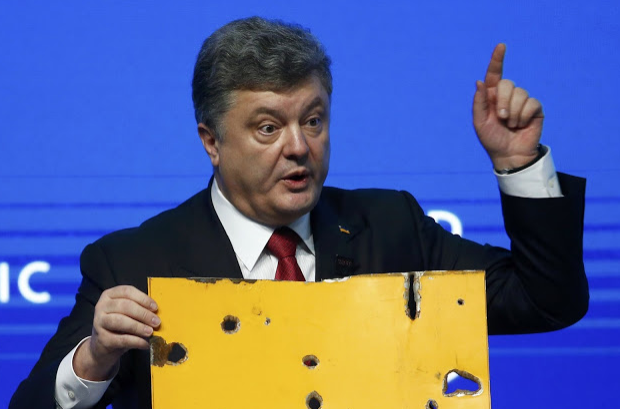
Ukraine’s grid under cyber-attack, according to Poroshenko

From Fort Russ
February 17, 2017
Sebastien HAIRON in Peuples-Libres-nouvelle-russie, translated by Tom Winter –

Le Figaro relays this despatch of Reuters which tells us that Russian hackers have broken in to Ukraine’s power grid! Really !

Except that in this case it is just once again the Kiev regime blaming Russia for Ukraine’s internal problems since the coming to power of the pro-Western putschist junta. Indeed, veterans of the army with the complicity of the neo-Nazi gang decided to organize a blockade of the Donbass on January 25 by blocking, in particular, the railways for the coal trains that deliver the coal essential to the operation of the Ukrainian power stations. Source: Pravda Ukraine

The state of Energy Emergency was set up by the Ukrainian government following this internal crisis. There would be only 14 to 100 days left of coal to allow their power stations to stay in operation.

The Figaro and Reuters (not the only ones) by relaying this vulgar propaganda worthy of a bad soap opera, thus absolve in advance the negligence into which Ukraine has fallen since the Kiev putsch of 2014. For if, unfortunately, some power stations were to cease functioning as a result of this blockade, all eyes will inevitably be directed against the ugly Russian hackers rather than against the Kiev regime.

They have been trotting out Russian hackers for months:

  1. Russian hackers elected Trump — at least in the mainstream press.
  2. Russian hackers are hijacking power stations in Ukraine.
  3. In France, Russian hackers broke into the site of Emmanuel Macron! Oh yes, this is the latest trendy joke!
  4. The Russian hackers will even threaten the elections in France and Germany!

Now that goes to show you how powerful these Russians are!

To get back to this blockade: who can make me believe that the police and the Ukrainian army can’t get this little mob off the railroad ??? RFI [Radio France International] Kiev is using these useful idiots to once again to clash with Russia and increase international pressure against Vladimir Putin. He is no longer a president, but an octopus!

http://www.fort-russ.com/2017/02/ukraines-power-emergency-russian-hackers.html

Who benefits if the power grid is shut down? Not Russia. Certainly not with the nuclear reactors next door. Russia has the most to lose.

So who benefits? This is a false flag.

Reuters:

Oleksandr Tkachuk, Ukraine’s security service chief of staff, said at a press conference that the attacks were orchestrated by the Russian security service with help from private software firms and criminal hackers, and looked like they were designed by the same people who created malware known as “BlackEnergy.”

…He said the attacks employed a mechanism dubbed “Telebots” to infect computers that control infrastructure.

Slovakian cyber-security firm ESET used the same name in December to identify the hacking group responsible for attacks on Ukraine’s financial sector and energy industries.

ESET said it believed that Telebots had evolved from BlackEnergy, a hacking group that attacked Ukraine’s energy industry starting in December 2015 [on December 23].

The December 23, 2015 attack was a highly coordinated attack on a day that the hackers perhaps deemed significant.  If so, that would indicate a EU or U.S. team responsible for the hack; they celebrate Christmas on December 24-25, and probably think everyone else does, too. Ukraine celebrates Christmas in January, and any Ukrainian and Russian would know that.

Other suspects are the oligarchs and their minions who fight against each other, and the militias in the West of Ukraine angling for control of Kiev.

The blockade and new internal productivity in Donbass

Reporter: About the new coal bed we opened, it seems that we don’t have anywhere to sell coal.

Alexander Zakharchenko: Why? We have our power plants that gladly accept this coal. We’ll get electric power and provide our homes with it. Our homes will be bright, warm, and comfortable…

Reporter: How long can we stand the blockade?

Zakharchenko: For 2 1/2 years we’ve already been living within the blockade…Despite whether there is or is not a blockade, they only make it worse for themselves. If idiocy were considered a sickness, everyone there already needs therapy.

…It’s their enterprises that are suffering. There is lack of spirit and lack of leaders.

Interview with Alexander Zakharchenko, leader of the DPR

From Fort Russ

February 17, 2017 – Fort Russ News –
– Christelle NEANT, in DONiPRESS, translated by Tom Winter
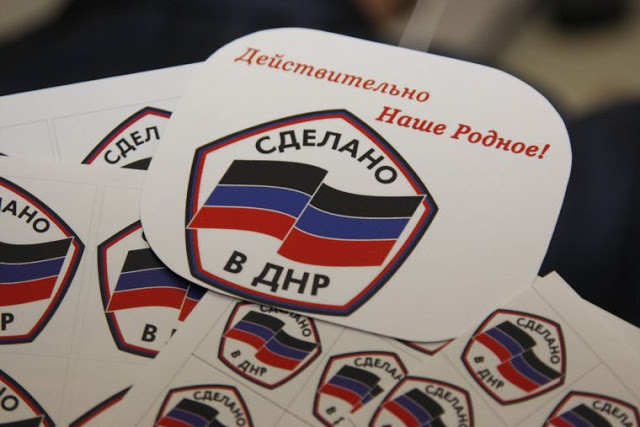
In small letters: “Truly our own.” In shield: “Made in the DPR”

For several weeks, neo-Nazis and other Ukrainian radicals have been blocking the rails that bring coal from Donbass to Ukraine. The coal necessary for the Ukrainian power stations providing about 40% of the country’s electricity. The Donbass alone supplies 37.5% of the coal used by these power stations.

Since the blockade has been total for five days, stockpiles at Ukrainian power plants now only cover 14 to 45 days of consumption, forcing the Ukrainian authorities to declare an energy emergency, and to consider rollng power outages to face the shortage.

The situation is so catastrophic that the EU has just brutally woken up and has called for an end to the commercial blockade of the Donbass.

Should we laugh or cry in the face of the very late awakening of the “European elites” in the face of a situation that has been going on for almost three years and whose radicalization has just revealed the whole danger, and not just for Ukraine?

For we must not deceive ourselves. If the EU reacts it is not for the beautiful eyes of the Ukrainians, that they do not care a fig about. No, if the EU reacts, it’s because the risk of collapse of the Ukrainian electricity grid would have terrible consequences for the neighboring countries, which are part of the EU, and would end up paying for the broken china of their Russiaphobic policies that border on the most profound idiocy.

Faced with this situation, the response of the leader of the RPD, Alexander Zakharchenko, is not lacking spice:

He wished to point out that the coal produced in the two peoples republics always had a secure outlet: the local market. The two republics have coal-fired power stations which supply them with electricity. Power plants that consume locally produced coal.

Continue reading

A documentary you’ll likely never see: “Ukraine on Fire” by Oliver Stone

Trailer

Neo-Nazis are being used by the Ukrainian Government,

“That whole process was headquartered in the US  Embassy” (former Ukraine president Yanukovitch)

Nobody should feel safe today… 

Global Research, February 14, 2017
Consortiumnews 13 February 2017
0

It is not very often that a documentary film can set a new paradigm about a recent event, let alone, one that is still in progress. But the new film Ukraine on Fire has the potential to do so – assuming that many people get to see it.

Usually, documentaries — even good ones — repackage familiar information in a different aesthetic form. If that form is skillfully done, then the information can move us in a different way than just reading about it.

A good example of this would be Peter Davis’s powerful documentary about U.S. involvement in Vietnam, Hearts and Minds. By 1974, most Americans understood just how bad the Vietnam War was, but through the combination of sounds and images, which could only have been done through film, that documentary created a sensation, which removed the last obstacles to America leaving Indochina.

Ukraine on Fire has the same potential and could make a contribution that even goes beyond what the Davis film did because there was very little new information in Hearts and Minds. Especially for American and Western European audiences, Ukraine on Fire could be revelatory in that it offers a historical explanation for the deep divisions within Ukraine and presents information about the current crisis that challenges the mainstream media’s paradigm, which blames the conflict almost exclusively on Russia.

Key people in the film’s production are director Igor Lopatonok, editor Alex Chavez, and writer Vanessa Dean, whose screenplay contains a large amount of historical as well as current material exploring how Ukraine became such a cauldron of violence and hate. Oliver Stone served as executive producer and conducted some high-profile interviews with Russian President Vladimir Putin and ousted Ukrainian President Viktor Yanukovych.

The film begins with gripping images of the violence that ripped through the capital city of Kiev during both the 2004 Orange Revolution and the 2014 removal of Yanukovich. It then travels back in time to provide a perspective that has been missing from mainstream versions of these events and even in many alternative media renditions.

A Longtime Pawn

Historically, Ukraine has been treated as a pawn since the late Seventeenth Century. In 1918, Ukraine was made a German protectorate by the Treaty of Brest Litovsk. Ukraine was also a part of the Molotov-Ribbentrop Pact of 1939 signed between Germany and Russia, but violated by Adolf Hitler when the Nazis invaded the Soviet Union in the summer of 1941.

German dictator Adolf Hitler

The reaction of many in Ukraine to Hitler’s aggression was not the same as it was in the rest of the Soviet Union. Some Ukrainians welcomed the Nazis. The most significant Ukrainian nationalist group, Organization of Ukrainian Nationalists (OUN), had been established in 1929. Many of its members cooperated with the Nazis, some even enlisted in the Waffen SS and Ukrainian nationalists participated in the massacre of more than 33,000 Jews at Babi Yar ravine in Kiev in September 1941. According to scholar Pers Anders Rudling, the number of Ukrainian nationalists involved in the slaughter outnumbered the Germans by a factor of 4 to 1.

But it wasn’t just the Jews that the Ukrainian nationalists slaughtered. They also participated in massacres of Poles in the western Ukrainian region of Galicia from March 1943 until the end of 1944. Again, the main perpetrators were not Germans, but Ukrainians.

According to author Ryazard Szawlowksi, the Ukrainian nationalists first lulled the Poles into thinking they were their friends, then turned on them with a barbarity and ferocity that not even the Nazis could match, torturing their victims with saws and axes. The documentary places the number of dead at 36,750, but Szawlowski estimates it may be two or three times higher.

OUN members participated in these slaughters for the purpose of ethnic cleansing, wanting Ukraine to be preserved for what OUN regarded as native Ukrainians. They also expected Ukraine to be independent by the end of the war, free from both German and Russian domination. The two main leaders in OUN who participated in the Nazi collaboration were Stepan Bandera and Mykola Lebed. Bandera was a virulent anti-Semite, and Lebed was rabidly against the Poles, participating in their slaughter.

After the war, both Bandera and Lebed were protected by American intelligence, which spared them from the Nuremburg tribunals. The immediate antecedent of the CIA, Central Intelligence Group, wanted to use both men for information gathering and operations against the Soviet Union. England’s MI6 used Bandera even more than the CIA did, but the KGB eventually hunted down Bandera and assassinated him in Munich in 1959. Lebed was brought to America and addressed anti-communist Ukrainian organizations in the U.S. and Canada. The CIA protected him from immigration authorities who might otherwise have deported him as a war criminal.

The history of the Cold War was never too far in the background of Ukrainian politics, including within the diaspora that fled to the West after the Red Army defeated the Nazis and many of their Ukrainian collaborators emigrated to the United States and Canada. In the West, they formed a fierce anti-communist lobby that gained greater influence after Ronald Reagan was elected in 1980.

Important History

This history is an important part of Dean’s prologue to the main body of Ukraine on Fire and is essential for anyone trying to understand what has happened there since the collapse of the Soviet Union in 1991. For instance, the U.S.-backed candidate for president of Ukraine in 2004 — Viktor Yushchenko — decreed both Bandera and Lebed to be Ukrainian national heroes.

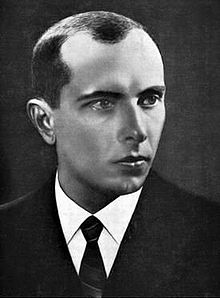
Stepan Bandera, a Ukrainian ultra-nationalist and Nazi collaborator.

Bandera, in particular, has become an icon for post-World War II Ukrainian nationalists. One of his followers was Dmytro Dontsov, who called for the birth of a “new man” who would mercilessly destroy Ukraine’s ethnic enemies.

Bandera’s movement was also kept alive by Yaroslav Stetsko, Bandera’s premier in exile. Stetsko fully endorsed Bandera’s anti-Semitism and also the Nazi attempt to exterminate the Jews of Europe. Stetsko, too, was used by the CIA during the Cold War and was honored by Yushchenko, who placed a plaque in his honor at the home where he died in Munich in 1986. Stetsko’s wife, Slava, returned to Ukraine in 1991 and ran for parliament in 2002 on the slate of Yushchenko’s Our Ukraine party.

Stetsko’s book, entitled Two Revolutions, has become the ideological cornerstone for the modern Ukrainian political party Svoboda, founded by Oleh Tyahnybok, who is pictured in the film calling Jews “kikes” in public, which is one reason the Simon Wiesenthal Center has ranked him as one of the most dangerous anti-Semites in the world.

Another follower of Bandera is Dymytro Yarosh, who reputedly leads the paramilitary arm of an even more powerful political organization in Ukraine called Right Sektor. Yarosh once said he controls a paramilitary force of about 7,000 men who were reportedly used in both the overthrow of Yanukovych in Kiev in February 2014 and the suppression of the rebellion in Odessa a few months later, which are both fully depicted in the film.

This historical prelude and its merging with the current civil war is eye-opening background that has been largely hidden by the mainstream Western media, which has downplayed or ignored the troubling links between these racist Ukrainian nationalists and the U.S.-backed political forces that vied for power after Ukraine became independent in 1991.

The Rise of a Violent Right

Continue reading

L’UE exhorte à lever le blocus commercial du Donbass

Sputnik

16.02.2017

Un blocus du Donbass au lieu d'une aide

Face à la perspective des coupures d’électricité tournantes en Ukraine, l’Union européenne s’est enfin aperçue du blocus commercial du Donbass, Kiev n’en recevant plus la houille anthracite absolument nécessaire pour les centrales ukrainiennes.

Le blocus commercial du Donbass viole les droits des Ukrainiens habitant sur les territoires qui échappent actuellement au contrôle de Kiev et risque de déclencher une crise énergétique dans le pays, prévient, dans un communiqué, la représentation de l’Union européenne en Ukraine, ajoutant que les organisateurs du blocus doivent le lever immédiatement.

« Le blocus du Donbass par l’Ukraine contredit l’approche inclusive envers les Ukrainiens habitant sur les territoires où les organes du pouvoir n’exercent pas provisoirement leurs fonctions. Les responsables du lancement du blocus doivent le lever immédiatement. Quant aux autorités, elles doivent régler ce problème au plus vite », lit-on dans le communiqué, cité par Sputnik.

Il s’agit en l’occurrence du blocus de la communication ferroviaire avec le Donbass qui se poursuit depuis fin janvier, quand un groupe d’anciens combattants des bataillons de volontaires, qui avaient participé aux hostilités dans le sud-est de l’Ukraine, et de députés de la Rada suprême (parlement ukrainien), a barré le trafic sur la ligne de chemin de fer. Les organisateurs du blocus ont affirmé que tout commerce avec les Républiques populaires autoproclamées de Donetsk (DNR) et de Lougansk (LNR) était illégal, et que toutes les marchandises transportées relevaient par conséquent de la contrebande.

Le blocus ferroviaire a débouché sur des problèmes de livraison de houille anthracite depuis le Donbass, engendrant des difficultés dans le secteur énergétique de l’Ukraine. Comme résultat, Kiev envisage d’ores et déjà des coupures d’électricité tournantes dans la plupart des régions du pays.

https://fr.sputniknews.com/international/201702161030122172-ue-blocus-donbass-levee-commerce-kiev/