Washington considers military action against North Korea to force “regime change”

Global Research, March 12, 2017
What’s Left 7 March 2017

The White House is considering “possible military action to force regime change” in North Korea, another in a long succession of threats Washington has issued against Pyongyang, piled atop unremitting aggression the United States has directed at the country from the very moment of its birth in 1948.

In addition to direct military action from 1950 to 1953 against the Democratic People’s Republic of Korea (the country’s official name), US aggression has included multiple threats of nuclear annihilation, and the deployment of tactical nuclear weapons into South Korea until 1991. Re-deployment is now under consideration in Washington.

Most US nuclear threats against Pyongyang were made before North Korea embarked upon its own nuclear weapons program, and constitute one of the principal reasons it did so. The country’s being declared an original member of the Bush administration’s Axis of Evil, along with Iraq and Iran, provided an additional impetus.

US aggression against Gaddafi’s Libya, after the Arab and African nationalist leader abandoned his country’s nuclear weapons program in a failed effort at an entente with the West, only affirmed Pyongyang’s view that its decision to acquire a nuclear deterrent was sound and imperative. To make Gaddafi’s blunder would be to commit suicide.

North Korea has additionally been menaced by annual US-directed war games involving hundreds of thousands of troops, carried out along North Korea’s borders. While US officials describe the twice yearly assembling of significant military forces within striking range of the DPRK as routine and defensive, it is never clear to the North Korean military whether the US–directed maneuvers are defensive exercises or preparations for an invasion. Accordingly, the exercises are objectively minatory.

US officials have described Russian war games along Russia’s western border as “provocations” and as a sign of Russian “aggression.” One US official said, “The Russians have been doing a lot of snap exercises right up against the borders, with a lot of troops. From our perspective, we could argue this is extraordinarily provocative behavior.” And yet when US and South Korean troops do the same, right up against North Korea’s borders, their actions are deemed routine and defensive. (Threats made routinely, it should be noted, do not become non-threats simply because they are routine.)

On top of military aggression, the United States has added economic aggression to its decades-long quest to bring about regime change in North Korea. For almost seven decades Washington has led a campaign of economic warfare against the DPRK, designed to do what economic sieges are always intended to do: make the lives of ordinary people sufficiently straitened and miserable that they rise in revolt against their own government.

While the United States struts around the globe as the self-proclaimed champion of democracy, while counting kings, emirs, sultans and military dictators among its closest allies, it has imposed sanctions on North Korea for the most profoundly undemocratic reason. A US Congressional Research Service 2016 report, “North Korea: Economic Sanctions,” enumerates a detailed list of economic penalties imposed on North Korea for having the temerity to operate a “Marxist-Leninist” economy contrary to Washington’s Wall Street-approved economic prescriptions. Hence, the United States wages economic warfare on people in other lands because it doesn’t like the decisions they make about how to organize their own economic lives (and more to the point, because those decisions fail to comport with the profit-making interests of corporate America, the only sector of the United States whose voice matters in US policy.) What could be more hostile to democracy—and more imperialist—than that?

The US decision to consider military action against North Korea to force regime change may be considered a response to Pyongyang’s “threats,” but the DPRK, regardless of its bluster, has never posed a threat to the physical safety of the United States. It is far too small (its population is only 25 million) and too weak militarily (its annual defense spending is less than $10 billion, swamped by the Himalayan military outlays of its adversaries, from South Korea’s $36 billion to Japan’s $41 billion to the United States’ $603 billion), to pose a significant threat, or even a derisory one. Moreover, it is totally devoid of the means to convey a military force to US soil, lacking long range bombers and a capable navy.

To be sure, Pyongyang may have developed ICBMs capable of reaching the United States, and it may have acquired the know-how to miniaturize nuclear warheads that can be carried atop them, but the notion that Pyongyang would undertake an offensive strike against the United States is risible. Doing so would be tantamount to a porcupine tangling with a mountain lion. Since porcupines have no hope of defeating mountain lions, and would be mangled in the attempt, they avoid confrontations with them. They do, however, have self-defensive quills—the equivalent of North Korea’s nuclear arms and ballistic missile programs—to deter mountain lions, and other predators, from tangling with them.

North Korea is often criticized for being a garrison state, closed off to the outside world, yet its insularity can be understood as an imperative of surviving as an independent, sovereign state, in a world in which the United States insists on exercising global “leadership” (i.e., denying other countries their sovereignty) and using its military supremacy to coerce the world to fall into step behind its leadership of the global economy.

Washington has been waging a cyber-war against North Korea, which it is speculated may be responsible for a string of missile test launch failures which recently plagued the DPRK’s missile program, and additionally explains why the country’s leadership is chary about openness. You don’t facilitate sabotage of your own country by opening up to a hostile government that is committed to your demise. And should there be any illusions about what Washington’s intentions are, consider the words of John R. Bolton. In 2003, Bolton was the US under secretary of state for arms control. Asked by New York Times’ reporter Christopher Marquis what Washington’s policy on North Korea was, Bolton “strode over to a bookshelf, pulled off a volume and slapped it on the table. It was called ‘The End of North Korea.’” “‘That,’ he said, ‘is our policy.’” North Korea’s nuclear arms and missile programs have nothing whatever to do with Washington’s desire to bring about the end of North Korea, since this has been US policy since 1948, the year the DPRK was founded, long before Pyongyang embarked on developing nuclear weapons and the means of delivering them. Instead, the reasons for Washington’s hostility lie in economics and Pyongyang’s refusal to submit to US leadership.

Next month, South Korea will significantly increase the rewards it pays to defectors from the north who treasonously disclose state secrets or surrender military equipment. High-ranking North Korean officials will receive $860,000 for defecting and selling out their compatriots, while pilots will be offered the same to fly their warplanes to South Korea. Sailors who surrender their warships to Seoul will also receive $860,000. At the same time, payouts from $43,000 to $260,000 will be handed to North Korean military personnel who defect, if they bring with them lesser weapons, such as tanks or machine guns.

South Korea, in contrast to the much-threatened North, is a US neo-colonial appendage which hosts tens of thousands of US troops on its soil, ostensibly for protection against the DPRK, even though North Korea is weaker militarily than its peninsular counterpart, has less advanced equipment and weapons systems, and its military outlays are only one-quarter of Seoul’s. South Korea denies itself sovereign control of its own military, yielding to de jure US command in times of emergency, and de facto US control otherwise. This reflects the history of the country. It began as a regime of collaborators with the Japanese, who shifted their collaboration to their new American overlords at the end of the Second World War. Meanwhile, to the north, it was guerrillas who fought Japanese colonization, and committed their lives to the manumission of Korea from foreign control, who founded the government in Pyongyang. Then as now, one half of the Korean peninsula exhibited a prickly independence, while the elite of the other half kow-towed to an imperialist behemoth (in contradistinction to a grassroots guerilla movement in the south that sought, unsuccessfully, to throw off the yoke of oppression by collaborationist governments and their US suzerain.)

South Korea’s hostility to its pro-independence northern neighbor, along with the United States’ nearly seven full decades of overt aggression against the DPRK, is directly responsible for the North Korean state’s closed, garrisoned, and authoritarian character. The country’s anti-liberal democratic orientation is not an expression of an ideological preference for police state rule, but an adaptation to a geopolitical reality. The nature of the North Korean state, its military strategy, and its nuclear weapons and missile programs, are consequences of its ideological commitment to independence intersecting with the difficulties of charting an independent course in the midst of hostile and much stronger neighbors whose US patron insists on North Korean submission.

When the infant Bolshevik state was surrounded by enemies who were stronger than the Bolsheviks by many orders of magnitude, Lenin argued that allowing the revolution’s enemies freedom of political organization would be self-defeating. “We do not wish to do away with ourselves by suicide and therefore will not do this,” the Bolshevik leader averred. North Korea’s voluntarily making over itself into an unrestricted liberal democracy—an open society—would likewise imperil the Korean nationalist project and amount to a self-engineered demise.

The DPRK is also criticized for being an economic basket-case, though its economic travails are almost invariably exaggerated. Nevertheless, nearly seven full decades of economic warfare and the imperatives of maintaining a military strong enough to deter the aggression of hostile neighbors and their imperialist patron must necessarily take a toll. Trying to bankrupt the DPRK by imposing on it trade sanctions, working to cut Pyongyang off from the world financial system, and maneuvering the country into a position where it has been forced to spend heavily on self-defense to survive (Pyongyang allocates an estimated 15%-24% of its GDP to defense compared to South Korea’s 2.6% and the United States’ 3.3%), and then attributing its economic difficulties to its “non-market” economy, as Washington has done, is dishonest in the extreme.

Perhaps it’s a measure of how bellicose the United States is that its threats of war are treated as sufficiently routine that they can be casually mentioned in the press without arousing much attention or protest. According to one calculation, the United States has been at war for 224 of its 241 years of existence. Against the background of its unceasing and devoted worship of Mars, Washington’s review of the merits of becoming embroiled in yet another war makes the latest eruption of belligerence an accustomed spectacle. This may explain the quietude with which the possibility of US military action against North Korea has been met. Contributing to the quiescence is the reality that war with the DPRK would require no direct participation from the vast majority of US citizens, short of their applauding from the sidelines. This, combined with North Korea’s total demonization, makes military action (should it be carried out) easy for the US public to accept, or at least to push it to the margins of its awareness.

The revelation that the White House is considering military action against its long-standing victim was casually tucked away in a Wall Street Journal article, and was thought so inconsequential as not to merit inclusion in the headline. Instead, the article’s headline mentioned that North Korea had fired “four ballistic missiles into waters off coast, South Korea says,” in keeping with the portrayal of the DPRK as a signal menace. Accordingly, the announcement of a considered US military strike on North Korea could be positioned as a legitimate response to an alleged North Korean provocation, rather than North Korea’s test firing of ballistic missiles being presented more reasonably as a legitimate reaction to nearly seven full decades of US belligerence.

Some liberals, worried by the increased tempo of US saber-rattling against Pyongyang, adjure Washington to negotiate a peace treaty with the DPRK, in exchange for North Korea undertaking Gaddafi’s folly and dismantling its nuclear weapons and ballistic missile programs. The idea that the United States reciprocate is never considered and is seen as Quixotic. The preferred arrangement is one of a nuclear weapons apartheid where the United States and its subalterns keep their nuclear arms as a “self-evident” necessity of self-defense and a bulwark against “nuclear blackmail,” while the rest of the world is expected to voluntarily submit to the nuclear weapons blackmail of the United States and the established members of the nuclear weapons club.

However, almost equally Quixotic is the idea that the DPRK will relinquish its nuclear arms and the means of delivering them. The United States has unintentionally created conditions which make a North Korean nuclear weapons program almost inevitable, and perfectly sound from Pyongyang’s point of view. For a nuclear deterrent not only forces Washington to exercise extreme circumspection in the deployment of its military assets against the DPRK, it also allows Pyongyang to reduce its expenditures on conventional deterrence, freeing up resources for its civilian economy. Nuclear weapons are cost-effective. This thinking is implicit in North Korea’s “Byungjin policy, “the “two-track program’ of building the economy and nuclear weapons, defined in the resolution adopted by the 7th Congress of the Korean Workers’ Party in May as its ‘permanent strategic course.’”

James Clapper, the former head of US intelligence, told the Wall Street-directed foreign policy think tank, The Council on Foreign Relations, to forget about negotiating a nuclear deal with Pyongyang. “I think the notion of getting the North Koreans to denuclearize is probably a lost cause,” said Clapper last October. “They are not going to do that. That is their ticket to survival. And I got a good taste of that when I was there about how the world looks from their vantage. And they are under siege…So the notion of giving up their nuclear capability, whatever it is, is a nonstarter with them.

“So an Iranian kind of negotiation that would put a cap or suspend is not—your experience in diplomacy is that it’s not likely to happen,” he was asked.

Clapper replied; “I don’t think so.”

Ukraine military takes losses after botched sea attack on DPR

March 12th, 2017 – Fort Russ News –
– DNR News – translated by J. Flores –

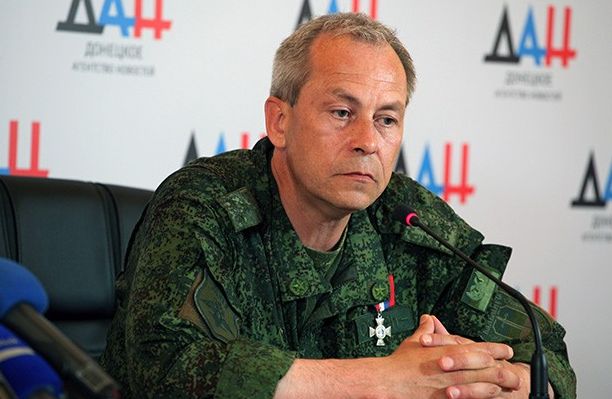
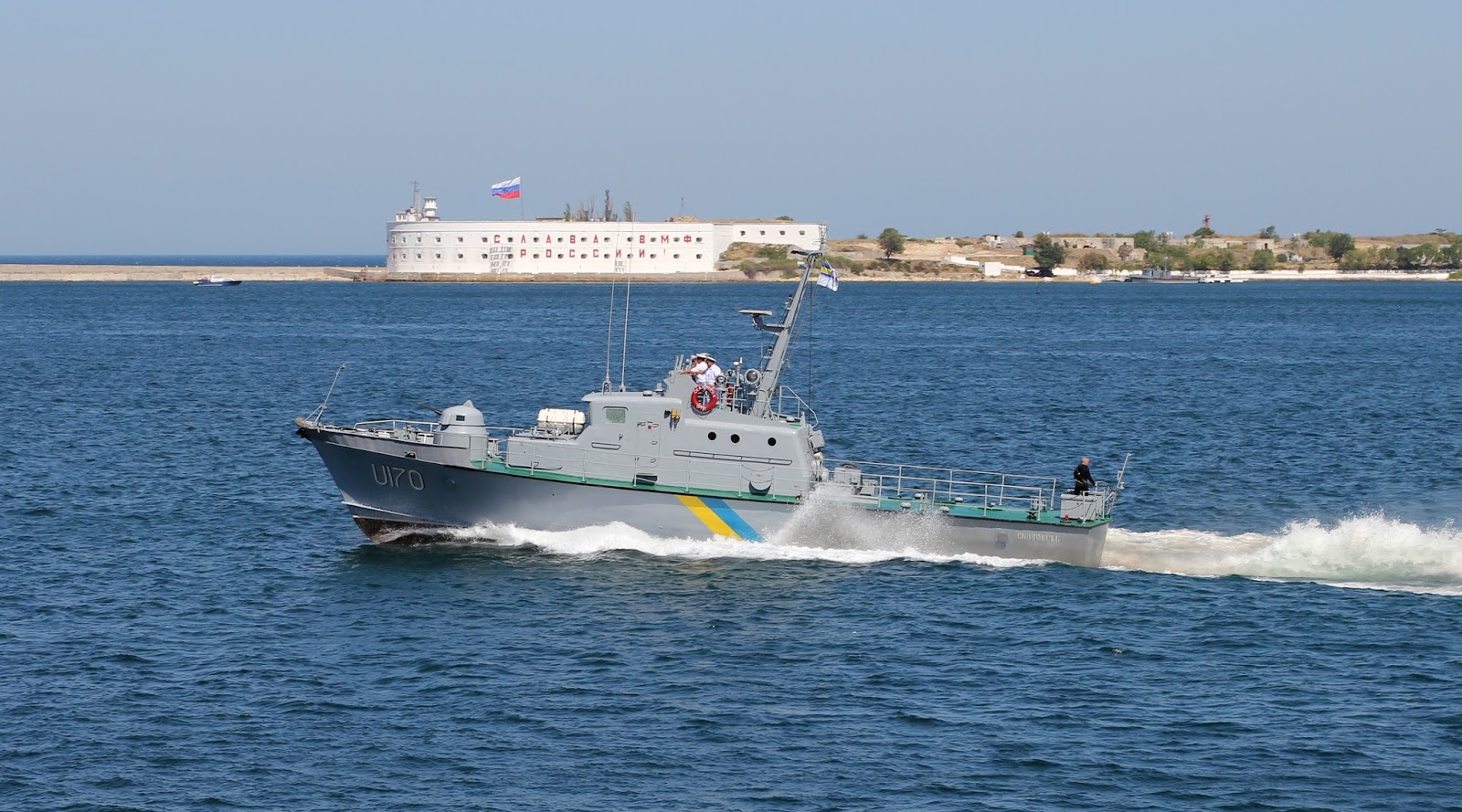
Ukrainian security forces tried to attack the Donetsk People’s Republic from positions on the coast of the Azov Sea from two army combat boats. This was reported today by the deputy commander of operations of the DPR, Eduard Basurin.

“Yesterday, on the orders of the commander of nautical center 73 of special operations of the Ukrainian Navy, 1st  Captain Eduard Shevchenko, two combat boats entered the territorial waters of the DPR in the area of the village of Bezymemnoye for reconnaissance and provocation, by opening of fire on our positions. We had to return fire with small arms and anti-tank, resulting in one of the boats being seriously damaged and was towed today “, said the deputy commander.
According to him, after an unsuccessful attack, the enemy saw two killed and three wounded.
“The lamentable result of the hasty action  of the UAF command again resulted in the senseless loss of life of Ukrainian servicemen”, concluded Eduard Basurin.

Turks shell Syrian village as Russian humanitarian aid convoy arrives

March 11th, 2017 – Fort Russ News –
RusVesna – – translated by Samer Hussein –


The portal “RusVesna” has obtained an exclusive footage of a village in the Syrian province of Aleppo that is being shelled by the Turkish forces right in the moment as the Russian aid convoy arrives.

On March 8th, 2017 the Russian humanitarian convoy left the city of Aleppo for the town of Ajami, located in the countryside of Manbij, east of Aleppo. The footage shows the arrival of the Russian Ministry of Defense humanitarian convoy at the building of the police station in the outskirts of the town of Ajami.
During the reconnaissance of the area, the Turkish forces launched heavy artillery shelling right next to the convoy.

Despite the difficult circumstances, the commander of the Center for the Reconciliation of the Warring Parties of the City of Aleppo decided to proceed in order to reach the destination and continue with reconnaissance of the area.

Local residents – Arabs, who spoke to RusVesna, said they were members of the Syrian Democratic Forces and that they hate Erdogan and are ready to fight for the liberation of Syria from the occupation by Turkey and the terrorist groups.

“We, the Syrians, are united and stand for Bashar Al Assad! We are here to liberate Syria from terrorism and the Turkish occupation. They all want to destroy Syria, but we, the Syrian people, are against Turkey and its President Erdogan. Erdogan and the heads of Arab states are traitors, they want to sell to Syria and bathe in the Syrian people’s blood. We, the Syrian people are fighting for a united Syria and for our President Bashar al-Assad! Russia, Thank you, Russia!”, they were heard saying.

http://www.fort-russ.com/2017/03/turks-shell-syrian-village-as-russians.html

Lugansk Investigation: Ukrainian captive names Motorola’s killer

March 11, 2017 – Fort Russ News –
RIA Novosti – translated by J. Arnoldski –
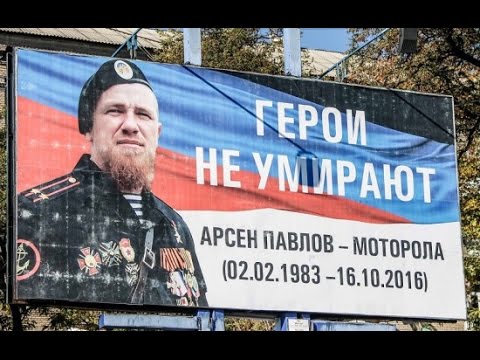
“Heroes don’t die. Arsen Pavlov – Motorola”
One of the saboteurs arrested in the Lugansk People’s Republic has named the killer of the Donetsk People’s Republic’s Sparta battalion commander, Arsen Pavlov, widely known by his codename “Motorola.” 
This comes on the heels of the LPR Ministry of Internal Affairs and Ministry of State Security’s report on the arrest of servicemen from Ukraine’s 8th special forces regiment on suspicion of involvement in the assassination of People’s Militia commander Oleg Anashchenko and other terrorist attacks.
Ivan Deev, one of those arrested, confessed in a video clip presented to RIA Novosti by the LPR’s security ministry: “I can also confirm that when I was in Khmelnitsky in the 8th regiment of Ukraine’s special forces, I heard Major Balov, the chief of intelligence, boast that Motorola’s murder was his handiwork.”


According to Deev, Balov once said that he had previously undergone special training for rigging elevator explosives, i.e., the method by which Motorola was assassinated in October 2016. 
[Editor: Where did Balov get this special training?]

Kiev cuts off water to Lugansk

From Fort Russ

March 11, 2017 – Fort Russ News –
By J. Arnoldski
Kiev has cut off water supplies to the Lugansk People’s Republic, the Ministry of Communications of the LPR has reported.
Water supplies from the Western Filtration and Pumping Station were cut off at 3:00 A.M. Although Kiev has said such is the result of an industrial accident, the LPR says that no official documents confirming such have been provided.
The water station in question is on Ukrainian territory and supplies water to Pervomaysk, Stakhanov, Kirovsk, Bryanka, Alchevsk, Perevalsk, Krasny Luch, and Antratsit. 
LPR authorities have warned that changes in water delivery schedules will be implemented in connection with this incident. 
This is not the first time that Ukraine has used water as a weapon against the Donbass republics. Earlier this week, on March 6th, Ukraine cut off supplies from the Petrovsky Pumping Station which supplies water to Slavyanoserbsk and Lugansk. 
According to the LPR’s Lugansk Water Corporation, the republic has reduced its dependency on water supplies from Ukraine to 15%, with approximately 84% of water demand covered by the republic itself. This does not mean, however, that civilians do not suffer when Kiev decides to cut off water and other necessities. Rather, this fits into the larger framework of Ukraine’s war of attrition or psychological warfare against the Donbass republics. 

Protecting the terrorists: U.S. forces come to the rescue of ISIS commanders in Iraq

Global Research, March 11, 2017
FARS News 9 March 2017

Commander of Asa’eb al-Haq Movement affiliated to the Iraqi popular forces of Hashd al-Shaabi said that the US forces have carried out a rapid heliborne operation and evacuated two commanders of ISIL terrorists from Western Mosul in Northern Iraq.

Javad al-Talaybawi said that the US forces carried out the heliborne operation in one of the Western neighborhoods of Western Mosul, evacuating two senior ISIL commanders to an unknown location after the commanders came under siege by Iraqi government forces in intensified clashes in Western Mosul.

“Americans’ support and assistance to the ISIL is done openly to save their regional plan in a desperate attempt,” al-Talaybawi underlined.

Iraq: US Forces Evacuate ISIL Commanders from Western Mosul

Al-Talaybawi had warned late in February that the US forces tried hard to evacuate ISIL commanders from the besieged city of Tal Afar West of Mosul.

After photos surfaced in the media displaying US forces assisting ISIL terrorists, al-Talaybawi said that the Americans were planning to take ISIL commanders away from Tal Afar that is under the Iraqi forces’ siege.

In the meantime, member of Iraqi Parliament’s Security and Defense Commission Iskandar Watut called for a probe into photos and footages displaying US planes airdropping aid packages over ISIL-held regions.

Watut further added that we witnessed several times that US planes dropped packages of food stuff, arms and other necessary items over ISIL-held regions, and called on Iraq’s air defense to watch out the US-led coalition planes.

Eyewitnesses disclosed at the time that the US military planes helped the ISIL terrorists in Tal Afar region West of Mosul.

“We saw several packages dropped out of a US army aircraft in the surrounding areas of the city of Tal Afar in Western Nineveh province and six people also came out of a US plane in the ISIL-controlled areas,” the Arabic-language media quoted a number of eyewitnesses as saying.

Tal Afar city has been under the siege of the Iraqi volunteer forces (Hashd al-Shaabi) for about two months now and the efforts by the ISIL terrorists to help their comrades besieged in Tal Afar have failed so far.

The news comes as the Iraqi army had reported that the US air force has been helping the ISIL terrorists in areas controlled by the terrorist group.

The Iraqi army says that the US army is trying to transfer the ISIL commanders trapped in areas besieged by the Iraqi army to safe regions.

President al-Assad on White Helmets’ film: the West gave al Qaeda an Oscar – “unbelievable…an unprecedented event”

Global Research, March 11, 2017
SANA 11 March 2017
From the interview with China Phoenix TV:

Question 12: Mr. President, as you may be fully aware that the “White Helmets” took an Oscar this year for the best documentary short, but folks are saying that the truth about this “White Helmets” is not like what Netflix has presented, so what is your take on this?

President Assad: First of all, we have to congratulate al-Nusra for having the first Oscar! This is an unprecedented event for the West to give Al Qaeda an Oscar; this is unbelievable, and this is another proof that the Oscars, Nobel, all these things are politicized certificates, that’s how I can look at it. The White Helmets story is very simple; it is a facelift of al-Nusra Front in Syria, just to change their ugly face into a more humanitarian face, that’s it. And you have many videos on the net and of course images broadcasted by the White Helmets that condemn the White Helmets as a terrorists group, where you can see the same person wearing the white helmet and celebrating over the dead bodies of Syrian soldiers. So, that’s what the Oscar went to, to those terrorists. So, it’s a story just to try to prevent the Syrian Army during the liberation of Aleppo from making more pressure on the attacking and liberating the districts within the city that have been occupied by those terrorists, to say that the Syrian Army and the Russians are attacking the civilians and the innocents and the humanitarian people.

Full interview:

http://www.globalresearch.ca/president-al-assad-foreign-troops-coming-to-syria-without-permission-are-invaders/5579060

Syrian President al-Assad: “Foreign troops coming to Syria without permission are invaders” — in-depth interview

Global Research, March 11, 2017
SANA 11 March 2017

Damascus, SANA-President Bashar al-Assad said that the solution to the crisis in Syria should be through two parallel ways: the first one is to fight the terrorists, and this is our duty as government, to defend the Syrians and use any means in order to destroy the terrorists who’ve been killing and destroying in Syria, and the second one is to make dialogue.

The president added in an interview given to Chinese PHOENIX TV that any foreign troops coming to Syria without our invitation or consultation or permission, they are invaders, whether they are American, Turkish, or any other one.

Flowing is the full text of the interview:

Question 1:  Thank you Mr. President for having us here in Dimashq, the capital of Syria. I think this is the first interview you have with Chinese media after the national ceasefire and after so many fresh rounds of talks, both in Astana and in Geneva, and of course after US President Donald Trump’s inauguration, and these days, as we have seen, your troops are making steady progress in battlefields, but peace talks do not seem just as productive. So, as far as the Geneva talks is concerned, your chief negotiator, Mr. Jaafari, was trying hard to find out who should be sitting on the other side of the negotiation table. So, according to your idea, who should be sitting there?

President Assad: This is a very crucial question. If you want those negotiations to be fruitful, we have to ask “who is going to be sitting there?” I mean, there could be a lot of good people with good intentions, but the question is: who do they represent? That’s the question. In this situation, you have different groups, you have people who are, let’s say, patriotic, but they don’t represent anyone, they represent themselves. You have others who represent the terrorists, and you have terrorists on the table, and you have others who represent the agenda of foreign countries like Saudi Arabia, like Turkey, like France, UK and maybe the United States. So, it’s not a homogeneous meeting. If you want it to be fruitful, going back to the first point that I mentioned, it should be a real Syrian-Syrian negotiations. In spite of that, we went to that meeting because we think any kind of dialogue could be a good step toward the solution, because even those people who are terrorists or belonging to the terrorists or to other countries, they may change their mind and go back to their normality by going back to being real Syrians, detach themselves from being terrorists or agents to other groups. That’s why I say we didn’t expect Geneva to produce anything, but it’s a step, and it’s going to be a long way, and you may have other rounds, whether in Geneva or in Astana.

Question 2: But anyway, it is an intra-Syrian talks, right? But the matter of fact is, it is proxy dialogue. I mean, main parties do not meet and have dialogue directly.

President Assad: Exactly.

Journalist: Are you personally satisfied with the current negotiation format or mechanism?

Continue reading

U.S. State Dept. urges coroner to keep Russian UN Ambassador Churkin’s cause-of-death secret

Global Research, March 11, 2017
ZeroHedge 10 March 2017

Following the unexpected death of 65-year-old Russian ambassador to the United Nations Vitaly Churkin, conspiracy theorists were stirred up as the ongoing Russophobic Deep State war combined with the deaths of nine Russian diplomats in the last year raised many coincident-questioning eyebrows. Now, as The Hill reports, pouring further fuel on that fire, the State Department asked the New York Medical Examiner not to publicly release information about Churkin’s cause of death.

“In order to comply with international law and protocol, the New York City Law Department has instructed the Office of Chief Medical Examiner to not publicly disclose the cause and manner of death of Ambassador Vitaly Churkin, Permanent Representative of the Russian Federation to the United Nations,”  Office of Chief Medical Examiner spokesman Julie Bolcer said, according to New York Times reporter Michael Grynbaum.

As outlined in formal requests from the United States Department of State, Ambassador Churkin’s diplomatic immunity survives his death. Further questions concerning this matter should be directed to the United States Department of State.

Initial reports suggested that there was no foul play involved in the incident and that Churkin died from cardiac arrest, but, as a reminder, Churkin was not alone among Russian diplomats who died of ‘heart attacks’:

1. You probably remember Russia’s Ambassador to Turkey, Andrei Karlov — he was assassinated by a police officer at a photo exhibit in Ankara on December 19.

2. On the same day, another diplomat, Peter Polshikov, was shot dead in his Moscow apartment. The gun was found under the bathroom sink but the circumstances of the death were under investigation. Polshikov served as a senior figure in the Latin American department of the Foreign Ministry.

3. Russia’s Ambassador to the United Nations, Vitaly Churkin, died in New York this past week. Churkin was rushed to the hospital from his office at Russia’s UN mission. Initial reports said he suffered a heart attack, and the medical examiner is investigating the death, according to CBS.

4. Russia’s Ambassador to India, Alexander Kadakin, died after a “brief illness January 27, which The Hindu said he had been suffering from for a few weeks.

5. Russian Consul in Athens, Greece, Andrei Malanin, was found dead in his apartment January 9. A Greek police official said there was “no evidence of a break-in.” But Malanin lived on a heavily guarded street. The cause of death needed further investigation, per an AFP report. Malanin served during a time of easing relations between Greece and Russia when Greece was increasingly critiqued by the EU and NATO.

6. Ex-KGB chief Oleg Erovinkin, who was suspected of helping draft the Trump dossier, was found dead in the back of his car December 26, according to The Telegraph. Erovinkin also was an aide to former deputy prime minister Igor Sechin, who now heads up state-owned Rosneft.

If we go back further than 60 days…

7. On the morning of U.S. Election Day, Russian diplomat Sergei Krivov was found unconscious at the Russian Consulate in New York and died on the scene. Initial reports said Krivov fell from the roof and had blunt force injuries, but Russian officials said he died from a heart attack. BuzzFeed reports Krivov may have been a Consular Duty Commander, which would have put him in charge of preventing sabotage or espionage.

8. In November 2015, a senior adviser to Putin, Mikhail Lesin, who was also the founder of the media company RT, was found dead in a Washington hotel room according to the NYT. The Russian media said it was a “heart attack,” but the medical examiner said it was “blunt force injuries.”

9. If you go back a few months prior in September 2016, Russian President Vladimir Putin’s driver was killed too in a freak car accident while driving the Russian President’s official black BMW  to add to the insanity.

If you include these three additional deaths that’s a total of nine Russian officials that have died over the past 2 years that WeAreChange.com’s Aaron Kesel knows of – he notes there could be more.

*  *  *

So why is the State Department now trying to keep Churkin’s cause of death from the public?

Nuclear danger: Donbass blockade organizers warn Kiev all Russian coal supplies may be blocked

This endangers the 19 nuclear reactors in Ukraine because the reactors rely on the electric grid for power to keep reactor cores and fuel rods cool. Without grid power and if there is no back-up power, reactors can explode and melt-down. Chernobyl had one reactor accident. Fukushima had 3 reactors melt down. 19 is unthinkable.

Beside the nuclear issue is the immense suffering of the Ukrainian people due to the energy shortage and the high costs imposed by the Kiev regime on the population for the energy they get. How many in Ukraine have died indirectly from this or actually frozen to death this winter? Will we ever know? 

From Sputnik News

11 March 2017

The organizers of the trade blockade in eastern Ukraine threaten to block all coal imports from Russia.

KIEV (Sputnik) — The organizers of the trade blockade in eastern Ukraine said Friday that they would block all coal imports from Russia beginning from April 2 in case Kiev failed to reach agreements on coal shipments from other countries by that time.

“We give the government time by April 2 to sign the contracts on coal supplies with countries which do not conduct warfare against Ukraine. We give the government time by April 2 to reconsider its trade policy with the aggressor country of Russia,” the blockade’s main organizer, Anatoliy Vynohrodsky, told reporters.

He added that beginning from April 2 the observation stations of the blockade organizers, which are to be established along all the railway transition posts, will begin the blockade’s active phase.

“First of all we will not let coal from Russia pass,” Vynohrodsky pointed out.

Vynohrodsky noted that concerning other supplies from Russia, the blockade organizers would “consult with the Ukrainian people.”In late January, a group of former participants of Ukraine’s military operation in Donbas, including several lawmakers, blocked traffic on several segments of freight rail lines running from the territories uncontrolled by Kiev. The blockade led to irregularities in supplies of anthracite coal from Donbass, leading to power shortages in Ukraine and prompting Kiev to declare an energy emergency.

Kiev’s authorities criticized the actions of the blockade organizers saying that coal shipments from Donbass were legal as coal producing plants located there had been paying taxes to the Ukrainian State Treasury Service. However, no efforts have been undertaken by the Kiev authorities to lift the blockage.

In January 2015, the Ukrainian parliament adopted a statement designating Russia as an aggressor country, as Kiev considered Russia being a party to the military conflict in Donbass. No evidence supporting this statement was provided.

Moscow denounced the statement. Russia repeatedly said it was not part to the Ukrainian conflict, had not provided military equipment to Donbass militia and was interested in the settlement of the Ukrainian crisis.

https://sputniknews.com/europe/201703111051470737-donbass-blockade-block-russia/