U.S. House of Representatives approves HR 5094 — delivery of lethal “defensive” weapons to Ukraine — to murder Donbass residents and threaten Russia

Block HR 5094!
H.R. 5094, The Stability and Democracy for Ukraine Act, or “STAND for Ukraine”  was passed by the House of Representatives by voice vote and referred to the U.S. Senate on September 22..
As Eduard Popov reported in Fort Russ, September 29,
The bill’s list of means for supporting democracy in Ukraine includes the supply of lethal defensive weapons systems. The legislation will come into force following a vote in the Senate and its signing by the US President. From that point on, Washington will be able to officially supply lethal weapons to Ukraine.
Here are excerpts with highlighting from the bill:

114th CONGRESS
2d Session


IN THE SENATE OF THE UNITED STATES

September 22, 2016

Received; read twice and referred to the Committee on Foreign Relations


AN ACT

To contain, reverse, and deter Russian aggression in Ukraine, to assist Ukraine’s democratic transition, and for other purposes.

Be it enacted by the Senate and House of Representatives of the United States of America in Congress assembled,

SECTION 1. SHORT TITLE AND TABLE OF CONTENTS.

(a) Short Title.—This Act may be cited as the “Stability and Democracy for Ukraine Act” or “STAND for Ukraine Act”.

(b) Table Of Contents.—The table of contents for this Act is as follows:

Sec. 1. Short title and table of contents.
Sec. 2. Statements of policy.


Sec. 101. United States policy against recognition of territorial changes effected by force alone.

Sec. 102. Prohibitions against United States recognition of the Russian Federation’s annexation of Crimea.

Sec. 103. Determinations and codification of sanctions under Executive Order No. 13685.


Sec. 201. Prohibiting certain transactions with foreign sanctions evaders and serious human rights abusers with respect to the Russian Federation.

Sec. 202. Report on certain foreign financial institutions.

Sec. 203. Requirements relating to transfers of defense articles and defense services to the Russian Federation.


Sec. 301. Strategy to respond to Russian Federation-supported information and propaganda efforts directed toward Russian-speaking communities in countries bordering the Russian Federation.

Sec. 302. Cost limitation.

Sec. 303. Sunset.

SEC. 2. STATEMENTS OF POLICY.

(a) In General.—It is the policy of the United States to further assist the Government of Ukraine in restoring its sovereignty and territorial integrity to contain, reverse, and deter Russian aggression in Ukraine. That policy shall be carried into effect, among other things, through a comprehensive effort, in coordination with allies and partners of the United States where appropriate, that includes sanctions, diplomacy, and assistance, including lethal defensive weapons systems, for the people of Ukraine intended to enhance their ability to consolidate a rule of law-based democracy with a free market economy and to exercise their right under international law to self-defense.

(b) Additional Statement Of Policy.—It is further the policy of the United States—

(1) to use its voice, vote, and influence in international fora to encourage others to provide assistance that is similar to assistance described in subsection (a) to Ukraine; and

(2) to ensure that any relevant sanctions relief for the Russian Federation is contingent on timely, complete, and verifiable implementation of the Minsk Agreements, especially the restoration of Ukraine’s control of the entirety of its eastern border with the Russian Federation in the conflict zone.

SEC. 101. UNITED STATES POLICY AGAINST RECOGNITION OF TERRITORIAL CHANGES EFFECTED BY FORCE ALONE.

Between the years of 1940 and 1991, the United States did not recognize the forcible incorporation and annexation of the three Baltic States of Lithuania, Latvia, and Estonia into the Soviet Union under a policy known as the “Stimson Doctrine”.

SEC. 102. PROHIBITIONS AGAINST UNITED STATES RECOGNITION OF THE RUSSIAN FEDERATION’S ANNEXATION OF CRIMEA.

(a) In General.—In accordance with United States policy enumerated in section 101, no Federal department or agency should take any action or extend any assistance that recognizes or implies any recognition of the de jure or de facto sovereignty of the Russian Federation over Crimea, its airspace, or its territorial waters.

(b) Documents Portraying Crimea As Part Of Russian Federation.—In accordance with United States policy enumerated in section 101, the Government Printing Office should not print any map, document, record, or other paper of the United States portraying or otherwise indicating Crimea as part of the territory of the Russian Federation.

SEC. 103. DETERMINATIONS AND CODIFICATION OF SANCTIONS UNDER EXECUTIVE ORDER NO. 13685.

(a) Determinations.—

(1) IN GENERAL.—Not later than 90 days after the date of enactment of this Act, the President shall submit to the appropriate congressional committees a report that contains the assessment described in paragraph (2).

(2) ASSESSMENT DESCRIBED.—The assessment described in this paragraph is—

(A) a review of each person designated pursuant to Executive Order No. 13660 (March 6, 2014; 79 Fed. Reg. 13493; relating to blocking property of certain persons contributing to the situation in Ukraine) or Executive Order No. 13661 (March 16, 2014; 79 Fed. Reg. 15535; relating to blocking property of additional persons contributing to the situation in Ukraine); and

(B) a determination as to whether any such person meets the criteria for designation pursuant to Executive Order No. 13685 (December 19, 2014; 79 Fed. Reg. 77357; relating to blocking property of certain persons and prohibiting certain transactions with respect to the Crimea region of Ukraine).

(3) FORM.—The assessment required by paragraph (2) shall be submitted in unclassified form but may contain a classified annex.

(b) Codification.—United States sanctions provided for in Executive Order No. 13685, as in effect on the day before the date of the enactment of this Act, shall remain in effect until the date on which the President submits to the appropriate congressional committees a certification described in subsection (c).

(c) Certification.—A certification described in this subsection is a certification of the President that Ukraine’s sovereignty over Crimea has been restored.

(d) Rule Of Construction.—Nothing in this section shall be construed to restrict the authority of the President to impose additional United States sanctions with specific respect to the Russian Federation’s occupation of Crimea pursuant to Executive Order No. 13685.

A section has frequent references to those who are “contributing to the situation in Ukraine.”

SEC. 201. PROHIBITING CERTAIN TRANSACTIONS WITH FOREIGN SANCTIONS EVADERS AND SERIOUS HUMAN RIGHTS ABUSERS WITH RESPECT TO THE RUSSIAN FEDERATION.

The Support for the Sovereignty, Integrity, Democracy, and Economic Stability of Ukraine Act of 2014 (Public Law 113–95; 22 U.S.C. 8901 et seq.) is amended by adding at the end the following new sections:TITLE IIIOTHER MATTERS

SEC. 301. STRATEGY TO RESPOND TO RUSSIAN FEDERATION-SUPPORTED INFORMATION AND PROPAGANDA EFFORTS DIRECTED TOWARD RUSSIAN-SPEAKING COMMUNITIES IN COUNTRIES BORDERING THE RUSSIAN FEDERATION.

(a) In General.—Not later than 60 days after the date of the enactment of this Act, the Secretary of State shall develop and implement a strategy to respond to Russian Federation-supported disinformation and propaganda efforts directed toward persons in countries bordering the Russian Federation.

(b) Matters To Be Included.—The strategy required under subsection (a) should include the following:

(1) Development of a response to propaganda and disinformation campaigns as an element of the ongoing crisis in Ukraine, specifically—

(A) assistance in building the capacity of the Ukrainian military to document conflict zones and disseminate information in real-time;

(B) assistance in enhancing broadcast capacity with terrestrial television transmitters in Eastern Ukraine; and

(C) media training for officials of the Government of Ukraine.

(2) Establishment of a partnership with partner governments and private-sector entities to provide Russian-language entertainment and news content to broadcasters in Russian-speaking communities bordering the Russian Federation.

(3) Assessment of the extent of Russian Federation influence in political parties, financial institutions, media organizations, and other entities seeking to exert political influence and sway public opinion in favor of Russian Federation policy across Europe.

(c) Report.—The Secretary of State shall submit to the appropriate congressional committees a report on the strategy required under subsection (a) and its implementation.

SEC. 302. COST LIMITATION.

No additional funds are authorized to carry out the requirements of this Act and the amendments made by this Act. Such requirements shall be carried out using amounts otherwise authorized.

SEC. 303. SUNSET.

This Act and the amendments made by this Act shall cease to be effective beginning on the date that is 5 years after the date of the enactment of this Act.

Passed the House of Representatives September 21, 2016.

H. R. 5094

These are the co-sponsors. Original co-sponsors are starred.

Cosponsor

Date Cosponsored

Rep. Kinzinger, Adam [R-IL-16]*

04/28/2016

Rep. Levin, Sander M. [D-MI-9]*

04/28/2016

Rep. Fitzpatrick, Michael G. [R-PA-8]*

04/28/2016

Rep. Kaptur, Marcy [D-OH-9]*

04/28/2016

Rep. Abraham, Ralph Lee [R-LA-5]*

04/28/2016

Rep. Costa, Jim [D-CA-16]*

04/28/2016

Rep. Weber, Randy K., Sr. [R-TX-14]*

04/28/2016

Rep. Deutch, Theodore E. [D-FL-21]*

04/28/2016

Rep. Pompeo, Mike [R-KS-4]*

04/28/2016

Rep. Cicilline, David N. [D-RI-1]*

04/28/2016

Rep. Shimkus, John [R-IL-15]*

04/28/2016

Rep. Keating, William R. [D-MA-9]*

04/28/2016

Rep. Bilirakis, Gus M. [R-FL-12]*

04/28/2016

Rep. Cohen, Steve [D-TN-9]*

04/28/2016

Rep. Ribble, Reid J. [R-WI-8]*

04/28/2016

Rep. Murphy, Tim [R-PA-18]

05/13/2016

Rep. Rush, Bobby L. [D-IL-1]

05/13/2016

Rep. Burgess, Michael C. [R-TX-26]

05/13/2016

Rep. Sherman, Brad [D-CA-30]

05/13/2016

Rep. Poe, Ted [R-TX-2]

05/13/2016

Rep. Kelly, Robin L. [D-IL-2]

05/13/2016

Rep. Boyle, Brendan F. [D-PA-13]

05/13/2016

Rep. Quigley, Mike [D-IL-5]

05/13/2016

Rep. Higgins, Brian [D-NY-26]

05/13/2016

Rep. Slaughter, Louise McIntosh [D-NY-25]

05/17/2016

Rep. Harris, Andy [R-MD-1]

05/23/2016

Rep. Pascrell, Bill, Jr. [D-NJ-9]

05/23/2016

Rep. Frelinghuysen, Rodney P. [R-NJ-11]

05/25/2016

Rep. Cartwright, Matt [D-PA-17]

05/25/2016

Rep. Meehan, Patrick [R-PA-7]

05/26/2016

Rep. Collins, Chris [R-NY-27]

06/03/2016

Rep. Wagner, Ann [R-MO-2]

06/15/2016

Rep. McMorris Rodgers, Cathy [R-WA-5]

07/05/2016

Rep. Smith, Christopher H. [R-NJ-4]

07/06/2016

Rep. Lipinski, Daniel [D-IL-3]

07/11/2016

Rep. Costello, Ryan A. [R-PA-6]

07/21/2016

Rep. DelBene, Suzan K. [D-WA-1]

07/25/2016

Popov states:

The act’s adoption was an expected development. After all, it is well known that a Ukrainian lobby effectively works in the US and throughout the West. During his visit to New York, Poroshenko (right) met with representatives of the Ukrainian Diaspora who have had strong positions in American political circles since the end of the Second World War.

As a point of comparison, the numerous Russian diaspora in the US and its organizations, and in particular the Congress of Russian Americans, are nowhere close to matching the efficiency of Ukrainian circles’ lobbying activism. The fault for this, in my opinion, can be assigned to both sides, both Russian Americans themselves and the Ministry of Foreign Affairs of Russia and other government agencies and non-governmental organizations.

However, his assignation of fault is incorrect. They U.S. government has sponsored ultra-nationalist Ukrainian individuals and promoted this agenda since the close of World War II. This has been a concerted and well-funded campaign to destabilize Ukraine and make it a U.S. vassal state. This “efficiency” is U.S. government-backed. That’s hard to beat.

Given Russia’s continued efforts at diplomacy, it seems that Russian leaders can’t quite believe that America is such a determined Russian foe. However, it’s now becoming brutally clear what America’s intentions are and have always been.

…But the experience of American support for “democracy” around the world attests to the fact that the US Congress is in fact promising new bloodshed and destruction for the people of Ukraine and Donbass. Ukrainians have never been good strategists, and this obvious truth has never benefitted the majority. One only needs to look at the experience of former Yugoslavia or that of Libya and Syria to be assured that America’s “benevolence” towards the people of Ukraine will only lead to the further division of the country and new victims. The US is not interested in a strong Ukraine, but in deterring Russia at any cost. For them, Ukrainians are but expendable material, just like the people of Donbass.

…Although lethal weapons were illegally delivered earlier, as many Donbass militiamen and even Ukrainian soldiers have exposed, the official green light to supply Ukraine with lethal weapons in fact makes the US a party in the armed conflict in the former Ukraine.

… will put the blame on the United States for participating in the murder of the peaceful population of Donbass.
Russian border regions face off threat of new Ukrainian attacks

August 11, 2016 –

Elena Ostryakova, PolitNavigator – 
Translated by J. Arnoldski
Additional security measures to prevent Ukrainian saboteurs from penetrating into Russian territory should be taken not only in Crimea, but also in Russia’s Voronezh, Kursk, and Belgorod regions. This was stated to PolitNavigator by Sergey Gavrilov, a State Duma deputy from the Communist Party of the Russian Federation. The deputy said: 
“We consider saboteur groups’ penetration of Crimea to be an extremely worrisome phenomenon not only for Crimea, but for all regions bordering Ukraine. Earlier, extremist forces such as Right Sector announced Ukraine’s territorial claims to Russian territories – above all, the Voronezh, Belgorod, and Kursk regions.
Now is a very worrisome moment as the economic situation in Ukraine is deteriorating and the ruling clans’ resources from the further plundering the population are dwindling. Europe is losing interest in Ukraine. There are plans to drag Russia into a big war and provoke a coup by radical forces in Ukraine. 
Therefore, we must firmly respond by closing the borer, tightening checkpoint procedures, and implementing security measures in border areas.” 
Earlier, President Vladimir Putin announced a strengthening of security measures in Crimea in connection with the attempt by Ukrainian sabotage groups to breach the border. Putin stressed: “We will take additional security measures…I want to say that there will be serious additional measures, and not only.” 

Two moves ahead: Russia refuses to slip into Ukrainian trap

August 11, 2016 –

By Eduard Popov for Fort Russ

Translated by J. Arnoldski

A few hours ago, a meeting of the UN Security Council, urgently convened in connection to Ukraine’s saboteur attacks on the territory of Russian Crimea, came to a close. The session was convened on Ukraine’s initiative, which is something of a strange incident. Usually, the injured side is the one to initiate such a meeting. In this case, the offended party is Russia, two of whose officers were killed at the hands of Ukrainian terrorists. Either Ukrainian diplomats turned out to be more agile than the Russians, or the convening of the UN Security Council session was merely a debriefing session. In my opinion, the second version appears to be more relevant. It is of even greater importance that the session was a closed one, which gives rise to even more anxiety.

As Russia’s permanent UN representative, Vitaly Churkin, stated, the meeting was useful for Russia insofar as it offered the opportunity to convey to other countries comprehensive information on the incident in Crimea. At the same time, the diplomat did not limit himself to merely informing his foreign colleagues about the Crimean incident, but also brought forth the Russian point of view on events in Donbass. Churkin advised the Ukrainian government to cease the conflict in Donbass and “stop shelling civilians.”

Currently known information on the UN Security Council meeting is quite limited. Nevertheless, some conclusions can be drawn and some previously made predications can be reinforced.

1. Today in an interview for a Russian publication, I expressed the opinion that there will be no war with Ukraine at this stage. I posited that the words of Churkin quite clearly confirm this view. Despite all the negative perceptions of the Ukrainian leadership as now even being “terrorist,” Russia is still ready (or compelled) to negotiate with it. Many hot heads in Russia will be disappointed with such restraint on the part of Russian diplomacy. But I believe that this is the only reasonable behavior to have in such an uncertain situation. The plans of the terrorist attacks’ organizers included a lavish display of the Ukrainian side’s intentions with shooting from Ukrainian territory and the shelling of Russian soldiers. There would have been no need for deliberate demonstrativeness, as the terrorist attack itself would have been arranged quietly and then, the organizers of the attack (obviously not Ukrainians, but useful tools in foreign hands) hoped for an emotional reaction from Russia.

Society has indeed expressed its frustration and replied with calls to punish Ukraine up to the point of sending in Russian troops. However, Russia’s political and military leadership has turned out to be more restrained and does not wish to act in a way predictable for the opponent, or play according to their rules. There is the danger of a direct military clash between Russia and Ukraine, but it is minimal. Otherwise, there would have already been such a war. That a war of this sort hasn’t been started yet is exclusively the merit of Russia, despite Ukraine’s efforts.

2. Vitaly Churkin’s words linked the incident in Crimea to the situation in Donbass while simultaneously appealing to Russia’s European partners’ opinions. Russia, as a victim of Ukrainian terrorism, is hoping for understanding on the part of its Western partners from the Normandy Quartet, who are supposed to put pressure on the Kiev regime. However, the recent statement by the French Foreign Ministry urging the conflicting parties to come to a peaceful agreement leaves little chance that the West will cooperate. The US State Department has supported all of Ukraine’s actions without “noticing” their terrorist character.

We can only guess what specific actions the Russian side will subsequently take against Ukraine if Kiev violates the ceasefire in Donbass. Judging by Vladimir Putin’s statements, Russia could abandon the Normandy Format. Without a doubt, the negotiation process over Donbass would continue in some kind of new form, either without Ukraine’s participation, or with strict control over its actions in Crimea. Admittedly, it is difficult to speak of an specifics on this question.

3. Despite the patience of President Putin and Russian diplomacy, a war with Ukraine seems to be only a matter of time away. Ukraine itself is deliberately provoking Russia to take this step. On August 11th, the holding of military exercises in Southern Ukraine and marine corps’ exercises were announced and Poroshenko gave the order to put troops in a state of high alert and move them up to the border of Russian Crimea. This is a game of muscle-flexing and a provocation against Russia. According to Chekhov’s famous play, if a gun hangs on the wall in the first act, then it will necessarily be shot in the last.

http://www.fort-russ.com/2016/08/two-moves-ahead-russia-refuses-to-slip.html

Putin: Minsk negotiations now pointless in light of Crimea provocation

Also see this article from 2014

http://www.globalresearch.ca/us-nato-delivering-arms-to-ukraine-the-planning-of-aggression-against-russia/5419850

From Fort Russ

August 10th, 2016 – Fort Russ News –
– translated by Tatzhit – 


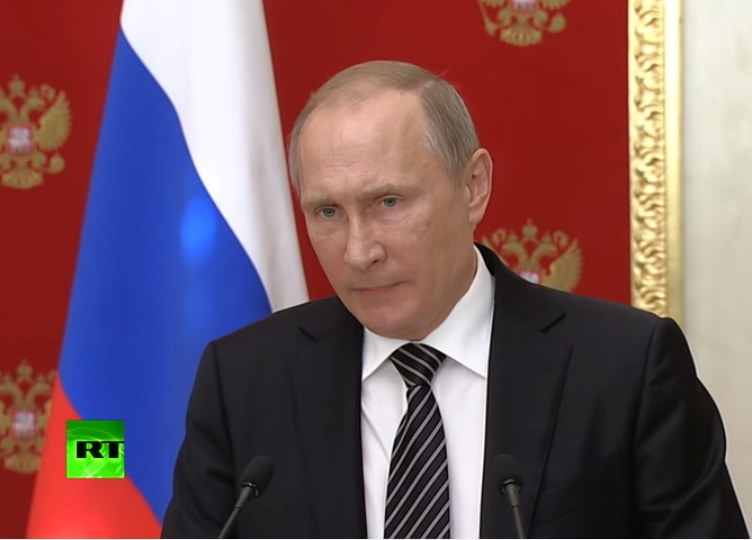
Vladimir Putin: “This is very disturbing. Our security services have prevented penetration of sabotage-reconnaissance group of the Ukraine Ministry of Defense into Crimea. Of course, such actions mean that continuing talks in Normandy format is pointless, especially when it comes to the next meeting in China.

Because, apparently, the people who [violently] seized power in Kiev and continue to usurp it, don’t want negotiations. [snip] Now, instead of looking for ways to  settle the conflict peacefully, they decided to try terrorism.

In this regard, I can’t avoid mentioning that we view the recent assassination attempt targeting the head of the Lugansk People’s Republic as an [act of terror], same as the current attempt to sneak saboteurs into the territory of Crimea.

I want to point out, I think the media reported it already, that the Russian side took losses. Two soldiers were killed. We certainly won’t excuse such things.

But I would like to also address our American, European partners. I think that by now it is obvious for all involved that the current Kiev authorities are not looking to solve problems through negotiation. Now they escalate to acts of terror. That is very concerning.

At first glance, what we just saw in Crimea seems to be a stupid and criminal act. It’s stupid, because it is impossible to regain the trust of Crimean population that way. And it’s criminal, because people have died.

But I think that the underlying situation is even more alarming. Because there is nothing to be gained from such attacks, except to distract their own people from the ruined Ukrainian economy, from the plight of many ordinary Ukrainians – that is the only reason.

Trying to provoke violence and conflict can only serve to divert public attention from those who seized power in Kiev, and still continue to usurp it and continue to rob their own people. [They’re playing dangerous games] in order to stay in power as long as possible, and loot as much as they possibly can.

But [both] their attempts failed, because their [cronies] turned out to be too incompetent.  Of course, we will do everything we can to ensure the safety of infrastructure and citizens, take extra security measures. And I mean serious additional measures. Both technical, and otherwise.

But the most important thing is that those [Western governments] who support the current Kiev authorities must decide – what do they want? Do they want their proxies to continue attempting to provoke us? Or do they still want a real peace agreement? And if they still actually want it, I really hope that they finally take some real steps to provide necessary pressure on the current government in Kiev.

Actual speech (in Russian):

Report on the details of provocation:
Fort Russ – FSB blames Ukrainian Defense Ministry for foiled terrorist plot in Crimea

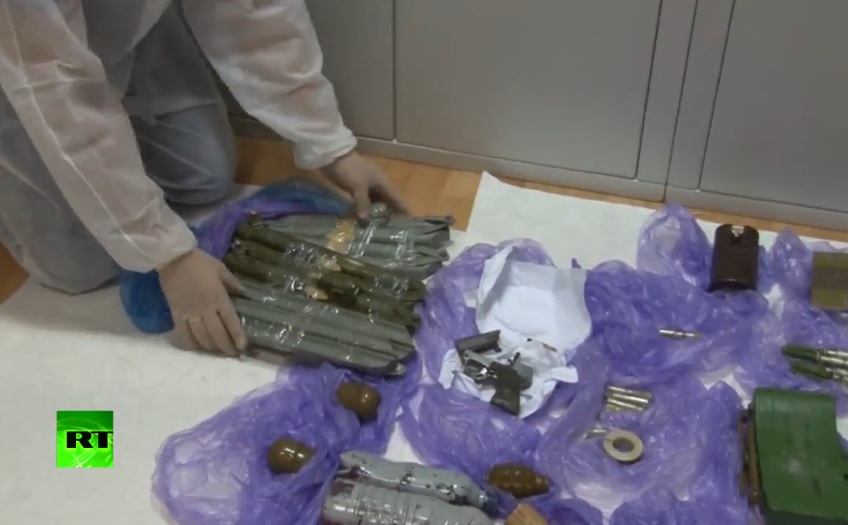
Picture: Captured saboteur equipment. Note plastic explosives, military MON mine, assortment of detonators, MSP noiseless pistol. Such a collection is generally unobtainable by common extremists, or even rank-and-file soldiers.    
===
  Separate thanks to blogger hippy-end for transcribing the speech in Russian. http://www.fort-russ.com/2016/08/unforgiving-rhetoric-vladimir-putin.html

June 22, the day Nazi Germany invaded the Soviet Union; President Putin addresses the State Duma

From Kremlin.ru

Vladimir Putin addresses the State Duma’s plenary session
April 22, 2016

The President reviewed the Duma deputies’ results and work over the last five-year parliamentary session.

President of Russia Vladimir Putin: Colleagues,

I wanted to meet with you as the parliament’s sixth convocation comes to the end of its mandate and thank you for your work over these years. I want to thank you and say a few words about the results of your work. Of course, I want to take a look forward too at the tasks the next parliament will have before it.

But first of all, let me turn to the tragic date we are marking today. Seventy-five years ago, Nazi Germany treacherously invaded the Soviet Union and the Great Patriotic War began. By this time, as we know, the Nazis has already enslaved many European countries.

The Soviet people took the brunt of the Nazis’ force, but they met the enemy with tremendous unity and resistance, and withstood the onslaught, fighting literally to the death to protect their homeland. They drove the enemy right back to its lair, inflicted a crushing defeat on the invaders and achieved the Great Victory.

Today, we bow our heads before this heroic generation. Our fathers and grandfathers gave their lives to save Russia and all of humanity from the fascist scourge. We will always remember their sacrifice and courage. We treasure the bright memory of all who gave their lives in that war, and all our veterans who are no longer with us now. I propose that we honour their memory with a minute of silence.

(Minute of silence)

It was the Nazis who unleashed this war. Their ideology of hatred, blind faith in their own exceptional nature and infallibility, and desire for world domination led to the twentieth century’s greatest tragedy.

We know the biggest lesson of that war: it could have been prevented. It could have been stopped if efforts had been made to firmly rein in the Nazis and their accomplices’ wild ambitions in time. But this did not happen. Our country, the Soviet Union, made direct proposals for joint action and collective defence, but these proposals were simply left hanging.

The leaders of a number of Western countries chose instead to pursue a policy of containing the Soviet Union and sought to keep it in a situation of international isolation. But it was Nazism that was the real and terrible global threat. Politicians underestimated its danger, overlooked the threat and did not want to admit that enlightened Europe could give birth to a criminal regime that was growing ever stronger.

The international community let its vigilance down and lacked the will and unity to prevent this war and save the lives of millions and millions of people. What other lesson do we need today to throw aside tattered old ideological differences and geopolitical games and unite our forces to fight international terrorism?

This common threat is spreading its danger before our very eyes. We must create a modern collective security system beyond blocs and with all countries on an equal footing. Russia is open to discussions on this most important issue and has repeatedly stated its readiness for dialogue.

For now though, as was the case on the eve of World War II, we see no positive response. On the contrary, NATO is stepping up its aggressive rhetoric and aggressive actions close to our borders. In this situation, we have no choice but to devote particular attention to the tasks we must address in order to increase our country’s defence capability.

I would like to thank the State Duma deputies for their deep and substantive understanding of Russia’s state interests and for knowing how to defend these interests decisively. Of course, I also want to thank you for your consolidated legislative support for the proposals on strengthening our country’s security.

Colleagues, your work and its results deserve a worthy assessment. It is particularly important that the laws you have adopted have played a big part in enabling us to fulfil our social obligations to our citizens, develop our most important economic sectors and improve our country’s political system. I want to stress this point.

You have accomplished a tremendous amount of work in all these areas. This successful work is the result of the efforts made by all parliamentary parties and their willingness to pursue a constructive dialogue with each other, with the Government, and with the other participants in the legislative initiative.

A truly historic result of this convocation’s work was the legal integration of Crimea and Sevastopol, which followed on your sincere and heartfelt moral support for the peninsula’s people on the eve of the referendum on joining the Russian Federation. You were active in supporting the view shared by the vast majority of Crimea and Sevastopol’s people, sometimes emotionally, and when needed, very professionally.

During this time, all parliamentary parties displayed a degree of unity of which your voters can be deservedly proud. In a very short period of time, you adopted more than 120 laws that smoothed the way for Crimea and Sevastopol’s entry into the Russian Federation. You helped people to get through the transition period’s difficulties, feel at home in Russia and know that their rights are reliably guaranteed and new opportunities have opened before them.

A readiness to consolidate for the sake of the tasks at hand and for Russia’s sake is this convocation’s distinguishing feature. It is very important now that the next parliamentary convocation continues these traditions, including this strict respect for the rules of parliamentary ethics. Continuity in law-making work is of tremendous importance.

This ensures the legislative base’s quality and also the authoritative reputation of the entire Russian jurisdiction. We should most definitely continue the practice of annual reports on the state of our country’s legislation. These reports are drafted by both chambers of the Federal Assembly together with the regional parliaments. This is a very useful practice, I think, very important work.

I want to stress particularly that the legislative branch is an independent branch of power and no opportunist, short term interests or desire to push some decision through as fast as possible should interfere with its work. There should be no hasty or superficial approach when examining and adopting laws. I particularly emphasise this point. The key task for the new convocation in the law-making process will be to ensure a well-planned and systemic legislative process with deep and substantive discussion of draft laws.

Colleagues, I particularly want to mention your great contribution to developing our political system. You have passed a whole swathe of laws that strengthen Russia’s democratic foundations, make the political system more transparent and effective, and set higher standards for political competition.

We now have ten times more political parties than we did five years ago. But we know very well that the political system’s quality cannot be measured by the number of parties, but by their ability to influence the decision-making process regarding the issues of greatest concern to our people.

The parliamentary parties have considerable advantages, and these opportunities are deservedly earned. But during the upcoming election campaign, you will have to pass the test once again before your voters. The executive order setting the date for the State Duma election has already been signed. The election will take place under the mixed-member system on September 18th.

Let me stress that the State Duma will soon get an influx of deputies elected in single-seat districts, and this will bolster considerably the parliament’s representative functions and ties with the regions. It is very important that your work gives our people added guarantees of their social rights. These rights should be guaranteed by laws that regulate education, healthcare, and the housing and utilities sector.

You have devoted much effort over these last years to precisely these issues, including support for motherhood and childhood. These are complicated issues of course, difficult problems, but their resolution is crucial for our country’s future. All of the different issues are important of course. Security and international affairs are important, but nothing is more important than the economy and the social sector.

We have put together an effective anti-corruption legal base over these last years, toughened requirements to all categories of civil servants, and introduced bans on opening accounts in foreign banks and possessing foreign companies’ assets.

Now we must ensure that all comply strictly with the law no matter what the office they hold. I am sure that we all share a unanimous position on this issue. I note too that the laws you have passed on strategic planning and industrial policy are extremely important, as is the law on priority development areas, for example.

The work on modernising civil law continues, including incentives for business and investment and measures to combat internet piracy. You have also passed the law on parliamentary oversight, which will most certainly raise the prestige and significance of the deputies’ work.

Improving our environmental legislation is an area of much importance today. Protecting nature and the animal and plant world and guaranteeing people’s right to a good natural environment are common tasks for all political parties. I know that during this parliament’s term you have examined draft laws on the preservation and restoration of forests and ensuring forest fire prevention. The new State Duma will have to continue this work just as actively as you have, all the more so as we have declared 2017 the Year of the Environment.

All parliamentary parties have also shown unity on foreign policy issues. I already mentioned this. Yes, there were some attempts to play up differences between parties, but no one succeeded in splitting your unity and splitting the consolidation in our society and between your voters. At the same time, your contacts with colleagues abroad have become more intensive.

Friends, many political parties have already set dates for holding their congresses to announce candidates and present their campaign programmes. Essentially, the election campaign has begun. Ahead of you is some fierce competition, debates with opponents, and a far from easy time for all who will be taking part in these elections.

I hope that you will do everything possible to ensure that this election is honest, open, and takes place in a spirit of mutual respect. It is also my hope that you will hold a battle not of mudslinging against each other, but of ideas, the implementation of which should strengthen our country and raise our people’s living standards. I appeal to you to do this.

It is very important that all political parties realise their responsibility for preserving social stability and strive not just for the best election results, but for voters’ trust in the election’s outcome. I am sure that stability and trust are key factors and foundations for our country’s successful development.

You are all experienced people and have traversed all the difficulties of election campaigns before. But let me say again nonetheless that the most important players now are not the parties and candidates, but the voters, our country’s people. They are most important. It is they who give you the powers to decide their biggest problems so as to make our country an independent and effectively functioning state in which people can live and work in comfort and safety.

I am sure that you understand well the tasks before our country today. You have already demonstrated this through your work as deputies based on the principles of patriotism and service to people. You have succeeded in developing high standards of political and parliamentary culture and applying them in practice in your everyday work. It will be useful for our country and for the voters if this constructive political style becomes the distinguishing feature of this election campaign too.

You all have much work ahead of you. No matter where you will be working in the future, I wish you professional success and satisfaction, and I want to thank you once again for the very important and responsible work you have done in the Russian parliament.

Thank you very much.

http://en.kremlin.ru/events/president/news/52198

Information released on June NATO exercise in Kherson

From Fort Russ

Translated by Ollie Richardson for Fort Russ
31st May, 2016
 
[Disclaimer: This information has not been confirmed by NATO or related persons or bodies]
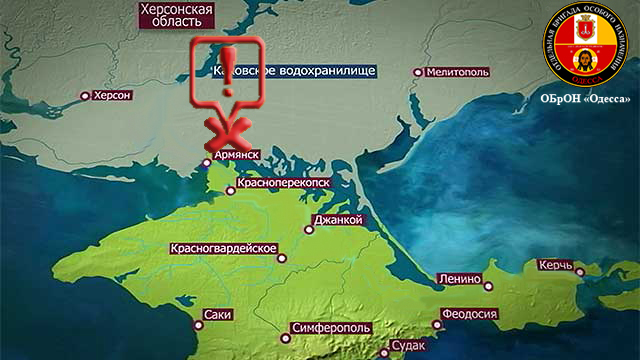
During the intelligence activities by the “Odessa” brigade it became known that military exercises under the auspices of NATO will be held on the territory of the Kherson region in the first half of June. Such countries as Ukraine, USA, Turkey, and other contingents of NATO forces will take part.
Military equipment and heavy weapons involved in the above event will arrive and be unloaded at the deep-sea ports of Odessa and Nikolaev. With the above mentioned ports, it will spill over into the territory of Kherson region, namely the venue of military maneuvers.
One of the notable nuances is that the Western-controlled media is silent about these exercises. This occurs despite the fact that previously such plans were preceded any public statements or publication in the news.
In addition, another factor is that the accumulation of troops and military equipment will be in close proximity to the state border with the Russian Federation, namely the Crimean Peninsula.
Also, attention should be paid to the fact that over the past week Israeli vessels, in very small volumes and with an urgent speed, exported concentrated vegetable oil and grain through the Nikolaev seaport. It was very similar to the desire in short notice to remove liquid assets from certain territories. At the same time, given the agility of the Israelis, all this can have an ulterior motive.
The “Odessa” brigade focused on the fact that because of a combination of the information received in light of the aggressive policy of the West, the vassal government in Kiev, and also the created and supported armed groups, it looks quite alarming. Thus, there is a definite probability of a possible aggravation of the military-political situation in the southern regions of Ukraine in the form of armed aggression against the Russian Federation, namely Crimea.

Operation “Sea Breeze”: How US Marines ‘studied’ Russian in Crimea in 2006

From Fort Russ

May 24, 2016

Blogger Mikhail Sinelnikov-Orishak (@sine-or in Live Journal)

Translated by Kristina Kharlova

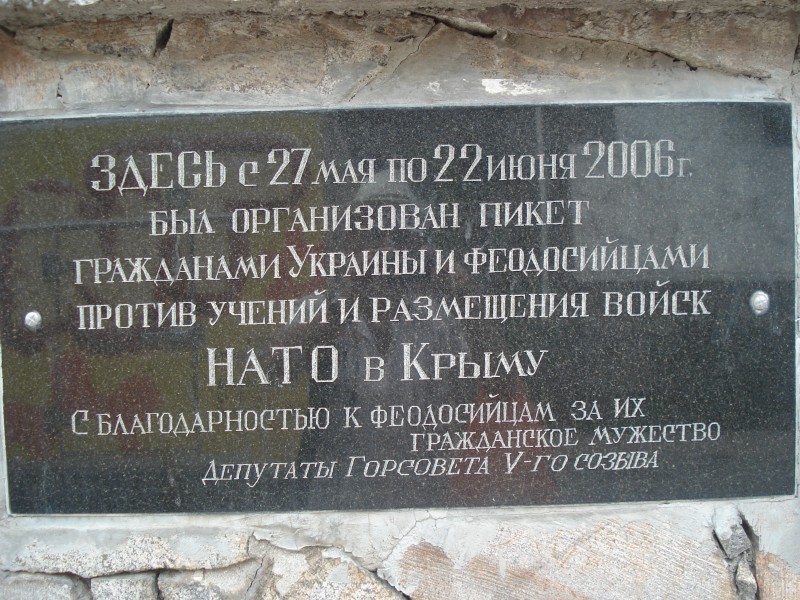
In my personal archive I found a photo from the era when Crimea was still Ukrainian:

“From May 27 to June 22 2006 here was held a protest by citizens of Ukraine and Feodosia against the exercises and deployment of NATO forces in Crimea. With gratitude to Feodosians for their civil courage from deputies of 5th City Council”

For those who didn’t know or tried to forget – I will remind: on May 27, 2006 the American ship “Advantage” came into the port of Feodosia where it unloaded several dozen containers with firearms, equipment and construction materials for military exercises “Sea Breeze-2006.”

Immediately began protests of Crimean residents against the presence of NATO troops: rallies, tent cities, peace marches. The tension has boiled to a point when more than 200 US Marines had to be hastily evacuated from the sanatorium of the Ministry of Defense of Ukraine near Alushta, where they, as it turns out, have been “studying Russian language”. At least, so said the representatives of the administration of then-President Yushchenko. In the end, the US State Department and the Pentagon have issued a joint statement on suspension of Sea Breeze-2006 due to a crisis … in the Middle East.

It should be noted that such NATO exercises were held in the Black sea 5 (!) times since 1997, and 4 of them in the territorial waters of Ukraine. Why did “Sea Breeze-2006” become a “stumbling block”?

Any military exercise initially has a script according to which further events must unfold. At the time, it went as follows:

Some “Runo peninsula”, formerly part of the country of Sapphire, with a thriving “regime”, hostile to NATO, comes under the jurisdiction of a “democratic state” of Emerald. Thus, the peninsula with all the familiar city names of Evpatoria, Sevastopol, Simferopol gains “political independence”, which Sapphire cannot accept and creates an IRM – “Independent Runo Movement”.
International community for a while ignores sabotage, murders of foreign citizens, committed by IRM. But ‘separatists’ commit a raid on a local university and take hostage a large group of students – citizens of countries-NATO members, and in Simferopol at the same time break out rallies and demonstrations demanding restoration of the previous status of the peninsula as a province of Sapphire. The government of Emerald appeals for help to the United Nations, and the UN gives NATO the permission to conduct the operation to free the hostages, for the establishment of peace and stability “in the Northern part of the Black sea”.

This legend was published in the media which finally infuriated the residents of “Runo Peninsula”. On June 24 2006 all American experts and military equipment finally left the “inhospitable” Crimea aboard a Ukrainian merchant vessel “Anatoly Kolesnichenko”.

P. S. As an expert comment from an interview with ex-NATO Secretary General Anders Fogh Rasmussen on the Ukrainian TV channel “Inter” on August 7, 2014: “What a ridiculous accusation, NATO never intended to establish military bases in Ukraine…”

http://www.fort-russ.com/2016/05/operation-sea-breeze-how-us-marines.html

How Obama aims to conquer Crimea

Global Research, May 15, 2016

When US President Barack Obama perpetrated his coup d’état in Ukraine in February 2014, and even had his agent Victoria Nuland select the person who was to rule Ukraine after the coup, it was with the expectation that the new government would renegotiate, and soon end, the Russian lease of the naval base at Sebastopol in Crimea, which wasn’t due to expire until 2042. (Up until 1954, that base had been in Russian territory because Crimea was part of Russia; but, after the Soviet dictator Khrushchev in 1954 arbitrarily transferred Crimea to Ukraine, and then the Soviet Union itself broke up in 1991, Russia was keeping its navy there by paying a lease on it from Ukraine.)

However, instead of the US winning control of Crimea as had been planned, the racist-fascist anti-Russian «Right Sector» forces, which Obama’s people had hired to carry out the coup in Kiev under the cover of ‘democratic’ demonstrations against the democratically elected President of Ukraine, Viktor Yanukovych (who had received over 75% of Crimeans’ votes in the Presidential election, prior to being overthrown), terrorized Crimeans during the coup, and this terrorizing of them, simply added insult to their injury. On February 20th, Right Sector forces massacred Crimeans who were escaping from Ukraine’s capital, fleeing the rabid sentiments in Kiev against supporters of Yanukovych. Right Sector caught up with them at the town of Korsun, burned some of their buses, and murdered some of the escaping Crimeans, though most survived — some of them severely injured.

Also, early in March of 2014, shortly prior to Crimea’s referendum on whether to remain within Ukraine, a Crimean who had served in Kiev as a prosecutor in the democratically elected Ukrainian national government that had just been overthrown, and who had likewise escaped from Kiev, was now safely back home in Crimea, and did a Crimean TV interview.

This former prosecutor, Natalya Poklonskaya, took questions from the live TV audience. The interview was posted to YouTube on 12 April 2014, and, as I described it, linking to the YouTube, she proceeded there to «inform her fellow Crimeans what she had seen happen during the overthrow, and why she couldn’t, in good conscience, remain as a Ukrainian official in Kiev, and swear loyalty to the new Ukrainian Government.

She had heard the chants of the Maidan protesters and smelled their piles of burning tires, and seen their marches in Kiev with Nazi symbols and salutes, and she didn’t want to become any part of that. So, she quit and was now unemployed back home in Crimea at the time of this interview».

How Obama Aims to Conquer Crimea

The Obama Administration, in planning for the coup, had polling done throughout Ukraine, and supplemented the sample in Crimea because, naturally, taking control of the Sebastopol naval base was of particular concern to Obama.

USAID and the International Republican Institute of the Republican Party (not the National Democratic Institute, because funding from them might have suggested the White House’s backing) polled 500 Crimeans, during 16-30 May 2013. As I have reported elsewhere, the first stage of preparation for the upcoming coup was already active inside the US Embassy in Kiev on 1 March 2013; and so, this was a very coordinated Obama Administration operation. (Most Washington-based accounts of the overthrow allege that it was ‘democratic’ and started after Yanukovych rejected the EU’s offer on 21 November 2013.)

On 27 December 2014, I compared the results of that Crimean poll versus the results of a poll covering all areas of the former Ukraine, which was taken, also, for the US government, but, to Obama’s inevitable disappointment, neither poll found a US-friendly, Ukraine-friendly, Russia-hostile, Crimea.

Gallup polled 500 Crimeans during May 16-30 in 2013, and found that only 15% considered themselves «Ukrainian». 24% considered themselves «Crimean». But 40% considered themselves «Russian». Even before Obama’s February 2014 coup which overthrew the Ukrainian President whom [nearly] 80% of Crimeans had voted for, the Crimean people overwhelmingly wanted to secede from Ukraine — and, especially now they did, right after the President for whom they had overwhelmingly voted, Viktor Yanukovych, had been overthrown in this extremely bloody coup. Furthermore, in April 2014, Gallup again polled Crimea, and they found that 71.3% of Crimeans viewed as «Mostly positive» the role of Russia there, and 4.0% viewed it as «Mostly negative»; by contrast, only 2.8% viewed the role of the United States there as «Mostly positive,» and a whopping 76.2% viewed it as «Mostly negative».

During the intervening year, Crimeans’ favorability toward America had plunged down to 2.8%, from its year-earlier 6%. Clearly, what Obama had done in Ukraine (his violent coup in Kiev) had antagonized the Crimeans. And, as if that weren’t enough, the 2014 poll provided yet more evidence: «The 500 people that were sampled in Crimea were asked [and this is crucial] ‘Please tell me if you agree or disagree: The results of the referendum on Crimea’s status [whether to rejoin Russia] reflect the views of most people here.’ 82.8% said ‘Agree.’ 6.7% said ‘Disagree.’»

In the hearts of the local residents, Crimea was still Russian territory, after an involuntary hiatus of 60 years; and so the Russian Government accepted them back again, into Russia – this was not as Corey Flintoff droned, «Russia’s seizure of Crimea». It was Russia’s protection of them from the invasion of Ukraine by the United States in a bloody coup.

On 20 March 2015, even Kenneth Rapoza at the anti-Russian magazine Forbes, headlined«One Year After Russia Annexed Crimea, Locals Prefer Moscow To Kiev», and he concluded that, «Despite huge efforts on the part of Kiev, Brussels, Washington and the Organization for Security and Cooperation in Europe, the bulk of humanity living on the Black Sea peninsula believe the referendum to secede from Ukraine was legit. At some point, the West will have to recognize Crimea’s right to self-rule».

However, Barack Obama refuses to accept this. After all, if he were to accept it, then he would have to terminate the anti-Russia economic sanctions he initiated on the basis of Russia’s ‘seizure’ of Crimea, and he would have to acknowledge that the massive US-led military buildup of NATO forces on Russia’s borders in order to protect against ‘Russia’s aggression’ needs to stop and, indeed, be withdrawn. But Obama doesn’t accept any of this; to do that would negate the whole purpose of his coup, and even his anti-Russian policy, including, perhaps, his refusal to cooperate with Russian forces that are trying to stamp out jihadist groups in Syria.

On 6 February 2016, I headlined «US Now Overtly at War Against Russia» and reported that both US ‘Defense’ Secretary Ashton Carter and NATO Secretary General Jens Stoltenberg had announced the US was initiating a quadrupling of US troops and weaponry on Russia’s northwestern borders.

On 4 May 2016, Dmitriy Sedov headlined at Strategic Culture, «NATO to Form Allied Fleet in the Black Sea: Plans Fraught with Great Risks» and he opened: «Finally, it has become clear what the world has been set to expect from the NATO summit to be held in Warsaw on July 8-9. Summing things up, it is clear that the Alliance is moving to the east. It plans to create a Black Sea «allied fleet». It should be done quickly – the standing force should be formed by July».

Sedov closed by saying that Ukraine’s President Petro Poroshenko «is impatiently waiting for the July NATO summit. The event can ultimately do away with whatever is left of ‘détente’, ‘reset’ etc. and bring the world back to the days of uncompromised mutual assured destruction».

There is a backstory to that, and, naturally, it goes back to Barack Obama:

As I have previously explained, US Secretary of State John Kerry had told Poroshenko, on 12 May 2015, to stop saying that Ukraine would restart its war against the separatist Donbass region and would invade Crimea and retake that too; but, Kerry’s subordinate, Hillary Clinton’s friend Victoria Nuland, told Poroshenko to ignore her boss on that, and then US President Obama sided with Nuland and sidelined Kerry on Ukraine policy by making clear that he thought Poroshenko was right to insist upon retaking Crimea and re-invading Donbass.

In other words, the Minsk peace process for Ukraine, that had been initiated by Angela Merkel and Francois Hollande, was grudgingly accepted by Obama but he really had no intention of its being anything more than a pause in the war, after which NATO itself would become engaged in facing-down Russia over its ‘aggressive invasion’ and ‘seizure’ of Crimea.

Game’s on for World War III, is Obama’s message to Russian President Vladimir Putin. At some point, either the American side or the Russian-NATO-EU side will have to back down on the Crimea matter, or else the bombs will be release against the other. Kerry has been trying negotiation, but his real enemy is his own boss.

There is every indication that, if Hillary Clinton, a super-hawk against Russia, becomes the next US President, then the policies that Obama has been implementing will be carried out. 2016 could thus turn out to be a very fateful election in the US, and not only for the US but for the entire world.


Third strand of Crimea energy bridge launched

Posted on Fort Russ

Translated by Ollie Richardson for Fort Russ
14th April, 2016
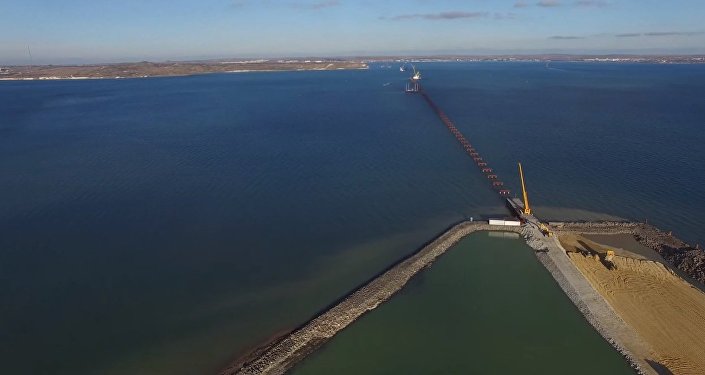
The third strand of the energy bridge in the Crimean Federal district was put into operation ahead of schedule. Its launch helped to increase the maximum power transmitted across the energy bridge. This was reported by the Russian Ministry of Energy.
“After the early launch of the third line, the total volume of alloted power to Crimea increased to 1060 MW excluding alternative and backup power sources. The maximum peak consumption on the Peninsula in the spring is expected to be no more than 1100 MW, that is, after today’s launch, the shutting down of the power supply will almost be completely stopped,” — said energy Minister Alexander Novak.
That third strand of the power bridge will be launched today, said the President of the Russian Federation Vladimir Putin, speaking at Straight Line.
“Overall, we are approaching the volume of flow that was carried from the Ukrainian territory”, — said the Russian leader.
According to him, the fourth strand of another 200 MW, which will completely replace the volume that came from Ukraine, will be running within two to three weeks.

S-300s installed; Kiev junta is preparing to shoot down planes over Crimea; Kherson leader appeals to European community

From Fort Russ

Translated by Ollie Richardson for Fort Russ
9th April, 2016
 
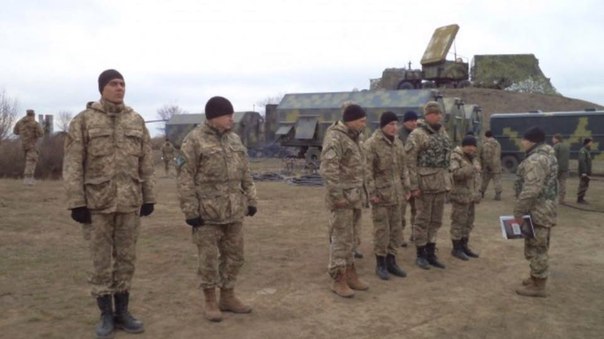
The Kiev junta is preparing to shoot down planes over Crimea. Two S-300 systems were installed in the Henichesk district, Kherson region. Residents, as well as the military, reported that these systems are on alert and are supplied with everything needed to ensure the smooth operation of these SAMs. Officially, the regime claims that the deployment of the systems is supposedly designed to protect the territory of Ukraine on the border with Crimea. However, this is not true, according to Kherson politician Aleksey Zhuravko.


Activist warned, with reference to its sources, that there is a high probability that the S-300 can be used for provocations similar to the downed Malaysian Boeing over Donbass. The politician wrote this on his social network, attaching a photo of the area where the SAM is deployed.
“From serious sources: SAM is not installed to protect the territory of Ukraine, but to commit provocations against the Russian Federation. The whole situation with the advent of SAM in the Kherson area reminds me of the preparation for the implementation of the scenario according to the example of the downed Boeing 777 flight MH-17 over Donbass. According to a high-ranking military source, these systems will not be operated by local Kherson troops, but by the Ukrainian military personnel brought here from another area.
I am extremely worried about the situation on the border with Crimea in connection with the arrival of SAM systems. I want to warn everyone that today’s bloody Kiev government is ready for anything and will stop at nothing. If a plane is shot down in the skies over Crimea, you know that the responsibility for this will fall on the current leadership of Ukraine: the President, the government, and Parliament,” said Zhuravko.
“I appeal to the entire European community, including europarliamentarians. Please work pro-actively and prevent new casualties,” said the politician, summarizing his message.