Question: During the 2008–2009 global financial crisis, the G20 became a popular format, a platform for solving global problems. Do you think that it still plays the same role? What problems that could really be solved in this format rather than in statements or declarations do you think are the most pressing today?
President of Russia Vladimir Putin: The role of the G20 in the global economic and financial governance is becoming increasingly important. Thanks to the decisions made by the G20, we have managed to create conditions not only for coping with the consequences of the 2008‑2009 crisis, but also for enhancing sustainability and transparency of the global financial markets.
However, nowadays, global economy is still unstable and cannot get onto a path towards sustainable and balanced development. In this context, the work that the G20 does is especially needed.
First and foremost, it is necessary to continue improving the international monetary and financial system; to impartially and equally redistribute quotas and voting shares among IMF members in favour of those developing economies that have gained greater weight; to improve the efficiency and legitimacy of the Fund’s activities. Besides, we see more often how politically motivated restrictions are imposed on the entry of sovereign borrowers and companies into the global financial markets. We consider G20 to be the main platform for dialogue on all of these issues.
The reform of international tax rules launched at the G20 Summit in St Petersburg is another important issue. The Base Erosion and Profit Shifting (BEPS) Action Plan should be finally adopted in Antalya. The next step is to introduce in practice the new rules in the G20 countries and beyond.
I would like to highlight such an important achievement made this year by the G20 as the development by our countries of investment strategies, which include specific commitments to encourage domestic demand through investment. Thus, the initiatives launched by Russia during its G20 Presidency have translated into practice.
Question: Western sanctions have substantially challenged Russia’s ability to attract funds from the Western capital markets. In these circumstances the ‘tilt towards the East’ seemed reasonable, however, it feels as though the East itself is reluctant to replace the West as a source of external capital for developing Russian economy. Is this notion right?
Vladimir Putin: Let me stress that Russia pursues multidimensional foreign policy. We seek to have as many equal partners as possible both in the West and in the East.
Russia’s geography and history determines the Asia-Pacific dimension as one of our foreign policy priorities. Therefore, cooperation between Russia and the Asia-Pacific region is a strategic and long-term one. It is worth mentioning that this region is the linchpin of global economy and politics. The Asia-Pacific region accounts for about 60 percent of global GDP, fifty percent of international trade and direct cross-border investment. Obviously, the role of this region in global affairs will be growing and we do take it into account.
As for the restrictive measures imposed against Russia in March 2014, they have, indeed, complicated the process of attracting investments from certain Western markets. Nevertheless, our domestic banking sector proved its resilience to external shocks. We managed to keep Russian stock market attractive. CEOs of the major multinational companies admit that investing in Russia’s economy is promising.
Obviously, cooperation with Asian partners in attracting funds gains special relevance in the current situation. In 2015, approximately 90 percent of investments in the Russian market came from Asia. Several large Russian enterprises are financed by China and we analyse the prospects of public borrowings from China. International investment mechanisms have been developed – the New Development Bank BRICS and Asian Infrastructure Investment Bank, each with an authorised capital of $100 billion. Pooled funds and investment platforms have been created with China, India, South Korea and the Gulf states to channel foreign investments into the real sector of Russia’s economy.
In order to strengthen our cooperation, we are streamlining taxation of profits from project financing in Russia and also propose new promising initiatives. Many opportunities for cooperation are now available under our programmes for developing Siberia and the Far East, which have been presented, among other things, in September 2015 at the first Eastern Economic Forum in Vladivostok, including the creation of Priority Development Areas (PDAs) and a free port in Vladivostok that would enjoy preferential tax and administrative regimes, modernisation of the Trans-Siberian and the Baikal-Amur mainline railways, the revival of the Northern Sea Route, and building the Power of Siberia pipeline.
Question: Did you expect such unanimous negative reaction in the West, in particular, the NATO countries, some of which are major Russian partners, to the start of the Russian Aerospace Forces’ operation in Syria, and is it possible that the Western partners’ negative reaction would affect the time frame of Russia’s military operation in Syria? Is there any risk that Russia could be dragged into a long-term conflict in Syria and how much will the costs of carrying out this operation affect the Russian Federation budget, which has been already cut?
Vladimir Putin: We officially informed the US and NATO leadership of the start of military actions in a reasonable time.
We hoped at least for the natural in such cases close military and expert coordination with the US‑led Global Coalition to Counter ISIL, even taking into account all the fundamental differences between the Russian and US approaches to the Syrian crisis.
However, the reaction of the United States and Western partners was quite restrained, although it would seem obvious that ISIL and other similar extremist groups operating in Syria represent a clear common threat to our countries.
We still have not managed to go beyond the joint approval of the Memorandum of Understanding on Prevention of Flight Safety Incidents in the Course of Operations in Syria, and even then with a reservation by the US that by no means such interaction should be regarded as the normalisation of military contacts, which were frozen on the US initiative.
The United States has been also reluctant to respond positively to our proposal to sign a special agreement for the rescue of military aircraft crews, notwithstanding the fact that at the time when the US operation in Afghanistan started, we immediately responded to their similar request.
Neither have we received any response to our request to provide Russia with relevant US intelligence data for planning operations of our Russian Aerospace Forces in Syria, although we have repeatedly asked the United States for such information.
However, in the course of our activities, we are ready to take into account any reliable information on the location of terrorist groups. We have even worked together with the Free Syrian Army (FSA). The Russian aviation has conducted several strikes on the targets identified by the FSA. We excluded areas, which had been indicated by FSA commanders as being under their control. By the way, this fact proves once again that we are not bombing the so‑called moderate opposition or the civilian population.
We are ready to cooperate with Washington despite the fact that the US operations in Syria are in violation of international law – without the resolution of the UN Security Council, without the request from the official Syrian government.
As for the time frame of the operation in Syria, a clear objective is set before the Russian forces – they should provide air support for the Syrian army’s offensive against the terrorists, that is why the duration of stay of our servicemen will be determined solely depending on the time this objective is achieved.
And the last thing. Our activities in Syria as well as potential risks and consequences have been carefully calculated many times, and all the resources needed for the operation, both financial and technological, have been allocated in advance.
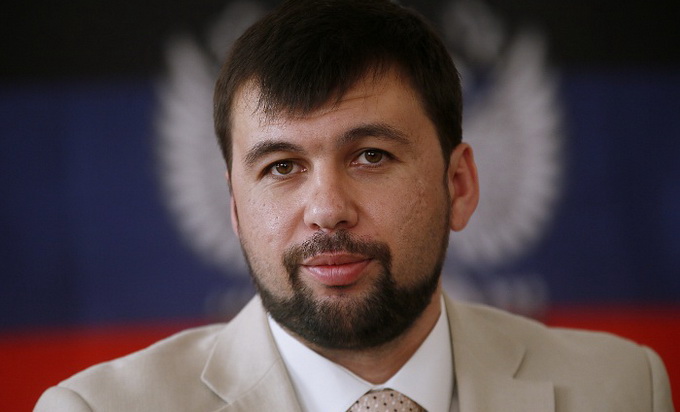
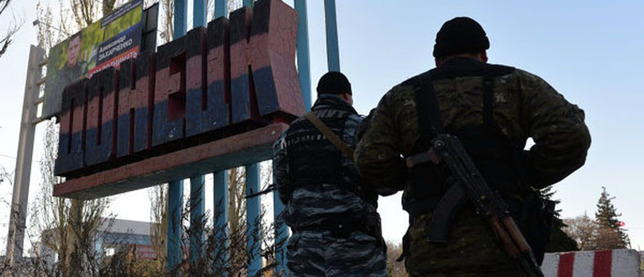
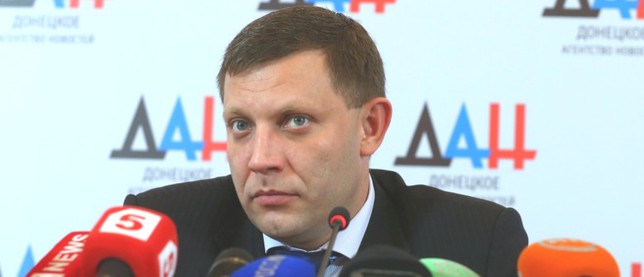
Question: At the G20 meetings with the Western leaders the settlement of the situation in Southeast Ukraine might be touched upon along with other issues. Taking into account the decision of the DPR (Donetsk People’s Republic) and LPR (Lugansk People’s Republic) to put off local elections until 2016, does it mean that the implementation of other items of the Minsk Agreements would be automatically prolonged as well? Are you concerned that procrastination in implementing the Minsk Agreements could bring about another frozen conflict close to Russian borders similar to the Transnistrian issue? You have repeatedly mentioned that Kiev does not comply with the Minsk Agreements, including its economic part. Does it mean that Russia is now actually responsible for supporting Donbass?
Vladimir Putin: The decision of Donetsk and Lugansk to put off the local elections until next year is a last-choice measure. They could have been held this year, had Kiev fulfilled strictly the Minsk Agreements of February 12 and agreed with the DPR and LPR on organising the elections, and also enacted the Law on the special status of Donbass in its original form.
Now, when a ceasefire in the region has finally been established, it is important that the parties to the conflict start looking for the points of contact together so that they can move on towards their common goal. They need to learn to listen to each other and hear each other. Compromise solutions depend on this.
Given the fact that the hostilities have ceased and cases of shelling are rare, it is unclear why would the US Congress adopt resolutions making it possible to provide Ukraine with lethal weapons. The question arises as to whether there is a desire to spark a war or provoke hostilities.
I would not overdramatize the delay in implementing the Minsk Agreements. Despite some difficulties, they are being implemented and, which is most important, their provisions, principles and logic are not questioned. We are talking simply about technical prolongation of the time frame.
However, the threat of Donbass turning into another frozen conflict is still there. It stems from Kiev’s policy, which continues to strengthen the blockade of the Southeast and has stopped the supply of food and money there. Kiev has eliminated the banking system there and is blocking exports.
I would like to recall that, during the talks as far back as in September 2014, the parties to the conflict agreed not only on a ceasefire, but also on the steps to restore livelihoods in the region. It was fixed that a programme for economic revival of Donbass should be adopted. This issue was discussed last February in Minsk, where our partners from the Normandy Four group – Germany and France – agreed to provide technical assistance in the recovery of the banking and financial infrastructure in the conflict-affected areas.
It is fair to say that there is certain progress. The parties restored railway communication, making it possible now to deliver Donbass coal to other regions of Ukraine. Works are underway to restore energy supply. Ways to restore water supply are also being analysed.
Russia, for its part, continues to support Donbass, which is in a difficult humanitarian situation. Since August 2014, more than 50,000 tonnes of humanitarian aid has been delivered there. First of all, we think about people that were abandoned by Kiev authorities and put to the brink of survival. It is our duty to provide them with the necessary assistance.
Question: The US and the EU have imposed sanctions against Russia. But despite Western countries’ criticism, Turkey continues to maintain its economic and political ties with Moscow. In this context, what future do you see for Russian-Turkish relations? To what extent do the differences on the Syrian issue affect the bilateral relations?
Vladimir Putin: While the US and the European Union unilaterally introduced sanctions, Turkey took an independent stand. Such an independent policy pursued by Ankara to meet its national foreign policy interests deserves great respect.
Such a pragmatic approach opens up new horizons for the development of Russian-Turkish relations – first of all, their business dimension. Turkey is our major partner in foreign economic collaboration. Last year our bilateral trade exceeded $31 billion. We have been building up industrial cooperation by implementing major projects in construction, light industry, metallurgy and agriculture. We focus primarily on such knowledge-intensive and hi-tech industries as energy – including nuclear power – and telecommunications. Tourism is another important field of collaboration. Last year over 3.3 million Russian citizens visited Turkish resorts. But generally, the potential for our trade and economic interaction is far from being fully unlocked.
It is true that the two countries have different views on the ways to resolve the crisis in Syria. But the important thing is that Russia and Turkey share the same priorities – we both stand for settling the situation in the region and effectively combating terrorism. With this in mind, the existing differences should not hamper our bilateral relations. On the contrary, in looking for the common ground, we draw upon vast experience of constructive cooperation between our countries.
Question: Last December, you made a state visit to Turkey during which, among other things, the launch of the TurkStream project was announced. Since then, no progress in its implementation has been observed, and there has also been certain information that the pipeline capacity would be halved and only two instead of four strings would be built. What are the reasons behind the project’s downsizing? Does it have anything to do with some serious political discords between Russia and Turkey, or is it for economic reasons alone?
Vladimir Putin: I cannot agree with your opinion that the TurkStream is slowing down. Such a large-scale project cannot be developed and agreed overnight. There are many legal, technical and economic, technological and organisational issues – including the number of the pipeline strings taking into account the actual need in gas acquisition and pumping volumes – which we have to decide together with our Turkish colleagues. The better we resolve these issues, the faster and with fewer risks and resources we will be able to implement our plans and ensure an uninterrupted delivery of Russian gas directly to Turkish consumers. The main thing is that this project is fully in the interests of both Russia and Turkey. We are one on this with my Turkish colleague Recep Tayyip Erdogan.
We passed our ideas on the bilateral intergovernmental agreement, which should provide legal basis for project implementation, to the Turkish side last July. We expect that the new Turkish government would be able to organise work on the key aspects of the above-mentioned agreement in a short period of time.
The pace of the negotiation process has been definitely affected by the political situation on the eve of the elections in Turkey. We understood that and did not force the events.
It is known that the EU and Bulgaria torpedoed the implementation of the South Stream and did not let us implement this project. Though it was clearly in the interests of Bulgaria and the entire southern Europe. The TurkStream would make it possible to deliver the Russian natural gas to the border between Turkey and Greece, virtually to the border of the EU. European consumers would be able to buy it there. But the countries that refused to take part in constructing the new pipeline would have to count lost profits.
I would like to note that we will continue to be a strategic and reliable energy supplier to Turkey and Europe, and that we have everything necessary for this.
Question: On Syria, Russia maintains that only the Syrian people can determine the future of Syria and Bashar al‑Assad. Which road map does Russia propose to settle the Syrian crisis? How do you see the future of that country? Was the resignation of Bashar al‑Assad from the post of president discussed at the meeting in Moscow? Did you make an arrangement with the United States to launch the operation in Syria?
Besides, Western countries have repeatedly accused Russia that the aircraft of its Aerospace Forces bomb not only the Islamic State and Jabhat al‑Nusra but also other groups in Syria. Do you think that all armed groups currently fighting in Syria against al-Assad’s army are terrorists?
Vladimir Putin: Indeed, from the very outset we have insisted, and we still insist today, that it is the Syrian people who should determine its future. It is good to know that at the Vienna talks on Syria on October 30, foreign ministers of seventeen states and representatives of the United Nations and the European Union supported this approach and expressed it in their final statement as their collective opinion.
As for the elaboration of a detailed road map to settle the conflict in Syria, that is not our task. The map should be developed and adopted by the Syrians themselves. Yet, we have a few ideas about how external forces could help the Syrians to defeat the terrorists and resolve the crisis. At present, the Russian diplomacy is actively advancing these proposals. They are not a dogma; rather they encourage the partners to continue a serious dialogue. Its constructive nature would to a large extent determine how successful we would be in translating the proposals into decisive joint actions which would help defeat ISIL and restore Syria as a unified, sovereign and secular state, create safe living conditions for everyone regardless of their ethnicity or faith, and open prospects for social and economic revival of the country. Let me repeat it once again – only the Syrians themselves should choose their future and their government leaders.
We were guided by this very logic – the logic of international law – when receiving Syrian President Bashar al‑Assad in Moscow. Let’s think how legitimate or ethical would it be if we invited the leader of a friendly state to Moscow and demanded him/her to resign? Syria is a sovereign country and Bashar al‑Assad is its President elected by the people. So do we have any right to discuss such issues with him? Of course, we do not. Only those who believe in their exceptionality allow themselves to act in such a shameless manner and impose their will on others.
It is based on the official request from the Syrian government that Russia is carrying out a military operation involving its Aerospace Forces in Syria. Let me repeat once again that the main purpose of this operation is not to support President al-Assad but to fight international terrorism. They are constantly trying to accuse us of bombing the so-called ‘moderate’ opposition but no evidence was provided so far. Moreover, we are already cooperating with that ‘moderate’ opposition, including the Free Syrian Army (FSA). The Russian aviation has attacked several targets indicated by the FSA.
To make the fight against terrorism more effective, the global community needs to develop a common framework as to whom to consider terrorists. It is not about the name of an organisation, which can seem quite ‘innocent,’ it is about whether it uses terrorist methods. So we need to compile a single list of extremist organisations. And Russia has already submitted its suggestions on this account – this was done during the Vienna meeting of the Syrian Support Group.
Question: It is expected that there would be a discussion on combating international terrorism at the G20 Summit under the Turkish Presidency. What do you think of the Turkish Presidency in the G20? What are you planning to put on the Antalya Summit agenda? Has the schedule of bilateral meetings on the sidelines of the G20 Summit been set?
Vladimir Putin: Indeed, at the proposal of the Turkish Presidency, the fight against terrorism and the problem of refugees will be discussed at the G20 Summit. This is not surprising. In our opinion, there is a direct relationship between these issues and the Summit’s agenda. Sustainable development, economic growth, global trade expansion, investments, and employment greatly depend on how successful the international community is in responding to today’s most urgent challenge – terrorism, and the problem of refugees that stems from chaos and violence. Hundreds of thousands of refugees are already in Europe and other countries, who are trying to save their lives and the lives of their close ones, and still more are on their way.
I am sure that the coming discussion would contribute to the practical solution of these issues and would be backed by a final document reflecting our common approaches to combating terrorism and resolving the refugee crisis.
As for the work of the Summit itself, we propose focusing the G20 on tackling major financial and economic problems, for example, measures for sustainable and balanced economic growth, and strengthening the stability of the financial system.
At the Summit, we will discuss the implementation of what our countries endorsed last year – the Growth Strategies and Country Employment Plans, the reform of international tax rules and promoting investments and decisions on financial regulation.
I expect that in Antalya we will manage to substantively discuss the future of the world trade and existing mechanisms of multilateral trade and economic cooperation. We will exchange our views on the prospects of creating closed integration associations in the Asia-Pacific region and in the Atlantic (I mean the Trans‑Pacific Partnership – on October 5, 2015, it was announced that the agreement was reached, 12 countries participate in the Partnership – Australia, Brunei, Vietnam, Canada, Chile, Japan, Malaysia, Mexico, New Zealand, Peru, Singapore, the United States – and the Transatlantic Trade and Investment Partnership that is a proposed agreement between the European Union and the United States). We are concerned that the process of their creation is not transparent for business circles and for the public both in the member states and in their economic partners. It is in our common interests to make sure that these associations indeed supplement the multilateral trade system, work for the development of all economies in the world and do not produce new barriers and risks.
We have high expectations for the WTO Ministerial Conference that will take place in Nairobi in December. We hope that it will contribute to the strengthening of the multilateral trade system and propose concrete steps to finalise the Doha Round of trade negotiations.
We will focus our attention on sustainable development, as well as climate change. The UN summit for the adoption of the post‑2015 development agenda has recently finished in New York. Now, the world is looking forward to the UN Climate Change Conference that will be held in Paris in December 2015 and, hopefully, a new agreement on climate will be adopted.
On the whole, we are satisfied with the Turkish G20 Presidency which managed to preserve the succession in complying with the decisions taken at the G20 summits in Saint-Petersburg and Brisbane, add new ideas to the current agenda, including establishing the Women‑20 and launching the World SME Forum.
The first G20 Energy Ministers Meeting in the history of the G20 has become an important Turkish initiative. At the meeting, the ministers discussed access to modern energy in Sub-Saharan Africa, improved energy efficiency and development of renewable energy sources, and most importantly, promotion of investments into energy infrastructure development and introduction of clean technology.
As for the schedule of bilateral meetings, it is now being formed. I intend to meet with the President of the People’s Republic of China, presidents of Turkey, the Republic of South Africa and Argentina, the prime ministers of the United Kingdom, Italy and Japan. Before the start of the G20 Antalya Summit, we will traditionally hold an informal meeting of the BRICS leaders where Russia currently holds chair. We will compare notes on the key issues of the G20 agenda and important international and regional problems.
http://en.kremlin.ru/events/president/news/50682


 Free Ukraine Now